「New Gen」と一致するもの

 なぜレディオヘッドはこんなにも音楽偏執狂を惹きつけるのか。筆者にとって、彼らはずっと気になる存在だ。筆者とレディオヘッドとの出会いは『OK Computer』にさかのぼる。このアルバムを1997年の発売当時に聴いて以来、ロックに限らず、音楽全体の潮目が確実に変わったのだと感じた。このアルバムの各曲は基本的にロックのフォーマットを維持しつつも、一度聴いただけでは全体を把握できない複雑さを秘めている。そして、この傾向は、その後の『Kid A』(2000)、『Amnesiac』(2001)のなかでますます顕著になっていく。以来、レディオヘッドは筆者にとって常に注意を払うべき存在となった。曖昧な調性、微分音の使用、複雑に聴こえるリズムと拍子、次々と新たな部分へと進むので何度も聴かないと覚えられない構成など、彼らの音楽はロックのセオリーを易々と逸脱し続ける。そのたびに聴き手は驚き、戸惑いながらも、一緒に歌ったり、手拍子を打ったり、音楽を身体に染み込ませる。
『OK Computer』がリリースされた1997年は、コーネリアス『Fantasma』、ビョーク『Homogenic』、プロディジー『The Fat of The Land』、ステレオラブ『Dots and Loops』といった、1990年代後半を代表するアルバムがいくつもリリースされた年だ。それは同時に、「オルタナティヴ」とされていたものが音楽的にも商業的にもメインストリームになったことを意味する。
 1990年代後半の「オルタナティヴ」の回想はさておき、レディオヘッドはロックと他のジャンルとの距離を縮めるどころか、その境界さえも曖昧にしてしまった。ポップあるいはロックと他のジャンル、とりわけ現代音楽との接近について、音楽批評家のアレックス・ロスは次のように記している。

二一世紀が始まったいま、クラシック音楽とポップ文化を対立させようという欲求は、もはや知的にも感情的にも意味を持たない。若い作曲家たちは、ポップ・ミュージックを耳にしながら育っていて、その場の求めに従って、それを利用したり無視したりする。彼らは知性の活動と街のノイズの中間地点を求めている。それと同じように、二〇世紀音楽、現代のクラシック音楽にたいする活発な反応は、大雑把な言い方だが、ポップ界から起こっている。ソニック・ユースの微分音調律、レディオヘッドの豊かな和声的手法、マスロックとインテリジェント・ダンス・ミュージックの崩れて急速に変化する拍子記号、スフィアン・スティーヴンズとジョアンナ・ニューサムの歌を支える哀愁に満ちたオーケストラの編曲。これらすべてが、クラシックとポピュラーの伝統のあいだで長いあいだ交わされてきた対話を引き継いでいる。(アレックス・ロス『20世紀を語る音楽』第2巻、柿沼敏江訳、みすず書房、2010年、570頁。原書はThe Rest Is Noise: Listening to the Twentieth Centuryとして2007年出版。)

「大融合」を目的の1つとする20世紀音楽(ロス、同前、571頁)以降、クラシックもポップも同じ言語で対話できるようになった。ここでいう「対話」を体現しているのがジョニー・グリーンウッドの活動である。グリーンウッドの映画音楽を高く評価する作曲家スティーヴ・ライヒは、彼との対談で、「あなたには、少なくとも二つの音楽的な人生があるように感じます。」(スティーヴ・ライヒ『スティーヴ・ライヒ対談集』大西穣訳、左右社、2025年、208頁)と述べた。自身もクラシック音楽と他の様々な音楽のバックグランドを持つ彼は、グリーンウッドに強いシンパシーを抱いているのだろう。2011年にグリーンウッドは、生演奏のギターのパートと、事前に録音したギター10パートとベース2パートによる、ライヒの“Electric Counterpoint”(1987)を演奏した。かたやライヒはレディオヘッドの“Everything In Its Right Place”と“Jigsaw Falling Into Place”を選び、この2曲をいったん更地に戻して彼の様式で再構築したアンサンブル曲“Radio Rewrite”(2012)を作曲した。
 ライヒの他にも、グリーンウッドは現代音楽との対話を続けている。ポーランドの作曲家クシシュトフ・ペンデレツキとの共同作業(2012年に2人の名義でアルバムがリリースされた)や、彼が敬愛する作曲家オリヴィエ・メシアンの楽曲で知られる電子楽器、オンド・マルトノ(1)をレディオヘッドで使用している様子から、彼ひとりの活動をとってみるだけでも、たとえ熱心なファンに限らずとも、このバンドに惹きつけられてしまう。その証拠として、レディオヘッドの音楽を極めてまじめに学術的な方法と態度でとりあげた論考や研究が既に存在している。ライターや研究者を名乗る人々が、このバンドの音源を何度も聴き、それを楽譜に書き起こして分析し、日々、謎解きを行っている(2)。リリース当時はあんなに議論された謎多き“Pyramid Song”だが、色々な説が飛び交った拍子の数え方どころか、今やその元ネタさえも解明されているのだ。聴いて楽しむ以外の享受方法をもたらしてくれるレディオヘッドは、音楽について何か言いたい人にとって、非常に「やりがいのある」バンドだともいえる。
 思考や分析の沼に誘うレディオヘッドだが、もちろん彼らの音楽にも直感的、身体的な側面がある。その一役を担うのがトム・ヨークだ。去年、筆者は彼のソロのステージを観た。彼は、そこで出す音すべての責任をひとりで担い、全力で私たちに音楽を聴かせてくれた。かつて、ブライアン・イーノは録音スタジオを作曲の道具とみなして音楽制作に勤しんでいた。トム・ヨークの場合は、彼の手に触れる楽器、声、身体全体が音楽を生み出す有機体に見えてくる。このたびリリースされたライヴ・アルバム『Hail to the Thief Live Recordings 2003-2009』からも音楽の身体性や躍動を聴くことができる。いうまでもなく、この動的な側面がバンドの音の醍醐味なのだ。

『Hail to the Thief Live Recordings 2003-2009』はレディオヘッドの6枚目のスタジオ・アルバム『Hail to the Thief』全14曲のうち“Backdrifts”と“A Punch Up at Wedding“を除いた12曲のライヴ音源で構成されている。タイトルの“Hail to the Thief(盗人万歳)”は、2000年のアメリカ大統領選挙の際のジョージ・ブッシュのスローガン「Hail to the Chief(大統領万歳)」を揶揄した言い回しに由来する。このことから、このアルバムを政治的な作品とする見方もあるが、特定の出来事というよりは、デジタル監視主義やグローバル・ファシズムが世界を覆い始めた空気のなかで『Hail to the Thief』は生まれたのだと考えられる。パンデミックを経た2025年現在、2003年当時は予兆や空気だったものが、どんどん現実化している。
 1曲目“2 +2=5”は、オーウェルの『1984』に繰り返し出てくる、事実の改竄と洗脳と服従を象徴するスローガン「2+2=5」のことだ。フェイク・ニュースやAIに翻弄されている私たちが「2+2がいつだって5になる場所(where two and two always makes up five)」の住民になりかけている今、この曲はリリース当時の2003年よりも切実な訴えとして聴こえてきてしまう。曲の構成はやや複雑で、A(イントロ)-B(are you such a dreamer?)-C(It’s the devil’s way)-D(Because you have not been)-E(短い間奏)-F(I try to sing)の6つの異なる部分からできていて、聴き覚えのあるAやBの部分に戻るのではなく、ひたすらまっすぐ突き進んで曲が終わる。最後のEの部分から荒れ狂った演奏が始まり、ここにロック・バンドとしてのレディオヘッドを再確認できる。
 「2 +2=5」をはじめとして、スタジオ・アルバム盤とライヴ盤のアレンジの間に大きな違いはあまり見られない。むしろ、この再現性の高さがライヴ・バンドとしてのレディオヘッドの高い技量を裏付けているともいえる。だが、彼らはアルバムの曲をただなぞっているわけではない。たとえば5曲目の“Where I End You Begin”では、グリーンウッドがギターのリフとそう変わらないテンションでオンド・マルトノを荒々しく弾いている。この激しさはスタジオ・アルバム盤とは明らかに異なる。6曲目の“We Suck Young Blood”前半のヴォーカルのメロディは8拍でひとまとまりのゆっくりとしたフレーズでできている。スタジオ・アルバム盤では7拍目という、なんとも数えにくいタイミングで手拍子が入るのだが、このライヴ盤では観客がこのやりにくい手拍子を打っているではないか。これは普通のロックのコンサートの基準に照らし合わせても、かなり特殊な現象だ。ある程度、意識的に拍を数えていないと、このタイミングで手を打つことはできないからだ。
観客の反応も含めて、レディオヘッドが規格外の演奏をステージで展開できるのは、エフェクトのかかったギターをじっと聴かせるエド・オブライエン、忍耐強いリズム・セクションのコリン・グリーンウッドとフィル・セルウェイによる3人の磐石な体制のおかげだろう。このようなバンド内の力学も考えると、やはりレディオヘッドはいつまでも興味深い存在である。日本でライヴを観られる日は来るのだろうか。

脚注

(1) オンド・マルトノ(Ondes Martenot)はフランスの電気技師でチェリストでもあったモリス・マルトノが1928年に発明した電子楽器。ピアノのように鍵盤を使って弾く方法と、鍵盤の前に張られたワイヤーのついた指輪をスライドさせて音高やダイナミクスを自分で操作しながら音を作る方法がある。この楽器を用いた楽曲として、メシアンの「トゥランガリーラ交響曲」(1946-48)が挙げられる。楽器の歴史と仕組みについては、ジョニー・グリーンウッドとも親交のあるオンド・マルトノ奏者、原田節が東京フィルハーモニー交響楽団のウェブサイトで詳しく解説している。「オンディスト、原田節が語る メシアン『トゥランガリーラ交響曲』に寄せて」2024年3月29日 参照。
 原田節「音大生にエール 連載60 其の六〈ジョニーが来たから伝えたい〉」2022年12月 で描かれている原田氏とグリーンウッドの交流の様子は非常に興味深い。ぜひとも一読されたい。

(2) 一例を挙げると、カンザス大学で教鞭を執るブラッド・オズボーン(Brad Osborn)によるEverything In Its Right Place: Analyzing Radiohead (Oxford University Press, 2017)は音楽理論や心理学を援用しながらレディオヘッドの楽曲を、形式、リズム、音色、和声の4つの視点から分析している。最終章の第6章は1章まるごと“Pyramid Song”の分析に充てられており、よい意味での狂気さえ感じられる。


[追記]
この原稿を書き終えた直後に、レディオヘッドとしては7年ぶりとなるインタヴューがThe Timesに公開された
インタヴューでは、2017年のテルアビブ公演をめぐってレディオヘッドに対して起きた、BDSこと「ボイコット・投資撤退、制裁運動(Boycott, Divestment and Sanctions)」問題についてのメンバーそれぞれの考えが語られている。また、まもなく始まる英国とヨーロッパ・ツアーに関して、彼らが65曲ほどを準備中で、セットリストは固定されたものではなく公演ごとに変わること、観客が舞台を取り囲むようなかたちでショーが行われる予定であることも明らかにされている。インタヴューについては以下のウェブサイト参照。

Daniel Kreps, 「レディオヘッドが語る活動休止と再始動の背景、イスラエル・パレスチナ問題との向き合い方」、『Rolling Stone Japan』2025年10月27日

Damian Jones, “Thom Yorke says Radiohead will “absolutely not” return to Israel and he wouldn’t want to be 5,000 miles anywhere near the Netanyahu regime,” NME, 26th October

Mac Pilley, “Radiohead reveal they’ll be playing in the round on UK and European tour and talk setlists: “We have too many songs,” NME, 26th October 2025.

R.I.P. D’Angelo - ele-king

緊那羅:Desi La(訳:編集部)

 人は大衆音楽における「才能」について、歌声や見た目の特別さを指して語りがちだ。どんなふうに歌い、叫び、あるいは甘く歌い上げるのか、とか。だが、音を「どのように聴いているのか」、そしてさまざまなジャンルの音楽をレゴブロックのように組み合わせ、過去の黄金の瞬間を細かく分解し、それを吸収し、「なんてこった!」と神々しいまでに独自なひらめきにうなずきながら、人びとを椅子から立ち上がらせ、心を動かすようなかたちに再構築する、その才能についてはあまり語られないかもしれない。D’Angeloは、2025年10月14日、わずか51歳という若さでこの世を去った。彼をめぐっては、メディア、共演者、ファン、そして彼のイメージや遺産で商売をしようとするSNS上の人びとから、さまざまな思い出が語られるだろうけれど、彼に正しく敬意を捧げるためには、彼を「ミュージシャン」と呼ぶだけでは足りないと私は思っている。彼はむしろ「技師(エンジニア)」であり、「建築家」だった。プリンスやマイルス・デイヴィス、パーラメントのように音楽を構築した偉大な建築家たちの系譜に属する存在だ。

 インスタグラムを何気なくスクロールしていたとき、私は残念ながら、あの“Untitled (How Does It Feel)”のヴィデオでの一瞬の性的イメージばかりを強調するインフルエンサーたちの投稿を目にしてしまった。彼を性的対象としてしか見ないそうした悪魔的な心性こそが、いくつかある理由のうちのひとつ——彼がキャリアの大部分を通して長く姿を消していた理由のひとつ——ではないのか。あの映像で焼きついた彼の官能的なイメージは、当時の大衆の記憶から決して消えることはないだろう。が、それは彼の真の才能を示すものではなかった。彼を讃えるということは、彼が望んだかたちで見られること、そして彼の激しい努力の結実を讃えることでもある。

 D’Angelo——本名マイケル・ユージーン・アーチャー——はヴァージニア州の生まれで、ファレルと同郷である(ヴァージニアの水にはたしかに何かがあるのだろう)。彼は教会の少年として育ち、ゴスペルを愛し、そしてソウル、ロック、ファンクの黄金時代の巨人たち——アル・グリーン、ジミ・ヘンドリックス、フェラ・クティ、プリンスなど——に憧れた。彼のヒーローもまた、みんな同じく「建築家」だった。音に対する鋭敏な耳を持ち、アレンジ、バンドの選択、そして全体的なプレゼンテーションにおいて非凡なセンスを備えた音楽家たちだ。彼は成長するにつれて、それらの創造者たちの手がけた構造を解きほぐし、彼らがどう音楽を創出しているのかを考究した。とりわけ、プリンスだ。彼がひとりでスタジオとサウンド全体を完全に支配していたその姿に魅了され、「あれが自分だ」と感じたはずだ。

 音楽業界が何かとレッテルを貼りたがるなかで、D’Angeloが『Brown Sugar』でシーンに登場し、最初のすばらしい成功を収めてから、彼には「ネオ・ソウル」という称号が与えられた。1995年のデビュー当時から、そして続いて登場したエリカ・バドゥの『Baduizm』(1997年)などと並び、その呼称は一定の妥当性を持っていたと言える。というのも、ヒップホップはもともとソウル/ファンクに影響を受けており、ネオ・ソウルの進化は、文化的にも経済的にも支配的となったヒップホップからの影響の「フィードバック・ループ」を示していたからだ。セクシーでチルなヴァイブス、しかもストリートの匂いもある。
 じっさいD’Angelo はネオ・ソウルの特徴をすべて体現していた——ヒップホップの影響を受けたタイトなビート、滑らかなヴォーカル、無駄のないプロダクション、社会的意識をもった歌詞、グルーヴに乗った重心の低いフロー、そして技巧に走らないセクシーな歌声……。
 多くのミュージシャンとは異なり、D’Angeloが遺した公式アルバムはわずか3枚のみだ。しかしそのどれもが前作を凌ぐ傑作であり、『Black Messiah』(2014)はまさにその頂点に立つ作品だった。彼が病に倒れる前に取り組んでいた未発表の音楽も、いずれ何らかの形で日の目を見ることになるだろうが、現時点では、『Black Messiah』こそが彼の到達点であり頂点である。もちろんそれは、『Voodoo』(2000)や『Brown Sugar』を軽んじてよいという意味ではない。むしろいまとなっては、これら2作を、音楽だけにすべてを賭けたひとりの男が歩んできた、その進化の道筋としても味わえる。

 もし私が「ブラックネス(黒人性)」という概念を音楽的革命として講義する授業を開くとしたら、『Black Messiah』収録の“The Door”という曲をかけるだろう。70年代的なハーモニーとファンクのリフが全編を覆い、厚みのあるファンク・ベースが鳴り響き、1940年代のブルーズ的スライド・ギターのクレッシェンドでは、スライドが弦に擦れる音までミックスに残されている。90年代的なデジタル録音のようなアンプ・ディストーションはなく、リラックスしたホンキートンク調のビートに乗せたファルセットの歌声。ファンク特有の切れ味あるストップ&スタートのイントネーションがありながら、歌唱技巧を排している。そしてたしかなダウンビートが、教室で机を叩いてビートを刻み、まわりの仲間が手拍子を合わせていた高校時代のあの瞬間を黒人たちに思い起こさせる。そうしたすべてが、この1曲のなかに凝縮されている。
 D’Angelo はまた、「ブラック/アフリカ的な音楽学習法」の価値を体現していた。ブルーズ、ゴスペル、ジャズ、あるいはアフリカの伝統音楽——いずれにおいても、黒人音楽とは共同体的な営みであり、集中して意図的に聴くことによって成り立っている。複数のパートが重層的に動きながらも、汗をかくことなく完璧に同期している。ビートとビートのあいだにはたっぷりとした呼吸がある。「重要なのは何を演奏するかではなく、何を演奏しないかだ」とマイルス・デイヴィスが言ったように。
 デビュー作で成功を収めたにもかかわらず、D’Angelo は資本主義的商業システム——すなわち大手レーベルという獣——の餌食になることを拒んだ。アーティストの首筋に息を吹きかけ、スタジオに押しかけては「早くリリースを」「長いツアーを」「最大の利益を」と迫る連中に対して、彼は「くそくらえ」と言い放ち、ルーツのクエストラヴとともに5年間もの冬眠に入ったのだ。……5年だ! 大学の学位を取るより長い。その「大学」が『Voodoo』であり、さらにそれを3倍にしたものが『Black Messiah』だった。
 反資本主義的な精神を貫きながら、D’Angelo は「ブラック・ヒストリーの音」を追い求め、それに人生を捧げた。彼は、過去の偉大な音楽家たちの独自性の蒐集家であり、各アルバムの制作にあたっては、その音楽を研究し、向き合い、ジャムし、さらにまた向き合い、あらたな協働者を招き入れてはまた向き合い、ヴォーカルだけで2年を費やしてもなお、音楽とともに座り続けた。その結果、『Voodoo』と『Black Messiah』は聴く者の前で雲を切り裂き、天を開く。細部にまでこだわり抜いたサウンド・デザインが機能する要素を徹底的に磨き上げ、極限まで高めている。
 建築家とは機械や建物の「内部構造」を見る者である。それを組み合わせることで以前よりも高い創意を生み出す。構造の逆解析を行い、どの瞬間においても楽曲を「最高なもの」として立ち上がらせる。そのような能力を持つ者。D’Angeloには「駄作」と呼べるアルバムがひとつもない。それは、彼が——良い意味で——あまりにも「良いアルバムを作ること」に執心していたからだ。そして、彼は待ち、さらに待ち続け、それが熟するのを見届けた。

 D’Angelo の壮大さ、彼のパフォーマンス、優しさ、録音作品は、視界の果てまで広がるほどの賛辞の波を呼び起こした。しかし残念なことに、彼を苦しめたある種の悪魔が誘発した逮捕、依存、鬱などが彼の早すぎる死に影響した可能性がある。皮肉なことに、彼を押し上げたその「社会的イメージ」こそが彼の首にかかった重すぎる錨となり、彼はそこから抜け出そうともがいた。注目すべきは、『Black Messiah』がD’Angeloのアルバムのなかで唯一、彼自身の姿がジャケットの表にもその裏面にも登場していない作品であるという点だ。焦点は完全に「作品そのもの」に置かれている。
 彼の焦点は、つねに芸術そのものに向けられていたのだ。そして2025年のいま、私たちはようやくその全体像を享受できるのである。その美しさ——彼の微笑み、その語り口、彼が遺した物語とそこに刻まれた教訓、そして何よりも音楽への絶対的な献身——そのすべてを、ありのままに味わえるのだ。


People often talk of talent as if it`s only a person’s singular singing voice or their particular look. How they sing, shout or croon. But not enough of how they hear and put the Lego blocks of multiple genres of music together, pick apart the golden moments of excellence of the past, take them in and head nod to the “goddamn!” pure heavenly idiosyncrasies and reassemble them in a way that move people from their seats and into their hearts. D`Angelo has left us at the early age of 51 years old this past October 14th 2025. There will be many memories of him from media, collaborators, fans and social media types looking to capitalize on his image and legacy. But to properly give tribute to him, I feel it`s appropriate to knight him not a mere musician but an engineer. An architect. In the vein of other architects like Prince or Miles Davis or Parliament. Doomscrolling on Instagram, I unfortunately ran across posts by influencers only emphasizing his sexuality from that one moment in time with the video "Untitled (How Does It Feel)", but that objectifying demon mind is actually the reason among several others for his long absence for the majority of his career. That image will never disappear from the public conscious of that time but that wasn`t his talent. To honor him is to honor how he wanted to be seen and the result of his intense efforts.

D`Angelo, born Michael Eugene Archer in Virginia, just like Pharrell (I think there is something in the water in VA for sure), was a church boy who grew up with love for the Gospel and love for the titans of the soul, rock, and funk era, i.e. Al Green, Jimi Hendrix, Fela Kuti, and Prince just to name a few. All his heroes were also fellow architects. Musicians with keen ears for sound, arrangement, band selection, and overall presentation. And as he grew up dissecting those creators and how they moved - he particularly was mesmerized by Prince`s one man command over the studio and his sound - D`Angelo said that`s me.

With the music industries need to label, D`Angelo`s entry into the scene and initial success with “Brown Sugar” was given the mantle of Neo-Soul. And to some extent with his debut in the 1995 and other titanic releases in the same period like Erykah Badu`s Baduizm in 1997, this is warranted as hip hop was initially influenced by soul/funk and Neo-Soul`s evolution signaled a feedback loop of influence by the dominance of hip hop culturally and financially. Sexy chill vibes but street.

D`Angelo exhibited the hallmarks of what was to be Neo- Soul; clear, hard hip-hop influenced beats, smooth vocals, uncluttered productions, socially relevant lyrics, in the pocket groove heavy flows, and sexy vocals that avoided theatrical gymnastics.

Until many musicians, D`Angelo leaves behind only 3 official albums. But each one is a classic greater than the one before with “Black Messiah” being the crowning achievement. I`m sure that music he was working on before his previously unannounced cancer disabled him will see the light of day in some way, but for now “Black Messiah” is the apex of his known work. That doesn`t mean sleep on “Voodoo” or “Brown Sugar.” Instead, just enjoy the evolution from a man solely focused on it.

If I could teach a class on blackness as a concept of musical revolution, I might play a song like “The Door” from “Black Messiah.” An unassuming song drenched in 70`s harmonic funk recitations, thick funk bass, 1940`s blues slide crescendos with the noise of the slide gracing the strings left in the mix, no amp distortion a la 1990`s digital recording, falsetto singing to a relaxed honky tonk sing song beat, the crispness of funk stop start intonation leaving out vocal gymnastics, and a solid down beat that gives black people memories of that guy in the class room who banged on the desk in high school to make a fire beat while his friends clapped in unison around. All of this in one song.

D`Angelo also represents the value of the Black / African method of studying music. Black music, whether blues or gospel or jazz or traditional African, is a communal situation filled with intensive intentional listening, focused and deliberate, layered instrumentation with multiple parts moving but in sync without breaking a sweat. Lots of breathing between the beats. “It`s not what you play but what you don`t” as Miles Davis used to say. D`Angelo despite his debut album success, refused to be the meat for the capitalist commercial beasts that major labels often are, breathing down the necks of artists, visiting them in the studio in effort to push them for a quick release, a long tour, and maximum profits. D`Angelo said fuck them and went into a five year hibernation with Questlove of The Roots ..... 5 YEARS!!!! just to produce “Voodoo.” 5 years is longer than

getting your degree in university. In this case though, the university was “Voodoo” and then times that by 3 with “Black Messiah.” Anti-capitalist in his endeavours, D`Angelo rested on his devotion to the “sound” of Black history in his eyes. A collector of the idiosyncrasies among his favorite musicians of the past, in making each album, he studied and sat with the music, jammed and sat with the music, invited new collaborators and then sat with the music, spent almost 2 years just doing vocals and still sat with the music. And it shows cause in particular “Voodoo” and “Black Messiah” separate the clouds from the heavens for listeners, letting loose a sound design meticulous with it`s attention to the things that work and amping them up.

An architect sees the inside of the machine or the building, the innerworks that when put together create greater ingenuity that before, reversed analysis of construction that allows each song to be see at a moment`s notice as great. D`Angelo doesn`t have any bad albums because he was too intent (in a good way) to make a good album. And he waited and waited til it gestated.

Though the grandeur of D`Angelo, his performances, his kindness, his recordings created waves of accolades that rolled exponentially as far as the eye could see, unfortunately certain demons haunted him leading to arrests, addiction, depression and so forth, all of which may have contributed to his untimely departure. His social image, the very thing that propelled him forward became an albatross, too heavy to bear but he did his best to break free. Take deep note that “Black Messiah” is the only D`Angelo album where he doesn`t appear on the cover or back sleeve. The focus was fully on his art. The beauty now of 2025 is we can enjoy the beauty of his smile, his diction, his stories, lessons learned and absolute devotion to music.

[[SplitPage]]

高橋芳朗

 ディアンジェロが逝ってしまった。死因は膵臓癌。51歳だった。かつての公私におけるパートナー、アンジー・ストーンが3月1日に交通事故で他界したのがまだ記憶に新しい中での思いがけない訃報。プリンスと共に彼の最大のインスピレーション源だったスライ・ストーンも6月9日に亡くなったばかりだ。スライの死を受けて、ディアンジェロの諸作を改めて聴き直していた方も多かったと思う。

 ディアンジェロは、1990年代以降で最も強大な影響力を有したアーティストのひとりだ。ただし、彼が30年に及ぶキャリアで残したアルバムはたったの3作。1995年の『Brown Sugar』、2000年の『Voodoo』、そして2014年の『Black Messiah』。もともと完璧主義だったことに加え、2000年代は薬物/アルコール依存、相次ぐ逮捕騒動などで活動が停滞。寡作ぶりに拍車をかけることになった。

 ディアンジェロの3作のアルバムはすべて掛け値なしに破格の傑作といえるが、彼は現在に至る名声を実質最初の2作で確立している。人種差別撤廃を訴えるブラック・ライヴズ・マター運動を背景に作られ、ザ・ルーツのクエストラヴが「俺たちの世代にとっての『There's a Riot Goin' On』」と激賞した『Black Messiah』も強力だが、真のゲームチェンジャーはやはり『Brown Sugar』と『Voodoo』。特に『Voodoo』は決定的だった。

 ビヨンセはディアンジェロへの追悼コメントで彼を「The Pioneer of Neo-Soul」と讃えたが、ディアンジェロが『Brown Sugar』と『Voodoo』によって果たした功績を端的にまとめるならば、それはまさに「ネオソウルの音楽像を作り上げたこと」となる。ディアンジェロが編み出したネオソウル・サウンドの最大の特徴は、J・ディラの作風に着想を得た揺らぎ(ズレ)のあるビート、そこから生じる聴く者をじわじわと引きずり込んでいくような深みのあるグルーヴ。その原点といえる試みは『Brown Sugar』収録の “Me and Those Dreamin' Eyes of Mine” で確認できるが、完成を迎えるのは5年後の『Voodoo』まで待たなくてはならない。

 『Voodoo』のビートの革新性は、レコーディング時の数々の逸話が浮き彫りにしてくれる。たとえば、ギタリストとしてのゲスト参加が決まっていたレニー・クラヴィッツがサンプル・トラックのドラム・パターンに違和感を訴えて「これでは演奏ができない」と辞退したエピソードなどは、ディアンジェロが描いていたヴィジョンがいかにセオリーから逸脱していたかを示す好例だろう。だが、何よりも興味深いのは『Voodoo』の大半の曲でドラムを担当しているクエストラヴの証言だ。彼はレコーディングに際して、ディアンジェロから「徹底的に正確さを削ぎ落としてほしい。絶対にうまくいくから俺を信じろ。グルーヴをキープしつつ、とにかくだらしなく叩くんだ」と要求されたという。

 正確さこそが命であると考えていたクエストラヴはディアンジェロの注文通りに演奏するのに約1ヶ月もの時間を費やしたそうだが、その成果──クエストラヴが言うところの「泥酔しているかのような演奏」──が最も如実に表れているのが以降ネオソウルのひとつのプロトタイプとして継承されていくことになる “Playa Playa”や “Chicken Grease” だ。ここで打ち出されているフィーリングは現在ネオソウルとして紹介されているあらゆる作品から聴き取れるのはもちろん、もはや今日のモダン・ミュージックを語る上で欠かせないものになっている。

 ミュージック・ビデオと併せてディアンジェロのアイコンになっている “Untitled (How Does it Feel)” がたくさんのオマージュ・ソングを生み出し続けている事実も含め、彼と『Voodoo』の遺伝子はいまもなおそこかしこで見つけることができる。ディアンジェロのデビューから30年、『Voodoo』のリリースから25年。これだけの歳月を経ているにもかかわらず、そのレガシーがなんら古びることなくフレッシュなアイデアとして有効性を維持しているのは驚異的と言うほかない。1990年代にデビューしたレジェンドのなかでも、ディアンジェロの音楽は若い世代にとって比較的「近い」位置にあったのではないだろうか。

 でもだからこそ、この世界にディアンジェロがいない現実をなかなか受け止めきれずにいる。ジョージ・クリントンがケンドリック・ラマーやフライング・ロータスとコラボするような未来が、きっと彼にもあったと思うのだ。

その彼方には、魅惑的な静寂が広がっていた……

ジャズの奥深くに広がるサイレンス
かつてない斬新な観点からつづられる未来的なエチュード

新しい音楽の聴き方、そして静と動が完璧に繋がった世界

マイルス、イーノにはじまり、「静寂の次に最も美しい音」のキャッチフレーズで知られるECM、菊地雅章の忘れられたシンセサイザー作品、芦川聡や吉村弘、尾島由郎ら日本の環境音楽の開拓者たち、そして清水靖晃から高田みどりまで

著者入魂、7年ぶりの書き下ろし

四六判変型並製/352ページ

[著者]
原 雅明(はら まさあき)
文筆家、選曲家。レーベルringsのプロデューサーとしてレイ・ハラカミの再発等に携わり、LAのネットラジオ局dublabの日本ブランチの設立に関わる。リスニングや環境音楽に関連する企画、ホテル等の選曲も手掛ける。早稲田大学文化構想学部非常勤講師。著書に『Jazz Thing ジャズという何か』『音楽から解き放たれるために』など。

『アンビエント/ジャズ』刊行に寄せて
──著者・原雅明による「前書きの前書き」をこちらにて公開中

刊行記念イベント開催決定!
・9/23@WPU Shinjuku
・10/13@野口晴哉記念音楽室
→詳細は本ページ下部をご確認ください

聴きながら読む──「アンビエント/ジャズ」プレイリスト公開中

Ambient/Jazz - between Miles Davis and Brian Eno Chapter 1&2

Ambient/Jazz - between Miles Davis and Brian Eno Chapter 3&4

Chapter 1 & 2 (YouTube Music)
https://music.youtube.com/playlist?list=PLwIEk49IRfMR35xvuGibFfpPlj9YORa1a&si=LV-Nsb82ydiGGv2A

Chapter 3 & 4 (YouTube Music)
https://music.youtube.com/playlist?list=PLwIEk49IRfMRRFpcQIW6O2CwFCSzfiZfI&si=21PsB4WMVhMTMw49

目次

intro

第1章 マイルス・デイヴィスのジャズとアンビエント

1 空間の拡張と時間の遅延──第2期クインテットにおける試行錯誤
2 エレクトリック期に試みられたトーン・ポエム/アンビエント
3 アップデートされる80年代以降のマイルス

第2章 ブライアン・イーノのアンビエントとジャズ

1 オブスキュアとギャヴィン・ブライヤーズ
2 アンビエントの誕生
3 アンビエント・シリーズの発展
4 ダニエル・ラノワの『Belladonna』とその後のイーノ

第3章 ECM もう一つのジャズとアンビエント

1 マンフレート・アイヒャーとジャン=リュック・ゴダール
2 多様なるECMの世界

第4章 日本におけるジャズと環境音楽の往還

1 菊地雅章が残した浮遊するサウンドとハーモニー
2 日本の環境音楽の開拓者たち──芦川聡、吉村弘、尾島由郎
3 清水靖晃の「質感」
4 今日まで続く高田みどりの挑戦

outro

オンラインにてお買い求めいただける店舗一覧
amazon
Rakuten ブックス
7net(セブンネットショッピング)
ヨドバシ・ドット・コム
Yahoo!ショッピング
HMV
TOWER RECORDS
disk union
紀伊國屋書店
MARUZEN JUNKUDO
e-hon
Honya Club

全国実店舗の在庫状況
紀伊國屋書店
三省堂書店
丸善/ジュンク堂書店/戸田書店、ほか
有隣堂
くまざわ書店
TSUTAYA
大垣書店
未来屋書店/アシーネ

刊行記念イベント①

dublab.jp presents
Listening Event “AMBIENT / JAZZ”

dublab.jpのファウンダーであり、文筆家、選曲家、レーベルringsのプロデューサーである、原雅明の新刊「アンビエント/ジャズ――マイルス・デイヴィスとブライアン・イーノから始まる音の系譜」の出版を記念したイベントの開催が決定。
ゲストに環境音楽のシーンを牽引し、海外からの再評価も高い尾島由郎氏を招聘し、書籍の本質をトーク&リスニングで解剖。また、「AMBIENT / JAZZ」を各々の解釈で展開させていくDJによるサウンドが空間を演出します。

また、会場では、新刊『アンビエント/ジャズ──マイルス・デイヴィスとブライアン・イーノから始まる音の系譜』をはじめ、本書のコンセプトである「アンビエント/ジャズ」に関連した書籍を揃えたポップアップ・ブックストアも出店します。

ぜひ、皆様の来場をお待ちしております。

会場: WPU Shinjuku
https://hotel.wpu.co/shinjuku/

日時: 2025年9月23日(火祝)
14:00-19:30

入場無料

Talk&Listening:
Masaaki Hara
Yoshio Ojima

DJ:
DJ Emerald
grrrden
JIMA 
mamekx

Support:
ADAM Audio

14:00-15:00 mamekx
15:00-16:00 DJ Emerald
16:00-17:00 JIMA
17:00-18:30 Talk&Listening: Masaaki Hara, Yoshio Ojima
18:30-19:30 grrrden

https://dublab.jp/show/listening-event-jazz-ambient-25-9-23/

刊行記念イベント②

「アンビエント/ジャズ――マイルス・デイヴィスとブライアン・イーノから始まる音の系譜 」出版記念レコード鑑賞会

10.13.2025(mon.祝日)
野口晴哉記念音楽室
open 16.00 start 17.00
¥3000(+1d order制)※Limited 20/reservation only

Masaaki Hara 
Takuro Okada
野口晴哉記念音楽室にて、ele-king booksより刊行された原雅明氏の新著 『アンビエント/ジャズ――マイルス・デイヴィスとブライアン・イーノから始まる音の系譜』 の出版を記念し、リスニング会を開催致します。
セレクターには著者の原氏、そしてレコードコレクターとしても名高い、音楽家・岡田拓郎氏をお招きし、新刊に関連する作品をレコードで聴きながら、お二人の対談を行い、「聴く/聞く」ことを掘り下げる一夜となります。
限定20名、予約制のささやかな会となります。参加ご希望の方は、お名前と人数を明記のうえ、全生新舎instagramのDMにてお申し込みください。

※入場時にIDチェックがあります。
身分証明書をご持参ください。

お詫びと訂正

このたびは『アンビエント/ジャズ』をご購入いただきまして誠にありがとうございます。
同書に誤りがありましたため、謹んで訂正いたしますとともに、
お客様および関係者の皆様にご迷惑をおかけしましたことをお詫び申し上げます。

●59ページ 6行目

誤 『The Complete Bitches Brew Sessions』
正 2003年リリースの『The Complete Jack Johnson Sessions』

●同 9行目

誤 『The Complete Bitches Brew Sessions』
正 『The Complete Jack Johnson Sessions』

●169ページ 注4の7行目

誤 ディオ演奏
正 デュオ演奏

●185ページ 8行目

誤 彼の音作り方から、
正 彼の音の作り方から、

●209ページ 5行目および9行目

誤 「All of My Life」
正 「All My Life」

●218ページ 後ろから4行目

誤 ルアカ・ポップ
正 ルアカ・ボップ

●281ページ 後ろから1行目

誤 「Wind 1,2」
正 「Air 1,2」

●282ページ 1行目

誤 「Wind 3」
正 「Air 3」

●同 3行目

誤 「Wind 4,5」
正 「Air 4,5」

●297ページ 8行目および10行目

誤 吉川
正 吉村

●312ページ 3行目

誤 濱野
正 濱瀬

interview with Colin Newman/Malka Spigel - ele-king

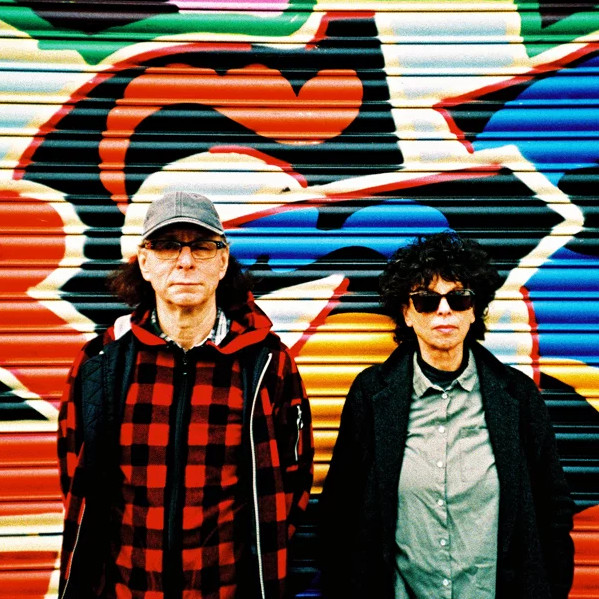
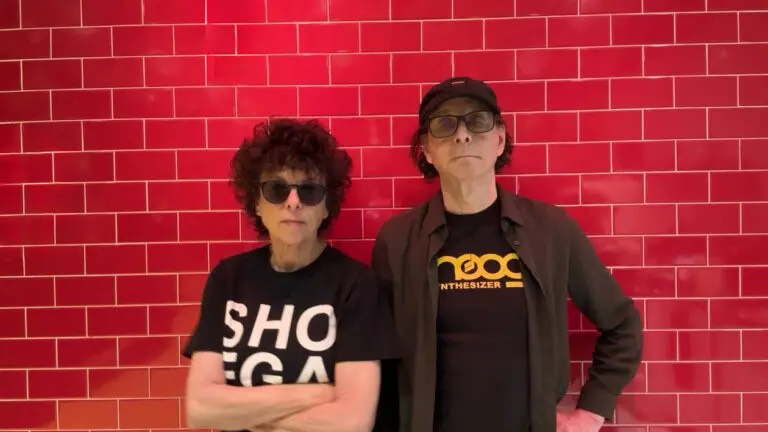
 「時代の流れに身を任せながらも、自分の原則を守ろうとする」というのが、マルカ・シュピーゲルが、過去数十年にわたって音楽と人生の道を歩む上で指針としてきた哲学を、自ら説明した言葉だ。イスラエル生まれで最初はベルギーを拠点とするポスト・パンクと実験的ポップ・バンド、ミニマル・コンパクトとして活動を始めた。
「君は本当に詩人だね」と、この時間の大半で冗談交じりに語ったのは、彼女のパートナーでイギリスのポスト・パンク時代の伝説のバンド、ワイアーのリード・ヴォーカル兼ソングライターとして名を馳せたコリン・ニューマンだ。
やりとりのなかで、行ったり来たりしながら互いの空白を埋めるように話し、どちらかが割って入って会話の流れを調整する。コラボレーションが基本という感覚こそが彼らの自然な会話の仕方の本質の一部であり、おそらくそれが、音楽家として長く継続できている協働の特性をも垣間見せているのかもしれない。


Immersion
Nanocluster Vol. 1


Immersion
Nanocluster Vol. 2


Immersion
Nanocluster Vol. 3

 1980年代にベルギーで出会ったふたりの、尽きることのない好奇心、新しい音に対する鋭いアンテナを張り巡らせること、そして他者の作品を吸収して共有したくてたまらない、スポンジのような吸収力と解放的な感性が組み合わさったことで、魅惑的で変わりやすいオルタナティヴ・ポップ・ミュージックの歴史に大きな影響を与える(同時に影響を受ける)存在となった。

 〈スウィム(Swim ~)〉レーベルの共同オーナーとして、Githead名義のバンドとして、ここ最近ではエレクトロニック・デュオ、イマージョン(Immersion/没入の意味)名義として『ナノクラスター(Nanocluster)』における複数の人と共働するスピーゲルとニューマンは、おそらくこれまでで一番活発な活動を展開している。今年のはじめ、彼らは『ナノクラスター』シリーズの第3弾をリリースし、イマージョンとしては、アメリカのアンビエント・カントリー・トリオのSUSSと共に砂漠と海、コンクリートと空を融合させた、ヒプノティックで本質的なテクノで宇宙的なコラージュを創り上げた。その一方、イマージョンのニュー・アルバム『WTF?』は時代精神を捉えたタイトルで、9月にリリース予定だ。

 下記は、昨年夏に『ナノクラスター』の「vol.2」「vol.3」のリリース期間中に実施した、スピーゲル(MS)とニューマン(CN)とのインタヴュ-の編集版である。

80年代半ばのブリュッセルに本物のシーンがあった。〈クラムド・ディスクス〉だけでなく、〈クレプスキュール〉もあり、両レーベルにたくさんの国際的なアーティストが集まって、結果的にブリュッセルに住むようになったりしていた。物価も安くてツアーもやりやすかったし。

この世界に入るきっかけは何だったと考えていますか?

マルカ・スピーゲル(以下、MS):知識も技術もない状態でも、とにかく人と集まって一緒になって演奏することから始まった気がします。それでも、クリエイティヴであることの力がどういうものなのかを感じることができたのが大きかった。そして私は‶一緒に居ること〟の力を感じ続けている。私たちが常にコラボレーションをするのはそのため。他の人と演奏すると音楽面だけでなく、人間関係においても魔法みたいなものを感じるから。

コリン・ニューマン(以下、CN):僕はマルカとはまったく違う世界から来ています。いわゆるハードコアからネオクラシカルまでの、ありとあらゆる音楽の領域で、合奏(アンサンブル)にはふたつのアプローチの仕方があると思う。ひとつは、誰かが何か書き留めたものを皆で演奏するタイプ。もう一方は、皆で部屋に集まってその場で一緒に何とかするタイプだとすると、僕は最初の方。ワイアーが、ジャミングが下手くそなのは、周知の事実! 「部屋で一緒に音楽を作ってみよう!」と言っても決して何もできあがらない。基本的な作品の構造と要素があれば、非常に良いものになる可能性はある。それに対して、マルカは完全に怖い物なしなんだ。彼女が文字通り演奏を始めると、その周りに必ず何かが見つかるという具合。僕たちが最初に出会ったのは1985年で、それからほぼ継続的に長い時間、一緒に仕事をしている。

あなたは、ミニマル・コンパクト(Minimal Compact)の5枚目のアルバムをプロデュースされましたね?

CN:そう、『レイジング・ソウルズ/Raising Souls』をね。

その頃、つまり1980年代初頭のベルギーの音楽シーンは、アクサク・マブールとザ・ハネムーン・キラーズのマーク・ホランダー(オランデル)が〈クラムド・ディスクス〉で活躍していた非常に興味深い時代だったようですね。

MS:そう、ある種のエネルギーがあった。レーベル周辺にはタキシードムーンやその他の多様な音楽があって、コリンは完全に魅了されていたと思う。彼は、ロンドンで公有地に不法滞在するような生活から、ブリュッセルに移ってイギリスよりも少し穏やかな人びとや美味しい食事に出会えた。

CN:そうなんだ。すごく気に入っていたよ。本物のシーンがあった。80年代半ばは常に魅力的な時代で、〈クラムド・ディスクス〉だけでなく、〈クレプスキュール〉もあり、両レーベルにたくさんの国際的なアーティストが集まって、結果的にブリュッセルに住むようになったりしていた。物価も安くてツアーもやりやすかったし。

MS:ロンドンはかなり厳しい場所だった! 私はロンドンに行き始めたばかりの頃にショックを受けたの。ものすごく貧しい感じがして。あなたがブリュッセルに惹かれた理由がわかった。誰かと恋に落ちた以外にもね……わかるでしょう?

CN:一目ぼれだったよ。

MS:楽しい場所だったけれど、(シーンが)衰退すると退屈なベルギーになってしまった。

CN:それは、ベルギーのシーンが心理的な境界線を越えてしまったからなんだ。フランドルとワロン地域はほとんど別の国とも言える場所で、シーンは〈R&S〉レコードがあったゲント(ヘント)に移ってしまい、そこがテクノ・シーンのすべてになった。突然、〈R&S〉と契約した国際的なアーティストたちが現れて、シーンを牽引するようになった。エイフェックス・ツインの最初のアルバムをリリースしたのも彼ら。〈ワープ〉レーベルが頭角を現して彼らの輝きを奪うまで、ゲントには強いシーンがあった。

MS:私たちが再びロンドンに興味を持ち始めたのもその頃だったね。

CN:たしかにね。ブリュッセルからゲントへの移住を考えるぐらいなら、ポーランドに移るのと変わらない。どちらにも同じ銀行、同じ店があるけど、言語もメンタリティも全然違う。それに、ロンドンはまさに、拡大し始めている時だった。

MS:私たちはいつも、物事が始まりそうな場所に惹かれる傾向があるね。

CN:僕は1986年にブリュッセルに移ったんだけど、僕たちがそこを離れたのは1992年になってからだった。その時、ロンドンではようやく電子音楽シーンが始まったところだった。

MS:そして私たちはレーベルを立ち上げて、多くの電子音楽のアーティストたちと知りったの。

CN:移住する前には、マルカのミニマル・コンパクトでの活動が下火になっていて、シンガーのサミー・バーンバッハの近所に住みながらあるプロジェクトに取り組んでいたんだけれど、進展しなかった。そしたら、マルカにソロ・アルバムの話が来たんだよね。でも、彼女は知らない雇われのミュージシャンたちとスタジオに入るのを嫌がり、自分たちのスタジオで、自分たち自身で作りたいと思った。

MS:それに、彼らは私たちの考え自体を理解してはくれなかった。その頃ちょうど、自分たちのスタジオを持つということをし始めたばかりだったから。今では普通のことなのにね。

CN:彼女は、‶もうやり始めたからには、最後までやり遂げたい。さっさとやってしまおう″と言ったんだ。ロンドンに引っ越す時には、ガレージをしっかりと録音ができる場所に改造してレコードを作ってから、リリースしてもらえるレーベルを探すつもりだった。持っていた僅かな金でガレージに防音を施して、新しいミキシング・コンソールを買い、レコードを完成させた。だけど、レコードを出してくれるレーベル探しには完全に失敗したんだ。そんななか、ミュート・レコード社長のダニエル・ミラーとミーティングをしたら、「ここまで全部を自分たちでやったのなら、自分たちで出せばいいのに。やり方はこうだ……」と、レーベルの運営方法を2時間かけて指導してもらった。そして突然、アルバムをリリースすることになった。

MS:(私たちの)典型的な回答ね! 質問に対して、もはやまったく別の話題になってしまっている……!

その後、ミニマル・コンパクトのサミー・バーンバッハと一緒に、オラクルという名でコンピレーションを制作して出した。2枚のレコードを出したところで、マルカが言ったんだ。「私たちはテクノ・レコードを作らなければ!」と。

これこそが私の理想のインタヴューの形ですよ。私がやるべきことが少なければ少ないほど良い!

CN:実は、僕たちがレコード会社を作ったことをマルカが認めるまでに一年かかったんだ。彼女にはそれがとても思い上がったことに思えたから! それでも僕たちはマルカの初のソロ・アルバムをリリースし、そこから利益を得ることができた。

MS:あの頃はいまよりもまだやり易い時代だったから。

CN:そして、人びとはもっと多く(音楽を)購入していた。その後、ミニマル・コンパクトのサミー・バーンバッハと一緒に、オラクル(Oracle)という名でコンピレーションを制作して出した。2枚のレコードを出したところで、マルカが言ったんだ。「私たちはテクノ・レコードを作らなければ!」と。

MS:私はそんなこと言っていないけど!

CN:いや、言ったよ!君はもっとインストゥルメンタルな曲を作るという想いにかられていた。そして、常に‶ミステリアス〟という言葉を好んでいたね。

MS:多分、そっちの方がより純粋だからだと思う。テクノには‶フロント〟というイメージがあまり無いところに惹かれたの。音楽の制作者がどこから来た、どういう人なのかは知らなくても、純粋な音楽だけがすべてだと思うようなところに。

CN:そうそう、『NME』では‶顔なしのテクノ・バカ(”faceless techno bollocks)″みたいにまとめられたけれど、それは‶ジャングル″のような言葉と同じで、最初はこき下ろしみたいな呼び方だけど、結局は受け入れられるんだ。‶顔なしのテクノ・バカ″なんて、素晴らしい発想だよね![編註:これはすぐにテクノの匿名性、音楽重視で作り手のルッキズムに依存しない態度を賛辞する言葉になった] 最初のイマージョンのレコードでは、僕たちはドイツ出身だと偽ってウィッグやマスクを着けて宣材写真を撮って、でたらめな偽名を使っていた。レコード会社としては、レコードをリリースするだけだから、それが誰によるものなのかは関係ない。それが最初のイマージョンのアルバム『オシレイティング/Oscillating』だった。

ほぼ同じ時期にリミックス・アルバムもリリースされましたよね?

MS:当時はほんとうに簡単だった。電子音楽のミュージシャンがたくさんいて、誰もがオープンで、「お願いできる?」と聞くと「もちろん、リミックスするよ!」という返事がもらえたものよ。

CN:それはロビン(ランボー、別名スキャナー)が始めたんだよね。バタシー・バークを歩いていた時、彼が「リミックスしてあげるよ!」と言ったんだ。我々も、いいね! という感じで。僕たちはそれが12インチ盤を出す口実になると思った。それで2枚分のリミックス・アルバムを作ったんだけど、2作目の頃には、テクノ界の少し有名なクロード・ヤングのようなアーティストがリミックスを手掛けてくれるようになって、それらのレコードが売れたんだ! まだレーベルを始める前の〈ファット・キャット〉がコヴェント・ガーデンにレコード店を持っていたから、少し多めに白盤を作って〈ファット・キャット〉に渡せば、彼らがトップDJたちに売ってくれていた。

MS:そうやって、自然と広がっていったの。あの自然な流れが好きだったな。今は、すべて業界の仕組みを通さなくてはならなくて、その罠から抜け出すのは不可能ね。

CN:それで、僕たちのそれまでの歴史とはまったく関係なく、ダンス・ミュージック界でクールな音楽を出すレーベルという評判を得たんだ。その次に、LFOのゲズ・ヴァーリーから連絡が来て、「いくつかのトラックがあるんだけど、ワープは全部が‵聴くための音楽′でないと出したくないと言っている。俺はダンスフロア向けの音楽をやりたいのに」と言うんだ。ちょうど息子のベンを迎えに行く車の中でそのカセットを聴いたんだけど、最初のトラック“クオ・ヴァディス/Quo Vadis”を聴いた瞬間にこれはポップ・ミュージックだと思ったね!

MS:彼はG-Manと名義を変えて12インチを出して、この曲は大成功を収めたし、今でもプレイされている。日本でのワイアーのライヴで、ある人がワイアーの出番の前に“クオ・ヴァディス”をプレイしていた。その人は、コリンとこの曲の繋がりを知らなかったと思うけど。聴いた瞬間に、「ワオ! まだプレイする人がいるんだ」と思った。

CN:まさにクラシックな、ダンスのできるミニマル・テクノとして、DJたちに愛されたよね。この頃には僕たちはもう恐ろしいほどの評判を得ていたんだけど、ひとつのスタイルに固執したくはなくて。そして、ドラムンベースが登場し、僕たちも夢中になった。テクノはある種、アメリカンな感じがしたけど、ドラムンベースはまさにロンドンの音楽で、70年代パンクのような興奮を覚えた。突然、信じられないほどのエネルギーの爆発が起きた。正直、90年代半ばのある時点では、もうドラムンベースさえあればいいという感じだった。自分たちでも少し作ったけれど、その後、ロニー&クライドという、ブレイクビートのより知的な側面に分け入って、違う領域に挑戦する人たちと仕事をするようになった。僕たちはもう少しダウンテンポ寄りの作品をいくつか出して、90年代後半にはポスト・ロックの渦に巻き込まれ始めた。僕たちは90年代をアンビエント・テクノから始めて、ポスト・ロックへとたどり着いた。その時の時流に乗ったということだ。レーベルをやるのであれば、常に現代的であり続けなければいけない。

いまの話を聞いて、あなたが先ほど話していたことを思い出しました。あなたは、ネオクラシックからその他のさまざまなジャンルへと続く音楽の糸のようなものについて話してくれましたが、それに名前は付けていないと言いました。実は私もそういったことをよく考えるのです。ジョン・ケージからブライアン・イーノが1970年代にやったこと、それからパンクの時代にもっとも興味深いバンドがやっていたことまで、線を引くことができるのではないかと。それは、クラシック・ロックの正典の枠組み外にある、並行歴史(パラレル・ヒストリー)のようなものではないかとね。

MS:ストリーミングが始まってからすべてが変わったのではないかな。音楽を届ける範囲や、仕組みそのものが変わったのでは?

CN:根本的に変わったのは、どこに力があるかということだと思う。例えば、90年代のインストゥルメンタル・ミュージックの台頭は、アーティストがアメリカやイギリス出身でなくても世界的に活躍できることを意味して、その変化はストリーミングの普及によって完成されたんだ。今ではその現象は‶グローカリズム(glocalism)〟と呼ばれていて、アーティストが自国で成功を収めながら世界中へと広げていくことができる。それと同時に業界は、完全に石化したかのような状態になって——僕が言っているのは、メジャー・レーベルや大手の独立系のことだけど——なんとか過去の体制にしがみつこうともがいている。権力の分散化は確実に起きていて、それをさらに加速化させる必要がある。

[[SplitPage]]

ドラムンベースが登場し、僕たちも夢中になった。テクノはある種、アメリカンな感じがしたけど、ドラムンベースはまさにロンドンの音楽で、70年代パンクのような興奮を覚えた。突然、信じられないほどのエネルギーの爆発が起きた。正直、90年代半ばのある時点では、もうドラムンベースさえあればいいという感じだ。

あなた方が一緒に働き始めた時、コラボレーションが重要になったと言っていましたね。年月を経て、それが大きく成長したように見えます。それはあきらかに、『ナノクラスター』の重要な要素のひとつですよね。

MS:それがすごく魅力的な領域なんです。長年音楽を作り続けていると、知らない人と一緒に働くこともあって、そんな時には自分の安全地帯から押し出されるようなことも起きてくる。どこか違う場所で、他の人たちのやり方に挑戦すると、視野が広がって、多くの選択肢を与えられるの。すべてのコラボレーションが私たちを新たな場所へと連れて行ってくれる。

CN:2000年代になると、ワイアーが再び始動して、それと並行してGitheadというバンドのプロジェクトにも取り組んでいた。10年前には、ブライトンに移住したんだけど、そこでまたイマージョンも復活させることにしたんだ。機材がかなりシンプルで、ただ一緒にギグをするだけでよかったから。イマージョンの前のアルバム『ロウ・インパクト/Low Impact』は1999年のリリースで、その次のレコードは2016年だった。長い間隔が空いてしまったけど、それが僕たちに自由に活動する空間を与えてくれた。それでアルバムを制作して最初は2枚の10インチ盤として発売し、後にCDに編集した――まるで島に住むアナログな生き物みたいなイメージで。実際にそれがタイトルになったんだけど(EP『アナログ・クリーチャーズ/Analogue Creatures』と『リヴィング・オン・アン・アイランド/Living On An Island』 をまとめたアルバム、『アナログ・クリーチャーズ・リヴィング・オン・アン・アイランド』)。実は僕たちがすでにその時、ブレグジットによる疎外感を感じ始めていたのがタイトルに表れているんだ。

今日の取材の前にその曲を聴いていて、そのことに強く感じ入りました。『リヴィング・オン・アン・アイランド』というタイトルと2016という年を見て「ああ、自分もその感覚を知っている!」と思ったんです。

MS:ブレグジットの投票時には、私たちは島に居て、あらゆるものから隔絶されているという強い感覚を覚えたの。

CN:僕たちは海辺に住んでいるしね。

MS:そう。そしてそれがある種の希望と楽観主義を同時にもたらしてもくれる。

CN:いくつかライヴやフェスティヴァルにも出演したけれど、大きな動きはなかったね。
でもブライトン在住の知人が、「ブライトンに居るなら、自分たちの手でシーンを作る必要がある」と言ったんだ。現地の音楽シーンは結構分断されているからね。

MS:ミュージシャンもすごく多いから!

CN:すごく多い! それで僕たちは、「それはどういう意味だろう? どうやったらシーンを生み出すことができるのか? クラブでイベントを企画してもいいけど、他の人とどうやって差別化できるんだろう? そうだ、コラボレーションの要素を入れてみよう」と思いついた。僕たちはターウォーター(Tarwater)とはベルリンのシーンの初期から何年も知り合いだったし、会場をみつけて、ターウォーターとイマージョンがコラボレートするイベントを企画しようということになった。彼らが数日間、僕たちの所に泊まり込んで一緒に曲を作ればよいと考えた。そして、それが上手くいったんだ。

MS:リハーサル中にもスタジオで録音ができたから、基礎となる録音を残すことができたしね。

CN:ザ・ローズ・ヒルという公共の、110人ぐらいのキャパの小さな会場でやったんだよね。ちゃんとしたお客さんで埋めるのも簡単な規模の。

これは、実はワイアーのブルース・ギルバートが人生と芸術について語った大事な声明のひとつ、「文脈がすべてだ(Context is all).」から来ている。僕はいわゆるビッグ・ボーイ・プロダクションと言われるものを常に嫌ってきた。レコードを聴いて、その背後に関わった‶プロデューサー″のエゴが透けて見えるような自己主張の強いもののことだ。

コラボレーションはどのような感じでやるのでしょう? 即興することもあるんでしょうか? それとも事前の準備の方が多めですか?

MS:まず私たちがアーティストにアプローチして、「私たちの方から3つの基本的なアイディアを送るから、あなたの3つの基本の考えを返送してください。何か思いついたものをそこに乗せてみてほしい」と言う。それを基に、あまりやり過ぎない程度に構築していく。それから相手と一緒になって完成を目指すの。毎回違うやり方にはなるけれど、それが基本的な構造かな。全然即興ではないけれど、完成度をそこまで高くしないから「うまく行くだろうか?」とか「良いライヴができるだろうか?」というような多少の緊張感もある。

CN:次に思いついたコラボレーションの相手がレティシア・サディールだった。‶クラウトロック・カラオケ″というものがあってね。

MS:ロンドンに長年住んでいる、日本から来た人が企画している、違うバンドの人達が集まってクラウトロックのヴァージョンを弾くという一夜があって、それが楽しいの!

CN:それをレティシア・サディールと一緒にやったんだけど、彼女はギター演奏の能力だけでなく、すべてのパートを覚えて参加したんだ。僕たちはそんなことをしたことがなかったんだけど! それを見て、彼女に『ナノクラスター』の話を持ちかけたら、セットをやってくれるのではないかと思った。

MS:彼女が私たちの所にやって来て滞在し、一緒に題材に取り組んで。そう、とても良かったわ。

CN:僕たちは多くの素晴らしい人たちを知っているけど、そのうちの何人かは僕たちがその人たちのファンであるという理由からなんだ。ウルリッヒ・シュナウスが宇宙で一番の音楽を作っていた時もあったし、他にもロビン・ランボー、スキャナー、勿論Githeadのね。彼のことももう何年も知っているよ。

MS:それ以来、私たちはますます幅広い分野でコラボを続け、紙の上では機能しそうもない奇抜なアイディアを次々と生み出してきたの。

CN:そこへ突然パンデミックが襲い、2020年5月に僕たちは4つのコラボレーション企画以外はまったくすることがなかったから、「アルバムを完成させよう」と決めた。実はこれは難しい決断だった。というのも、マルカと僕はそれまで一度もアルバムのミキシングをやったことがなかったから。まさに目から鱗が落ちるような経験だった。僕の感覚では、それが当時、僕たちのスタジオから生まれた作品のなかでも最高のミックスのレコードになったんだ。すべてをコラボレーションして制作したからだと思う。

MS:ある意味、ラジオからも影響を受けていたよね。異なるジャンルの曲をたくさん聴くと、音の組み合わせ方など、無意識に影響を受けていたと思う。

CN:その通りだね。それを2021年にリリースして、批評家からはある程度の高評価を得たけれど、パンデミックの最中にはプロモーションは何もできなかった。ライヴもすでに終わっていたので、ツアーを組むのも難しい状況だった。どちらにしても、2021年から22年にかけて、ツアーを検討したミュージシャンは、自分たちで主催するしかなかったし。

パンデミックの状況において、アルバムで他のアーティストたちとはどのように協力して制作できたんですか?

CN:すべてを事前に録音していた。

MS:リハーサルをしながら録音し、それを制作の基盤としたの。現在では、彼らが送ってくれる素材で仕事をしているけれど、次回作のコラボレーション(2025年のSUSSとの『ナノクラスターVol.3』)では、物理的な空間での作業はしないと思う。状況次第だけどね。スタジオ・ワークを完成させるには、互いにパーツを送り合うか、物理的に人が集まるかのどちらかの方法がある。

それは、プロジェクトの進化の一環ですね。始めた頃にはブライトン在住のミュージシャンたちや、移動が容易な人たち中心だったのが、より広範にアーティストを探し始めると、プロセス自体も変わってくる。

CN:まさに。最初の作品をリリースした後、「次のレイヤーに行くにはどうすればよいか」を考えた。多くの人と話をしたけど、誰もブライトンには居なかったし、パンデミック後というのは、誰もが自分のキャリアに集中していた時期だった。僕たちと仕事をするのは贅沢だと思われる可能性もあったから、何か別の方法はないかと考えた。僕たちの知り合いにサウス・バイ・サウスウェストの主なオーガナイザーのひとりであるジェイムズ・マイナーがいたので、そこで何かをやってみようと思った。

MS:それは結構怖いことだった。というのも、オースティンまで遠征して、現地の人たちと音楽を作らなければならなかったから。どうやってやろう?と。その時、リストにソー(Thor)・ハリスの名前を見つけたの。彼はその土地の人で、パーカッションを演奏するので、一緒に何かを創りやすいのではないかと思った。

CN:彼はかなりアメリカのミニマリスト・シーンの核心にいる人物だし。

MS:そして、生まれつきコラボレーションの才能のある人。

CN:ソーは、実に乗り気きだったね。事前に素材を交換したので現場に着いたらすでに基盤となるものもあった。結局、彼の家でリハーサルをすることになった――彼はただ優秀な音楽家であるだけでなく、大工、配管工、便利屋としても何でもござれの職人で、素晴らしい社会的良心も持ち合わせているんだ。

MS:彼は素晴らしい人物だった。彼の自宅で仕事ができたのは良い経験だった。オースティンでは誰もが知る人物。

CN:実際のパフォーマンスでは、ちょっとした試練のようだった。というのも、結局、ホテル・ヴェガスで演奏することになり、半分暗がりの、そこら中、酔っぱらいだらけのなかで、テーブルの上に機材を設置しなければなかったから。

MS:それがコラボレーションの良いところ。それぞれの異なる経験が、いつもなら行かないような場所にまで連れて行ってくれるので、かなりの中毒性がある。私たちは人と一緒に音楽を作ることが大好きだし、他の人の世界に引き込まれるのも特別なことだから。

それが、リスナーとして『ナノクラスター』のアルバムを聴くときに興味深い点のひとつです。音楽的な個性が互いに溶け合っていくかのような感覚なんです。多くの人が関わっていて、各盤面やディスクごとにコラボレーターが違うのに、常に一貫した雰囲気が漂ってくるからです。あなたたちがワイヤーとの作業について説明してくれたのとは対照的ですね。ワイアーでは各人の役割が明確に分けられ、決まっていたという。

MS:コラボレーターが違っていても、音に一貫した豊かさがあると言う声をよくもらいます。

CN:それはおそらく、最終的なミックスのやり方も影響しているだろうね。

MS:でも、それだけではないわ。私たちはそこに人間同士の繋がりを持ち込むから。いつも、最後には友情関係になって終わることが多いよね。

CN:僕たちは、一緒に仕事をする人の空間を作ろうと努めるけれど、文脈を設定した上でそうする。これは、実はワイアーのブルース・ギルバートが人生と芸術について語った大事な声明のひとつ、「文脈がすべてだ(Context is all).」から来ている。僕はいわゆるビッグ・ボーイ・プロダクションと言われるものを常に嫌ってきた。レコードを聴いて、その背後に関わった‶プロデューサー″のエゴが透けて見えるような自己主張の強いもののことだ。制作に関わるのであれば、その音楽とそれを聴く人の間の障壁を取り除くべきだ。リスナーがその音楽のなかに何があるのかを容易に聴けるようにするべきだと思う。自分や他の関係者を良く見せよう、聴かせようとすることではなく、全体が大事なんだ。

レーベル名をSwim(泳ぐ)にしたのはなぜですか?

MS:だめ(笑)? 私たちはいつも響きの良い名前を探しているんだけど。多分、私たちがいつも異なる人びとの世界の間に軽やかに浮かんでいるからかも。でも、ほんとうはよくわからない。それは後からついて来るものだと思う。この名前を聞いて、あなたは何を思い浮かべますか?

私はブライアン・イーノのことを思い出しました。彼の音楽では水が繰り返し登場するテーマで、イマージョンで聴く音にもどこか似たものを感じます。あなた方は、どちらも他のバンドではシンガーとして知られていますが、ここでは多くの曲でヴォーカルを削ぎ落しています。だから、ポップスターやロックスターのエゴを排除して、他の可能性が生まれる流動的な空間を探しているように聴こえます。

MS:私たちは、『ウォーター・コミュニケーション/Water Communication』というコンピレーションも出したし、水は繰り返し現れるテーマなの。そして今は、海辺に住んでいるし。

CN:これは、ある意味、『ナノクラスターVol.2』のもうひとつのコラボレーションであるジャック(ウォルター、別名カブゾア Cubzoa)に引き戻される。2021年頃だったと思うけれど、皆が再びライヴを開催するようになり、僕たちはザ・ローズ・ヒルに行ってカブゾアに真に感銘を受けたんだ。

MS:彼は私たちに曲を送ってくれるようになったんだけど、曲というのは完成されたものなので、最初はどうしたらよいのかと戸惑った。通常は、もっと基本的なところから始めるから。でもとても興味深い挑戦になったし、すごく良い作品に仕上がったと思う。

「いまのバンドは大変なのよね。そうせざるを得ないんだから」「ほんとうにそう! パンデミック以降、業界はミュージシャンに圧力をかけている」

CN:さらにもうひとつ、これまでの『ナノクラスター』ではやったことのないことをしたんだ。それは、素材をどんどん出し合うことだった。最初は素材が足りていなかったから。結果、かなり素晴らしい成功に繋がった。彼の曲とはかなり違うものになったんだ。

MS:彼が一緒に居るとほんとうに良い人なので助かったわ。人間性は非常に重要だから。

前回の作品では、4人のアーティストが参加してそれぞれが10インチの片面を担当されましたが、2作目ではふたりとなり、各ディスクにひとりのアーティストが参加した形になっていますね。

MS:それは事前に決めたことではなかったけど、作業を進めるうちに素材が十分そろったことに気付いたの。今後はもしかしたら、コラボレーションはひとつだけになるかもしれない(注:実際、『ナノクラスターVol.3』では、SUSSのみとのコラボになった)。

CN:ルールを設けてはいないよね。ただ、僕たちはダブル10インチ(2枚組の10インチ盤)が好きで。この着想は、完全に実用面でのふたつの理由から生まれた。ひとつ目は、最初のアルバムを製造した際、12インチのヴァイナルをプレスするのに数か月かかったのに、10インチならずっと早く作れたということがあった。また、最初のアルバムには4つのまったく異なるプロジェクトが含まれていた。だから‶それぞれに専用の面があれば、それが自然な仕切りになる″と考えた。

MS:アーティストにとってもより興味深くなるしね。

CN:そう。それぞれが独立した作品になればね。当然のようにデジタル配信では、別々のEPとしてもリリースされているし、ストリーミングでは、短い長さのリリースがトレンドになっているようだ。例えば、20曲入りのアルバムをリリースしても、注目されるのは1、2曲だけで、残りは無視されてしまう。ストリーミングでは聴く人の注意力が極端に短いから。別々のEPにすることで、異なる人たちがそれぞれ別のアーティストに集中できると思った。でも実際には、媒体によるということなんだけど。

そして2作目では、各アーティストがより広い範囲でプレイする余地が得られると、EPのような短いフォーマットではなく、違う方向性になる気がします。

MS:そうかも。各アーティストがより多くの表現で貢献できるようになることが重要。

現在のあなた方の作品に共通するテーマのひとつは、独立した所有権の尊重のように感じます。ワイアーの場合も、バンドがカタログの大部分を所有しているというのは事実でしょうか?

CN:僕たちは80年代の作品は所有しておらず、70年代、80年代の出版権も持っていないけれど、70年代作品のマスターテープは保持していて、2000年以降の作品のすべても持っている。〈スウィム〉からリリースしたアーティストの一部は、自分たちで権利を買い戻していて、他のアーティストは特に気にしていないようだけれど、僕たちは喜んで権利を返還するつもりなんだ。他の人の音楽に執着する必要はない。

MS:あなたの場合は、所有権を持つことがとても重要だと思う。だって、大手レーベルが持つ影響力というものに嫌というほど、気付かされたんだから……

CN:僕たちにとっては、個人的にかなり大きな違いになったよね……。勿論、僕は非常に恵まれた立場で話しているわけだけど。つまり、70年代のワイアーの素材が何世代にもわたって受け入れられてきたから。それは70年代にリリースされた当時の人たちだけでなく、世代を超えて受け継がれて若い人にまで響いている、決して静かではないダイナミックな現象なんだ。さらにストリーミングの数字から判断すると、リスナーは減少するどころか、増加している。自らでマスターの権利を所有し、収益の大部分をバンドに還元できると、生計を立てるための基盤ができる。もしもオリジナル・メンバーと同世代の人たちが公務員になっていれば、はるかに多くの収入を得ていただろう。だけど、60代、70代、80代のミュージシャンのなかには、生活に苦労している人も多い。ツアーに出なければ家賃を払えないから、過酷な条件でツアーを続けるしかないんだ。

MS:でも、私たちが一緒に作るものをすべて所有していることには、メリットとデメリットの両方がある。外部レーベルのように、作品をより広めるような力はないから。

CN:お金がかかるからね。宣伝費や製造費、その他すべてに費用がかかる。だけど、例えばすでにやっているコラボレーションのひとつは、ブライトンを拠点とするバンド、ホリディ・ゴースツというサムとカットのカップルで、僕たちとも仲が良い。彼は30代前半で、ツアーのブッキング方法まで良く知っているんだ。僕の世代のミュージシャンは、ツアーのブッキングの仕方などまったく知らないと思う。

MS:いまのバンドは大変なのよね。そうせざるを得ないんだから。

CN:ほんとうにそう! パンデミック以降、業界はミュージシャンに圧力をかけている。

日本でも似たような状況だと感じます。あの数年で、何かが急激に加速した、‶それ以前とそれ以後″があるんです。若手のミュージシャンたちが、まるで優秀なビジネスマンのように見えるのはある意味で尊敬に値するけど、彼らがそうせざるを得ないことに同情してしまいます。

MS:そうよね。ミュージシャンとして、ただ音楽を追求する自由は、素晴らしい以外の何ものでもない。

(了)

[[SplitPage]]

“I think you swim with the times, but you try to hold onto your own principles,” is how Malka Spigel describes the philosophy that’s guided her path through music and life over the past several decades — initially with Israeli-born, Belgian-based post-punk and experimental pop band Minimal Compact.

“You’re such a poet,” jokes her partner through the greater part of that time, Colin Newman, who made his name as the lead vocalist and songwriter of UK post-punk legends Wire.

A sense of back-and-forth, of each filling the gaps left by the other, of one stepping in and adjusting the flow of the conversation — of collaboration, essentially — is a natural part of the way they talk, and perhaps offers a window into the nature of their long-lasting collaboration as musicians too.

The pair met in Belgium in the 1980s and a combination of endless shared curiosity, a finely honed antenna for new sounds, and a porous, open sensibility to both absorb and eagerly share other people’s work has seen them leave their in fluence on (and be influenced by) by a fascinating and fluid alternative history of popular music.

Working together as co-owners of the Swim~ label, in the band Githead, as the electronic duo Immersion and most recently with a series of collaborators in the Nanocluster live and recording project, Spigel and Newman are perhaps more active than they’ve ever been. Earlier this year, they released the third of their Nanocluster series in collaboration, Immersion merging with US ambient-country trio SUSS to create a hypnotic, techno-organic, shifting kosmische collage of desert and sea, concrete and sky. Meanwhile, Immersion’s new album, under the zeitgeist-grabbing title “WTF?”, is set for release in September.

The following interview is an edited version of a conversation with Spigel (MS) and Newman (CN) last summer in the period between the second and third Nanocluster releases.

__________

IM : What do you think was your starting point that got you on this train?

MS: I think just getting together with people and playing together without any knowledge and technical ability, but feeling already the power of what it’s like to be creative. But also the togetherness, for me is the power that always stays there. That’s why we always collaborate: there’s some kind of magic when you play with other people, not only on the music side but on the human side.

CN: I come from a very different world from Malka. I mean, within whatever you call this whole gamut of music that runs from hardcore to neoclassical or whatever, there seem to be two approaches among ensembles. One is somebody writes something and the ensemble plays it, or the ensemble stand in a room and figure it out together. I come from the first approach. Wire is famously rubbish at jamming! If you’d said, “Let’s stand in a room and figure out some music together,” that’s never happened. If you have a basic structure and some compositional elements that are going in there, then it can be very, very good. Whereas Malka is completely fearless: she will literally just start playing and you kind of find things that go around what she’s playing. We first met in 85, so that’s a long period of pretty much continual working together.

IM : You produced maybe the fifth Minimal Compact album, right?

CN: Yeah, “Raging Souls”.

IM : That looks like a very interesting period for music in Belgium in the early 80s, with the Crammed Discs label and Marc Hollander from Aksak Maboul and The Honeymoon Killers.

MS: Yeah, there was some kind of energy. There was Tuxedomoon and other kinds of music around the label, and I think Colin was pretty much charmed by the whole thing. He came from living in a squat in London into Brussels, and the nice food and people who are kind of softer than in the UK.

CN: Yeah, I loved it. It was a real scene. And that period around the mid-80s was a really fascinating time. It wasn’t just Crammed Discs, there was Crépuscule, and both labels had a lot of international artists who ended up living in Brussels because it was cheap and good for touring.

MS: And London was a pretty harsh place! I was a bit shocked when I started going to London! It felt pretty poor. I could see why you were charmed with Brussels. Apart from falling in love with… you know!

CN: It was love at first sight.

MS: It was a fun place, but when it died off, it just became boring Belgium.

CN: What happened was the scene in Belgium crossed the psychological border. Flanders and Wallonia are almost two separate countries, and the scene moved to Ghent because that’s where R&S Records were based, and that was the whole techno scene was. Suddenly there were all these international artists signed to R&S and they were leading the pack. I mean, they put out the first Aphex Twin albums. Until Warp came and stole their thunder, there was a strong scene in Ghent.

MS: That’s also when we started getting more interested in London again.

CN: That’s true, if you’re in Brussels and you’re thinking about moving to Ghent, you might as well be moving to Poland. You have the same banks and same shops, but you have a totally different language and an entirely different mentality. And London was just starting to expand.

MS: We always feel attracted to places where things kind of start.

CN: I moved to Brussels in 1986 and we finally left in ’92, and at that point, the electronic scene was just starting in London.

MS: And started a label, and started to get to know more electronic music artists.

CN: Before we left, Malka’s time with Minimal Compact had sort of fizzled out, and we lived around the corner from the singer, Samy Birnbach, and sort of worked on a project that didn’t go anywhere. Then Malka got the offer to do a solo album, but she didn’t want to go into the studio with a bunch of hired musicians. We wanted to make it ourselves in our own studio.

MS: And they just didn’t get the concept. It was the beginning of people owning their own studios, and now it’s so common.

CN: She said, “Well I’ve already started on it. I want to finish it. Let’s just do it.” We moved to London with the idea that we could convert our garage into a proper space for recording, then make that record and figure out if we could find someone to release it. We took the little money we had, soundproofed the garage, bought a new mixing board and set to work on finishing the record. Then totally failed to find a label for it, but I had a meeting with (Mute Records boss) Daniel Miller and he said, “You’ve done it all yourselves, so why don’t you just release it yourselves as well? This is what you do…” So I had like a two-hour instruction about how to run a label. And suddenly we were releasing an album.

MS: Typical answer! He asked a question and now we’re a million miles away!

IM : This is my ideal interview. The less work I have to do, the better!

CN: It took Malka a year to actually admit that we had a record company. She thought it was well pretentious! But we put out Malka’s first solo album, and we made some money out of it!

MS: It was easier in those days.

CN: And people bought more. And after that we put out a compilation of the material we’d worked on with Sami Birnbach from Minimal Compact, under the name Oracle. So we’d released two records and then Malka said, “We have to make a techno record!”

MS: I never said that!

CN: Yes you did! You were very much into the idea that we had to make something more instrumental. You always liked the word “mysterious”.

MS: I guess it’s more pure. I always felt attracted with techno to how it doesn’t have too much of a “front image”. The people making the music, we don’t know where they come from, it’s all about the purity of music.

CN: Yeah, summed up in the NME with the phrase “faceless techno bollocks”, which rather like all those other words, like “jungle”, which starts off as a put-down but you sort of embrace it: “faceless techno bollocks”, what a brilliant idea! With the first Immersion record, we just pretended to be from Germany and we had publicity photos with wigs and masks, we had made-up names. If you’re a record company, you just release records: they could be by anybody. That was the first Immersion album, “Oscillating”.

IM : You also put out a remix album at almost the same time, didn’t you?

MS: It was really easy at the time. There were lots of electronic musicians, people were open, you’d ask someone, “Yeah, I’ll do you a remix!”

CN: It was Robin (Rimbaud, a.k.a. Scanner) that started it. We were walking in Battersea Park and he said, “I’ll do you a remix!” Oh, alright! Then we thought that would be an excuse to put out twelve-inches. We did two volumes of remixes and by the second one, we were getting slightly bigger names in the techno world doing remixes for us, like Claude Young, and those records were selling! Fat Cat Records had a shop in Covent Garden, and basically you’d manufacture some extra white labels, give them to Fat Cat, and they would sell them to all the top DJs.

MS: So it kind of spread naturally. I like the way it was so organic. Now everything goes through the industry and it’s impossible to break out of that kind of trap.

CN: And we started to have a reputation within dance music that was nothing to do with our history, just as this label that puts out cool music. The next thing that happened was that Gez Varley from LFO got in contact with us and he said, “I’ve got these tracks and Warp don’t want to put it out because they want to be all ‘listening music’ and I want to to do dancefloor.” And I remember listening to his cassette while going to pick up our son Ben from school in the car, listening to the first track, “Quo Vadis”, and I just thought, “This is pop music!”

MS: He called himself G-Man. And we did really well with it. I mean, people still play “Quo Vadis”. I heard it in Japan, when Wire played a gig and there was someone playing earlier, I don’t think he connected you with the track, but he played “Quo Vadis” and I thought, “Wow! People are still playing it!”

CN: It’s just an absolutely classic bit of danceable minimal techno and DJs loved it. So by this point we had a fearsome reputation but didn’t want to stick in one style. And then drum’n’bass happened. We were biiiiig on drum’n’bass. Techno was sort of American, but drum’n’bass was just London music, and it was kind of exciting like the 70s punk thing: suddenly you have this unbelievable explosion of energy. There was a point in the mid-90s when, to be honest, drum’n’bass was the only music that you needed. We made a little bit of it ourselves, but then we started working with Ronnie & Clyde, who were sort of the more intellectual side of breakbeat or pushing into a different kind of area. We put out some other stuff that was kind of more downtempo, and then towards the end of the 90s, we started to get involved in the whole post-rock thing. We charted a course through the 90s, starting with ambient techno and ended up with post-rock. It was all about what was going on: if you’re a label, you’ve got to be contemporary.

IM : It reminds me of something you said earlier. You talked about this thread of music that runs from neoclassical through all these other things, and you didn’t have a name for it. But it’s something I often think about: that there’s a line you could draw through stuff like John Cage, through what Brian Eno was doing in the 1970s and what a lot of the most interesting bands of the punk era were doing. It’s like a parallel history outside that classic rock canon.

MS: Didn’t everything change because of streaming. It changed how far it can reach and how it works.

CN: I think the fundamental change is in where the power lies. For example, the rise of instrumental music in the 90s meant that artists didn’t have to be from America or the UK to be international artists, and that thing has really been completed now with streaming, where you have what they call “glocalism”, where artists can do really well in their territory and spread out. At the same time, the industry is absolutely petrified and they’re doing everything they can to hang on — I’m talking about the major labels and the large independents — to the way it was. There’s definitely been a devolution of power and that has to be accelerated.

IM : You said that collaboration is something that became important when you started working together, and it seems like that’s grown a lot over they years. It’s obviously a big part of what Nanocluster is.

MS: It’s a fascinating area, because after so many years of making music, you get pushed out of your comfort zone because you’re working with a person you might not even know very well. So to kind of find yourself somewhere else and to try to go towards what they do, it opens you up and gives you ways forward with more options. Every collaboration takes us somewhere else.

CN: Wire happened again through the 00s, we had a parallel project, Githead, which was also a band, and we moved to Brighton ten years ago. We made a decision when we got to Brighton that we would reactivate Immersion because the equipment was quite modest and we could just play gigs together. Immersion’s last album (“Low Impact”) had come out in 1999 and the next one came out in 2016. It’s a long time between records, but that offered us a space to just get on and do stuff, so we did an album, which we initially released as two 10-inches and then compiled onto a CD — like analogue creatures living on an island, which was actually the title (the EPs “Analogue Creatures” and “Living On An Island” which were compiled into the album “Analogue Creatures Living On An Island”). So we were already starting to feel the alienation of Brexit in that title.

IM : I was listening to that earlier today and that struck me. I saw “Living On An Island”, then the date 2016 and thought, “Oh yeah, I know that feeling!”

MS: There was a really strong feeling at the time of the Brexit vote that we’re on an island, kind of separate from everything.

CN: And we live next to the sea, too.

MS: Yeah, which gives you a kind of hope and optimism at the same time.

CN: We did a few gigs, maybe a couple of festivals, but there wasn’t a lot going on with it. But someone we knew in Brighton had told us, “If you’re in Brighton, you need to create your own scene.” It can be quite divided-up.

MS: There’s LOTS of musicians!

CN: Lots of musicians! So we thought, “Well what does that mean? How can we create a scene? Let’s create a night in a club, but how can we make that different to anybody else’s? Well let’s have a collaborative element in it.” We’d known Tarwater for absolutely years, right from the early days of the Berlin scene, and we thought, “We’ll find a venue, do Tarwater and Immersion collaborating together. They can stay with us for a couple of days, we can work out the pieces together.” And it worked.

MS: And we could record it in our studio while we were rehearsing, so we had a basic recording of it.

CN: We did it at The Rose Hill, which is a small community venue that holds about 110 people — easy to fill it up with the right thing.

IM : How does the collaboration come about? Is there improvisation, or more prior preparation?

MS: We approach the artist and say, “We’ll send you three very basic ideas, you send us three basic ideas: try and put something on it that you come up with.” And we kind of build it, but not too far. Then we get together and sort of complete it in a way. It’s different every time, but that’s the basic structure. It’s not improvisation at all, but it’s not so complete that there isn’t a kind of tension about “Is it going to work? Is it going to be good live?”

CN: The next person we thought of was Laetitia Sadier. There’s something called “Krautrock Karaoke”.

MS: It’s someone from Japan who’s been living in London for a long time, and he’s been organising nights where people from different bands get together and play a version of krautrock. It’s fun!

CN: We did one with Laetitia Sadier. She came with not only the competence of her guitar playing: she’d actually learned all the parts, which is more than we’d ever done! It was amazing. So we thought maybe if we ask her, she’ll do a Nanocluster set.

MS: And she came over, stayed here, worked on material, and yeah, it was good.

CN: We know a lot of people, some of them just because we’re fans. There was a point when Ulrich Schnauss was making some of the best music on the planet, and then Robin Rimbaud, Scanner, of course who was in Githead. We’ve known him for years.

MS: And since then, we’ve been collaborating further and further afield and come up with more weird ideas that maybe shouldn’t work on paper.

CN: And then suddenly the pandemic hit, it was May 2020, we had these four collaborations, absolutely nothing else to do, so we thought, “Let’s finish the record.” And that was a difficult decision because Malka and I had never worked on mixing an album before. It was a real eye-opener: it was at that point the best mixed record that had come out of our studio, in my opinion, and it was because we were doing everything as a collaboration.

MS: It was kind of influenced by the radio show as well. When we play a lot of songs from different genres, we hear sounds, how things are put together, and it does unconsciously influence how we work.

CN: Absolutely. So we put that out in 2021, to some critical acclaim but in the middle of a pandemic you can’t do anything about promoting it much. All the gigs had been done already, so a bit difficult to tour it. And anyway, if any musicians in 2021-2022 were thinking about touring, they were thinking about touring themselves.

IM : Given the pandemic situation, how were you able to work together with the artists on the album?

CN: Everything was recorded beforehand.

MS: So while we rehearse, we record, and that becomes the base to work on. Now we’re working on stuff that they send us, and I don’t think something physical, in a room, is going to happen for this next collaboration (2025’s “Nanocluster vol. 3” with SUSS). So it depends. There’s always a way to finish studio work, whether we send parts to each other or peeople are physically here.

IM : This is also part of the way the project has evolved, by the sound of it. When you started, it was musicians in Brighton or who could travel easily, but as you start looking further afield for artists to work with, maybe that changes the process.

CN: Absolutely. What happened was that we put the first one out and then we thought “How do we move that on to the next layer?” Because we’d spoken to a lot of people but none of them were in Brighton, and the post-pandemic period was one when people were very much looking at their own careers. Doing stuff with us could be seen as a luxury. So we thought, “How can we do this another way?” We know quite well one of the main organisers of South By Southwest, James Minor, and we thought, “OK, why don’t we do something there?”

MS: It was quite scary because we have to travel to Austin and somehow create music with someone already there, so how do you do it? Then we saw Thor Harris on the list: he’s local, he plays percussion and seemed like it might be easy to make something together.

CN: And he’s very much in the American minimalist world.

MS: And he’s a natural collaborator.

CN: Thor was really up for it, we exchanged some material so we had something to build on when we got there. We ended up rehearsing in his house — the house that he built himself because he’s not only a very competent musician: he’s also a very competent carpenter, plumber and odd-job man, who also has this amazing social conscience.

MS: He’s an amazing guy. It was a great experience to work in his house. Everybody knows him in Austin.

CN: It was a bit of a baptism of fire in terms of the actual performance. We ended up playing at Hotel Vegas. We had to set up a table with all our gear on, in semi-darkness with drunk people falling all over us.

MS: It’s the beauty of the collaboration: each experience is different and each experience takes you somewhere you wouldn’t otherwise be. That feeling is quite addictive because we love making music together but to be pulled into someone else’s world as well is special.

IM : That’s one of the things that I find interesting, hearing the Nanocluster albums as a listener: it’s the feeling of all the musical egos dissolving into each other. Even though there’s a lot of people involved and the collaborator is switching with each side of the record or each disc, quite a coherent atmosphere comes out of it. The opposite of how you described working with Wire where each person’s role is very clearly fixed and separated.

MS: We do hear from people that even though there’s different collaborators, there’s a fullness to the sound.

CN: I guess that’s also how we mix it in the end.

MS: But not only that: we bring something human-wise where we connect with the person. It’s always ended up being a friendship.

CN: I mean we try to create a space for the person but we set a context. That’s actually one of Bruce Gilbert from Wire’s big statements about life and art: “Context is all.” I always hate what I call “big boy production” where you hear a record and you know there’s been a “producer” involved because it’s got that ego about it. If you’re working on production, you should be taking away the barrier between the music and the person listening to it: you should make it easy for the person to hear what’s in the music. It’s not about making yourself sound good, or about making this other person sound good: it’s about the whole thing.

IM : Why did you choose the name Swim~ for the label?

MS: Why not? (Laughs) I mean we always look for good sounding names. I suppose we always float easily between the worlds of different people. I don’t know, though. That’s something that comes after the fact. What do you think when you hear the name?

IM : It reminds me of Brian Eno. Water is such a recurring theme in his music, and I felt he does something a little similar to what I hear in Immersion. You’re both musicians who are known as singers in your other bands, but here you’ve stripped away the vocals in a lot of it. So it’s like taking away the pop star or rock star ego and finding some more fluid space where other things could happen.

MS: We had a compilation called Water Communication, so water seems to be a theme that keeps coming back. And now we live by the sea.

CN: This kind of brings us back to Jack (Wolter, a.k.a. Cubzoa), the other collaboration on Nanocluster Volume 2. I think it was back in 2021, when people were starting to have gigs again, and we went to The Rose Hill and we were really impressed by Cubzoa.

MS: He ended up sending us songs, and we thought, “What are we going to do?” because songs are quite complete things. Normally we start from something more basic, but it was an interesting challenge and I think it turned out really well.

CN: And the other thing was we did something that we had so far not done with Nanocluster, which is bash out some material between us because we didn’t have enough material at first. It was a quite spectacular success. They were quite different to his songs.

MS: It helps that he’s such a nice guy to be with. The human side is so important.

IM : With the last one, there were four artists, with each getting one side of the 10-inch but with the second one it’s just two, with one artist per disc.

MS: It’s not something we decided in advance, but it became obvious as we worked that there’s enough material. In the future it might be just one collaboration (Note: this ended up being the case with “Nanocluster vol.3” with SUSS).

CN: There’s no rule. Though we like the double ten-inch. The idea for it came about through two entirely practical reasons. One was that when we manufactured the first album, pressing 12-inch vinyl was taking absolutely months when you could do 10-inches much quicker. And then also on the first album there were four really different projects. So we thought, “If each one gets their own side, it’ll make a natural division between them.”

MS: And it’s more interesting for the artists, too.

CN: Yeah, if they’ve got their own separate things. And of course with the digital release, they are separate EPs as well. With streaming, the trend seems to be towards shorter releases. You’ll notice that someone releases an album with like twenty tracks, but only one or two will get attention and the rest will be ignored because there’s a bit of a short attention span in streaming. So we thought separate EPs and then perhaps different people will tend more towards one or towards another one. But it’s just about the medium, really.

IM : And I guess with the second one, each artist having more space to play with takes it to a different place than with a smaller, EP-length canvas.

MS: Yeah, there’s more expression for each artist to contribute.

IM : One thing that seems to run through your work now is a respect for independent ownership. I think even with Wire now the band owns most of its catalogue, is that right?

CN: We don’t own the 80s stuff and we don’t own the publishing on the 70s or 80s stuff, but we own the masters on the 70s stuff and we own everything since 2000. Some of the artists that we’ve released on Swim have taken back their own rights and others don’t seem to be bothered so much, but we’re happy to give back the rights. We don’t need to be hanging onto other people’s music.

MS: With you, it’s really important to have ownership because you became much more aware about how big labels can really…

CN: It’s made a massive difference to us personally. Of course I talk from a very priveliged position because it just so happens that Wire’s 70s material caught generation after generation. It’s not a static thing where the only people who listen to Wire’s music from the 70s are contemporaries of when it came out. It seems to go down the generations and catch younger audiences as well, so it’s a dynamic thing. And that audience, from what I can see in the streaming figures, is growing, not diminishing. So owning the master rights and getting the majority of the money into the band gives you a living. I mean people of the age of the original members, if they’d gone into the civil service, could easily be making much more money, but a lot of musicians in their sixties, seventies and eighties are struggling. Having to go on tour in poor conditions because if they don’t go on tour, they can’t pay their rent.

MS: There is an avantage and a disadvantage in that we own everything that we make together. We don’t have the power of an external label that can maybe push it more.

CN: It does cost money. You have to spend money on promotion, you have to spend money on manufacturing and all the rest of it. But, for example one of the collaborations that we’ve already started is with a band who are based in Brighton called Holiday Ghosts — with Sam and Kat. We’re two couples and we get on really well. He’s in his early thirties, and they know how to book a tour: they don’t have any problem with that kind of stuff. Musicians of my generation would not have even the first idea how to book a tour.

MS: I mean it’s so hard for bands nowadays, they have to be.

CN: They have to be! And since the pandemic, the industry has squeezed the musicians.

IM : It feels similar in Japan, where there’s a before and after where something accelerated massively over those years. Young musicians seem like such good businesspeople, and I sort of admire them but I kind of feel sorry for them that this has had to happen to them.

MS: Yeah, the freedom of just being a musician is amazing.

Stereolab - ele-king

 未来を見つめるために過去を振り返るのは、つねにステレオラブの習慣の一部だった。アートワークには1960年代の実験的なステレオ・テスト・レコード盤の要素を取り入れ、音のルーツはクラウトロックの攻撃的でモータリックなモダニズム、フランス現代思想や戦後のマルクス主義の変種などの緩めの解釈、ルチア・パメラやノーマン・マクラレン等の創造力豊かな変わり者たちによるポップ・カルチャーの難解な奥義などの多岐にわたる過去から引き出したあらゆる要素が、政治批判、技術楽観主義、そして子どものようなクリエイティヴな遊びを融合させた、進歩の土台となる精神を構築してきた。
 
 だが、その進歩という考え方が、なかなかトリッキーではある。ステレオラブの新譜があなたを本当に驚かせたのはいつが最後だっただろうか? 私にとって、それはおそらく2001年の『Sound Dust』だったのではないかと思うが、すでに1997年に『Dots and Loops』がリリースされた時点で、ステレオラブのアルバムを思い浮かべるときに必要なすべての要素が揃ったと感じていたことにも言及しておきたい。とはいえ、それ以降の作品に創造性が欠如していたわけではない。グループはしばしば、自分たち自身で障害物をこしらえて、グルーヴを壊し、プロセスを複雑化して、お決まりのパターンに陥るのを防ぐことを繰り返してきた。2004年の『Margerine Eclipse』で特にその手法が際立っているが、このアルバムは“デュアル・モノ”方式で録音され、ふたつの独立した録音が各チャンネルにあり、それらが組み合わさって音が聴こえてくるというものだった。

 『Instant Holograms on Metal Film』の制作過程でもそのような仕事がなされたのかは知る由もないが、2008年の『Chemical Chords』のセッションからの音源で編まれた2010年の『Not Music』以来の今回の新譜は、まさにステレオラブのアルバムらしい音に聴こえる。完璧なメロディの再構築、音楽的要素やテーマなど、愛聴家たちが期待するものが揃っている。私の周りの人びとの意見はというと、眩暈がするような興奮を覚えた人と、期待はずれだったという人に二分されている。ある人は“自動操縦(オートパイロット)化されたバンド”という表現で総括した。
 私はその批判は、的外れであると思う。何よりもその精緻な再現性だけで、“オートパイロット”化という言葉がほのめかす怠惰という疑いを晴らすことができるからだ。それよりも私が感じとったのは、17年ぶりに集まったミュージシャンたちがこの“ステレオラブ”と呼ばれるものの記憶を呼び覚まし、再構築するために懸命に努力する様子だった。最後に一緒に奏でた音楽から彼らを隔てた長い時間自体が、そのプロセスを複雑化する障害物として機能し、再びステレオラブになるという行為がその概念の枠組みとなっているのだ。
 これは、単なる技術の実践を超えたもののように感じてしまう。長い時間、離れていた音やプロセス、そして人同士が再接続を果たすという感情的な行為なのだ。

 冒頭から、“Mystical Plosives”の電子的なアルペジオが“Aerial Troubles”へと突入すると、何か強烈なものの存在を感じる。ビートが予想より一瞬だけ早く始まり、ポップなフックに辿り着こうと焦っていかのようだ。メロディとテーマだけで、アルバム発売前のシングル“Melodie Is A Wound”が“Ping Pong”と同じ作曲者によるものだとわかるが、いずれも、より広がりのある密度の濃い作品となっている。この曲とA面全体が、新しい家のすべての部屋を見せたくてたまらない、無我夢中な案内人に連れまわされているような感覚だ。
 ティム・ゲインとレティシア・サディエールはどちらも前回のアルバム以来、活発な活動を続けており、この再構築されたステレオラブの構造にも、それぞれの作品の要素が絡まっている。ティムのプロジェクトであるキャヴァーン・オブ・アンチ・マターのホルガ―・ツァップもゲスト参加した、インストゥルメンタルな“Electrified Teenybop!”はふたりのアルバムの一枚にも違和感なく収まりそうな曲だ。一方、レティシアが頻繁にコラボレートするマリー・メルレ(アイコ・シェリーの)がバック・ヴォーカルで参加している。
 ある意味、ティムとレティシアの、その間の数年にわたる活動が、彼らが自分たちの過去を振り返るというプロセスを必要とした大きな理由のひとつかもしれない。キャヴァーン・オブ・アンチ・マターがシンセティックなモダニズムのサウンドに激しく傾倒したのに対し、レティシアの方は、特に昨年の『Rooting For Love』では物理的なものと精神的なものに対峙していた。ステレオラブの開発ツールは、両者が再び一緒に演奏できるようにするだけでなく、それぞれの創造的なこだわりを追求する余地を提供しており、その枠組みのなかで両者のアプローチが絡み合うことが織り込み済みなのだ。

 『Rooting For Love』では、現代政治がかなり強調されていたが、それはより抽象的な形で詩的に表現されていた。だが『Instant Holograms on Metal Film』 では、資本主義の破壊的なダンスと、機能不全を好む独裁体制を、執拗に、鮮明に描いている。

「Is there some form of justice possible or (なんらかの正義の形というものは実現可能なのだろうか、それとも)/So long, public’s right to know the truth(国民の真実を知る権利の終焉か)/Gagged, muzzled by the powerful(権力者に口を塞がれて封じられ)/Cultivate ignorance and hate(無知と憎しみを増殖させる)」

 と、レティシアは「Melodie Is A Wound(メロディとは傷である)」で問いかけ、こういった率直な真剣さを嫌がる人たちの目を白黒させる。

 A面の、歌詞を通じて現在の混乱した社会情勢に対する社会的、政治的、そして経済的な批判をアルバムの基盤とするやり方は、音楽のより理論に基づいた側面と結びつき、彼女の宇宙的な進歩の処方への、ある程度の具体的かつ抽象的な入口を構築している。
 そして、おそらくここが A面の政治に対する真剣さに賛同していた人のなかでも、レティシアの政治観が精神的なものばかりでなく、ニューエイジの領域に近い要素にまで密接に結びついているために、離れてしまう人が出てくる分かれ目になっているのかもしれない。とはいえ、このアルバムは、ステレオラブがこれまで表現してきたなかでもっとも完全な、政治的かつ個人的な宣言となっている。全体を貫いているのは、ただ問題点を明らかにする
だけでなく、ある種の解決策への道筋を示そうとする献身である。 

「Juncture invites us to provide care (この岐路は私たちにケアの提供を促している)/Palliative (一時しのぎの緩和ケアを)/ For dying modernity (死にゆく現代性に)/While offering antenatal care for the inception of the new, yet undermined future (一方でまだ定まっていない新たな未来の始まりに産前ケアを提供しながら)/ That holds the prospect for greater wisdom (より大きな英知の可能性を持つ未来のために)」

 レティシアはこのように“Aerial Troubles”で語り、『Rooting For Love』の歌詞は、彼女の革命的な実践において、対立ではなく愛と共感を中心に据えていると言及している。

 “Wisdom(知恵・英知)”は彼女が繰り返し使う言葉だが、その使い方は“明晰さ”と大体一致しており、社会という名のフィルターを通して見る訓練がなされる前に世界を見透かしてしまう、子ども特有の純真さのような感覚のことなのかもしれない。おそらく、多少はフランス左派の哲学者、コルネリュウス・カストリアディスの影響もあるのだろう。彼はイド、自我と超自我に分割される前の子どもの精神を、精神的な単子(サイキック・モナド)と説明し、健全な社会には、内省のための精神分析的なツールが不可欠であると考えた。そのような自己分析なしでは、私たちは自分たちの意欲に気付けないばかりか、真の自律性を獲得することができず、自治制のない社会は機能しないからだ。
 フランス語のつづりによる“Monade”は、もちろん、レティシアが自身の名前のみを使って活動するようになる前に音楽をリリースする際に使用した名称だが、これは単なる精神分析学的な用語ではなく、グノーシス主義とも強く結びついた神秘的な言葉である。
 アルバムのB面へと進み、とくに豊かでサイケデリックなC面になると、歌詞の社会批判は、診断的な内容から治療の段階へと進み、彼らが描く救済への道には、だんだんとグノーシス主義的な宇宙論が映し出される——資本主義の現実主義的支配者、デミウルゴス(“Vermona F Transistor”の神のふりをするジョーカー)が、人類が英知や啓発を得て、モナドの高潔で純粋な光の中で真の人間性を手に入れるのを妨げようとするが、その神聖な一部の火花は本来、我々がそれぞれ内包しているものなのだ。

 だが、ここで重要なのは、これらの表現方法のすべてが、本質的には個人的なものへと行き着くことなのだ。レティシアが“Vermona F Transistor”で「The architect, our higher self (建築家という私たちの高次なる自己)」と歌うその言語は霊的なものであり、「Explore without fear the rhizomic waves (恐れることなく、根茎状の波を探索せよ)」と歌うところでは、ドゥルーズとガタリの批判理論を想起させるが、“Esemplastic Creeping Eruption”のタイトルでは、コールリッジの詩の言葉を引いており、一体感(wholeness)と結合(union)という繰り返されるテーマは、宗教、心理学、政治と愛における語彙の核心的な部分だ。  「統合」のテーマは、バンドの再結成という文脈において、特に心に迫るものだ。“Esemplastic Creeping Eruption”のエンディングの歌詞

「It is because I am you, it’s because you are me (なぜなら、私はあなたであり、あなたは私だから)/Eternally entwined, mirage of separateness(永遠に絡み合った、分離と言う幻影)/Meeting with a stranger, a lost part of myself (見知らぬ人との出会い、失われた自分の一部) /It’s because I am you, it’s because you are me (なぜなら、私はあなたであり、あなたは私だから)/Two halves of one(一個の二つの半身)/Union, compound (結合、複合)」

は、人間に共通する普遍的なテーマとしても解釈できるが、ステレオラブ自身にとっても、強力な響きを持つ文脈となっている。

 アルバムの最終面は、注目を集めたがるA面や暗さのあるB面、サイケデリックなC面とは対照的に軽やかで、爽やかさと安心感のある音調になっている。最終面より前の面でも探求された多くのテーマを再訪するが、アルバムと同様に、次へと漕ぎ出す出発点として過去に焦点を当てている。“Colour Television”が「Open are the possibilities(可能性は無限に広がっている)!」と宣言し、“Flashes From Everywhere”では、「冒険的な進み方」を約束している。

 最終的に、政治批判や哲学、心理学、宇宙論といった深遠な風景を駆け抜ける、目の回るような旅の後にステレオラブが『Instant Holograms on Metal Film』で提示する前進への道は、決して不明瞭なものではないし、大袈裟なものでもない。彼らはただ、こう言っている。「自分自身の意欲と偏見について熟考し、明晰さと自律性を獲得しよう。その明晰さで異なる可能性を探求し、自分自身と他者を、精神的、社会的に、あるいは長年離れていたポップ・グループとして、同一のものの一部として結びつき、大胆に、自由に創造しよう」


by Ian F. Martin

The idea of looking back in order to look forward is one that’s always been a part of Stereolab’s praxis. The artwork that drew from 1960s experimental and stereo test records, their sonic roots in the aggressive, motorik modernism of krautrock, various loosely interpreted strains of French Theory and postwar mutant Marxism, the pop cultural esoterica of creative eccentrics like Lucia Pamela and Norman McLaren — it all drew from the past to construct an ethos combining political critique, technological optimism and childlike creative play as a platform for progress.

That idea of progress is a tricky one, though. When was the last time a new Stereolab album really surprised you? For me, perhaps that was 2001’s Sound Dust, although I’d argue that all the key elements you need to imagine a Stereolab album were in place with the release of Dots and Loops in 1997. That’s not to say there was a lack of creativity at work beyond that point, though: the group would often construct roadblocks for themselves to throw themselves off their groove, complicate their process and prevent themselves from falling into patterns. They do this most strikingly in 2004’s Margerine Eclipse, which was recorded in “dual mono” with two independently coherent recordings, one in each channel, that combine to create the song you hear.

Whether there was some process of that kind at work behind the scenes of Instant Holograms on Metal Film, I don’t know, but this first new album since 2010’s Not Music, which was itself pieced together from recordings made during the 2008 sessions for Chemical Chords, sounds exactly like a Stereolab album: an immaculate recreation of the melodies, musical elements and themes a fond listener would expect. Opinions among people around me have been split between giddy excitement and disappointment: a feeling one person summed up as of “a band on autopilot”.

I think that criticism misses the mark. The meticulousness of the recreation alone absolves the band of the suggestion of laziness “autopilot” implies. Rather, the sense I get is of musicians working together for the first time in seventeen years, working hard to remember and reconstruct this thing called Stereolab — the gulf of time that separates them from their last music together itself functioning as a roadblock that complicates their process, the act of becoming Stereolab again its own conceptual framework.

It feels more than just a technical exercise, though. It’s an emotional process of reconnecting with sounds, processes and people after a long time.

From the start, as the electronic arpeggio of Mystical Plosives bursts into Aerial Troubles, there’s something insistent, beats kicking in just a moment before you’re expecting them, almost an impatience to get to the pop hook. Both in melody and themes, early single Melodie Is A Wound is identifiably the same songwriters who wrote a song like Ping Pong, but it’s both more expansive and densely packed. The song, and the whole of side A, really, feels like being swept along by a deleriously enthusiastic guide, eager to show you all the rooms of their new house.

Tim Gane and Laetitia Sadier have both been active over the years since their last album, and elements of both their own work twine through the structure of the reconstructed Stereolab. Holger Zapf from Tim’s project Cavern of Anti-Matter makes an appearance, and the instrumental Electrified Teenybop! would fit just as easily into one of their albums. Meanwhile, Laetitia’s frequent collaborator Marie Merlet (of Iko Chérie) joins on backing vocals.

In a way, Tim and Laetitia’s work in the intervening years may be a big part of what makes this process of looking back on their own past necessary. Where Cavern of Anti-Matter leaned hard into the sound of synthetic modernism, Laetitia, especially on last year’s Rooting For Love, sought to engage with the physical and the spiritual. The Stereolab toolkit allows them both to play together again, offering space for each to explore their own creative obsessions within a framework where the intertwining of those approaches is baked in.

Where contemporary politics underscored much of Rooting For Love, they do so lyrically in a more abstract way. Instant Holograms on Metal Film, though, lays out with urgent clarity the destructive dance of capitalism and its dysfunctional lover authoritarianism.

“Is there some form of justice possible or / So long, public's right to know the truth / Gagged, muzzled by the powerful / Cultivate ignorance and hate,” Laetitia asks on Melodie Is A Wound, no doubt causing all the sorts of people who cringe at such direct earnestness to roll their eyes.

The way Side A grounds the album in a social, political and economic critique of the current troubled climate both links the album lyrically with the more theoretical side of the music, and constructs a more or less tangible entry point for her more cosmic prescription for progress.

This is probably the point where even some of those who were OK with the political earnestness of Side A begin to check out, because Laetitia’s politics are woven intimately with something spiritual, even new age-adjacent. However, the album maps out what might be the most complete political and personal manifesto Stereolab have ever expressed. What underscores it all, throughout, is a devotion to not just identifying problems but mapping out some sort of route to a solution.

“The juncture invites us to provide care / Palliative / For dying modernity / While offering antenatal care for the inception of the new, yet undetermined future / That holds the prospect for greater wisdom,” she says on Aerial Troubles, and ss on Rooting For Love, the lyrics here centre love and compassion rather than conflict in her revolutionary praxis.

The word “wisdom” is one she returns to again and again, used in a way that seems to be roughly congruent with “clarity” and perhaps the sense of childlike innocence that sees the world clearly through eyes that haven’t yet been trained to see through society’s filters. There’s perhaps the influence of French leftist philosopher Cornelius Castoriadis in this, who describes a child’s psyche before it is broken up into the id, ego and superego as the “psychic monad”, and saw the psychoanalytical tools of self-reflection as crucial to a healthy society, because without such examination, we cannot be conscious of our motivations and therefore be truly autonomous, and a society cannot function without autonomy.

Monade (in the word’s French spelling), of course, was the name Laetitia used to release music under before settling into using her own name alone, and it’s not just a psychoanalytical term but a mystic one with strong connections to gnosticism.

As the album moves into Side B and especially the richly psychedelic Side C, and the lyrics’ social critiques move from the diagnostic to the curative, the route they sketch out towards salvation increasingly mirrors gnostic cosmology — the archons of the capitalist realist demiurge (“the joker who pretends a God to be,” of Vermona F Transistor) holding humanity back from attaining wisdom or enlightenment and experiencing their full humanity in the incorrubtible pure light of the monad, part of whose divine spark we each contain.

Importantly, though, all these modes of expression come down to something fundamentally personal. The language is spiritual on Vermona F Transistor when Laetitia sings “The architect, our higher self”, it recalls the critical theory of Deleuze and Guattari where she sings “Explore without fear the rhizomic waves”, it draws language from the poetry of Coleridge in the title Esemplastic Creeping Eruption, and the repeated theme of wholeness and union is a key part of the vocabulary of religion, psychology, politics and love.

That theme of union is a poignant one in the context of the band’s reunion. The ending of Esemplastic Creeping Eruption with the lines “It is because I am you, it's because you are me / Eternally entwined, mirage of separateness / Meeting with a stranger, a lost part of myself / It’s because I am you, it's because you are me / Two halves of one / Union, compound” can be read as a general statement about collective humanity, but rings powerfully in the context of Stereolab itself.

The final side of the album takes on a lighter, breezier, more reassuring tone than the attention-hungry Side A, the darker side B and the psychedelic Side C. It revisits many lof the points explored on the earlier sides, but perhaps like the album itself, its focus is on summarising the past as a kicking off point for where to go next. “Open are the possibilities!” declares Colour Television, with Flashes From Everywhere promising an “Adventurous way to proceed”.

For all the giddy journey they take you on through this esoteric landscape of political critique, philosophy, psychology and cosmology, the route forward Stereolab offer on Instant Holograms on Metal Film isn’t an obscure one, in the end. It’s not a grand one either. It simply says: reflect on your own motivations and biases in order to achieve greater clarity and autonomy; use that clarity to explore different possibilities; see yourself and others united as part of the same thing, whether spiritually, as a society, or maybe even as a long-separated pop group; and create boldly and with freedom.

Pulp - ele-king

 1995年という年は、いまとなっては当時の1965年と同じくらい遠い過去になった。1995年、グラストンベリー・フェスティヴァルのメインステージに、ストーン・ローゼズの代役として突如ヘッドライナーとして登場したパルプにとって、それはバンドの飛躍を意味したものだったが、同時に、イギリスのポップ・カルチャーにおける決定的な出来事でもあった。当時リリースされたばかりのシングル「Common People」は、その瞬間にして90年代を象徴するポップ・ソングとしての地位を確立したのだった。
 あのときの勝利は、周縁に追いやられてきた人びと、置き去りにされてきた人びと──インディ・キッズ、労働者階級、学校でいじめられ、スーパーマーケットの駐車場で暴力を受けていたような“変わり者”たちにとっての正当性の回復のようにも感じられた。
 あれから30年──2025年に(あまりうまく隠し通せなかった)シークレット・セットとして同じステージに戻ってきた彼らは、明らかに年齢を重ね、白髪も混じった風貌のバンドとなっていた。もっとも、ジャーヴィス・コッカーはもともと“老けた若者”のような佇まいで、彼の身体がようやく年齢に追いついただけとも言える。その意味では、彼の佇まいはあまり変わっておらず、2025年のパルプのライヴは、驚異と美しさに満ちたものだった。90年代の楽曲がひとつずつ演奏されていくにつれ、時間が逆流していくような錯覚を覚える。ジャーヴィスの表情や身振りが、いつしか過去の写真のなかの彼自身と重なっていき、ひとつひとつの曲が、ふたたび若さを帯びながら息を吹き返していくのだ。

 パルプの新作アルバム『More』は、こうした熟年期の彼らが生み出した作品である。そこには人生の静かな失望や諦念が、擦り切れた袖口のように滲んでいる。だがこのアルバムは同時に、過去の断片や未完の思考と緩やかにつながりながら、それらを現在へと開かれた「連続体」の一部として再構築している。過去と対話を重ねることで、それをいまなお生き続ける何かとして復活させている。

 オープニング曲 “Spike Island” は、1990年にザ・ストーン・ローゼズが敢行した伝説的な野外コンサートを参照している。この公演は、音響の不備や場当たり的な運営が問題視された一方で、インディ・カルチャーが時代精神を掌握した象徴的瞬間であり、パルプが1995年にグラストンベリーのメインステージに立つまでの流れを形成する上でも、重要な踏み石となった出来事だ。 “Slow Jam” に登場する「Cos I’m the resurrection man(だってぼくは復活の男だから)」という一節もまた、ザ・ストーン・ローゼズの代表曲 “I Am the Resurrection ” を想起させつつ、彼らが生み出した時代の空気がパルプの台頭を後押ししたという文脈をほのめかしている。
 アルバムにはその他にも、ポップ・カルチャーへの言及が点在している。 “Tina ” のなかの「Your lipstick on my coffee cup(コーヒーカップについた君の口紅)」という台詞は、90年代UKポップスの寵児テイク・ザットへのウィンクとして響く。そしてラスト曲 “A Sunset” では「I’d like to teach the world to sing(世界中に歌を教えたい)」というフレーズが繰り返される。これは、1971年に放映されたコカ・コーラのCM──海辺の夕焼けを背景に、若者たちが合唱するあの映像──に記憶の起源をもつかもしれないが、同時にオアシスの初期代表曲──ロジャー・クックとロジャー・グリーナウェイによる原曲 “I’d Like to Teach the World to Sing ” のメロディを流用していたことで知られている── “Shakermaker ” をも想起させる。

 もちろん、このアルバムにはパルプ自身の歴史も随所に織り込まれている。 “Got to Have Love ” でジャーヴィスが綴る「L-O-V-E」の綴り方は、1995年の名曲 “F.E.E.L.I.N.G.C.A.L.L.E.D.L.O.V.E. ” を明確に呼び起こすし、 “Grown Ups” における「Are you sure?(本気かい?)」という一言は、 “Common People” での印象的な語り口をなぞる。そして “Background Noise ” で告白される「Don’t remember the first time(最初のときのことは覚えていない)」という一節は、1994年の出世作『His’n’Hers』に収録された名曲 “Do You Remember the First Time? ” への静かな応答でもある。過去と現在、記憶と再演──それらはこのアルバム全体を通して繰り返し響き合いながら、パルプという存在の継続性を、静かに、しかしたしかに証明している。

 とはいえ、こうした過去のポップ・カルチャーにまつわるイースターエッグ[*復活祭に飾られるカラフルな卵/復活の象徴]の数々は、どちらかといえば時間の経過を示す通過点のようなものであり、このアルバムの核心にあるのは、ジャーヴィス自身による老いについての私的な黙想にほかならない。そしてそれは、かつて彼の楽曲を特徴づけていた、性的欲望や覗き見るような痛みを描いた物語の精緻な語り口とまったく同じ文体で遂行されている。
 2曲目 “Tina” は、 “Something Changed ” の構造を逆転させるような楽曲だ。あの曲では、語り手はまだ出会ってもいない女性との未来を夢見ていたが、 “Tina” では(おそらく既婚の)男が、実現しなかったもうひとつの人生──ある女性との長年にわたる幻想の関係──を回想するというかたちをとる。いや、より正確には、電車やカフェでふと目にする女性たちに向けて日常的に抱く、現実とは切り離された空想の象徴といった方がいいかもしれない。
 この曲の核心にあるのは、「老い」がいかにして人間から「別の人生」の可能性をひとつひとつ奪っていくか、という痛切なメタファーである。そしてそのメタファーは、女性の名前に込められた言葉遊びによって強調される。 “Tina” とは、マーガレット・サッチャーがかつて語った有名なフレーズ──「There Is No Alternative(他に選択肢はない)」──の頭文字なのだ。

“My Sex ” は、より近過去の記憶を反映している。ギリシャ悲劇のコロスを思わせる鋭く語りかけるようなバッキング・コーラスは、ジャーヴィス・コッカーが2019年に始動させたプロジェクト《Jarv Is...》の作風と語り口を彷彿とさせる。一方、 “Got to Have Love” は、別の興味深いアプローチを取っている。2000年前後に書かれたが一度はお蔵入りとなった楽曲を再構築し、いまのバンドの状況にふさわしいかたちで蘇らせているのだ。ディスコ的な律動が執拗に反復されるこの曲は、バンドの絶頂期の痛切な渇望──とりわけ “She’s a Lady” に通じるもの──をもっとも明示的に喚起するものだが、同時にジャーヴィスは、当時と現在とのあいだに広がる時間の隔たりを自覚的に見つめている。「It cannot be denied, I waited far too long / To believe, to believe in the words, I once wrote to this song(否定できない、ぼくはあまりに長く待ちすぎた/かつてこの曲のために綴った言葉を信じるために)」
 しかしながら『More』は、ブラーの近作『The Ballad of Darren』と同様、強いポップ性を前面に押し出すよりも、静かなテンポと内省的な憂いに重心を置いた作品である。ブラーのデーモン・アルバーンが“ダレン”という誰でもない架空の存在を媒介に老いについての思索を展開したのに対して、ジャーヴィス・コッカーはより直接的で、感傷に浸ることなく語りかけてくる。曲そのものも、しっとりとしたトーンのなかに、どこか切迫した緊張感を保っている。
  “Partial Eclipse” は、パルプがこれまで録音してきたなかでも屈指の名曲のひとつと言ってよいだろう。そしてアルバムを締めくくる “A Sunsets” は、すでにライヴでのハイライトとしての風格すら漂わせている。録音ではブライアン・イーノとその家族がバック・ヴォーカルに加わっているが、その響きはまるで、イーノの名作『Before and After Science』のB面に収められていても不思議ではないような、静謐かつ奥行きある余韻を残す。
 『More』に欠けているのは、作品全体を貫く強固な「音の輪郭」だ。少なくとも、それが『His’n’Hers』にあったような、きらめくシンセとグラム・ロック的華やかさで構築されたウォール・オブ・サウンドであったり、『This is Hardcore』のような、コカインの幻覚と偏執的閉塞感、そしてオーケストラルなギター・ノイズが渾然一体となった不穏な音響的スープであったりするような形では、ここには存在していない。

 もっとも、『More』も『This is Hardcore』と同じく、管弦楽的アレンジへの愛着を共有してはいる。だが本作を特徴づけているのは、むしろ過剰さを排した端正なプロダクション──それぞれの楽曲に必要な空間だけを与え、個々の曲が独立した輝きを放てるように配慮された、ミニマルで清潔な仕上げである。その意味で、アルバム全体の印象は『Different Class』に近い。じっさい、この『Different Class』との関係こそが、本作について考えるとき何度も立ち返ってしまう視点である。『More』は、90年代のあの名作の、老いを経た鏡像のようにも感じられる。年月に磨耗しながらも希望を失わず、どの曲も同じように独自性をもち、洗練され、控えめなながらしっかりとした自信をたたえた、もうひとつのポップの結晶としてそこにあるのだ。


Ian F. Martin

1995 is is distant in the past now as 1965 was then. When Pulp stepped onto the main stage at Glastonbury in 1995 as last-minute replacement headliners for The Stone Roses, it was a breakthrough moment for the band and a defining event in British pop life, cementing the position of their then-new single Common People as the iconic pop song of the decade. It felt like a triumph and vindication for the outsiders and the left-behind: the indie kids, the working class, the weirdos who got bullied at school and beaten up in supermarket car parks.

When they stepped onto that same stage for a (not very well kept) secret set in 2025, it was as an older, greyer, more weathered group. Jarvis Cocker always looked to me like an elderly man just waiting for his body to catch up, so he inhabits this ragged state well. This also means that he is remarkably unchanged, and Pulp live in 20205 is a thing of wonder and beauty: as the songs from their 90s unfold, time seems to flow backwards through them, Jarvis growing impossibly younger as the set goes on and one by one he begins to inhabit those photographs of another time.

Pulp’s new album, More, is a creature born of this older band — music that wears the quiet disappointments of life on its worn sleeves — but throughout, it connects to and runs with loose threads from the past, turning the past into part of a still-living continuum, in conversation with its older self.

Opening song Spike Island references The Stone Roses’ legendary 1990 outdoor concert, notorious for its poor sound and slapdash atmosphere but a key moment in indie culture’s seizing of the zeitgeist and an important stepping stone on Pulp’s route to that stage in Glastonbury. The line “Cos I’m the resurrection man” on Slow Jam also perhaps calls back to The Stone Roses and the role they had in shaping the atmosphere that enabled Pulp’s rise. Other pop cultural reference points dot the album too. The line “Your lipstick on my coffee cup” from Tina gives a wink in the direction of Take That. Meanwhile, closing song A Sunset repeats the line “I’d like to teach the word to sing”, which perhaps has its roots in a childhood memory of a 1971 Coke advert, featuring a choir of youngsters singing the line against the backdrop of a seaside sunset, but also summons the memory of Oasis’ early hit Shakermaker, which stole the melody of Roger Cook and Roger Greenaway’s original song.

Naturally, Pulp’s own history extends through the album too. The way Jarvis enunciates the letters “L-O-V-E” in Got to Have Love echoes F.E.E.L.I.N.G.C.A.L.L.E.D.L.O.V.E. from 1995, The line “Are you sure?” on Grown Ups nods to his famous delivery of the same phrase in Common People, and his confession of “Don’t remember the first time” in Background Noise calls back to Do You Remember The First Time? from Pulp’s 1994 breakthrough (and best) album His’n’Hers.

But all these little easter eggs from past pop moments are more like waypoints to symbolise the passage of time, while the heart of the album is Jarvis’ own personal meditations on growing old. This he does with all the storyteller’s attention to detail that characterised his early tales of sexual frustration and voyeuristic heartache. Second track Tina inverts the structure of Something Changed, where instead of the narrator dreaming of a future with a girl he hasn’t yet met, it takes the form of a (possibly married) man loking back over a decades-long fantasy of a life he never had with another woman — or more likely an avatar for all the other women he idly fantasises about in trains and cafés. The song underscores its metaphor for the way age closes down one alternative life path after another by making the woman’s name an acronym for Margaret Thatcher’s famous declaration of cancelled futures everywhere: “There Is No Alternative”.

My Sex reflects the more recent past, with its sharply delivered Greek chorus backing choir recalling the style and tone of Cocker’s 2019 Jarv Is project. Meanwhile, Got to Have Love takes another interesting approach, resurrecting an abandoned song from around the turn of the millennium and retooling it for the band’s current circumstances. With its insistent disco pulse, it’s the song that most explicitly summons the painful longing of the band’s heyday, particularly She’s a Lady, but with Jarvis noting the distance between the song’s roots and the band’s current lives as he sings “It cannot be denied, I waited far too long / To believe, to believe in the words, I once wrote to this song”.

Like Blur’s recent The Ballad of Darren, though, More leans less on bold pop statements and harder on its downtempo, melancholy side. Where Damon Albarn wrapped his own musings on advancing age in the distancing device of everyman Darren, though, Jarvis is more direct, less mournful, the songs still crisp and urgent in their own way. Partial Eclipse might be one of the best songs Pulp have ever recorded, and closing song A Sunset already feels like a live showstopper, the recorded version recruiting Brian Eno and most of his family on backing vocals for a tune that already feels like it could have sat comfortably on Side B of Before and After Science.

What More doesn’t have is a strong overarching sound of its own, or at least not in the way His’n’Hers did with its shimmering, glittering, synth-glam wall of sound or This is Hardcore did with its paranoid, claustrophobic brew of cocaine-sleaze and orchestrally-augmented guitar noise. While it shares the latter’s love of orchestral arrangements, the overall sound it’s characterised more by a tidy, unfussy production style that gives each of the songs what they need to shine individually, and in this way it more closely resembles Different Class.

It’s that relationship with Different Class that I keep coming back to with this album, and in many ways it feels like an older mirror to its 90s counterpart: worn down by the years but still hopeful, and each song every much as unique, elegantly crafted and quietly confident a piece of pop in its own more understated way.

〈BEAUTIFUL MACHINE RESURGENCE 2025〉 - ele-king

BEAUTIFUL MACHINE RESURGENCE 2025

 ele-kingで絶賛執筆中のデジさん(緊那羅:デジ・ラ)、音楽活動も精力的にやっています。7月20日に東京のアンダーグラウンドの牙城、幡ヶ谷 FORESTLIMITにて、〈BEAUTIFUL MACHINE RESURGENCE 2025〉を主催します。とても面白そう。参院選の日、夜は幡ヶ谷に集合です!

〈BEAUTIFUL MACHINE RESURGENCE 2025〉
Artists :
Heejin Jang
Taro Aiko from M.A.S.F.
Kinnara : Desi La
DJs : Moemiki
Deadfish Eyes 2025/07/20
幡ヶ谷 FORESTLIMIT
adv ¥2300 w/1D /// door ¥2500 w/1D
Open 18:00

2025/07/10迄——予約はaimaidebakuzen@yahoo.co.jp
2025/07/10以降——当日券(door)になります。

https://docs.google.com/forms/d/e/1FAIpQLSf7KdhsC8wMDdjymQtYj9MKyDc2ahmMig0ibbD8gwOy0jqVEw/viewform

 みなさん、こんにちは。お知らせがあります。7年ぶりにBEAUTIFUL MACHINEが帰ってき ます——その名も「BEAUTIFUL MACHINE RESURGENCE」。2013年に初開催し、6年間 続けてきましたが、様々な限界にぶつかり、沈黙していました。
 ノイズ・ミュージックとレイヴ・カルチャーの融合、そして「マシン」そのものへのオマー ジュという二重の意図から生まれたBEAUTIFUL MACHINEは、クラブ・シーンで活躍する DJたちと先鋭的な電子音楽アーティストたちをつなぎ、日本の2つの強力なアンダーグラ ウンド文化を11回以上にわたりクロスオーヴァーさせてきました。

 〈BEAUTIFUL MACHINE RESURGENCE 2025〉では、韓国から電子音楽アーティストHeejin Jangをヘッドライナーとして迎えます。彼女の来日は2018年以来初となります。さらに、 ノイズペダルメーカーTaro Aiko (M.A.S.F.)、ジューク・シーンやGqom愛好家のMoemiki、そ してイベント〈Ximaira〉よりロマンティックなインダストリアルセレクションを届ける Deadfish Eyesが出演。そして最後に、緊那羅 : Desi Laが、新作「Demons to some, Angels to others」からの最新セットを披露します。

 After a 7 year absence, BEAUTIFUL MACHINE is back — this time as BEAUTIFUL MACHINE RESURGENCE. First launched in 2013, the event ran for 6 years straight before going dark. Inspired by the idea of fusing noise music and rave culture with the parallel dual intention of paying tribute to the "machine" itself, Beautiful Machine brought together DJs active in the club scene and seminal electronic artists, cross mixing two of the strongest underground cultures in Japan over 11 times.
BEAUTIFUL MACHINE RESURGENCE 2025 is bringing together headliner electronic artist Heejin Jang from Korea in her first visit to Japan since 2018 with noise pedal creator Taro Aiko of M.A.S.F., heavy hitting djs juke and Gqom enthusiast Moemiki and Deadfish Eyes of event Ximaira serving up a romantic industrial selection, and lastly Kinnara : Desi La, playing a brand new set from his upcoming release ”Demons to some, Angels to others”.

■Heejin Jang
 ヒジン・チャン(Heejin Jang)は、韓国・ソウルを拠点に活動する アーティストです。彼女のライブサウンドパフォーマンスでは、即 興のコンピュータ音楽を披露し、日常的で些細な音の要素から着想 を得て、それらを再構成し、瞑想的な体験やデジタルによって引き 起こされるパニックのような現象的な空間を創り出します。ヒジンは、ザ・ラボ(The Lab)、ヤーバ・ブエナ芸術センター (Yerba Buena Center for the Arts)、ムムック・ウィーン(mumok Vienna)、ハーベスト・ワークス(Harvestworks)、ライズームDC (Rhizome DC)、ハイ・ゼロ実験音楽フェスティヴァル(High Zero Experimental Music Festival)、センター・フォー・ニュー・ミュー ジック(Center for New Music)、ダブラブ(DubLab)などでライヴパフォーマンスや作品展示を行ってきました。彼女の音楽は、 『The Quietus』、『NPR』、『The Wire』などでも取り上げられて います。
Heejin Jang is an artist based in Seoul, South Korea. In her live sound performance, Heejin presents a set of improvised computer music. She arranges and synthesizes sonic spaces that draw from the everyday and the trivial, re-forming them into phenomenal situations of meditation or digitally induced panic.
Heejin played live and exhibited her pieces at The Lab, Yerba Buena center for the arts, mumok Vienna, Harvestworks, Rhizome DC, High Zero Experimental Music Festival, Center for New Music, DubLab, and many more. Her music has been reviewed on The Quietus, NPR, The Wire and more.
Music:Bandcamp: https://heejinjang.bandcamp.com/
Website: https://heejinjang.com/

■ Taro Aiko from M.A.S.F.
 ノイズ・シーンから圧倒的な支持を得る音響ブランドM.A.S.F.の開発者にしてエレクトロニクス奏者。自身が設計制作した発振器やエ フェクターを用いた独自のハードスタイルを追求・展開してきた。 近年はモジュラーシンセサイザーを用いた演奏を取り入れ、より過 剰な音響演出を試みる。節度や常識を一切考慮しないそのオリジナ ルな創作は、音を生成する瞬間に演奏者と聴き手の境界を溶解させ る、自己生成する生物としてのノイズである。
A developer of the highly acclaimed sound brand M.A.S.F., which has earned overwhelming support from the noise scene, and an electronics performer. He has pursued and developed a unique hardstyle using self-designed and built oscillators and effects units. In recent years, he has incorporated modular synthesizer performances, pushing toward even more excessive sonic presentations. His original creations, unconcerned with restraint or convention, generate noise as a self-generating organism that dissolves the boundaries between performer and listener in the very moment of sound creation.

■ Deadfish Eyes
 ポスト・パンクやニューウェイヴ等の音楽から強く影響を受け、インダストリアルミュージックやノイズを織り交ぜた、耽美主義的な表 現を得意とするDJ。 マイノリティのためのクィアパーティー「Ximaira」を主催し、レジデントも担当。
A DJ heavily influenced by post-punk, new wave, and known for their decadent expression that blends industrial music and noise. They are the organizer and resident of "Ximaira," a queer party for minorities.

■Moemiki
 トリップ・ホップからクラブ・ミュージックの世界に入り、フットワークの洗礼を浴びて2018年よりパーティオーガナイズと DJ活動を開始。エクスペリメンタル/ゴルジェ/フットワークを行き来す る呪術的なアプローチが持ち味。好きなBPMは160。
Entering the world of club music through trip-hop and baptized by juke/footwork, she began organizing parties and DJing in 2018. Her signature style is a shamanic approach that traverses experimental, gqom, and juke. Preferred BPM: 160.

■Kinnara : Desi La(緊那羅:デジ・ラ)
 緊那羅:デジ・ラは、電子音楽家、3Dモーションアーティ スト、グラフィック・デザイナー、クリエイティヴコーダーとしてジャンルを 横断しながら活動する多才なクリエイティヴ・アーティストです。新たなテク ノロジーと建築的世界のリズムを芸術を通して表現することにフォーカスし た未来派のアーティストでもあります。緊那羅:デジ・ラは、ライヴ・パフォーマンス作品であるオーディオ・ヴィジュアルパフォーマンス《CHROMA》やアンビエントAV作品《SPHERE OBJEKTS》、漆黒の中で行われる没入型電子音響体験《DARK SET》、多層的なテーマを持つ音楽リリース、そしてWeb3上に構築された抽象的なミクス トメディアによる空間的ゲーム/ギャラリーなど、幅広いメディアと表現形 式を行き来しながら活動しています。
 彼のヴィジョンの核心にあるのは、「未来主義」であり、社会の進化を積極的 に受け入れること。それは、過去のすべてを再解釈・再構成・再構築し、現 在そして未来の世代のために進化させるという考えに基づいています。保存 ではなく、再構成こそが重要なのです。
緊那羅:デジ・ラのヴィジュアル作品は、渋谷や銀座のアンダーグラウンドな 空間で展示されたほか、シンガポール、マレーシア、インドネシアなど海外でも発表されています。彼の代表的イベント《BEAUTIFUL MACHINE》は 2013年に始まり、6年間で11回開催された後、いったん幕を閉じましたが、 現在《BM》は再び蘇りつつあります。
Kinnara : Desi La is a versatile Creative prolific as an electronic musician, 3D motion artist, graphic designer, and creative coder working across genres. A futurist focused on expressing the rhythms of the new technological and architectural world through his art. Kinnara : Desi La bridges his art between live performance works like his audiovisual performance CHROMA and ambient audiovisual SPHERE OBJEKTS, pitch black DARK SET explorations in intense electronic listening, multi-thematic music releases and his abstract mixed media spatial game / gallery in web3. Kinnara : Desi La`s total vision embraces futurism, the embrace of advancement in society as a cornerstone of his world view. All things of the past should be reinterpreted, remixed, reconstructed, and rebuilt for the advancement of our current and future generations. Reconfiguration versus preservation.
Kinnara : Desi La`s visuals have been shown in the depths of Shibuya and Ginza and internationally in Singapore, Malaysia, and Indonesia.
Kinnara : Desi La`s flagship event BEAUTIFUL MACHINE began in 2013 and continued for 6 years over 11 times before going dark. Now BM is resurrected.
https://kinnara-desila--afrovisionary-creations.bandcamp.com/

Nazar - ele-king

 ナザールはこの7年間で、もっとも躍動的な新世代ブラック・エレクトロニック・ミュージックのプロデューサーのひとりとなった。彼は、インダストリアル・ノイズとアフリカン・ビートの神学とが直感的に衝突することに熱烈な愛を抱いている——それは、論理、政治、宗教、そしてアフリカ大陸の歴史の深層に根を持つものだ。ナザールの音楽的探求は、1980年代にアンゴラで生まれた大衆ダンス音楽クドゥーロの土壌から芽吹いている。アンゴラ発のクドゥーロはこの数十年のあいだ、地元アンゴラの無数のプロデューサーたち、あるいは欧州へと渡った移民、またはナザールやDJナルシソのような第一世代の息子や娘たちによって、鮮やかに再構築され、変容を遂げてきた。
 ナザールの眼を通して見れば、彼のクドゥーロは混成的なものだ。それは独自の領域にあり、伝統的なプロデューサーならば恐れて足を踏み入れぬような新たな環境のなかを、彼は自由に歩んでいる。「Enclave」EPと初のフルアルバム『Guerrilla』は、ヨーロッパ各地のダンス・ミュージック・プロデューサーのなかにおいて、彼独自の声を確固たるものとして示した。彼のアイデンティティにおいて決定的だったのは、アンゴラの戦争、そしてその戦争における家族の関与と、それに対する音楽を通じた内省だった。彼のデビュー作では、そのテーマ性と鋭利なビートが健康的に融合していた。

 あれから5年が過ぎ、ナザールは『Demilitarize』で再び姿を現した。これは明らかに、彼の出世作『Guerrilla』への「呼応」であり、前作同様にタイトルは声明である。ただし今回は、目の前の風景を予見するのではなく、むしろ内なる精神の解放を指し示している。ナザール自身もこれはより「個人的な」アルバムだと述べており、サウンドスケープはまさにそれを裏づけている。

 『Guerrilla』をパンデミック初期に発表し、続いてCOVIDの合併症により1年近く死の淵を彷徨うような病に苦しんだナザールは、すべてを経て自ずと別の視座に至った。オープニング・トラック“Core”は、彼の新たな美学への温かく誘うような導入部である。かつてのような耳を刺す粗さは影を潜め、厚みのある音像はなおも跳ねるが、より空気のように、スピーカー越しに漂い出る異質さが、アルバムの最後まで全曲を貫いている。『Demilitarize』は、非常に統一感のある、一貫したアルバムである。
 大きく異なるのは、ナザールが「個人的な」方向へと向かうなかで、アルバムの大半において自ら歌うという選択をした点だ。この選択こそが、『Demilitarize』の印象を大きく変えている。とりわけ印象的なのは、その歌声のほとんどが意味を捉えがたく、にもかかわらず前面に出て美しいアレンジを背景へと押しやることで、音像が平坦に感じられる点だ。楽曲の構造は主にヴォーカルを支えるものとなり、ビート・アルバムとは異なる時間感覚——より速く過ぎていくような印象——をもたらす。全体の尺が短く感じられるのはそのためだろう。

 これは、現在の「男性の感情の脆さを表現する」ソーシャルな波に対する、ひとつの参与とも読める。ビートは引っかかり、途切れ、また唐突に現れては消える——まるで時間自体が不安定になっているかのように。だからこれは、ダンス・レコードではない(踊りたくなる瞬間はあるとしても)。これはヘッドフォンで聴く音楽であり、よりポップへの希求に傾いた作品だ。歌詞はしばしば時間を攪乱する——旋律だけではなしえない方法で。歌詞、あるいは歌声の感触は、時間そのものを変容させる。このアルバムがインストゥルメンタルのみで構成されていたならば、印象はまったく異なっていたに違いない。
 そして、それが聴き手の求めるものであるならば、この作品はすばらしいだろう。ただし全体の尺は36分30秒。この簡潔さは、音のなかを浮遊したり、潜り込んだりする快楽に逆らう——というのも、身体がようやくその中に安住しかけた頃には、すでに音は過ぎ去っているからだ。『Demilitarize』は繰り返し聴くに値する作品だが、同時に、より大きな作品へと至るための「通過点」としてのアルバムでもあるのではないかと私は考えてしまう。デジタル的な音響の美しさは豊潤だが、2曲目以降、アルバムの流れは容赦なく突き進み、ほとんど呼吸の余地を与えない。36分30秒の終盤、9曲目“Heal”においてようやく、それまでの圧力から抜け出すように音楽は水面へと浮上する。海の底から現れるクジラのように——ここでようやく、楽器そのものが主導権を握る。アルバムのラストは、音楽のなかでの苛立ちと不確かさに対する、意図された吐息のようだ。

 けれど、私はまだ問いを抱えている。というのも、5年ものあいだ大きなリリースがなく、ようやく届けられた作品がEP程度の分量であることが、やはり気になるのだ。そんなふうに思いを巡らせていたら、ふと1920年へと思いが跳んだ。
 『春の祭典』が初演された年だ。あの伝説的な上演——新しい音響に対して聴衆が激しく反発したあの出来事。ストラヴィンスキーがこの全楽曲を書き上げるのにかかったのは、わずか1年半である。コンピュータなどなかった時代、すべての楽器パートの譜面を手書きしなければならなかった。しかも、まったく未知の楽曲の力学を、オーケストラに教え込まねばならなかった。そして、その演奏時間は33分だった。


Nazar has become one of the best producers of kinetic new black electronic music in the last 7 years. Fervently in love with intuitive clashes of industrial noises and African beat theology rooted deeply in the core of the continent`s history, logic, politics, and religion, Nazar grows his musical explorations from the soil of Kuduro, an Angolan popular dance music that began in the 1980`s. The music of Kuduro from the country of Angola has been over the last couple of decades vibrantly recalibrated and mutated by the numerous local Angolan producers and those who immigrated to Europe or were first generation sons and daughters such Nazar or Dj Narciso. Through Nazar`s eyes, his Kuduro is a hybridity, in its own realm, surrounded by new environments that free him to walk down new roads traditional producers would fear. The “Enclave” ep and his first full album “GUERRILLA” firmly established his voice among other producers of dance music across Europe. Key to his identity at this time, was the back drop of the war in Angola, his family`s participation in it, and reflections on it through his music. The subject and constant sharp beat merged healthily together with his debut.
5 years have passed and Nazar has re-emerged with Demilitarize. An obvious “response” to the “call” of his breakthrough album Guerrilla, the title is again a statement like his last but this time pointing toward the release of the inner psyche rather than forecasting the landscape before the eye. He has stated that this is more of a personal album and the soundscape of the release proves that true.
Nazar, having released Guerrilla directly at the start of the pandemic, having survived an almost year long near death sickness due to COVID complications, came out of all that naturally out with a different perspective. “Core”, the first track, is an inviting warm introduction to his new aesthetic. Previous abrasion lacking, soundscapes are still thick bouncing but more ethereal through your speakers emitting an otherness that connects all the tracks til the very end. Demilitarize is a very united consistent album.

What is different is that in turning toward the “personal” Nazar made the choice to sing throughout the majority of the album. This choice makes Demilitarize feel different. Namely cause most of the vocals are mostly unintelligible, the vocals take centerstage and end up pushing the beautiful arrangements to the background, and feel monotone. The music mainly supports the vocals and time itself feels different, faster than a beat album. It feels remarkably shorter. This is a push toward inclusion in the current social wave of expressing male vulnerability while beats jerk and stop, jerk and stop. Sometimes disappearing totally before they mysteriously reappear.
So to be clear, this isn`t a dance record (though you may be inclined to do so at times), it`s a headphone listen. And a lean toward more pop yearnings. Lyrics often disrupt time in ways pure melodies cannot. Lyrics or the feel of lyrical vocals changes time. This album would be viewed vastly differently if only instrumental.
And all this is good if that is what you are looking for. But the whole album is 36:30 minutes. The brevity works against the beauty of the floating and diving that you do when surfing on all the sounds cause they are over before you can relax within them. Demilitarize is worthy definitely of many listens but I also wonder if it is a stepping stone album, an album that is needed for an artist to reach an even greater work. The digital sonic beauty is luscious but from the 2nd track, the flow of the album plows right ahead not allowing for much breathing room. The tail end of the 36:30 feels more like a whale arising to the air. This emerging from the depths of the ocean in the 9th track “Heal” lets the instrumentation take charge. The end of the album a purposeful exhale for the frustration and uncertainty in the midst of the music.
But I still have questions. Because fives years of no major releases is a long time to only get a ep`s worth of music. Because in wondering many things, I have to ponder back to 1920 when

“The Rite of Spring” was performed. A quite legendary performance. Fierce discontent by the audience from the new sonorities. It`s a fact that it only took Stravinsky a year and a half to write all the music for the composition. There were no computers so all the sheet music for each instrument had to be painstakingly written to perform. And the orchestra had to be taught the dynamics of the unknown composition. And it was also 33:00 minutes.

interview with Rafael Toral - ele-king

 Bandcampに掲載されたラファエル・トラルのプロフィールによると、彼はそのキャリアを通して、‶サウンドのなかの音楽と、音楽を超越したサウンドのあいだを行ったり来たりしている〟という。このポルトガル出身の音楽家は、実験音楽の世界でもう30年以上も極めて重要な存在であり続けているが、目下のところ、昨年のアルバム『Spectral Evolution』をきっかけに再評価の波に乗っている。このアルバムは、トラルの尽きることのない探求心の溢れる実践のさまざまな要素——初期の『Wave Field』(1995)などで聴かれた液化したようなギターの音色や、2004年から2017年に取り組んだ「Space Program」時代に収集した、規則にしばられない自由なDIYの電子楽器の数々など――が融合された、記念碑的な作品なのだ。なかでも、鍵となる構成要素は、伝統的なジャズのハーモニーで、“アイ・ガット・リズム”や“A列車で行こう”の即座に認識可能な(ただし、氷河の形成のごとくゆっくりとした)コード進行が、アルバムに意外な情感の重みを与えている。
『Spectral Evolution』は、3年がかりの骨の折れる緻密な制作プロセスの結果であり、その間トラルは作品の56ものヴァージョンを制作した。アドヴァイスを求めて友人のジム・オルークに聴かせると、感銘を受けたオルークは、長年休止状態にしていた自身のレーベル〈Moikai〉を再始動させ、アルバムを発売するために動き出したのだった。
 2008年以来となる日本ツアーでオルークと石橋英子と共演する前に、トラルはEメールでのやりとりを通じて、音楽家としてのジャズとの関わり、ますます醜くなっていく世界のなかでの美の重要性、そして、『Spectral Evolution』をライヴで演奏した際に経験した‶愛のフィードバック〟について語ってくれた。
 この会話は明確さの保持と長さを考慮して編集されている。

ますます醜くなっている世界において、私たちは美しいもの、広い意味での美しさ、単に綺麗というだけではなく高潔さをそなえたもの、たとえば、誠実さなどから手を離すべきではないんだ。

『Spectral Evolution』についての昨年のトーン・グロウとのインタヴューで、あなたは「このレコードを作るために多くのことを学んで研究し、開拓する必要があった」と語っていました。これについて、もう少し教えていただけますか?

ラファエル・トラル(Rafael Toral、以下RT):まず、このアルバムにはたくさんのジャズ・コードが含まれているんだけど、それらを繋ぎ合わせるためには、自分が何をやっているのかを明確に知らなければならなかった。ひとつの音符が本来あるべき所からずれるだけで、和音が違う色調に変化する仕組みを理解する必要があったんだ。私にはその準備ができていなかったから、正しい形に仕上げるために説得力を持たせて、最終的に美しく仕上げるまでに相当な努力を要した。その過程でジム・オルークに助言を求めたら、彼がリリースを決断してくれたという経緯がある。

あなたとジムとの関係について教えてください。ふだんから、制作途中の作品を共有することはあるのでしょうか? それとも、今回だけが特別だった?

RT:ジムとは1995年頃からの大の仲良しで、最初に出会ったのはシカゴでだった。彼は常に忙し過ぎるぐらいだったから、私のことで煩わせようなんて思ったことはなかったんだ。でも、今回だけは違った。アルバムでやろうとしたことが自分の能力を超えてしまい、私はアレンジやハーモニーのことで苦慮していた。だから背に腹は代えられないと思った。ジムが私よりも音楽の多くの分野で知識が豊富だと知っていたから、友人として音を聴いてほしいと頼んだんだ。

ご自分の能力の限界を突破するのは、あなたの仕事では日常的なことのように思うのですが、このような挑戦を続けるための意欲はどこから得ているのでしょう?

RT:私はただ、自分がすべきことを理解しようと思っているだけかな。自分の力をどこに注ぐべきなのか、やりたいことの中核はどこにあるのか、その時の前向きな動きとは何か、何が言われているのか、そしてそれが私の名を冠してやる価値のあることなのかどうか。多くの場合、それは私が土台から築き上げなければならないもので、約束とヴィジョンを伴うものでもある。私はたとえそれで自分を追い込むことになっても、実行するしか選択肢がないことが多いんだ。もっと言えば、私たちはまだ進化が終わっていないことを忘れがちだけど、人間には進化する義務があると思っているんだよ。

あなたの仕事において、美の役割があるとすれば、それは何ですか?

RT:(考えながら)うーん、役割ではないかもしれないけれど……私は一方では、20世紀の文化に浸って育ってきた。つまり、大雑把にいえば、キュビズムからパンク、セリエリズムからグリッチまで、構造の解体や脱構築、破壊することで忙しかった。私が若い頃には、美しいものを真っ当な芸術として見なすべきではないとする風潮があったんだ。これは当然、ものすごく粗雑な一般論だけど、私はそういった束縛から自分を解放して、美を現代の芸術には不可欠な要素として受け入れる必要があると思った。これは延々と議論することができる話で、要約するのは難しい。もう一方で、美というのは、単なる文化的で美学的な話でもなくて、個人の好みを超えたところにあるものだ。好みと、私たちが目で見て、耳で聴くことへの生物学的、そして神経学的反応には、多くの重複する部分がある。例をあげると、完全5度の響きを美しく感じるのは、実は単純な数学的な比率の3対2の隔たりに基づく音程で、自然な振動現象だ。その振動が人の身体の細胞を共鳴させ、背筋が寒くなるぐらい良い音だと感じると、もう何が起きているのかわからなくなる。美とはそれほど深いところにまで届くんだ。最後にもうひとつ、ますます醜くなっている世界において、私たちは美しいもの、広い意味での美しさ、単に綺麗というだけではなく高潔さをそなえたもの、たとえば、誠実さなどから手を離すべきではないんだ。

ピタゴラスは正しかったというわけですね! この科学的な側面について、深く掘り下げたことはありますか?

RT:私は科学にはあまり入こんでいないかな。科学は文明の柱のひとつではあるけれど、測定できないものや、説明できないことを欠いている側面もある。むしろ私は、頭でそういったことを‶知る〟ことを避けている。私は直感で自分の動きを確認するようにしているんだけど、それは直感が脳よりも身体に根差した知識からくることが多いからだ。そして、何よりもその辺はリスナーが音楽を自分なりに取り込むことができるように、オープンにしておきたい思いがある。

あなたが言及された‶高潔さ〟という資質は、優れた芸術と凡庸な芸術を差別化する要素のひとつでもある気がします。美しさについての考えを再考することになった特定のきっかけはあったのですか?

RT:今日、醜さが飛躍的に増加していることや、文明の衰退……なんかであることはたしかだね。不思議なことに、美を守り続けるのは、生存戦略となりつつあり、精神の健全さを保つための意識的な努力にほかならない。それは、広義に理解された美しさのことだ。たとえば、嘘を広めるよりも、事実を認識する方が美しい。あるいは、対立する世界を結んで、対話を促すような美しさ。それが『Spectral Evolution』の核心なんだ。

『Spectral Evolution』に収録された最終ヴァージョンを制作するのに、それだけの労力がかかっていることを踏まえると、それをライヴで演奏したときの感覚はどのようなものだったのでしょうか?

RT:コンサートは、アルバムから構造的な恩恵を受けているので、非常に隙の無い構成になっていて、ライヴで聴く音の響きは、まるで物理的にサウンドフィールド(音場)に没入しているような感覚になる。ハーモニーの情感的な側面と、振動の物理的な体験が結びつけられているんだ。オーディエンスにとっては、とても強烈な体験になっているようで、たまに「泣きそうになった」と打ち明けてくれる人もいる。私にとって、リスナーを音に引き込むことが重要で、それによって愛のフィードバックが生まれるんだよ。

‶愛のフィードバック〟とは、素晴らしい表現ですね! これはあなたとオーディエンスの関係性についての多くを物語っていると思います。

RT:一部のコンサートでは、その感覚が非常にクリアに感じられるんだ。このアルバムとすべての音は愛を込めて制作され、オーディエンスもまた、愛を込めた聴き方で受け入れてくれ、彼らの積極的な関与と、感情の質がステージに送り返されてくるんだよ。

私は常にオーディエンスを敬愛してきたし、彼らの人生で活用できる何かを提供できることにすごく感謝している。何かを捧げて、それが良い受け取り方をされると、それ自体が自分にまた贈り物として戻ってくるんだ。私はいつも、彼らが自宅を出てチケットを購入し、私が演奏するどんな音をも聴くために時間を費やしてくれることを思うと、それに値するものを提供しなければいけないと、心に誓っている。

あなたのキャリアを通じて、オーディエンスとの関係性は、どのように発展してきたのでしょうか?

RT:私は常にオーディエンスを敬愛してきたし、彼らの人生で活用できる何かを提供できることにすごく感謝している。何かを捧げて、それが良い受け取り方をされると、それ自体が自分にまた贈り物として戻ってくるんだ。私はいつも、彼らが自宅を出てチケットを購入し、私が演奏するどんな音をも聴くために時間を費やしてくれることを思うと、それに値するものを提供しなければいけないと、心に誓っている。

『Spectrum Evolution』をライヴで演奏す際に経験されたという激しい感情的な反応は、
新しいことなのでしょうか? 過去の他のプロジェクトからも同じような反応を引き出したことはありますか?

RT:これは新しい体験なんだ。過去にやってきたことよりもずっと情感のこもった作品だし、ライヴではそれを激しい形で表現しているから。

アーティストのなかには、‶感情的(ルビ:エモーショナル)〟な音楽を、あなたが先ほど美しさについて述べたような、疑いの目で見る人もいると思います。あなたもおっしゃったように、これはあなたにとって新しい領域だと思いますが、どうやってここに辿り着いたのでしょう?

RT:はっきりとした感情を扱うのは、私にとっては新しいことだけど、決して意図的なものではなかった。私としては、感情をオープンにしながらも、抽象性を保つことで、リスナーが自分自身の感情を投影できるようにしたいと考えているんだ。これらのハーモニーには感情が組み込まれていて、そこから逃れることはできないと思う。でも、実は、私はそのサウンド自体により興味があるんだけど。

『Spectral Evolution』のライヴは、パフォーマンスごとにどれほど違うものなのでしょうか?

RT:ライヴ版は、拡張されていて、一部の移行部はよりゆったりとしたテンポで演奏している。当初、このアルバムは、ライヴ演奏をする前提で作ったものではなかった。だから、可能な限りライヴでは多くのギター・パートを実際に演奏し、そのいくつかでは即興している。それでも、全体的にはすごく一貫性を保っているよ。細部のヴァリエーションはあるけどね。会場の響きとPAの設定が決定的な影響を与えるから、毎回良い音にするために、何時間もサウンドチェックに費やしている。

あなたのサウンドチェックにはどういったことが含まれますか? その一連の流れを効率化するためのメソッドをお持ちですか? それとも毎回が新しい挑戦のようなものなのでしょうか?

RT:その両方だね! 良い会場で良いPAシステムがあれば作業は楽になることもあるけど、普通は、課題が見つかるものだ。もちろん順序立ったやり方をしていて、強烈でありながらも人びとを誘い込むような、サラウンドな、コクのある音を作るのを目標にしている。誰かを無理に押すようなサウンドではなく、引き込むような音。支配するのではなく、包み込むようなサウンドをね。会場ごとに全然違うから、綿密なチューニングが必要なんだ。

昨年末にあなたが『The Wire』誌で発表した「Wire Mix」を聴いていたのですが、あれはアルバムの素晴らしい補完物となっていますね。ケニー・バレルは本来、私の好みではないのですが、この文脈では完璧に理に適っています。興味本位でお聞きしますが、あなたと伝統的なジャズとの関係はどのようなものなのでしょうか?

RT:常に軌道上の衛星になったような感覚だね。ものすごく注目しているけど、自分は別の場所に立っているような。以前、フリージャズに影響を受けた私のエレクトロニクスのプロジェクト「Space Program」について、こう言及したことがある。‶音楽以外の、すべてがジャズだ〟と。それとはまったく異なる理由から、同じことが『Spectral Evolution』にも当てはまるんだ。ジャズにおける高い人間性には心からの敬意を抱いている。学ぶべきことも、感じるべきことも多い。(ジャズには)知性と心のための深い層が存在するんだ。

あなたのジャズへの理解と、先ほど挙げていただいたような特徴は、歳を重ねるごとに深まっていると思いますか?

RT:ああ、それは確かだね! 私が15歳だった頃、ジャズは理解できなかったし、興味も持てなかった。たまには良いと思えるものに出会うことはあったけれど、それを理解するための知識や経験がなくて、5年か10年経ってから、ようやくその真価を認められるようになった。それらの意味や価値は、それをどのように採り入れるかによって変化していく。例えば、初めてケニー・バレルを聴いたときには、彼がもっとも刺激的なジャズ・ギタリストだとは思えなかったけど(なんとも二〇世紀らしい考え方だね)、自分が演奏するようになってからは、彼をより尊敬するようになった。

あなたはジャズのギタリストとしての技術を持っていると思いますか?

RT:えーっ? いや、まったく! できるだけ学んで吸収したいと思ってやってはいるけど、それはジャズ・ギタリストを目指してやっていることではないし。私は実際の‶音楽〟ではなく、演奏される音に興味を持っているんだ。

「Space Program」時代には、完全にギターから離れていたのですか?

RT:15年間ギターに触っていなかったね。より多くを要求されるギター文化を受け入れるようになった今、まるで一から始めるような気持ちになる。学ぶべきこと、練習すべきことが多くてハードルも高いから、8歳ぐらいの子どもに戻ったような感じだ。困ったことに、自分はほとんどのギター特有の表現法に興味がないのに、それでも演奏はしたいから、どうやったらいいのかと考え中だ……。

あなたは最近、「Layers」という新作からの抜粋を発表しましたね。それについて何か教えていただけることはありますか?

RT:「Layers」は、持続音が蓄積されて、少しずつ互いを置き換えていくという作品で、調性音楽から無調に変化させながら演奏される。その後、とんでもなく複雑に変化し続けるハーモニクスを生み出す装置に通されるんだ。これは、完全にライヴで演奏するための新作だ。「Layers」は、創作過程としてのパフォーマンスを指向した、単一の作品であるのに対し、『Spectral Evolution』は、作曲における繋がりの広い領域を表している。「Layers」はすでに未来の一部であり、自分が愛することを実践している。未知と対峙するということを。


■ラファエル・トラル公演概要
Scaffold #1

2025.06.26
京都 Club METRO | OPEN 19:00 / START 20:00  
早割¥4,000 ドリンク代別途 [受付期間:5/19 17:00〜5/23 23:59迄]
前売¥5,000 ドリンク代別途
https://www.metro.ne.jp/schedule/250626/

2025.06.28
鳥取 jig theater | OPEN 18:00 / START 19:00  
前売 \ 5,500 (定員80名)
https://x.gd/WLRbt

2025.07.01
渋谷クラブクアトロ| OPEN 18:00 / START 19:00
前売 ¥6,000 ドリンク代別途
https://www.club-quattro.com/shibuya/schedule/detail/?cd=017126
出演者: Rafael Toral / Jim O‘Rourke×石橋英子

お問い合わせ:
京都Club METRO: ticket@metro.ne.jp
鳥取jig theater:mail@jigtheater.com
渋谷クラブクアトロ:03-3477-8750

主催 (Organize):PARCO
制作(Produce):DOiT / CLUB QUATTRO
協力(Cooperation):Club METRO / jig theater

[[SplitPage]]

interview with Rafael Toral

Written by James Hadfield

As Rafael Toral’s Bandcamp profile puts it, he’s spent his career “bouncing between the music within sounds and the sounds beyond music.” The Portuguese musician has been a vital presence in the world of experimental music for over three decades, but he’s currently enjoying a renaissance on the back of last year’s “Spectral Evolution.” A landmark work, the album unites different strands of Toral’s endlessly inquisitive practice: the liquefied guitar tones heard on early releases like “Wave Field” (1995); the menagerie of unruly DIY electronic instruments he assembled during his “Space Program” period, which ran from 2004-2017. The key ingredient is classic jazz harmony, including the instantly recognisable (if glacially slow) chord progressions of “I Got Rhythm” and “Take the ‘A’ Train,” which give the album a surprising emotional heft.
“Spectral Evolution” was the result of a painstaking three-year process, during which Toral produced 56 versions of the piece. When he turned to his friend Jim O’Rourke for advice, the latter was so taken by what he heard, he revived his long-dormant Moikai label in order to release it.
In an email exchange with Toral ahead of his first tour of Japan since 2008 – where he’ll be sharing a bill with O’Rourke and Eiko Ishibashi – the musician discussed his relationship with jazz, the importance of beauty in an increasingly ugly world, and the “feedback of love” he’s experienced while performing “Spectral Evolution” live. The conversation has been edited for clarity and length.

Speaking about “Spectral Evolution” in an interview with Tone Glow last year, you said you “had to learn and study and develop a lot in order to make this record.” Can you expand on this?

Well, the album has lots of jazz chords and to connect these chords together you need to know what you’re doing. I had to understand why and how a single note out of place steers a chord into a different colour. I wasn’t prepared for that, so a lot of work went into having it done correctly, then convincingly, then beautifully. As I was struggling with that, I asked Jim for advice, and that’s how he decided to release it.

Can you tell me about your relationship with Jim? Do you often share your works-in-progress with him, or was this a special case?

Jim and I have been great friends since 1995 or so; we first met in Chicago. He’s always been way too busy, so it doesn’t occur to me to distract him with stuff. But this case was different: I was struggling with the harmonies and arrangements, because the album was beyond my capacities and I knew I didn’t have a choice but to climb up to that bar. I knew Jim has much more knowledge in many fields of music than myself, so I asked him to listen, as a friend.

Reaching beyond your capacities seems to be a regular thing in your work. Where do you find the motivation to keep pushing yourself like this?

Well, I just try to make sense of what I am supposed to do: Where should my energy go, and where is the nexus of what I want to do; what is a positive move in its time, what is being said, and whether it should bear my name. Very often, it turns out to be something I must build from the ground up and it entails a promise, a vision. I don’t really have a choice but to fulfil it, even if that means I’ll be pushing myself. Besides, I guess it’s easy to forget we’re not done with evolution: I think we actually have the obligation to evolve.

What role does beauty have in your work?

[Thinking] Well, maybe not a role, but… on the one hand, I’ve grown up immersed in 20th century culture, which, broadly speaking, was mostly busy with dismantling/deconstructing/destroying structures, from cubism to punk, from serialism to glitch. When I was young, anything that was “beautiful” was not to be considered seriously as legitimate art. This is a very gross generalisation, of course. But I felt I needed to claim freedom from that and embrace beauty as something integral to today’s art. We could discuss this forever – I can’t really put it in a nutshell. On the other hand, beauty is not simply cultural/aesthetic; it goes beyond one’s likes and dislikes. There’s a lot of overlap between preferences and our biological and neurological response to what we see and hear. Like, a perfect fifth sounds great and is beautiful, but it’s an interval from a simple mathematical proportion, 3/2, and is a natural vibrating phenomena that has the cells in your body resonating, and who knows what else is happening, when a sound gives you chills down the spine because it’s so good – beauty does go that deep. And lastly, the world is getting so ugly that we better hold on to what is beautiful – in a broad sense, not just pretty, but anything that contains elevated qualities, like integrity, etc.

Pythagoras was right! Have you delved much into the science of this?

I haven’t gotten into the science much. Science is a pillar of civilisation but also lacks everything it can’t measure and explain. I also try to keep away from “knowing” that sort of thing with my head. I try to validate my movements with intuition, often from a kind of knowledge that pertains more to the body and not so much to the brain. And besides, I always prefer to leave that open, for the listener to have their own way to integrate the music.

I think the elevated qualities you’re talking about are also often what separates great art from the mediocre. Was there any particular impetus that made you reconsider your thoughts about beauty?

Definitely today’s exponential increase of ugliness, the decline of civilisation… holding on to beauty is strangely becoming a survival strategy, a conscious effort towards sanity. And yes, beauty understood broadly. Like, acknowledging facts is beautiful, as opposed to spreading lies. Or the beauty of bringing opposite worlds together and having them talk to each other: That’s what “Spectral Evolution” is all about.

Given how much work was involved in producing the final version of “Spectral Evolution” heard on the album, what’s it been like performing it live?

The concert benefits from the album’s structure, which makes it very solid, and the way it sounds live is like being physically immersed in a sound field. It connects the emotional aspects of harmony with the physical experience of vibration. It seems to be intense for the audience; sometimes people tell me they almost cried. For me, it’s important to draw listeners into the sound and that creates a feedback of love.

“Feedback of love” is a great image – I think it says a lot about the relationship you have with your audience.

In some concerts, it can be felt very clearly. These sounds and this whole album have been made with love and it’s been met with a loving way of listening by the audience, and that engagement, that quality of feeling, beams back to the stage.

How has your relationship with your audience developed over your career?

I’ve always respected the audience very much and I’m grateful for how I’m able to contribute something they use in their lives. When you give something and it’s well received, that receiving is in turn a gift back to you. I always commit myself to deliver something that justifies their getting out of their homes and buying a ticket and spending their time listening to whatever I play.

Are the intense emotional reactions you’ve encountered when performing “Spectral Evolution” something new, or have you elicited similar responses with other projects in the past?

This is new, as it’s much more emotional than anything I’ve done before, and it’s delivered with intensity.

I think there are artists who'd view "emotional" music with the same suspicion you talked about earlier, in relation to beauty. As you said, this is new territory for you, but how did you arrive here?

Dealing with clearer emotions is new to me and is unintentional. I like to keep emotions open and abstract so that the listener can project their own. These harmonies have emotions built-in and it’s almost impossible to escape them. I’m more interested in their sound, however.

How much does “Spectral Evolution” vary from one performance to the next?

The live version is expanded; some transitions take a more relaxed time. The album was not originally conceived to be played live, so I play as many live guitar parts as possible, and a few of those are improvised. But it’s very consistent: The variation is in the details. The room acoustics and the PA configuration have a decisive effect, and that’s why I spend hours of soundcheck making it sound good every time.

What does your soundcheck involve? Have you found any ways to streamline the process, or is it always a challenge?

Both! I mean, sometimes a fine PA in a good venue makes things easier, but it’s usually a challenge. I do have a sequenced method and the goal is to create a surround body of sound that is intense but invites people in. A sound that doesn’t push you, but pulls you instead. A sound that isn’t there to dominate, but to embrace you. Every room is different, so the tuning has to be very precise.

I was listening to the mix you did for The Wire at the end of last year, and it’s a fascinating complement to the album – Kenny Burrell isn't normally my thing, but he makes perfect sense in this context. Out of interest, what’s your relationship like with the jazz tradition?

It’s always been like a satellite in orbit. Totally focused in but standing elsewhere. Once I said about the Space Program (my previous free-jazz inspired project of electronics), “It’s all jazz, except the music.” For entirely different reasons, the same applies to “Spectral Evolution.” I have a lot of admiration for the heightened humanity of jazz. There’s a lot to learn and a lot to feel. Layers of depth for the mind and heart.

Do you think your appreciation of jazz, and the qualities you mentioned, has deepened as you get older?

Oh yes, indeed! When I was 15, jazz just didn’t make sense to me and I didn’t have any interest in it. Sometimes, I’d come across something that I could acknowledge was good but I didn’t have the references or experience to process it, eventually becoming able to appreciate it only 5 or 10 years later. The meanings and values change with respect to how you integrate them. For example, when I first heard Kenny Burrell, I thought he wasn’t the most exciting jazz guitarist (there goes the typical 20th-century thinking). But when I started playing, now I’ve come to respect him a lot more.

Do you have jazz chops as a guitarist?

Gosh, no! I do try to learn and absorb everything I can, but it’s definitely not towards becoming a jazz guitarist. I’m interested in the sound of the guitar as it’s played, more than the actual “music”.

Did you completely step away from the guitar during your Space Program period?

I didn’t touch a guitar for 15 years. As I’ve embraced a much more demanding guitar culture, I feel like starting from scratch. There’s so much to learn and practice, because the stakes are so much higher, so it’s almost like I’m 8 years old or so. To make it more difficult, I find myself uninterested in most guitar idioms, but I still want to play – so I’m figuring out what…

You recently released an extract of a new piece called “Layers.” What can you tell me about it?

“Layers” is an accumulation of sustained notes, gradually replacing themselves, played with varying degrees of tonal intention. Then it goes through some gear that brings out incredibly complex and shifting harmonics. It’s a new piece to be played fully live. “Layers” is just one specific thing, more simple and completely oriented to performance as a creative process, as opposed to “Spectral Evolution” which is a broad field of connections in composition. “Layers” is already part of the future and doing what I love: engaging with the unknown.

The Sabres of Paradise - ele-king

 ザ・セイバーズ・オブ・パラダイスは、故アンドリュー・ウェザオールが90年代なかばにジ・アルーフのふたり、ジャグズ・クーナーおよびギャリー・バーンズと組んでいたグループだ。昨秋再結成が発表され、きたる6月5日、バルセロナのフェスティヴァル、プリマヴェーラ・サウンドでじつに30年ぶりのライヴをおこなう彼ら。ここへきて、『Sabresonic』(1993年)と『Haunted Dancehall』(1994年)がリイシューされることになった。発売は8月1日。CDもLPも出るそうなので楽しみに待っていよう。

The Sabres Of Paradise
90年代、世界中の音楽フリーク達の人生を変えた歴史的名作がリマスターで蘇る

故アンドリュー・ウェザオールが率いたセイバーズによる『Sabresonic』、『Haunted Dancehall』が8月1日に同時再発
帯付きCD/LP、Tシャツセットも発売

プライマル・スクリームのプロデュース、ニュー・オーダー、ビョーク、マイ・ブラッディ・ヴァレンタインらのリミックスを手がけ、世界最高のDJ/プロデューサーとして唯一無二の存在だった、故アンドリュー・ウェザオール。そんな彼がアルーフ(The Aloof)のメンバー、ジャグズ・クーナーとゲイリー・バーンズと共に結成したプロジェクト、セイバーズ・オブ・パラダイスが〈Warp〉より、1990年代中盤のエレクトロニック・ミュージックを代表する2作としてリリースした、『Sabresonic』、『Haunted Dancehall』のリイシュー盤を8月1日に発売することが発表された。いずれもオリジナル・テープからのリマスタリングが施され、オリジナル発売以来初となるCD/LPフォーマットでのリイシューが実現する。「Smokebelch II (Beatless Mix)」、「Theme」は初のLP収録となっており、CD/LPは帯付き仕様で発売され、Tシャツセットの発売も予定されている。

今回の再発は、現存メンバーのジャグズ・クーナーとゲイリー・バーンズの全面協力のもと、故アンドリュー・ウェザオールの遺族との連携により行われた。リマスターはマット・コルトンが手がけており、発売に先駆け、各ストリーミングサービスでは本日よりリマスター音源の配信が開始されている。

『Sabresonic』
配信リンク >>>

『Haunted Dancehall』
配信リンク >>>

このリリースに合わせて、実に30年以上ぶりとなるツアーも開催が発表されている。

「未練があるというより、新しい目的がある」とクーナーとバーンズは語る。「The Sabres Of Paradiseは、1995年5月の東京・リキッドルームでの最終公演をもって、あるべきときに終わった。だが、今やるべきことがある」

「アルバムを再紹介したいし、できればフェスティバルのような場で若い世代にアンドリューのレガシーをさらに定着させたい」とクーナーは言う。「彼らにThe Sabres Of Paradiseの真価を体験してもらいたい。そして、僕たちが30年前に作った音楽に、新たなファンを惹きつけられたらいいと思っている。彼らの多くは当時まだ生まれてすらいなかったかもしれないけどね」

2枚の金字塔的なアルバムが、わずか13か月の間に制作されたあの時代から30年。クーナーとバーンズは、プロダクション、リミックス、ライブ、地下スタジオでの密度の濃い作業の数々を振り返る。当時の熱狂は、ウェザオールがプロデュースを手がけたプライマル・スクリームの名盤『Screamadelica』(1991年)によって加速していた。『Sabresonic』(1993年10月)と『Haunted Dancehall』(1994年11月)は、Flowered Up、Future Sound Of London、Galliano、Yelloといった多くのアーティストのリミックスを手がけていた3人が、ついに完全なアーティストへと進化する過程で生まれた。

〈Warp〉との契約により、急遽アルバム制作が求められたが、幸いなことに彼らのスタジオの棚にはDATテープが山積みだった。「まあ、録りためてた音源がいくつもあったってことだね」とクーナー。「それに、いくつかは掘り起こして作り直したんだ」とバーンズも補足する。

たとえば「R.S.D.」は、元々はレッド・ストライプ(ジャマイカのビール)のCM用に依頼された曲だった(タイトルは “Red Stripe Dub” の略)。そのセッションでは、「Wilmot」や「Tow Truck」も生まれている。

『Sabresonic』の冒頭曲「Still Fighting」は、プライマル・スクリームの「Don’t Fight It, Feel It」をベースに作られており、「あの曲にはまだ可能性があると感じていた」とクーナーは振り返る。「でも実際にスタジオで取り組んだら、全く別の曲に変わっていったんだ」

中でも象徴的な楽曲として知られる「Smokebelch II」は、4分強の牧歌的な傑作であり、元はNYのハウス・プロデューサー、レイモンド・ブッカーがザ・プリンス・オブ・ダンス・ミュージック(The Prince Of Dance Music)名義でリリースした「New Age of Faith」のカバーだった。「あれはShoom(ロンドンの伝説的クラブ)でよくかかっていた曲で、アンドリューも大好きだった」とクーナーは言う。「シングルにするつもりはなかった」とバーンズは言うが、「アンドリューがアセテート盤を持ってブライトンのクラブでかけたら、フロアが熱狂した」

1994年には、クーナーとバーンズがプライマル・スクリームの『Give Out But Don’t Give Up』ツアーに帯同し、セイバーズとしてのライブ活動を開始。その後スタジオに戻り、『Haunted Dancehall』制作に入った。「Tow Truck」や「Wilmot」のデモを仕上げ、さらに旧曲「Theme」を再構築した。「Theme」は1994年のイギリス映画『Shopping』用に書かれた、力強くシンフォニックなジャズ・ファンク曲である。

また「Planet D」(元のタイトルは「Planet Distortion」)という新曲も生まれ、当時絶頂期にあったポーティスヘッドにリミックスを依頼。そして、タイトル曲「Haunted Dancehall」は、スタンリー・キューブリック監督『シャイニング』の “誰もいないホテルの広間” のシーンにインスパイアされたという。

「ストリングスにはEQ処理を施して、まるで古い蓄音機から遠くの舞踏室で鳴っているような音にした」とバーンズは語る。「最初のタイトルは “Haunted Ballroom” だったんだけど」とクーナーが補足する。「でも最終的にアンドリューが “Haunted Dancehallの方がいい響きだ” って言ったんだ」

それから30年、『Sabresonic』と『Haunted Dancehall』は再び脚光を浴びることになる。そして、セイバーズのライブも復活。クーナーとバーンズは、かつてのバンドメイト――リッチ・セア(Red Snapper, The Aloof)、ニック・アブネット(The Aloof)、フィル・モスマン(LCD Soundsystem)――を再集結させ、世界ツアーを展開する。

「今こそ、振り返るべきタイミングだった」とクーナーは語る。「あの瞬間は、自分たちだけじゃなく、多くの人々にとって重要な時間だった。これらのアルバムは、今なお色褪せない。多くの人に、ライブでその音を体感してもらいたい。アンドリューがステージに立つことはないけれど、きっと袖の陰から、うなずいてくれていると信じている」

label: Warp Records
artist: The Sabres Of Paradise
title: Sabresonic
release date: 2025.08.01

商品ページ
https://www.beatink.com/products/detail.php?product_id=15104

TRACKLISTING
A1. Still Fighting
A2. Smokebelch I
B1. Clock Factory
C1. Ano Electro (Andante)
C2. R.S.D.
D1. Inter-Lergen-Ten-ko
D2. Ano Electro (Allegro)
D3. Smokebelch II (Beatless Mix)

label: Warp Records
artist: The Sabres Of Paradise
title: Haunted Dancehall
release date: 2025.08.01

商品ページ
https://www.beatink.com/products/detail.php?product_id=15105

TRACKLISTING
A1. Bubble And Slide
A2. Bubble And Slide II
A3. Duke Of Earlsfield
B1. Flight Path Estate
B2. Planet D
B3. Wilmot
B4. Tow Truck
C1. Theme
C2. Theme 4
C3. Return To Planet D
C4. Ballad Of Nicky McGuire
D1. Jacob Street 7am
D2. Chapel Street Market 9am
D3. Haunted Dancehall

  1 2 3 4 5 6 7 8 9 10 11 12 13 14 15 16 17 18 19 20 21 22 23 24 25 26 27 28 29 30 31 32