「Beautiful」と一致するもの

マデイラディグ実験音楽フェスティヴァル - ele-king

「あんなに楽しいフェスは経験したことがなかった。だからフェスが嫌いなひとのために、自分でもやってみようと思ったんだ」

 ポルトガルのマデイラ島で開催されている、マデイラディグ実験音楽フェスティヴァルのオーガナイズ・リーダーであるマイケル・ローゼンは、大西洋を見晴らす崖に面したホテルのバーのバルコニーに座っている。雨と汗と泥にまみれた、よくあるフェスの体験からは数百マイルも隔たった雰囲気がそこにはある。というかその雰囲気は、ほかのどんな場所にも似ていないものだ。
 フェスの来場者の大半が滞在する小さな町ポンタ・ド・ソルは、高く深い谷の上に位置している。フェスの運営を取り仕切るメインとなる中継地点であるホテル、エスタラージェン・ダ・ポンタ・ド・ソルはとくに素晴らしく、まるで崖沿いを切りだしたようにして作られていて、海に沿った通りからはただ、崖の岩肌を上に向かってホテルへと至る、すっきりとした作りのコンクリート製のエレヴェーターだけが見えている。

 エスタラージェンでのアフター・パーティーや毎晩行われるライヴはあるが、フェスのメインとなるプログラムは、ホテルから車ですこし移動したところにあるアート・センターで行われる、午後の二つのショーのみである。

 ローゼンは次のように述べている。「毎日たくさんのパフォーマンスが行われるフェスが好きじゃないんだ。テントを張って、雨が降って、人混みに囲まれてっていうやつがね。僕らが借りている会場のキャパは200人くらいで、それがちょうどホテルが受けいれられる上限でもあるから、そのくらいが集客の上限なんだよ」

 フェスは金曜の夜、ポルトガルのサウンド・アーティスト、ルイ・P・アンドラーデ&アイレス[Rui P. Andrade & Aires]によるアンビエント・セットとともに開幕し、アナーキーで混沌としたフィンランドのデュオ、アムネジア・スキャナー[Amnesia Scanner]によるデス・ディスコがそれに続く。マデイラディグのプログラムはみな、多くの人が実験音楽と理解しているものの元にゆるやかに収まる音楽ばかりなわけだが、主催者側がはっきりと意図して普通とは異なったアプローチを見せているこの組みあわせ方によって、2組のアーティストのあいだにある違いが強調されることになっている。


アナ・ダ・シルヴァとフュー

 日曜日の夜は、不気味さや打楽器のような調子や、美しさや激しさのあいだで移り変わっていく自らの演奏から生みだされるループによって音楽を構築する、ポーランドのチェリスト、レジーナ[Resina]の演奏とともに始まる。彼女の演奏は、つねに変化するアニメーションによるコラージュや、戦争の映像、自然や文明や、コミュニケーションやテクノロジーといったものの相互の関係を映しだすヴィデオの上映を背景して行われる。コミュニケーションというテーマは、より遊び心に満ちたものとして、ただ一つのテーブル・ランプに照らしだされた多くの電子機材を前に演奏される、アナ・ダ・シルヴァ[Ana da Silva]とフュー[Phew]による、めまぐるしい展開によって方向感覚を狂わせるようなライヴのなかでも取りあげられている。参加したアーティストのなかで、フェスの開催日に到着したフューはもっとも遠くからやってきている人物だが、その一方でダ・シルヴァは、生まれ育った島に戻ってくるかたちとなっている。2人のアーティストのあいだにあるこのコントラストは、それぞれの言語を使い、ひとつひとつの言葉にたいし、ユニークかつときに不協和音的な解釈を与えている彼女たちのパフォーマンスそのもののなかにも、はっきりとその姿を見せているものだ。演奏のある地点で彼女たちは、曲間のおしゃべりの一部分を取りあげてループさせ、それをパフォーマンスのなかに組みこむことで、ライヴのもつ遊び心に満ちた親密な性格を強調している。

 ローゼンは、そうした彼女たちのライヴを生む根底にある自身の哲学を次のように説明している。「普通では一緒に見ることのないような二組のアーティストに同じ舞台に上がってもらうんだ。まったく異なっているように見えながら、だけど質の部分で繋がっているアーティストにね」

 こうしたアプローチは、ドイツのクラブ「キエツザロン」[Kiezsalon]で彼がオーガナイズしているイヴェントにも見られるもので、マデイラディグについて理解するためには、多少ベルリンのことについて触れておく必要がある。というのも、ローゼン以外のオーガナイザーだけではなく、オーディエンスの大半もその街からやってきているからだ。

 ローゼンはベルリンのシーンを退屈でバラバラなままの状態だと述べている。いわくそこには、すでに存在しているオーディエンスに媚びたありきたりなイヴェントばかりがあり、結果として、シーンやジャンルを分断する区別を強化することになっているのだという。オーストリアを拠点にしたスロバニアのミュージシャンであるマヤ・オソイニク[Maja Osojnik]もやはりこの点を繰りかえし、彼女が暮らしているウィーンも同じように、まれに土着的な「ヴィーナーリート」[Wienerlied]という民謡の一種がジャンルを横断した影響を見せているくらいで、パンクがあり実験的な音楽があるというかたちで、内部での音楽シーンの分断という状況にあると述べている。東京のインディーでアンダーグラウンドなシーンのなかに深くかかわっている人たちもきっと、すぐに同じような状況に思いあたることだろう。


マヤ・オソイニク

 マヤ・オソイニクは、パリを拠点としたカナダのミュージシャンであるエリック・シュノー[Eric Chenaux]による、キャプテン・ビーフハートの経由したニック・ドレイクといった雰囲気のジャズ・フォークの後に続いて、金曜日の夜の最後に出演した。シュノーの演奏が、いったん心地よく美しく伝統的な音楽的発想を取りあげ、それをさまざまなかたちで逸脱させていくことによって特徴づけられるものであるのにたいし、オソイニクの音楽は、不協和音の生みだすことを恐れることなくさまざまな要素を重ねていき、そのすべてが、彼女がときに「ディストピア的な日記」と呼ぶ、音によるひとつの物語をかたちづくるものにしている。全体の雰囲気や演奏に通底する低音やパルス音は、催眠的でインダストリアルな高まりを見せ、オソイニクのヴォーカルは、豊かな抑揚をもった中世の歌曲からポストパンクの熱を帯びた怒りまで、自在に変化していくものとなっている。


エリック・シュノー

 後に彼女と話したさいオソイニクは、同時代の音楽からの影響ももちろんあるが、古典的な音楽教育を受けてきのだという事実を明かしてくれた。一三〇〇年代にフランスのアヴィニオンに捕囚されていた教皇たちのためだけに作曲された、あまり知られていない音楽に興味があるのだと、興奮気味に彼女はいう。自身が受けてきた折衷的で渦を巻くような影響にかんして彼女は、次のように述べている。「いろんな音楽をアカデミックに学んでみた結果、そこには多くの並行性があることに気づいたんです。たしかに規則は違うし、アプローチも違う、根底にある美学も違っていますが、同じ鼓動が感じられるときがあるんです」

 シュノーとオソイニクが共有しているのは、二組のライヴがともにどこかで、人間は複雑で、つねに仲良く議論しているわけではないのだという事実を感じさせるものだという点にある。したがってオーディエンスにたいするメッセージは、オソイニクがいうとおり、「目を覚ますこと。受けとるだけでいるのをやめて、探すことをはじめること」にあるのだといえる。

 マデイラディグは、多くの点で伝統的な音楽フェスと異なるものとなっているわけだが、一方でそれは、参加する者たちのなかに普通とは異なる現実を創造するというその一点において、真の意味で伝統的なフェスティヴァルといえるものとなっている。フェスの初日の時点では、どこか気後れしたような初参加者と毎年参加しているヴェテランのあいだに目に見えるはっきりとした違いがあったが、フェスのオーガナイズの仕方によって、そこにはすぐに、その場にいる人間たちによる共同体の感覚が育まれることとなっていた。イベントの後の食事やエスタラージェン・ダ・ポンタ・ド・ソルでのアフター・パーティーは、交流の機会となり、毎回あるメイン会場への車での移動が、参加者をひとつにすることを促している。日中に辺りの自然のなかや最寄りの大きな町であるファンシャルへ旅することは二重の意味をもっていて、参加者がひとつのグループとして絆を深める機会となっていると同時に、イヴェントの会場でもあるホテルの盛りあがりからの息抜きとしても機能している。

 またマデイラ島は並外れて美しい島であると同時に、不思議なことにどこかで日本に似たところもある場所だといえる。通りに沿ってその島を旅していると、山がちな景色が必然的にトンネルのなかを多く通ることを強いてくるわけだが、気がつけばやがて古い通りに出て、島がその本当の姿を見せてくる。そこには雲を突きぬけ緑で覆われた、ぐっと力強く迫りだしている火山の多い地形があり、谷に沿って並ぶ家々や急な勾配に沿った畑があり、浅くコンクリートで舗装されれ、海まで続く川が見られる。海を見張らしながら、古い時代の商人たちが登った道のひとつを登っていたとき、ポルトガルの現地スタッフのひとりが、「この景色を見るためには、ここまで登ってこなきゃいけないんですよ」と述べていた。

 美しさを見いだすためには努力が必要だというこの発想は、風景についてだけではなく、音楽についても当てはまるものだろう。フェスの最終日は、カナダのアーティストであるジェシカ・モス[Jessica Moss]による繊細で複雑なヴァイオリンの演奏とともに始まる。彼女はマデイラディグに参加する多くのアーティスト同様、ループによってレイヤーを生みだし、自らの音楽のなかにテクスチャーとパターン(そしてパターン内部におけるパターン)を作りだしている。その後に続くのは、デンマークのデュオであるダミアン・ドゥブロヴニク[Damien Dubrovnik]によるハーシュ・ノイズの荒々しい音である。彼らはまるでモルモン教徒の制服のモデルのような出で立ちでステージに上がり、会場を音による恐怖で連打していく。


ダミアン・ドゥブロヴニク

 マデイラディグは間違いなく、オーディエンスにたいし、このフェスがステージ上で生みだそうとする美のために協力するように求めているのだといえるが、一般的にいって実験音楽にかんするイヴェントや、とくに遠方からの参加を前提とした特殊なフェスには、参加を阻む誤った種類の障害を設けてしまうという危険性が存在しているものである。すぐに思い当たることだが、日本で行われる同様のイベントは、全員ではないにしろ、多くの熱心なファンには厳しい金額が参加費として設定されているし、結果としてそのことが、音楽シーンの断片化を助長し、多くの地方都市における文化の空洞化に繋がることとなってしまっている。
 マデイラディグの参加費は目をみはるほど安い(チケットの料金は4日間で8000円ほどであり、ホテルの価格も納得のいく範囲に維持されている)。だがいずれにしてもそれは、もっぱら市場の情けによって生き残っているだけであるヨーロッパのアートを手助けしている、ファウンディング・モデルなしには機能しなかったものだといえるだろう。ローゼンはこうした状況を自覚したうえで、それでもやはり、難解で聞きなれないような音楽を集めるイヴェントは、可能なかぎりアクセスしやすいものではくてはならないという点にこだわる。

 「音楽にかかわりのないような人にも届いてほしいと思っているんだ」。「ホテルの予約間違い」でフェスを知り、結果として、いまでは毎年参加しているベルギーのカップルの話をしながら、ローゼンはそんなふうにいう。

 「文化を近づきやすいものにしたい。これは音楽だけじゃなく、文学でも哲学でも何でもそうであるべきだと思う。誰もが参加できるファンドによるフェス、政府から資金を引きだすフェスというかたちで、僕はそれを立証しているんだよ」

https://digitalinberlin.eu/program2018/

Madeiradig experimental music festival
November 30 (Fri) to December 3 (Mon)

by Ian F. Martin

“I've never been a fan of festivals, so I wanted to make one for people who don't like festivals.”

Michael Rosen, the lead organiser of the Madeiradig experimental music festival on the Portuguese island of Madeira, is sitting on the balcony of a hotel bar, situated on a cliffside overlooking the Atlantic Ocean. It feels a million miles from a typical festival experience, drenched in a cocktail of rain, sweat and mud. It feels a million miles from anywhere.

The village of Ponta do Sol, where most of the festival guests stay, nestles in the mouth of a tall, deep valley. The main organisational hub of the festival's activities, the hotel Estalagem da Ponta do Sol, is a particularly striking, looking almost as if it has been carved out of the cliffsides, visible from the road only by the thin, concrete elevator shaft that rises skywards out of the rock towards the hotel proper.

The main festival programme is limited to two shows an evening, held at an arts centre a short coach ride away, while the Estalagem hosts after-parties with DJs and live acts into the morning every night.

“I don't like festivals where there are lots of performances every day – all the tents, rain, crowds,” explains Rosen, “The capacity of the auditorium we use is about 200 people, which is also all the hotels in Ponta do Sol can accommodate, so that’s the audience limit.”

The opening Friday night of the festival opens with a spacious, ambient set by Portuguese sound artists Rui P. Andrade & Aires, which is followed by the anarchic, chaotic death disco of Finnish duo Amnesia Scanner. While Madeiradig’s programme all falls loosely under what most people would understand as experimental music, it’s clear through the choices of pairings that the organisers are keen to see different approaches rub up against each other.

Saturday night opens with Polish cellist Resina, whose music builds around loops that draw from her instrument sounds variously eerie, percussive, beautiful and harsh. Set against this are video projections featuring an ever-shifting collage of animations and images exploring subjects such as war and the relationship between nature, civilisation, communication and technology. The theme of communication recurs more playfully in the lively and disorientating set by Ana da Silva and Phew, performing behind masses of electronic equipment and lit intimately by a single table lamp. Of all the artists at the festival, Phew has travelled by far the furthest to be there, having arrived from Japan on the first day, while da Silva is revisiting the island where she was born. This contrast between the two performers informs the performance, with each member delivering their vocals in the other’s language, adding their own unique and sometimes dissonant takes on the words. At one point, they pick up and loop what seem to be snatches of inter-song backchat and integrate that into the performance, reiterating the playful and intimate nature of the set.

Rosen explains his philosophy as being based on, “Placing two artists on the same stage who you wouldn’t normally see together. Artists who are connected in terms of quality, but nonetheless quite different.”

It's an approach that he follows with the “Kiezsalon” events he organises in Berlin as well, and in understanding Madeiradig, we really need to talk a bit about Berlin, since that's where not only othe organisers but the vast majority of the audience come from.

Rosen describes the scene in Berlin as boring and fragmented, with events typically pandering to existing audiences, in the process reinforcing the divisions that separate scenes and genres. Austrian-based Slovenian musician Maja Osojnik echoes the point, saying that her adopted hometown of Vienna suffers from similar internal divisions in the music scene, with punk, experimental and the unique local “Wienerlied” folk style rarely interacting. Anyone who has spent much time immersed in the Tokyo indie and underground music scene will find their complaints immediately familiar.

Maya Osojnik closed Sunday night after the rhythmically dislocated Nick Drake-via-Captain Beefheart jazz-folk of Paris-based Canadian musician Eric Chenaux. While Chenaux’ set was characterised by the way he would take conventionally pretty or beautiful musical ideas and then investigate multiply ways of knocking them off centre, Osojni's music layers element over element, not shying away from dissonance, but bringing them all together in the service of a single sonic narrative – what she sometimes calles a “dystopic diary”. Tones, drones and pulses build up to a hypnotic, industrial crescendo, Osojnik’s vocals ranging from richly intoned, almost medieval sounding singing to haranguing postpunk rage.

Speaking to her later, she reveals that, despite her more contemporary influences, she was classically trained and she talks excitedly about her interest in obscure music composed only for the exiled popes of the French town of Avignon in the 1300s. She explains her music's eclectic swirl of influences, saying, “Studying all this music academically made me realise that there were many parallels. There are different rules, different approaches, different aesthetics, but you can find the same heartbeat.”

Where Chenaux and Osojnik are perhaps similar is that their sets both feel in some way like people having complex and not always friendly discussions with themselves. The challenge to the audience is, as Osojnik puts it, “To wake up. To stop receiving and start seeking.”

Despite the many ways Madeiradig diverges from a traditional music festival, one way it is a traditional festival in a very real sense is in the way it creates a kind of alternate reality around its attendees. On the first day, there is a visible division between the rather intimidated-looking first-timers and the veterans who return every year, but the way the festival is organised very quickly fosters a sense of community among those present. Post-event food and after-party entertainment at the Estalagem da Ponta do Sol give us opportunities to interact, while the ritual of the coach trip to the main venue regularly hustles everyone together. During the daytime, trips into the countryside and the main town of Funchal served the dual purpose of giving us chance to bond as a group and at the same time breaking us out of the hotel-venue bubble.

And it has to be said that Madeira is an extraordinarily beautiful island, but also one in some ways strangely reminiscent of Japan. Travelling around it by road, the mountainous landscape means that you spend a lot of your time in tunnels, but finally finding our way out onto the old roads, the island’s real form revealed itself, the volcanic topography thrusting aggressively skyward, piercing the clouds, swaddled in thick vegetation, houses clinging to valleysides and farmland carved out of steep slopes, shallow, concrete-lined rivers racing seaward. Hiking along one of the crumbling ancient merchants’ roads, overlooking the ocean, one of the local Portuguese staff remarked that, “To get this beauty, you have to work for it.”

The idea that to find beauty requires effort feels just as appropriate to music as it does to a landscape. The closing night of the festival opens with the fragile, fractal violin of Canadian artist Jessica Moss, who, like many artists at Madeiradig uses loops to build layers, textures and patterns (and patterns within patterns) in her music. She is followed by a raw blast of harsh noise, delivered by Danish duo Damien Dubrovnik, who stalk the stage like models from a Mormon menswear catalogue, pummeling the theatre with sonic terror.

While Madeiradig undoubtedly wants its audience to work for the beauty it gives a stage to, there is always a danger with experimental music events in general, and exotic “destination festivals” in particular, that they put up the wrong kinds of barriers to participation. It's easy to imagine a similar event in Japan being priced far out of the ability of any but the most dedicated fans to access, and that in turn feeds the fragmentation of the music scene and contributes to the cultural hollowing-out of much of rural Japan.

Madeiradig is remarkably cheap (a festival ticket costs about ¥8,000 for four days, and the hotels are also kept very reasonable) and I don't think it's unfair to say that it would never be able to function without the arts funding model that ensures European arts aren't left solely at the mercy of the market. Rosen is aware of this situation, and adamant that an event offering difficult or unusual music needs to be as accessible as possible.

“I want to reach people who have nothing to do with music,” he explains, recounting the story of a couple from Belgium who discovered the festival because of “a booking mistake” and ended up returning every year.

“I want to make culture accessible, and this should be true not just for music but also literature, philosophy, anything,” he continues, “I make a point that at a funded festival – one that’s getting money from the government – anyone should be able to go.”
BOOMBOX&TAPES - ele-king

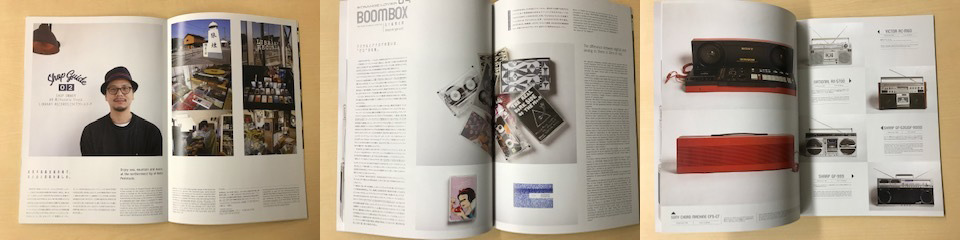
 時代の速度は速い。20年前は可能性のかたまりみたいに賞揚されてきたデジタル・メディア、いまみなさんが見ているインターネットも、いまではフェイクだ宣伝だバイトニュース(アクセス数稼ぎの扇情的な見出し)だ、とか、眼精疲労にもなるし精神的にも中毒性が高いなどなど、むしろバッドな側面のほうが露呈している始末。そんななかでアナログに脚光が当たるのも無理もないというか。カセットテープ愛好家のための同人誌が刊行されました。同人誌といっても、『BOOMBOX&TAPES』(へのへのもへじPRESS刊)。はA4判型/40ページフルカラーのゴージャスな作り。カセット・テープおよびカセットデッキの紹介があり素敵な写真があり、愛好家たちのインタヴュー記事があります。文字も詰まっているし、ヴィジュアルも豊富で、読ませて見せますよ! 限定500部で、すでにけっこう売れているそうなので、うかうかしていると売り切れてしまうかも。
 ele-kingがカセットに着目したのはちょうどいまから10年ほどまえのUSのインディ・シーンがきっかでした。〈Not Not Fun〉のようなレーベルががしがしカセット作品を出してたし、で、しばらくするとヴェイパーウェイヴが出てきてカセット作品&フリー配信というリリース形態を確立しましたよね。まだまだカセットが衝撃だった時代だけど、いまじゃすっかり普及したというか、アナログ盤ほどじゃないにせよ、少なくともVHSビデオカセットや2HDフロッピーよりは(笑)、ほぼ選択肢のひとつとして定着している感はある。じつはあの当時、カセット作品を聴くためにTAEACのカセットデッキを中古で買ったんですけど、数年まえに壊れてしまったしまったんですよね。買い換えようと思っているうちに、中古のカセットデッキも値上がってしまったみたいで、ぼくはもう1台小さいのを持っているからいいんですけど、カセットの良さってやっぱ音質ですよね。あの音質は、ギガバイトの世界にはないので、音好きのひとはカセット聴いて下さい。新しい世界が広がりますよ~。

へのへのもへじ同人誌
猟奇偏愛同人誌(FUNZINE ABOUT SUPER STRANGE LOVE)
創刊号:BOOMBOX&TAPES
価格 : ¥1,500YEN+TAX(500部限定)


【Featuring】松崎 順一(Design Underground代表)/MAMMOTH(日本シンセサイザーノイズHOPグループ)/Geoff Johnson(ラジカセDr.)/五十嵐 慎太郎(MASTERED HISSNOISE代表)/角田 太郎(waltzオーナー)/赤石 悠(toosmell records代表)/糸矢 禅(LIBRARY RECORDS代表)/草野 象(ON SUNDAYSマネージャー)
【2018年11月12日発売/500部限定/日英バイリンガル原稿】
【体裁】A4オールカラー44ページ(オフセット印刷、無線綴じ)

西暦2018年XXX日本。
マーケティングビジネス、ファストファッション、コンビニ、巨大モールが疫病のように蔓延。かっての拘りのある個性ある店や、その良し悪しを教えてくれたちょっと怖い憧れの店員さんは絶滅し、当たり障りの無いお決まりの接客の顔なしのような店員が大量増殖。その結果、我々の審美眼、美意識、パッションは失われ、優秀な人材は海外に流出する始末...。
その一方で。
入手困難、高額、かさばる、不便、手間がかる無用の長物に価値を見出し、その魅力に憑かれてしまった偏愛家と呼ばれる方々がいる。
我々へのへのもへじPRESSは、
憂いを持って、
現状の日本に対するアンチテーゼとして、
御意見無用!の偏愛家たちのパッションとアティチュード、その物の価値体系を記録する同人誌を創刊する事にした。
記念すべき創刊号はカセットテープとラジカセの偏愛について。
カセットデッキにお気に入りのミックステープを突っ込んで、のんびりとご覧下さい。
その心意気はスペインの諺よろしく
「優雅な生活が最高の復讐である」
でどうぞ夜露死苦。

2018 A.D. XXX JAPAN.
Manual marketing business, fast fashion, convenience stores and giant shopping malls plague the landscape.
Shops with originality have all disappeared with knowledgeable enthusiastic sales staff. They are all replaced by faceless robots who just repeat their routine work.
With them, sense of beauty and passion for good taste are all lost. Gone are the talents who can tell what is good and beautiful.
On the other hand…we know there are ‘’maniacs’’ who cannot help seeing charm and beauty in useless, hard to find, rare and pricey, bulky and inconvenient stuff.
We are launching a fanzine titled HENOHENOMOHEJI-PRESS for those maniacs who don’t give a damn to the mainstream rubbish culture. It is an antithesis to the dominant depressing cultural landscape. Our zine is aimed to record the passion, attitudes and values of the fringe maniacs, just like you.
Our first issue features quirky love for cassette tapes and boom box. Play your favorite compilation tape on your boom box to get the max out of the zine!
As they say in Spain, our motto is ‘’an elegant life is the best revenge’’.
Enjoy your elegant life.


■現在の全国販売協力店 14店舗
@museumshop_onsundays (東京/外苑前)
@hmvrecordshop_shibuya (東京/渋谷)
@giftlabgarage (東京/清澄白河)
@toosmellrecords (東京/吉祥寺)
@eadrecord (東京/高円寺)
@newport054 (静岡)
@theapartmentstore.jp(名古屋)
@storeinfactory (名古屋)
@liverary_extra (名古屋)
@c7cgalleryandshop (名古屋)
@library_records (富山)
@eyejackdesignstudio (広島)
@ongakushokudo_ondo (広島)
@shimacoya (香川県直島)

interview with Colleen - ele-king

 年末に刊行されるele-king vol.23では「non human」というテーマの特集を組んでいる。近年の音楽、とくにエレクトロニック・ミュージック周辺では、「人間以外」をテーマにした音楽が目立つようになっている。OPNが人類滅亡後の世界を空想したり、このご時世、ダーク・エコロジーを反映した音楽は少なくない。日本でもceroが動物たち(人間以外の生命)のことをテーマにしたり、少し前ではビョークが自然をテーマにしたり、そんな感じだ。詳しくはぜひ本誌を読んでいただきたい。ここではその予告編もかねて、去る11月に来日したコリーンのインタヴューをお届けしよう。

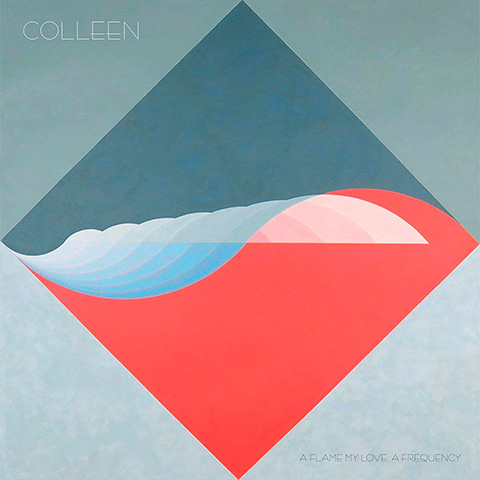
 だれかにもっとも美しい音楽を聴きたいと言われたら、ぼくならコリーンの『A Flame My Love, A Frequency(炎、わたしの愛、フリーケンシー)』というアルバムを差し出す。2017年の年間ベスト4位にした作品(ちなみにFACT MAGは2位)。これだけ消費スピードが速いご時世において、いまでも聴きたくなるし、じっさいいまでも聴いているたいせつな1枚だ。彼女が来日すると知って、これは取材せねばならないと思った。11月初旬のことである。
 もっともぼくにはほかにも推薦したいアルバムがもう数枚ある。2013年の『The Weighing Of The Heart(心の計量)』は間違いなくその1枚に入るし、2015年のダブにアプローチした『Captain Of None 』も、初期の作品では『Les Ondes Silencieuses(沈黙の波)』もぼくは好きだ。ヴィオラ、チェロ、クラシックギター、こうした弦楽器の音色とエレクトロニクスとの有機的な絡み合いから生じるおおらかな静寂が彼女の音楽の魅力である。

 コリーンことセシル・ショットは1976年パリ郊外で生まれ、2年間イギリスで暮らし、そしてパリに移住し、現在はスペインに住んでいる。日本には2006年の11月に来ているので、今回は彼女にとって12年ぶりの2回目の来日となるわけだが、彼女が泊まっているホテルは渋谷の公園通りを上がっていって少し脇道に入ったところにあった。通りの向こう側では、建設中のビルがインダストリアルなビートを打ち鳴らしている。なんともアイロニカルなシチュエーションだなと思いながらロビーに座って待っていると、彼女は爽やかな笑顔でやって来た。ぼくは彼女にいかに自分があなたの音楽好きかを説明し、2017年の年間ベストでは『A Flame My Love~』を4位にした旨を話ながら誌面を見せた。5位が坂本龍一の『async』であることを見ると、「FACT MAGでは坂本が1位でわたしが2位だった。知ってる?」と言った。それから「うん、ジェイリンが3位は良いね」「じゃ、1位はなんでしょう」とページをめくってコーネリアスであることを確認すると、ひとこと「わお、ナショナリスティック!」とおどけた。なるほど、こういうリアクションもあるのかとぼくは妙に感心した。

わたしは反消費主義。たとえば、服は全部自分で作る。(着ている服をつまみながら)これも、これも、このジャケットも自分で作ったものよ。基本的にショッピングとかしない人間なの。

渋谷は、世界でもトップクラスの過剰なまでの商業都市で、あなたの音楽性とは真逆の世界でもあるんですが、滞在していてどうですか?

C:答えるのは難しいな。渋谷でじっくり時間を過ごしたことがないから。商業地区は避けるようにしているの。できるだけミニマリストな生き方をしたいからね。わたしは反消費主義。たとえば、服は全部自分で作る。(着ている服をつまみながら)これも、これも、このジャケットも自分で作ったものよ。基本的にショッピングとかしない人間なの。だから渋谷や商業地域で時間を過ごすことがないから、そこがどうなのかわからない。この後、谷中や上野に行こうと思っている。わたしが好きでいつも行く場所よ。東京が魅力的なのは、たとえ渋谷や原宿でも路地裏に行けば低層の建物が並んだ、味のある街並みがまだ残っているところ。パリだとすべてが高い建物で覆われてしまって、小さい住宅はもうほとんど残っていない。わたしから見ると、東京にはまだいくつか孤立した穴場があって、木造の掘っ建て小屋のような個性あふれる風景が残っている。

あなたの音楽が好きなのは、ぼくがふだん見ている世界とは違った世界が見えるからなんですね。この世に感情がかき立てられる音楽があるとしたら、あなたの音楽は世界が広がる音楽なんです。たとえば『Les Ondes Silencieuses』のアートワークには植物や星や動物が描かれている。あなたは動物や風や珊瑚や砂の音楽も作っている。

C:それはわたしにとっては大変な褒め言葉ね。わたしにとってひとりの人間としての進化とひとりのミュージシャンとしての進化は完全に連動している。そのふたつを切り離すことはできない。そして歳を重ねるにつれ、自然をより身近に感じるようになって、生きていく上で欠かせないものになった。たとえば、『Les Ondes Silencieuses』の後、わたしは音楽面そして個人的にも重大な危機に直面して、しばらく音楽を作るのをやめた。あまりに早いペースで物事が進んでいると感じたから。そしてまた音楽を作りたいと思えるきっかけを作ってくれたもののひとつが他の表現方法に身を置くことだった。だから陶芸と石彫を勉強した。そしてもうひとつは、より純粋で素朴な生き方をすることだった。
仕事とプライヴェートのバランスを見つけるのに日々悩まされるわ。わたしにとってプライヴェートの生活のなかで調和をとるのに役立つのが自然と接することなの。だからバードウォッチングをするんだし(※彼女の趣味で、取材の前日は代々木公園で野鳥の観察をしている)。もちろん鳥が大好きだからなんだけど、自然のなかにいると、自分のことについて考えるのを忘れるのよ。自分のあるべき姿により戻してくれる。大きな宇宙のなかでわたしたちというのは本当にちっぽけな存在でしかないのに、日常のなかでわたしたちは自分たちのことに囚われすぎてしまう。だからわたしとって自然を愛すること、そして自然界に生きる動物たちは当たり前のもの、うまく説明できないんだけど、自分を癒してくれる存在なの。わたしは瞑想を実践してはいないけれど、自然のなかにいて自然を見ていると、瞑想しているみたいに思える。心を癒してくれる薬のようなものね。だから、宇宙のなかに存在する他の生き物たちの存在を音楽のなかに感じ取ってくれたのなら、それは本当に嬉しいことよ。

わたしにとってひとりの人間としての進化とひとりのミュージシャンとしての進化は完全に連動している。そのふたつを切り離すことはできない。そして歳を重ねるにつれ、自然をより身近に感じるようになって、生きていく上で欠かせないものになった。

あなたの音楽は、いくつかの生の楽器とエレクトロニクスとの融合だと言えますが、人間とテクノロジーの関係をどう考えていますか?

C:テクノロジーは我々の感情表現や生活を便利にするための道具として使うのであれば素晴らしいものだと思う。音楽という観点で見たとき、PCや誰もが使えるソフトが存在しなければ、わたしはレコーディング・アーティストになっていたとは思わない。わたしはテクノロジーをDIYのツールとして興味を持っているけど、決してテクノロジーに傾倒している人間ではないわ。たとえば、わたしはスマートフォンを初めて手にしてからまだ2年も経っていないのよ。ずっとスマートフォンなんて要らないと思っていた。2年前に、必要に迫られて持つようになっただけ。
制作面に関して言うと、テクノロジーとの関係性は5作目の『Captain of None』から変わってきていると思う。もしかしたらその前のアルバムからかもしれない。『The Weighing of the Heart』はほとんどが生楽器で構成されているけど、最後に作った曲の”Breaking Up The Earth”にはたくさんディレイを使っていて、この曲を作っていたときにたくさんのジャマイカ音楽を聴いていた。ジャマイカ音楽こそがいい例だと思うわ。貧しい国で、限られたテクノロジーしか持っていなくても、それを最大限に活用して、時代を超えた素晴らしい名作を数多く輩出している。だから、”Breaking Up The Earth”をアルバムの最後に作ったとき、自分が行きたい方向はこれだとわかった。
だからいまわたしにとってテクノロジーというのは、サウンドの世界をさらに奥深く、遠くへと探求させてくれるものなの。でも『A Flame My Love~』のように、全編エレクトロニックな作品を作るとは思っていなかった。このアルバムの前までは、わたしは生楽器の音しか好きじゃないと思っていた。もちろん生楽器の音を加工するのは前からやっていたわ。でも核にあるのはviola da gambaやアコースティック・ギターの音だとずっと思っていた。でも、自分でも驚いたのだけど、このアルバムを通じて、エレクトロニック・サウンドで旅ができることを発見したの。今夜のライヴもそうだけど、エレクトロニックの機材を操作していると自分がどこにいるかを忘れてしまうくらい、不純物のない、抽象的な周波数の世界に瞬間移動したかのような感覚になる。アルバムのタイトルに「周波数」という言葉を使ったのもそれが理由よ。だからいまは、とくにアナログ機材に興味がある。魔法を生む機械だと思う。電子機材を作る人も尊敬する。わたしは電子工学のことはてんでわからないから。でも、こういう機材を使うのは凄く面白いし、今後もサウンド操作が生み出すこの抽象的な周波数の世界をさらに探求し続けたいと思っている。

『A Flame My Love~』はパリのテロ事件に触発された作品だという話をどこかで読みましたが、アルバムの最初の2曲は、悲劇的なテロを題材にした曲で、しかしこれほどパラドキシカルに美しい曲はないと思います。

C:アルバムはあの事件に影響を受けているのはたしかよ。わたしがあの夜にパリにいたのはまったくの偶然で、実際に事件があった場所にはいなかったのだけど、ほんの数時間前に近くを通った。ヴィオラの弓の修理をしなければいけなくて、本当にたまたま近くを通ったの。同時に家族と近しいひとが病気だったので、お見舞いも兼ねてパリにいた。本当に辛い体験だった。新しい音楽の制作にちょうど取り掛かろうとしていたところだった。アルバムを作る準備を進めていたときにあの事件が起きた。制作に戻らないとと思ったわ。
あの事件が作品に反映するのは不可避だった。これはわたしの人生に起きたことだったのだから。そして曲作りに取り掛かると、最初にできてきた曲は明るく喜びに満ちたものだった。なぜなら、わたしの人生、そして世界がいまどれだけ辛くても、それはどうすることもできない。できることがあるとしたら、少しでもその苦しみを和らげてくれるものを作ることだった。自分のためでもあり、それを聴いたひとたちもそう感じ取ってくれたら嬉しいと思った。そうやって最初はビートのある曲や明るい曲に自然と寄っていった。そしてアルバムの制作が進むにつれ、1年半近く経って、わたしの気持ちも少し落ち着いて、起きたことの重苦しいことも曲にすることができるようになった。矛盾しているかもしれないけど、気持ちが回復してから悲しい曲をかけるようになった。それしか方法はなかったの。わたしの歌詞はあまり直接的ではないかもしれないけど、わたしにとっては歌詞で表現しようとしたことと音楽は明確につながっている。

あなたがムーンドッグやアーサー・ラッセルに惹かれるのはなぜでしょうか?

C:その質問に限られた時間で答えるのは難しいけれど、おそらくわたしは独自のやり方を貫いている人たちに惹かれるんだと思う。ムーンドッグやアーサー・ラッセルはふたりとも「非常に特異なミュージシャン」のいい例だと思う。どちらも多くの人に影響を与えながら唯一無二の存在だった。
アーサー・ラッセルにはいまでも強く共感するわ。彼の音楽を前ほど聴くことはなくなった。何度も何度も聴いたから、もはや自分のなかにあるんだから。基本的には自分独自のやり方を貫く人が好き。リー・ペリーもまた、限られた環境で独自の世界を作ったひとね。10万ユーロもかけて機材を揃えたスタジオがなくてもいい音楽は作れる。むしろ贅沢な設備はない方がいいのかもしれない。いまわたしが面白いと思うのは……、『A Flame My Love~』はエレクトロニックかもしれないけど、じつは作っているあいだ、エレクトロニック・ミュージックを聴いていたわけじゃないの。わたしのパートナーのIker Spozioの話をしないといけないわ。彼はわたしの作品のアートワークをすべて手がけているのだけど、彼は熱心な音楽ファンでもあって、幅広く何でも聴いている。彼のレコード・コレクションの恩恵に預かったわ。家にいるときはたとえばアフリカ音楽だったり、60年代のサイケデリック・ポップだったり、ジャマイカ音楽、そして夜にはバッハやモーツアルトを聴いたりしている。とくにアフリカ音楽はたくさん聴いているの。アフリカ音楽は、わたしのすべての作品に多大な影響を与えていると思う。それと……、リズムとメロディの関係性にも興味がある。パーカッションという意味でのリズムではなくて、どんな楽器でも弾き方によってリズム感を出すことができる。アフリカ音楽のそういう部分が面白いと思う。アフリカ音楽のギターの弾き方も凄くリズミカルよね。だから例えば『Captain Of None」ではヴィオラをよりリズミカルに演奏しようと試みた。音楽は果てしない海のようだと思う。自分が知らないものがまだまだたくさんあって、それと出会うことで新しい何かをもたらしてくれる。

世界がいまどれだけ辛くても、それはどうすることもできない。できることがあるとしたら、少しでもその苦しみを和らげてくれるものを作ることだった。自分のためでもあり、それを聴いたひとたちもそう感じ取ってくれたら嬉しいと思った。そうやって最初はビートのある曲や明るい曲に自然と寄っていった。

子供の頃から楽器を習っていたんですか?

C:全然。15歳になるまで楽器を弾いたことなんてなかった。自分も音楽をやりたいと思わせてくれた最初に夢中になったバンドがビートルズだった。ビートルズは絶大な人気を誇りながらも、非常に質の高い作曲能力があって、それに加え革新的なテクノロジーも積極的に取り入れた最たる例であり、誰も真似できていないと思う。最初は素晴らしい曲を作るシンプルなポップ・バンドだったけど、数年という短い期間にテクノロジーを駆使してバンドとして進化し続けた。そういう点では、いまでもわたしにとって大きなインスピレーションの源よ。わたしの音楽は彼らのとは全く違っていてもね。で、えっと、質問は何だったかしら……、あ、クラシックの教えを受けたか、だったわね。わたしの両親は多少音楽を聴いたけどそれほどでもなくて、わたしはいわゆる中流家庭の出で、高価なクラシックの楽器を買うお金もレッスン代を賄うお金もなかった。だから最初の楽器はクラシック・ギターで、それからエレキ・ギター。そして26歳になって安いチェロを買った。しかも正規のよりも小型の。そのあとでちゃんとしたチェロを手に入れて、それからヴィオラ・ダ・ガンバを買った。弦楽器職人に依頼してヴィオラ・ダ・ガンバを作ってもらったのよ。もうその頃は働いていて、英語の先生をやって貯めたお金があったから、自分の夢を叶えようと思ってね。そうやってヴィオラを手に入れてレッスンも受けたけど、2006年頃だからすでに30歳だったわ(笑)。

あなたの音楽はエレクトロニック・ミュージックであるとか、アンビエントであるとか、いろいろアクセスできると思うのですが、どこか固有のジャンルには属していませんよね。それは意識しているのですか?

C:そう。自分がどのジャンルに属するかといったことを意識したことはない。自由であることを大事にしてきた。生きているとわたしたちはいろいろな妥協をしなければならないでしょ。いろんな出来事や出会い、人間関係に直面し、人生のいろいろな場面で妥協を強いられる。そんななかでアートというのは、自分が表現したいことを妥協することなく表現することだとわたしは思っている。もし1時間の長いドローン・ミュージックを作りたいと思ったら作ればいいし、2分のポップ・ソングが作りたいならそうすればいい。わたしはメロディアスであると同時に実験的なものを作りたいと思っていて、それを追求しない理由はない。わたしがアルバムを出し続ける理由はたったひとつで、それは伝えたいことが自分のなかにまだあるから。ある日伝えたいことが無くなったら音楽を作るのをやめて他のことをするでしょう。何にも縛られず自由であることは大事で、もの作る者にとっての本分だと思う。

あなたは英文学を勉強し、英語の教師をしていたということですが、どんな本がお好きなんですか?

C:最初に好きになったのは文学よ。子供の頃から本を読むのが大好きだった。学校で英語を勉強した際も文学の歴史に重点を置いて勉強した。高校のときもたくさん本を読んで、大学ではもっぱら英米文学を読んだ。いちばん好きな本はマルセル・プルーストの『失われた時を求めて』。読破するのにものすごく時間が掛かった。ものすごく分厚い本だから(笑)。でもわたしの読書人生のハイライトのひとつだと思う。またいつか読み返したいと思っている。
それからしばらくは音楽制作で忙しくなってしまって本を読む時間がなくなってしまった時期があった。そして日本から戻って、フランスの図書館から日本についての本をたくさん借りて読んだ。もっぱら日本の陶器や伝統美意識、禅庭についての本よ。そのあと、またしばらく読書から離れた時期があって、今度は自然に関する本をたくさん読んだ時期もあった。たとえばバードウォッチングはとにかくまず野鳥について知らないといけないから、何冊も繰り返し読んだわ。他にはアートブックを読むのも好きよ。パートナーのIkerは絵描きだから家にはアートブックがたくさんある。アフリカのお面(マスク)についての本から、マティス、ミケランジェロまで、なんでも。アートについて読むのも大好き。そして小説もまた読むようになった。今年ようやくメルヴィルの『白鯨』を読んだわ。20年もの間ずっと本棚にいつか読まなきゃと思って置いてあったのをようやく読むことができた(笑)。最近はそうやって昔に読もうと思って買った本を読むようにしているわ。

『The Weighing Of The Heart(心の計量)』というタイトルも気になっていたのですが、これはなにか書物からの引用ですか?

C:古代エジプトの『死者の書』の翻訳を読んだ。美しい絵とヒエログリフで構成されている巻物を写したヴァージョンよ。そして古代エジプト人が行なった埋葬の儀式に感動した。その儀式では死者の心臓を天秤にのせ、もう片側の皿には羽根を置く。純潔な人生を送った人はその心臓が羽根よりも軽くなる。なんて美しいイメージなんだろうと思ったわ。わたしはいい人間でありたいと思っているから、いい人生を送ることの難しさを表しているようで、余計にこのイメージが心に刺さったんじゃないかしら。わたしにとってぴったりのタイトルだった。

 パリの「黄色いベスト」運動が起きたとき、アメリカのトランプ大統領は、ほら、だれから俺はパリ協定から脱退すると言ったんだという、まったくトンチンカンだが環境のために膨大な福祉予算などつぎ込みたくなる側からすればある意味スジが通った意見を述べている。逆に言えば、人間以外(生きる権利を持っている地球上の生物)のことを考えることは、新自由主義の暴走を否定する根拠にもなってきている。コリーンのような音楽が重要なのは、デジタルとアナログとの融合などということではなく、ポジティヴな未来を考えるうえでたいせつな感性が表現されているからだと思う。
 ele-king vol.23に掲載されているアースイーターのインタヴューもぜひ読んでください。こちらは2018年もっとも感情をかき立てられたアルバムの1枚ですが、コリーンよりもさらにラディカルに「non human」というテーマが偏在しています。なぜなら彼女は本当に動物たちといっしょに育った人間であり……。(続く)

Marc Ribot - ele-king

 ケンドリック・ラマーのカリスマティックなステージには痺れたし、ボブ・ディランの静かで豊かなバンド演奏にも嘆息した。だが今年のフジロック、僕がもっとも感動したのはマーク・リーボウのセラミック・ドッグだった。フィールド・オブ・ヘヴンのピースフルなムードを切り裂くように尖ったギター・サウンドの応酬で繰り広げられるポスト・パンキッシュなバンド演奏と、そこに獰猛に交配されるキューバ音楽とフリージャズによる熱さ・冷たさ。弛緩したところがひとつもない、限界までヤスリで砥いだように鋭く美しい音で、一切の躊躇もなく叩きつけられる暴君あるいは愚かな権力者に向けた「Why are you still here?」。ほとんど身がすくむ想いだった。僕はポリティカル・ソングにはユーモアがあったほうがいい、ほとんどふざけるぐらいでちょうどいいと思っている人間だが、そのまっすぐな怒りにはひれ伏すしかなかった。その日は奇しくも、マイノリティに対して差別的な発言をした国会議員に対しての抗議デモが東京でおこなわれていた日で、「なんで、お前は、まだ、ここに、いるんだ?」――その言葉が、そこに届くことを祈らずにはいられなかった。
 ただ圧倒されていると、終盤、ほとんど喋らなかったリーボウが「これはcivil rights movementに捧げられた歌だ」とポツリと言って、それまでとまったく異なるトーンのギターを演奏し始めた。アコースティックな響きのソウル・カヴァー――1966年にレコーディングされた“We'll Never Turn Back”だ。それまで一切なかった甘いメロディがゆっくりとその場を満たしていく。「civil rights movement」だから60年代後半の公民権運動を指す意味でリーボウは使ったのだろうが、僕は最初、勝手に「市民運動に捧げられた歌だ」と解釈してしまった。先述のデモに対していくらか感傷的になっていたせいかもしれない、が、その優しい調べはすべての市民運動に捧げられているように聴こえたのだ。

 『ソングス・オブ・レジスタンス 1942 - 2018』はリーボウが2016年ごろから始めたプロテスト・ソング集のプロジェクトであり、ダイレクトなアンチ・トランプという意味ではセラミック・ドッグの『ワイアーユー・スティル・ヒア?』からの連作である。様々な時代の様々な地域のプロテスト・ソングを蒐集しアレンジし、また、オリジナルの楽曲も並列することでマーク・リーボウ流の現代プロテスト・アルバムとなった。リーボウいわく、「勝利を収めたすべての運動には、歌があった」。
 アルバムはトラディショナルの“We Are Soldiers in the Army”のカヴァーから始まり、フリージャズ的な無調を導入することで紛れもないマーク・リーボウの音楽として立ち上げてしまう。続く“Bella Ciao (Goodbye Beautiful)”はイタリア内戦の際に作られのちに反ファシズムの歌となったフォークロアだが、トム・ウェイツのドスの効いた声が乗ることで一気にアメリカへと空間を超えるようだ。とりわけ面白いのは「ドナルド・トランプ、お前に言ってるんだよ!」の語りのあとに急に軽快なラテンのリズムが入ってくる“Rata de dos Patas”だ。原曲はメキシコの革命家に歌われていたプロテスト・ソングだが、それがアメリカ人俳優のオーヘン・コーネリアスのラップが挿入されることで現代アメリカにも通じるものとして奏で直されるのである……それも、陽気な、踊り出したくなるようなリズムで。ミシェル・ンデゲオチェロが物悲しい歌を聴かせるフォーク・ナンバー“The Militant Ecologist (based on Fischia II Vento)”は、これも元々はイタリアのパルチザンに歌われていたものだが、地球温暖化を食い止めようとする女性の視点にアレンジしたそうだ。過去のレジスタンス――抵抗の記憶を、それはそれは多彩なアンサンブルで、現代の闘いのために召喚するのだ。
 また、かなりソリッドな内容だった『ワイアーユー・スティル・ヒア?』とは異なり、大幅に叙情が入っているのも本作の魅力だ。偽キューバ人たちでの経験を生かしたラテンの風、フォーク、ソウルのエモーションが、リーボウを通過したものとして鳴らされる。サム・アミドンとフェイ・ヴィクターが参加した“How To Walk In Freedom”はストリングスとフルートが美しいフォーク・ナンバーとして始まり、やがてパーカッションの連打によって情熱的なラテン・ダンスへと姿を変えていく。このアルバムには怒りがあるが、怒り以外の感情――悲しみ、慈しみ、優しさ、不屈さ、勇敢さ、それに連帯の喜びといったものが、世界中に散らばった歌たちの助けを借りて表現されている。
 『超プロテスト・ミュージック』を読んだときにも思ったし、最近さることから猛烈な怒りを覚えたときにも痛感したことだが、プロテスト・ソングには怒り以外の感情を掬うこともまた必要なのだろう。怒りを純粋な状態で吐き出したからこそ、リーボウは現在「抵抗」の叙情を鳴らしているのではないか。アルバムのラストは件のソウル・チューン“We'll Never Turn Back”だ。リーボウが本作でもっとも鳴らしたかったのはこの温かさなのだと僕には思える。そこでは虐げられてきた人びとの記憶を慈しむようにギターが余韻たっぷりに響き、柔らかく声が重ねられている。
 「だけど、わたしたちは引き返さない。わたしたちみんなが自由になるまでは。わたしたちが平等を手にするまでは」――。

Brainfeeder X - ele-king

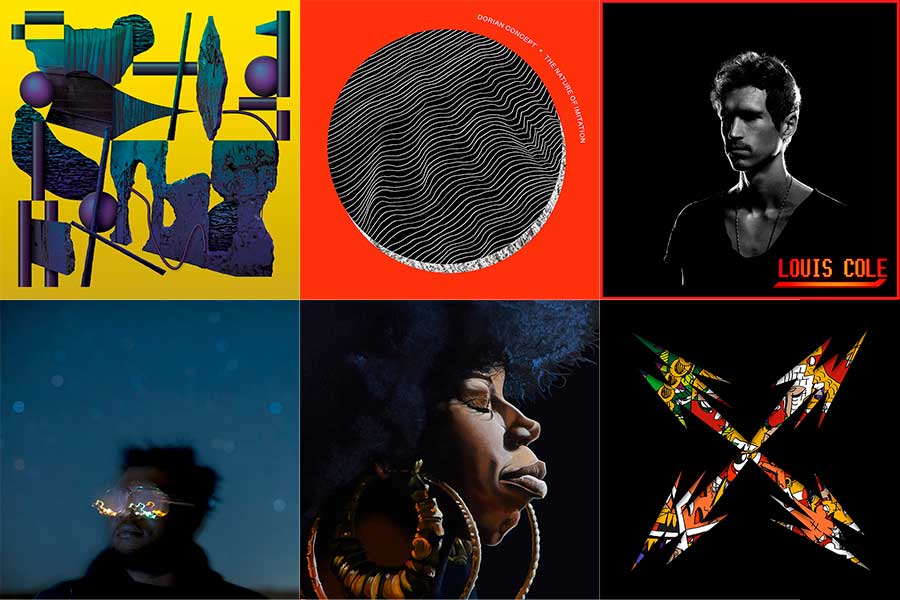
 こんにちは。ロス・フロム・フレンズにドリアン・コンセプトにブランドン・コールマンにルイス・コールにジョージア・アン・マルドロウにと、最近〈Brainfeeder〉関係のお知らせが続いていますが、ついに決定的なニュースが舞い込んできました。設立10周年ということでここ数ヶ月さまざまなアクションを起こしてきた同レーベルが、アニヴァーサリー・コンピレーションをリリースします。詳細は下記をご確認いただきたく思いますが、錚々たる面子が参加しています。CDは2枚組で、ディスク1はこれまでの〈Brainfeeder〉の作品から選りすぐったレーベルの歴史を紐解くような内容、そしてディスク2は新曲や蔵出し音源を詰め込んだレアトラック集となっています。現在、そのディスク1からフライング・ロータスによるブランドン・コールマンのリミックスが先行公開中です。リリースは11月16日。しっかりお財布をマネージしておきましょう。

BRAINFEEDER 10周年記念コンピレーション・アルバムが登場!
フライング・ロータスやサンダーキャットなどの初出し音源が22曲!
レア曲も満載!
全36曲を収録し、豪華パッケージで11月16日(金)リリース!
フライング・ロータスによるブランドン・コールマンのリミックスが解禁!

設立10周年を迎え、怒涛のリリースラッシュ、ソニックマニアでのステージまるごとジャック、売り切れグッズ続出のポップアップショップなど、凄まじい勢いを見せているフライング・ロータス主宰レーベル〈Brainfeeder〉が、輝かしい10年の歴史の集大成としてコアなファンはもちろん、すべての音楽ファンを魅了する超豪華コンピレーションのリリースを発表! レーベルの歴史を彩る代表曲に加え、フライング・ロータスやサンダーキャットなど初出し音源が実に22曲! さらに初めて公式リリースされるレア曲も加えた必聴コンピ『Brainfeeder X』は11月16日(金)リリース! 今回の発表に合わせて、フライング・ロータスによるブランドン・コールマンのリミックスが解禁された。

Brandon Coleman - Walk Free (Flying Lotus Remix)
https://www.youtube.com/watch?v=VhkoMyG1v2c

ジャズ、ヒップホップ、ファンク、ソウル、ハウス、アンビエント、テクノ、フットワーク……あらゆるスタイルのDNAを再編成し、類まれな審美眼を持って、真のグッド・ミュージックを送り出し続けてきた〈Brainfeeder〉。時代が時代なら、サン・ラとも契約を果たしただろうし、アリス・コルトレーンの神秘的かつ霊妙な魂を宿した唯一無二のレーベルと言っても過言ではないだろう。ジョージ・クリントンは、そのほとんどの作品を〈Casablanca Records〉から発表しているが、〈Brainfeeder〉との契約は、ファンクの神にとっても至極当然の展開として、幅広い音楽ファンが喜びをもって支持した。そしてこれは〈Brainfeeder〉以外のレーベルでは全くもって想像できないことである。

LAに端を発したビート・ミュージック・シーンの勃興の中で産声をあげた〈Brainfeeder〉の世に放つ作品には、レディオヘッドからJ・ディラ、エイフェックス・ツイン、DJシャドウ、ボーズ・オブ・カナダ、ドクター・ドレー、ジョン・コルトレーンとその妻のアリス・コルトレーン、ポーティスヘッドなどからの影響が見受けられつつ、そこには必ず刺激的な革新性が存在している。

代表曲を中心に過去〜現在をまとめたDISC 1
ディスク1は、サンダーキャットやテイラー・マクファーリンといった新世代ジャズのキーマン達、先鋭的ヒップホップで注目を集めたジェレマイア・ジェイ、ベース・ミュージックにテクノやハウスを融合させたオランダ人プロデューサー、マーティン、フットワーク/ジュークの最高峰レーベル〈TEKLIFE〉のクルー、DJペイパル、そしてレーベル設立当初からフライング・ロータスと共にビート・ミュージック・シーンを盛り上げたティーブスやデイデラス、トキモンスタら、ジャンルやバックグラウンドを問わず、秀でた才能を発掘し、世に送り出してきたレーベルの懐の深さが味わえる。サンダーキャットの人気曲“Friend Zone”のロス・フロム・フレンズによるリミックスや、フライング・ロータスによるブランドン・コールマンのリミックスもディスク1の最後に聴くことができる。

DISC 2には初出し音源やレア曲が満載!
ディスク2は、フライング・ロータスもプロデューサーとして参加し、バッドバッドノットグッドをゲストに迎えたサンダーキャットの新曲“King of the Hill”が冒頭を飾る。ラパラックス、ロス・フロム・フレンズ、ドリアン・コンセプト、ジョージア・アン・マルドロウら新曲も数多く収録される他、フライング・ロータスとサンダーキャット、シャバズ・パラセズから成るウォークが、ジョージ・クリントンをフィーチャーして発表した“The Lavishments of Light Looking”が初めての公式リリースという形で収録され、先日ついに日本でも公開され話題を呼んだ、フライング・ロータス初長編映画『KUSO』のサウンドトラックからは、バスドライバーをフィーチャーした“Ain't No Coming Back”など、フライング・ロータス関連のレア曲も収録。またPBDY(ピーボディ)、ミゲル・アトウッド・ファーガソン、リトル・スネイク、テイラー・グレイヴスら、これまでもレーベルに貢献しつつ、今後リリース作品が期待される注目アーティストもここで紹介されている。参加アーティストの一人、ストレンジループは、今現在フライング・ロータスの革新的なライヴ・パフォーマンスのヴィジュアルを担当している知る人ぞ知る存在。そしてロカスト・トイボックス名義でフィーチャーされているデヴィッド・ファースは、俳優、声優、映画監督、ビデオアーティストなど、様々な顔を持ち、フライング・ロータスとはミュージックビデオや映画『KUSO』でもコラボレートしている鬼才だ。

全フォーマット、趣向を凝らしたパッケージ
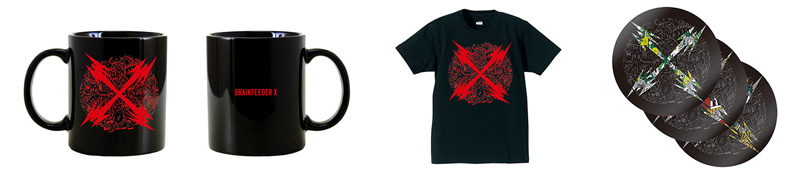
今作のアートワークは、〈Brainfeeder〉の印象的なオリジナル・ロゴを手がけたチャールズ・ムンカが担当。4枚組LPボックスセットは、ディスク一枚一枚がデザインの異なるインナースリーヴに収納され、10周年記念ロゴが型抜きされたハードケース入り。国内盤CDは、解説書が封入され、数量限定の初回盤は、LPボックスセットのデザインを踏襲した特殊スリーヴケース付きの豪華仕様となっている。なお輸入盤CDのフロントジャケットは、4種類のカラー展開で発売される。

〈Brainfeeder〉の輝かしい功績と“今”、そして未来を詰め込んだ超豪華コンピレーション・アルバム『Brainfeeder X』は11月16日(金)世界同時リリース! 今作は、〈Brainfeeder〉10周年キャンペーン対象商品となり、国内盤CDには、初回盤、通常盤ともに10周年記念ロゴ・ステッカー(3種ランダム)が封入される。

label: BRAINFEEDER / BEAT RECORDS
artist: Various Artists
title: Brainfeeder X

限定国内盤2CD BRC-586LTD ¥2,800+税
特殊スリーヴケース付き/解説書封入

通常国内盤2CD BRC-586 ¥2,500+税
解説書封入

BEATINK.COM:
https://www.beatink.com/products/detail.php?product_id=9868

[TRACKLISTING]

DISC 01
01. Teebs - Why Like This?
02. Jeremiah Jae - $easons
03. Lapalux - Without You (feat. Kerry Leatham)
04. Iglooghost - Bug Thief
05. TOKiMONSTA - Fallen Arches
06. Miguel Baptista Benedict - Phemy
07. Matthewdavid - Group Tea (feat. Flying Lotus)
08. Martyn - Masks
09. Mr. Oizo - Ham
10. Daedelus - Order Of The Golden Dawn
11. Jameszoo - Flake
12. Taylor McFerrin - Place In My Heart (feat. RYAT)
13. MONO/POLY - Needs Deodorant
14. Thundercat - Them Changes
15. DJ Paypal - Slim Trak VIP
16. Thundercat - Friend Zone (Ross from Friends Remix)
17. Brandon Coleman - Walk Free (Flying Lotus Remix)

DISC 02
01. Thundercat - King of the Hill (feat. BADBADNOTGOOD)
02. Lapalux - Opilio
03. Ross from Friends - Squaz
04. Georgia Anne Muldrow - Myrrh Song
05. Dorian Concept - Eigendynamik
06. Louis Cole - Thinking
07. Iglooghost - Yellow Gum
08. WOKE - The Lavishments of Light Looking (feat. George Clinton)
09. PBDY - Bring Me Down (feat. Salami Rose Joe Louis)
10. Jeremiah Jae - Black Salt
11. Flying Lotus - Ain't No Coming Back (feat. BUSDRIVER)
12. Miguel Atwood-Ferguson - Kazaru
13. Taylor Graves - Goku
14. Little Snake - Delusions
15. Strangeloop - Beautiful Undertow
16. MONO/POLY - Funkzilla (feat. Seven Davis Jr)
17. Teebs - Birthday Beat
18. Moiré - Lisbon
19. Locust Toybox - Otravine

--------------------------------------------

〈Brainfeeder〉10周年キャンペーン実施中

CAMPAIGN 1
対象商品お買い上げで、〈Brainfeeder〉10周年記念ロゴ・ステッカー(3種ランダム/商品に封入)をプレゼント!
CAMPAIGN 2
対象商品3枚お買い上げで、応募すると〈Brainfeeder〉10周年記念特製マグカップもしくはオリジナル・Tシャツが必ず貰える!

応募方法:
対象商品の帯に記載されている応募マークを3枚集めて、必要事項をご記入の上、官製ハガキにて応募〆切日までにご応募ください。

キャンペーン対象商品

キャンペーン詳細はこちら↓
https://www.beatink.com/user_data/brainfeederx.php

--------------------------------------------

『Brainfeeder X』にもフィーチャーされているハイパー・マルチスペック・アーティスト、ルイス・コールが12月に来日!

TOKYO: 2018/12/13 (THU) @WWW X
OPEN 19:00 / START 19:30

KYOTO: 2018/12/14 (FRI) @METRO
OPEN 18:30 / START 19:00

前売 ¥5,800(税込)
別途1ドリンク代 / ※未就学児童入場不可

チケット詳細

[東京公演]
イープラス
●ローソンチケット 0570-084-003 (Lコード:74741)
チケットぴあ 0570-02-9999
Beatink
Clubberia
iFLYER

INFORMATION: BEATINK 03-5768-1277 / www.beatink.com

[京都公演]
イープラス
●ローソン (Lコード:56266)
ぴあ

INFORMATION:METRO 075-752-2787 / info@metro.ne.jp

interview with Laetitia Sadier (Stereolab) - ele-king


Laetitia Sadier Source Ensemble
Find Me Finding You

Drag City

Amazon

 Initially emerging as a curiously conceptial bubblegum pop tangent from the shoegaze scene, Stereolab throughout their career embodied a series of tensions – between accessible and experimental, complex and grindingly simple, personal and political. Their music was never purely bubblegum: it had to be John Cage Bubblegum, it was never purely avant-garde: it had to be Avant-Garde AOR.
Stereolab’s roots lie in guitarist/main songwriter Tim Gane and lead vocalist/lyricist Laetitia Sadier’s time with jangly indiepop band McCarthy, with whom Stereolab shared similary explicit leftwing politics.
However, where McCarthy’s lyrics were typically sarcastic dissections of the absurdities of contemporary political life, Stereolab’s politics tended to be more reflective and even romantic, revelling in their own uncertainty, feeling out the relationship between self and society with less confidence and more innocent curiosity.
Their early records were infused with a gushing enthusiasm for the motorik rhythms of Neu!, which they then filled out with organ drones, and it’s probably fair to say that, along with Julian Cope, Stereolab were in large part responsible for the UK music scene’s rediscovery of Krautrock in the 1990s. However, from around 1994’s Mars Audiac Quintet, and more explicitly on 1996’s Emperor Tomato Ketchup, the band’s sonic palette broadened considerably, incorporating influences from ‘60s film soundtracks, French pop, jazz and a more sophisticated use of electronic elements.
Through all these mutations, the group’s unique and instantly recognisable sonic identity was Laetitia Sadier’s vocals, which simultaneously embodied a cool detachment and an unaffected romanticism. Sadier’s vocal foil for much of the ’90s was keyboard player Mary Hansen, and the interplay between the two singers helped to define the group up until Hanson's death in a road accident in 2002. Their combination of deadpan delivery and breezy “ba-ba-ba”s reflected a broader dynamic within the band’s music between pop’s desire to give you everything all at once and an avant-garde wariness of making things too easy.
From the start, Stereolab infuriated the UK music press with cryptic song titles and obscure puns alongside what seemed like a contrarian insistence that what they were doing was pop. And it was pop in the sense that, at its heart, Stereolab’s music was generally simple and melodic, drawing on familiar chords and rhythms – the song Transona Five was built around the instantly recognisable beat of Canned Heat’s On The Road Again, for example.
It also reflected a punkish rejection of the grownup world and a love of childish thrills. It’s there explicitly in song titles like We’re Not Adult Orientated, but also in the dadaist delight in nonsense that led to them describing the tracks on Transient Random-Noise Bursts With Announcements with gnomic nuggets of hi-fi wisdom like “subjective white noise” and sci-fi surrealism like “underwater aztec”.
In some ways, Stereolab were like a precociously smart teenager experiencing first love: so keen for you to like them, but always holding something back; complicating every simple expression of their feelings, but also underscoring every attempt to be cool and aloof with something disarmingly honest.
In the end though, perhaps the band themselves were always their own best reviewers, so it may be best to leave the last words to them:
“Constantly evolving, curious / Sombre, obscure, dark and luminous / Vitriolic, stringent, prophetic.”

Yeah, and I think that’s the beauty of pop: that it is this simple, conservative structure that lends itself perfectly to being disturbed and disrupted.

IAN:
Since this issue of the magazine is focused on avant-pop, I’m interested in how you feel about that term. With me, I find that I use it a lot without ever really thinking about what it means. It’s certainly a term that has often been used to describe Stereolab, but was it a term you ever felt comfortable with?

LAETITIA:
Well, as you know, artists don’t like to be pigeonholed in any way, so no term would suit. But if I were to choose one, this would actually be quite legitimate, because there were strong pop references in our music, and it was our structure for a lot of what we were doing. And there was an immense liberty between a verse and a chorus, where Tim might want to try out some ideas, so there would be these “avant” ideas perhaps between parts four and seven of track three on the album. That’s how I understand the “avant” in “avant-pop” – it’s taking liberties and being free to explore inbetween a rather simple structure, without our music being “avant-garde” strictly speaking.

IAN:
It also seems to me that the term “avant-pop” embodies a contradiction. There’s something fundamentally conservative about pop, in that it’s music that wants you to feel comfortable in how you already are, whereas the avant-garde is about taking you out of your comfort zone.

LAETITIA:
Yeah, and I think that’s the beauty of pop: that it is this simple, conservative structure that lends itself perfectly to being disturbed and disrupted. I think The Beach Boys were masters of hiding an incredible amount of complexity and even darkness beneath something that on the surface is so shiny and friendly – when inside it’s just plain weird! So in that regard pop can be very subversive and can be a danger to society! (Laughs)

IAN:
You mention about the the importance of simplicity, and I remember reading something that Tim said about how a lot of the simplicity and minimalism of early Stereolab was dictated to a large degree by your own limitations as musicians.

LAETITIA:
Yeah. Indeed, you have what you have, and you have to work with that. In a sense it’s more liberating to accept the physical limitations. It’s much more hindering to have too many possibilities and have to narrow it down rather than have a much more narrow terrain to work with and think, “How do we exploit this bit of land here and how do we extract the gems?” There was a fair amount of limitations because we were not schooled musicians. But the aim wasn’t to be virtuosos, and I guess that’s also part of the pop thing. You don’t have to be a virtuoso: you just explore your capabilities within the context of being a normal human being, not some supreme creature touched by the hand of God! It was more punk: do the best with what you’ve got.

IAN:
Within punk, there seemed to be a lot of affection – sometimes a little ironic and sometimes more sincere – for the bubblegum extremes of pop music. The Sex Pistols covering The Monkees etc., despite them not seeming ideologically compatible on the face of it.

LAETITIA:
But they were! I don’t know if I can make the class system step in, but I will! It was about the working classes taking power, exercising their self-determination, so that’s very important and very dangerous. You know, The Who and The Kinks were probably seen with an air of suspicion by the authorities because they had an incredible amount of sway with the youth. They were a bit threatening, and of course so were the punks. And the punks made a point of saying, “I didn’t go to school for this, and I’m going to make it as simple and direct as I can to show that anybody can do this!”

That’s what I find so appealing in that sort of pop, is that it was very political. Not political with a big “P” but it was about people taking matters into their own hands through their art. That’s how I educated myself politically: it was through music, not through reading Karl Marx.

IAN:
Yeah. When Stereolab started, one of their most audible influences was Krautrock, which was a music with its own kind of simplicity. But Krautrock also embodied this thing that wasn’t only a class thing but also this attempt to get away from the Anglo-American hegemony over rock music.

LAETITIA:
Yeah, and again there was a big element of self-determination and saying “Fuck you!” to the man. That’s what I find so appealing in that sort of pop, is that it was very political. Not political with a big “P” but it was about people taking matters into their own hands through their art. That’s how I educated myself politically: it was through music, not through reading Karl Marx – because it’s hard to read Karl Marx! And far less immediate than listening to a pop album.

IAN:
Of course, as your career progressed, you all became better musicians and so some of those limitations fell away. How did you keep in touch with that simplicity?

LAETITIA:
The watershed point would be “Emperor Tomato Ketchup”. That’s where it shifted to something more overtly complex. I didn’t write the music, so it’s difficult for me to answer this clearly, but as far as I know, each album stemmed from an idea, and it would imply some kind of restriction. One album was written entirely where none of the notes from the melodies appeared in the chord that was sustaining the melody – which I think is great. It brings about more tension. It wasn’t dissonant, but I think “tension” is the word that springs to mind, and that for me makes it an interesting song. Another example was “Margarine Eclipse”, which was essentially three albums, because we had one on the left speaker, one album on the right speaker, and then you had the sum of the two, which created the third album, so that was another sort of conceptual idea. There were often little tricks like that, which sustained entire albums.

IAN:
You’ve mentioned the idea of “tension”, and your work often has a kind of tension between music that on the face of it seems cheerful, happy, pleasant, and lyrical content that’s quite dark or angry. I’m thinking particularly of “Ping Pong” off “Mars Audiac Quintet”, where the lyrics about the cycles of economic downturn and war seem ever more relevant with the way the world seems to be heading now.

LAETITIA:
Yeah, absolutely. It’s difficult for me to say why I write certain things, but I know what you mean, especially with Stereolab, there was more darkness than originally suspected from a first glance. We were very serious about what we did. It was our way of making sense of our lives and of being autonomous. And of course I’ve always been very very sensitive to the way the world is going, and in fact since I was born it’s just getting worse. I always felt that we could organise ourselves a bit better, and I don’t mean a utopian society where everybody’s cool and the sun shines every morning – I just mean, “Hold on a minute: we can do this a little bit better so that it works out for more of us who are living on this planet.” And yet it seems that, “Oh, my God, we can’t!” The pathology has only gotten worse and deeper, at least on the surface. Because there’s a lot of good things as well that are happening, and people are getting organised in more silent ways – silent in the sense that you might not hear about it. People are going, “You can’t expect anything from governments: we’re going to have to do it ourselves!” and that I view as a good development: people taking matters into their own hands on a local level.

IAN:
Do you think there’s a parallel between what you’re describing there and the music scene? Something about the idea of organising independently of power structures?

LAETITIA:
I don’t know, because in my own experience, in my band, there were a lot of power structures actually. It wasn’t a democracy, in the sense that Tim monopolised the entire musical field and operated as a kind of “soft tyrant”. I mean, I had all the freedom lyrically speaking, but only because he couldn’t do it! (Laughs) So I don’t have an idealised view of being in the band. I’ve never been in a band where everyone wrote together. Even in my own band, I write almost everything. Sometimes on certain songs I give my bassist Xavi (Munoz) the chords and he writes a bass line, and then I have to write a melody on top of that, and it’s like, “Shit! He took all the melodic feel!” but it’s great because you have to dig deeper. So this thing about relinquishing control is probably difficult if you have a very strong artistic expectation, which I think Tim had. But also as a result I think our music was very reined in. It might seem crazy, but I’ve been listening to Stereolab’s old records recently, and they’re very repressed. But it’s really hard to let go and to let things flow, and I think that’s the reserve of some really, really great musicians where the’re totally on top of their instrument and go beyond.

IAN:
Do you think that having your creativity channeled narrowly into your lyrics and vocals influenced the way you make your own music?

LAETITIA:
Yeah, yeah, of course! And also what it forced me to do was start my own band, which was Monade, and I think Tim was very relieved! (Laughs) And, yeah, so that was a creative way around this issue, because I wanted to write my own songs, I had my own ideas, which are actually very similar to Stereolab, so I think I could have co-written much more with Tim. I’ve done seven albums now, and to my dismay I’m like, “This is still very influenced by Stereolab!” It’s really strange how each time I try to let go of that, I’m always face-to-face with that root, which I created. And I listen to what Tim is doing, and it’s still also... there’s no escaping it! It’s absolutely crazy! I don’t know, I could maybe write some reggae stuff to break it, but then it wouldn’t be me!

IAN:
But also one of the most powerful things music can do is that it creates a world. People fall in love with bands because they create worlds that they’re able to immerse themselves in and feel comfortable with. I wonder if the difficulty you describe in escaping Stereolab is a measure of how immersive the world you created was.

LAETITIA:
I don’t know. I find myself quite good at getting out of my comfort zone, at least when I compare myself to people I know. So I don’t know if what I’m looking for is something comfortable that I recognise, that I identify as safe. And particularly in the artistic field, where I feel that’s where you should be most free, and most adventurous. There’s no danger of hurting anyone because, as you say, it’s a world we create.

Yeah, and also coming from psychoanalysts themselves. It was always around “the problem came from your parents,” never from society.

IAN:
That comes back in a way to the “avant” side of avant-pop, right? The need to step out of your comfort zone, and also to take the listener out of their comfort zone.

LAETITIA:
Yeah, this is the duty! But maybe that’s where one can act and maybe not have that pretension of taking anyone out of their comfort zone, and simply do what comes best, and not be too complicated. I worked with Colin Newman recently, and his wife Malka Spigel who was in (Belgian postpunk band) Minimal Compact. I didn’t know that they worked with a looper where things had to be four and four and four and four, and so I was sending something which I found quite interesting and fun and not too complicated, and they totally rejected it! What they did was they took parts of the song and then they looped it. And it worked fine, but I realised that, compared to what they were sending me, it just gave me a glimpse of how complex I make things and how I could simplify it a lot. I’m not saying it’s good or bad; it’s just an insight.

IAN:
A friend of mine once remarked to me that he thinks Stereolab must be the band whose lyrics contain the word “society” more than any other. And I was thinking how this idea of looking at the structure of the world in many ways goes against the rather individualistic world of pop or rock music.

LAETITIA:
Yeah, there’s a dichotomy between a world of egos and society. And I wanted Stereolab’s lyrical work to bridge the very intimate and personal and society; where does political start and where does it end? Because the way I saw it was let’s be as complete as we can, and for me being complete is talking about things that matter to me. Some people view pop music as a means to escape reality, so if you talk about mindless things, or if you “settle the accounts” with somebody, or express the world of feelings around a relationship. I do explore emotional stuff as well – that wasn’t excluded. It just seemed to me that let’s talk about important stuff, because there’s enough of it going on out there that we can discuss or at least question, because a lot of what I talked about in my lyrics were just questions for myself. Even the capitalist, the individualist, all this is stuff I could feel within myself. It was like, “No, I can be that monster too, and I’d like to interrogate that.”

IAN:
It seems that we’re often being encouraged by society to think very internally and to not really interrogate the relationship between ourselves and the outside world. In the song “The Well-Fed Point of View” by yours and Tim’s old band McCarthy, the lyrics tackle this quite directly.

LAETITIA:
Yeah, and also coming from psychoanalysts themselves. It was always around “the problem came from your parents,” never from society. And in fact, I got very interested in a guy called Cornelius Castoriadis. He wasn’t just a psychoanalyst, he was many things, but he was married to a very famous psychoanalyst (Piera Aulagnier) in the ‘60s, ‘70s, ‘80s in Paris, and they both were some of the first in the field to interrogate the impact of society on the human psyche. But it’s amazing to see that they were rare ones. Like, as if society did not impact your psyche, your unconscious, which I find extremely dubious! Of course it’s going to have an impact: everything has an impact on us: the architecture, the way the streets are laid out. It’s like if doctors are saying whatever you eat doesn’t impact your health: how can you say that?

IAN:
You mention architecture, but that’s true of music as well, right? The aesthetics, or the “internal architecture” of music also has an impact that goes beyond the lyrics.

LAETITIA:
Yeah, I think so. And the production of the song will say a lot. It’s a language.

IAN:
There seems to be an ease pop culture in Japan has in disconnecting the aesthetics from the content. But at the same time, maybe that’s impossible because the aesthetics have an impact of their own that is connected to the content.

LAETITIA:
Yeah, and I think there was enough happening aesthetically in our work that people would suspect that it had a revolutionary intent: that this wasn’t your regular pop group. And I think in Japan people were very savvy as well when it came to music. People knew their stuff! Not to mention that we called one of our albums “Emperor Tomato Ketchup”, which was named after a super-revolutionary Japanese movie.

IAN:
By Shuji Terayama, yeah.

LAETITIA:
I haven’t seen it! I haven’t read Marx and I haven’t seen “Emperor Tomato Ketchup”! (Laughs) Don’t tell them!

IAN:
It’s too late. It’s on tape! With the many collaborations you’ve been involved in, do you think that enriches your music?

LAETITIA:
Definitely. Like I said, it gets you out of your comfort zone, and it forces you to a sort of activity to be productive, because anything could make you go out of productivity: feeling a bit depressed or this or that or the other. It’s good to be kept in action. And stuff comes out that wouldn’t normally come out, so it’s very instrumental in keeping the creativity bubbling and active.

IAN:
Are there any particular projects that you’ve worked on with other people that stand out as being especially rewarding experiences for you?

LAETITIA:
When I worked with Jan and Andi (Mouse on Mars). It was so brilliant. We had a tour of Greece and Italy booked up and we had to come up with an hour’s worth of music, and it was the first time I was working like this outside of Stereolab. It was really difficult for me because I wasn’t confident that I could do this. I then learned that if I’m asked to do it, that means that I can do it! So that became my sort of motto. And yeah, somehow we did it and we had such a fun tour – it was such an adventure! But working with people, each time it’s a different adventure. I’m currently working with a Brazilian band called Mombojó, and we created a group together called Modern Cosmology – we made a video called “C’est le Vent”, “It’s the Wind”, which gives an idea of our collaboration. I can only see the positives of working with other people and “crossbreeding” (laughs) your creativity.

IAN:
So you made three albums with Monade, then three just under your own name, and then more recently one as Laetitia Sadier Source Ensemble. It seems like there’s a period there where your identity is subsumed within this idea of a band, then three albums where you push your own individual identity to the foreground, and then finally this third stage where you’re trying to reconcile the collective and the individual. Would you say there’s something like that going on in the process?

LAETITIA:
Yeah, thank you for summing it up so beautifully! Yeah, it’s true that there’s time where you’re in the playground and you’re working out who the hell you are like, “This is me.” And then there are some times where you open it up and it’s like, “This is me in the world, this is me and my friends, and this is collective me.” And even when I was in my “this is me” period, Laetitia Sadier, I was still well aware that nothing that I do is just the product of solely me: it’s the product of many people’s involvement. And it seemed to me that it was an important point to make when I “Source Ensembled” Laetitia Sadier, because we’re told that “This is just you, and you and you and you alone!” and that’s wrong: that’s a lie. We are all connected here.

IAN:
Jumping back to Stereolab, I think it’s interesting that the band is in many ways a product of the 1990s and the age of CDs. For example, most Stereolab albums are far too long to fit onto a single piece of vinyl. But at the same time, they’re also albums that seem designed to be appreciated on vinyl.

LAETITIA:
Yeah, like any music that respects itself! (Laughs) It’s true. I have a turntable in my kitchen and a CD player, and I’m not attached to the object at all, and I would prefer to listen to CDs because you don’t need to worry about turning it over. But now I realise there’s something different about vinyl. I don’t know what it is, but it’s just more music-friendly.

IAN:
I think the way it forces you to constantly attend to it by turning it over every fifteen minutes encourages a different, more attentive sort of listening.

LAETITIA:
Yeah, it’s funny how this kind of alienation in fact gives you more connection with the record.

IAN:
Perhaps it goes back to the idea of tension again. In this case, rather than tension within the music, it’s tension between the listener and the medium itself that engages the listener. The other extreme would be Spotify or something, where you just put on a playlist while you’re cooking.

LAETITIA:
Yeah, you just consume it. I don’t have Spotify, but my son’s got it and it’s amazing though. Just say a band and there you have it. I think I’m going to have to get it, especially because I’m going to be on Spotify as of this month (April 2018). The Drag City catalogue is on all the streaming platforms, which it wasn’t before – Drag City have given in! It’s tricky but times are changing and people just have new ways of listening to music. There’s a lot of people out there – have you seen all this youth out there! (Laughs)

IAN:
OK, I guess before we finish, I should just ask if there’s anything more you’ve got coming up that you’d like to tell us about.

LAETITIA:
Well, really the main thing at the moment is my project with those Brazilian boys, Modern Cosmology. Apart from that, I’ll make it to Japan again maybe not this year but next year, one way or another.

interview with Jim O’Rourke - ele-king


Jim O'Rourke
sleep like it’s winter

NEWHERE MUSIC

Amazon

Writing about a musician like Jim O’Rourke is always a challenge. His work is rarely what it seems to be on the surface, its mechanisms carefully concealed so that how it works on you as a listener is the result of an almost invisible creative process. A huge amount of complexity and musical intelligence underscores music that feels completely natural and even obvious, as if it’s always existed. If his creative approach includes a strong element of academic discipline, his finished music nonetheless has a lot of heart.
On O’Rourke’s previous relatively high-profile release, his unexpected 2015 return to something like rock songwriting with Simple Songs, instantly familiar-sounding rock hooks would merge imperceptably into completely unexpected musical territory without you ever noticing how you’d travelled. His latest album, Sleep Like It’s Winter, released from the new, ambient-focused NEWHERE label, sees him in a radically a different sonic landscape again, with an icy, uneasy, breathtakingly beautiful 45-minute instrumental track.
Between Simple Songs and Sleep Like It’s Winter lie twenty-two separate releases in O’Rourke’s Steamroom series, which he puts out at a rate of about one every couple of months from his Bandcamp page. While some of these releases are old tracks deemed worthy of exhuming from his archives, this rapid flow of releases may also include something for those of us hoping to find clues as to his working. Certainly some of the Steamroom releases that most immediately preceded Sleep Like It’s Winter share similarities.
None of them are quite as richly layered and textured though, and while ambient music is almost by definition music that defies analysis, working primarily on the fringes of consciousness, Sleep Like It’s Winter at the same time feels like a very conscious album, full of ideas and revealing something new on every listen.

I mean, most people would say Eno. Actually it would go back to Michael Nyman’s book Experimental Music: Cage and Beyond. It’s a great, important book that I read when I was in high school.

I:
I always find it a bit difficult to talk about music that often gets described as ambient or drone…

J:
Right, well, the fact that they even asked me to make an ambient record for them, that’s why I decided to take the challenge. I didn’t set out to make an ambient record but it’s sort of about making an ambient record more than it’s an ambient record (laughing) you know? Pretty much everything I do is about what it is as opposed to being it.

I:
You’ve said before something along the lines of that you approach making music in a way kind of like a critic.

J:
Yeah, I don’t make music ‘cause I enjoy it. (Laughs) Yeah, I have said something like that. I’m not comparing myself to him but when I was young I read this quote from Godard where he said, “The best way to critique a film is to make another film,” and that stuck with me since I luckily read that as a young boy. That’s fundamental to how I work.

I:
How long did this new album take?

J:
That took about two years.

I:
Were you still living in Tokyo when you started work on it?

J:
I was still in Tokyo, yes, when they first asked me. But there was also a lot of extraneous work around that time also because I was moving. So the first six months of working on it was probably more thinking than actually putting anything down. Just thinking about what the hell that term “ambient” meant, and it means different things to different generations. At the beginning, when they asked me, it was like “We’re starting an ambient label,” and I was like, “Okay…” (laughs) Just making any record in terms of “make a record in this genre” is anathema to me, but I decided to do it because it was such a revolting idea! (Laughs) Not that I dislike ambient music – I don’t mean that. That’s just not the way I think when I make things, so it was such a bizarre proposal that I decided to do it.

I:
For ambient music what is your first natural frame of reference?

J:
I mean, most people would say Eno. Actually it would go back to Michael Nyman’s book Experimental Music: Cage and Beyond. It’s a great, important book that I read when I was in high school. There’s a bit about Eno in there talking about, and (Eno) didn’t use the word “ambient” yet, he refers (Erik) Satie’s idea of “furniture music”. And it might be on the back of his Discreet Music record, which was a big deal for me when I was a kid, because on the back of the record it’s all just him talking about these ideas and there’s also diagrams of technically how he made the music. When I think of ambient music I don’t necessarily think of Eno because Eno’s actual ambient music, when he moved on, you know those “Ambient” records, I actually don’t like those very much – no disrespect to him, but it’s just not my cup of tea. In a way I like Satie’s definition of it more: that it’s “furniture music”, that it’s like BGM: it’s not something that’s meant to be listened to with the active mind, which implies that you’re not following the formal structure of what’s going on. So it’s a sort of shift of standpoint that means “ambient” to me. For me, in making this record, the most important thing was, “Where is a line where you decide to give up on formal structures completely?” and, “Where is a line where formal structures can still be perceived but they’re not being shouted at you?”

I:
Speaking of formal structures, going back to Eno, he often seems interested in the idea of taking the musician completely out of the music

J:
For me, in that way of thinking of music, which I’ve been moving towards my entire life slowly but surely (laughs), Roland Kayn was the biggest guy for me. Someone could call his music ambient but it’s way too aggressive for that. The idea of his music is you create the system and then you just let it go. The challenge is how can you create a system that still represents the ideas even though you’ve let it go. If you look at some of the last decade or so of Cage’s scores, like the number pieces, they create these systems. These later Number Pieces of his are really interesting because, if you do them correctly, they’re really constraining even though they don’t seem to be. Whereas someone like Kayn and what Brian Eno were doing, especially in the 70’s, they still want a result but they want to be hands off about it.

I:
For those of us listening to you, it’s almost like we get to hear you, well not in real time but now it almost feels like every couple of months there’s a new thing on Bandcamp

J:
Yeah, Bandcamp is one of the few things the internet has created that I really like. I do like that it’s just there for the fifty people who want it and nothing else gets attached to it. Everything that comes with releasing records, if I have nothing to do with it that’s the happiest I could possibly be. For me, you’ve got to understand, once it’s done it’s done: I’m already gone.

I:
Did your work on those releases inform your work on this new album?

J:
I think one or two might have been failed versions. (Laughs) I mean the Bandcamp stuff, honestly it’s for the 50 or 80 people out there who want to hear that stuff. It’s just being able to be, “Here, you guys want this: go ahead.” Not that I don’t put as much work into those things. For every Bandcamp work I put up, there’s like 80 failed Bandcamp things.

I:
In Sleep Like it’s Winter, there are a lot of sounds that are happening just on the edge of hearing, where it drops to near silence for a while before the sounds build back up again.

J:
Yeah, that’s true. A lot of my really early stuff in the late ’80’s, early ’90’s was a lot of that but I think, because I was young, I was still in the mode of imitating people. I was imitating silence (laughs) because there’s a lot of that, especially in (Giaconto) Scelsi’s music, which I was really really into when I was in college. And I really appreciated the amount of silence in a lot of Luc Ferrari’s work, which I was also really really into.
Also, at that time, things like the Hafler Trio, P-16 D4a, blah blah blah, but I don’t think I really understood how to use that until later in life. Because silence is just as much a part of the dynamic as something loud. In the act of actually listening to something, time means a lot and silence is also time because you perceive time differently in silence than time with sound. Hopefully, the use of silence stretches your perception of time – it’s the same thing as having a good drum fill or something.

[[SplitPage]]

Well, in terms of structure, the one thing that music can’t really do eloquently, like the other art forms, is deal with time backwards. Music can really only change time by making reference, and that can only be done if the music has a formal structure because you’re making structural reference or a melodic reference.

I:
So silence can be a function of the overall rhythm of the piece.

J:
Right, yes, exactly, yeah. Another thing I had to think about a lot when making this record is the idea that just because the music is “ambient” and doesn’t have percussion elements or whatever, that doesn’t mean it doesn’t have a rhythm. So, what role does rhythm take in this and how does it manifest itself is also something I had to think about a lot. And silence is part of that. Silence is kind of like an audio punctuation as well and it can be a comma or it can be a period. Or a semi-colon. Of course it matters what comes before and what comes after, but you really can hear the difference between a period and a comma. There’s definitely a moment of silence on this record that’s a comma and then there’s one that’s 3 periods in a row. At least that’s the way I think of it.

I:
Did you find, while making this record that there are cliches in ambient music?

J:
Oh, there definitely are. I kind of knew them before I started this because that’s mostly the reason I don’t listen to ambient music. I mean, pretty much all ambient music is major 7th chords, so harmony was going to be a big deal – how to approach harmony with this. Major 9th is also very popular: those are the two go-to harmonies in ambient music, if it isn’t just a perfect 5th. How to deal with harmony on this! I didn’t want it to just be about the overtones, because with the drone route really you’re dealing with overtones and not dealing with harmony – that was something I knew firsthand from doing it. In my memory, all the failed versions are sort of mixed up in it. Once I’ve finished the record, the only time I’ve heard it since mixing it is to check the mastering, so I kind of forget what happens in it. I learned a lot of what it wasn’t, but I don’t know if I learned what it is. I would rather find the next question than find the answer: that’s just the way I am. I mean, I don’t really believe in answers. A solution should lead to the next question.

I:
A bit like a filmmaker working in a genre, you have a choice: “Am I going to take this convention and play with it or am I going to confound this convention?”

J:
That’s a really apt comparison for me, because those kinds of filmmakers were a much bigger influence on me than music really was when I was young. I always wanted to be a filmmaker and then I found out how expensive it is and what kind of life you have to lead so that didn’t happen. Someone like Robert Aldrich or Richard Fleischer, these kinds of filmmakers were a really big deal for me because I loved watching them do all sorts of things despite being in this supposed cage of genre convention. William Friedkin is like a superhero to me: I love William Friedkin. To Live and Die in L.A., that film is amazing in what it does with genre conventions. I have a huge poster of it staring in my face right now. My way of thinking on that stuff really comes more from film than anything else. Just it really taught me a lot about approach.

I:
I wonder as well if, compared to pop music where the story is told in a very concise nugget, ambient music, where a single piece might be stretched over an entire album, works in a more cinematic rhythm.

J:
Well, in terms of structure, the one thing that music can’t really do eloquently, like the other art forms, is deal with time backwards. Music can really only change time by making reference, and that can only be done if the music has a formal structure because you’re making structural reference or a melodic reference. And that’s really only calling back, that’s not restructuring time. Kurosawa Kiyoshi, in the ‘90s, was the king of that. He deals with time in his films in the most extraordinary manner, especially Hebi no Michi (Serpent’s Path) and Kumo no Hitomi (Eyes of the Spider). The way he restructures everything you’ve seen with just an image, and your perception of time in everything you’ve seen can change from just an image. You can do that in all the visual arts, and obviously you can do that in writing, but music doesn’t have the tools to do that in such an eloquent manner. It’s really kind of clumsy. That’s something that’s always fascinated me since college, because when I was in college and studying all the Stockhausen and all that shit, that was the stuff I was really interested in. There’s this whole period of Stockhausen doing these “moment works”. I mean, the 60s and 70s was when all those guys were trying to address the problem of time in music, and the fact that they did is awesome, but it was really kinda hamfisted. It’s still a problem in music and that’s the thing I think about a lot, and film is the thing that reminds me of that constantly, more so than music does.

I:
You’ve mentioned before constantly creating roadblocks for yourself in the creation of your music.

J:
I don’t think I do that as much as I used to. When I was younger I think I needed to. I think now I sort of trip myself up naturally. I don’t even consciously do that: its just the way my brain works. I think when I was younger I had to do that. And also, when you’re younger, when you have no gear or anything, that’s a great thing, you know? Having too much gear is one of the worst things in the world. The more gear you have, the less you do. That’s a concrete restriction that you’ve got to think about, “I’m not even gonna touch any of that stuff”. There’s only three instruments on this record – no, four, sorry, if you count a short-wave radio as an instrument.

I:
Were you working with any collaborators on this record or is it all you?

J:
Yeah, it’s just me. There was one version that was going to have drums on it but it didn’t work. So there’s a hard-drive full of this stuff with drums on it that will rust away (laughs).

I:
You’re living in the countryside now. Since moving there has that impacted the way you work.

J:
I just get to work more. There’s not much distraction at all. It’s the closest to when I was in my early twenties, really. I mean, I wouldn’t sleep for days at a time: I’d really be in my room with my tape machine and just doing that non-stop. That’s not something I’d want to do now, but I can get to that frame of mind again, which is something I haven’t been able to do for a long long time.

I:
You produce a wide range of music under the name of “Jim O’Rourke”, but there’s often this sense, particularly in Japan, that “this is what this project is and this is what it sounds like”. I remember a friend of mine was playing a show and at the end the manager of the venue commented, “Yeah, that should be three different bands, what you played there”

J:
Yeah, that’s a very reductive way of thinking. I think it is more common here than anywhere else.

I:
You’ve spoken in the past that people have a hard time considering an artist’s work as a whole rather than each thing discretely.

J:
Right, I think that’s more common in music. I mean, you say “Hitchcock “ – people might mention a film or two as their favourites but they’re generally thinking “the work of Hitchcock”. But it is true in music; you would think of “the works of Morton Feldman” but that’s because that world of music does tie into that socio-political way of thinking. But in terms of popular music that really has more to do with commodity than a way of thinking, there really aren’t that many people who approach it that way. Whether you like him or not, Frank Zappa is someone who could be seen as an exception to that: people generally think of “the work of Frank Zappa”, although he was generally making records with a rock band. People think that way about someone like Bob Dylan. So there are exceptions, but in general there aren’t.

I:
Do you feel there are themes that keep coming back in your music?

J:
Oh God, yeah! (Laughs) It’s all the same thing. They’re all the same thing really. I mean, I think it’s something Picasso said or someone said it about Picasso: “You’re really just making the same painting over and over again.”

One silly example, I remember when I was younger, I would read Naked Lunch every year, and I noticed that every year I re-read it, I learned more about me than I did about the book. Because I saw more of how I had changed, in that time, than the book had changed. Because the book, of course, hadn’t changed at all: it’s always been there.


Jim O'Rourke
sleep like it’s winter

NEWHERE MUSIC

Amazon

I: What do you think links an album like Simple Songs to and album like Sleep Like it’s Winter or maybe Kafka’s Ibiki’s Nemutte?

J:
I guess I would say it’s that I made them. (Laughs) It sounds like a joke, but in a way I think that’s really kind of the best answer. Certain aspects of what I’m trying to do come out stronger on some things more than others. But they’re kind of all there on all of them.

I:
One thing that connects them, when I listen to them, is that I hear multiple layers to the way things transition on your records.

J:
I don’t know if you’ve heard this record I did called The Visitor.

I:
Yeah, I was listening to that today, actually.

J:
I mean, that’s probably the closest I’ve ever gotten. It still has lots of problems, but that’s the closest ever to sort of doing what I wish the music would do. And that’s really all about the transitions, really – the flipping and the flopping, as Kramer would say. I don’t think in the abstract about the transitions – I don’t think “OK, now I’m going to make this kind of transition,” – it’s not an abstract idea or an exercise, but that really is a big part of how I put things together. It’s like weaving a rug. I don’t know if that’s an apt analogy, but you don’t want the work put into the music to show. The best rug you ever saw, if you look at the way it’s put together, that work never overshadows the overall effect, hopefully. That’s the hardest thing, I think, in making music - to hide the work. You’ve gotta hide it. That’s really really important to me.

I:
Has that always been a key part of your approach?

J:
It’s always been there. I’m trying to think of where I learned that lesson, but I know I learned it very young. Definitely since like… it was like ’91, ’92 where I got out of the habit of highlighting the work more than what the work was supposed to produce.
That’s kind of part and parcel of how I work. A big percentage of the work is in hiding the work: it needs to live once you’ve killed it, you know what I mean? (Laughs)

I:
Part of the fun of listening to some of your recent records was that on multiple listens, it continues to fundamentally change.

J:
You’ve reminded me. I know I’ve said this before, but this was a big deal for me and it relates 100% to this. When I was in high school there was a movie theatre within like two hundred yards of our house and, because I would go there every day, they eventually just let me go in for free. So I was going there every day. And one day I was going there to go see a movie and my father said, “You saw that movie already, why are you going to see it?” and I remember saying to him, something to the effect of, “All of these people put like a year of their lives into making this movie. How arrogant would it be for me to think I could understand it all in two hours?” That was one of the things I really love about film: that good films didn’t have it all out there on the surface like somebody serving you a whatever course dinner. You had to dig in, and some things don’t work without that resonance, that’s very important, ‘cause time equals resonance, you know? One silly example, I remember when I was younger, I would read Naked Lunch every year, and I noticed that every year I re-read it, I learned more about me than I did about the book. Because I saw more of how I had changed, in that time, than the book had changed. Because the book, of course, hadn’t changed at all: it’s always been there. So that was also kind of a profound thing for me when I was a young ‘un.

I:
Perhaps there’s also this idea of having the space to find you way into something. It took me forever to get into Bowie because at first I thought it was “classic rock”, which just had so much baggage attached to it. But because there were so many entry-points into his work I eventually found one that worked for me.

J:
I can understand that. I had that a few years ago with Keith Jarrett. He was someone I knew I was supposed to like and I should have ‘cause I love ECM –70s ECM, the stuff I grew up on. And of course, he’s like a towering figure in that world and it took a long long time. It’s really only in the past two or three years that I finally cracked the code with him.

I:
I can understand that. I guess the point for me is that there wasn’t a single door. There were multiple doors in and I had to find mine.

J:
Right. Well I think there has to be like one initial door and when you open that door there’s all the other doors. Just like… (Laughs) I immediately thought of Genesis, sorry!

I:
You don’t have to apologize for Genesis!

J:
Oh, I will never apologise for Genesis! You’re never going to find a more hardcore Genesis fan than me – Peter era, of course. The Lamb Lies Down on Broadway is my favourite album of all time. But, you know, Genesis wasn’t embarrassing when I was growing up.

I:
Maybe “I will never apologise for Genesis!” is a good sentiment to end on. Thanks!

惑星観測 - ele-king

 おかげさまで好評をいただいております『ボーカロイド音楽の世界 2017』ですが、その刊行を記念してなんと、トーク・イベントが開催されます! 出演は、同書の監修を務め、またweb ele-kingのレヴューでもおなじみのしま、そして同書に原稿を寄せてくださったマンボウおよびアンメルツPの3氏。
 当日はボカロとジャズの関係についてや、初音ミクと同じく昨年10周年を迎えた鏡音リン・レンについてなどのトークをはじめ、数多くの楽曲が紹介される予定です。あなたのまだ知らない1曲に出会えるかも。
 5月26日、ぜひ会場まで足をお運びください。

惑星観測
『ボーカロイド音楽の世界 2017』刊行記念トーク・イベント

初音ミク10周年という節目を迎え、大きな盛り上がりを見せた2017年のボーカロイド音楽シーン。その実態を振り返る書籍『ボーカロイド音楽の世界 2017』の出版を記念して、トーク・イベントを開催!

『ボーカロイド音楽の世界 2017』はどのような意図のもと生まれたのか? 2017年はどんな作品があったのか、そして2018年の現在はどんな動きが出てきているのか? 『ボーカロイド音楽の世界 2017』監修者のしま氏とクリエイターのマンボウ氏にゲストを交え、アングラからジャズまで、さまざまな切り口で現在のボカロ・シーンを大観測!


[イベント情報]

会場:ロフトプラスワンWEST(大阪)
日時:5月26日(土)
OPEN 17:00 / START 18:00
出演:しま、マンボウ、アンメルツP

前売り ¥2,000 / 当日 ¥2,500(飲食代別)※要1オーダー¥500以上
前売券はイープラス、ロフトプラスワンウエスト電話予約は4/28(土)10時~発売開始!
■購入ページURL(パソコン/スマートフォン/携帯共通)
https://sort.eplus.jp/sys/T1U14P0010843P006001P002259240P0030001
ロフトプラスワンウエスト電話→0662115592(16~24時)
※ご入場はプレイガイド整理番号順→ロフトプラスワンウエスト電話予約→当日の順となります。

https://www.loft-prj.co.jp/schedule/west/87385


[書籍情報]

ボーカロイド音楽の世界 2017
2018年3月14日 発売
ISBN: 978-4-907276-93-5
Amazon: https://www.amazon.co.jp/dp/4907276931/

[contents]

VOCALOIDはボサノヴァ――an interview with EHAMIC (しま+小林拓音)

The World of Vocaloid Music 2017
ボーカロイドに関する2017年の重要トピック (しま)
初音ミク10周年のトピック (しま)
鏡音リン・レン10周年のトピック (アンメルツP)
まえがき ~みんながよく話す「ボカロ」という言葉~ (ヒッキーP)
2017年は新陳代謝の年 ~初音ミク10周年を祝った旧世代と無視した新世代~ (ヒッキーP)
ぼからんで見る「2017年」という時代 (あるか)

The 50 Essential Songs of 2017 (キュウ+しま)
The 20 Essential Albums of 2017 (キュウ+しま)

Various Aspects of Vocaloid Music
ボカロとジャズ (Man_boo)
ボーカロイド・アンダーグラウンド (ヒッキーP)
中国ボーカロイド・シーンの発展と現状 (Fe+しま)
VOCALOIDタグ動画におけるニコニ広告の拡大とそのランキングへの影響 (myrmecoleon)


[CD情報]

合成音声ONGAKUの世界
2018年3月14日 発売
PCD-20389
Amazon: https://www.amazon.co.jp/dp/B0797M1GSY/

[tracklist]

01. 春野 「nuit」
02. Treow 「Blindness」
03. piptotao 「春 etc.」
04. 羽生まゐご 「阿吽のビーツ」
05. 拓巳 「Kaleidoscope」
06. cat nap 「ぺシュテ」
07. 鈴鳴家 「フリーはフリーダム」
08. 松傘, mayrock, sagishi, 緊急ゆるポート, trampdog 「人間たち」
09. でんの子P 「World is NOT beautiful」
10. のうん 「箒星」
11. ぐらんびあ 「孤独、すべて欲しい」
12. キャプテンミライ 「イリュージョン」
13. Dixie Flatline 「シュガーバイン」
14. yeahyoutoo 「lean on you」
15. Noko 「只今」

Nanaco + Riki Hidaka - ele-king

 昨年、リキ・ヒダカのライヴを見たとき、彼は歌うのではなく、ステージの上でひとりでドローンを演奏した。いわゆるインディ・ロック系のオムニバスのライヴのだったので、そりゃあもちろん、スマホをいじっている客もいた。が、そこにいたほとんどのオーディエンスは、リキ・ヒダカの演奏に集中した。リキ・ヒダカもまた、オーディエンスの耳を話さなかった。アンビエント系とかその手のイベントならまだしも、経験的に言えば、ライヴハウスでロックのファンを前にこれができるミュージシャンは多くはない。
 リキ・ヒダカは素晴らしいボヘミアンだ。広島のStereo Recordsからリリースされている彼のアルバムは、静かな波紋を呼んで、本当にゆっくりと広まっている。そのひとつはジム・オルーク、石橋英子とのライヴ・ツアーだが、いまもうひとつ、意外なコラボレーション作品のリリースが発表された。年々再評価を高めている80年代を駆け抜けた伝説のシンガー、佐藤奈々子との共作『Golden Remedy』がそれだ。
 世代もジャンルも異なるこのふたり、いったい何がどうしてコラボレーションすることになったのか謎ではあるが、間違いなく注目作でしょう! 

Nanaco + Riki Hidaka『Golden Remedy』
2018年6月20日リリース
PCD-25259 定価:2,500円+税

伝説のシンガー、佐藤奈々子の5年ぶりニュー・アルバムは、今もっともアートなサウンドを紡ぐ大注目ギタリスト、Riki Hidakaとのあまりに美しきコラボレーション!
唯一無二のウィスパー・ヴォーカルと吸い込まれるほど夢幻的なギター・サウンドが織りなす妖艶なるポップ・ワールド──。カメラ=万年筆とコラボした前作に続き、またしても若き天才との化学反応が生んだ恍惚の傑作が誕生!

<トラックリスト>
1. Old Lady Lake
2. 王女の愛 (Love of Princess)
3. Frankincense Myrrh Gold
4. I Will Marry You
5. 美しい旅人 (Beautiful Traveller)
6. Secret Rose
7. 未来の砂漠でギターを弾く君と私 (The Desert)
8. 魔法使い (Wizard)
9. 白鳥 (Swan)

<参加ミュージシャン>
オカモトレイジ (OKAMOTO’S):dr
野宮真貴:cho
ジェシー・パリス・スミス:keys, cho
Babi:cho
佐藤優介 (カメラ=万年筆):p
佐藤望 (カメラ=万年筆):chorus arrangement
ほか

◆プロフィール


佐藤奈々子 (Nanaco)
歌手・写真家
1977年 佐野元春氏との共作アルバム『ファニー・ウォーキン』でデビュー。4枚のソロアルバム他をリリース。
1980年以降、カメラマンとなり、広告、雑誌などで活躍し、5年間パリで暮らす。
1996年 アルバム『Love is a drug』をイギリス、アメリカ、日本でリリース。タイトル曲のシングルは、日本人アーティストではじめて、NMEの"single of the week" に選ばれる。
1998年 イギリスBella Unionより、Simon Raymondeプロデュースによるアルバム『Luminous love in 23』をリリース。
2000年 R.E.Mを手がけたMark Binghamのプロデュースにより『sisters on the riverbed』をリリース。
2013年 カメラ=万年筆とのコラボレーション・アルバム『old angel』(diskunion)リリース
2016年 前田司郎監督の映画「ふきげんな過去」の主題歌を歌唱+作詞。近年はライブ活動も行なうようになり、さまざまなミュージシャンとのセッションやライブツアーも行なっている。写真家としては、広告、雑誌、またCoccoや細野晴臣といったミュージシャンのCDジャケットなどの撮影を多数手がけている。ピチカート・ファイヴに楽曲提供した「Twiggy Twiggy」は世界的なヒットとなった。


Riki Hidaka
1991年LA出身。東京育ち。2014年よりNY在住。ギター奏者。
『NU GAZER』(‘11)、『POETRACKS』(‘11)、『LUCKY PURPLE MYSTERY CIRCLE』(‘17)など、自主制作による限定リリースを含む多数のソロ作品をリリースするほか、QN、THE OTOGIBANASHI’S、GIVVNなどの作品にギタリストとして参加。また、アートワークやフィルム制作、ショーの音楽など、様々な分野で活動している。ライヴも精力的に行い、17~18年に行われたジム・オルーク、石橋英子との二度に亘るスリーマン・ツアーは話題を呼んだ。


 「ボーカロイド音楽」という言葉を目にしていまあなたは何を思い浮かべましたか? 高音が耳に残るアイドル・ソングでしょうか。テンポの速いロック・サウンドでしょうか。もちろん、それらも間違いではありません。が、ヒップホップやレゲエ、フューチャーベース、ブレイクコアやジュークなど、ボーカロイドあるいは他の音声合成ソフトを用いて作られた音楽は現在、想像以上にその幅を広げています。日に日に深化を遂げているこの音楽の最新の状況を知っていただきたく、『ボーカロイド音楽の世界 2017』をお届けします。

 2017年、ボカロ・シーンは初音ミク10周年という大きな節目を迎えましたが、それ以外にも同じく10周年を迎えた鏡音リン・レン、初音ミク中国語版の発売、「王の帰還」現象と新世代の擡頭、『♯コンパス』コラボ曲の席巻など、多くのトピックが目白押しでした。本書では「The World of Vocaloid Music 2017」と題しそれらの動きを俯瞰しています。
 巻頭インタヴューはEHAMIC。Google ChromeのCMにも出演していた彼は、ボカロを用いて曲を作るのみならず、それをLPやカセットテープといったアナログ・メディアでも展開している興味深いアーティストです。そのこだわりについて存分に語っていただきました。
 もうひとつの目玉は、「The 50 Essential Songs of 2017」と「The 20 Essential Albums of 2017」。2017年に発表された楽曲とアルバムからそれぞれ50曲/20枚を精選し、一挙にレヴューしています。再生回数にはいっさいとらわれず、何よりもまず「グッド・ミュージック」という観点からさまざまな楽曲/アルバムを紹介しています。
 また「Various Aspects of Vocaloid Music」ではさまざまな執筆者に協力を仰ぎ、「ジャズ」「アンダーグラウンド」「中国」「ニコニ広告」というテーマで近年の動向をフォロウ。とくに、ビリビリ動画を震源地として大きな盛り上がりを見せている中国ボカロ・シーンの紹介は、これまで気にはなっていたもののどこから手をつければいいのかわからなかった方にとって、格好のガイドとなるでしょう。

 また、本書の発売と同じ3月14日に、『合成音声ONGAKUの世界』というコンピレイションCDもリリースされます。1998年に竹村延和のレーベル〈Childisc〉からデビューしたスッパマイクロパンチョップ監修による充実の15曲を収録。こちらもぜひ手にとってみてください。きっと新たな発見があるはずです。

[書籍]
ボーカロイド音楽の世界 2017
2018年3月14日 発売
ISBN: 978-4-907276-93-5
Amazon

[contents]

VOCALOIDはボサノヴァ――an interview with EHAMIC (しま+小林拓音)

The World of Vocaloid Music 2017
ボーカロイドに関する2017年の重要トピック (しま)
初音ミク10周年のトピック (しま)
鏡音リン・レン10周年のトピック (アンメルツP)
まえがき ~みんながよく話す「ボカロ」という言葉~ (ヒッキーP)
2017年は新陳代謝の年 ~初音ミク10周年を祝った旧世代と無視した新世代~ (ヒッキーP)
ぼからんで見る「2017年」という時代 (あるか)

The 50 Essential Songs of 2017 (キュウ+しま)
The 20 Essential Albums of 2017 (キュウ+しま)

Various Aspects of Vocaloid Music
ボカロとジャズ (Man_boo)
ボーカロイド・アンダーグラウンド (ヒッキーP)
中国ボーカロイド・シーンの発展と現状 (Fe+しま)
VOCALOIDタグ動画におけるニコニ広告の拡大とそのランキングへの影響 (myrmecoleon)


[CD]
合成音声ONGAKUの世界
2018年3月14日 発売
PCD-20389
Amazon

[tracklist]

01. 春野 「nuit」
02. Treow 「Blindness」
03. piptotao 「春 etc.」
04. 羽生まゐご 「阿吽のビーツ」
05. 拓巳 「Kaleidoscope」
06. cat nap 「ぺシュテ」
07. 鈴鳴家 「フリーはフリーダム」
08. 松傘, mayrock, sagishi, 緊急ゆるポート, trampdog 「人間たち」
09. でんの子P 「World is NOT beautiful」
10. のうん 「箒星」
11. ぐらんびあ 「孤独、すべて欲しい」
12. キャプテンミライ 「イリュージョン」
13. Dixie Flatline 「シュガーバイン」
14. yeahyoutoo 「lean on you」
15. Noko 「只今」

  1 2 3 4 5 6 7 8 9 10 11