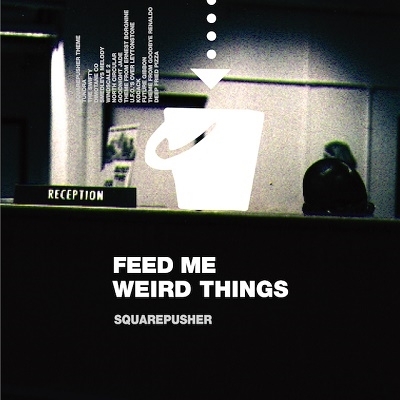
ロンドンのチェルシー・カレッジ・オブ・アート・アンド・デザインの美術学部に入学したとき、トム・ジェンキンソンは借りられる最高額の学生ローンを受け取り、その全額をはたいて中古の機材を買い揃えた。1400ポンド分の小切手は、中古のAkai S950サンプラー、2台のドラムマシン、ミキサー、DATレコーダーを買えるだけの額であり、これらの機材は、スクエアプッシャーとしての1996年のデビューアルバム『Feed Me Weird Things』に収められた音楽を作る上で不可欠な役割を果たした。当時のジェンキンソンは、レイヴ・ミュージックの文体を身につけながらそこに変化を加えてより斬新な可能性を追い求めようとするミュージシャンたちの流れに属していると見なされており、ルーク・ヴァイバート、μ-Ziq──そしてもちろんエイフェックス・ツインといった顔ぶれと交流を持っていた。ブレイクビーツのリズムを非常識な速度に高めたり、その性質をシリーパテ(粘性と弾性を兼ね備える合成ゴム粘土)のように多彩に変化させたりといったスタイルは、ほどなくしてドリルンベースと呼ばれるようになるジャンルの象徴となっていた。だが、彼の音楽を何より際立たせていたのはエレキベースの卓越した使い方で、奏者としての圧倒的な才能は、あのジャコ・パストリアスが比較対象になるのも納得できるものだった。
1995年にノースロンドンで開かれた実験的電子音楽のイベントに登場したジェンキンソンは、幸運にもエイフェックス・ツインその人であるリチャード・D・ジェイムスの耳にとまり、その後押しによって『Feed Me Weird Things』が彼のレーベル〈Rephlex〉からリリースされた。ジェイムスは収録トラックを選曲し、アルバムに熱烈なライナーノーツを寄稿した(例えば「ミスター・ジェンキンソンが指揮をするとき、彼を除く世界中のあらゆるものがオーケストラピットにある」といった記述がある)。翌年スクエアプッシャーは〈Warp Records〉からの最初のアルバム『Hard Normal Daddy』をリリースし、ドラムのプラグラミングと、ジャズ・フュージョンの過激さと、ひねくれたユーモアが混ざり合っていたことで、先進的な評論家の中からは彼をジャングル・ミュージック界のフランク・ザッパと位置づける声も上がった。しかし続いて1998年にリリースされた『Music Is Rotted One Note』では、大胆な方向転換──以後何度もおこなわれる方向転換のはじまりでもあった──がなされ、シーケンサーがアナログ楽器に置き換えられるとともに、ミュジーク・コンクレートといったジャンルやエレクトリック期のマイルス・デイヴィスを起源とするサウンドが作られるようになった。
その後に続くジェンキンスの多様な作品──2001年の『Go Plastic』のように〈Warp〉の歴史に刻まれる名作から、ベースのソロ・アルバム(『Solo Electric Bass 1』)、オルガン(『All Night Chroma』、ジェイムズ・マクヴィニーとの共作)またはアンドロイドを活用した作品(『Music for Robots』、Zマシーンズとの共作)にまでおよぶ──において、彼は一貫して独特の音の響きを保ち続けた。そして『Feed Me Weird Things』の時点で、すでにその音の響きは完成していた。本アルバムのリリース25周年を記念したリイシュー盤には、本人による新規のライナーノーツが付属するが、そこに記載されるまるで『Sound & Recording』などの専門書のようなマニアックな分析は、彼がたびたび言及する初歩的な技術のあり方とは対照的だ。『Feed Me Weird Things』のサウンドは、現在の〈Warp〉らしいスタイルのIDM(インテリジェント・ダンス・ミュージック)の神髄を表しているが、その起源が1980年代のインディー・シーンで培われたDIYの手法にあることも伝わってくる。
昨年の『Be Up A Hello』でジェンキンソンは、キャリアの初期に使用していた機材をひさしぶりに持ち出して、ひねりを加えたアシッド・ハウスやレイヴ・サウンドを生み出し、アルバムはこれまで制作してきた中で最も面白味のある作品のひとつと評価された。Zoomでのインタヴューで『Feed Me Weird Things』のリイシューに触れることはほとんどなかったが、長時間に渡って、10代のころの話やベースとの関わり、また創作における制約こそがつねに自らの取り組み方を決定してきたことなどについて積極的に語ってくれた。
子供時代が再来したかのようだった。「大人の世界」が遠のいて、もはや自分のやっていることと世界の間に現実の関わりがあるという感覚がなくなってしまったんだ。僕は、かなり本気でこの状態を保ちたいと思っている。
■昨年はあなたにとってどのような年でしたか?
TJ:たぶん、いろいろな意味で未知なる日々だった。何よりも最初は、そこにある恐怖がすべてだったけど、次第にある種の安堵感が混ざるようになった。1年中ツアーに出るだろうと思っていた状況から、程度の差はあれ、基本的に全部が撤回されるという状況に変わってしまったからね。ここでは正直に話すけど、もしこれで僕の思うようにやらせてもらえるとすれば、申し分のない状況だ。つまり、大人たちの世界は事実上機能を停止した。先を見据えたプロジェクトや何かが話題になることがなくなり、それは何が起ころうとしているのか誰にもわからなかったからだ。そんなわけで、創作活動に当てられる、願ってもない時間が早々に訪れたということだ。
■それはいいですね!
TJ:そう、ある意味ではそうだった──だからといって、この1年間ずっと降りかかってきた恐怖を軽視しているわけでは決してない──ただ、どことなく子供時代が再来したかのようだった。ある日突然、僕はこの場所でひたすら自分に向き合うことになり、それでいわゆる「大人の世界」が遠のいて、もはや自分のやっていることと世界の間に現実の関わりがあるという感覚がなくなってしまったんだ。僕は、かなり本気でこの状態を保ちたいと思っている。平常時であれば、それこそ無難な距離感を保つために、もっと慎重に取り組んだだろうけど、パンデミックの場合、なるようにしかならなかったんだ。
■ここ1年ほどの間に、自身が何か特定の方向性に引き寄せられていると感じることはありましたか? 現在取り組んでいることでも、あるいはこれから創作しようとしていることでも。
TJ:大まかに言えば、まだ『Be Up A Hello』の余韻が残っている。包み隠さず話すけど、これほどまでに大人の世界が遠ざかっている感覚が強くなって、自分のいままでの日常生活とか、考え方とか、対話とかがもはや通用しないとなるにしたがって、「好きなようにやってやろう!」という意識が戻ってきた。確かにいまのところ大きな仕事とか、大きなプロジェクトは何もない。それなら思い切り遊んでみようと思うだろう? そしてその考えは、すでに『Be Up A Hello』にもある程度は、取り入れられている。なぜなら、このアルバムそのものが、度重なる人生の厳しい出来事に影響を受けているからで、おかげである意味で再出発をして、最初の原則に立ち返ることができた。楽しいことをするっていうところにね。
■過去には、心から楽しいと思えない仕事をしていた時期もあったということですか?
TJ:(笑)いい質問だね。いや、本当に大事なことだ。何ていうか、そうだな、実際問題、楽しさを期待するだなんて、笑われても仕方がないからね……つまり26年の「キャリア」と呼べる年月が僕にはあって、それどころか子供だったころの準備期間を考慮すればもっと長くなる。確かに、すごく昔、それこそキャリアがはじまる前は、楽しいという感情がすべてを突き動かしていた。だからこそ毎日学校から走って家に帰ったし、ギターを触るのが待ちきれなかった。面白いという気持ちだけだった。職業にするという気はなかったし──もっとうまくなりたいという向上心すらなかった。初めは、何かすごいことをしたいという考えさえ持っていなくて、ただ単に「この楽器が好きでしょうがないし、この楽器が鳴らす音が好きでしょうがない」というだけだった──すごく素朴な向き合い方だ。もちろんそこからさまざまなことが進歩しているし、そのぶんつねにいろいろと気を配って、できるだけついていくようにしていることもつけ加えておきたい。要するに、46才になった自分に、10才の少年みたいな心持ちを期待されても困るということかな。
■(笑)そうですね……
TJ:だけど正直に言うと、できるだけ変わらないでいたいと思っている。自分にとってはそれがすべての根本だから。活力の源だ。言い方を変えれば、自分にルールを課して、楽器を弾いてもうまくいかないとき──そして楽しめていないとき──には、「いいか? いまは距離を置くべきなんだ」と考えるようにした。なぜなら、そうやってできあがったものを誰かが耳にしても、苦労の痕跡や憤りや退屈が伝わるばかりで、意味が変わってしまうから。ただときにはおかしなことが起こって、例えば取り組んでいるものがまるで気に入らなくて「どうしても最後までやらないといけないんだよな。気に入らないし、どうせ全部消去することになるんだろうけど、ともかく終わらせないと……」と考えていても、翌日聴いてみれば「あれ、思っていたより、ずっといいぞ」ってなることはある(笑)。それでもまあ、全体的には、僕は悩みながら取り組み続けるタイプではない。そういうやり方は自分に合わない。ただそれだけだ。
このことは、つねにあちこちのインタヴューで話している。まさに事実だからね。強い熱意が根っこにあって、あらゆるものがそこから派生している──そして何かに取り組むさいに無理を重ねて、身を粉にしてまでとことんやり抜くのは、かえってすべてを台なしにすると思う。駄目にするのはその日だけに限らず、もしかすると、何日も何週間も棒に振るかもしれない。たぶんプログラミングにもそういう面があって……実は昨日もいろいろとやっていたんだけど、結局放り出したんだ。義務感だけでやっている仕事に思えたから。いつかアシスタントのような人を置ければいいと考えている。仕事を押しつけるためではなくて、一緒に作ることで、もっと楽しめることがあるかもしれないと思うからね。でもそうなると、長年の習慣が変わってしまうだろう。まあやってみないとわからないけど。
■とはいえ、何度か他の人たちと一緒に仕事をしていますね? バンド(ショバリーダー・ワン)で活動していたこともありましたし……
TJ:うん、そのとおりだ。
■……そしてある時期(だいたい2008年の『Just A Souvenir』のころ)には、ボルト・スロワーのメンバーだったドラマーとともにステージに立っていました。
TJ:アレックス・トーマスだね。そうそう。いや、確かにああやってすばらしい時間を過ごしたけど、実際、技術的な面というか機械に関する面では、誰かに手伝ってもらったことはないよ。思うに、コラボレーションが実現するのは(つまり他のミュージシャンたちと演奏することは)僕にとっていちばん自然なことだ。何しろ10代のころを振り返れば、ずっとバンドに入って音楽活動をしていたわけだから。それが当時は何より大切なことだったし、自分の作品を作り続けてきたなかで、いまもまた活力を与えてくれている。
■なるほど、そうですか。10代のころ楽器を演奏しているときに、ベースに引き寄せられたわけですよね。その理由は、バンドでベーシストが必要とされていたからでしょうか? それとも、楽器そのものがあなたを引きつけたのでしょうか?
TJ:最初に楽器があって、それからバンドで演奏するようになった。というより、楽器があったからこそバンドをはじめたんだ。じつは最初の楽器はベースではなかった。当時は、何であれギターに類する楽器を身につけたいなら、昔ながらのアコースティック・ギターからはじめるのが一番だというのが定説だったし。そして僕は11才だった。経験も知識もまるでなくて誰にも相談しようがなかった──それにお金もなかった。安物のエレキ・ギターでさえ縁遠いものだった。初めてのアコースティック・ギターを15ポンドで買って、もちろんそれは、まったくもって大した楽器ではなかったけど、それでも新しい世界への扉を開くのには役立ったね。
だけど僕はずっとベースだけでなく電子楽器の世界にも引き寄せられていた。何がそんなに魅力的だったかと言えば、音色の質とか、奥深さ、エネルギーといったものが、自分にはその楽器を体現しているように思えたんだ。僕は、ベースがどんなものかさえ知らなかった。確かに、耳を慣らしていなければ、あの楽器はちゃんと聴き分けられない。そこに興味が湧いた。例えば「この楽器は何をしているんだろう? どこの音域なんだろう? どんな可能性を秘めているのだろう?」といったように。そしてその答えが明らかになる瞬間が何度かあった。振り返ってみれば、例えばポール・サイモンのアルバム『Graceland』が挙げられる。あのアルバムは傑作で──あれを知らないなんて許されないと言ってもいいくらい、それこそ触れる機会はいくらでもあるはずだ──そのなかに、あの素晴らしいベーシスト(バキティ・クマロ)が弾いているシングル曲があるんだけど……
■“Call Me Al” ですか?
TJ:そう、それだ。“You Can Call Me Al” だよ。このポップ・ソングのなかに、2小節だけ入っているベースのソロ・フレーズがある。それがもう「いまのは何だ!? めちゃくちゃ格好いいぞ!」っていう感じだった。パーカッションみたいにリズムを刻んで、それでいて美しいメロディーを奏でている。それに心を奪われた。あの音域ですごく面白いことをやっている。現在までの僕の音楽は、メロディー重視の曲を作る風潮に反していると思っている。メロディー重視の音は、クラシックでも、ポップでも、ジャズでもあらゆるジャンルで聞こえてくる──そこではトップの音が売り上げを左右して、低い音域はあくまで土台とされている。僕は低音域の作用に魅了されていて、多くの場合、自分の作品では上の音域が控え目になっている。どういうわけか、そのほうが性に合っている。でもとにかく……ベースは僕を惹きつけたんだ。
そういう出来事は他にもあった──例えば、ジミ・ヘンドリックスのモンタレー(1967年のモンタレー・インターナショナル・ポップ・フェスティヴァル)でのパフォーマンスだ。僕はあのステージのビデオテープを持っていて、本当に夢中になった。彼がギターに火を放つ場面があって、あの意味についてはそれこそ無限に解釈ができる。どことなく愉快なシーンだし、たぶん狙ってやっているところもあるんだろうけど、僕にとってはいまでも思い出すだけで背筋がぞくっとする。あれはロックの象徴で、それがああやって粉々にされて火を点けられた──そのときに鳴っていた音が魅惑的だった。いつまでも続く魅惑的な音が、楽器を酷使することで生まれていた。小遣いは足りていなかったし、ガソリンも持っていなかった──だから子供だった僕は、自分のギターに同じことはできなかったよ(笑)。
それはそれとして、ジミヘンがこれをやっている間、ノエル・レディングが演奏を引っ張って、ベースの音程を上げていき、そしていつの間にか甲高い音をバックで奏ではじめた。すごく刺激的だった。ここでもまた、別の意味で僕は引きつけられた。「そうか、ベースはこんなに激しくて力強い音も出せるのか」と思った。そういったできごとがあって、僕はすっかり納得していた。やがて次の機会が巡ってきた。ベースが70ポンドで売りに出されているのが地元の新聞に載っていて、しかもアンプまで揃っていたんだ。すぐに飛びついたよ。
僕の音楽は、メロディー重視の曲を作る風潮に反していると思っている。メロディー重視の音は、クラシックでも、ポップでも、ジャズでもあらゆるジャンルで聞こえてくる──そこではトップの音が売り上げを左右して、低い音域はあくまで土台とされている。
■スクエアプッシャーとして活動しはじめた頃、ベースも使うべきか迷いましたか、それともそこは最初から自然なことだったんでしょうか?
TJ:まあ、そうだね。スクエアプッシャーとなったものは、どのみち子供の頃にやっていたことの延長線上にあったものだから、つまり、手元にあった機材や、借りられるものを手あたり次第使ってみたってことだ。『Feed Me Weird Things』の頃も、それ以降もそうだった。最近になってその頃のことを思い出した。インタヴュー等で、あの作品の技術面について語ることがあったんだ。実際、あの機材の3分の1は借り物だった。おかしいよな(笑)。大体こんな風に「あ、このギターアンプ借りられる? ドラムマシンも貸してくれる? ちょっとこいつを試してみたいんだ……」とね。終始そんな調子だった。ギターペダルも借りたんだ。全然自慢にならないけど、まだ返してない(笑)。『Be Up A Hello』でもまだ使っているよ。だから、ある程度は言いわけは立つかもね。悪いことをしているのに変わりはないけど。
忘れられないのは、ビスケットの缶でスネアドラムを作ったことだ。画鋲を中に放り込んで、てっぺんに絶縁テープを張り巡らせてスキンを作った。ドラムセットの構成だってよくわかってなかったんだ、その頃は。「あの音だ。よく2拍目か4拍目に入るやつ。あのシャンシャンいう響き、〝シャラシャラ〟って鳴るあれ。あれは何? ドラムみたいだけど、でも……どうやってシャンシャン鳴るドラムを作るんだろう?」そういうわけで、「まあ、わかんないけど、画鋲をビスケットの缶に入れてみよう。それで上に何かを張ればいいや。そしたら叩けるだろ?」で、うまくいったんだ! それなりにね。最初の頃はともかく、恐ろしく原始的なものだった。予算ゼロだし、手元にあるのは安物のギターだけ。でも、そういうメンタリティーでいったんだ。
いまとなってはわざわざこういうことを追求してみようっていう気はないけど、近頃のミュージシャン志望の子たちが置かれている状況と比べてみると面白いとは思う。正直、彼らのほうが恵まれている。ラップトップさえあれば、無限の音楽作成ツールにアクセスできるんだから。夢みたいな環境だ。ほんの少し前を振り返って見るだけで、40年も前のことでもないのに、まったく、恐ろしいほど違っているんだ。
さて、もとの質問に戻るけど、ベースはなくてはならないものだった。あの頃、エレキ・ギターを持っていなかったから、電子機材で高音域を探求するという選択肢がなかった。でもまあ、「じゃあ、ベースのネックのいちばん上までいってみよう。それでギターみたいな音を出してみよう」ってやったんだ。で、もちろん、ギターの音にはいまいち似ていないけれど、別の味があった。それがなかなか面白かった。おかげでコードや和音、それから右手を使った色々なテクニックに首を突っ込むことになり、最終的には2009年にリリースした(『Solo Electric Bass 1』)みたいなソロのベースの作品になった。だからあれはそういう慈善バザー的な意識と取り組み方の集大成みたいなものなんだ。
それから少しして、バンドで演奏する傍ら、友だちと一緒に地元でパーティーを開くようになった。近所のYMCAとかでね。地元のサッカークラブなんかも良かった。そういうところで何度もパーティーをやったものだ。ドライアイスを敷き詰めて、手元にあった当時の最新レイヴのレコードをかけた。そこへベースを持っていっては演奏に合わせてジャムって、違った味を出そうとしたんだ。デッキでブレイクビートをかけて、ミキシングをしているやつがいれば、それに合わせてジャムってみたり。スクエアプッシャーはそういう活動からそれほど飛躍したものじゃない。中核になっているのはそういったもので、それが礎になっている。
楽器の演奏方法には一般的な思い込みが氾濫していて、「そうだ、偉大な先人はこうしていたんだ、だから君もうまくなりたいなら、彼らのやり方に習わなきゃ」っていうようなナンセンスだらけだ。
■ミュージック・シーンに初めて登場したときのことを振り返って見ると、ダンス系の音楽をああいう風に生の機材でやろうとしていた人びとはあまりいなかったかと思います。ある意味、ただひとり、自分の道を歩んでいましたよね?
TJ:ああ……いい勉強になったよ。その後、かなり早い段階であの世界から身を引いたからね。僕の見たところ、少なくともイギリスの評論家の一部は、僕がジャズやフュージョン・ジャズの要素を取り出してダンス・ミュージックと融合させていると思い込み、「どういうつもりなんだ?」と言っていた。それでまあ……奇をてらっているだとか、コメディ路線だとか思われたんだろう。確かに僕の作品にそこはかとないおかしみがあるのは否定しない、含まれているものなら他にもいろいろあるけれど。でも、あの機材はパロディやおどけじゃなかった。そういう反応が生まれた原因の一部は、もちろん、みんながそういう見方をしていたわけじゃないけど、ご指摘にあった通りだと思う。あまり流行ってなかったからだね。
でも、その目新しさが素晴らしい出会いにつながることもあった。例えば、タルヴィン・シンだ。彼は様々なスタイルや伝統音楽を用いている。彼もきっとタブラ演奏で同じようなことをやっていたんだと思う。しかも非凡な演奏者だったしね。彼とはたまたま同じギグに出演したときに知り合って、すぐに意気投合した。互いのアプローチに共通点があったからだ。当時のダンス・ミュージックと昨今の作品とのつながりを保ちつつも、生の楽器とそういった音楽との接点を見出し、互いに影響しあえる絶妙なツボを模索していたんだ。結局は、それこそが醍醐味だからね。そして、その具体的な成果がいまになって目に見えるようになったんじゃないかと思ってる。とくに最近のドラマーたちの多くにね。いまでは彼らはとても、とても明白に影響を受けていて……いや、自画自賛をするつもりはないよ。僕だけじゃない、もちろん。でも、わかるはずだ、彼らが受け継いでいるのを。例えば、僕やタルヴィンや他の人びとが探求してきたものをだ。そしていまでは逆方向へのフィードバックがはじまっている。素晴らしいことだと思う。
そのフィードバックのプロセスは、ある意味、僕のなかでも起きていた。ほんの束の間だけど、10代前半の頃に戻れたんだ。ベースラインの濃厚なレイヴのレコードがしっくりくるアシッドの曲やなんかで。そういうレコードにはしょっちゅうあることだが、たぶん(プロデューサーが)従来的な楽器のイロハを学んでないことに関わりがあるんだろうな。レコードの音程がサイケデリックなんだ。何て言うのか、音階が完全にぶっ飛んでいる。そこから音階を作ろうとしたら、とても妙なものができあがるだろう。2オクターヴの音階だとか、リピートしないものだとかね。そういう曲を演奏しようとすると、そういったある種どうしても内面化してしまっている、いわゆる「原理原則」を手放すことになる。というのも、とても多くの音楽がそういう特定の作法に従っているからだ、音階だとか、そういったものにね。あまりに普遍的で、どうすることもできない……知っておかなければならないことではあるけど、そういったものもある種の制限を課してくるんだ。
だからDJピエールの(フューチャー名義の)“Slam” や “Box Energy” を演奏して、理解を深めようとしたことがあるんだけど、「ものすごく変!」ってなる。けれども演奏しているうちに「こいつは……本当に未来的だ」とわかる。実に勉強になるんだ。演奏に別の角度から影響を与えてくれる。楽器の演奏方法には一般的な思い込みが氾濫していて、「そうだ、偉大な先人はこうしていたんだ、だから君もうまくなりたいなら、彼らのやり方に習わなきゃ」っていうようなナンセンスだらけだ。実際、視線をその向こうに据えて、サウンドだけに集中してみるといい。「偉大な先人」から目を背け、名演奏とはまるで関係ないレコードだけじゃなく、それ以外のもの全て、周りのノイズのようなものも含めてシャットアウトする。そうすると、少なくとも同じくらいか、むしろそれ以上のインスピレーションが得られるはずだ。
■あなたのキャリアを振り返るのはじつに興味深い。アルバムとアルバムの間である種の綱引きがおこなわれているようなんです。きわめてライヴ要素を重視しているものがある一方で、もっとこう、箱の中で展開しているようなものもある。
TJ:ああ、実にその通りだ。
何であれ、手元にあるもので音楽を作る。自慢できることがあるとすればそこだ。つまり「僕はどんなものを手にしたって、音楽が作れる」ってこと。ある意味、パンク精神と言おうか、独立精神と言おうか。
■楽器を用いずに、完全にコンピュータだけでやっているときでも、ベースはつねにあなたの人生の一部で、何があっても触れ続けているものだったんですか?
TJ:ああ……もちろん。練習そのものに注ぎ込む時間は、まちまちだけどね。そこは一定してない。芯からプロ意識を持っている人っていうのはそういうところに厳しく取り組むんだろうけど、僕は違う。弾きたいときに弾くんだ。でも結局のところ、限界みたいなものがあるんだ。そこを過ぎるとスタミナを失っていくポイントがね。でも、他にあるのは……僕が言っているのは原理原則の体系だとか、音階ってこと。僕の理解では、他の多くの人もそう思っているだろうけど、指がどこに行くのかを心得てればいいってもんじゃない。指が行先を心得ているのは全体像となるメンタルマップがあるからなんだ。演奏しているとき、指にそこに行けと命じているわけじゃない。頭の中にイメージがあって、そのイメージをなぞっている。ある種の構造化したネットワークのようなものの、異なった道筋を辿っているんだ。それはつねにある。ギターを手にしていようがいまいがね。
■なるほど。
TJ:だから、しょっちゅう、電車を待ってるときとか、行かなければいけないところがあるけどやることがないとか、そういうときには大体頭のなかで演奏して楽しんでいる。基本的には同じことなんだ。楽器はないけれど、音はそこにある。僕が辿る構造化した道筋は同じだ。それはもちろん、コンピュータをベースにした作曲のときにもあると思う。だからこの構造化した道筋を通じて情報がろ過されていく。こう言ったらわかってもらえるかな。例えば、『Damogen Furies』のメロディーには、僕がギターを手に取れば演奏しそうな要素がある。
■ああ、なるほど。
TJ:そこが面白いところでもあり、楽器の恐ろしいところでもある。テクノロジーを使うだけというような単純な話じゃない。テクノロジーに使われてしまうんだ。テクノロジーが構成の前例、構成のパターン、そして構成の傾向を固めてしまう。僕が使っているあらゆる機材もそうだ。シンセサイザー、キーボード、ドラムに対応する構造やネットワークがあり、他にも僕がとても慣れ親しんでいる機材は、それらに対応する脳内イメージを持っている。でもって、それらがまた、フィルターとしても働く。だから僕は絶えずそれに抗おうとしているんだ。必ずしもフィルターというわけでもないな。努力さえすれば、型を破ることができるのだから。だから僕は「原理原則」と言うんだ。必ずしも従わなきゃならないってわけではない。でも、そうしないように意識的に努力しないと、確立されたネットワークや道を辿るのが最も抵抗の少ない道になってしまう。そして、そうなってしまうと本当に、最終的には自分の使っているものが定めてしまうことになるんだ。
■じゃあオーネット・コールマンみたいにヴァイオリンを弾きはじめるとか、そういうことで、自分の殻を完全に破ってみたくなったことはないんですか?
TJ:何をやったかは具体的には挙げられないけど、つい最近、そういうことがあったのは認めるよ。いや、でも、あのメンタリティーは尊敬に値する。時々、こういうことをやるのはとても大事なことだと思う。そうだとも。ヴァイオリンと言えば……もちろんギターとの共通点がある。だけど根本的な違いは、思うに、少なくとも僕にとってだけど、ヴァイオリン系の楽器を手にしたときに感じるのは、弦が完全5度に調律されているってことだね。一方、ギターの場合はそれが4度だ。だから、僕が言っていた同じ体系をそのまま当てはめることはできない。完全にずれて新しいパターンになっているから。だから、それに抗って、僕がヴァイオリンを手にしたときにやれることを実現するには、ギターのチューニングを変えることだ。ラディカルさに欠ける嫌いはあるけど、ある程度はやれるようになる。でも本当にラディカルなのは、管楽器を手に取ることだろうね、いままで一度もやったことないから。やってみたら、たまげるだろうな! ぜひ挑戦したいね。
■そうでしたね、『Feed Me Weird Things』のライナーノーツで “The Swifty” でのベース演奏はサックス奏者の影響を受けたと言ってましたね。
TJ:うん、そうなんだ。実に。
■でも、そこまでやったことはまだないと?
TJ:ないな。なぜって、これと戦うというのは、そうだな……怠惰と呼んでもいい。僕には手近なところにあるものでベストを尽くさずにはいられないっていう微妙に染みついた癖があるんだ。僕のメンタリティーというのは、良きにつけ悪しきにつけ、前にも言ったが、音楽的な自由が身の回りにほぼなかったという状況の産物なんだ。まあ、アコースティック・ギターとテーププレイヤーがあって、ペダルが何個かあって、後になってキーボードみたいなものがきた。まあ、それはいいんだ。でも機材はとても限られていた。あれこれ手に入れようとはしたけど、限界を受け入れなければならなかった。そしてそれがある意味、僕の姿勢を決定づけた。そりゃ、贅沢だってできるよ。楽器店に出向いて、何かすごいものを手に入れて、「おい、見てくれ、新しいオモチャだぞ!」って言うんだ。もちろん、そういうことをしてみることもある。4弦から6弦のベースに変えたのは大きな変化だった。「いいんじゃない? 手を出してみよう。贅沢してみようか?」ってね。性格的に、さっき言った背景の強い影響もあって、「金に飽かして音楽を作ろう」っていう(メンタリティー)はない。何であれ、手元にあるもので音楽を作る。自慢できることがあるとすればそこだ。つまり「僕はどんなものを手にしたって、音楽が作れる」ってこと。ある意味、パンク精神と言おうか、独立精神と言おうか。DIYするっていうのは「教会のオルガンも、24トラックのテープも、Neveのミキサーも、アウトボードも聖歌隊も要らない……」ってことだ。僕には不要なんだ。
■リック・ウェイクマンとは違うんだと。
TJ:(笑)。よくわかってるじゃないか! まさにそう。いや、まあ、あの人はあの人だ。だけど僕にはそういう選択肢はまったくなかったし、異なった状況でベストを尽くさねばならなかった。そして次第に、そういうことが僕にとっていちばんいいメンタリティーを造り上げていったんだと思う。断言するけど、それでよかったんだ。なぜなら、外部的なものに頼りきっていると、膨大な予算だとか、大勢のキャストやスタッフだとかに頼るとね、そういうのに支配されるようになる。そして、そこに不安を覚えるんだ。自分の制作プロセスを左右されたくない。他人の気まぐれやら、彼らの考えるいいサウンドだとか、彼らの考える「支払ってもいい妥当な金額」とかにね。そういうくだらないことには一切悩まされたくない。とにかく没頭したいんだよ、わかるだろ? まあ、じつのところ、性格的に僕は浪費できないんだろうけど。
困ってしまうのは、テクノロジー系の雑誌なんかと(インタヴューを)やるときだね。彼らにとってはそれが全てなんだ。完全に業界に縛られていて、「新しい機材=新しい音楽」という図式なんだ。必ずしもそういうわけじゃないだろうって。そんなことはない。陳腐なやり方を当てはめてしまったら、そこから生まれてくるのは、クソみたいに無意味で、味気なく、つまらない音楽だ。反対に、こういうやり方も……いや、リック・ウェイクマンの冗談はさておき、メシアンのような作曲家(のやり方)を見習える。実に幅広く、とてつもなく面白い、刺激にあふれたオルガンのための作品を彼は生み出した。オルガンは何世紀も前の楽器だけど、彼が手にすると突然に、前代未聞のサウンドを奏で出す。僕に言わせれば「新しい機材、新しい音楽」の間には抜け落ちているものがたくさんある。それはもう……そりゃそうだ。新しい機材は音色が違うのはわかる。多少はね。(眉をよせる)だけど、そんなことじゃ僕は興奮しない。そういうことに意欲をかき立てられはしないんだ。
interview with Squarepusher
by James Hadfield
When he enrolled as a student of Fine Art at London’s Chelsea College of Art and Design, Tom Jenkinson took out the largest student loan he could get and blew the whole thing on second-hand gear. His £1,400 cheque was enough to buy a used Akai S950 sampler, two drum machines, a mixer and a DAT recorder, which played integral roles in the music collected on his 1996 debut album as Squarepusher, “Feed Me Weird Things.” At the time, Jenkinson seemed to be part of a wave of musicians who were taking the language of rave music and twisting it to weirder ends, putting him in the company of the likes of Luke Vibert, μ-Ziq — and, of course, Aphex Twin. The way he pushed breakbeats to insane speeds or turned them into silly putty was typical of what would soon be known as drill’n’bass, but his music was distinguished by its prominent use of electric bass, which he played with a virtuoso flair that made Jaco Pastorius comparisons inevitable.
Appearing at an experimental electronic night at a North London pub in 1995, Jenkinson had the good fortune to catch the ears of Aphex Twin himself, Richard D. James, who would go on to release “Feed Me Weird Things” on his Rephlex label. James chose the track selection and wrote the album’s ecstatic liner notes (sample line: “When Mr. Jenkinson is conducting, the rest of the world is in the pit”). The following year, Squarepusher released his first album on Warp Records, “Hard Normal Daddy,” whose blend of frenetic drum programming, jazz-fusion excess and twisted humour led some enterprising wags to dub him the Frank Zappa of jungle. But its 1998 follow-up, “Music Is Rotted One Note,” pulled a volte-face – the first of many – by swapping the sequencers for analogue instruments and a sound rooted in musique concrète and electric-era Miles Davis.
For all the variety of Jenkinson’s subsequent work – from landmark Warp releases such as 2001’s “Go Plastic,” to albums for solo bass (“Electric Solo Bass 1”), organ (“All Night Chroma,” with James McVinnie) or androids (“Music for Robots,” with Z-Robots) – he’s maintained a distinctive voice throughout. And on “Feed Me Weird Things,” that voice was already fully formed. The album’s 25th anniversary reissue comes with new liner notes by the man himself, offering geeky breakdowns of each track in a “Sound & Recording”-style tone that stands in contrast with the often rudimentary techniques he’s describing. “Feed Me Weird Things” may sound like quintessential Warp-style IDM now, but it was also rooted in a DIY approach that owes as much to the 1980s indie scene.
On last year’s “Be Up A Hello,” Jenkinson dusted off some of the equipment he’d used during the early days of his career, delivering a set of twisted acid ravers that was among the most enjoyable things he’s done. Speaking via Zoom, he barely mentions the “Feed Me Weird Things” reissue, but is happy to talk at length about his teenage years, his relationship with the bass, and how those formative constraints have continued to inform his approach.
■How has the past year been for you?
TJ:It’s been, I suppose, novel in ways. One of the first things, for me, was just the terror of it all, which then became mixed with a sense of some sort of relief. I moved from a situation where it was looking like I would be on the road all year, to one where, more or less, everything was basically cancelled. And I’ve got to be honest with you: if I’m left to my own devices, that’s the perfect situation. I mean, the adult world just more-or-less ground to a halt. There were no conversations regarding further projects or anything, because nobody knew what was happening. It quite quickly gave way to a really lovely creative period.
■Oh, nice!
TJ:Yeah, and it was, in a sense – and I don’t mean this in any way to trivialise the horror of what’s been happening over the last year – but it was kind of like a second childhood, you know? It was suddenly like, there I was, working away on my stuff, and the adult world, in inverted commas, just receded to such a distance where there was no longer a sense of it having any real relation to what I was doing. I’m pretty keen on preserving that state anyway. In normal times, it’s more of a deliberate attempt to kind of push it to a safe distance, but in the case of the pandemic, it did it of its own accord.
■Have you found yourself gravitating in any particular direction over the past year or so, in terms of what you’re working with, or what you’re trying to create?
TJ:Just following on from “Be Up A Hello,” in a general sense. And I’ll be completely frank with you: I think it’s very much part-and-parcel with the sense of the adult world receding to such a distance, where it was just no longer really a feature of my day-to-day life or thinking or conversations, that I correspondingly just kind of went back into this [state of] “Ah, let’s just mess about!” You know, there’s no big thing to do here, there’s no big project. Let's just play around, you know? To an extent, that was already what was underpinning “Be Up A Hello,” because that itself was precipitated by a couple of life events that were quite severe, and it just led me to kind of have a restart, and just go back to first principles. Fun stuff.
■Have there been times in the past where what you were doing really didn't feel fun?
TJ:(Laughs) That’s a good question. No, I admire that. Because, yeah, let’s face it: it would be ludicrous to expect that across... I mean, it’s 26 years of what you might call a “career,” and actually much longer than that if you count all of the lead-up when I was a kid. Certainly, very early on, before career days, fun was what drove it. That was what got me running home from school and wanting to pick a guitar up: it was the sense of enjoyment. It didn’t feel vocational – it didn’t feel aspirational, even. I didn’t start, even, with the idea of being any good, it was just like: “I love this thing, and I love the sounds it makes” – a very, very elemental approach to it. Of course, things developed from there, and I would hasten to add that it is always something I’ve got my eye on, to retain as much of that as I can. I mean, at 46, you can’t expect to have the mentality of a 10-year-old boy.
■(Laughs) Sure...
TJ:But I’ll be honest: I will try and preserve as much of it as I can, because for me, that is the root of it all. It’s the lifeblood. Put it like this: I would have a rule where, if I’m playing an instrument and it’s just not working – I’m not enjoying it – it’s like, “You know what? I just have to walk away.” Because you end up hearing it: you hear the struggle, and you hear the resentment, or the boredom, and it translates. The peculiar thing is, once in a while, you'll be sitting there hating it, and you think: “I’ve just got to get through this. I hate it, I’m going to delete it, but I need to get to the end…" And then the next day, you listen to it and think: “Wow. That’s pretty good, actually.” (Laughs) But in general, yeah, I’m not one for sitting there suffering. It’s just not the basis of it, for me. It really isn’t.
I always say this in interviews, because it’s so true: the enthusiasm is the root of it, and everything stems from there – and I feel like sitting there, slogging away and just grinding yourself into the ground, is just killing that. And it doesn’t kill it just that day: it kills it, potentially, for days and weeks. Programming is the side, perhaps… I was actually doing something yesterday, and I just walked away, because it was like: this is a chore. One day, I hope I will have an assistant. Not to palm off, but I think some of these things would be perhaps more pleasurable done in collaboration. But that would be changing the habit of a lifetime. We’ll see.
■But you have worked with people at some points, right? You had the band [Shobaleader One]...
TJ:Yes, absolutely.
■...and you had the period [circa 2008’s “Just A Souvenir”] when you were playing with that drummer, the Bolt Thrower guy.
TJ:Alex Thomas. Yeah, yeah. No, and those have been great times, but I’ve never had a technical or an engineering collaborator, really. I guess, if a collaboration is to happen, [playing with other musicians is] what comes most naturally to me, because then I’m referring back to teenage years, when a lot of my musical activity was playing in bands. That was the principle thing I was doing in those days, so it’s just re-energising a strain of my work that was always kind of there anyway.
■Sure, sure. So when you were playing as a teenager, the way that you gravitated towards bass: was that because they needed a bassist in the band, or was it really like the instrument itself was drawing you in?
TJ:The instrument came first, and then I got into playing with bands, but it was the instrument that started it. Actually, I didn’t start on bass. The received wisdom at the time was that any branch of the guitar family that you eventually want to pursue, you’re best starting with classical acoustic guitar. And, you know, I was 11: I didn’t really have the grounds or the knowledge to argue with anyone – and also not the money. Even a cheap electric guitar was a different kind of commitment. I got my first classical acoustic for 15 quid, and of course, it was not a great instrument in any way, but it served to open the door.
But I was always being pulled along by, not just bass, but the electric instrument world. That was what fascinated me, is the sort of timbre, the amplitude, and the drive that seemed to me synonymous with those instruments. I didn’t even know what bass was. And, certainly when your ear is not trained to listen to it, it’s not always an instrument you can really pick out, so that intrigued me. It’s like, “What does this thing do? What is its register, and what are its possibilities?” And there were moments where it was clear. Thinking back, like on Paul Simon’s album, “Graceland,” which was a massive album – it was actually illegal not to know it, somehow, it was just so ubiquitous – there was that single with this amazing, amazing bass player [Bakithi Kumalo]…
■“Call Me Al,” right?
TJ:Yeah, exactly, “You Can Call Me Al.” So it’s got these two bars of, basically, bass shred in the middle of this pop song. It’s like: “What’s that!?! That sound is COOL!” It’s got this kind of percussion thing, but it’s also melodic. It just captivated me: that register, doing something interesting. Still, I think, to this day, my music is kind of flipping that top, melodically oriented approach that you’ll hear across classical, across pop, across jazz, whatever – where the top is kind of where the business happens, and the lower registers are the foundation. I’m fascinated by activity in the low registers, and quite a lot of the time, the upper registers are more placid, in my stuff. Somehow, it just suits my temperament. But anyway... so the bass is the thing that pulled me in.
There were other things – like, for example, the Hendrix performance at Monterey [1967 Monterey International Pop Festival]. I had a video tape of a bit of that, and it really entranced me. This moment where he sets the guitar on fire: it’s such a limitlessly interpretable thing. I mean, it’s kind of funny, I guess, and perhaps a gimmick, but for me, I still think back to it and it makes the hairs on my neck stand up. It’s the central symbol of rock, and here it was, being smashed to pieces and set on fire – and the fascinating thing being the sound it was making at the time. It’s an endlessly fascinating thing, of what an instrument does when you mistreat it. I didn’t have the finances – or the petrol – to do that to my guitars when I was a kid. (Laughs)
Anyway, whilst Hendrix is doing this, Noel Redding kind of takes the lead, and he turns up the tone control on his bass, and suddenly it’s really clanging away in the background. It’s really exciting. So again, that was another thing that pulled me in. I thought: “Oh, bass can sound really hard and aggressive as well.” So that was it: I was sold. And then the next opportunity came around, I saw one in the local paper for 70 pounds, complete with amplifier, so I jumped in.
■When it came time for you to start working on Squarepusher stuff, was there ever any question in your mind about whether or not you should incorporate the bass into it, or was that just kind of like a natural thing for you from the start?
TJ:Well, yeah, because what became Squarepusher is just an outgrowth of what I was doing as a kid anyway – i.e. just laying my hands on whatever instrument I had, or what I could borrow. Even up to the days of “Feed Me Weird Things” and beyond. I’ve been reminded of this recently, because I’ve been, in some interviews, talking about the technical side of that record, and actually it’s like a third of the equipment on this record is borrowed. (Laughs) It’s funny. That’s basically how it was: “Oh, can I borrow your guitar amp? Can I borrow your drum machine? I just want to try this thing…" So that was the story all the way through. I’ve borrowed guitar pedals, and – not to my credit, but – I’ve still not given them back. (Laughs) And I’m still using them on “Be Up A Hello,” so there’s some justification, even if it’s fundamentally wrong.
I remember, I made a snare drum out of a biscuit tin, but filled it with drawing pins, and then I made a skin on the top of the tin from criss-cross insulation tape. I didn’t know what, really, the elements of a drum kit were, in those days. “There’s a sound – typically on the second and the fourth beat – that’s kind of got this fizz, it’s like ‘pssh, pssh.’ What’s that? It’s like a drum, but... how do you make a fizzy drum?” And so, I was like, “Well, I don’t know, put drawing pins in a biscuit tin, and then a thing on top, so you can hit it?” And it was OK! It sort of worked. It was just very, very primitive early on, when there was zero budget, and really not much other than a cheap guitar, but that’s just kind of the mentality.
I’ve got no specific interest in labouring this point in itself, but I do think it’s interesting if you compare that to the situation that an aspiring musician would be in now – which I think is better, frankly – where if you’ve just got a laptop, you’ve got access to basically an endless array of sound-making tools. It’s a fantastic situation to be in. And it’s only looking back to those years – it’s not even 40 years ago – and it was very, radically different.
But going back to your question: the bass was just one of the things that I had to have. In those days, I didn’t have an electric guitar, so I didn’t have that scope to explore the upper registers of an electric instrument, but I would kind of, “Well, let’s go right up the top of the neck of the bass, just to try and make it sound like a guitar” – and of course, it doesn’t quite sound like a guitar, but it does something else, which is quite interesting. That led me to explore chords, and polyphonic stuff, and different right-hand techniques, which eventually led me to do stuff like the solo bass record that was released in 2009 [“Solo Electric Bass 1”]. So it was just really an outgrowth of that sort of jumble sale attitude and aspect of how things were being done.
A little bit later, parallel to playing in bands, my friends and I would put on parties locally – you know, the local YMCA, or the local football club was a good place. We did a lot of parties down there. We’d just fill it with dry ice, and play whatever the latest rave records were that we had at the time. I started taking my bass along, just to jam along top, to bring some different aspects to it. Whoever was on the decks might be playing breakbeat records and mixing those up, and I’d just jam along the top. It was really not a big jump from that to Squarepusher. That’s kind of the elements of it, set right there.
■Thinking back to when you first came on the scene, I’m not sure if there were really many people who were trying to do dance-rooted electronic music with live instrumentation in that way. You were really kind of out there on your own, weren't you?
TJ:Yeah... it was instructive, because I backed away from that world fairly quickly afterwards, but it seemed to me – at least among certain British critics – that [my approach of taking] elements that they perceived as coming from jazz and from fusion jazz, and mixing it with dance music, was kind of like, “What are you doing?” That’s kind of… probably either pretentious, or for comedy’s sake. And whilst I don’t deny that there is obtuse humour – amongst other things – in my work, fundamentally, that instrument wasn’t there just to kind of make a parody, or make fun of itself. I think that response – and it wasn’t, of course, the only response at all – was partly because of what you said: it wasn’t really happening.
But that novel aspect of it did lead, also, to some really great hook-ups. For example, I believe Talvin Singh – as much as he was drawing on different styles, different musical traditions – was perhaps doing something analogous with his tabla playing, and he was an extraordinary player. I got to meet him, just through randomly being at the same gig, but we immediately clicked because of that common approach. There were references to the dance music of the time, and of recent times, but also trying to find the the sweet spot of where a live instrument might connect with those things, and how one informs the other – because that’s, in the end, the beauty of it. And I think now we can see really tangible results of this, especially in a lot of modern drummers, where they now very, very clearly have taken away some of the... I’m not saying this to blow my own trumpet or anything – it’s not just me, of course – but you can see that they’ve taken something from the kinds of things that, for example, Talvin and myself, and other people, were exploring. And that has now kind of fed back in the reverse direction, which I think is a wonderful thing.
That feedback process was kind of happening internally as well for me. Going back to earlier teenage days briefly again: I would get a rave record, or something with a really fat bass line of some sort, like an acid track or something. Quite often, you’d find on those records – and I believe it might relate to the fact that those [producers] didn’t always have training on conventional instruments – that the note intervals are really psychedelic. It’s like a completely screwed-up scale. If you were to try to derive a scale from it, it would be quite a weird, like, two-octave scale, or maybe something that doesn't repeat. So trying to play those things would take your hand away from those “tramlines” that inevitably you kind of internalise, because so much music is in those particular modes, whatever it is, scales. They’re so prevalent, and you can't help [it]… you must know them, but they also produce their own sort of restrictions.
So trying to just play something like “Slam” by DJ Pierre [as Phuture], or “Box Energy” by DJ Pierre – I remember trying to work that out, and it’s like, “This is so fucking weird!” But in the end, when you’re playing, it’s like, “This is... it’s totally future.” And it’s really instructive, and it really can inform your playing in a very sort of lateral way. There’s so much received wisdom about how to play instruments, and so much fluff about, “Oh, it’s what the greats did, so if you want to be great, you've got to do what they did…" Actually, I think looking beyond that, and looking away from “greats," and looking just to sounds – not just from records that are nothing to do with that virtuosic tradition, but even beyond that entirely, to kind of environmental sounds – there’s as much, if not more, inspiration to be derived from that.
■It’s been interesting looking back at your career, how there’s been this kind of push and pull between some albums which were very much focused on the live element, and then others which were much more kind of happening within the box.
TJ:Yeah, absolutely.
■Even when you weren’t incorporating instrumentation, and doing stuff purely on computer, presumably the bass was still present in your life, just as something that you’d be playing anyway?
TJ:Yeah... of course, the amount of time devoted to just practice, it does vary. It varies for me. I’m sure someone who’s truly internalised professional attitudes probably has a rigorous approach to this stuff. I don’t: I just play when I wanna play. But in the end, there’s always kind of a bare minimum, beyond which you start to lose the stamina. But the other thing is... I’m speaking about the tramlines of structures and the scales and so on. I believe the way I relate to it – I’m sure many other people do as well – is that it’s not just that your fingers know where to go: they know where to go because there’s a mental map of the whole thing. So when you’re playing, you’re not telling your finger to go there, it’s just a picture in your mind, and you’re following the picture, following a different pathway around this kind of structural network. And that’s there, whether you’ve got the guitar in your hand or not.
■Right.
TJ:So, quite often, if I’m in a situation – waiting for a train or whatever it is – where you’re basically obliged to be somewhere but there’s nothing you can really do, I will quite often entertain myself by playing things, but just playing in my head. It’s basically the same thing: it's just without the instrument, but the sounds are still there, and the structure that I’m navigating is identical. That, of course, I think will also be present working on computer-based stuff, so the information will be sort of filtered through this structure. You might be able to pick it up: there are elements, for example, on “Damogen Furies,” where the melodies are very much the kind of thing I would play if I just picked up a guitar.
■Ah, okay.
TJ:This is what fascinates me, and sort of scares me about instruments. It’s not like as simple as you use the technology: the technology uses you. It sets up precedents, it sets up patterns, it sets up tendencies. Every instrument I use does do that, so there’s also parallel structures or networks that correspond to synthesisers, keyboards, drums – other instruments that I’ve got strong familiarity with, there are these analogous kind of cerebral representations of them. But they do act, also, as filters, which is why I’m always trying to fight against them. They’re not necessarily filtering: you can always think beyond them if you make enough effort. That’s why I’m talking about “tramlines.” It’s not that you have to follow them, but if you don’t make a specific effort not to, the path of least resistance is to follow in those established networks and paths, and that really, in the end, will be established by whatever you use.
■So you haven’t been tempted to do an Ornette Coleman and start playing violin or something like that, just to completely pull yourself out of your routines?
TJ:I can’t actually name an activity I’ve done, certainly in very recent times, where that has happened, I admit. No, but I admire that mentality. I think it’s really essential, from time to time, to do this. Absolutely. Speaking of violin... Of course, there are similarities between that and a guitar, but the principle difference, I think – at least for me, when I pick up a violin family instrument – is that the strings are tuned in fifths, and on a guitar it’s tuned in fourths. So you can’t just apply those same structures I was talking about: it’s all shifted out of place into a new pattern. And so one of the ways that I try to interrupt that, and get to something like how it might be if I picked up a violin, is just to tune the guitar differently. It’s less radical, but it gets some of the way there. But I think a really radical thing would be for me to pick up, like, a wind instrument, because I’ve never done that. That would blow my mind, trying to do that! I’d love to.
■Oh yeah, you mentioned in the liner notes for “Feed Me Weird Things” that when you made “The Swifty,” your bass playing was inspired by saxophonists.
TJ:Yeah, that’s right. Exactly.
■But you’ve never gone there?
TJ:No, because fighting against this is a sort of… you might call it laziness. It’s this slightly ingrained tendency I have to make the best of what I have to hand in my immediate environment. My mentality, for better or for worse – as I said earlier – is born of this situation, where I had virtually no musical degrees of freedom around me. I would have, like, an acoustic guitar and a tape player, a couple of pedals – and then later, perhaps, a keyboard of some kind, whatever – but this very limited range of stuff, and I was trying to acquire things but had to accept the limits. And I think this has kind of set my attitude, in a sense. Look, I can indulge, go to a music shop, get something great and then [say], "Hey, look, I've got a new thing!” And of course, once in a while, that will happen: when I switched from 4-string to 6-string bass, it was a big step. “Why not? Let’s try this. Why not indulge?” Just temperamentally – and very strongly informed by that background – I don’t have that “making music with my wallet” [mentality]. I make music with whatever I have to hand. If I take any pride in any of it, I take pride in that. It’s like: “I can just pick that up, and I can make music.” Something of it is the spirit of punk, some of that independence of mine: the DIY thing, the thing of, like, “I don’t need a church organ, a 24-track tape, and a Neve mixer and a stack of outboard and a choir…" I don’t need that.
■You're not Rick Wakeman.
TJ:(Laughs) You know where I’m going! Exactly. I mean, whatever: he did his thing. But for me, that option was never there, and I’ve had to make the best of a different situation, and over time, I believe this is kind of cultivating the mentality that I think is best. I will say that: I think it’s better. Because I think relying on all this external stuff – relying on massive budgets, relying on a huge cast of staff – it just puts you at their mercy, and there’s something about that which alarms me. I don’t want my process to be vulnerable to other people’s whims, to their ideas about what sounds good, what their idea is about the amount of money it’s worth spending on it. I don’t want to think about any of that crap: I just want to get on with it, you know? But I think the flip of that is that I’m just not temperamentally inclined to indulge.
I get into trouble, because when you’re doing [interviews with] tech magazines, it’s like their whole thing – they are completely entwined with that industry, and the paradigm that “new instrument = new music.” It’s like: not necessarily. I don’t believe so. You can apply the same tired old habits to it, and in the end it produces more fucking irrelevant, flat, inconsequential music. Conversely, you can go to... well, joking about Rick Wakeman aside, you can [do what] a composer like Messiaen did, in a very broad and absolutely fascinating, inspiring body of work that he made for the organ – which was a centuries-old instrument, but suddenly, under his control, making sounds that were, to my mind, unprecedented. For me, there’s so much slippage between “new instrument, new music” that it’s... Yeah, okay. I get that a new instrument sounds different – a bit. (Frowns) That doesn’t fire me up, you know. It’s not the thing that gets me going.