「Real World」と一致するもの

edbl × Kazuki Isogai - ele-king

 トム・ミッシュ以降を担う存在として人気を集めているロンドンのプロデューサー、エドブラックと大分のギタリスト、磯貝一樹とのコラボ作がリリースされる。発売はCDが9月7日、LPが12月21日。エドブラックのソウルフルな音楽と磯貝のジャジーなギターが生み出すマジックを楽しみたい。

Cate Le Bon - ele-king

「立ち上がり、歩くこと。立ち上がり、歩くこと。彼がつまづかないことを示すこと。彼は大丈夫だ。大丈夫なのだ」。ジェームズ・ケルマンの『how late it was, how late』における主人公で、グラスゴー人のサミーは、家路につこうとするが、体が言うことをきかない。酔っぱらって頭にかかっていた靄はやがて晴れる。しかし彼は自分が一歩一歩、手と足を使って、身を隠すために奔走していることに思い当たる。

 哲学の勉強のためにグラスゴーを歩き回った4年間で、私は移動することに価値を見出すようになった。飲酒文化が特に有名なこの街における「移動」は、少し飲み過ぎた後でも安全に家に帰れるということを示している。6年ほど前に東京に引っ越してからは、酒の量は減った。しかし定期的に東京の終わりのない通りや小道をぶらぶらと歩き回るようになった。決まった目的地がないときには、歩いているだけで気分が高揚する。

 しかし、多くの人と同じように、パンデミック以来、私は室内から外を見て過ごすことが多くなった。ここ数年は、スコットランド文学を追いかけたり、様々なアーティストやコメディアンがTwitchというストリーミング・プラットフォームに活動の場を移していくのを見守ったりしている。そのなかでの個人的なハイライトのひとつは、「Rust」というゲームで自分の仮想上のクラブ・ナイトを作り、主催した Murlo だ。また、ちゃんとしたヘッドフォンを購入したことで、ポップとエクスペリメンタルを横断するような音楽への興味が再燃した。

 スコット・ウォーカーの “It's Raining Today” を青写真に、私は、私の感覚をぶっ壊すような「歌モノ」の音楽をいつも探している。過去10年間では、ジュリア・ホルターの “エクスタシス” や、ディーズ・ニュー・ピューリタンズの “フィールド・オブ・リーズ”、クワイア・ボーイの “パッシヴ・ウィズ・ディザイア”、ガゼル・ツインの “パストラル・アンド・ソフィー”、オイル・オブ・エヴリー・パールの “アン・インサイド” の際立った、シュールな構造と興味深い歌詞に大きな影響を受けた。マルチ・インストゥルメンタリストでシンガー・ソングライターのケイト・ル・ボンの2019年のアルバム『リワード』が出たとき、アルバムではなくシングルのループ再生の面白さに気づくときまで、また別のお気に入りのアルバムを見つけたと思ったものだ。しかし3年後の新しいアルバム『ポンペイ』には、あらゆる意味で興奮させられた。

 ル・ボンは、グラスゴーの賑やかな通りから離れたウェールズの田舎で育った。しかし、スコットランドや英国の他の地域と同様に、ウェールズもパンデミックによって特に大きな打撃を受け、政府の厳しい規制によって、彼女は7枚目のアルバム『ポンペイ』の制作を受け入れることを余儀なくされた。「レコードを作るときは、どこかに行って、自分を真空のなかに置きたいんだ」と、ル・ボンは最近のインタヴューで語っている*。パンデミックが発生したとき、彼女はアイスランドにいて、ジョン・グラントの『ザ・ボーイ・フロム・ミシガン』の制作作業を終えていた。このアルバムにおける温かいプロダクションは、グラントによる、この世のものとは思えないアメリカ中西部の疲弊した物語の端々を包み込んでいる。状況が悪化したとき、彼女はなんとかウェールズに戻ることができたが、カリフォルニアにある彼女の家からは、遠いところにいなければならなかった。

 では(外的な状況によって、移動が)できないとき、人はどうやってどこかに行くのだろうか? ル・ボンの場合は、旅を内側に向け、外部からの交通が停止に近い状態で、ロックダウン中のアルバムに広大な地表を織り込むことによってだった。

 オープニングの “ダート・オン・ザ・ベッド” では、サックスとベースの方向の違いが、「移動」をシミュレーションする。サックスが、ひっかかったかのようなオフ・ビートで、音の粒子に逆らって仰け反らせる間に、重みのあるベース音が勢いよくスイングし、前方の道を探る。サム・ゲンデルとサム・ウィルクスによる『ミュージック・フォー・サクスフォン・アンド・ベース』は、当時ヘヴィー・ローテーションされていたはずで、それをこの二元論的なレコードの、オルタナティヴなタイトルにすることは容易だったはずだ。サックスはドラムスとともに、彼女が外部に委託している唯一の楽器でもある。

 低音域での歌唱がニコと比較されることもあるが、ここでのル・ボンのヴォーカルは、他の誰の声にも聞こえないくらい際立っている。『ポンペイ』のサウンドの方も、デビュー作『マイ・オー・マイ』のチェンバー・フォークや、2016年の『クラブ・デイ』の生き生きとしたポスト・パンクから離れたものになっているが、完全に異なるわけではない。アルバムのピークはメロウになり、それは、ロキシー・ミュージックのシンセサイザーと一緒に、雑談で時間を潰すには不安にすぎる、80年代のどこかに存在している。なにしろ、外では嵐が吹き荒れているのだから。

 シングル曲 “モデレーション” のプレ・コーラスでは、「節度を、持つことができない。そんなものはいらない。それに触れたい」と、すべてが快調ではないことのしるしが現れる。思考が流動的になり、「できない(can't)」は「いらない(don't want)」へと後退し、それが「したい(want)」へと反転していく。長い孤独のなかで、最大の敵である自分の心の揺らぎを前にして、自分自身のアイデンティティや価値観が混乱に変わっていく。やがて晴れやかなギターが輝きはじめ、泣き叫ぶようなサックスがヴォーカル・ハーモニーからそれていく。そして、ル・ボンは自分自身が「混乱に縛られている」ことに気づく。

 しかし、なお『ポンペイ』は前方へと進んでいる。それぞれの曲は、より広いタペストリーのなかで、際立った位置づけを保持している。不確かな曲たちは去り、その後には風景の変化が待っている。水平線には穏やかさが増しているのだ。晴朗な “ハーバー” では、彼女は自らのヴォーカルの低音域を捨てさり、浮遊感のあるファルセットを好んで使用している。彼女は、これまででもっともキャロライン・ポラチェクのように演奏していて、ゆったりとしたシンセ・ポップ的グルーヴは、ブルー・ナイルのレコードに収録されても違和感がないものだ。

 最終曲の “ホイール” に至るまで、ル・ボンはヨーロッパの海岸線と、自然災害の現場を、安全に航海してきた。「目には見えない都市のフランスの少年たち」(“フレンチ・ボーイズ”)から “ポンペイ” の「記念碑的な怒りの上に作られた都市」まで、である。泣き叫ぶサックスは鳴りを潜め、ベースは誇らしげに行進する。自己が回復し、この力強く、感動的なレコードは終わる。

 我々は元気を取り戻し、歩いている。我々はそれを乗り越えたのだ。

* https://www.undertheradarmag.com/interviews/cate_le_bon_on_pompeii

written by Ray Chikahisa

“Up and walking, up and walking; showing here he wouldnay be stumbling; he wouldnay be toppling, he was fine, he was okay”. Sammy, the Glaswegian protagonist in James Kelman’s how late it was, how lateis trying to make his way home, but his body is not cooperating. His drunken fog eventually clears, but he still finds himself scrambling for cover, using his hands and feet to navigate each step.

In the four years I spent walking around Glasgow studying for a philosophy degree, I came to value being on the move. Especially in a city famed for its drinking culture, being on the move means you’re safely returning home after a few too many drinks. Since moving to Tokyo almost six years ago, I drink less, but regularly head out to wander aimlessly through the city’s never-ending streets and pathways. Without a set destination, being up and walking takes on a state of mind.

Still, like many others, since the pandemic I have been spending a fair amount of time indoors looking out. In the past few years I have been catching up on Scottish literature, and watching various artists and comedians transition over to streaming platform twitch - one of my highlights being Murlo building and then hosting his own virtual club night on the video game Rust. I’ve also invested in a decent pair of headphones and resumed obsessing over music at cross-sections of pop and experimental.

With Scott Walker’s ‘It’s Raining Today’ as my blueprint, I’m always on the hunt for vocal music that subverts the senses. In the past ten years Julia Holter’s Ekstasis, These New Puritans’ Field of Reeds, Choir Boy’s Passive With Desire, Gazelle Twin’s Pastoral and Sophie’s Oil Of Every Pearl's Un-Insides have all affected me in a big way with striking, surreal architecture and lyrical intrigue. When multi-instrumentalist and singer-songwriter Cate Le Bon’s 2019 album Reward came out, I thought I’d found another favourite until I realised I was stuck in a listening loop with the singles and not the album. But three years on, and a new album had me all kinds of excited.

Le Bon grew up in the Welsh countryside, far removed from Glasgow’s busy streets. But like Scotland and the rest of the UK, Wales was hit particularly hard by the pandemic, and strict government restrictions forced her to adapt for her seventh album Pompeii. “When I make a record, I want to go somewhere and put myself in a vacuum,”* remarked Le Bon in a recent interview. When the pandemic hit, she had been in Iceland finishing up her production work on John Grant’s The Boy From Michigan - an album whose warm production grips at the edges of Grant’s weary tales from an otherworldly American Midwest. When conditions got worse, she had managed to return to Wales, but was kept apart from her home in California.

So how do you go somewhere when you can’t? In the case of Le Bon, you turn your travels inward, and weave an extensive geography into your lockdown album as external traffic nears to a standstill.

Right from the start of opener ‘Dirt On The Bed’, movement is simulated by the contrasts in direction from the saxophone and bass. Weighted bass notes swing forth with momentum, scouting the path ahead while saxophones, often snagging on an off-beat, brush back against the grain. Sam Gendel and Sam Wilkes’ Music for Saxofone and Basshad supposedly been on heavy rotation at the time, and it could easily have been an alternative title for this dualistic record. The saxophones, together with drums, are also the only instrumentation she outsources.

While comparisons to Nico follow her in the lower registers, by this point, Le Bon’s vocals are so distinctive it’s hard to hear anyone else. The sound of Pompeii has also moved on from the chamber-folk of her debut My Oh My, and the lively post-punk of 2016’s Crab Day, but not entirely. Its peaks have mellowed, it’s somewhere in the 80s, with a hand on Roxy Music’s synthesizers, but too anxious to stick around for the schmooze. After all, there’s a storm building outside.

Signs appear in the pre-chorus of single ‘Moderation’ that all is not well, ‘Moderation, I can't have it, I don't want it, I want to touch it’. With stream-of-thought fluidity, ‘can’t’ regresses into ‘don’t want’ which then flips into ‘want’. Our own identities and values turn to soup when facing our greatest adversary in times of prolonged isolation - our own wavering mind. Before long bright guitars begin to spark, wailing saxophones veer away from aligned vocal harmonies and Le Bon finds herself “tethered to a mess”.

And yet Pompeii travels onwards. Each song has its own distinct location within a wider tapestry. Songs of uncertainty depart, a change of scenery awaits, and calm grows in the horizon. Take the serene “Harbour,” where she casts aside the sobering lower registers of her vocal range in favour of buoyant falsetto. It’s the most she’s ever sounded like Caroline Polachek, and the slow-burner synth-pop groove wouldn’t be amiss on a Blue Nile record.

By the time of final track ‘Wheel’, Le Bon has navigated safe passage through European coastlines and sites of natural disaster, from the ‘French boys in invisible cities’ to Pompeii’s ‘Cities built on monumental rage’. The wailing saxophones have simmered, and the bass marches on proudly. The self is restored, and so draws this emphatically moving record to a close.

We’re back up and walking. We made it through.

* https://www.undertheradarmag.com/interviews/cate_le_bon_on_pompeii


Black Country, New Road - ele-king

文:イアン・F・マーティン(訳:江口理恵)

 音楽をコミュニケーションの行為として考えるとき、私たちはそのプロセスの半分にしか思いを致していないことが多い。アーティストに伝えたいことがあり、それを音楽でリスナーに伝えると、その成功は受け手側にも共感を呼び覚ますことができるかどうかで測られる。しかし、コミュニケーションは双方向性のプロセスであり、録音というデッド(死んだ)な(ライヴとの対比として)メディアが、生きているリスナーと対話するには、それとは異なる難儀な類のコミュニケーションが必要になる。

 ブラック・カントリー、ニュー・ロードのコミュニケーションは、微細な観察からなる個々のディテールが、印象主義的な全体像を構成する、断片のコラージュで表現されている。これらの物語の断片を読み解くもっとも直観的な方法は、音楽の喜びのうねりや、押し寄せる嘆き、親密さに伴う押しつぶされるような痛み、喪失による靭帯の引き裂きにより、正確な意味が流れ去るような場面があっても、ときおり言葉に焦点を合わせて音色を追っていくことだ。また、細部を掘り下げることで、その他の物語が直線的ではなく、繰り返されるイメージを通して、聞きなれた言葉が馴染みのない方法で繰り返し使用され、再び現れた文字のシルエットなどが、まるで秘密の言語のようなヒントとして、かすかに浮かび上がってくる。

 2021年のバンドのデビュー盤『For the First Time』では、数年にわたり段階的に積み上げられてきたイメージやアイディアと、反復する音楽の主題や歌詞のアイディアが導入されては引き戻され、より大きなピースが傾き、互いにぶつかり合いながらも、一緒に織りあげられたものだ。それは、スリリングで多様性に満ちたリスニング体験をもたらし、高い完成度にもかかわらず、異なる条件の元で書かれた作品を見事なシミュレーションで一貫性を持たせた、寄せ集めのようなコレクションだった。これに続く新作では、ブラック・カントリー、ニュー・ロードがそのプロセスをより統制しやすくなっているのは必然であり、具体的な意味は不透明なままでも、表面下で煮えたぎるようなディテールは、より豊かで複雑に感じられる。

 具体的な解釈なしに自由に音楽が飛翔するなか、“Haldern” のような曲では、ときに感情を打ち砕くような音色を繰り出す。“For the First Time” をとても面白いものにしている繊細なユーモアは、いまは脱退してしまったヴォーカリスト、アイザック・ウッドの、もの悲しさや神話的なものと、陳腐で軽薄なものとを並走させながら、揺れ動く感情で、決して声のトーンを崩さないという驚くべき才覚によるもので、音楽のなかでも未だ重要な存在となっている。“Bread Song” では、「私のベッドでトーストを食べないで」という家庭内のリアリズムから、「この場所は誰のものでもない、パンくずのためのものでもない」という聖書のような語り口へと巧みに転換し、“The Place Where He Inserted the Blade” では、料理の比喩と思われるものを通してワイルドな感情の極限の狭間を揺れ動く。

 日常から形而上、時代劇からSF的な未来へと、時空を超えて飛び交う語り口は、我々をコミュニケーションの問題へと立ち返らせる。その非常な不透明さ、断片化、ほのめかされた相互関係は、リスナーが意味を選択して光を当て、自らの物語を書くことにより、聴くことをクリエイティヴなコラボレーションという行為に変えるのだ。ズームアウトして眺めてみれば、『Ants from Up There』には、ふたりの人間が、ある種の親密な関係を築こうと努力をするが、大きな痛みを与えあった後、引き裂かれて破壊的な傷が残るという喪失の物語がみつかるだろう。少しズームインしてみると、おそらくそこには、フィリップ・K・ディック風のポスト・モダニズムの、混乱した大人たちが、自分たちの肉体に不確かさを覚え、ライトセーバーや宇宙船、ウォーハンマー40,000といった子供時代のゲームなど、過去の残滓を使って自分たちや世界を理解しようと藻掻く物語も存在する。そこには、語り手のビリー・アイリッシュ(歌詞に何度も登場する)や、チャーリー・XCXのようなポップ・スターとフロイト的なパラソーシャル(パラセクシュアル?)な関係を築いたり、ポップ・ミュージックそのものが BC,NR の世界の混沌とした断片を繋ぎ合わせる共通の土台を形成したりしているという儚い物語も埋め込まれているのだ。繰り返し登場する超音速旅客機、コンコルドのイメージは繋がりの象徴なのだろうか? スピードと混乱の象徴? 恋人? 失われた未来? 他の何か、もしくは上記のすべてか?

 しまいには、バンドが書いた物語を聴いているのではなく、バンドが並べた断片と、それらが繋がるかもしれないという彼らが残した示唆をもとに、自分自身で描いた物語を聴いている気分になる。次に聴くときには、また異なる物語を書いているかもしれない。このアルバムの死んだプラスティックに綿密にマッピングされた分岐路の庭を消化する正味期限の限界があるだろうが、それまでは、『Ants from Up There』は、魅力的で、辛辣な面白さで、時に感情的に落ち着かない会話の相手になってくれることだろう。

Next > Casanova.S

written by Ian F. Martin

When we think about music as an act of communication, we’re often only thinking of only half the process. The artist has something to communicate, and through their music they transmit that to the listener, with success measured by their ability to summon up those same feelings at the receiver’s end. Communication is a two-way process though, and how a dead (as opposed to live) medium like a recording is able to create a dialogue with a living listener is a different and more difficult sort of communication.

Black Country, New Road communicate in collages of fragmentary images in which granularly observed individual details make up an impressionistic whole. The most instinctive way to navigate these pieces of story is to follow the tone, letting the words occasionally fall into focus even as the precise meaning swims away in the music’s swells of joy, washes of mourning, crushing pain of intimacy and tearing ligaments of loss. Dig into the details, though, and other stories glimmer into light in a less linear fashion, through recurring images, familiar words used repeatedly in unfamiliar ways, silhouettes of returning characters revealed, all through hints like a secret language.

On the band’s 2021 debut “For the First Time”, images and ideas that had been built up piecemeal over several years were woven together with recurring musical themes, lyrical ideas introduced and brought back, even as the larger pieces lurched apart and crashed against each other. It made for a thrilling and diverse listening experience, but as fully-formed as it felt, it was still a collection of pieces written under different conditions and then fashioned, albeit masterfully, into a simulation of coherence. With this follow-up, it’s inevitable that Black Country, New Road would be a bit more in control of the process, and the interconnected details simmering beneath the surface feel correspondingly richer and more intricate, even if specific meanings remain just as opaque.

Even as the music flits free of tangible interpretations, they sometimes hit emotionally devastating notes on songs like “Haldern”. The subtle sense of humour that made “For the First Time” so much fun is still a key presence in the music too though, with now-departed vocalist Isaac Wood having an incredible knack for juxtaposing the mournful and mythic with the banal and frivolous, without ever breaking the teetering-on-the-brink emotional tone of his voice. On “Bread Song” the narration flips tone dextrously from the domestic realism of “Don’t eat your toast in my bed” to the Biblical “This place is not for any man / Nor particles of bread”, while “The Place Where He Inserted the Blade” swings between wild emotional extremes all through what seems to be the metaphor of cooking.

The way the narration leaps from mundane to metaphysical, from historical drama to sci-fi future, blurring time and space, all brings us back to the question of communication. That very opaqueness, fragmentation and hinted interconnections makes the very act of listening an act of creative collaboration as the listener writes their own stories by selecting and highlighting meanings. Zoom out and there’s perhaps a story of loss in “Ants from Up There” — of two people who struggle to connect, cause each other tremendous pain even as they find their way into some sort of intimacy, and who leave a devastating wound when they tear apart. Zoom in a little and there’s perhaps also a Philip K. Dick-like postmodernist story of confused adults, uncertain in their own flesh, struggling to make sense of themselves and the world using the lingering ghosts of the past — the light sabers, starships and Warhammer 40,000 games of childhood. There’s a story nestled in there too of the narrator’s Freudian parasocial (parasexual?) relationship with pop stars in the form of Billie Eilish (who makes recurring appearances in the lyrics) and Charli XCX, as well as perhaps the fragile way pop music itself forms a common ground of connection between the chaotic fragments of BC,NR’s world. Is the recurring image of the Concorde supersonic airliner a symbol of connection? Of speed and confusion? A lover? A lost future? Something else or all of the above?

By the end, you are no longer listening to a story written by the band but to one you’ve written yourself out of the pieces they’ve laid out and suggestions they’ve left for how they might connect. And the next time you listen, you may have written a different story. There is probably a limit to how long you can do so before you’ve exhausted the garden of forking paths mapped out on the album’s dead plastic, but in the meantime “Ants from Up There” makes for a fascinating, wryly funny and often emotionally uncomfortable conversational partner.

[[SplitPage]]

文:Casanova.S

僕には二度目の別離の夏を迎える余裕はない
この階段は、君の古い写真に繋がっているだけなんだ
“Concorde”

君は自分を必要とする世界を恐れているんだろう?
だから地元の人と仲良くすることはなかった
だけど君はそのツルでゆっくりと僕を縛り付け、どこにも行けなくした
“The Place Where He Inserted the Blade”

 2nd アルバムの発売直前にヴォーカル/ギターのアイザック・ウッドがブラック・カントリー・ニューロードから脱退することが発表された。僕は彼の書く歌詞と少し硬い歌声が大好きだった。ナイーヴな自己憐憫を重ねるような歌詞、音として紡がれる言葉たち、ひとつの言葉が他の言葉と結びついてイメージを形作りそうして意味をなしていくアイザック・ウッドのスタイル。彼は 1st アルバムで「Black Country」という言葉を繰り返し用いて、ヴォーカルが起こした性的トラブルを告発されたことで解散することを余儀なくされたナーヴァス・コンディションズから続くブラック・カントリー・ニューロードの物語を描き出した。ケンブリッジの10代の新人バンドがデビューするという最初の記事が出たタイミングでの告発、一曲も残す事なくバンドは終わり、時間が過ぎて、残されたメンバーはそれぞれに失意を抱えながらもバンドを続けることを決意した。そうして隅っこでギターを弾いていたアイザック・ウッドの前にマイクが置かれ、本来それを担当するはずだった人間の代わりに彼が歌いはじめるようになった。「だからきっとある意味で/いつだって僕はゲストだった」 1st アルバム収録曲のヴァージョン違い、“Track X (The Guest)” に追加された「ゲスト」というこの言葉はウッドのソロ・プロジェクト ザ・ゲストにひっかけた言葉なのだろうが、ナーヴァス・コンディションズの解散後にはじめたこの活動がいまのアイザック・ウッドのスタイルを形作った。そこで彼は初めて詞を書き唄い、そうして自分自身をゲストと呼んだ。

 ウッドにとってナーヴァス・コンディションズとはどんな存在だったかのか? それは 1st アルバムを聞けばわかるのかもしれない。起きてしまったことに対する後悔と自己憐憫、少しの希望、アルバムの全ての曲は同じ方向に向かって流れ、それが「Black Country」という言葉によって繫がれる。「僕は何にも学んじゃいない/2018年に失った全てのことから/彼女はまだどこかで僕らを待っているって気がしてならないんだ/水を綺麗に保つために僕たちが作ったものの下に隠されて」。7インチのヴァージョンから変更された “Athens, France” のように象徴的な言葉を差し込み(2018年はナーヴァス・コンディションズが解散した年だ)、ウッドはアルバムの曲を連結し、全体で大きなイメージを作りあげた。ここで唄われる「彼女」とはナーヴァス・コンディションズのことを指していて「Black Country」という言葉も同じものを意味しているのではないか? アイザック・ウッドの歌詞はそうやって想像する余地を残していく。「向こうで Black Country が待っているんだ」。そう繰り返し唄われる “Science Fair”、「Black Country の地面から僕らが作りあげたもの」「穏やかに過ごすために僕たちが作り上げたもの」。“Opus” では比喩的にブラック・カントリー・ニューロードの結成の物語が綴られる(ブラック・カントリー・ニューロードはサウス・ロンドンシーンのパーティのはじまりに間に合わなかったバンドだ。本来ならばナーヴァス・コンディションズかここに参加しているはずだった)。1年前のリリース時のインタヴューでサックス奏者のルイス・エヴァンスが語っていたように 1st アルバムはある時期の彼らを切り取ったものだったのだろう。傷ついた仲間たちが再び集い、そうしてまた歩き出そうとする決意の物語、ウッドは自分たちのバンド名から後付けで言葉に意味を付与し、その最初の物語、失われてしまったナーヴァス・コンディションの未来の姿を終わらせようとした。余裕なんてどこにもなく、スリルと狂気と不安がそこに漂っているような、1st アルバムはそんなアルバムだった。

 この 2nd アルバムはどうだろう? 破裂してしまいそうだったヒリついた空気が消え去り、記憶を静かに呼び覚ますような、優しく慈しむような、ここではそんな音楽が奏でられている。1st アルバムとはもう別のバンドになってしまったと言ってもいいくらいに。あるいはゆっくりと時間をかけて自分の中に潜む感情を理解しようとしているかのような。最初のアルバムで感情の変化や亀裂を描いていたギターやサックスの音がこの 2nd アルバムでは感情を優しく導いていくようなものに変わり、舞台の上でセリフをまくし立てているようだったウッドのヴォーカルはメロディをゆっくりと口ずさむようになった。それは1年前にインタヴューで見せていたあの仲間同士のリラックスした雰囲気で、ポップ・ソングを愛する、もしかしたらこれがバンドの本来の姿だったのかもしれない。「ネクスト・アーケイド・ファイアになれたら……基本的にはそれがゴールさ」 冗談とも本気ともとれるようなジョークを飛ばすアイザック・ウッドの、おそらくはそれこそがサングラスをかけフォンジーに変身しステージ立つ必要のなかった世界のブラック・カントリー・ニューロードの姿だったのだろう。『Ants From Up There』にはそんなバンドの魅力が詰め込まれている。

 ウッドはこの 2nd アルバムでもイメージを結びつけるキーワードような言葉を用いてそれぞれの曲を繋ぎアルバム全体で一つのテーマを描き出そうとしている。「コンコルド」は曲のタイトルになっているし、「ビリー・アイリッシュ」も複数回出てくる。「クランプ」は彼らをつなぎ止める留め金で、それは “The Place Where He Inserted the Blade” において自らを縛り付けどこにも行けなくするツタや彼らを結ぶタグ、長い糸としても表現されている(おそらくそれは僕たちが絆と表現するものなのだろう)。曲をまたぎ何度も歌詞に登場する「コンコルド」という言葉はケンブリッジ郊外にあるダックスフォード航空博物館を訪れた共通の思い出が元になっているとドラムのチャーリー・ウェインが明かしているが、アルバム3曲目である “Concorde” においてのこの言葉はおそらくコンコルド効果を意味するものでもある。このまま引きずっていてもろくな事にはならないと理解していながらも、それでもこれまでにあった出来事をなかったことにはできない。思い出は美しく自らを縛り付ける。クリエイティヴ・ディレクター、バート・プライスが手がけた 1st アルバムのプロモーション(インターネット上のフリー素材を用いたスタイル)から、メンバー自身が子供の頃に書いた絵を使ったプロモーションに変化していることからも彼らがノスタルジックな思い出をこのアルバムのテーマにしていることがうかがえる。このアルバムは思い出を抱えそれに縛り付けられながらもそこから歩みを進めようとするアルバムなのだ。

 インタヴューの中で彼らは今作では歌詞だけではなくサウンド面でもリンクさせようと曲作りの段階で考えていたとも語っている。ルイス・エヴァンスは「今回は、曲を作っている時に他の曲のことを考えながら作った感じ。アルバムの曲順も曲作りの時点で考えながら曲を作っていったんだ」と語り、メイ・カーショウも「全てをリンクさせることを意識していた」と話す。その言葉通り、1分足らずの短いイントロから繫がれる “Chaos Space Marine” にはその後の曲を紹介するティーザーのようにアルバムの中の要素が断片的に織り込まれている。グランドピアノの音に明るく優しいサックス、何度もタメが入って展開し、メロディを唄うウッドの口からはコンコルド、ビリー・アイリッシュ、掘ってしまった穴と次々と後続の曲を示唆するような言葉が出てくる。パーソナルな領域にゆっくり踏み込むような “Bread Song” はチャーリー・ウェインのドラムによってエモーショナルさを一気に加速させ、その手法は “Haldern” や “Snow Globes” にも取り入れられている。それは匂いや色、言葉や音、一見関係がない事柄が他の何かを思い出すきっかけとなるような記憶の仕組みによく似ていて、楽曲に繋がりと広がりを生み出している。おおげさに言うとひとつの曲の中に実際には鳴っていない他の曲の音、あるいはイメージが埋め込まれているような感じだ。そうしてそれがオーバーラップしてくる。表面的な言葉や音は必ずしもそれ自体を意味しているわけではなく、その時々で違った意味が顔出す。僕はこれこそがブラック・カントリー・ニューロードの魅力なのだと思う。彼らは曲単位ではなく塊としてアルバムを意識している。もっといえばアルバムとアルバムとの関係性も意識しているのかもしれない。

 このアルバムはとても内向きなアルバムだ。ライヴで演奏するために作られた楽曲が収められた 1st アルバムと違い、ライヴのできない状況下で作られたこの 2nd アルバムの曲たちはアルバムに収録されるために作られた。最初にあったのは “Basketball Shoes” でこの曲を出発点にしてこのアルバムは作られたという。全てのテーマが “Basketball Shoes” の中にあり、逆に辿ってアルバムの最終曲であるこの曲にまた帰って来る。初期に「チャーリーXCXについて夢を見た」と唄われていた箇所が「コンコルドが僕の部屋の中を飛び回る/家の中をズタズタにして」と変更され、アルバムの中を飛び回る「コンコルド」のイメージを強化する(それはまたしても僕たちを縛り繫いでいく)。「僕がしてきたことの全てはドローンを作ることだった/僕らは残りを唄う」 曲の中でウッドがそう伝える通りに、このアルバムでは他のメンバーの声も聞こえてくる。“Chaos Space Marine” を彩るコーラスに “Good Will Hunting” で響く歌声、“The Place Where He Inserted the Blade”、そして “Basketball Shoes” の重なる声、それらがエモーショナルに心を震わせる。これも 1st アルバムでは見られなかった特徴だ。

 このアルバムのレコーディングはバラバラではなく一つの部屋で同時におこなうライヴ・レコーディングの手法がとられたようだ。ロンドンから離れ船でワイト島に渡り3週間滞在し、寝食を共にしてアイデアを出し合い意見を交わす。時にはフットボールに興じたり、みなで屋外レストランに出かけたり、地元のパヴを巡り映画を見たり。ルイス・エヴァンスは 1st アルバムのインタヴューで冗談まじりに「音楽より仲間の友情の方が大切さ」と語っていたがこのスタンスは2nd アルバムでより顕著に表れている。プロデューサーは立てたくなかったし、ロンドンでのレコーディングもしたくなかった、それは激動の時代を経てもう一度自分たちと向き合う為に必要なプロセスだったのだろうか? ロンドンから離れた場所、海を渡ったイタリアの観光地を思わせる非日常の世界、そのスタジオの中で彼らはお互いに向き合い、観客抜きの自分たちの為だけのライヴをおこなった。サウンド・エンジニアのセルジオ・マッショッコ(最終的には彼がプロダクションを担当することにもなった)とワイト島のレコーディングスタジオのエンジニアのデイヴィッド・グランショウのふたりの手を借りて、2nd アルバムはそうやってでき上がった。だからこのアルバムはより彼らの内面に迫ったものになっている。ある意味で彼らだけで完結している閉じた世界のアルバムなのだ。バンドが大きくなっていく過程において閉じた世界だけでは成立しなくなる、自分たちを取り巻く世界が目まぐるしく変わっていく、だからこそ彼らは原点に立ち返りそこから再び始めようとした。美しく慈しむようなこのアルバムのサウンドは、ノスタルジックであると同時に、「コンコルド」の思い出を糧に前へ進もうという意志と明るい希望が感じられる。あたかももう少し自分たちのバンドをやってみるよというメッセージが込められているかのように。

 アイザック・ウッドの脱退の発表からそこに新たな響きが付け加わってしまったのかもしれないが、それでもこの 2nd アルバムにはレコーディングされた当時の希望がそのまま封じ込められている。だから悲しくは響かない。1年後、3年後や5年後、これから先、きっと繰り返し聞くことになるアルバムには思い出が積み重ねられていく。音楽はそうやって時間を重ね、“Snow Globes” に出てくるキャラクター、ヘンリーがそうしたように記憶の壁にかけられるのだ。アルバムのアートワークに描かれている飛行機はどうしてコンコルドではないのだろう? 頭にそんな疑問が浮かぶが、でもそんなことは些細な問題なのかもしれない。アルバムを取りだしてジャケットを眺める。その飛行機の模型からコンコルドのことが思い出されて、針を落とす前にはもう頭の中に曲が流れ出している。このアルバムはやはり記憶と連想のアルバムなのだ。美しく感傷的で希望に溢れるブラック・カントリー・ニューロードのこの 2nd アルバムはきっと頭の中、記憶の部屋に残り続けることだろう。この先バンドがどんな風になっていくのかわからないが、でもいまはこの素晴らしいアルバムが作り上げられたことを嬉しく思う。

GONNO & HAL ca - ele-king

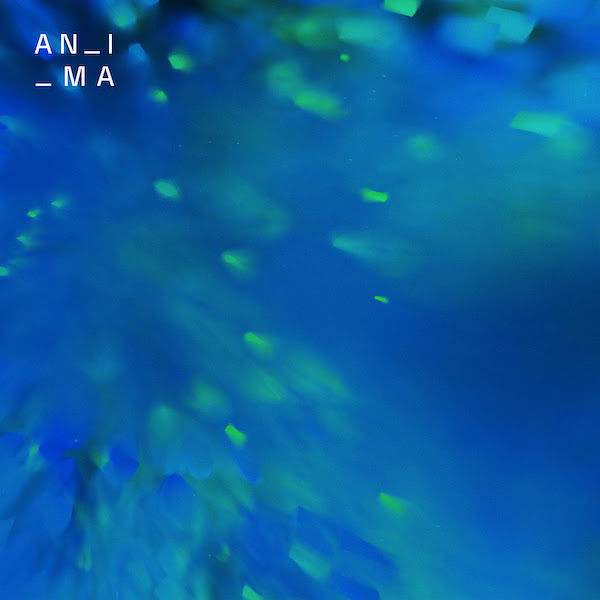
 日本を代表するテクノDJのひとり GONNO(4/28には GONNO × MASUMURA として CONTACT でもプレイ)による新作2タイトル『Waft』『Wander Other Worlds』と、菊地晴夏を中心とする新プロジェクト HAL ca によるデビュー作『ANIMA』、計3タイトルが〈813 Records〉からリリースされる。いずれも立体音響技術「360 Reality Audio」を用いた作品とのことで、どんなサウンドに仕上がっているのか、自身の耳で確かめてみてほしい。

GONNO と HAL ca による立体音響作品が 813 Records より3タイトル同時リリース!

ヨーロッパを中心にテクノ/ハウスシーンでも活躍してきたDJ/プロデューサー Gonno 音響作品『Waft』『Wander Other Worlds』と、様々なサウンド・インスタレーションを手がけてきたコンポーザー菊地晴夏を中心とした新プロジェクト HAL ca によるデビュー作『ANIMA』が一挙リリース。

これまでpeechboyやXTALなど国内の気鋭エレクトロニック・アーティストの作品を発表してきたレーベル813が、立体音響技術360 Reality Audio に特化したスタジオ「山麓丸スタジオ」の協力を得て、 新たな音響快感を追求したアンビエント、テクノミュージック作品にアプローチする。

まずGonnoによる2作品は、後日に発表されるEP『Loom』と合わせた立体音響三部作の一環。『Waft』は、ニューエイジ~アンビエントへと接近し新たなイマーシヴ体験を追求した4曲入りEP。そして1トラック20分強の大作シングルとなる『Wander Other Worlds』は、リコーの開発するRICOH PRISMの体験プログラムとして制作された楽曲から発展。同プログラムのビジュアル演出を手掛けた画家、Akiko Nakayamaがアートワークを提供している。

同様にRICOH PRISMのプログラムとして、デジタル・アーティスト村上裕佑のディレクションで制作された同名作品のサウンドトラックでもある、HAL ca『ANIMA』にも注目してほしい。中心人物となる菊地晴夏は、パリのエコールノルマル音楽院の映画音楽作曲科を首席で卒業という才媛。配信作品としては今作がデビュー作となる。HAL caでは今後、空間音響を軸としたプロジェクトとして活動していく。


Gonno / Waft
Label: 813
2022年3月30日発売
※Amazon Music Unlimited、Deezerなど360 Reality Audio対応プラットフォームにて先行リリース。ステレオ版のリリースは4月6日予定。

[収録曲]
1. Warbly FM
2. Nikita
3. 550 Drums
4. A Long Way


Gonno / Wander Other Worlds
Label: 813
2022年3月30日発売
※Amazon Music Unlimited、Deezerなど360 Reality Audio対応プラットフォームにて先行リリース。ステレオ版のリリースは4月6日予定。

[収録曲]
1. Wander Other Worlds


HAL ca / ANIMA
Label: 813
2022年3月30日発売
※Amazon Music Unlimited、Deezerなど360 Reality Audio対応プラットフォームにて先行リリース。ステレオ版のリリースは4月6日予定。

[収録曲]
1. MononooN
2. roTaTe
3. MeMory
4. NoVa

Burial - ele-king

文:小林拓音

 周知のようにブリアル*は2007年の『非真実(Untrue)』を最後に、アルバム単位でのリリースを止めている。なのでこの新作「反夜明け(Antidawn)」はおよそ14年ぶりの長尺作品ということになるわけだが……2ステップのリズムを期待していたリスナーは大いに肩透かしを食うことになるだろう。本作にわかりやすいビートはない。もちろん、これまでも彼はシングルでノンビートの曲を発表してきた。今回はその全面展開と言える。
 厳密には、冒頭 “Strange Neighbourhood” の序盤、聴こえるか聴こえないかぎりぎりの音量で4つ打ちのキックが仕込まれている。それは “New Love” の中盤でも再利用されているが、そちらではより聴取しやすいヴォリュームで一瞬ハットのような音がビートを刻んでもいる。あいまいで、小さく、すぐに消えてしまう躍動。間違ってもフロアで機能させるためのものではない。それらは数あるパッチワーク素材のひとつにすぎず、うまく思い出せない遠い記憶のようなものだ。

 明確なダンス・ビートの不在を除けば、変わっていないところも多い。トレードマークのクラックル・ノイズ。もとの素材がわからなくなるまで激しく加工されたヴォーカル。サウンドトラックなどから引っ張ってきたと思しき上モノたち。“路上生活者(Rough Sleeper)”(2012)以降のブリアルを特徴づけてきた、聖性を演出するオルガン。
 あるいは、しゃりしゃり/かちゃかちゃと鳴る金属的な音。咳払い。雨の音。虫の歌。謎めいたキャラクターの震え声。その他いくつかの、あたかも具体音のごとく響く断片たち。その大半はおそらく(フィールド・レコーディングではなく)ヴィデオ・ゲーム(の、さらに言えばユーチューブにアップされた動画)からサンプルされたものだろう。とりわけ強く印象に残るのは “Antidawn”、“Shadow Paradise”、“Upstairs Flat” の3曲に忍ばせられた、ライターで火をつける音だ。

 コラージュはブリアルの音楽を成り立たせるもっとも重要な技法である。今回もそのうち元ネタ特定合戦が開始されるにちがいない。たとえば最後の “Upstairs Flat” で二種類の音色に分散されて奏でられている旋律。下降時の音階が異なるので間違っているかもしれないが、たぶんこれ、エイフェックス『SAW2』収録曲(CD盤でいうとディスク2の8曲め、通称 “Lichen”)じゃないかと思う。直前に挿入されるたった2音のパーカッションも “Blue Calx” に聞こえてしかたがない。
 ダンスを出自とするブリアルの音楽がアンビエントとしての可能性を秘めていることはあらためて確認しておくべきだろう。クラックル・ノイズを過去性の刻印として解釈するのもいいが、それは無個性かつ無展開であるがゆえ周囲に溶けこむ音にだってなりうる。

 静寂はそして、ことばを引き立たせる。ブリアルを特徴づける闇夜と孤独は、冒頭 “Strange Neighbourhood” ですでに十分すぎるほど表現されている。「通りを歩く/夜になると/行き場がない/どこにもない/通りを歩く(Walking through the streets / When the night falls / There is nowhere / Nowhere to go / Walking through the streets)」。この「行き場がない(Nowhere to go)」は、「ひどい場所にいる(I'm in a bad place)」とのフレーズが印象的な表題曲 “Antidawn” でも繰り返され、「夜になると(When the night falls)」のほうも “Shadow Paradise” でふたたび顔をのぞかせている。どうしようもない閉塞感。それを、まったく出口の見えない資本主義と接続したくなる気持ちもわからなくはない。

 が、ポイントはそこではない。「Antidawn」にはまとまった長さが与えられている。ゆえに各曲のことばは照応し、シングルでは発生しようのなかった相互作用が際立っている。
 たとえば “Shadow Paradise” では、孤独に抗うかのように何度も「ちょっとだけ抱きしめさせて(Let me hold you for a while)」というフレーズが繰り返されている。「こっちに来て、愛しいひと/暗闇のなかへ連れていって(Come to me, my love / Take me to the dark)」「いっしょに夜のなかまで連れていって(Take me into the night with you)」と、つねにだれかの存在がほのめかされているのだ。
 この「you」はほかの曲にもこだましている。“Strange Neighbourhood” では「あなたがこっちにやってきた(You came around my way)」と、“Antidawn” では「あなたが入れてくれたら(If you let me in)」と、“Upstairs Flat” では「いちばん暗い夜のどこかにあなたがいる/そこに行きたい(You're somewhere in the darkest night / I wanna be there)」というふうに。

 最大のテーマであるはずの闇夜や孤独を凌駕するほど、本作には「あなた」が横溢している。そしてそんな「あなた」を「わたし」は求めている。「あなた」とはライターであり、星だ。「あなた」がいれば暗闇のなかでも歩いていける、と。
 いやもちろん、2007年の “Archangel” も「あなた」を求めていた。でもそれは2ステップのリズムの勢いに任せて放たれる、「きみを抱きしめる/ひとりじゃ無理、ひとりじゃ無理、ひとりじゃ無理」という、幼く、ひとりよがりで、一方的な願いだった。「Antidawn」はちがう。今回の「わたし」はどこか控えめだ。大人になったということかもしれない。なにせあれから14年のときが過ぎているのだ。
 ダンス・ビートの放棄、静けさの醸成、ことば同士の照応。かつてとは異なるアプローチで「あなた」と出会いなおすこと。いまブリアルは初めて本格的なアンビエント作品に取り組むことで、ほんとうの意味で他者に出会おうと努めているんだと思う。多くのひとが内省にとらわれたパンデミック以後の世界にあって、外からやってくるものへと向かうその姿勢はきっと重要な意味を持つにちがいない。

* 日本では「ブリアル」と表記されることが多いが、実際の発音は「ベリアル」のほうが近い。

HYPERDUB CAMPAIGN 2022
https://www.beatink.com/products/list.php?category_id=3

Next >> キム・カーン

[[SplitPage]]

文:キム・カーン
翻訳:箱崎日香里

 ブリアルのブルータリストなネイバーフッドにようこそ──「Antidawn」はブリアルのこれまでで最も無防備で生身の作品だろうか?

 彼の最新作──45分という長尺を考慮すればもはやアルバムと呼ぶべきに思えるが──で、唯一聞こえてくるビートは、ポトポトという雨音だけだ。これまでのブリアル作品でもお馴染みのこの音は、彼が毎日のように雨が降り続くイギリス出身であることを物語っている。

 ひとたび「Antidawn」の世界に足を踏み入れると、その舞台セットに飲み込まれる。1曲目 “Strange Neighbourhoods” が女性の咳払いとともに幕を開けると、たちまちひとつの物語のはじまりが告げられる。いわば、ブリアルのロックダウン・サーガとでも呼べるだろう。

 「You came around my way(私のところに来たんだね)」というささやきが荒涼とした景色の中に一陣の風をかき立てたのち、きらめくチャイムに招き入れられて、共感覚によってグレーに彩られた、物語の舞台となるとある地区の姿が現れてくる。トラックは中ほどでブレイクダウンに入り(ブリアルのダンス・ミュージックのバックグラウンドがまだ完全に消失してはいない証だろう)、そのあとに聞こえる「my love」の哀しげな呼びかけが、本作の主人公と思われる人物の感情を揺さぶる。

 続くタイトル・トラックは Ronce を思わせるASMRではじまり、主人公に新たな試練が降りかかる。

I'm in a bad place / with nowhere to go
(まずい状況にいる/行く先もない)

 不穏なシンセの暗闇の中を、ときおりチャイムの輝きが照らす。

you're one of them / I'm not your kind
(あなたは彼らの仲間だ /私はあなたたちの仲間じゃない)

 ここから登場人物たちのコミュニケーションがはじまると、少しずつ物語が肉付けられてゆく。チャイムのきらめきの緊張感が高まっていく先には、ブリアルが構築したこの不毛の地の中の小休止が見えてくる。

 “Shadow Paradise” で響くオルガンの音は、ロックダウン中にブリアルは教会をよく訪れたのだろうかと想像させる。曲はブリアルが変化していくのと同じように多幸感に満ち溢れている。そこに随伴するのは管楽器風のシンセ音や母性的なヴォーカルだ。次の箇所は故ソフィーのトラックに入っていても違和感がないであろうし、まるで生温かい抱擁のようだ。

There's one / alone in our reverie / ...I'll be around
(誰かがいる/たったひとりで私たちの幻想のなかに/……わたしはそばにいる)

 登場人物たちが新たな愛(New Love)を見つけると同時に、「Antidawn」の物語も動き出す。

ever since I was young / I wanted to get away / free beyond everything / for you
(幼い頃からずっと/ここから離れたかった/全てから解放されて/あなたのために)

 若い恋人たちの逃避行を、「For you」の反復の間にちりばめられたメロディーの断片が彩る。無限に増大するような重層的な音のテクスチャに、チャイムの閃きと、そこここで鳴るヴァイナルのクラックル・ノイズが重なり合う。次の瞬間、シーンはシンプルなアンビエント・パッドの音に合わせて無邪気に踊る主人公たちへと切り替わり、やがてトラック中盤でブレイクダウンに入る。「Come unto me / Come on come on」と手つかずの野原を奔放に跳びはねるふたりの蜜月はここでピークを迎えて終息へと向かい、オルガンの厳粛な響きがシンセのアルペジオをかき消すと、ふたたびブリアルの雨が降ってくる。

 「New way / my way」の声が響く “Upstairs Flat” は傷心の主人公を映し出し、呼吸音とクラックル・ノイズが細心の注意をもって重ねられた低いドローン・シンセが、新しいフラットの未知の環境を照らし出す。

I won't be there / when you're alone
(私はそこにいない/あなたがひとりのとき)

 甘くほろ苦いヴァイオリンのメロディーが闇に響く。「Come get me」の声で曲は静まり、雨音とともに終わりを迎える。

 私たちはディストピア世界のサバービアを描いたひとつの物語を聞き終え、すべての登場人物に出会い、彼らのストーリーや名前を知り、そして彼らが一礼して舞台を去ったのち、静寂のなかに取り残される。ひょっとしたら、ビートがないブリアルは、それを失う前のブリアルと同様に素晴らしいのではないか。そんな思いを巡らせながら。

 パンデミック以降の世界で、ペリラ(Perila)やウラー(Ulla)スペース・アフリカといった多数のアーティストがサウンド・コラージュやASMRをアンビエントのフィールドに持ち込む中、ブリアルの「Antidawn」はこのアンビエント界における新世代の蜂起を静かに補完している。

HYPERDUB CAMPAIGN 2022
https://www.beatink.com/products/list.php?category_id=3

Next >> 髙橋勇人

Text: Kim Kahan

Welcome to Burial’s brutalist neighbourhood. Is this Burial at his most vulnerable yet?

The only beats we really hear on his newest EP - although at a meaty 45 minutes it can be considered an album at this point - are the pattering of rain, typical of Burial’s output to this point. Telling that he’s from England, where it rains everyday.

Heading into Antidawn, we’re struck by the mise en scene. A feminine clearing of a throat signals the beginning of the first track, "Strange Neighbourhoods". At once this appears as the telling of a story, potentially the Burial lockdown saga.

Whispers “you came around my way” stoke the wind that swirls around a barren landscape. Chimes twinkle as they welcome us to the neighbourhood which my inner synaesthesia unanimously agrees is grey. The song enters a breakdown halfway (it becomes apparent that Burials’ dance music background has not disappeared just yet) before emerging with a plaintive voice calling out “my love”, stirring emotion for what we presume is the protagonist of the album.

The title track "Antidawn" begins with a Ronce-esque ASMR fumbling and another trying time for our character “I’m in a bad place / with nowhere to go” and ominous synth is punctuated by chiming that glimmers in the darkness. We then start to see the story fleshed out with conversations as the character begins to communicate “you’re one of them / I’m not your kind”. Twinkling intensifies and we start to see the hint of respite in this barren land of Burial’s construction.

"Shadow Paradise" welcomes organs and we wonder if Burial visited church much during lockdown. The song is about as euphoric as Burial gets, with piping pads and a maternal vocal “there’s one / alone in our reverie / ...I’ll be around” which wouldn’t be out of place on a Sophie (RIP) track and feels like a lukewarm hug.

The story of Antidawn moves on as they find "New Love", “ever since I was young / I wanted to get away / free beyond everything / for you”, snatches of melody intersperse the “for you”s as the young lovers elope through the track. Vinyl crackles back and forth as chimes twinkle over a million multiplying textures. The next moment sees them dancing along innocently simple ambient pads before heading down to a breakdown mid-track. Bounding through fields of wild abandonment “come unto me / come on come on” as the lovers enter the post-honeymoon phase and it winds down, arpeggio synth disappears as the organ solemnly ploughs on and the rain comes down in true Burial style.

"Upstairs Flat" sees the protagonist post-heartbreak, “new way / my way”, entering the unknown of a new flat as deep, droney synth kicks in, breaths and crackles layered carefully on top. “I won’t be there / when you’re alone” as the bittersweet melody of violin punctuates the darkness. “come get me” and the song calms down, as rain comes in and the song finishes.

We feel like we’ve just listened to an entire story about a suburban dystopia and met all the characters and learnt all their stories and their names and then they’ve bowed out again and we feel alone in the silence. And we think that maybe Burial without beats is just as good as Burial with them.

In this post-COVID world we have seen artists such as Perila, Ulla, Space Afrika and more bring sound collages and ASMR to the ambient landscape and Burial’s Antidawn quietly complements this modern ambient rebellion.

HYPERDUB CAMPAIGN 2022 https://www.beatink.com/products/list.php?category_id=3

[[SplitPage]]

文:髙橋勇人

 COVID-19が猛威を振るう中でも、ソロ・シングル「Chemz / Dolphinz」(2020)、フォー・テットトム・ヨークとの12インチ「Her Revolution / His Rope」(2020)、ブラックダウンとのスプリット「Shock Power of Love E.P.」(2021)と、コンスタントに作品を出してきたブリアル/ウィル・ビーヴァンは、45分にも及ぶ「Antidawn」で2022年の幕をこじ開けた。
 発表に際して公開された写真には、降り頻る雪のなか、楽しそうに両手を広げる本人の姿がある。マスクをしていることから、これはパンデミック中に撮られたものであることがわかる。今作は彼からの「近況報告」なのだろう。
 「Antidawn」にはビートがなく、スタイルとしては2019年のシングル集『Tunes 2011-2019』でも顕著だったアンビエント的なサウンド・コラージュであり、楽曲や映画からサンプリングされたであろうスポークン・ワードが音の流れを牽引している。前述のシングルでは、レイヴ・スタイルのハードなビートで、フロアの期待に答えつつ、自身の表現の幅を増幅させていたのに比べると、今作には明瞭な新しさはない。
 現在、電子音楽シーンではエクスペリメンタル/アンビエントの新たな光が、緩やかな木漏れ日のように、意気消沈した世界へと降り注いでいるのに気づいている方は多いだろう。ウラーやペリラ、あるいは日本のウルトラフォッグの参加作品などで知られる、ASMR的感覚、牧歌性、ときにメタリックな美学を繋ぐドイツの〈Experiences Ltd.〉(最近〈3XL〉に改名?)。イーライ・ケスラーや主宰のひとりでもあるフェリシア・アトキンソンを擁する、ミュジーク・コンクレートやエレクトロニクス/アコースティックを行き来しサウンド/ソニックの可能性を探求するフランスの〈Shelter Press〉。アーティスト、レーベルとともに、この勢いは衰えを知らない。作風的には「Antidawn」はその流れに連なっている、といえる。

 今回もブリアルのインスピレーションは彼の周囲からやってきているようだ。過去作を振り返ってみても、路上生活者(Rough Sleeper)、ねずみ(Rodent)、盗まれた犬(Stolen Dog)など、ブリアルは(特にロンドンでは頻繁に目にする)日常の構成物から楽曲のタイトルを採用してきた(そしてイルカ(Dolphinz)など彼が好きなもの)。
 「Antidawn」が奇妙深いのは、「奇妙な近所(Strange Neighbourhood)」や「上の階のフラット(Upstirs Flat)」といった日常的アクターが、造語である「反夜明け(Antidawn)」、「影の楽園(Shadow Paradice)」、「新たな愛(New Love)」といった抽象的で幻想的な面をも醸し出すタームで繋がっているという点だ。
 ブリアルは『Untrue』(2007)収録の “In Macdonalds” などがそうであるように、日常風景にかすかに存在する非日常性を サウンドで描くのに長けたアーティストでもある。「Antidawn」をその尺度で考えるならば、これらのタームが放つ印象は、ロックダウンによる隔離生活によって、日常と非日常の境目が人連なりに曖昧になっていく世界/生活と違和感なく連想できる。45分はそのサウンドスケープであり、ここでは踏み込まないが、スポークン・ワードはそこに広がるドラマツルギーとして考え得られる。ジャケットのイラストはその住人なのかもしれない。
 ブリアルは今作において一層エモーショナルになっているようだ。雨の音で緩やかにはじまる1曲目は、荘厳なオルガンを経て、徐々に電気グルーヴの “虹” のシンセ・フレーズにも似た優美なメロディにまで展開する。2曲目ではドローン・サウンド上で言葉が舞い、彼のシグニチャー・サウンドであるフィルターがかかったノイズやウィンドチャイムを機に、その表情が変わっていく。一曲のうちにいくつもの楽曲が組み込まれているような構成であり、そのアレンジも「Antidawn」を起伏のあるドラマとして醸成している。

 ここにないものはビートなのだが、それはある種、ブリアルと現実のダンスフロアを繋ぎ止めていたダンスというリアルな身体性の欠如であるとも考えられる。言葉においても、孤独や救済に焦点が当てられるものの、肝心なそこで生きる者の顔は曖昧なままだ。
 対照的に、現在のシーンでは身体や自意識への回帰、あるいはその問い直しが顕著におこなわれている。例えばブリアルのホームである〈Hyperdub〉から、2021年にデビュー・アルバム『im hole』を出したロンドン拠点のアヤは、自分の出自をラップ/詩で歌い、複雑なポリリズムとプロダクションは、入り組んだ身体のようにその言葉を基礎づけている。
 同年、先の〈Shelter Press〉からアルバム『17 Roles (all mapped out)』をリリースしたテキサスの前衛ドラマー/電子作家のクレア・ロウセイが頻繁にテーマにするのは、自身の肉声と機械によるエッセイの読み上げと、涙腺を緩やかに刺激するアンビエントを経由した、身体とそこを横切っていく人間関係だ。
 世界に再び太陽が登ろうとする2022年、私たちが聞くべきなのは、待ち受ける関係性のしがらみを再び生き抜いていくヴァイタリティに溢れたそのようなサウンドではないか。閉じきった2020年のような「Antidawn」が位置している太陽が登らない世界は、そこからは少し遠いように思える。
 愛、ドラッグ、ジェントリフィケーション、移民、階級、リズム&低音の科学が渦巻くUKガレージやダブステップとの緊張関係のなかで『Untrue』生まれたように、アンダーグラウンド主義者ブリアルは何かの中心との距離をとりつつも、そこと呼応することができる作家だ。「Antidawn」がロックダウンの世界であるならば、次はそのアフターの世界になる。「上の階のフラット」で/から彼が何を見たのか、次の長編作にその答えを待つ意味は大いにある。

HYPERDUB CAMPAIGN 2022
https://www.beatink.com/products/list.php?category_id=3

 9月4日、イギリス海軍が建造した史上最大で最強の航空母艦、HMS(女王陛下の)クイーン・エリザベス号が横須賀港に寄港した。アルマダの海戦でスペインの無敵艦隊を沈めた16世紀の女王の名を冠したこの船は、旧大英帝国がかつて足を踏みならしたシンガポールにも停泊しており、象徴性と政治性を存分に誇示したアジア・ツアーを敢行したわけだ。イギリスは、この巨大な新しい船を使って軍事力を見せつけた。まるで年老いた男が、ブリティッシュ・シー・パワーのグレイテスト・ヒッツを演奏するかのように。

 そのひと月前、バンド、British Sea Power(ブリティッシュ・シー・パワー)は、バンド名をより合理的なSea Power (シー・パワー)に縮めることを発表した。彼らは慎重に言葉を選びながら、“ブリティッシュ”を切ることは、イギリスそのものへの嫌悪を意味することではないと強調し、イギリスに限らず世界的な流れとしての、“ある種のナショナリズムの台頭による孤立主義や、敵対的なナショナリズムと混同されるリスクを回避したい”ということを理由にあげた。
 実際、そのようなナショナリズムの傾向は、イギリスでも明らかに問題となっている。「21世紀のヨーロッパのフェスティヴァルに参加した若者がプログラムを見て、“パワー”という言葉の横に“ハンガリアン”とか“ロシアン”という言葉を含むバンド名を目にした時に、どのようなことを連想するのかを考えてみてほしい」という彼らの問いかけは、“ブリティッシュ”という言葉も同じように不愉快で、暴力的なイメージを呼び覚ましてしまうかもしれない可能性を示唆している。イギリスのストリートや報道機関の多くが、ヨーロッパや外国人全体に対して敵意をむき出しにする雰囲気を増長させ、ポスト・ブレグジットに拍車をかけてしまっているのだ。

 20年前、バンドがブリティッシュ・シー・パワーという名前を選んだときには、それは道理に反してはいるが、コミカルなばかばかしさとして受け止められていたことは明らかだ。“ブリティッシュ・シー・パワー”は、侵略者に対する英雄的な戦いや、過ぎ去りし日の帝国の華やかな虚栄の古い物語だった。彼らのファースト・アルバム『ザ・ディクライン・オブ・ブリティッシュ・シー・パワー』(2003)は、取返しがつかぬほど変わってしまった場所から過去を振り返る、ノスタルジックで皮肉な声明だった。
 そのアルバムには、ある意味、戦後の大英帝国の衰退と、その誕生の際の産声がロックンロールだった新しいイギリスとが交錯していた。ザ・ビートルズの1964年の映画、『A Hard Day's Night (ビートルズがやってくる ヤァ!ヤァ!ヤァ!)』では、彼らと同じ鉄道の車両に乗り合わせて閉じ込められた男が、「私はお前たちのような人種のために戦争で戦ったんだ」と叫び、敬意を要求したが、「でも勝利を後悔しているだろう?」とリンゴに反撃されている。その数年後には、ビートルズは『サージェント・ペパーズ・ロンリー・ハーツ・クラブ・バンド』で、イギリス軍の過去のイメージをとりあげ、ノスタルジーと時代錯誤的なばかばかしさを混ぜ合わせて、サイケデリックの領域に攻め込み、ザ・フーは、イギリス国旗とRAF(英国空軍)のラウンデル(円形の紋章)をポップ・アート・デザインのモチーフにしてしまった。

 ザ・キンクスは、アルバム『アーサー、もしくは大英帝国の衰退ならびに滅亡』(1969)で、新世代ブリティッシュ・ロックの消えゆく過去への陶酔を、あからさまに、力強く表現した。一方、1990年代初頭には、ブラーなどのブリットポップ・バンドが過去のイギリスの皮肉でセンティメンタルなイメージ(シングル「フォー・トゥモロー」のジャケットに描かれたスピットファイア戦闘機や、アルバム『モダン・ライフ・イズ・ラビッシュ』(1993)の蒸気機関車など)を利用し、60年代のブリティッシュ・ロックの栄光の日々と同時に、大英帝国の過去に対するブリティッシュ・ミュージックの奇妙に相反する、ノスタルジックでシニカルな姿勢の両方を描いてみせた。ブリティッシュ・シー・パワーというバンド名は、まさにこの壮大さ、喪失感、プライドと自虐的でドライなユーモアを想起させるのだ。

 しかし、このイメージが物語っているのは、内向きな、白人世界のイギリスの姿に過ぎない。1990年代はブリットポップの時代であったかもしれないが、同時にトリップホップ、コーナーショップのようなバンドやドラムンベースなど、イギリスの植民地時代の過去に連なる移民の2世や3世が、さまざまな経験や異なる文化的な視点から、イギリスらしさを再構築していたのだ。

 ブリットポップが使用していたノスタルジックで愛国的なイメージは、もとは社会批判が発端となっていたかもしれないが、すぐに、人びとが過去の大英帝国の郷愁に浸り、その皮肉が暗示する意味合いを完全には受け入れずにすむ、保護膜のような働きをした。やがてそのイメージがナショナリズムの象徴として常態化し、列車のなかの尊大な男が、ビートルズの騒々しいロックンロールを忌み嫌ったように、多文化の共生する現代国家に憤る人びとの、称讃の的となった。その結果、ブリティッシュ・シー・パワーのような名前に込められていた皮肉は効力を失ったのだ。ナショナリストたちは皮肉には取り合わないし、若者は皮肉を偽善的な行為を覆い隠すものとして疑ってかかる傾向が強まっている。

 そのような時代において、かつて帝国が支配した海を、国旗を振りかざしながら巡回し、何世紀にもわたる軍の戦いに敬意を表して付けられた名を持つ軍艦とは異なる種類のパワーを、バンドがEP「Waving Flags」(2008)のように定義しなおしたことは、正しかったのだろう。イギリスのように、どこにいても海岸から100キロ以内しか離れていないような場所では、海が強力な必然性を持ち、国民は天気や気候を左右する気まぐれな海に翻弄されて生活している。海は潮の入り江を行き来し、餌を与えたり、打ち付けたり、唸ったり宥めたりしながら、一定の島のシンフォニーを奏でているのだ。それは、国を世界から切り離すものであると同時に、どことでも繋がるものであり、その意味では、“Sea Power”は“Britain”(ブリテン=イギリス)という言葉で騒ぎ立てることを、ほんの小さな心配事にしてみせることに成功している。


'The changing meanings of "British Sea Power"'


Ian F.Martin

On September 4th, the aircraft carrier HMS Queen Elizabeth, the largest and most powerful warship ever constructed for Britain’s Royal Navy, docked at the port of Yokosuka. Named after the 16th Century queen whose navies sank the Spanish Armada, the ship had earlier stopped at the old British Empire stomping grounds of Singapore, so there was plenty of symbolism and politics on display in this Asian tour. Britain was using this huge new ship to flex its military muscles: an old man performing the greatest hits of British sea power.

A month earlier, the band British Sea Power had announced that their name would be shortened to the more streamlined Sea Power. They were very careful in their choice of words, stressing that cutting “British” didn’t signify any dislike of Britain itself, and placing their reasons in the global context of “a rise in a certain kind of nationalism in this world – an isolationist, antagonistic nationalism that we don’t want to run any risk of being confused with” rather than anything specific to the UK.

And yet those nationalist trends clearly are a problem in the UK. When the band ask us to imagine “a youngster at a European festival in the 21st century looking at the programme and seeing a band name including the word ‘Hungarian’ or ‘Russian’ alongside ‘Power’” and then think about what sort of images and associations might run through their head, they’re implying that the word “British” could raise similarly uncomfortable and possibly violent images — ones that the increasingly hostile atmosphere on some of Britain’s streets and in most of its press towards Europe and foreigners in general will have only encouraged post-Brexit.

When the band chose the name British Sea Power twenty years ago, it seemed obvious that the name was comically absurd: “British sea power” was an old story of heroic battles against invaders and the pomp of an imperial past long gone. Their first album title, “The Decline of British Sea Power” was a statement both nostalgic and ironic, looking back at the past from a place that had irrevocably changed.

In a way, the postwar decline of the British Empire is intertwined with a new Britain whose birth screams were the sound of rock’n’roll. “I fought the war for your sort,” was the pompous demand for respect of a man trapped in a railway carriage with The Beatles in their 1964 movie A Hard Day’s Night, only for Ringo to fire back, “I bet you’re sorry you won.” A couple of years later, they used Sgt. Pepper’s Lonely Hearts Club Band to take military-edged imagery from Britain’s past and push its mix of nostalgia and anachronistic absurdity into the realm of the psychedelic, while The Who turned the national flag and Royal Air Force military roundels into pop-art design motifs.

The Kinks expressed the rising generation of British rock’s fascination with the fading past most explicitly and powerfully in their album Arthur (Or the Decline and Fall of the British Empire). Meanwhile, in the early 1990s, Britpop bands like Blur seized on ironically sentimental images of Britain’s past (the Spitfire fighter planes on the cover of their For Tomorrow single, the steam train painting on the cover of the album Modern Life is Rubbish) in a way that both both referenced the glory days of 60s British rock and the peculiarly ambivalent attitude of British music to the nation’s imperial past, both nostalgic and cynical. The band name British Sea Power evokes just this mix of grandeur, loss, pride and self-effacing dry humour.

But it’s still an inward-looking and distinctly white version of Britain that this imagery speaks to. The 1990s may have been the generation of Britpop, but it was also the era of trip-hop, bands like Cornershop, drum’n’bass — music born from second- and third-generation immigrants with connections to Britain’s colonial past, that was reshaping Britishness once more out of a very different set of experiences and cultural reference points.

The nostalgic and patriotic images that Britpop had used may have begun with an edge of social criticism, but that irony soon became a protective coating that allowed people to bask in the nostalgia of an imperial past without accepting its full implications, and eventually the imagery became normalised as nationalistic symbols, celebrated in a way every bit as resentful of the multicultural modern nation as the pompous man in the train carriage was to the noisy rock’n’roll of The Beatles. As a result, the irony embedded in a name like British Sea Power loses its bite: Nationalists don’t deal in irony or nuance, and young people seem increasingly suspicious of irony as a cloak for insincerity.

In such times, perhaps the band are right in framing a different sort of sea power — one removed from warships named in honour of centuries-old military battles “Waving Flags” on a tour through seas the Empire once ruled. In a place like Britain, where you are never more than a hundred kilometres from the coast, the sea is a powerful inevitability and the nation lives subject to its whims, defining the weather and climate, as it rushes back and forth up tidal inlets, feeding and battering, roaring and soothing in a constant island symphony. It’s both what cuts the country off from the rest of the world but also what connects it to everywhere, and in that sense, “Sea Power” makes any fuss over a word like “Britain” rather a small concern.

追悼ジョン・ハッセル - ele-king

“悪行と善行の観念を越えたところに平原が広がる。我々はそこで会おう”  ジャラール・ウッディーン・ルーミー(13世紀ペルシャの神秘主義詩人)

 ジョン・ハッセルに電話インタヴューしたのはちょうど1年前の昨年7月だった

 実はそのとき、もしかしたらこれが最後の取材になるんじゃないか……という予感があった。彼の問答には、明晰さのなかにも随所で精神的衰弱が垣間見られたから。取材3ヶ月前の同年4月には、ジョン・ハッセルの生活サポートのためのファンドが立ち上がったことをブライアン・イーノがツイートしていたが、当時ハッセルは、骨折治療とコロナ禍での健康不安により生活が困窮していたという。昨年の新作『Seeing Through Sound』により、新たなリスナーを増やしていただけに、彼の逝去はあまりにも残念だ。

 件のインタヴュー記事では『Seeing Through Sound』のことだけでなく、過去のキャリアについてもかなり語ってもらった。彼の業績に関する総論的追悼文をここで書いても、インタヴュー記事の内容の繰り返しになってしまうので、ここでは、彼の音楽的基盤から枝葉まで、その具体例を聴きながら改めて全体像を把握することで、追悼文に代えさせていただく。

ジョン・ハッセルに多大な影響を与えた音楽家たち

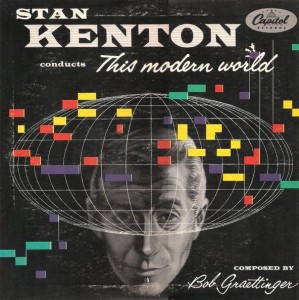
1. Stan Kenton『This Modern World』(53年)

 ハッセルは1937年3月、米テネシー州メンフィスに生まれた。父親が大学時代に学生バンドで吹いていたコルネットを手にしたのが小学生の時。十代半ばになるとジャズに親しみつつ、ジュークジョイント(黒人向け音楽バー)にも通っていたという。とくに魅せられたのが、スタン・ケントンのビッグ・バンドだ。“プログレッシヴ・ジャズ”を標榜し、斬新なアンサンブルを展開したケントンの50~60年代の作品は、いま聴いても驚かされる。「第四世界」の種のひとつがこの奇妙なハーモニーとリズムのなかにはあった。ちなみに、デビュー当時のキング・クリムゾン(とくにイアン・マクドナルド)もケントンに絶大な影響を受けていた。

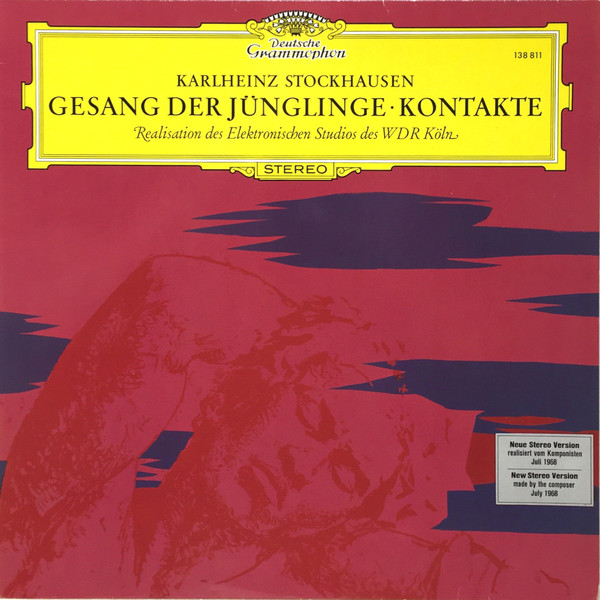
2. Karlheinz Stockhausen「Gesang Der Jünglinge (少年の歌)」(56年)

 ハッセルはNYなどでトランペットと作曲を学んだ後、妻のマーガレット(70年代に離婚後は、前衛専門のピアニスト、カトリーナ・クリムスキーとして活動)と共にドイツに渡り、現代音楽の大家カールハインツ・シュトックハウゼンに3年弱(64~66年)師事した。カンのイルミン・シュミットやホルガー・シューカイもクラスメイトだった。渡独前からシュトックハウゼンの「少年の歌」(ミュジーク・コンクレートと電子音楽を統合した初期の傑作)に心酔し、切ったり貼ったりのテープ・マニピュレーションを独自に試みていたというハッセルは、留学時代には、50年代米国ジャズ・ヴォーカル・グループ、ハイ・ロウズの作品をコラージュしたりもした。シュトックハウゼンの下で習得した電子機器の使い方やプログラミング、テープの切り貼り等の技術は、80年代以降の彼のサンプリング・ワークの土台になった。

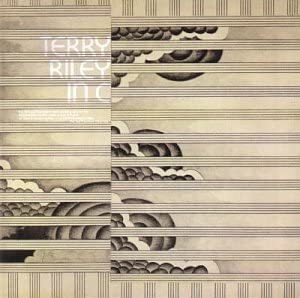
3. Terry Riley『In C』(68年)

 「私は彼のことが大好きだったし、お互いの妻も含め、ひとつの家族のような関係だった」と語るように、ドイツから米国に戻ったハッセルがもっとも親しくつきあい、また影響も受けたのがテリー・ライリーだ。帰国したハッセルを待ち受けるように60年代後半の米国現代音楽界で沸騰しつつあったのが現代音楽のニュー・モード、ミニマリズムだが、そのブレイクスルーの象徴的作品であるライリー『In C』の初録音盤(68年)にはハッセルと妻マーガレットも参加している。

4. Pandit Pran Nath『Ragas』(71年) 

 ハッセルは、テリー・ライリーとともにミニマリズム・ムーヴメントを牽引していたラ・モンテ・ヤングのドローン・プロジェクト《Theater of Eternal Music(永久音楽劇場)》にも加わり(ヤングの74年のライヴ盤『The Theatre Of Eternal Music - Dream House 78'17"』に参加)、そこから導き出した「垂直の音楽」(時間軸に沿った旋律聴取ではなく、微細な音色や倍音などの感知を通して音の深奥まで下降し体得する音楽的アナザー・ヴィジョン)という概念を元に、やがて「斜めの音楽」という独自の世界を目指していった。その思考過程を土台固めしてくれたのが、すでにライリーとヤングが師事していたインド古典声楽の大家パンディット・プラン・ナートだ。ハッセルは72年、ヤング夫妻に同行してインドに赴き、ナートの下でインド古典声楽の修業をした。やがて、音のなかに曲線を描くナートの歌唱技術は、トランペットを共鳴管として歌わせるハッセルの演奏技法そのものとなっていった。ハッセルはナートから学んだことを「自分の音楽の中で最も大きなポジションを占める」と告白している。

5. Μiles Davis“He Loved Him Madly”(74年)

 ライリー&ヤングやパンディット・プラン・ナートと並びハッセルの表現にもっとも大きな影響を与えたのがエレクトリック期(60年代末期~70年代半ば)のマイルズ・デイヴィスだ。ピックアップを仕込んだマウスピースを歌うように響かせ、エンヴェロープ・フィルターなどで電気処理するというハッセルの演奏技法は、当時のマイルズのワウ・ペダルを参考にしたものであり、その技法は今日ニルス・ペッター・モルヴェルなどによってさらに発展している。ハッセルはいくつかのインタヴューでとくに愛着のあるマイルズの作品として『On The Coener』(71年)や『Live-Evil』(72年)などを挙げているが、音色やムードが最も近いのは『Get Up With It』のA面曲“He Loved Him Madly”だろう。これがハッセルのソロ・デビュー作『Vernal Equinox』に直接的に影響を与えたことは想像に難くない。

11枚で俯瞰するジョン・ハッセルの軌跡

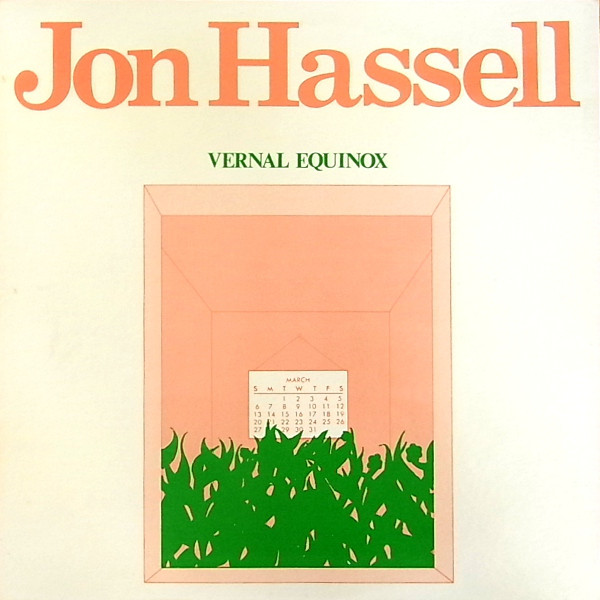
1. Jon Hassell『Vernal Equinox』(77年)

 ジョン・ハッセルの名前と「第四世界」なる新コンセプトを一躍世界に広めたのは言うまでもなくブライアン・イーノとの連名で発表された『Fourth World Vol. 1 - Possible Musics』(80年)だが、そこで示された斬新なサウンド・プロダクションの大半、そして彼の表現の核である夢幻的官能性は既にこのソロ・デビュー作の中に十分すぎるほど認められる。キーワードの「第四世界」こそ明記されてはいないが、コンセプト自体はこの何年も前から彼の頭のなかにはあった。乱暴に言ってしまえば、本作にイーノがエレクトロニクスでトリートメントを加えたのが『Fourth World Vol. 1 - Possible Musics』だったのだ。米ピッチフォーク誌の「アンビエント・アルバム歴代ベスト50」リストでも47位に選出されているが、個人的にはベスト10に入れるべき作品だと思う。ハッセルは近年のインタヴューでこう語っている。「当時私は、電子技術を組み合わせた管楽器によってラーガとミニマリズムの相克を探求していた。最近、本作に内包された種子が自分にとっていかに重大なものだったかが改めてわかり、驚嘆した」

 録音は76年、トロントのヨーク大学エレクトロニク・メディア・スタジオ。参加しているのは、「永久音楽劇場」の仲間であり、人体の自律神経を用いた音楽作品 (バイオ・フィードバック・ミュージック) で一躍注目を集めていた実験音楽家デイヴィッド・ローゼンブーム、純正律や現代音楽的ガムランなどで80年代に有名になる実験音楽家ラリー・ポランスキー、パリから米国に移ったばかりのブラジル人パーカッション奏者ナナ・ヴァスコンセロスなど、実験音楽と民族音楽の両方を自在に行き来するクセ者ばかり。そしてエンジニアを務めたのは、80年代以降、ブライアン・イーノやダニエル・ラノワの右腕的コラボレイターとして、あるいはリアルワールド系作品のプロデューサーとして大活躍することになるマイケル・ブルック。当時パンク・シーンでギターを弾いていたブルックは、ここでのハッセルとの出会いをきっかけに、世界中の民族音楽に興味を持つようになったという。

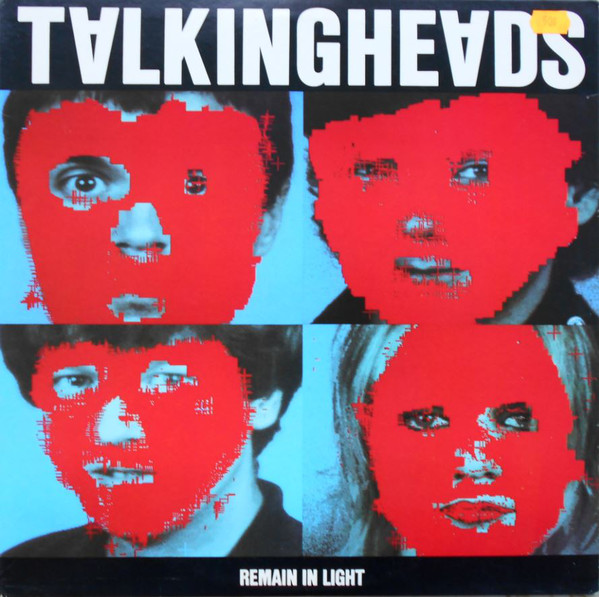
2. Talking Heads“Houses In Motion”(80年)

 「こういう作品を待ち望んでいた」と絶賛したとおり、『Vernal Equinox』はブライアン・イーノに絶大な影響とインスピレイションを与えた。そしてハッセルもまた、イーノとの出会いをきっかけにポップ・ミュージック・シーンと関わり始めた。その最初のコラボ・ワークが、トーキング・ヘッズの傑作『Remain In Light』 への参加だ。アフリカ音楽のリズムを大胆に取り込んだ本アルバムへの賛辞“原始と電子の融合”は、そのままハッセルの「第四世界」のコンセプトでもある。翌年出たイーノとデイヴィッド・バーンの連名による『My Life In The Bush Of Ghosts』にはハッセルは参加しなかったが、そこで展開されたエスノ・エレメントのコラージュ・ワークは、元々はハッセルのアイデアであり、後年彼はインタヴューで「二人にパクられた」と恨み言をつぶやいている。

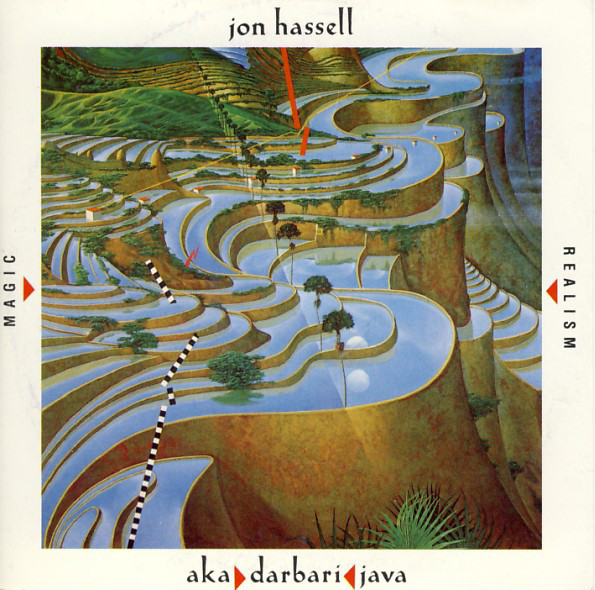
3. Jon Hassell『Aka / Darbari / Java - Magic Realism』(83年)

 ハッセルは、マレー半島の山岳少数民族セノイ族の夢理論をモティーフにした『Dream Theory In Malaya (Fourth World Volume Two)』(80年)を経て、この次作では「第四世界」上に「マジック・リアリズム」という新コンセプトを積み重ねた。ここでは、世界初のデジタル・サンプリング・キーボード「Fairlight CMI」を導入し、ピグミーのコーラスやセネガルのドラム、イマ・スマックのレコードなど様々なサウンド・エレメントを細分化、再構築している。サンプリング/コラージュやミニマリズム、インドのラーガなどから始まったハッセルの初期キャリアの、これが最高到達点だろう。

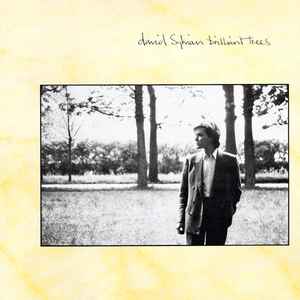
4. David Sylvian「Brillant Trees」(84年)

 ハッセルが参加したロック系作品のなかで、『Remain In Light』と並びもっとも有名かつ印象的なのが、デイヴィッド・シルヴィアンの初ソロ・アルバム『Brilliant Trees』だろう。全7曲中の2曲でトランペットを演奏。ハッセルの参加がどういう経緯だったのかは不明だが、本アルバムには元カンのホルガー・シューカイ(ハッセルとはシュトックハウゼンの同門)も参加しており、もしかしたらホルガー経由(推薦)だったのかもしれない。ちなみにカンにも「第四世界」とは似て非なる「E.F.S.(Ethnological Forgery Series=民族学的偽造シリーズ)」というコンセプチュアル・ワークがあった。

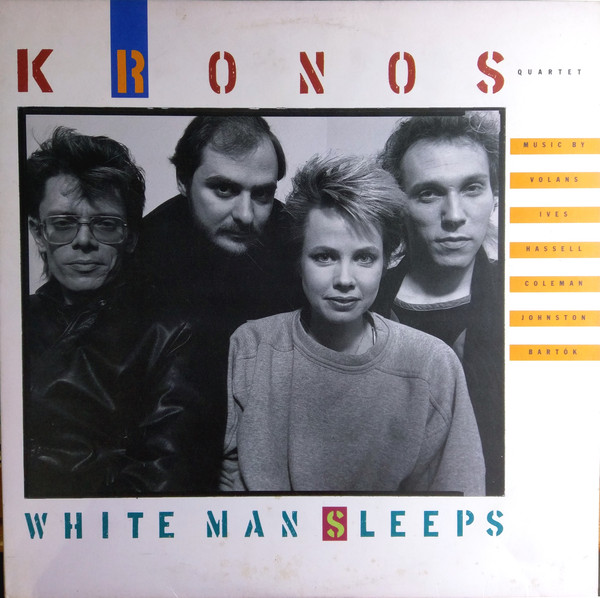
5. Kronos Quartet「Pano da costa (Cloth from the Coast)」(87年)

 クロノス・クァルテットがハッセルに委嘱した弦楽四重奏曲。クロノスのアルバム『White Man Sleeps』に収録。ハッセルをクロノスに紹介したのは、クロノスにたくさんの楽曲を提供しているテリー・ライリーである。ここでの演奏にはハッセルは参加していないが、楽曲自体はハッセルの世界そのものだ。おそらくここから発展したのだろう、クロノスの93年のアルバム『Short Stories』ではハッセルの師パンディット・プラン・ナートが歌った曲も入っている。

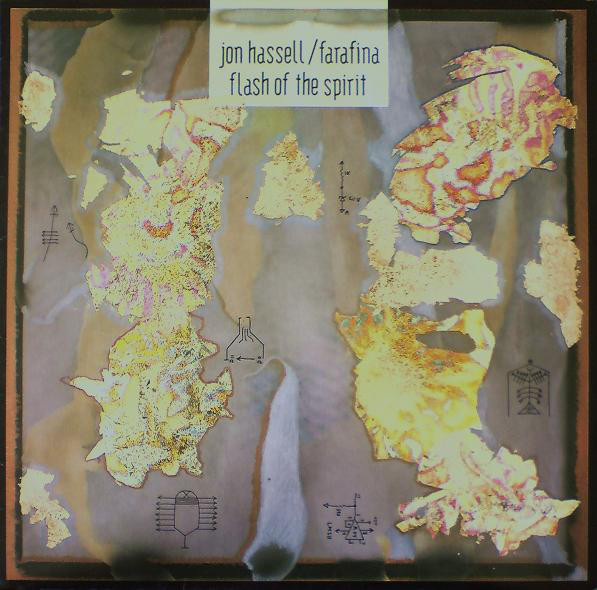
6. Jon Hassell/Farafina『Flash Of The Spirit』(88年)

 デビュー作『Vernal Equinox』で電子音楽家デイヴィッド・ローゼンブームにもンビラやタブラ等を担当させるなど、当初からパーカッションに強いこだわりを持っていたハッセルがブルキナファソの伝統音楽打楽器アンサンブル(7人編成)ファラフィーナとガップリ四つに組んだ作品。バラフォンやタマ、ジャンベなどが複雑に織り成すアフリカン・ポリリズムのなかをハッセルの電化トランペット/キーボードが蛇行する様は「第四世界」音楽のわかりやすいサンプルか。パーカッシヴな名曲としては、同年にジャン=フィリップ・リキエル他とイタリアでライヴ録音した「Pygmy Dance」(91年のオムニバス盤『Ai Confini / Interzone』に収録)もお勧めだ。

7. Les Nouvelles Polyphonies Corses With Hector Zazou「In La Piazza」(91年)

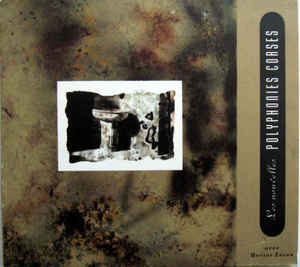
 フランスの前衛室内楽ユニット「ZNR」での活動を経て、80年代にはアフリカ他世界中の伝統音楽を独自に加工したキッチュなエスノ・ポップで名を馳せた才人エクトール・ザズー。なかでも人気が高いのが、コルシカ島のポリフォニー・コーラスを素材にしたアルバム『Les Nouvelles Polyphonies Corses Avec Hector Zazou』だ。ハッセルは3曲に参加。様々な声とトランペットがもつれ合いながら描くヒプノティックな曲線が美しい。

8. Jon Hassell & 808 State「Voiceprint」(90年) 

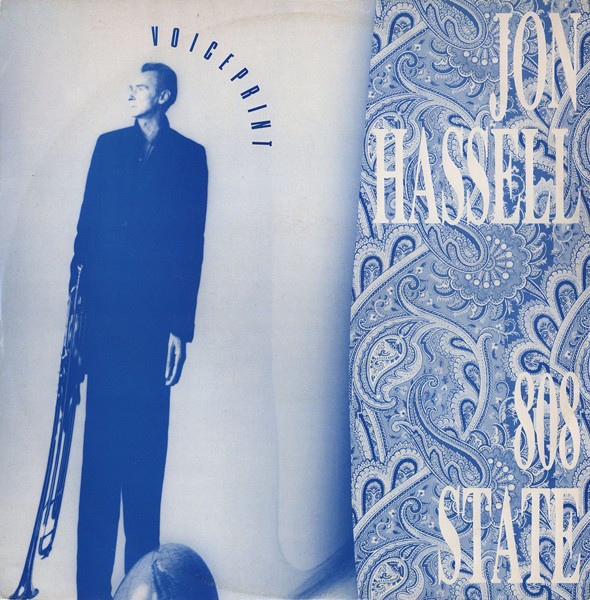
 ハッセルは都市のノイズに焦点を当てた90年のアルバム『City:Works Of Fiction』あたりからクラブ・ミュージックやヒップホップとも接近しはじめた。同年には『City:Works Of Fiction』のオープニング・ナンバー「Voiceprint」の808 Stateリミックス・ヴァージョンを含むミニ・アルバムと12インチ・シングル「Voiceprint」もリリース。後年にはリカルド・ヴィラロボスやアルカなどもハッセルをサンプリングしている。

9. Jon Hassell & Bluescreen『Dressing For Pleasure』(94年) 

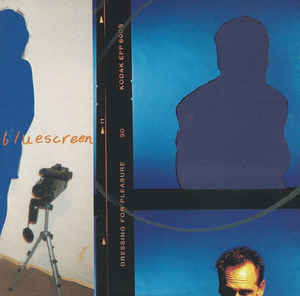
 パブリック・エナミーをヴォーカル・サンプリングした『City:Works Of Fiction』以上にヒップホップ色濃厚な作品がブルースクリーン(DJを含む4人組)と組んだ『Dressing For Pleasure』だ。デューク・エリントンのエキゾティック・チューン“Bakiff”を含む細かいサンプリングで精緻に構成しつつ、全体を貫くのはブレイクビーツ。

10. Jon Hassell / I Magazzini「Temperature Variabili」(95年)

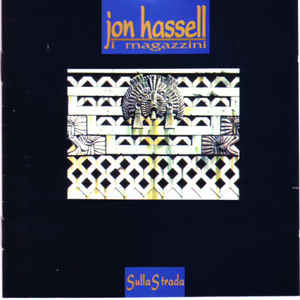
 ハッセルはライ・クーダー絡みの映画音楽にもいくつか参加しているが、『Sulla Strada』はイタリアの前衛劇団「イ・マガッツィーニ」の演目のための音楽集だ。アルバム全体にわたりハッセルが過去に試みてきた様々な技法やスタイルがちりばめられ、随時、イ・マガッツィーニの声もランダムに混入される。サウンド・スペクタクルとして非常にヴァラエティに富み、面白い作品だ。

11. Jon Hassell『Fascinoma』(99年)

 ナット・キング・コールのスタンダード・ナンバーとして有名な“Nature Boy”(モンド/エキゾティカ文脈で知られる奇人作曲家エデン・アーベの作)で幕を開け、デューク・エリントンのナンバーなどもカヴァした異色アルバム。ハーモナイザー等エフェクターなしの素ペット演奏も聴ける、一種のジャズ回帰/回顧作。しかしバンスリや木魚の音が突然出てきたり、「キャラヴァン」にタンブーラが妖しく絡みつく「Caravanesque」なんてのがあったりと、どこまでもハッセル・フィルターを通した幻想のジャズである。ジャズ・ピアニストのジャッキー・テラソンが全面参加し、プロデュース/ギターはライ・クーダー。

The World of My Bloody Valentine
マイ・ブラッディ・ヴァレンタインの世界

極限にまで到達したロック・サウンドの軌跡──
マイ・ブラッディ・ヴァレンタインがなしえたこととは

インタヴュー
ディスクガイド
『Loveless』から広がる宇宙
ティーンエイジャーの自我の溶解
“愛無き” を愛することを学ぶ
etc

第二特集
New Generation of Indie Rock and Post Punk in the UK
UKインディー・ロック/ポスト・パンク新世代

The World of My Bloody Valentine issue

photos by Kenji Kubo
ケヴィン・シールズ、その人生を大いに語る(杉田元一+坂本麻里子)

■ディスクガイド
(イアン・F・マーティン、大藤桂、黒田隆憲、後藤護、ジェイムズ・ハッドフィールド、清水祐也、杉田元一、野田努、山口美波、与田太郎)
This Is Your Bloody Valentine
Ecstasy
Geek! / The New Record By My Bloody Valentine / Strawberry Wine / Sunny Sundae Smile
You Made Me Realise
Feed Me With Your Kiss
Isn't Anything
オフィシャル・インタヴュー(粉川しの)
ティーンエイジャーの自我の溶解(イアン・F・マーティン)
Glider
Glider Remix
Tremolo E.P.
Loveless
オフィシャル・インタヴュー(小野島大)
“愛無き” を愛することを学ぶ(ジェイムズ・ハッドフィールド)
Ecstasy And Wine
m b v
オフィシャル・インタヴュー(黒田隆憲)
EP's 1988-1991
オフィシャル・インタヴュー(黒田隆憲)
Experimental Audio Research
Patti Smith, Kevin Shields
Brian Eno With Kevin Shields
Hope Sandoval & The Warm Inventions
轟音の向こう側の素顔(黒田隆憲)
あの時代の不安定な生活のなかで(久保憲司)

■『ラヴレス』から広がる宇宙
ロック編(松村正人)
テクノ編(野田努)
アンビエント編(三田格)
実験音楽編(松山晋也)

第二特集「UKポストパンク新時代」
〈ラフ・トレード〉が語る、UKインディー・ロックの現在(野田努+坂本麻里子)
断片化された生活のための音楽(イアン・F・マーティン)
ディスクガイド(天野龍太郎、野田努、小山田米呂)
活況を見せるアイルランド・シーン(天野龍太郎)
新世代によるクラウトロック再解釈とドライな「歌」(天野龍太郎)
世界の中心は現場にあって、広がりはインターネットによってもたらされる(Casanova)

オンラインにてお買い求めいただける店舗一覧

amazon
TSUTAYAオンライン
Rakuten ブックス
7net(セブンネットショッピング)
ヨドバシ・ドット・コム
HMV
TOWER RECORDS
disk union
紀伊國屋書店
honto
e-hon
Honya Club
mibon本の通販(未来屋書店)

P-VINE OFFICIAL SHOP
SPECIAL DELIVERY

全国実店舗の在庫状況

紀伊國屋書店
三省堂書店
丸善/ジュンク堂書店/文教堂/戸田書店/啓林堂書店/ブックスモア
旭屋書店
有隣堂

訂正
このたび は弊社商品をご購入いただきまして誠にありがとうございます。
『別冊ele-king マイ・ブラッディ・ヴァレンタインの世界』において、
p185上段のBlack Midiのジャケット写真が、
中央部を拡大したまま(トリミング・ミスのまま)印刷されていました。
謹んで訂正いたしますとともに、
お客様および関係者の皆様にご迷惑をおかけしましたことをお詫び申し上げます。

interview with Squarepusher - ele-king

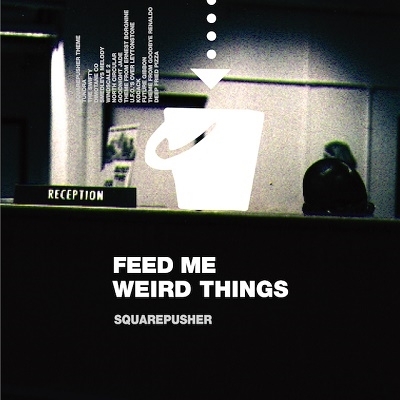
 ロンドンのチェルシー・カレッジ・オブ・アート・アンド・デザインの美術学部に入学したとき、トム・ジェンキンソンは借りられる最高額の学生ローンを受け取り、その全額をはたいて中古の機材を買い揃えた。1400ポンド分の小切手は、中古のAkai S950サンプラー、2台のドラムマシン、ミキサー、DATレコーダーを買えるだけの額であり、これらの機材は、スクエアプッシャーとしての1996年のデビューアルバム『Feed Me Weird Things』に収められた音楽を作る上で不可欠な役割を果たした。当時のジェンキンソンは、レイヴ・ミュージックの文体を身につけながらそこに変化を加えてより斬新な可能性を追い求めようとするミュージシャンたちの流れに属していると見なされており、ルーク・ヴァイバート、μ-Ziq──そしてもちろんエイフェックス・ツインといった顔ぶれと交流を持っていた。ブレイクビーツのリズムを非常識な速度に高めたり、その性質をシリーパテ(粘性と弾性を兼ね備える合成ゴム粘土)のように多彩に変化させたりといったスタイルは、ほどなくしてドリルンベースと呼ばれるようになるジャンルの象徴となっていた。だが、彼の音楽を何より際立たせていたのはエレキベースの卓越した使い方で、奏者としての圧倒的な才能は、あのジャコ・パストリアスが比較対象になるのも納得できるものだった。

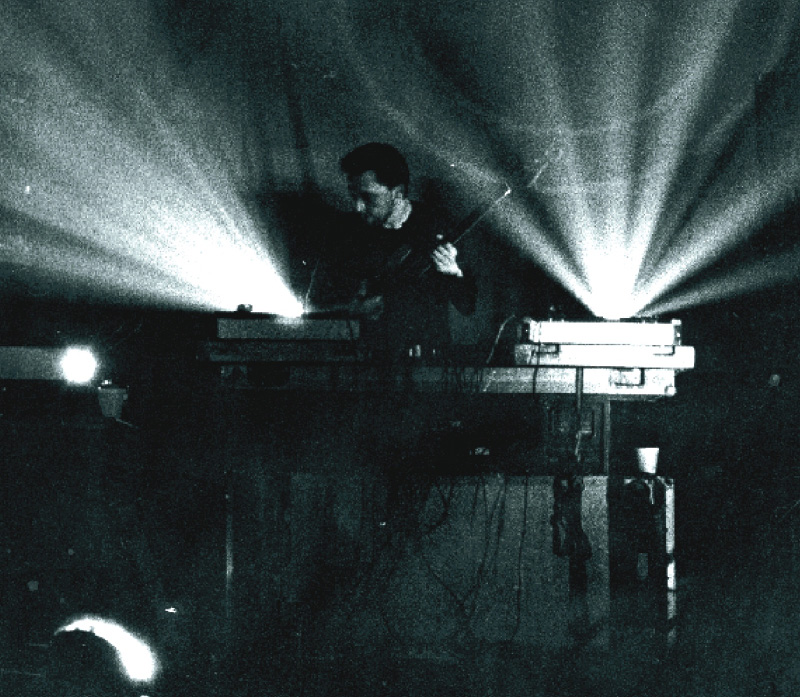
 1995年にノースロンドンで開かれた実験的電子音楽のイベントに登場したジェンキンソンは、幸運にもエイフェックス・ツインその人であるリチャード・D・ジェイムスの耳にとまり、その後押しによって『Feed Me Weird Things』が彼のレーベル〈Rephlex〉からリリースされた。ジェイムスは収録トラックを選曲し、アルバムに熱烈なライナーノーツを寄稿した(例えば「ミスター・ジェンキンソンが指揮をするとき、彼を除く世界中のあらゆるものがオーケストラピットにある」といった記述がある)。翌年スクエアプッシャーは〈Warp Records〉からの最初のアルバム『Hard Normal Daddy』をリリースし、ドラムのプラグラミングと、ジャズ・フュージョンの過激さと、ひねくれたユーモアが混ざり合っていたことで、先進的な評論家の中からは彼をジャングル・ミュージック界のフランク・ザッパと位置づける声も上がった。しかし続いて1998年にリリースされた『Music Is Rotted One Note』では、大胆な方向転換──以後何度もおこなわれる方向転換のはじまりでもあった──がなされ、シーケンサーがアナログ楽器に置き換えられるとともに、ミュジーク・コンクレートといったジャンルやエレクトリック期のマイルス・デイヴィスを起源とするサウンドが作られるようになった。

 その後に続くジェンキンスの多様な作品──2001年の『Go Plastic』のように〈Warp〉の歴史に刻まれる名作から、ベースのソロ・アルバム(『Solo Electric Bass 1』)、オルガン(『All Night Chroma』、ジェイムズ・マクヴィニーとの共作)またはアンドロイドを活用した作品(『Music for Robots』、Zマシーンズとの共作)にまでおよぶ──において、彼は一貫して独特の音の響きを保ち続けた。そして『Feed Me Weird Things』の時点で、すでにその音の響きは完成していた。本アルバムのリリース25周年を記念したリイシュー盤には、本人による新規のライナーノーツが付属するが、そこに記載されるまるで『Sound & Recording』などの専門書のようなマニアックな分析は、彼がたびたび言及する初歩的な技術のあり方とは対照的だ。『Feed Me Weird Things』のサウンドは、現在の〈Warp〉らしいスタイルのIDM(インテリジェント・ダンス・ミュージック)の神髄を表しているが、その起源が1980年代のインディー・シーンで培われたDIYの手法にあることも伝わってくる。

 昨年の『Be Up A Hello』でジェンキンソンは、キャリアの初期に使用していた機材をひさしぶりに持ち出して、ひねりを加えたアシッド・ハウスやレイヴ・サウンドを生み出し、アルバムはこれまで制作してきた中で最も面白味のある作品のひとつと評価された。Zoomでのインタヴューで『Feed Me Weird Things』のリイシューに触れることはほとんどなかったが、長時間に渡って、10代のころの話やベースとの関わり、また創作における制約こそがつねに自らの取り組み方を決定してきたことなどについて積極的に語ってくれた。

子供時代が再来したかのようだった。「大人の世界」が遠のいて、もはや自分のやっていることと世界の間に現実の関わりがあるという感覚がなくなってしまったんだ。僕は、かなり本気でこの状態を保ちたいと思っている。

昨年はあなたにとってどのような年でしたか?

TJ:たぶん、いろいろな意味で未知なる日々だった。何よりも最初は、そこにある恐怖がすべてだったけど、次第にある種の安堵感が混ざるようになった。1年中ツアーに出るだろうと思っていた状況から、程度の差はあれ、基本的に全部が撤回されるという状況に変わってしまったからね。ここでは正直に話すけど、もしこれで僕の思うようにやらせてもらえるとすれば、申し分のない状況だ。つまり、大人たちの世界は事実上機能を停止した。先を見据えたプロジェクトや何かが話題になることがなくなり、それは何が起ころうとしているのか誰にもわからなかったからだ。そんなわけで、創作活動に当てられる、願ってもない時間が早々に訪れたということだ。

それはいいですね!

TJ:そう、ある意味ではそうだった──だからといって、この1年間ずっと降りかかってきた恐怖を軽視しているわけでは決してない──ただ、どことなく子供時代が再来したかのようだった。ある日突然、僕はこの場所でひたすら自分に向き合うことになり、それでいわゆる「大人の世界」が遠のいて、もはや自分のやっていることと世界の間に現実の関わりがあるという感覚がなくなってしまったんだ。僕は、かなり本気でこの状態を保ちたいと思っている。平常時であれば、それこそ無難な距離感を保つために、もっと慎重に取り組んだだろうけど、パンデミックの場合、なるようにしかならなかったんだ。

ここ1年ほどの間に、自身が何か特定の方向性に引き寄せられていると感じることはありましたか? 現在取り組んでいることでも、あるいはこれから創作しようとしていることでも。

TJ:大まかに言えば、まだ『Be Up A Hello』の余韻が残っている。包み隠さず話すけど、これほどまでに大人の世界が遠ざかっている感覚が強くなって、自分のいままでの日常生活とか、考え方とか、対話とかがもはや通用しないとなるにしたがって、「好きなようにやってやろう!」という意識が戻ってきた。確かにいまのところ大きな仕事とか、大きなプロジェクトは何もない。それなら思い切り遊んでみようと思うだろう? そしてその考えは、すでに『Be Up A Hello』にもある程度は、取り入れられている。なぜなら、このアルバムそのものが、度重なる人生の厳しい出来事に影響を受けているからで、おかげである意味で再出発をして、最初の原則に立ち返ることができた。楽しいことをするっていうところにね。

過去には、心から楽しいと思えない仕事をしていた時期もあったということですか?

TJ:(笑)いい質問だね。いや、本当に大事なことだ。何ていうか、そうだな、実際問題、楽しさを期待するだなんて、笑われても仕方がないからね……つまり26年の「キャリア」と呼べる年月が僕にはあって、それどころか子供だったころの準備期間を考慮すればもっと長くなる。確かに、すごく昔、それこそキャリアがはじまる前は、楽しいという感情がすべてを突き動かしていた。だからこそ毎日学校から走って家に帰ったし、ギターを触るのが待ちきれなかった。面白いという気持ちだけだった。職業にするという気はなかったし──もっとうまくなりたいという向上心すらなかった。初めは、何かすごいことをしたいという考えさえ持っていなくて、ただ単に「この楽器が好きでしょうがないし、この楽器が鳴らす音が好きでしょうがない」というだけだった──すごく素朴な向き合い方だ。もちろんそこからさまざまなことが進歩しているし、そのぶんつねにいろいろと気を配って、できるだけついていくようにしていることもつけ加えておきたい。要するに、46才になった自分に、10才の少年みたいな心持ちを期待されても困るということかな。

(笑)そうですね……

TJ:だけど正直に言うと、できるだけ変わらないでいたいと思っている。自分にとってはそれがすべての根本だから。活力の源だ。言い方を変えれば、自分にルールを課して、楽器を弾いてもうまくいかないとき──そして楽しめていないとき──には、「いいか? いまは距離を置くべきなんだ」と考えるようにした。なぜなら、そうやってできあがったものを誰かが耳にしても、苦労の痕跡や憤りや退屈が伝わるばかりで、意味が変わってしまうから。ただときにはおかしなことが起こって、例えば取り組んでいるものがまるで気に入らなくて「どうしても最後までやらないといけないんだよな。気に入らないし、どうせ全部消去することになるんだろうけど、ともかく終わらせないと……」と考えていても、翌日聴いてみれば「あれ、思っていたより、ずっといいぞ」ってなることはある(笑)。それでもまあ、全体的には、僕は悩みながら取り組み続けるタイプではない。そういうやり方は自分に合わない。ただそれだけだ。
このことは、つねにあちこちのインタヴューで話している。まさに事実だからね。強い熱意が根っこにあって、あらゆるものがそこから派生している──そして何かに取り組むさいに無理を重ねて、身を粉にしてまでとことんやり抜くのは、かえってすべてを台なしにすると思う。駄目にするのはその日だけに限らず、もしかすると、何日も何週間も棒に振るかもしれない。たぶんプログラミングにもそういう面があって……実は昨日もいろいろとやっていたんだけど、結局放り出したんだ。義務感だけでやっている仕事に思えたから。いつかアシスタントのような人を置ければいいと考えている。仕事を押しつけるためではなくて、一緒に作ることで、もっと楽しめることがあるかもしれないと思うからね。でもそうなると、長年の習慣が変わってしまうだろう。まあやってみないとわからないけど。

とはいえ、何度か他の人たちと一緒に仕事をしていますね? バンド(ショバリーダー・ワン)で活動していたこともありましたし……

TJ:うん、そのとおりだ。

……そしてある時期(だいたい2008年の『Just A Souvenir』のころ)には、ボルト・スロワーのメンバーだったドラマーとともにステージに立っていました。

TJ:アレックス・トーマスだね。そうそう。いや、確かにああやってすばらしい時間を過ごしたけど、実際、技術的な面というか機械に関する面では、誰かに手伝ってもらったことはないよ。思うに、コラボレーションが実現するのは(つまり他のミュージシャンたちと演奏することは)僕にとっていちばん自然なことだ。何しろ10代のころを振り返れば、ずっとバンドに入って音楽活動をしていたわけだから。それが当時は何より大切なことだったし、自分の作品を作り続けてきたなかで、いまもまた活力を与えてくれている。

なるほど、そうですか。10代のころ楽器を演奏しているときに、ベースに引き寄せられたわけですよね。その理由は、バンドでベーシストが必要とされていたからでしょうか? それとも、楽器そのものがあなたを引きつけたのでしょうか?

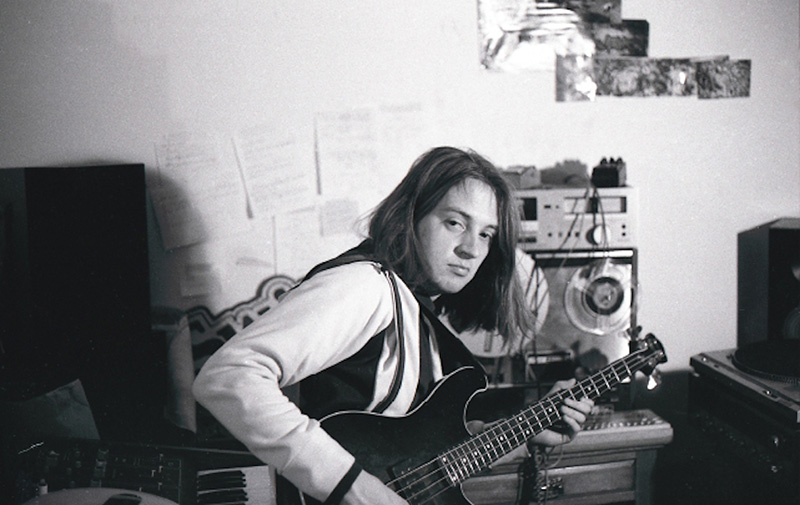
TJ:最初に楽器があって、それからバンドで演奏するようになった。というより、楽器があったからこそバンドをはじめたんだ。じつは最初の楽器はベースではなかった。当時は、何であれギターに類する楽器を身につけたいなら、昔ながらのアコースティック・ギターからはじめるのが一番だというのが定説だったし。そして僕は11才だった。経験も知識もまるでなくて誰にも相談しようがなかった──それにお金もなかった。安物のエレキ・ギターでさえ縁遠いものだった。初めてのアコースティック・ギターを15ポンドで買って、もちろんそれは、まったくもって大した楽器ではなかったけど、それでも新しい世界への扉を開くのには役立ったね。
だけど僕はずっとベースだけでなく電子楽器の世界にも引き寄せられていた。何がそんなに魅力的だったかと言えば、音色の質とか、奥深さ、エネルギーといったものが、自分にはその楽器を体現しているように思えたんだ。僕は、ベースがどんなものかさえ知らなかった。確かに、耳を慣らしていなければ、あの楽器はちゃんと聴き分けられない。そこに興味が湧いた。例えば「この楽器は何をしているんだろう? どこの音域なんだろう? どんな可能性を秘めているのだろう?」といったように。そしてその答えが明らかになる瞬間が何度かあった。振り返ってみれば、例えばポール・サイモンのアルバム『Graceland』が挙げられる。あのアルバムは傑作で──あれを知らないなんて許されないと言ってもいいくらい、それこそ触れる機会はいくらでもあるはずだ──そのなかに、あの素晴らしいベーシスト(バキティ・クマロ)が弾いているシングル曲があるんだけど……

“Call Me Al” ですか?

TJ:そう、それだ。“You Can Call Me Al” だよ。このポップ・ソングのなかに、2小節だけ入っているベースのソロ・フレーズがある。それがもう「いまのは何だ!? めちゃくちゃ格好いいぞ!」っていう感じだった。パーカッションみたいにリズムを刻んで、それでいて美しいメロディーを奏でている。それに心を奪われた。あの音域ですごく面白いことをやっている。現在までの僕の音楽は、メロディー重視の曲を作る風潮に反していると思っている。メロディー重視の音は、クラシックでも、ポップでも、ジャズでもあらゆるジャンルで聞こえてくる──そこではトップの音が売り上げを左右して、低い音域はあくまで土台とされている。僕は低音域の作用に魅了されていて、多くの場合、自分の作品では上の音域が控え目になっている。どういうわけか、そのほうが性に合っている。でもとにかく……ベースは僕を惹きつけたんだ。
そういう出来事は他にもあった──例えば、ジミ・ヘンドリックスのモンタレー(1967年のモンタレー・インターナショナル・ポップ・フェスティヴァル)でのパフォーマンスだ。僕はあのステージのビデオテープを持っていて、本当に夢中になった。彼がギターに火を放つ場面があって、あの意味についてはそれこそ無限に解釈ができる。どことなく愉快なシーンだし、たぶん狙ってやっているところもあるんだろうけど、僕にとってはいまでも思い出すだけで背筋がぞくっとする。あれはロックの象徴で、それがああやって粉々にされて火を点けられた──そのときに鳴っていた音が魅惑的だった。いつまでも続く魅惑的な音が、楽器を酷使することで生まれていた。小遣いは足りていなかったし、ガソリンも持っていなかった──だから子供だった僕は、自分のギターに同じことはできなかったよ(笑)。
それはそれとして、ジミヘンがこれをやっている間、ノエル・レディングが演奏を引っ張って、ベースの音程を上げていき、そしていつの間にか甲高い音をバックで奏ではじめた。すごく刺激的だった。ここでもまた、別の意味で僕は引きつけられた。「そうか、ベースはこんなに激しくて力強い音も出せるのか」と思った。そういったできごとがあって、僕はすっかり納得していた。やがて次の機会が巡ってきた。ベースが70ポンドで売りに出されているのが地元の新聞に載っていて、しかもアンプまで揃っていたんだ。すぐに飛びついたよ。

僕の音楽は、メロディー重視の曲を作る風潮に反していると思っている。メロディー重視の音は、クラシックでも、ポップでも、ジャズでもあらゆるジャンルで聞こえてくる──そこではトップの音が売り上げを左右して、低い音域はあくまで土台とされている。

スクエアプッシャーとして活動しはじめた頃、ベースも使うべきか迷いましたか、それともそこは最初から自然なことだったんでしょうか?

TJ:まあ、そうだね。スクエアプッシャーとなったものは、どのみち子供の頃にやっていたことの延長線上にあったものだから、つまり、手元にあった機材や、借りられるものを手あたり次第使ってみたってことだ。『Feed Me Weird Things』の頃も、それ以降もそうだった。最近になってその頃のことを思い出した。インタヴュー等で、あの作品の技術面について語ることがあったんだ。実際、あの機材の3分の1は借り物だった。おかしいよな(笑)。大体こんな風に「あ、このギターアンプ借りられる? ドラムマシンも貸してくれる? ちょっとこいつを試してみたいんだ……」とね。終始そんな調子だった。ギターペダルも借りたんだ。全然自慢にならないけど、まだ返してない(笑)。『Be Up A Hello』でもまだ使っているよ。だから、ある程度は言いわけは立つかもね。悪いことをしているのに変わりはないけど。
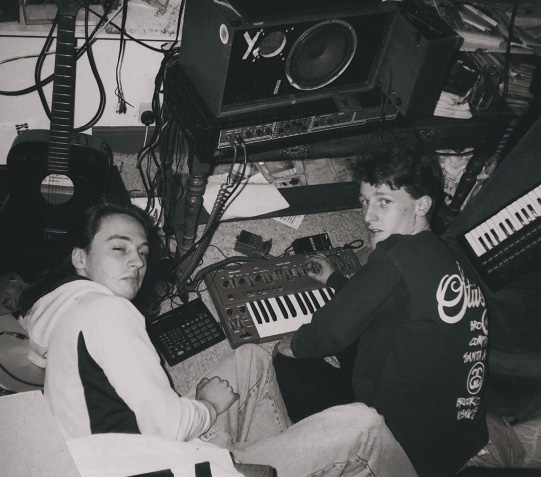
 忘れられないのは、ビスケットの缶でスネアドラムを作ったことだ。画鋲を中に放り込んで、てっぺんに絶縁テープを張り巡らせてスキンを作った。ドラムセットの構成だってよくわかってなかったんだ、その頃は。「あの音だ。よく2拍目か4拍目に入るやつ。あのシャンシャンいう響き、〝シャラシャラ〟って鳴るあれ。あれは何? ドラムみたいだけど、でも……どうやってシャンシャン鳴るドラムを作るんだろう?」そういうわけで、「まあ、わかんないけど、画鋲をビスケットの缶に入れてみよう。それで上に何かを張ればいいや。そしたら叩けるだろ?」で、うまくいったんだ! それなりにね。最初の頃はともかく、恐ろしく原始的なものだった。予算ゼロだし、手元にあるのは安物のギターだけ。でも、そういうメンタリティーでいったんだ。
 いまとなってはわざわざこういうことを追求してみようっていう気はないけど、近頃のミュージシャン志望の子たちが置かれている状況と比べてみると面白いとは思う。正直、彼らのほうが恵まれている。ラップトップさえあれば、無限の音楽作成ツールにアクセスできるんだから。夢みたいな環境だ。ほんの少し前を振り返って見るだけで、40年も前のことでもないのに、まったく、恐ろしいほど違っているんだ。
 さて、もとの質問に戻るけど、ベースはなくてはならないものだった。あの頃、エレキ・ギターを持っていなかったから、電子機材で高音域を探求するという選択肢がなかった。でもまあ、「じゃあ、ベースのネックのいちばん上までいってみよう。それでギターみたいな音を出してみよう」ってやったんだ。で、もちろん、ギターの音にはいまいち似ていないけれど、別の味があった。それがなかなか面白かった。おかげでコードや和音、それから右手を使った色々なテクニックに首を突っ込むことになり、最終的には2009年にリリースした(『Solo Electric Bass 1』)みたいなソロのベースの作品になった。だからあれはそういう慈善バザー的な意識と取り組み方の集大成みたいなものなんだ。
 それから少しして、バンドで演奏する傍ら、友だちと一緒に地元でパーティーを開くようになった。近所のYMCAとかでね。地元のサッカークラブなんかも良かった。そういうところで何度もパーティーをやったものだ。ドライアイスを敷き詰めて、手元にあった当時の最新レイヴのレコードをかけた。そこへベースを持っていっては演奏に合わせてジャムって、違った味を出そうとしたんだ。デッキでブレイクビートをかけて、ミキシングをしているやつがいれば、それに合わせてジャムってみたり。スクエアプッシャーはそういう活動からそれほど飛躍したものじゃない。中核になっているのはそういったもので、それが礎になっている。

[[SplitPage]]

楽器の演奏方法には一般的な思い込みが氾濫していて、「そうだ、偉大な先人はこうしていたんだ、だから君もうまくなりたいなら、彼らのやり方に習わなきゃ」っていうようなナンセンスだらけだ。

ミュージック・シーンに初めて登場したときのことを振り返って見ると、ダンス系の音楽をああいう風に生の機材でやろうとしていた人びとはあまりいなかったかと思います。ある意味、ただひとり、自分の道を歩んでいましたよね?

TJ:ああ……いい勉強になったよ。その後、かなり早い段階であの世界から身を引いたからね。僕の見たところ、少なくともイギリスの評論家の一部は、僕がジャズやフュージョン・ジャズの要素を取り出してダンス・ミュージックと融合させていると思い込み、「どういうつもりなんだ?」と言っていた。それでまあ……奇をてらっているだとか、コメディ路線だとか思われたんだろう。確かに僕の作品にそこはかとないおかしみがあるのは否定しない、含まれているものなら他にもいろいろあるけれど。でも、あの機材はパロディやおどけじゃなかった。そういう反応が生まれた原因の一部は、もちろん、みんながそういう見方をしていたわけじゃないけど、ご指摘にあった通りだと思う。あまり流行ってなかったからだね。
 でも、その目新しさが素晴らしい出会いにつながることもあった。例えば、タルヴィン・シンだ。彼は様々なスタイルや伝統音楽を用いている。彼もきっとタブラ演奏で同じようなことをやっていたんだと思う。しかも非凡な演奏者だったしね。彼とはたまたま同じギグに出演したときに知り合って、すぐに意気投合した。互いのアプローチに共通点があったからだ。当時のダンス・ミュージックと昨今の作品とのつながりを保ちつつも、生の楽器とそういった音楽との接点を見出し、互いに影響しあえる絶妙なツボを模索していたんだ。結局は、それこそが醍醐味だからね。そして、その具体的な成果がいまになって目に見えるようになったんじゃないかと思ってる。とくに最近のドラマーたちの多くにね。いまでは彼らはとても、とても明白に影響を受けていて……いや、自画自賛をするつもりはないよ。僕だけじゃない、もちろん。でも、わかるはずだ、彼らが受け継いでいるのを。例えば、僕やタルヴィンや他の人びとが探求してきたものをだ。そしていまでは逆方向へのフィードバックがはじまっている。素晴らしいことだと思う。
 そのフィードバックのプロセスは、ある意味、僕のなかでも起きていた。ほんの束の間だけど、10代前半の頃に戻れたんだ。ベースラインの濃厚なレイヴのレコードがしっくりくるアシッドの曲やなんかで。そういうレコードにはしょっちゅうあることだが、たぶん(プロデューサーが)従来的な楽器のイロハを学んでないことに関わりがあるんだろうな。レコードの音程がサイケデリックなんだ。何て言うのか、音階が完全にぶっ飛んでいる。そこから音階を作ろうとしたら、とても妙なものができあがるだろう。2オクターヴの音階だとか、リピートしないものだとかね。そういう曲を演奏しようとすると、そういったある種どうしても内面化してしまっている、いわゆる「原理原則」を手放すことになる。というのも、とても多くの音楽がそういう特定の作法に従っているからだ、音階だとか、そういったものにね。あまりに普遍的で、どうすることもできない……知っておかなければならないことではあるけど、そういったものもある種の制限を課してくるんだ。
 だからDJピエールの(フューチャー名義の)“Slam” や “Box Energy” を演奏して、理解を深めようとしたことがあるんだけど、「ものすごく変!」ってなる。けれども演奏しているうちに「こいつは……本当に未来的だ」とわかる。実に勉強になるんだ。演奏に別の角度から影響を与えてくれる。楽器の演奏方法には一般的な思い込みが氾濫していて、「そうだ、偉大な先人はこうしていたんだ、だから君もうまくなりたいなら、彼らのやり方に習わなきゃ」っていうようなナンセンスだらけだ。実際、視線をその向こうに据えて、サウンドだけに集中してみるといい。「偉大な先人」から目を背け、名演奏とはまるで関係ないレコードだけじゃなく、それ以外のもの全て、周りのノイズのようなものも含めてシャットアウトする。そうすると、少なくとも同じくらいか、むしろそれ以上のインスピレーションが得られるはずだ。

あなたのキャリアを振り返るのはじつに興味深い。アルバムとアルバムの間である種の綱引きがおこなわれているようなんです。きわめてライヴ要素を重視しているものがある一方で、もっとこう、箱の中で展開しているようなものもある。

TJ:ああ、実にその通りだ。

何であれ、手元にあるもので音楽を作る。自慢できることがあるとすればそこだ。つまり「僕はどんなものを手にしたって、音楽が作れる」ってこと。ある意味、パンク精神と言おうか、独立精神と言おうか。

楽器を用いずに、完全にコンピュータだけでやっているときでも、ベースはつねにあなたの人生の一部で、何があっても触れ続けているものだったんですか?

TJ:ああ……もちろん。練習そのものに注ぎ込む時間は、まちまちだけどね。そこは一定してない。芯からプロ意識を持っている人っていうのはそういうところに厳しく取り組むんだろうけど、僕は違う。弾きたいときに弾くんだ。でも結局のところ、限界みたいなものがあるんだ。そこを過ぎるとスタミナを失っていくポイントがね。でも、他にあるのは……僕が言っているのは原理原則の体系だとか、音階ってこと。僕の理解では、他の多くの人もそう思っているだろうけど、指がどこに行くのかを心得てればいいってもんじゃない。指が行先を心得ているのは全体像となるメンタルマップがあるからなんだ。演奏しているとき、指にそこに行けと命じているわけじゃない。頭の中にイメージがあって、そのイメージをなぞっている。ある種の構造化したネットワークのようなものの、異なった道筋を辿っているんだ。それはつねにある。ギターを手にしていようがいまいがね。

なるほど。

TJ:だから、しょっちゅう、電車を待ってるときとか、行かなければいけないところがあるけどやることがないとか、そういうときには大体頭のなかで演奏して楽しんでいる。基本的には同じことなんだ。楽器はないけれど、音はそこにある。僕が辿る構造化した道筋は同じだ。それはもちろん、コンピュータをベースにした作曲のときにもあると思う。だからこの構造化した道筋を通じて情報がろ過されていく。こう言ったらわかってもらえるかな。例えば、『Damogen Furies』のメロディーには、僕がギターを手に取れば演奏しそうな要素がある。

ああ、なるほど。

TJ:そこが面白いところでもあり、楽器の恐ろしいところでもある。テクノロジーを使うだけというような単純な話じゃない。テクノロジーに使われてしまうんだ。テクノロジーが構成の前例、構成のパターン、そして構成の傾向を固めてしまう。僕が使っているあらゆる機材もそうだ。シンセサイザー、キーボード、ドラムに対応する構造やネットワークがあり、他にも僕がとても慣れ親しんでいる機材は、それらに対応する脳内イメージを持っている。でもって、それらがまた、フィルターとしても働く。だから僕は絶えずそれに抗おうとしているんだ。必ずしもフィルターというわけでもないな。努力さえすれば、型を破ることができるのだから。だから僕は「原理原則」と言うんだ。必ずしも従わなきゃならないってわけではない。でも、そうしないように意識的に努力しないと、確立されたネットワークや道を辿るのが最も抵抗の少ない道になってしまう。そして、そうなってしまうと本当に、最終的には自分の使っているものが定めてしまうことになるんだ。

じゃあオーネット・コールマンみたいにヴァイオリンを弾きはじめるとか、そういうことで、自分の殻を完全に破ってみたくなったことはないんですか?

TJ:何をやったかは具体的には挙げられないけど、つい最近、そういうことがあったのは認めるよ。いや、でも、あのメンタリティーは尊敬に値する。時々、こういうことをやるのはとても大事なことだと思う。そうだとも。ヴァイオリンと言えば……もちろんギターとの共通点がある。だけど根本的な違いは、思うに、少なくとも僕にとってだけど、ヴァイオリン系の楽器を手にしたときに感じるのは、弦が完全5度に調律されているってことだね。一方、ギターの場合はそれが4度だ。だから、僕が言っていた同じ体系をそのまま当てはめることはできない。完全にずれて新しいパターンになっているから。だから、それに抗って、僕がヴァイオリンを手にしたときにやれることを実現するには、ギターのチューニングを変えることだ。ラディカルさに欠ける嫌いはあるけど、ある程度はやれるようになる。でも本当にラディカルなのは、管楽器を手に取ることだろうね、いままで一度もやったことないから。やってみたら、たまげるだろうな! ぜひ挑戦したいね。

そうでしたね、『Feed Me Weird Things』のライナーノーツで “The Swifty” でのベース演奏はサックス奏者の影響を受けたと言ってましたね。

TJ:うん、そうなんだ。実に。

でも、そこまでやったことはまだないと?

TJ:ないな。なぜって、これと戦うというのは、そうだな……怠惰と呼んでもいい。僕には手近なところにあるものでベストを尽くさずにはいられないっていう微妙に染みついた癖があるんだ。僕のメンタリティーというのは、良きにつけ悪しきにつけ、前にも言ったが、音楽的な自由が身の回りにほぼなかったという状況の産物なんだ。まあ、アコースティック・ギターとテーププレイヤーがあって、ペダルが何個かあって、後になってキーボードみたいなものがきた。まあ、それはいいんだ。でも機材はとても限られていた。あれこれ手に入れようとはしたけど、限界を受け入れなければならなかった。そしてそれがある意味、僕の姿勢を決定づけた。そりゃ、贅沢だってできるよ。楽器店に出向いて、何かすごいものを手に入れて、「おい、見てくれ、新しいオモチャだぞ!」って言うんだ。もちろん、そういうことをしてみることもある。4弦から6弦のベースに変えたのは大きな変化だった。「いいんじゃない? 手を出してみよう。贅沢してみようか?」ってね。性格的に、さっき言った背景の強い影響もあって、「金に飽かして音楽を作ろう」っていう(メンタリティー)はない。何であれ、手元にあるもので音楽を作る。自慢できることがあるとすればそこだ。つまり「僕はどんなものを手にしたって、音楽が作れる」ってこと。ある意味、パンク精神と言おうか、独立精神と言おうか。DIYするっていうのは「教会のオルガンも、24トラックのテープも、Neveのミキサーも、アウトボードも聖歌隊も要らない……」ってことだ。僕には不要なんだ。

リック・ウェイクマンとは違うんだと。

TJ:(笑)。よくわかってるじゃないか! まさにそう。いや、まあ、あの人はあの人だ。だけど僕にはそういう選択肢はまったくなかったし、異なった状況でベストを尽くさねばならなかった。そして次第に、そういうことが僕にとっていちばんいいメンタリティーを造り上げていったんだと思う。断言するけど、それでよかったんだ。なぜなら、外部的なものに頼りきっていると、膨大な予算だとか、大勢のキャストやスタッフだとかに頼るとね、そういうのに支配されるようになる。そして、そこに不安を覚えるんだ。自分の制作プロセスを左右されたくない。他人の気まぐれやら、彼らの考えるいいサウンドだとか、彼らの考える「支払ってもいい妥当な金額」とかにね。そういうくだらないことには一切悩まされたくない。とにかく没頭したいんだよ、わかるだろ? まあ、じつのところ、性格的に僕は浪費できないんだろうけど。
 困ってしまうのは、テクノロジー系の雑誌なんかと(インタヴューを)やるときだね。彼らにとってはそれが全てなんだ。完全に業界に縛られていて、「新しい機材=新しい音楽」という図式なんだ。必ずしもそういうわけじゃないだろうって。そんなことはない。陳腐なやり方を当てはめてしまったら、そこから生まれてくるのは、クソみたいに無意味で、味気なく、つまらない音楽だ。反対に、こういうやり方も……いや、リック・ウェイクマンの冗談はさておき、メシアンのような作曲家(のやり方)を見習える。実に幅広く、とてつもなく面白い、刺激にあふれたオルガンのための作品を彼は生み出した。オルガンは何世紀も前の楽器だけど、彼が手にすると突然に、前代未聞のサウンドを奏で出す。僕に言わせれば「新しい機材、新しい音楽」の間には抜け落ちているものがたくさんある。それはもう……そりゃそうだ。新しい機材は音色が違うのはわかる。多少はね。(眉をよせる)だけど、そんなことじゃ僕は興奮しない。そういうことに意欲をかき立てられはしないんだ。

[[SplitPage]]

interview with Squarepusher

by James Hadfield

When he enrolled as a student of Fine Art at London’s Chelsea College of Art and Design, Tom Jenkinson took out the largest student loan he could get and blew the whole thing on second-hand gear. His £1,400 cheque was enough to buy a used Akai S950 sampler, two drum machines, a mixer and a DAT recorder, which played integral roles in the music collected on his 1996 debut album as Squarepusher, “Feed Me Weird Things.” At the time, Jenkinson seemed to be part of a wave of musicians who were taking the language of rave music and twisting it to weirder ends, putting him in the company of the likes of Luke Vibert, μ-Ziq — and, of course, Aphex Twin. The way he pushed breakbeats to insane speeds or turned them into silly putty was typical of what would soon be known as drill’n’bass, but his music was distinguished by its prominent use of electric bass, which he played with a virtuoso flair that made Jaco Pastorius comparisons inevitable.

Appearing at an experimental electronic night at a North London pub in 1995, Jenkinson had the good fortune to catch the ears of Aphex Twin himself, Richard D. James, who would go on to release “Feed Me Weird Things” on his Rephlex label. James chose the track selection and wrote the album’s ecstatic liner notes (sample line: “When Mr. Jenkinson is conducting, the rest of the world is in the pit”). The following year, Squarepusher released his first album on Warp Records, “Hard Normal Daddy,” whose blend of frenetic drum programming, jazz-fusion excess and twisted humour led some enterprising wags to dub him the Frank Zappa of jungle. But its 1998 follow-up, “Music Is Rotted One Note,” pulled a volte-face – the first of many – by swapping the sequencers for analogue instruments and a sound rooted in musique concrète and electric-era Miles Davis.

For all the variety of Jenkinson’s subsequent work – from landmark Warp releases such as 2001’s “Go Plastic,” to albums for solo bass (“Electric Solo Bass 1”), organ (“All Night Chroma,” with James McVinnie) or androids (“Music for Robots,” with Z-Robots) – he’s maintained a distinctive voice throughout. And on “Feed Me Weird Things,” that voice was already fully formed. The album’s 25th anniversary reissue comes with new liner notes by the man himself, offering geeky breakdowns of each track in a “Sound & Recording”-style tone that stands in contrast with the often rudimentary techniques he’s describing. “Feed Me Weird Things” may sound like quintessential Warp-style IDM now, but it was also rooted in a DIY approach that owes as much to the 1980s indie scene.

On last year’s “Be Up A Hello,” Jenkinson dusted off some of the equipment he’d used during the early days of his career, delivering a set of twisted acid ravers that was among the most enjoyable things he’s done. Speaking via Zoom, he barely mentions the “Feed Me Weird Things” reissue, but is happy to talk at length about his teenage years, his relationship with the bass, and how those formative constraints have continued to inform his approach.

How has the past year been for you?

TJ:It’s been, I suppose, novel in ways. One of the first things, for me, was just the terror of it all, which then became mixed with a sense of some sort of relief. I moved from a situation where it was looking like I would be on the road all year, to one where, more or less, everything was basically cancelled. And I’ve got to be honest with you: if I’m left to my own devices, that’s the perfect situation. I mean, the adult world just more-or-less ground to a halt. There were no conversations regarding further projects or anything, because nobody knew what was happening. It quite quickly gave way to a really lovely creative period.

Oh, nice!

TJ:Yeah, and it was, in a sense – and I don’t mean this in any way to trivialise the horror of what’s been happening over the last year – but it was kind of like a second childhood, you know? It was suddenly like, there I was, working away on my stuff, and the adult world, in inverted commas, just receded to such a distance where there was no longer a sense of it having any real relation to what I was doing. I’m pretty keen on preserving that state anyway. In normal times, it’s more of a deliberate attempt to kind of push it to a safe distance, but in the case of the pandemic, it did it of its own accord.

Have you found yourself gravitating in any particular direction over the past year or so, in terms of what you’re working with, or what you’re trying to create?

TJ:Just following on from “Be Up A Hello,” in a general sense. And I’ll be completely frank with you: I think it’s very much part-and-parcel with the sense of the adult world receding to such a distance, where it was just no longer really a feature of my day-to-day life or thinking or conversations, that I correspondingly just kind of went back into this [state of] “Ah, let’s just mess about!” You know, there’s no big thing to do here, there’s no big project. Let's just play around, you know? To an extent, that was already what was underpinning “Be Up A Hello,” because that itself was precipitated by a couple of life events that were quite severe, and it just led me to kind of have a restart, and just go back to first principles. Fun stuff.

Have there been times in the past where what you were doing really didn't feel fun?

TJ:(Laughs) That’s a good question. No, I admire that. Because, yeah, let’s face it: it would be ludicrous to expect that across... I mean, it’s 26 years of what you might call a “career,” and actually much longer than that if you count all of the lead-up when I was a kid. Certainly, very early on, before career days, fun was what drove it. That was what got me running home from school and wanting to pick a guitar up: it was the sense of enjoyment. It didn’t feel vocational – it didn’t feel aspirational, even. I didn’t start, even, with the idea of being any good, it was just like: “I love this thing, and I love the sounds it makes” – a very, very elemental approach to it. Of course, things developed from there, and I would hasten to add that it is always something I’ve got my eye on, to retain as much of that as I can. I mean, at 46, you can’t expect to have the mentality of a 10-year-old boy.

(Laughs) Sure...

TJ:But I’ll be honest: I will try and preserve as much of it as I can, because for me, that is the root of it all. It’s the lifeblood. Put it like this: I would have a rule where, if I’m playing an instrument and it’s just not working – I’m not enjoying it – it’s like, “You know what? I just have to walk away.” Because you end up hearing it: you hear the struggle, and you hear the resentment, or the boredom, and it translates. The peculiar thing is, once in a while, you'll be sitting there hating it, and you think: “I’ve just got to get through this. I hate it, I’m going to delete it, but I need to get to the end…" And then the next day, you listen to it and think: “Wow. That’s pretty good, actually.” (Laughs) But in general, yeah, I’m not one for sitting there suffering. It’s just not the basis of it, for me. It really isn’t.

I always say this in interviews, because it’s so true: the enthusiasm is the root of it, and everything stems from there – and I feel like sitting there, slogging away and just grinding yourself into the ground, is just killing that. And it doesn’t kill it just that day: it kills it, potentially, for days and weeks. Programming is the side, perhaps… I was actually doing something yesterday, and I just walked away, because it was like: this is a chore. One day, I hope I will have an assistant. Not to palm off, but I think some of these things would be perhaps more pleasurable done in collaboration. But that would be changing the habit of a lifetime. We’ll see.

But you have worked with people at some points, right? You had the band [Shobaleader One]...

TJ:Yes, absolutely.

...and you had the period [circa 2008’s “Just A Souvenir”] when you were playing with that drummer, the Bolt Thrower guy.

TJ:Alex Thomas. Yeah, yeah. No, and those have been great times, but I’ve never had a technical or an engineering collaborator, really. I guess, if a collaboration is to happen, [playing with other musicians is] what comes most naturally to me, because then I’m referring back to teenage years, when a lot of my musical activity was playing in bands. That was the principle thing I was doing in those days, so it’s just re-energising a strain of my work that was always kind of there anyway.

Sure, sure. So when you were playing as a teenager, the way that you gravitated towards bass: was that because they needed a bassist in the band, or was it really like the instrument itself was drawing you in?

TJ:The instrument came first, and then I got into playing with bands, but it was the instrument that started it. Actually, I didn’t start on bass. The received wisdom at the time was that any branch of the guitar family that you eventually want to pursue, you’re best starting with classical acoustic guitar. And, you know, I was 11: I didn’t really have the grounds or the knowledge to argue with anyone – and also not the money. Even a cheap electric guitar was a different kind of commitment. I got my first classical acoustic for 15 quid, and of course, it was not a great instrument in any way, but it served to open the door.

But I was always being pulled along by, not just bass, but the electric instrument world. That was what fascinated me, is the sort of timbre, the amplitude, and the drive that seemed to me synonymous with those instruments. I didn’t even know what bass was. And, certainly when your ear is not trained to listen to it, it’s not always an instrument you can really pick out, so that intrigued me. It’s like, “What does this thing do? What is its register, and what are its possibilities?” And there were moments where it was clear. Thinking back, like on Paul Simon’s album, “Graceland,” which was a massive album – it was actually illegal not to know it, somehow, it was just so ubiquitous – there was that single with this amazing, amazing bass player [Bakithi Kumalo]…

“Call Me Al,” right?

TJ:Yeah, exactly, “You Can Call Me Al.” So it’s got these two bars of, basically, bass shred in the middle of this pop song. It’s like: “What’s that!?! That sound is COOL!” It’s got this kind of percussion thing, but it’s also melodic. It just captivated me: that register, doing something interesting. Still, I think, to this day, my music is kind of flipping that top, melodically oriented approach that you’ll hear across classical, across pop, across jazz, whatever – where the top is kind of where the business happens, and the lower registers are the foundation. I’m fascinated by activity in the low registers, and quite a lot of the time, the upper registers are more placid, in my stuff. Somehow, it just suits my temperament. But anyway... so the bass is the thing that pulled me in.

There were other things – like, for example, the Hendrix performance at Monterey [1967 Monterey International Pop Festival]. I had a video tape of a bit of that, and it really entranced me. This moment where he sets the guitar on fire: it’s such a limitlessly interpretable thing. I mean, it’s kind of funny, I guess, and perhaps a gimmick, but for me, I still think back to it and it makes the hairs on my neck stand up. It’s the central symbol of rock, and here it was, being smashed to pieces and set on fire – and the fascinating thing being the sound it was making at the time. It’s an endlessly fascinating thing, of what an instrument does when you mistreat it. I didn’t have the finances – or the petrol – to do that to my guitars when I was a kid. (Laughs)

Anyway, whilst Hendrix is doing this, Noel Redding kind of takes the lead, and he turns up the tone control on his bass, and suddenly it’s really clanging away in the background. It’s really exciting. So again, that was another thing that pulled me in. I thought: “Oh, bass can sound really hard and aggressive as well.” So that was it: I was sold. And then the next opportunity came around, I saw one in the local paper for 70 pounds, complete with amplifier, so I jumped in.

When it came time for you to start working on Squarepusher stuff, was there ever any question in your mind about whether or not you should incorporate the bass into it, or was that just kind of like a natural thing for you from the start?

TJ:Well, yeah, because what became Squarepusher is just an outgrowth of what I was doing as a kid anyway – i.e. just laying my hands on whatever instrument I had, or what I could borrow. Even up to the days of “Feed Me Weird Things” and beyond. I’ve been reminded of this recently, because I’ve been, in some interviews, talking about the technical side of that record, and actually it’s like a third of the equipment on this record is borrowed. (Laughs) It’s funny. That’s basically how it was: “Oh, can I borrow your guitar amp? Can I borrow your drum machine? I just want to try this thing…" So that was the story all the way through. I’ve borrowed guitar pedals, and – not to my credit, but – I’ve still not given them back. (Laughs) And I’m still using them on “Be Up A Hello,” so there’s some justification, even if it’s fundamentally wrong.

I remember, I made a snare drum out of a biscuit tin, but filled it with drawing pins, and then I made a skin on the top of the tin from criss-cross insulation tape. I didn’t know what, really, the elements of a drum kit were, in those days. “There’s a sound – typically on the second and the fourth beat – that’s kind of got this fizz, it’s like ‘pssh, pssh.’ What’s that? It’s like a drum, but... how do you make a fizzy drum?” And so, I was like, “Well, I don’t know, put drawing pins in a biscuit tin, and then a thing on top, so you can hit it?” And it was OK! It sort of worked. It was just very, very primitive early on, when there was zero budget, and really not much other than a cheap guitar, but that’s just kind of the mentality.

I’ve got no specific interest in labouring this point in itself, but I do think it’s interesting if you compare that to the situation that an aspiring musician would be in now – which I think is better, frankly – where if you’ve just got a laptop, you’ve got access to basically an endless array of sound-making tools. It’s a fantastic situation to be in. And it’s only looking back to those years – it’s not even 40 years ago – and it was very, radically different.

But going back to your question: the bass was just one of the things that I had to have. In those days, I didn’t have an electric guitar, so I didn’t have that scope to explore the upper registers of an electric instrument, but I would kind of, “Well, let’s go right up the top of the neck of the bass, just to try and make it sound like a guitar” – and of course, it doesn’t quite sound like a guitar, but it does something else, which is quite interesting. That led me to explore chords, and polyphonic stuff, and different right-hand techniques, which eventually led me to do stuff like the solo bass record that was released in 2009 [“Solo Electric Bass 1”]. So it was just really an outgrowth of that sort of jumble sale attitude and aspect of how things were being done.

A little bit later, parallel to playing in bands, my friends and I would put on parties locally – you know, the local YMCA, or the local football club was a good place. We did a lot of parties down there. We’d just fill it with dry ice, and play whatever the latest rave records were that we had at the time. I started taking my bass along, just to jam along top, to bring some different aspects to it. Whoever was on the decks might be playing breakbeat records and mixing those up, and I’d just jam along the top. It was really not a big jump from that to Squarepusher. That’s kind of the elements of it, set right there.

Thinking back to when you first came on the scene, I’m not sure if there were really many people who were trying to do dance-rooted electronic music with live instrumentation in that way. You were really kind of out there on your own, weren't you?

TJ:Yeah... it was instructive, because I backed away from that world fairly quickly afterwards, but it seemed to me – at least among certain British critics – that [my approach of taking] elements that they perceived as coming from jazz and from fusion jazz, and mixing it with dance music, was kind of like, “What are you doing?” That’s kind of… probably either pretentious, or for comedy’s sake. And whilst I don’t deny that there is obtuse humour – amongst other things – in my work, fundamentally, that instrument wasn’t there just to kind of make a parody, or make fun of itself. I think that response – and it wasn’t, of course, the only response at all – was partly because of what you said: it wasn’t really happening.

But that novel aspect of it did lead, also, to some really great hook-ups. For example, I believe Talvin Singh – as much as he was drawing on different styles, different musical traditions – was perhaps doing something analogous with his tabla playing, and he was an extraordinary player. I got to meet him, just through randomly being at the same gig, but we immediately clicked because of that common approach. There were references to the dance music of the time, and of recent times, but also trying to find the the sweet spot of where a live instrument might connect with those things, and how one informs the other – because that’s, in the end, the beauty of it. And I think now we can see really tangible results of this, especially in a lot of modern drummers, where they now very, very clearly have taken away some of the... I’m not saying this to blow my own trumpet or anything – it’s not just me, of course – but you can see that they’ve taken something from the kinds of things that, for example, Talvin and myself, and other people, were exploring. And that has now kind of fed back in the reverse direction, which I think is a wonderful thing.

That feedback process was kind of happening internally as well for me. Going back to earlier teenage days briefly again: I would get a rave record, or something with a really fat bass line of some sort, like an acid track or something. Quite often, you’d find on those records – and I believe it might relate to the fact that those [producers] didn’t always have training on conventional instruments – that the note intervals are really psychedelic. It’s like a completely screwed-up scale. If you were to try to derive a scale from it, it would be quite a weird, like, two-octave scale, or maybe something that doesn't repeat. So trying to play those things would take your hand away from those “tramlines” that inevitably you kind of internalise, because so much music is in those particular modes, whatever it is, scales. They’re so prevalent, and you can't help [it]… you must know them, but they also produce their own sort of restrictions.

So trying to just play something like “Slam” by DJ Pierre [as Phuture], or “Box Energy” by DJ Pierre – I remember trying to work that out, and it’s like, “This is so fucking weird!” But in the end, when you’re playing, it’s like, “This is... it’s totally future.” And it’s really instructive, and it really can inform your playing in a very sort of lateral way. There’s so much received wisdom about how to play instruments, and so much fluff about, “Oh, it’s what the greats did, so if you want to be great, you've got to do what they did…" Actually, I think looking beyond that, and looking away from “greats," and looking just to sounds – not just from records that are nothing to do with that virtuosic tradition, but even beyond that entirely, to kind of environmental sounds – there’s as much, if not more, inspiration to be derived from that.

It’s been interesting looking back at your career, how there’s been this kind of push and pull between some albums which were very much focused on the live element, and then others which were much more kind of happening within the box.

TJ:Yeah, absolutely.

Even when you weren’t incorporating instrumentation, and doing stuff purely on computer, presumably the bass was still present in your life, just as something that you’d be playing anyway?

TJ:Yeah... of course, the amount of time devoted to just practice, it does vary. It varies for me. I’m sure someone who’s truly internalised professional attitudes probably has a rigorous approach to this stuff. I don’t: I just play when I wanna play. But in the end, there’s always kind of a bare minimum, beyond which you start to lose the stamina. But the other thing is... I’m speaking about the tramlines of structures and the scales and so on. I believe the way I relate to it – I’m sure many other people do as well – is that it’s not just that your fingers know where to go: they know where to go because there’s a mental map of the whole thing. So when you’re playing, you’re not telling your finger to go there, it’s just a picture in your mind, and you’re following the picture, following a different pathway around this kind of structural network. And that’s there, whether you’ve got the guitar in your hand or not.

Right.

TJ:So, quite often, if I’m in a situation – waiting for a train or whatever it is – where you’re basically obliged to be somewhere but there’s nothing you can really do, I will quite often entertain myself by playing things, but just playing in my head. It’s basically the same thing: it's just without the instrument, but the sounds are still there, and the structure that I’m navigating is identical. That, of course, I think will also be present working on computer-based stuff, so the information will be sort of filtered through this structure. You might be able to pick it up: there are elements, for example, on “Damogen Furies,” where the melodies are very much the kind of thing I would play if I just picked up a guitar.

Ah, okay.

TJ:This is what fascinates me, and sort of scares me about instruments. It’s not like as simple as you use the technology: the technology uses you. It sets up precedents, it sets up patterns, it sets up tendencies. Every instrument I use does do that, so there’s also parallel structures or networks that correspond to synthesisers, keyboards, drums – other instruments that I’ve got strong familiarity with, there are these analogous kind of cerebral representations of them. But they do act, also, as filters, which is why I’m always trying to fight against them. They’re not necessarily filtering: you can always think beyond them if you make enough effort. That’s why I’m talking about “tramlines.” It’s not that you have to follow them, but if you don’t make a specific effort not to, the path of least resistance is to follow in those established networks and paths, and that really, in the end, will be established by whatever you use.

So you haven’t been tempted to do an Ornette Coleman and start playing violin or something like that, just to completely pull yourself out of your routines?

TJ:I can’t actually name an activity I’ve done, certainly in very recent times, where that has happened, I admit. No, but I admire that mentality. I think it’s really essential, from time to time, to do this. Absolutely. Speaking of violin... Of course, there are similarities between that and a guitar, but the principle difference, I think – at least for me, when I pick up a violin family instrument – is that the strings are tuned in fifths, and on a guitar it’s tuned in fourths. So you can’t just apply those same structures I was talking about: it’s all shifted out of place into a new pattern. And so one of the ways that I try to interrupt that, and get to something like how it might be if I picked up a violin, is just to tune the guitar differently. It’s less radical, but it gets some of the way there. But I think a really radical thing would be for me to pick up, like, a wind instrument, because I’ve never done that. That would blow my mind, trying to do that! I’d love to.

Oh yeah, you mentioned in the liner notes for “Feed Me Weird Things” that when you made “The Swifty,” your bass playing was inspired by saxophonists.

TJ:Yeah, that’s right. Exactly.

But you’ve never gone there?

TJ:No, because fighting against this is a sort of… you might call it laziness. It’s this slightly ingrained tendency I have to make the best of what I have to hand in my immediate environment. My mentality, for better or for worse – as I said earlier – is born of this situation, where I had virtually no musical degrees of freedom around me. I would have, like, an acoustic guitar and a tape player, a couple of pedals – and then later, perhaps, a keyboard of some kind, whatever – but this very limited range of stuff, and I was trying to acquire things but had to accept the limits. And I think this has kind of set my attitude, in a sense. Look, I can indulge, go to a music shop, get something great and then [say], "Hey, look, I've got a new thing!” And of course, once in a while, that will happen: when I switched from 4-string to 6-string bass, it was a big step. “Why not? Let’s try this. Why not indulge?” Just temperamentally – and very strongly informed by that background – I don’t have that “making music with my wallet” [mentality]. I make music with whatever I have to hand. If I take any pride in any of it, I take pride in that. It’s like: “I can just pick that up, and I can make music.” Something of it is the spirit of punk, some of that independence of mine: the DIY thing, the thing of, like, “I don’t need a church organ, a 24-track tape, and a Neve mixer and a stack of outboard and a choir…" I don’t need that.

You're not Rick Wakeman.

TJ:(Laughs) You know where I’m going! Exactly. I mean, whatever: he did his thing. But for me, that option was never there, and I’ve had to make the best of a different situation, and over time, I believe this is kind of cultivating the mentality that I think is best. I will say that: I think it’s better. Because I think relying on all this external stuff – relying on massive budgets, relying on a huge cast of staff – it just puts you at their mercy, and there’s something about that which alarms me. I don’t want my process to be vulnerable to other people’s whims, to their ideas about what sounds good, what their idea is about the amount of money it’s worth spending on it. I don’t want to think about any of that crap: I just want to get on with it, you know? But I think the flip of that is that I’m just not temperamentally inclined to indulge.

I get into trouble, because when you’re doing [interviews with] tech magazines, it’s like their whole thing – they are completely entwined with that industry, and the paradigm that “new instrument = new music.” It’s like: not necessarily. I don’t believe so. You can apply the same tired old habits to it, and in the end it produces more fucking irrelevant, flat, inconsequential music. Conversely, you can go to... well, joking about Rick Wakeman aside, you can [do what] a composer like Messiaen did, in a very broad and absolutely fascinating, inspiring body of work that he made for the organ – which was a centuries-old instrument, but suddenly, under his control, making sounds that were, to my mind, unprecedented. For me, there’s so much slippage between “new instrument, new music” that it’s... Yeah, okay. I get that a new instrument sounds different – a bit. (Frowns) That doesn’t fire me up, you know. It’s not the thing that gets me going.

 昨年、このサイトの記事で、音楽における政治の重要性について書いた。アーティストがオーディエンスの生活と繋がりを持ち、自分たちの音楽と世界への視点を豊かにする方法と、メインストリームな組織以外の場所で、繋がりを築く方法について述べた。しかしその記事では取り上げなかったひとつの大きなイシュー(問題点)がある。政治に内在する対立が芸術に入り込んだ時に何が起こるのか、ということだ。

 これこそが、多くの人が日常的な交流のなかで、政治の話を避けようとする主な理由だ。新しい同僚に対して慎重になって政治についての話題を避けたり、高校時代の旧友が、政敵について好意的に語ると胃が締めつけられる気がしたり、何杯かの酒の後に抑制が効かずに家族と衝突してしまったりする。学校の教師をしている両親の息子である自分は、普段、ミュージシャン、ライター、アーティストやその他のクリエイティヴな人びとの輪のなかでほとんどの時間を過ごしているが、自分の政治観(社会的リベラル、経済的には左寄り)が決して皆のデフォルトではないことを想像するのが難しい時がある。だが、自分の住む国やより広い世界に少しでも目を向けると、それが真実ではないことがわかる。

 音楽の世界にも充分すぎるほどの対立があり、ミュージシャンが自分の意見をオープンにすればするほど、その境界線が明確になる。セックス・ピストルズとPiLのジョン・ライドンは、昨年の米国大統領選挙でトランプ支持を表明した。ザ・ストーン・ローゼズのイアン・ブラウンは、COVID-19の偏執的な陰謀論の声高な擁護者となり、アリエル・ピンクとジョン・マウスは米連邦議会を襲撃したトランプ支持者たちとともに行進し、モリッシーは口を開くたびに、人種差別的なばかげた言葉の塊を吐き出し続けている。彼らは何をしているのだろう? 彼らは我々の仲間ではなかったのか? どうやら“我々”にはあらゆる大衆が含まれているらしい。

 一見、似たような政治観を持つ人びとの間でも、より微妙な対立が生じることがある。英国のグループ、スリーフォード・モッズとアイドルズは表面上、非常によく似ている。どちらも政治意識が高く、イギリスの保守党体制を鋭いリリックで批判し、音楽的にはまったく異なる方法で、ポスト・パンクのねじ曲がって歪んだ構造を想起させる。しかし、彼らの間には、階級政治に根差した意見の相違があったのだ。

 2019年、スリーフォード・モッズのジェイソン・ウィリアムソンが、アイドルズは、はるかに安定したミドル・クラス(中流階級)出身であるにもかかわらず、「ワーキング・クラス(労働者階級)の声を盗用している」と批判した。このコメントで引かれた、スリーフォード・モッズとアイドルズの間の境界線は、新しいものではない。1981年にドイツのSPEX誌がザ・フォールのマーク・E.スミスに、ギャング・オブ・フォーについて訊ねた際のスミスの批判は、似たような所から来ていたのだ。

「彼らは左翼的な思想を説く。彼らは大学で学び、特権階級に属している。ワーキングクラスが何を求めているのか、知ったふりをしているのが問題だ。でも何もわかっていない。シャム69は、自分たちが言っていることをよく理解していてよかった。自分を含むイギリスのワーキングクラスにとって、ギャング・オブ・フォーの音楽は、侮辱的で、無礼で傷つけられると言う意味で有害だ」

 ここには、階級政治に関わるイシューがあり(2017年のジョーダン・ピールの映画『ゲット・アウト』でも人種問題における力学の似たような試みが行われている)、ブルジョワのリベラル派が自分自身のブランド価値を高めるためにワーキングクラスを装って、もがいてみせることがある。その方法で迎える典型的な結末は、ワーキング・クラスの人たちが元の場所に置き去りされ、彼らの声さえもが他人に利用され、薄められてしまうのが常だ。スリーフォード・モッズの最近のアルバム『Spare Ribs』からの曲、「Nudge It」で、ウィリアムソンは、こう言う。

愚かで自暴自棄になってる奴らの前でプレイしてきた  
愛とつながりについての乏しい見解
バカな考えにとらわれて
お前が作れる料理はそれしかないから
クソッタレなクラス・ツーリス((階級見学ツアーの参加者)め
お前たちは社会集団というものを混同している

 もう少し根本的なところでは、いつの時代も説教臭い人間は忌々しいし、リベラルや左派の人間が他人の意見に対して小うるさく、偉そうにする傾向があることが、ジョン・ライドンを、トランプの、ガサガサした革のような腕の中に押し込めた原因のひとつかもしれない。そもそもパンクは、進歩的な政治のムーヴメントとはいえないものだった。パンクは常に何かに反応していたが、反応と反動の境界線は、我々の多くが信じたかったものよりも、薄っぺらなものだったのだ。1970年代後半、パンクはしばしば保守の体制に反応したが、根本的には、世間体のよい立派な人間になるように命令する、あらゆる声に反発していたのだ。

 そういう意味でトランプは、良いパンクな大統領だった。彼の魅力の多くは、結果など気にもとめずに、人を混乱させ、無視し、奪ったり侮辱したりしながら人生を歩む能力にある。トランプの不名誉な行いを見ると、パンクが与えたのと同じような、責任感からの解放がある。彼は立派であろうとせず、繊細さや礼儀正しさが求められるところで失敗しても、無頓着でいられる才能があるのだ。話す内容の細部は意味をなさないが、彼が発するメッセージはキャッチ―でシンプル、そしてパンク・ロックのコーラスのように、反復的だ。

 トランプと極右の人びとのシンプリシティを志向する本能こそが、ブルース・スプリングスティーン(“ボーン・イン・ザ・USA”)やニール・ヤング(“ロッキン・イン・ザ・フリー・ワールド”)、レイジ・アゲインスト・ザ・マシーン(“キリング・イン・ザ・ネーム”)などの反国家主義的な曲を、国家主義的な主義信条のサウンドトラックとしてうまく利用できた理由だ。彼らはバカではない。これらの曲が彼らに反対するものであることを知りながら、その繊細なメッセージを一切見ようとはせずにそれを消し去り、完璧な重度の繰り返しにより、自分たちのための曲だと主張することができた。曲のキャッチ―さを利用し、皮肉を逆手にとり、洗練された部分にはドリルで穴をあけて、曲が元来持つシンプルな魅力を掘り起こしたのだ。トランプの「クソッタレ、お前のいうことなんて聞かない」という態度こそが、彼の支持者たちへのアピールの核心だ。

 スリーフォード・モッズは、そのような伝統のなかにおいては、それほど派手な不作法さはない。ウィリアムソンは音楽が生まれた場所について正直であることを重視し、演壇やお立ち台などがなくても人びとにコミュニケートする能力がある。“Elocution”という楽曲は、皮肉たっぷりの歌詞で始まる。

やあ、そこの君
今日は独立系コンサート会場の重要性について話しに来た
そしてそれについて話すことに同意することで、
俺自身がそのような会場でプレイすることをやめられる立場になることを、密かに望んでいる。

 この歌詞は、アイドルズや他のミドル・クラスのロッカーたちへの批判のようにも読めるが、バンドが成功するにつれ、より大きな会場に招かれ、ウィリアムソン自身が隣人たちのことを書いて有名になった地元の街から、家族を連れて郊外に引っ越すにつれ、自分のなかで芽生えた不安が反映されているのかもしれない。歌詞の皮肉はさておき、スリーフォード・モッズはパンデミックで大打撃を受けた、インディペンデント系の会場の強力な支援者であり、2020年12月には、“インディペンデント・ヴェニュー・ウィーク・キャンペーン”を支持してコンピレーション・アルバムに曲を提供している。

 アイドルズもまた、インディペンデント系の会場の積極的な支援者であり、2021年に発表した楽曲“Carcinogenic”のミュージック・ヴィデオは、彼らの故郷ブリストルの地元の会場を支援するために制作された。バンドとPR会社は、確かにそれを大々的に宣伝しているが、ブリストルにある会場のうち、文句を言っている所などあるだろうか?

 ある意味、アイドルズのヴォーカルのジョー・タルボットは、ウィリアムソンとは異なる領域に、自分の真正性の杭を打ち込んでいるともいえる。彼のリリックや公式見解の多くは、ソーシャルメディアなどの不安定な場でよくみられる、告白めいた、少し防御的な姿勢で書かれてはいるが、ある種のポジティヴな自己表現を土台としている。彼には(ワーキング・クラスとしての)“真正な”生い立ちの物語はないかもしれないが、自分に対して正直だ。2020年のアイドルズのアルバム『ウルトラ・モノ』に収録されている“The Lover”では、まさにこのような声で、批評する人たちに訴える。

お前は俺の決まり文句が嫌いだというが
俺たちのスローガンやキャッチフレーズは
”愛はフリーウェイのようなものだ”
クソッタレ、俺はLOVERだ

 社会の変化に伴い、ワーキング・クラスとミドル・クラスの伝統的な区分が複雑になっているのも問題のひとつだろう。アイドルズ自身はワーキングクラスではないかもしれないが、彼らの音楽の怒りと祝福の声は、増え続ける不安定雇用に陥っている、大学教育を受けた社会的意識が高い若者層と呼応している。最近出現したプレカリアート(雇用不安定層)の新メンバーたちは、その苦悩や先の見えない将来の不安を味わっているにもかかわらず、気取ったノスタルジックな1950年代の田舎やワーキング・クラスの生活の幻想を懐かしむ政治やメディアから、特権的な学生と嘲笑されているのだ。彼らは、田舎は自分たちの世界よりも現実的だといわれたり、ビスケットの缶の絵からそのまま取ってきたような田舎の愛国心のイメージなどに、また、自分たちの理想主義が揶揄され、軽蔑されることに疲れている。多くの人にとってアイドルズのヴォーカリスト、ジョー・タルボットは、“本当のイングランド”という安直な概念を切り崩し、フラストレーションや怒りを受け止めてくれる存在なのだ。

 「不平等ということに怒っているのなら、“お前は間違っている、クソッタレ”というのではなく、代替案としての平等を説くべきだ」と、タルボットはウィリアムソンの批判に応えて述べた。「1970年代にパンクスがやっていたことをいまも議論し続けているのは、“クソッタレ”的なことでは成功しなかったという事実があるからだ」

 「もうウンザリだ、俺の怒りは正当化される!」というアチチュード(姿勢)もあり、トランプ支持者のそれと似ているようにも聞こえるが、極端な比較をするのには慎重になる必要がある。似たような怒りのアクティヴィズム(行動主義)であっても、残酷ではない社会を求めて戦うことと、白人至上主義を支持して議会を襲撃することは同義ではない。だが、その原動力には似通ったものがある。どちらも怒りを原動力とするマシーンであり(“怒りはエネルギーだ”と言ったのは誰だっけ?)、いずれも無力感やある程度の個人的な承認欲求から生まれたものだ。彼らは信じられないぐらい複雑化する社会に方向性を与えると同時に、人びとの声を多数に分けて、それぞれに自分の主張を最も声高に叫ばせている。

 アイドルズは、多くの政治的な議論やレトリックには軋轢が存在することを認識しているようだが、団結を求める彼らの声(少なくとも彼ら側では)は、自分自身の真実を語るというタルボットの、本質的には個人主義的な必要性に、常に磨きをかけている。“Grounds”という曲のなかで、彼は批判者たちが建設的ではないと非難する。

勇敢なことや役に立つことなど何もない
お前はクソなたわごとを小個室の壁に書きなぐり
俺の人種や階級はふさわしくないという
だから俺は自分のピンク色の拳を振り上げ、
ブラック・イズ・ビューティフルと言う。

 タルボットにしてみれば、自分の人種や階級を理由に、自分が関心のあるイシューに貢献することを妨げられたくはないのだ。しかし他人は、タルボットのその思いには、白人のミドル・クラスの男性として、自分が選択したどの領域の誰の問題にも関わって指揮を執ることができるという、生まれながらの特権があると思っていると感じてしまう。さらにその結果として得られるキャリア上の利益の権利があると思っている、そのことこそが問題の核心なのだ。

 このような論争を、大きな視点から眺めてみれば、それほど重要なことではない── 「音楽は政治問題を解決できない」と言ったジェイソン・ウィリアムソンはおそらく正しいし、その延長線上にあるミュージシャン同士の政治的な不和はさほど重要ではない。しかし、音楽における政治の役割が、アーティストがいかに自分たちのオーディエンスにつながるかということに行きつくのだとすれば、スリーフォード・モッズとアイドルズは微妙に異なりながらも、かなりの程度、重なり合うオーディエンスに対して、非常に効果を発揮している── 一方は政治を辛辣でシュールな、時に自嘲的な日常の見解と織り交ぜ、他方は、あらゆる自制心を焼き尽くす、自分自身と信念に対する祝福のような主張をしているのである。


Class, Politics, Sleaford Mods and Idles

by Ian F. Martin

In an article for this site last year, I talked about the importance of politics in music — as a way for artists to connect with their audience’s lives, of enriching both their music and perspective on the world, and to build links with others organising outside the mainstream. One big issue that piece didn’t try to address, though, was what happens when the conflict inherent in politics enters art.

This, of course, is the reason many people try to avoid politics in their daily interactions — why we tiptoe around it with new coworkers, why we feel our stomachs tighten when an old high school friend drops a talking point favoured by our political enemies into the conversation, why we clash with family members after a few drinks have loosened our inhibitions. For me, the son of schoolteachers, who spends most of his time in a bubble of musicians, writers, artists and other creative people, it’s sometimes hard to imagine that my politics (socially liberal, economically left-leaning) aren’t the default for everyone, but a simple glance around the country I live in or the wider world proves that’s not true.

Within the music world, there’s plenty of division too, the lines of which become clearer the more open musicians are about their views. John Lydon of The Sex Pistols and PiL came out in support of Donald Trump during last year’s US elections; Ian Brown of The Stone Roses has been a vocal proponent of paranoid COVID-19 conspiracy theories; Ariel Pink and John Maus marched with the Trump supporters who invaded the US Senate in January; nuggets of racist idiocy continue to drop out of Morrissey’s mouth every time he opens it. What are they doing? Weren’t they one of us? Apparently “us” includes multitudes.

Even among people with apparently similar political outlooks, more subtle antagonisms can arise. The British groups Sleaford Mods and Idles are on the face of it quite similar — both delivering politically conscious, sharply worded lyrics critical of the British Conservative establishment, with music that evokes, albeit in very different ways, the twisted and distorted structures of post-punk. Nevertheless, they’ve had their disagreements, with the roots lying in class politics.

In 2019, Jason Williamson of Sleaford Mods criticised Idles for “appropriated a working class voice” despite coming from a far comfortable, middle-class background. The line these comments draw between Sleaford Mods and Idles isn’t a new one. Back in 1981, when German magazine SPEX asked Mark E. Smith from The Fall about Gang of Four, Smith’s criticisms came from a similar place:

“They preach the leftist ideas. They went to university and belong to the privileged class. The problem is that they pretend to know what the working class wants. But they haven't got a clue. Sham 69 knew what they were talking about and they were good. The English working class (including myself) find the music of the Gang of Four offensive, insulting, hurtful.”

There’s an issue relating to class politics here (and Jordan Peele’s 2017 movie “Get Out” takes aim at a similar dynamic in race issues) in how bourgeois liberals often dress themselves up in the struggles of the working classes to boost their own personal brands, in a way that typically ends up leaving the working classes right where they were, with even their own voice appropriated (and often watered down) by others. On “Nudge It” from Sleaford Mods’ recent album “Spare Ribs”, Williams says:

“I been out playin to this mindless abandon / This ropey idea about love and connection / Just stuck on silly ideas / ‘Cause it's all you can cook / You fucking class tourist / You mix your social groups up”

On a more fundamental level, of course, people who come across as preachy are always annoying, and the tendency of liberals and the left to be fussy and pompous about other people’s opinions seems to be part of what pushed John Lydon into the leathery arms of Trump. But then punk was arguably never a politically progressive movement to begin with: it was always reacting against something, and the line between reactive and reactionary is perhaps thinner than a lot of us want to believe. In the late-1970s, it was often reacting against a conservative establishment, but more fundamentally, it was reacting against any voices ordering them to be respectable.

Trump was a good punk president. A lot of his appeal lies in his ability to shuffle, shrug, mug and insult his way through life with no care for the consequences. There’s a liberation from responsibility in watching Trump’s disgracefulness that is similar to what punk gives — he doesn’t care about being respectable and he has a talent for blundering carelessly through any demands for subtlety or decorum. When he speaks, the details are always nonsensical, but the message is as catchy, simple and repetitive as a punk rock chorus.

It’s an instinct for simplicity that has enabled him and other far right figures to successfully co-opt anti-nationalistic songs by Bruce Springsteen (“Born in the USA”), Neil Young (“Rockin' in the Free World”) and Rage Against The Machine (“Killing in the Name”) to soundtrack a nationalist cause. They’re not stupid: they know these songs are aimed against them, but by simply refusing to see the subtlety in the message, they can erase it and claim the song for themselves through sheer weight of repetition, using the catchiness of the hooks to turn irony back against itself, drilling past its layers of sophistication and reclaiming the simple appeal that the song hangs from. The attitude of “Fuck you, I won’t do what you tell me” is at the heart of Trump’s appeal to his supporters.

Sleaford Mods are in a less brash sort of tradition. Williamson puts a great deal of importance on honesty about the place music comes from, and his talent is in his ability to communicate to people without a soapbox or pedestal. The song “Elocution” begins with the sarcastic opening line,

“Hello there, I'm here today to talk about the importance of independent venues. I’m also secretly hoping that by agreeing to talk about the importance of independent venues, I will then be in a position to move away from playing independent venues.”

You can read this as a criticism of Idles and other middle class rockers, but it’s perhaps just as much as a reflection of his anxieties about himself as he grows more successful, as his band gets invited to play larger venues, as he moves his family out from the neighbourhoods that he became famous writing about and into the suburbs. The line’s sarcasm aside, Sleaford Mods are strong supporters of independent venues, which have been hit badly by the pandemic, and in December 2020 contributed a song to a compilation album in support of the Independent Venue Week campaign.

Idles have also been vocal supporters of independent venues, and the 2021 music video for their song “Carcinogenic” was made to support local venues in their hometown of Bristol. The band and their PR machine certainly make a big show out of their cause, but how many venues in Bristol are complaining?

In a way, Idles vocalist Joe Talbot is just staking out his own sort of authenticity in a different territory from Williamson, many of his lyrics and pronouncements coming in the sort of confessional, slightly defensive voice usually encountered on the unsteady ground of social media, but grounded in a sort of positive-minded self-expression — he may not have an “authentic” backstory, but he’s true to himself. On “The Lover” from Idles 2020 album “Ultra Mono”, he addresses his critics in just this voice:

“You say you don't like my clichés / Our sloganeering and our catchphrase / I say, ‘love is like a freeway’ and / ‘Fuck you, I'm a lover’"

Part of the problem may also be that traditional divisions between working- and middle-class have been complicated by changes in society. Idles may not be working class themselves, but the angry yet celebratory voice of their music chimes with the growing class of university-educated, socially-conscious young people trapped in unsteady employment. Despite their struggles and increasingly dim futures, these new members of the recently emerged precariat have been derided as privileged students by a political and media establishment that prefers to see authenticity in twee, nostalgic 1950s fantasies of rural and working class life. They’re tired of being told that (for example) the countryside is more real than their world, when images of rural patriotism come straight off biscuit tins — tired of having their idealism sneered at and derided. To many people, Idles vocalist Joe Talbot cuts through these facile notions of “the real England” and offers a voice that acknowledges their frustration and anger.

“If you’re angry about inequality, you have to preach equality as an alternative rather than go, ‘Fuck you, you’re wrong,’” said Talbot in response to Williamson’s criticisms. “The fact that we’re still talking about the same stuff punks were dealing with in the 1970s means that ‘Fuck you’ thing didn’t work.”

There’s an attitude of “I’m tired of it, and my anger is justified!” that might sound similar to that of the Trump supporters. We should be wary of taking the comparison too far — similarly angry activisms, one fighting for a less cruel society and one storming the Senate in support of a white supremacist, are not the same thing — but there’s something similar in the dynamics. They’re both machines powered by anger (who was it that said “anger is an energy”?), both born from feelings of powerlessness, and also on some level driven from a personal desire for validation — to feel heard. They give people direction in a world that feels like it’s becoming impossibly complicated, but they also divide them into a multitude of voices, all trying to shout out their claims loudest.

Idles seem aware of the divisiveness of much political debate and rhetoric, but their calls for unity (on their own side at least) constantly rub up against Talbot’s essentially individualistic need to speak his own truth. In the song “Grounds”, he accuses his critics of being unconstructive:

“There’s nothing brave and nothing useful / You scrawling your aggro shit on the walls of the cubicle / Saying my race and class ain’t suitable / So I raise my pink fist and say black is beautiful”

To Talbot, he doesn’t want to be held back from making a contribution to issues he cares about simply because of his race and class. To others, though, Talbot’s annoyance at being told what it’s appropriate for him to say or otherwise may seem like a reflection of the core problem: that as a white, middle class man, he feels he has an intrinsic right to take command of any issue he chooses, on anyone’s territory, as well as the right to whatever career benefits that might accrue to him as a result.

When you look at disputes like this from a wide view, they’re obviously not that important — Jason Williamson is probably right when he says that “music can’t solve political problems”, and by extension of that, the political disagreements between musicians themselves are of little consequence. However, if the role of politics in music really comes down to how artists connect to their audiences, this is something both Sleaford Mods and Idles are doing very effectively to slightly different (but also to a large degree overlapping) crowds — one interweaving politics with caustic, surreal and often self-mocking observations of daily life, the other a celebratory insistence on itself and its beliefs that burns through all demands for restraint.

  1 2 3 4 5 6 7 8 9