「IR」と一致するもの

Autechre - ele-king

 先日8年ぶりとなるヘッドライン来日公演を終え、変わらぬ反骨精神を見せつけてくれたオウテカですが、彼らが4月にNTSラジオで披露したロング・セットがCD、ヴァイナル、デジタルの3フォーマットにてリリースされることが決まりました……のですが、ええっと、ちょっと待ってくださいね。彼らのセットは2時間×4日の計8時間あったわけだから……なんと、CDに換算すると8枚組です(絶句)。前々作『Exai』が2枚組の大作で、前作『elseq 1–5』が5枚組相当の超大作で、今回は8枚組……どんどん膨張しております。でもこれ、内容はかなり良いです。これまでのオウテカとこれからのオウテカがみっちり詰まっています。発売日は8月24日。ぼく? もちろん買いますよ。

Autechre.
NTS Sessions.
24 August 2018.

先月6月13日(水)、実に8年振りとなる超待望のヘッドライン公演を行い、平衡感覚すら奪われるような漆黒のライヴ・パフォーマンスで超満員のオーディエンスを沸かせたオウテカから新たなニュースが届けられた。4月、突如始動したオウテカはロンドンのラジオ局「NTS Radio」に4度に渡って出演。DJセットを期待したファンの予想を裏切るように、すべて新曲のみで構成された各日2時間のロング・セットを披露し、リスナーの度肝を抜いた。今回は計8時間にも及ぶその新作『NTS Sessions.』が、CD、アナログ盤、デジタル配信で8月24日(金)にリリースされることが決定! 解説書とデザイナーズ・リパブリックがデザインしたジャケ写ステッカーが封入された国内流通盤は500セット限定となる。

Autechre@恵比寿 LIQUIDROOM ライヴ・レポート
https://www.ele-king.net/review/live/006336/

各種仕様は以下の通り。


Autechre.
NTS Session 1.

1. t1a1
2. bqbqbq
3. debris_funk
4. I3 ctrl
5. carefree counter dronal
6. north spiral
7. gonk steady one
8. four of seven
9. 32a_reflected

Autechre.
NTS Session 2.

1.elyc9 7hres
2. six of eight (midst)
3. xflood
4. gonk tuf hi
5. dummy casual pt2
6. violvoic
7. sinistrailAB air
8. wetgelis casual interval
9. e0
10.peal MA
11. 9 chr0
12. turbile epic casual, stpl idle

Autechre.
NTS Session 3.

1. clustro casual
2. splesh
3. tt1pd
4. acid mwan idle
5. fLh
6. glos ceramic
7. g 1 e 1
8. nineFly
9. shimripl air
10. icari

Autechre.
NTS Session 4.

1. frane casual
2. mirrage
3. column thirteen
4. shimripl casual
5. all end


NTS Sessions. LP Complete Box Set.
12枚組LPボックス・セット。特殊ハードケース+インナースリーブ。ダウンロード・カード付。

NTS Sessions. CD Complete Box Set.
8枚組CDボックス・セット。特殊ハードケース+インナースリーブ。500セット限定の国内流通盤には解説書とデザイナーズ・リパブリックがデザインしたジャケ写ステッカーを封入。

NTS Session 1.
NTS Session 2.
NTS Session 3.
NTS Session 4.
3枚組LP。アウタースリーブ+インナースリーブ。ダウンロード・カード付。

Sparkling 竹井千佳画集 - ele-king

女の子の心をわしづかみにする大人気のイラストレーター、竹井千佳。初のイラスト全集ついに発売!

いつも竹井さんの作品を見る時呼吸がうまく出来ず心臓が喉に詰まる謎の感覚に陥る…
ただ苦しくない、むしろ気持ちよ過ぎて…なんだこれ!どんな感情なんだ…
待てよ、これがまさか…心躍る…?
心躍りたい方、ファンシースーパーキュートハッピーキラキラガールズを超えたリアルが詰まった竹井ワールドをお楽しみ下さい!
(簡単に言うと大勢の人の中で好きな人を見つけた時の感情)――渡辺直美


パステル調で色鮮やか、キラキラと弾ける様に楽しいポップな感性と、抑制の効いた品格ある日本画の風情や、昭和の少女たちに迎えられた塗り絵のような奥深い世界観を併せ持つ魅力的な作品たち。
女の子たちに見え隠れする「醒めた眼差し」「ポジティブなエネルギー」「ちょっとイジワルで小悪魔的でさわやかな色気」も感じる彼女の表現は多くの女性の支持を呼び、メディアやブランドコラボでの活躍も目立つ存在に。
最近では有田哲平が司会を努めるTBS『夢なら醒めないで』のスタジオ・デザインや、雑誌『andGIRL』とコラボしたコーヒー・カップのイラスト提供、原宿ではコスメブランドの大型壁面ポスターが飾られ、地元である宇都宮市とコラボした観光誘致パンフレット「ナイショの宇都宮」が各公共機関で配布されるなど、幅広く活躍。
キュートな女子だけの人気に留まらず、今正に目が離せない竹井千佳の世界に存分に触れることのできる初のイラスト集です!


interview with Grimm Grimm - ele-king


Grimm Grimm - Cliffhanger
MAGNIPH / ホステス

PsychedelicFolkDroneIndie Pop

Amazon Tower HMV iTunes

 マイ・ブラッディ・ヴァレンタインの頭脳、ケヴィン・シールズが彼の元恋人シャルロット・マリオンヌ(ル・ヴォリューム・クールブ)とともに設立したレーベル〈Pickpocket〉からデビューを果たし、いまはなきインディー・ロックの祭典《All Tomorrow's Parties》には2度も出演、その〈ATP〉レーベルからも音源をリリースしたことのある日本人がいるのをご存じだろうか。ある種の人にとっては、嫉妬すら覚えるような輝かしい経歴を持つ彼は、東京出身・ロンドン在住のマルチ・インストゥルメンタリスト、Grimm Grimmことコウイチ・ヤマノハ。彼の通算2枚目のアルバム『Cliffhanger』がリリースされた。

 前作『Hazy Eyes Maybe』よりおよそ2年半ぶりとなる本作は、ウィリアム・S・バロウズのカットアップ技法を彷彿とさせる散文詩や、いまにも消え入りそうなウィスパー・ヴォイス、童謡やバロックなどにも通じるどこか懐かしいメロディ、アコギやピアノによるシンプルなトラックによって構成された、フォーキーでサイケデリックなサウンド。前作に引き続き、盟友BO NINGENのKohei Matsudaが参加しシンセを奏でている他、様々なライヴやイベントで共演を重ねているシャルロットや、エクスペリメンタル・バンド、ブルー・オン・ブルーのディー・サダもヴォーカリストとしてフィーチャーするなど、前作よりもさらに深みのある内容に仕上がっている。

 ロンドンに移住してすぐ、スクリーミング・ティー・パーティーなるバンドを結成し、その後ソロでの活動を始めたヤマノハ。彼の生み出す、どこの国のどの時代の音ともいえないサウンドは、一体どこから来ているのだろうか。

ときどき、「人と人は、深いところでは繋がっているな」と思うことがあるんです。「無意識の領域」というか、そこにはポジティヴでもなくネガティヴでもない、ニュートラルな感情がある。

まずは、ヤマノハさんがイギリスへ移住した理由を教えてもらえますか?

コウイチ・ヤマノハ(以下ヤマノハ):特に理由はありませんでした。イギリスの音楽が好きだったというワケでもなくて、ただちょっと日本が窮屈だなと思うことはあったんですけど、でもそれも理由でもないから「何となく」っていう感じですかね。ただ、こっちでは音楽はやろうと思っていました。

かれこれ10年以上、暮らしているんですよね。こんなに長く住むと思っていました?

ヤマノハ:いや、思ってなかったですね。2年くらいしたら住む場所を変えるつもりだったのに、気づけばこんなに経ってしまいました(笑)。ロンドンって、やっぱりちょっとイギリスじゃない感じがあって。コスモポリタンというか、多国籍空間で、変人も多いですし(笑)。何年いても不思議で。ここ10年くらいでテレーサ・メイみたいな右翼政府に変わってきているっていうのもあって、いまだに自分はエイリアンだなと感じます。そういうところは東京と似ているのかもしれないけど、ロンドンの方が僕にとっては居心地が良かったんですよね。

ロンドンで最初に結成したバンド、スクリーミング・ティー・パーティーは、どうやって始まったのですか?

ヤマノハ:ロンドンに着いて、割とすぐにドラマーとベーシストを探していたんです。街のあちこちの壁や電柱にメンバー募集の紙を貼ったりして。で、たまたま通りかかったスタジオの前に女の子がいて、ドラムケースの上に座ってたんですよ。「彼女、ひょっとしてドラマーかな?」と思いつつ一度は通り過ぎたんですけど、戻って声をかけたらやっぱりドラマーで(笑)。たったいま、ドラマーをクビになって、ドラムセットを家に持ち帰るところだって言うんですね。それで、その場で仲良くなったのが最初のドラマー、イタリア人のテレーサ・コラモナコだったんです。もうひとり、日本にいるときからの友人ニイヤンがロンドンに来て。彼はギタリストだったので、僕がベースをやることにして3人でスタジオに入ったのが、スクリーミング・ティー・パーティーの始まりですね。

バンドは2006年から2010年まで活動し、その間メンバーチェンジもありつつ3枚のシングル(「Between Air and Air」「Holy Disaster」「I'd Rather Be Stuck On The Stair Rail」)と2枚のミニ・アルバム(『Death Egg』『Golden Blue』)をリリースしています。バンド解散後は、ヤマノハさんはすぐソロ活動を始めたのですか?

ヤマノハ:いや、そこから3年くらい空きました。その間はずっと作曲やフィールド・レコーディングにハマっていて、ヨーロッパの古い建物や廃墟へよく行ってましたね。で、あるときベルリン西部にある廃墟でふとGrimm Grimmのコンセプトを思いついたんです。その頃はすでに曲を書きためていて、それをどういう形にするかを思いついた。言葉で言うのは難しいんですけど……うーん、懐かしい感じ? 死ぬときや、生まれる時の感じというか。ときどき、「人と人は、深いところでは繋がっているな」と思うことがあるんです。「無意識の領域」というか、そこにはポジティヴでもなくネガティヴでもない、ニュートラルな感情がある。基本的に僕は、ハッピーな音楽を作りたいと思う人間なのですが(笑)、そういう「無意識の領域」を想起させるような音楽が作りたいんですよね。

確かに、Grimm Grimmの音楽を聴いていると「懐かしさ」みたいな感情をかき立てられるのですが、それって日本人だからこそ感じるものなのでしょうか。イギリスの人には、ヤマノハさんの音楽はどう受け止められていますか?

ヤマノハ:「懐かしさ」といっても、いわゆる「ノスタルジー」とは少し違うと思っていて。さっきの「生と死」じゃないですけど、過去と未来が繋がっているような感じというか。そこを目指しているんですが、海外でも伝わる人には伝わっているなと感じますね。

いまっぽい音でも、昔懐かしい音でもなく、どこの時代の音楽かも分からないような、そういうサウンドを目指しているのでしょうかね。

ヤマノハ:そうですね。いまある音楽を否定したり、無視したりするつもりは全然ないのですが、時代感のない、タイムレスなメロディやサウンドに個人的には惹かれます。今回ミックスをしてくれたベルリン在住のミュージシャン、エンジニアのゴー君(Nakada Goh;ケヴィン・マーティンのThe Bugのサウンド・エンジニア)は古い友人で、ミックスをする時は1曲ごとに、例えば「視聴覚室で吹奏楽部が練習しているのが遠くから聞こえる学校感」とか「海辺の病院」とか、アンビエントの雰囲気や想像の場所を伝えてサウンドを決めていきました。

歩いていたら、ケヴィン(・シールズ)がいつもお金をあげてるホームレスたちが目的地のケバブ屋までついてきちゃった、ということがありました(笑)。一度に20ポンド(2800円)くらい平気であげちゃうから、みんな顔を覚えてるんですよ。

そもそも、曲作りをする上でヤマノハさんが影響を受けた人というと、誰になるのですか?

ヤマノハ:ここ5年くらいは、未来派の絵画などに刺激をもらっていると思うんですけど、音楽でいうと誰なんだろう。うーん、わかんないですね。ムーンドッグとかはいまでもよく聴いてます。あとはヴァシティ・バニアンとかの曲にあるメロディの永遠性に惹かれます。サイケフォークとか、そういうステレオタイプの定義ではなくて、なんというかどんなジャンルの音楽やコメディや建物や椅子でさえも、生死感が根底にうっすらあるものに影響を受けます。

童謡や、バロック音楽の影響もあるような気がします。

ヤマノハ:グレン・グールドが弾く、オルガンのバッハとかは昔から好きですね。あの「建築感」というか。それこそ過去と現在と未来が繋がっているような気がしますね。

2014年の夏には〈Pickpocket Records〉(マイ・ブラッディ・ヴァレンタインのケヴィン・シールズと、ル・ヴォリューム・クールブのシャルロット・マリオンヌが共同設立したレーベル)からシングルをリリースしていますよね。彼らとの出会いは?

ヤマノハ:元々僕は、シャルロットがやっているル・ヴォリューム・クールブが好きだったんですね。ロンドンに着いて、初めて友人に借りたCDが彼女のファーストで。「ベスト・フレンドを殺した」というタイトルの作品でした。それから7年ほど経ったとき、偶然入った近所の中古レコード屋で彼女が店員をしていて。それで話しかけたのがきっかけとなって仲良くなったんです。ケヴィンは、シャルロットに紹介されて知り合いました。みんな、イメージと違ってとても気さくな人たちです。

もうすぐMBVの活動が再開されますが、最近ケヴィンには会いました?

ヤマノハ:ひと月くらい前に、ダイナソーJr.がロンドンでライヴをやって、もともとJとケヴィンは兄弟みたいに仲が良くて、そのときに誘ってくれました。終演後、シャルロットも含めみんなでご飯を食べに行くことになって。カムデン・タウンを歩いていたら、ケヴィンがいつもお金をあげてるホームレスたちが目的地のケバブ屋までついてきちゃった、ということがありました(笑)。一度に20ポンド(2800円)くらい平気であげちゃうから、みんな顔を覚えてるんですよ。あ、ミュージシャンやってるケヴィンだ! って。

ケヴィンらしいエピソードですね(笑)。Grimm Grimmは、2015年と2016年の《All Tomorrow's Parties Iceland》にも出演していますよね。

ヤマノハ:はい。バリー・ホーガン(ATP主催者)は、たまたま飲みに行ったバーのカウンターで隣どうしになって。話してみたら、友人の友人だったりして、結構見えないところにある横のつながりに気づいたりしますね。ATPは問題児の集まりみたいな(笑)。子供がそのまま大人になったみたいな人たちばかりで、そういうところが好きでしたね。もちろん、ビジネスなんだけど、それを超えたところでやっているというか。そういう人たちは、会った瞬間に分かりますね。「この人とは仲良くなれそうだな」っていうのは、シャルロットにもケヴィンにもバリーにも、〈Stolen Recordings〉(スクリーミング・ティー・パーティーが所属していたレーベル)の人たちにも感じました。

Grimm Grimmとル・ヴォリューム・クールブは、よく一緒にイベントをやっているみたいですね。

ヤマノハ:ええ。ここ数年でシャルロットとは親友になって、ル・ヴォリューム・クールブ VS Grimm Grimmというユニットでお互いの曲を演奏しあうプロジェクトもしています。彼女は交友関係が広くて、特に90年代のいろんなミュージシャンと繋がることができました。10代のときに聴いていたマジー・スターのホープ・サンドヴァルや、ジーザス・アンド・メリーチェインの人たちとか。アラン・マッギー。刺激を受けることもたくさんあります。

彼女はいま、ノエル・ギャラガーと一緒にツアー回っているんですよね?

ヤマノハ:そう! あれは本当にビックリしましたね(笑)。ノエルのプロデューサー、デヴィッド・ホルムズがシャルロットの友人でもあり、それが縁で参加することになったみたいです。彼女は特に楽器が上手いわけでもなくて、主にコーラスとして参加することになったんですね。でも、「何かしら弾けた方がいいよね」っていう話になって、僕のところに相談に来たんです。「どうしよう?」って。それで、「ハサミの音で参加するのはどう?」って提案したんですよ。

(笑)。

ヤマノハ:僕は、ハサミの音が前からすごく好きだったので、パーカッション代わりに使ったらどうだろう? と思って。最初シャルロットは「ええ? ハサミ?」っていうリアクションだったけど、結局ライヴでやることになって。そしたら映像としてもハサミと女の人で、黒いオカルトっぽくてインパクトあるじゃないですか(笑)。一気に話題になって。ジュールズ・ホランドに出演したのが大きかったのかな(https://www.youtube.com/watch?v=iwV1lKNA0wU)。あれで炎上しちゃったんですよね。

リアム・ギャラガーも苛ついてましたよね(笑)。

ヤマノハ:いろいろと大変だったみたいですよ。オアシスのフーリガンみたいなファンから脅迫メールが来たりして。「ちゃんと楽器を弾きやがれ!」とか。ちょっと変わった子っぽく映っちゃったからか、風貌を中傷するような書き込みとかもあって。彼女自身は全く気にしてなくて、いまの状況を楽しんでますけどね。

[[SplitPage]]

自分を含め周りにいる人たちの人生は、崖にぶら下がっているみたいだなって思ったところからですね(笑)。あと、崖からぶら下がっているような、クライマックスのいちばんいいところで「来週に続く」みたいに終わることを「cliffhanger」というらしくて。


Grimm Grimm - Cliffhanger
MAGNIPH / ホステス

PsychedelicFolkDroneIndie Pop

Amazon Tower HMV iTunes

それを聞いて安心しました。さて、Grimm Grimmの最新作『Cliffhanger』ですが、こちらはどのようにして生み出されたのですか?

ヤマノハ:アルバムは、この2、3年いろんなことがあったのとリンクしている部分はある気がします。親しかった友人が亡くなったり、生死をいままで以上に身近に感じました。それについて書いた曲がタイトル曲なのですが、そこからアルバムの構想が膨らんでいきました。それと今回は「いままでで以上に正直に作ろう」と思いました。前作よりも、 自分のいちばん弱い部分が剥き出しになって、結果的に張り詰めた雰囲気が出たというか。音数もだいぶ少なくなっているんですけど、「引き算」で音楽を作っていくのが楽しかったですね。

アルバム・タイトルはどこから来ていますか?

ヤマノハ:さっきの話じゃないですが、自分を含め周りにいる人たちの人生は、崖にぶら下がっているみたいだなって思ったところからですね(笑)。まあ、半分ジョークですが。あと、海外では映画のシリーズものとかで、崖からぶら下がっているような、クライマックスのいちばんいいところで「来週に続く」みたいに終わることを「cliffhanger」というらしくて。60年代に生まれた言葉で、それとかかっているのも面白いなと思いました。

ヤマノハさんは崖からぶら下がっているような人生ですか?(笑)

ヤマノハ:(笑)。きっと多かれ少なかれ、みんなそう感じるときはあるんじゃないかなと思います。もがいたり足掻いたりしながら誰もが生きていると思うし。「苦難があってこその人生」という風に、ポジティヴに受け止めて生きた方がいいんじゃないですかね。例えば、人生において不安はつきものだと思うんですけど、僕は「不安」はいいことだと思っていて。それを乗り越える力があれば、それこそ幸せだなと思うんです。

心強い言葉です。ちなみにタイトル曲は、ディー・サダという女性ヴォーカルをフィーチャーしています。

ヤマノハ:その曲は、いろいろとアレンジを試しながら何度かレコーディングしてみたんですが、なんか上手くいかなくて。ディーにヴォーカルをお願いして、歌とアコギだけのアレンジにしたらいい感じになったんです。彼女はブルー・オン・ブルーという、ロンドンのエクスペリメンタル・バンドに所属するネパール系女性ミュージシャンです。友人でもあるのですが、彼女の声が僕はすごく好きなんですよね。

ほんと、ジュディ・シルの未発表曲みたいな美しさがありますよね。

ヤマノハ:嬉しいです。このメロディが、頭のなかでずっと繰り返し流れていて、それを携帯のボイスメモに録っておいて後から歌詞を付けました。難しかったのは、普通にアレンジしたらポップになり過ぎてしまう曲だったこと。自分のなかにも、そういう邪念というか(笑)、「サビでもっと盛り上げて……」みたいなポップスの定石を、ついつい踏襲したくなる。悪魔のささやきですね。でも、何度か試しているうちに「あ、これ全部要らないや」と気づき、それでナイロン・ギターと歌だけにしたんです。

来日したとき、ライヴでも披露していた“Final World War”は、スクリーミング・ティー・パーティー時代にリリースした曲なんですよね?

ヤマノハ:この曲は、演奏しているうちに自分のなかで意味が変わってきたというか。最初に作ったときは「世界が滅亡して、それでもまだ流れている音楽」というイメージだったんですね。あるいは「事故で大破した車のカーステから流れている音楽」というか。ほんと、タイトル通り「世界最終戦争」という感じだったんですけど、いまは演奏していると、「最後の戦争が終わって、平和な世界が訪れるように生きる」というポジティヴな光景が目に浮かんでくるようになった。なので今回は、その解釈でレコーディングしたいなと思ったんです。

廃墟というとネガティヴな印象を持つ人もいると思うんですけど、僕のなかではポジティヴなイメージ。朽ちたままそこに存在している姿に、恋してしまったようなドキドキする感情を掻き立てられるんですよね。

そういう、ヤマノハさんの気持ちの変化はなぜ訪れたんでしょう。

ヤマノハ:特に何か、大きなキッカケがあったわけじゃないんですけどね。生きていく上で、ポジティヴに考えなければどうしようもないときってあるじゃないですか。新聞でやりきれない悲しいニュースとか読んだりしていて、そう感じることが多くなってきたのかもしれないですね。ただ、いまだにあの曲をやり続けている意味は、自分でもよく分からないんですよね(笑)。まあ、気に入ってる曲なんだと思います。演奏していて、気持ちがニュートラルになるというか。

もう1曲、スクリーミング・ティー・パーティー時代の“Shayou”も収録されています。これって、太宰治の『斜陽』と関係あります?

ヤマノハ:よく言われるんですけど、恥ずかしながらその本のこと知らなかったんですよ(笑)。最近まで読んだことがなかったんですけど、日本人の友人が帰国するときに本をたくさんくれて、そのなかに『斜陽』もあって読みました。ただこの曲は、ブダペストの工業地帯にある廃墟へ行ったとき、朽ちた建物の隙間から太陽光線がバーっと降っていて、その光景を見たときに思いついたものです。

お話を聞いていると、ヤマノハさんにとって「廃墟」はインスピレーションの源ようですよね?

ヤマノハ:そうかもしれない。廃墟というとネガティヴな印象を持つ人もいると思うんですけど、僕のなかではポジティヴなイメージ。朽ちたままそこに存在している姿に、恋してしまったようなドキドキする感情を掻き立てられるんですよね。ロンドン東部にカナリー・ワーフという、ウォーターフロント再開発地域があるんですけど、妙な未来感があってそこを歩いていていてもなぜか同じ気分になります。巨大建築物ってなんか切なくて。

ひとつとして同じ形のものはないですしね。人工的な建築物が、朽ちて自然と同化していく感じも好きです。

ヤマノハ:そう。他の惑星の生物のことを思ったりしますね。もっとわかりやすく言えば、廃墟は『天空の城ラピュタ』みたいな感じかな。

“Shayou”のシンセは、Bo NingenのKohhei Matsudaさんが弾いているんですよね。

ヤマノハ:はい。隣の部屋に住む彼に来てもらって(笑)、同じシンセを2台並べて一緒に弾きました。試し録りをそのまま使っています。イメージとしては、「小学校の屋上」みたいな感じ……(笑)? なんか小学校の屋上って、なんとも言えない無機質で巨大な非日常感があったと思うんです。あまり頻繁には行かないし。晴れた空が広がる、永遠に終わらない真っ青な空間というか。言葉にならない異世界感というか。

“Hybrid Moments”は、アメリカのホラー・パンク・バンド、ミスフィッツのアコースティック・カヴァーです。Grimm Grimmでは、カヴァーって他にもやりますか?

ヤマノハ:たまに。森田童子の歌や“ムーン・リヴァー”をやってます。そういえば森田さん、亡くなっちゃいましたね。日本に住んでいるときによく聴いている時期があって、童子好きが集まるイベントに出たことがあるんです。「森田童子の曲を演奏する」という内容だったのだけど、そのときに、ものすごく彼女に似ている声の人がいたんです。異様に張り詰めた雰囲気がある人で「あれは一体誰だったんだろう」って言い合っていたんですけど、どうやら本人だったらしく。

ええ?

ヤマノハ:そうなんです。名前も変えて。で、みんなが気がついたときには、すでにいなくなってた。後日手紙が送られてきて、「いま、童子は横にいます」と書いてあった。超現実的で、白昼夢のような体験でした。

不思議な体験ですね……。でも確かに、Grimm Grimmと森田童子のメロディには、どことなく通じるものがある気がします。前作『Hazy Eyes Maybe』に収録されていた“Kazega Fuitara Sayonara”とか。

ヤマノハ:あ、本当ですか。童子の歌って、飲み屋とかバーで流れたら、それまで賑やかだった場がしんと静まりかえってしまうような、空気を一変させる力がありますよね。そこが僕はとても好きです。歌詞の世界も、根本的というか。恋愛だけじゃない精神世界的な何かがあって。

ところでヤマノハさんは、歌詞でどんなことを書きたいですか?

ヤマノハ:10代の頃って英詞の内容がわからないまま音楽聴いていて。いま思うと、英詩とかを日本語にするっていう翻訳の作業は、本当のところ繊細すぎてほとんど不可能みたいなことだと思うんです。その若干間違った歌詞翻訳を読んだりして、辻褄の合わない雰囲気、距離感に影響を受けました。僕は、歌詞の内容より音の響きや音質の方にプライオリティがあって。歌詞は散文詩じゃないですけど、1行ずつ考えていくので繋げたときに意味がなくなることも多いんですね。それでも、メロディと一緒に聴いたときに何かイメージが想起されればそれでいい。そういう歌詞の方が、聴き手のイメージが限定されず、いろいろと湧いてきたりすると思うんですよね。

ウィリアム・S・バロウズのカットアップという技法に似ている部分があります。“Orange Coloured Everywhere”の、ナレーションみたいな声は?

ヤマノハ:タイトル曲でゲスト参加してくれたディーや、友人たちに喋ってもらいました。もともとこれは、デイジー・ディッキンソンという映像作家の『Blue But Pale Blue』という短編映画の作品のために作った曲なんです。

シャルロットが参加している“Si”は、日本語の「死」という意味?

ヤマノハ:いえ、フランス語で「if」という意味です。シャルロットと会って、一緒に作った曲なんですが、僕がメロディを考え、彼女が歌詞を付けてくれました。

今後はどんな活動展開を考えていますか?

ヤマノハ:7月にジュネーヴにあるCERN(セルン)という欧州合同原子核研究機関でライヴをする予定があります。スティーヴン・W・ホーキング博士が「ビッグバン・セオリー」を研究していた巨大なドームで、普段滅多に演奏できるところではないのですごく楽しみです。メンバーと一緒にドラムマシンやシンセを使って取り組んでいて。そこからインスピレーションを受けながらアルバムの準備をしています、いまはドラムマシンで曲を作っていますね。

へえ、じゃあまた違った雰囲気の作品になるかもしれないですね。

ヤマノハ:最終的には、今作よりももっと削ぎ落としたものになるかもしれないですけど。逆にチェロやホーンを入れたり、いろんなことができたらいいなと思案中です。いずれにせよベーシックな作曲の部分は変わらないと思いますね。

interview with Laetitia Sadier (Stereolab) - ele-king


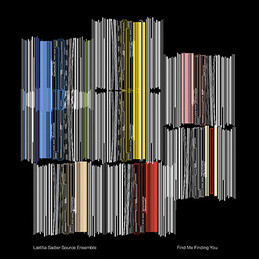
Laetitia Sadier Source Ensemble
Find Me Finding You

Drag City

Amazon

 Initially emerging as a curiously conceptial bubblegum pop tangent from the shoegaze scene, Stereolab throughout their career embodied a series of tensions – between accessible and experimental, complex and grindingly simple, personal and political. Their music was never purely bubblegum: it had to be John Cage Bubblegum, it was never purely avant-garde: it had to be Avant-Garde AOR.
Stereolab’s roots lie in guitarist/main songwriter Tim Gane and lead vocalist/lyricist Laetitia Sadier’s time with jangly indiepop band McCarthy, with whom Stereolab shared similary explicit leftwing politics.
However, where McCarthy’s lyrics were typically sarcastic dissections of the absurdities of contemporary political life, Stereolab’s politics tended to be more reflective and even romantic, revelling in their own uncertainty, feeling out the relationship between self and society with less confidence and more innocent curiosity.
Their early records were infused with a gushing enthusiasm for the motorik rhythms of Neu!, which they then filled out with organ drones, and it’s probably fair to say that, along with Julian Cope, Stereolab were in large part responsible for the UK music scene’s rediscovery of Krautrock in the 1990s. However, from around 1994’s Mars Audiac Quintet, and more explicitly on 1996’s Emperor Tomato Ketchup, the band’s sonic palette broadened considerably, incorporating influences from ‘60s film soundtracks, French pop, jazz and a more sophisticated use of electronic elements.
Through all these mutations, the group’s unique and instantly recognisable sonic identity was Laetitia Sadier’s vocals, which simultaneously embodied a cool detachment and an unaffected romanticism. Sadier’s vocal foil for much of the ’90s was keyboard player Mary Hansen, and the interplay between the two singers helped to define the group up until Hanson's death in a road accident in 2002. Their combination of deadpan delivery and breezy “ba-ba-ba”s reflected a broader dynamic within the band’s music between pop’s desire to give you everything all at once and an avant-garde wariness of making things too easy.
From the start, Stereolab infuriated the UK music press with cryptic song titles and obscure puns alongside what seemed like a contrarian insistence that what they were doing was pop. And it was pop in the sense that, at its heart, Stereolab’s music was generally simple and melodic, drawing on familiar chords and rhythms – the song Transona Five was built around the instantly recognisable beat of Canned Heat’s On The Road Again, for example.
It also reflected a punkish rejection of the grownup world and a love of childish thrills. It’s there explicitly in song titles like We’re Not Adult Orientated, but also in the dadaist delight in nonsense that led to them describing the tracks on Transient Random-Noise Bursts With Announcements with gnomic nuggets of hi-fi wisdom like “subjective white noise” and sci-fi surrealism like “underwater aztec”.
In some ways, Stereolab were like a precociously smart teenager experiencing first love: so keen for you to like them, but always holding something back; complicating every simple expression of their feelings, but also underscoring every attempt to be cool and aloof with something disarmingly honest.
In the end though, perhaps the band themselves were always their own best reviewers, so it may be best to leave the last words to them:
“Constantly evolving, curious / Sombre, obscure, dark and luminous / Vitriolic, stringent, prophetic.”

Yeah, and I think that’s the beauty of pop: that it is this simple, conservative structure that lends itself perfectly to being disturbed and disrupted.

IAN:
Since this issue of the magazine is focused on avant-pop, I’m interested in how you feel about that term. With me, I find that I use it a lot without ever really thinking about what it means. It’s certainly a term that has often been used to describe Stereolab, but was it a term you ever felt comfortable with?

LAETITIA:
Well, as you know, artists don’t like to be pigeonholed in any way, so no term would suit. But if I were to choose one, this would actually be quite legitimate, because there were strong pop references in our music, and it was our structure for a lot of what we were doing. And there was an immense liberty between a verse and a chorus, where Tim might want to try out some ideas, so there would be these “avant” ideas perhaps between parts four and seven of track three on the album. That’s how I understand the “avant” in “avant-pop” – it’s taking liberties and being free to explore inbetween a rather simple structure, without our music being “avant-garde” strictly speaking.

IAN:
It also seems to me that the term “avant-pop” embodies a contradiction. There’s something fundamentally conservative about pop, in that it’s music that wants you to feel comfortable in how you already are, whereas the avant-garde is about taking you out of your comfort zone.

LAETITIA:
Yeah, and I think that’s the beauty of pop: that it is this simple, conservative structure that lends itself perfectly to being disturbed and disrupted. I think The Beach Boys were masters of hiding an incredible amount of complexity and even darkness beneath something that on the surface is so shiny and friendly – when inside it’s just plain weird! So in that regard pop can be very subversive and can be a danger to society! (Laughs)

IAN:
You mention about the the importance of simplicity, and I remember reading something that Tim said about how a lot of the simplicity and minimalism of early Stereolab was dictated to a large degree by your own limitations as musicians.

LAETITIA:
Yeah. Indeed, you have what you have, and you have to work with that. In a sense it’s more liberating to accept the physical limitations. It’s much more hindering to have too many possibilities and have to narrow it down rather than have a much more narrow terrain to work with and think, “How do we exploit this bit of land here and how do we extract the gems?” There was a fair amount of limitations because we were not schooled musicians. But the aim wasn’t to be virtuosos, and I guess that’s also part of the pop thing. You don’t have to be a virtuoso: you just explore your capabilities within the context of being a normal human being, not some supreme creature touched by the hand of God! It was more punk: do the best with what you’ve got.

IAN:
Within punk, there seemed to be a lot of affection – sometimes a little ironic and sometimes more sincere – for the bubblegum extremes of pop music. The Sex Pistols covering The Monkees etc., despite them not seeming ideologically compatible on the face of it.

LAETITIA:
But they were! I don’t know if I can make the class system step in, but I will! It was about the working classes taking power, exercising their self-determination, so that’s very important and very dangerous. You know, The Who and The Kinks were probably seen with an air of suspicion by the authorities because they had an incredible amount of sway with the youth. They were a bit threatening, and of course so were the punks. And the punks made a point of saying, “I didn’t go to school for this, and I’m going to make it as simple and direct as I can to show that anybody can do this!”

That’s what I find so appealing in that sort of pop, is that it was very political. Not political with a big “P” but it was about people taking matters into their own hands through their art. That’s how I educated myself politically: it was through music, not through reading Karl Marx.

IAN:
Yeah. When Stereolab started, one of their most audible influences was Krautrock, which was a music with its own kind of simplicity. But Krautrock also embodied this thing that wasn’t only a class thing but also this attempt to get away from the Anglo-American hegemony over rock music.

LAETITIA:
Yeah, and again there was a big element of self-determination and saying “Fuck you!” to the man. That’s what I find so appealing in that sort of pop, is that it was very political. Not political with a big “P” but it was about people taking matters into their own hands through their art. That’s how I educated myself politically: it was through music, not through reading Karl Marx – because it’s hard to read Karl Marx! And far less immediate than listening to a pop album.

IAN:
Of course, as your career progressed, you all became better musicians and so some of those limitations fell away. How did you keep in touch with that simplicity?

LAETITIA:
The watershed point would be “Emperor Tomato Ketchup”. That’s where it shifted to something more overtly complex. I didn’t write the music, so it’s difficult for me to answer this clearly, but as far as I know, each album stemmed from an idea, and it would imply some kind of restriction. One album was written entirely where none of the notes from the melodies appeared in the chord that was sustaining the melody – which I think is great. It brings about more tension. It wasn’t dissonant, but I think “tension” is the word that springs to mind, and that for me makes it an interesting song. Another example was “Margarine Eclipse”, which was essentially three albums, because we had one on the left speaker, one album on the right speaker, and then you had the sum of the two, which created the third album, so that was another sort of conceptual idea. There were often little tricks like that, which sustained entire albums.

IAN:
You’ve mentioned the idea of “tension”, and your work often has a kind of tension between music that on the face of it seems cheerful, happy, pleasant, and lyrical content that’s quite dark or angry. I’m thinking particularly of “Ping Pong” off “Mars Audiac Quintet”, where the lyrics about the cycles of economic downturn and war seem ever more relevant with the way the world seems to be heading now.

LAETITIA:
Yeah, absolutely. It’s difficult for me to say why I write certain things, but I know what you mean, especially with Stereolab, there was more darkness than originally suspected from a first glance. We were very serious about what we did. It was our way of making sense of our lives and of being autonomous. And of course I’ve always been very very sensitive to the way the world is going, and in fact since I was born it’s just getting worse. I always felt that we could organise ourselves a bit better, and I don’t mean a utopian society where everybody’s cool and the sun shines every morning – I just mean, “Hold on a minute: we can do this a little bit better so that it works out for more of us who are living on this planet.” And yet it seems that, “Oh, my God, we can’t!” The pathology has only gotten worse and deeper, at least on the surface. Because there’s a lot of good things as well that are happening, and people are getting organised in more silent ways – silent in the sense that you might not hear about it. People are going, “You can’t expect anything from governments: we’re going to have to do it ourselves!” and that I view as a good development: people taking matters into their own hands on a local level.

IAN:
Do you think there’s a parallel between what you’re describing there and the music scene? Something about the idea of organising independently of power structures?

LAETITIA:
I don’t know, because in my own experience, in my band, there were a lot of power structures actually. It wasn’t a democracy, in the sense that Tim monopolised the entire musical field and operated as a kind of “soft tyrant”. I mean, I had all the freedom lyrically speaking, but only because he couldn’t do it! (Laughs) So I don’t have an idealised view of being in the band. I’ve never been in a band where everyone wrote together. Even in my own band, I write almost everything. Sometimes on certain songs I give my bassist Xavi (Munoz) the chords and he writes a bass line, and then I have to write a melody on top of that, and it’s like, “Shit! He took all the melodic feel!” but it’s great because you have to dig deeper. So this thing about relinquishing control is probably difficult if you have a very strong artistic expectation, which I think Tim had. But also as a result I think our music was very reined in. It might seem crazy, but I’ve been listening to Stereolab’s old records recently, and they’re very repressed. But it’s really hard to let go and to let things flow, and I think that’s the reserve of some really, really great musicians where the’re totally on top of their instrument and go beyond.

IAN:
Do you think that having your creativity channeled narrowly into your lyrics and vocals influenced the way you make your own music?

LAETITIA:
Yeah, yeah, of course! And also what it forced me to do was start my own band, which was Monade, and I think Tim was very relieved! (Laughs) And, yeah, so that was a creative way around this issue, because I wanted to write my own songs, I had my own ideas, which are actually very similar to Stereolab, so I think I could have co-written much more with Tim. I’ve done seven albums now, and to my dismay I’m like, “This is still very influenced by Stereolab!” It’s really strange how each time I try to let go of that, I’m always face-to-face with that root, which I created. And I listen to what Tim is doing, and it’s still also... there’s no escaping it! It’s absolutely crazy! I don’t know, I could maybe write some reggae stuff to break it, but then it wouldn’t be me!

IAN:
But also one of the most powerful things music can do is that it creates a world. People fall in love with bands because they create worlds that they’re able to immerse themselves in and feel comfortable with. I wonder if the difficulty you describe in escaping Stereolab is a measure of how immersive the world you created was.

LAETITIA:
I don’t know. I find myself quite good at getting out of my comfort zone, at least when I compare myself to people I know. So I don’t know if what I’m looking for is something comfortable that I recognise, that I identify as safe. And particularly in the artistic field, where I feel that’s where you should be most free, and most adventurous. There’s no danger of hurting anyone because, as you say, it’s a world we create.

Yeah, and also coming from psychoanalysts themselves. It was always around “the problem came from your parents,” never from society.

IAN:
That comes back in a way to the “avant” side of avant-pop, right? The need to step out of your comfort zone, and also to take the listener out of their comfort zone.

LAETITIA:
Yeah, this is the duty! But maybe that’s where one can act and maybe not have that pretension of taking anyone out of their comfort zone, and simply do what comes best, and not be too complicated. I worked with Colin Newman recently, and his wife Malka Spigel who was in (Belgian postpunk band) Minimal Compact. I didn’t know that they worked with a looper where things had to be four and four and four and four, and so I was sending something which I found quite interesting and fun and not too complicated, and they totally rejected it! What they did was they took parts of the song and then they looped it. And it worked fine, but I realised that, compared to what they were sending me, it just gave me a glimpse of how complex I make things and how I could simplify it a lot. I’m not saying it’s good or bad; it’s just an insight.

IAN:
A friend of mine once remarked to me that he thinks Stereolab must be the band whose lyrics contain the word “society” more than any other. And I was thinking how this idea of looking at the structure of the world in many ways goes against the rather individualistic world of pop or rock music.

LAETITIA:
Yeah, there’s a dichotomy between a world of egos and society. And I wanted Stereolab’s lyrical work to bridge the very intimate and personal and society; where does political start and where does it end? Because the way I saw it was let’s be as complete as we can, and for me being complete is talking about things that matter to me. Some people view pop music as a means to escape reality, so if you talk about mindless things, or if you “settle the accounts” with somebody, or express the world of feelings around a relationship. I do explore emotional stuff as well – that wasn’t excluded. It just seemed to me that let’s talk about important stuff, because there’s enough of it going on out there that we can discuss or at least question, because a lot of what I talked about in my lyrics were just questions for myself. Even the capitalist, the individualist, all this is stuff I could feel within myself. It was like, “No, I can be that monster too, and I’d like to interrogate that.”

IAN:
It seems that we’re often being encouraged by society to think very internally and to not really interrogate the relationship between ourselves and the outside world. In the song “The Well-Fed Point of View” by yours and Tim’s old band McCarthy, the lyrics tackle this quite directly.

LAETITIA:
Yeah, and also coming from psychoanalysts themselves. It was always around “the problem came from your parents,” never from society. And in fact, I got very interested in a guy called Cornelius Castoriadis. He wasn’t just a psychoanalyst, he was many things, but he was married to a very famous psychoanalyst (Piera Aulagnier) in the ‘60s, ‘70s, ‘80s in Paris, and they both were some of the first in the field to interrogate the impact of society on the human psyche. But it’s amazing to see that they were rare ones. Like, as if society did not impact your psyche, your unconscious, which I find extremely dubious! Of course it’s going to have an impact: everything has an impact on us: the architecture, the way the streets are laid out. It’s like if doctors are saying whatever you eat doesn’t impact your health: how can you say that?

IAN:
You mention architecture, but that’s true of music as well, right? The aesthetics, or the “internal architecture” of music also has an impact that goes beyond the lyrics.

LAETITIA:
Yeah, I think so. And the production of the song will say a lot. It’s a language.

IAN:
There seems to be an ease pop culture in Japan has in disconnecting the aesthetics from the content. But at the same time, maybe that’s impossible because the aesthetics have an impact of their own that is connected to the content.

LAETITIA:
Yeah, and I think there was enough happening aesthetically in our work that people would suspect that it had a revolutionary intent: that this wasn’t your regular pop group. And I think in Japan people were very savvy as well when it came to music. People knew their stuff! Not to mention that we called one of our albums “Emperor Tomato Ketchup”, which was named after a super-revolutionary Japanese movie.

IAN:
By Shuji Terayama, yeah.

LAETITIA:
I haven’t seen it! I haven’t read Marx and I haven’t seen “Emperor Tomato Ketchup”! (Laughs) Don’t tell them!

IAN:
It’s too late. It’s on tape! With the many collaborations you’ve been involved in, do you think that enriches your music?

LAETITIA:
Definitely. Like I said, it gets you out of your comfort zone, and it forces you to a sort of activity to be productive, because anything could make you go out of productivity: feeling a bit depressed or this or that or the other. It’s good to be kept in action. And stuff comes out that wouldn’t normally come out, so it’s very instrumental in keeping the creativity bubbling and active.

IAN:
Are there any particular projects that you’ve worked on with other people that stand out as being especially rewarding experiences for you?

LAETITIA:
When I worked with Jan and Andi (Mouse on Mars). It was so brilliant. We had a tour of Greece and Italy booked up and we had to come up with an hour’s worth of music, and it was the first time I was working like this outside of Stereolab. It was really difficult for me because I wasn’t confident that I could do this. I then learned that if I’m asked to do it, that means that I can do it! So that became my sort of motto. And yeah, somehow we did it and we had such a fun tour – it was such an adventure! But working with people, each time it’s a different adventure. I’m currently working with a Brazilian band called Mombojó, and we created a group together called Modern Cosmology – we made a video called “C’est le Vent”, “It’s the Wind”, which gives an idea of our collaboration. I can only see the positives of working with other people and “crossbreeding” (laughs) your creativity.

IAN:
So you made three albums with Monade, then three just under your own name, and then more recently one as Laetitia Sadier Source Ensemble. It seems like there’s a period there where your identity is subsumed within this idea of a band, then three albums where you push your own individual identity to the foreground, and then finally this third stage where you’re trying to reconcile the collective and the individual. Would you say there’s something like that going on in the process?

LAETITIA:
Yeah, thank you for summing it up so beautifully! Yeah, it’s true that there’s time where you’re in the playground and you’re working out who the hell you are like, “This is me.” And then there are some times where you open it up and it’s like, “This is me in the world, this is me and my friends, and this is collective me.” And even when I was in my “this is me” period, Laetitia Sadier, I was still well aware that nothing that I do is just the product of solely me: it’s the product of many people’s involvement. And it seemed to me that it was an important point to make when I “Source Ensembled” Laetitia Sadier, because we’re told that “This is just you, and you and you and you alone!” and that’s wrong: that’s a lie. We are all connected here.

IAN:
Jumping back to Stereolab, I think it’s interesting that the band is in many ways a product of the 1990s and the age of CDs. For example, most Stereolab albums are far too long to fit onto a single piece of vinyl. But at the same time, they’re also albums that seem designed to be appreciated on vinyl.

LAETITIA:
Yeah, like any music that respects itself! (Laughs) It’s true. I have a turntable in my kitchen and a CD player, and I’m not attached to the object at all, and I would prefer to listen to CDs because you don’t need to worry about turning it over. But now I realise there’s something different about vinyl. I don’t know what it is, but it’s just more music-friendly.

IAN:
I think the way it forces you to constantly attend to it by turning it over every fifteen minutes encourages a different, more attentive sort of listening.

LAETITIA:
Yeah, it’s funny how this kind of alienation in fact gives you more connection with the record.

IAN:
Perhaps it goes back to the idea of tension again. In this case, rather than tension within the music, it’s tension between the listener and the medium itself that engages the listener. The other extreme would be Spotify or something, where you just put on a playlist while you’re cooking.

LAETITIA:
Yeah, you just consume it. I don’t have Spotify, but my son’s got it and it’s amazing though. Just say a band and there you have it. I think I’m going to have to get it, especially because I’m going to be on Spotify as of this month (April 2018). The Drag City catalogue is on all the streaming platforms, which it wasn’t before – Drag City have given in! It’s tricky but times are changing and people just have new ways of listening to music. There’s a lot of people out there – have you seen all this youth out there! (Laughs)

IAN:
OK, I guess before we finish, I should just ask if there’s anything more you’ve got coming up that you’d like to tell us about.

LAETITIA:
Well, really the main thing at the moment is my project with those Brazilian boys, Modern Cosmology. Apart from that, I’ll make it to Japan again maybe not this year but next year, one way or another.

Our Favorite LGBTQ+ Songs - ele-king

 セイント・ヴィンセントの新しいミュージック・ヴィデオが最高である。昨年のアルバム収録曲“Slow Disco”のディスコ・ヴァージョン、その名も“Fast Slow Disco”に合わせて用意されたもので、ベア/レザー系のゲイ・クラブが舞台になっているのだが、裸の胸と尻をさらけ出したゲイたちの群れのなか、汗まみれのアニー・クラークが歌うというものだ(彼女はバイセクシュアルをカミングアウトしている)。派手なバッキング・ヴォーカルを入れたベタベタなゲイ・ディスコ・サウンドもかえって効果的だ。そこでわたしたちはHIV/エイズ以降の現在にあってなお、70年代のフリー・セックスの祝祭を再訪する。ディスコ・シーンが生み出した性の解放を、そこではダンス・ミュージックが大音量で鳴らされていたことを……。

 こうしたヴィデオが発表されるのは、世界的に6月は「プライド月間」であるからだ。49年前の1969年、6月28日に起きた〈ストーンウォールの反乱〉から半世紀が経とうとしているが、今年の6月も世界各地でLGBTQ+の権利やジェンダーの平等を掲げるプライド・パレードが開催された。はためくたくさんのレインボー・フラッグ。今年のNYプライドの写真をいくつか見ていると、かつての女子テニス界の女王であり現在のLGBTQ+運動のシンボルのひとりであるビリー・ジーン・キングが、現在の銃規制運動のアイコンでありバイセクシュアルをカミングアウトしている坊主頭の高校生エマ・ゴンザレスと並んで笑顔を見せているものに引きこまれた。歴史の積み重ねにより、世代を超えた共闘が清々しく実現されているからだ。
 そして音楽を愛するわたしたちは、その歴史のなかでたくさんの歌たちがあったことを知っている。70年代のディスコ、80年代のハウスやシンセ・ポップ、90年代のライオット・ガール、そして21世紀のじつに多種多様な音楽が、セクシュアル・マイノリティの自由を鳴らし、切り拓いてきた。音楽だからこそ感じられるジェンダーとセクシュアリティの多様性がそこにはある。もしあなたが「プライド」の意味を知りたければ、トム・ロビンソン・バンドの“Glad to Be Gay”を聴くといいだろう。アイデンティティ・ポリティクスにおけるもっとも重要な命題が、そこでは端的に提示されているからだ。
 あるいはまた、音楽は音楽であるがゆえに、「プライド」だけでは掬い取れないセクシュアル・マイノリティの感情や実存にも入りこんでいく。「イエスはホモ野郎が嫌いなんだよ」と父親に切々と説かれる様を描いたジョン・グラントの“Jesus Hate Faggots”、マフィアに性奴隷のような扱いを受けて非業の死を遂げたゲイ・ポルノ俳優の内面に入りこむディアハンターの“Helicopter”の凄み。アノーニの声はそれ自体の響きでもってジェンダー規範をゆうに超越してしまうし、自らを「ミュータント」と呼んだアルカは歌詞に頼らず電子音でクィアの官能を鳴らしてみせた。

 この企画を思いついたのは、まずは単純にプライド・マンスに便乗しようと思ったからなのだけれど、もうひとつ、ピッチフォークが先日発表した「過去50年のLGBTQ+プライドを定義する50曲」のリストがなかなかに興味深かったというのもある。こうしたリストを作るとき、たとえば自分ならついつい当事者性にこだわってしまうのだが、ピッチフォークのリストはミュージシャンの当事者/非当事者の線引きに関係なく……いや、SOGI(Sexual Orientation and Gender Identity の略。性的指向と性自認を示す)の区分に関係なくアイコニックな50曲を選出している。作り手がヘテロであってもゲイであっても、トランスであってもシスであっても、ゲイ/トランス/クィア・ソングは歌えるし、それに合わせて踊れると、こういうわけである。
 いまや大人気バンドであるザ・エックスエックスはシンガーふたりがゲイで、同性愛に限らないジェンダーレスなラヴ・ソングを歌っているが、こうした態度は非常に現代的だと感じる。最近ではジェンダーが流動的であるという「ジェンダー・フルイド(gender fluid)」や対象のジェンダーに関係なく性的願望を抱く「パンセクシュアル(全性愛)」なども認知され始めており、当事者/非当事者の線引きがますます難しくなっている。それはおそらく良い兆候で、更新されていく価値観に合わせて、音楽やそれにまつわる言説も柔軟に変化しているということなのだろう。

 そんなわけで、今回はSOGIの区分にこだわらず、ライター陣に自由な発想で私的に偏愛するゲイ/トランス/クィア・ソングを選んでもらった。正史にこだわったものではないが、そのぶん、じつに多彩なサウンド、多様な性のあり方が集ったと思う。楽しんでいただけたら幸いだ。
 「わたしの・俺の魂の一曲がないじゃないか」という方は、ぜひわたしたちにもあなたのお気に入りを教えてください。Happy Pride! (木津毅)

※性的少数者の総称として、この記事ではLGBTQ+というタームを使っています。僕はフラットな意味で「セクシュアル・マイノリティ」と書くことが多いのですが、とくに欧米だと「マイノリティ」というと人種のことを先に連想しやすいということもあるそうで、現在ではLGBTQ+が適切な表現として採用されることが多いようです。


My Favorite (21st century ver.) 
選:木津 毅

Kylie Minogue - Come into My World (2001)
Pet Shop Boys - The Night I Fell in Love (2002)
The Soft Pink Truth - Gender Studies (2003)
Rufus Wainwright - Gay Messiah (2004)
Antony and the Johnsons - For Today I Am a Boy (2005)
Matmos - Semen Song for James Bidgood (2006)
John Maus - Rights for Gays (2007)
Hercules and Love Affair - Blind (2008)
The XX - VCR (2009)
Deerhunter – Helicopter  (2010)
St. Vincent - Cruel (2011)
Frank Ocean - Forrest Gump (2012)
John Grant - Glacier feat. Sinéad O'Connor (2013)
Perfume Genius - Queen (2014)
Arca - Faggot (2015)
坂本慎太郎 - ディスコって (2016)
Syd - Bad Dream/No Looking Back (2017)
Serpentwithfeet - Bless Ur Heart (2018)

野田努

Tom Robinson Band - Glad To Be Gay (1978) 

「この歌を世界保健機構に捧げる。国際疾病分類における302.0の病気に関する、これは医学の歌だ」、そうトム・ロビンソンは話してからこの曲をはじめる。この当時、ホモセクシャルは性的/精神的な病気に分類されていたのだ。この曲の歌い出しはこうだ。「イギリスの警察は世界で最高だね。信じられない話だけど、奴らはずけずけとオレらのパブに入って、いっぽうてきに客を壁に一列に並ばせるんだ……君がゲイに生まれて嬉しいなら、一緒に歌ってくれ/君がゲイに生まれて嬉しいなら、一緒に歌ってくれ」

ジャジーなパブロック調の魅力的な曲だ。この曲を聴いたのは高校生になったばかり頃だった。そして、曲の真の意味を知るのはもっとずっと後になってからのことだったが、パンクに触発されたこの勇気あるメッセージを真に受けた連中がいたからこそ、それもひとつの力となって、いまこうして世界は変わったんだと思う。

小川充

Lou Reed - Coney Island Baby  (1975)

“Walk On The Wild Side”はじめ、同性愛、トランスジェンダー、セックス、ドラッグ、生と死といった題材が多いルー・リードとヴェルヴェット・アンダーグラウンドの作品。それらの多くは荒々しくギラギラした演奏だったり、またはクールでソリッドなロック・ナンバーだったりするのだが、そうしたなかにあって1975年という彼の転換期にあったアルバム『コニー・アイランド・ベイビー』のタイトル曲は、内省的でアコースティックなイメージのバラード調の作品。少年時代に自身がゲイであることに気づき、そのために父親から虐待されていたというルー・リード。そんな彼の救いはフットボールで、高校時代に教えてもらったコーチを慕い、「彼のためにフットボールがしたかった」と歌う。「都会はサーカスや下水道みたいで、いろいろな嗜好をもった人が集まる」とも。それまでのルーにあったワイルドでキャンプなイメージとは違い、肩の力が抜けて枯れたムードに始まり、エンディングへ向けて次第に熱くなっていく展開で、極めてナチュラルに自身の心情やニューヨークで生きることについて歌っている。私が音楽を通じてLGBTQについて知るようになったのは、デヴィッド・ボウイやルー・リードの作品を聴いてからだが、そうしたなかでルーのこの曲はもっとも好きな曲のひとつ。性別やLGBTQであるか否かを超えて、ルーの裸の歌は切々と響いてくる。

行松陽介

忌野清志郎+坂本龍一 - い・け・な・いルージュマジック (1982)

まだジェンダーという言葉も知らない子供の頃にこの曲のPVを見て、少なからず衝撃を受けました。ACT UPの活動や様々なジェンダーに関する問題などについて知ることになるのは、それから随分と後になってからでした。

沢井陽子

St. Vincent - New York (2017)

この曲は、聴けば聴くほどいろんなシナリオが浮かんでくる。「“New York isn't New York without you love,” ニューヨークは、あなたなしではニューヨークでない」の歌詞は、カーラ・デルヴィーニュやクリステン・スチュワートなどの、彼女の恋人との別れを歌っていると言われたが、ヒーローをなくし友だちをなくし、たくさんの人が去ったけど、自分はまたここで全部をひとりでやり直す、という彼女のハートブレイク感と、ニューヨークへの強い愛が描かれている。自分の知らない誰かのために涙を流し、数ブロックの中で起こるドラマは、ニューヨーク的で、LGBTQだけでなく、ニューヨーカー、誰に置き換えても当てはまる普遍性を持っている。そんな弱さを見せる彼女も素敵。

鈴木孝弥 (ライター・翻訳家)

Freddie McGregor feat. Marcia Griffiths - United We Stand (2005)

レゲエ愛好家だからアンチ同性愛者だと思われるのははなはだ迷惑だし、あなたがそう結びつけるとしたら、そのあまりに短絡的な見方を猛省してほしい。たしかに過去何名かの急進派レゲエ・アーティストが過激な反同性愛ソングを発表し世界規模のスキャンダルとなった。とりわけ欧米では人権活動家がそんな曲を看過しないから、当該歌手の来訪コンサートは中止に追い込まれ、当局が興行ヴィザを発給しないという判断にまで至った。そうした“アンチ・ゲイ・チューン”の根拠に“男色法”や“聖書の記述”(本当に全知全能の神があんなことをたびたびのたまったのだとしたら、だが)があるとしても、それらは人が自由に生きる権利に先立つものではない、という判断を断固支持する。この曲をデュエット・カヴァーしている2人の思いもきっとそうだろう。イソップ起源とされる団結のためのモットーの古典〈United we stand, divided we fall(団結すればひるまず、分裂すれば倒れる)〉をモティーフとし、どんな困難があろうと、愛し合う私たちが一緒なら大丈夫と歌う、英ブラザーフッド・オブ・マン70年の大ヒット曲だ。これまでとくに性的マイノリティの人権運動において熱烈に愛唱されてきたこの曲を、レゲエ界を代表するこのヴェテラン歌手2人が組んで2度も録音していることはもっと知られるべきだ。

Lisa Stansfield - So Be It (2014)

このミュージック・ヴィデオは、自然をあるがまま見せる。何故、こんな風にわざわざ映像で自然を確認する価値があるかというと、それが美しいからであり、そして我々が往々にしてその美しさを見失いがちだからだ。

Lisa Stansfield - Never Ever (2018)

彼女がLGBTQ界隈からも大きな支持を得てきたことは、この最新曲を聴いても合点が行く。普遍の愛を描くシンプルな言葉。琴線に触れ、活力となり、背中を押してくれる。世の雑音にあたふたする自分を後ろに捨て去れる気がする。

柴崎祐二

Bola de Nieve - Adios felicidad(1963)

革命期におけるキューバ音楽の変遷は、ジャズなどをはじめとした米国ポピュラー音楽の流入・融合の流れと、それを排除しようとする共産勢力との拮抗の歴史だった。数年前日本でにわかに再発見された「フィーリン」も、当初革命政府から「帝国主義的音楽」と目されていたのをご存知だろうか。発端となった曲が「アディオス・フェリシダ(幸せよ、さようなら)」で、同曲が当局から批判されたことで、カストロをも巻き込んだ論争に発展していったのだった。ナット・キング・コールなどの米ジャズ・ボーカル音楽に影響を受けた甘く気怠い洗練が、退廃的かつ反動的な音楽だと指弾されたという。

この曲、日本ではブエナ・ビスタ・ソシアル・クラブでもおなじみのオマーラ・ポルトゥオンド版が知られているかもしれないが、当時上記のような論争を引き起こすきかっけとなったのは男性シンガー、ボラ・デ・ニエベによる版だったという。ピアノ弾き語りのスタイルで数々の名唱を残した彼こそは、革命体制下のキューバ音楽史上では極めて珍しいゲイ・アーティストであった(そのころアカデミック〜文化界において同性愛は厳しい弾圧の対象にされたが、彼はそれを奇しくも免れた)。

削ぎ落とされた歌詞と、過ぎ去りし日々に哀切を捧げるような歌い口、歌詞、全てが美しい。深読みが過ぎるかもしれないが、上記のような経緯を知った上で聴くと、どうしても表現や性の自由を暗喩的にかつ静かに称揚する音楽であると思えてならない。

ちなみに同曲の作者のエラ・オファリルは、一連の論争ののちに今度は「同性愛者の嫌疑」で勾留され、拷問まがいの取り調べを受けることになり、ついには国外へと逃れているのだった。

岩沢蘭

Tin Man - Constant Confusion (Tama Sumo mix version) (2009)

2009年に〈KOMPAKT〉から出たタマ・スモ『Panorama Bar 02』のミックスの一曲目。パラノマ・バーに飾られているというヴォルフガング・ティルマンスの写真をいつか見に行きたい。

Bronwen Lewis - Bread and Roses (2014)

映画『Pride』(邦題『パレードへようこそ』)の挿入歌。ジェームズ・オッペンハイムの詩をもとに作られた100年以上前のこの歌は、ユニオンソングとして有名な曲だ。クィア・ソングとしての趣旨は外れてしまうかもしれない。ただ映画のなかで歌われていたこの曲がよかったことと、次回日本のパレードでこの歌を聴きたいと思い選曲しました。
以下映画の字幕から引用です。

ささやかな技と愛と美を
不屈の精神は知っている
私たちはパンのために闘う
そしてバラのためにも

小林拓音

がつんと正面から「LGBTQ+」というテーマに向き合っているものというよりも、まずはサウンドありきで、ふだん好きでよく聴いていたり動向を追っかけたりしているミュージシャンの作品のなかから、どうにも気になってしかたのないものやその文脈とリンクしていそうなものをいくつか。

Oneohtrix Point Never - Returnal (Antony's Vocal Version)  (2010)
https://soundcloud.com/oneohtrix-point-never/returnal-antonys-vocal-version

当初歌詞の内容はまったく気にせず聴いていたけれど、紙エレ最新号で坂本麻里子さんが訳しているのを読んだらなぜか頭から離れなくなった。「君が去ったことはなかった/君はずっとここにいたんだ」。

Kingdom - Stalker Ha (2011)
https://www.youtube.com/watch?v=XpXjaCIFFg4

最近ではシドとのコラボが話題の〈フェイド・トゥ・マインド〉のボスによる、比較的初期の曲。MAWをサンプリング。

Mykki Blanco - Join My Militia (2012)
https://www.youtube.com/watch?v=WC-QH74zha8

「あんたの場所がどこにあるのか忘れるな」。ラップもトラックもとにかく強烈。プロデューサーはアルカ。

Grizzly Bear / Gun-Shy (Lindstrøm Remix)  (2013)
https://soundcloud.com/grizzlybearband/grizzly-bear-gun-shy-lindstrom

アゲアゲである。原曲の情緒はいったいどこへやら。毎年クリスマス・イヴにイルミネイションを眺めながら聴いている。

Owen Pallett - Infernal Fantasy (2014)
https://www.youtube.com/watch?v=4VMpu-03zuM

「べつの時代を待つ」「べつの人生を待つ」というイーノの声が耳に残り続ける。「地獄のファンタジー」とはいったい。

Le1f – Koi (2015)
https://www.youtube.com/watch?v=aUBzGKpHGAY

恋かと思ったら鯉だった。興味深いことにプロデューサーのソフィーは同年、安室奈美恵と初音ミクのデュエットも手がけている。

Yves Tumor - Serpent I (2016)
https://yves-tumor.bandcamp.com/track/serpent-i

ひとつのアイデンティティに固定されたくないからだろうか、さまざまなエイリアスを用いていろんなスタイルを試みる彼のなかでも、とりわけわけのわからないトラック。

Fatima Al Qadiri – Shaneera (2017)
https://fatimaalqadiri.bandcamp.com/track/shaneera-feat-bobo-secret-and-lama3an

「シャニーラ」とは「邪悪な、ひどい」といった意味のアラビア語の、誤った英語読みだそう。彼女の出身地であるクウェイトではクィアのスラングとして用いられているのだとか。リリックは出会い系アプリ Grindr のチャットから。

三田格

Gizzle - Oh Na Na (2017)

去年、ヒップホップで一番好きだった曲。何度か聴いているうちにクィア・ラップだということに気がついた。LGTBQだから好きというわけではなく、好きになった曲がLGTBQだったというだけ。そんな曲はたくさんあります。

大久保潤

Limp Wrist - I Love Hardcore Boys, I Love Boys Hardcore (2001)

Limp Wristはフィラデルフィアのクィア・ハードコア・バンドである。90年代に活躍したシカゴのラティーノ・ハードコア・バンド、Los Crudosのヴォーカリストであるマーティンを中心に結成された。
なんだかんだでヘテロの白人男性中心のUSハードコア界にあって、Crudosはシーンにおけるヒスパニック系を中心としたマイノリティの置かれた状況などについて、ほぼ全曲スペイン語で歌ってきた。
そんなマーティンの次なるプロジェクトとしてスタートしたLimp Wristは音楽的にはCrudosの延長上にある1分前後のファストでシンプルなパンク・ロックだが、歌詞は基本的にゲイ・コミュニティに言及したもの。
2015年、アメリカ最高裁で同性婚を認める判決を出たタイミングでLos Crudosが来日、場内が「マーティンおめでとう!」というムードがいっぱいだったのが忘れられないのでこの曲を選んでみました。

田亀源五郎  (ゲイ・エロティック・アーティスト)

Man 2 Man - Male Stripper (1986)

レザーパンツを履いた青年のヌードという、ゲイゲイしいジャケットに惹かれて12インチシングルを手にとったら、裏ジャケに載ってたアーティスト写真もハードゲイ(和製英語だけど)風だったので即購入。目に付いたゲイっぽいものは、とりあえず買っておくという年頃だった。当時の自分の好みからすると明るすぎ&軽すぎではあったのだが、音の好み云々よりも、映画『クルージング』に出てきたようなレザーマンが集まるゲイディスコ(行ったことがない憧れの地だった)では、こういう曲がかかっているのだろうかと想像してドキドキしていた。そして後に20年くらい経ってから、この曲のプロデューサーが、次のMan Parrishだったと知ってビックリ。

Man Parrish - Heatstroke (1983)

80年代に海賊版VHSで観た、自分が大好きだったゲイポルノ映画に、Joe Gage監督の『Heatstroke』(1982)という作品があった。主演のRichard Lockeが大好きだったというのもあるのだが、ホモエロスを濃厚に描き出すGage監督の映像表現にも大いに惹かれ、ぶっちゃけ自分のマンガにも影響を与えている。そしてこの『Heatstroke』には、ゲイポルノ映画としては珍しくオリジナルの主題歌まであり、しかもそれがなかなかカッコ良かった。その主題歌を手掛けていたのがMan Parrishで、後により凝ったアレンジになってオーバーグラウンドでリリースされた。私が音源をゲットできたのはCD時代になってからだが、ハードコア・ゲイポルノ映画の主題歌がCDで入手できるなんて、この曲くらいのものじゃないだろうか。インターネット時代になってから本人のブログを見つけ、キャリアの初期にアダルトフィルムの音楽を手掛けていたことや、Joe Gage監督と未だにコンタクトがあることなどが明記されていたのも、なんかとても嬉しかった。

Jamie Principle - Sexuality (1992)

ハウスに興味を持ち始めたころに、何かのレビュー(『ミュージック・マガジン』だったかな。当時買っていた音楽雑誌はそれくらいだったし)でアルバム『The Midnite Hour』を知って購入。その中で私が特にこの曲を推したいのは、曲として好きだというのもさることながら、多分これは自分がsexualityという言葉と出会った最初期のケースだったから。少し経ってから、この言葉は日本のメディアでも見られるようになったけれど、当時の日本語表記はもっぱら《セクシャリティ》だった。でも私はこの曲で、「いや《セクシュアリティ》だろう、はっきりそう歌っているし」と思っていたので、自分の文章ではずっとその表記にこだわっていた。昨今ではこの表記の方が優勢になってきた感があり何より。

大久保祐子

Rostam / Half-Light (2017)

イラン移民の親を持つアメリカ人で、ゲイをカミングアウトしている元ヴァンパイア・ウィークエンドのロスタム。
昨年発表したアルバムの表題曲にもなった“Half-Light”という言葉には夜明けと日暮れというふたつの意味があるらしいとの話を知ってから改めてこの曲を聴くと、「Baby, all the lights came up what are you gonna do ?」と繰り返されるフレーズが美しい曲をより輝かせているように感じる。アルバムには「他の男の子たちとは違う男の子」と同性愛について歌っている曲もあるのだけれど、ぼんやりしていて曖昧で影を持った言葉のほうに強く想像を掻き立てられる。
あかりが消えるように終わりかけた最後にウェットのケリー・ズトラウの歌声が現れ、視点が変わるところがまたいい。

PROCARE Feat. POSHGOD - ele-king

 梅雨明けはいつになるやら。たまの晴れ間は猛暑だし、基本的にジメジメしてて陰湿な今の季節、外に出るのもおっくうになっちゃいますよね、わかりますよ。いざクラブに足を運んでも、エントランスに置いてた傘をパクられて濡れてタクシー拾うハメになるのなんてゴメンですよね、わかります。だけど、しばらくクラブで踊ってなかったり、イヤホンだけで音楽きいてもフラストレーション溜まっちゃうじゃないですか。だから本ちゃんの梅雨の期間である6月を乗り越えて7月になったらその溜まりに溜まったものを吐き出しにどこかへでかけませんか。
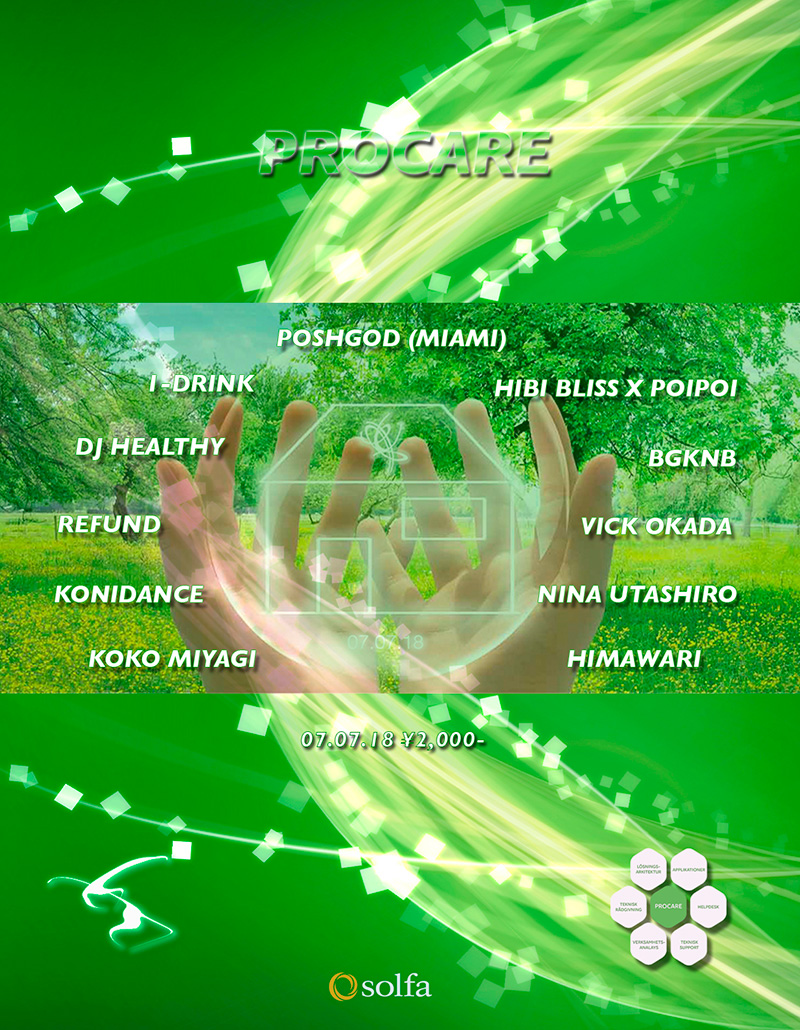
 7月7日、七夕の夜に開催される「PROCARE」と第された本パーティは、Anthony NaplesやButtechnoなんかを東洋化成製ヴァイナルで発売するレーベル「City-2 St. Giga」、原宿の外れに位置する刺繍屋さん「葵産業」が主催。この時点でメジャーな感じが一切香ってこないですが、それがイイですね。
 ラインナップはマイアミを拠点とするCSPGのPX$H6XDことPOSHGOD(Metro Zu! 懐かしい!)に、自称テクノおじさんことみんな大好きワンドリさん(1-Drink aka 石黒景太)、今年8月に日本をあとにするウルトラデラックスなDJ HEALTHYくん、などなど盛りだくさん。
パーティ会場では前述したPOSHGODと1-DRINKの音源を含む全12曲収録のコンピCD『PURE-FESSIONAL』がマーチャンダイズとして販売。Will DimaggioやUon、Khotinを含む全員が未発表音源を提供しているなかなかに豪華な仕様です。帯の文言、アートワークもなかなかダサくて(褒めてます)ついつい手を伸ばしちゃいそうですね。
 ここまで読んだみなさん、パーティのスローガン「安心・安定・安全」を合言葉に重くなった腰をどうにかして、この日は中目黒へ遊びにでかけましょう。

PROCARE Feat. POSHGOD
7月7日土曜日午後10:00

POSHGOD
1-DRINK
DJ HEALTHY
REFUND
KONIDANCE
KOKO MIYAGI

HIBI BLISS x POIPOI
BGKNB
VICK OKADA
NINA UTASHIRO
HIMAWARI

Venue:solfa www.nakameguro-solfa.com
Door:¥2000


PURE-FESSIONAL By PROCARE

Track List
1. Uon - door 2
2. Will DiMaggio - B (Broadcast Mix)
3. Khotin - Mornings ii (Live at New Forms)
4. 1-Drink - Untitled
5. Kareem Kool - Untitled
6. Ko Saito - Squala
7. James Massiah (DJ Escrow) - Twisted ("You're Too High To Leave Now!")
8. James Massiah (DJ Escrow) - Kane (In The Astral Plane)
9. Senmei - Okinawa
10. Konida - Jhetto Re
11. B.Y.M - ?
12. Posh-God - Untitled

試聴
https://soundcloud.com/professionalcare/sets/purefessional

Mouse On Mars - ele-king

 ボン・イヴェールのジャスティン・ヴァーノンとザ・ナショナルのアーロン・デスナーがウィスコンシン州で主宰するフェスティヴァル〈Eaux Claires〉は、実際に行って感じたことだが、非常にDIY的な感覚で貫かれた場だ。大企業よりは地元の顔なじみの企業がスポンサーに入り、集客のためよりはミュージシャン同士の音楽的なネットワークを可視化するためにラインナップを決める。ミュージシャンシップによってジャンルを横断し、大勢の人間や価値観がひとつの場所に集うという感覚――とりわけ、ボン・イヴェールの作品や活動に貫かれているのは、この「シェア」という感覚である。いま、ヴァーノンが音楽仲間たちと取り組んでいるコレクティヴ・プロジェクトの名前はズバリ「PEOPLE」だ。
 「PEOPLE」のラインアップには、そして、ヤン・ヴァーナーとアンディ・トマの名前もある。マウス・オン・マーズのオリジナル・アルバムとしては6年ぶり、通算11作めとなる『ディメンショナル・ピープル』は、彼らが〈Eaux Claires〉に参加した経験がかなりの部分で基になっている作品だ。大勢のゲストが参加しているという点ではコンピレーション作『21アゲイン』(14)の発想を推し進めていると言えるが、同作がモードセレクターはじめ基本的にエレクトロニック・ミュージック系のネットワークを駆使していたことに比べると、『ディメンショナル・ピープル』に現れるメンツはジャンル的に非常に多彩。ボン・イヴェール、ザ・ナショナルはもちろんのこと、サム・アミドン、ベイルート、リサ・ハニガンといったインディ・ロック/フォーク勢をはじめとして、スパンク・ロックやアマンダ・ブランク、さらには超大御所ソウル・シンガーであるスワンプ・ドッグといった意外なメンツはすべて、〈Eaux Claires〉に由来している。そしてまた、コンセプトが社会主義だというのも……ボン・イヴェールが社会主義者とまでは思わないが、「民主社会主義」を繰り返し唱えていたバーニー・サンダースの演説大会の前説をヴァーノンが担当していたことを思えば、そう遠くないと言えるだろう。少なくとも、「シェア」という感覚こそが本作のもっとも重要なテーゼである。

 アルバムはそのヴァーノンが参加し、パート1~3で構成されるタイトル・トラック“Dimensional People”から始まる。ジューク/フットワークを意識したと思われるビートがせわしなく跳ねまわるが、ジューク/フットワークではない。フリージャズとダブ、アフロビートがたっぷりと注がれたすさまじくファンキーなIDMであり、それはやがてアンビエントへと姿を変えていく。このトラックがよく本作のモードを表していて、前作『パラストロフィックス』のエレクトロニックな質感に比べてオーガニックな音色とジャンルの積極的な衝突/融合が特徴だ。管弦楽器のアンサンブルや人声が要所で施され、大勢の人間がひとつの部屋にいる情景が何度も喚起される。IDMとポスト・ロックの交流に熱があった2000年前後の空気が、現代的に更新されていると言えばいいだろうか。久しぶりの〈スリル・ジョッキー〉作だというのも本作のトピックだ。
 雑多な人間によるアンサンブルという点では発想的にボン・イヴェールと共通しているのだが、やはりというか何というか、もっとも異なるのはマウス・オン・マーズらしい素っ頓狂なユーモアが張り巡らされていることである。やる気が感じられない脱力しきったアブストラクト・ヒップホップ“Foul Mouth”、カントリー・ドローンとでも呼びたくなる“Parliament Of Aliens”、パーカッシヴでつんのめるグルーヴが躍動するメタ・ファンク“Daylight”と、爆笑ではなく思わず小さく噴き出してしまう妙ちくりんなトラックが並ぶ。きめ細かさもあるが、それを崩す余裕もある。このおかしなサウンドはマウス・オン・マーズが開発したというアプリであるElastic DrumsやfluXpadが駆使されてできたものだそうだが、テクノロジーを理知的に利用するというよりは、ただおもしろがって遊んでいるといった感じだ。実際、ヴァーノンはじめ本作に参加したメンバーがアプリで遊ぶ動画がいくつか公開されているが、みんな純粋に楽しそうだ。子どものように音を変形させ、笑っている。

 紙ele-king vol.22に掲載されたヤン・ヴァーナーの発言を読めば、彼らが真剣に社会主義の発想を現代に生かせないか、と考えたことがわかる。資本や富を分かち合うこと、対話すること、多様な価値観を認め合うこと。OPNの『エイジ・オブ』がアンチ・ヒューマニズム的な見解からエレクトロニック・ミュージックの更新を(ある意味、トレンディに)目論んでいるとすれば、マウス・オン・マーズのIDMは頑なにヒューマニズムを貫こうとしている。だがそれは頑固とはほど遠い柔軟なもので、大勢の人間のアンサンブルの目標を(予定)調和に予め設定してしまうのではなく、偶発性や事故を能動的に楽しもうとする態度である。多様性とはそういうことなのだ、と。ベイルートのザック・コンドンとスワンプ・ドッグが参加したなかばドリーミーなクロージング・トラック“Sidney In A Cup”のピースフルな音の戯れを聴いていると、ここにマウス・オン・マーズの最新の理想主義が示されているように思えてくる。


TOKYO CUTTING EDGE vol.02 - ele-king

 avex内のレーベル、cutting edge主催のイヴェント『TOKYO CUTTING EDGE vol.02』に、Chim↑Pomがインスタレーションで参加する。また、TOKYO GIRLS COLLECTIONなどの会場装飾を手がけるバルーンアーティスト・Bashicoが場内のディスプレイを担当する事が発表された。
 おっと、ちなみに出演者は、長岡亮介、SHINICHI OSAWA (MONDO GROSSO)、WONKに加えて、 jan and naomi やEYEの名の加わっています。金曜日の夜の贅沢な一夜になりそう。

TOKYO CUTTING EDGE vol.02

【日時・会場】
2018年7月6日(金曜日)  LIQUIDROOM
開場/開演 24:00 ~ 終演 28:30予定

【出演】
LIVE:長岡亮介 / jan and naomi / WONK
DJ:SHINICHI OSAWA (MONDO GROSSO) / EYE (BOREDOMS) / AYASHIGE (wrench)
Installation:Chim↑Pom
Balloon Display:Bashico

【チケット】
 一般発売
 2018年5月31日(木)10:00~
 Yahoo!チケット https://r.y-tickets.jp/tce1802
 チケットぴあ https://w.pia.jp/t/tokyocuttingedge/
 イープラス https://eplus.jp/tce2/
 ローソンチケット https://l-tike.com/tokyocuttingedge02-lawson/


*年齢制限
 ※本公演は深夜公演のため20歳未満の方のご入場はお断り致します。 本人及び年齢確認のため、ご入場時に顔写真付きの身分証明書(免許書/パスポート/顔写真付き住民基本台帳カード/顔写真付きマイナンバーカード/在留カード/特別永住者証明書/顔写真付き社員証/顔写真付き学生証)をご提示いただきます。身分証をご提示頂けない場合は、前売りチケットをお持ちの方でもご入場頂けませんのでご注意下さい。
※全てコピー・画像及び期限切れは不可。
※身分証をご掲示頂けず、ご入場出来ない場合であっても、チケット代の払い戻しは一切致しません。
https://cuttingedge-tokyo.jp/
info
LIQUIDROOM 03(5464)0800

interview with Jim O’Rourke - ele-king


Jim O'Rourke
sleep like it’s winter

NEWHERE MUSIC

Amazon

Writing about a musician like Jim O’Rourke is always a challenge. His work is rarely what it seems to be on the surface, its mechanisms carefully concealed so that how it works on you as a listener is the result of an almost invisible creative process. A huge amount of complexity and musical intelligence underscores music that feels completely natural and even obvious, as if it’s always existed. If his creative approach includes a strong element of academic discipline, his finished music nonetheless has a lot of heart.
On O’Rourke’s previous relatively high-profile release, his unexpected 2015 return to something like rock songwriting with Simple Songs, instantly familiar-sounding rock hooks would merge imperceptably into completely unexpected musical territory without you ever noticing how you’d travelled. His latest album, Sleep Like It’s Winter, released from the new, ambient-focused NEWHERE label, sees him in a radically a different sonic landscape again, with an icy, uneasy, breathtakingly beautiful 45-minute instrumental track.
Between Simple Songs and Sleep Like It’s Winter lie twenty-two separate releases in O’Rourke’s Steamroom series, which he puts out at a rate of about one every couple of months from his Bandcamp page. While some of these releases are old tracks deemed worthy of exhuming from his archives, this rapid flow of releases may also include something for those of us hoping to find clues as to his working. Certainly some of the Steamroom releases that most immediately preceded Sleep Like It’s Winter share similarities.
None of them are quite as richly layered and textured though, and while ambient music is almost by definition music that defies analysis, working primarily on the fringes of consciousness, Sleep Like It’s Winter at the same time feels like a very conscious album, full of ideas and revealing something new on every listen.

I mean, most people would say Eno. Actually it would go back to Michael Nyman’s book Experimental Music: Cage and Beyond. It’s a great, important book that I read when I was in high school.

I:
I always find it a bit difficult to talk about music that often gets described as ambient or drone…

J:
Right, well, the fact that they even asked me to make an ambient record for them, that’s why I decided to take the challenge. I didn’t set out to make an ambient record but it’s sort of about making an ambient record more than it’s an ambient record (laughing) you know? Pretty much everything I do is about what it is as opposed to being it.

I:
You’ve said before something along the lines of that you approach making music in a way kind of like a critic.

J:
Yeah, I don’t make music ‘cause I enjoy it. (Laughs) Yeah, I have said something like that. I’m not comparing myself to him but when I was young I read this quote from Godard where he said, “The best way to critique a film is to make another film,” and that stuck with me since I luckily read that as a young boy. That’s fundamental to how I work.

I:
How long did this new album take?

J:
That took about two years.

I:
Were you still living in Tokyo when you started work on it?

J:
I was still in Tokyo, yes, when they first asked me. But there was also a lot of extraneous work around that time also because I was moving. So the first six months of working on it was probably more thinking than actually putting anything down. Just thinking about what the hell that term “ambient” meant, and it means different things to different generations. At the beginning, when they asked me, it was like “We’re starting an ambient label,” and I was like, “Okay…” (laughs) Just making any record in terms of “make a record in this genre” is anathema to me, but I decided to do it because it was such a revolting idea! (Laughs) Not that I dislike ambient music – I don’t mean that. That’s just not the way I think when I make things, so it was such a bizarre proposal that I decided to do it.

I:
For ambient music what is your first natural frame of reference?

J:
I mean, most people would say Eno. Actually it would go back to Michael Nyman’s book Experimental Music: Cage and Beyond. It’s a great, important book that I read when I was in high school. There’s a bit about Eno in there talking about, and (Eno) didn’t use the word “ambient” yet, he refers (Erik) Satie’s idea of “furniture music”. And it might be on the back of his Discreet Music record, which was a big deal for me when I was a kid, because on the back of the record it’s all just him talking about these ideas and there’s also diagrams of technically how he made the music. When I think of ambient music I don’t necessarily think of Eno because Eno’s actual ambient music, when he moved on, you know those “Ambient” records, I actually don’t like those very much – no disrespect to him, but it’s just not my cup of tea. In a way I like Satie’s definition of it more: that it’s “furniture music”, that it’s like BGM: it’s not something that’s meant to be listened to with the active mind, which implies that you’re not following the formal structure of what’s going on. So it’s a sort of shift of standpoint that means “ambient” to me. For me, in making this record, the most important thing was, “Where is a line where you decide to give up on formal structures completely?” and, “Where is a line where formal structures can still be perceived but they’re not being shouted at you?”

I:
Speaking of formal structures, going back to Eno, he often seems interested in the idea of taking the musician completely out of the music

J:
For me, in that way of thinking of music, which I’ve been moving towards my entire life slowly but surely (laughs), Roland Kayn was the biggest guy for me. Someone could call his music ambient but it’s way too aggressive for that. The idea of his music is you create the system and then you just let it go. The challenge is how can you create a system that still represents the ideas even though you’ve let it go. If you look at some of the last decade or so of Cage’s scores, like the number pieces, they create these systems. These later Number Pieces of his are really interesting because, if you do them correctly, they’re really constraining even though they don’t seem to be. Whereas someone like Kayn and what Brian Eno were doing, especially in the 70’s, they still want a result but they want to be hands off about it.

I:
For those of us listening to you, it’s almost like we get to hear you, well not in real time but now it almost feels like every couple of months there’s a new thing on Bandcamp

J:
Yeah, Bandcamp is one of the few things the internet has created that I really like. I do like that it’s just there for the fifty people who want it and nothing else gets attached to it. Everything that comes with releasing records, if I have nothing to do with it that’s the happiest I could possibly be. For me, you’ve got to understand, once it’s done it’s done: I’m already gone.

I:
Did your work on those releases inform your work on this new album?

J:
I think one or two might have been failed versions. (Laughs) I mean the Bandcamp stuff, honestly it’s for the 50 or 80 people out there who want to hear that stuff. It’s just being able to be, “Here, you guys want this: go ahead.” Not that I don’t put as much work into those things. For every Bandcamp work I put up, there’s like 80 failed Bandcamp things.

I:
In Sleep Like it’s Winter, there are a lot of sounds that are happening just on the edge of hearing, where it drops to near silence for a while before the sounds build back up again.

J:
Yeah, that’s true. A lot of my really early stuff in the late ’80’s, early ’90’s was a lot of that but I think, because I was young, I was still in the mode of imitating people. I was imitating silence (laughs) because there’s a lot of that, especially in (Giaconto) Scelsi’s music, which I was really really into when I was in college. And I really appreciated the amount of silence in a lot of Luc Ferrari’s work, which I was also really really into.
Also, at that time, things like the Hafler Trio, P-16 D4a, blah blah blah, but I don’t think I really understood how to use that until later in life. Because silence is just as much a part of the dynamic as something loud. In the act of actually listening to something, time means a lot and silence is also time because you perceive time differently in silence than time with sound. Hopefully, the use of silence stretches your perception of time – it’s the same thing as having a good drum fill or something.

[[SplitPage]]

Well, in terms of structure, the one thing that music can’t really do eloquently, like the other art forms, is deal with time backwards. Music can really only change time by making reference, and that can only be done if the music has a formal structure because you’re making structural reference or a melodic reference.

I:
So silence can be a function of the overall rhythm of the piece.

J:
Right, yes, exactly, yeah. Another thing I had to think about a lot when making this record is the idea that just because the music is “ambient” and doesn’t have percussion elements or whatever, that doesn’t mean it doesn’t have a rhythm. So, what role does rhythm take in this and how does it manifest itself is also something I had to think about a lot. And silence is part of that. Silence is kind of like an audio punctuation as well and it can be a comma or it can be a period. Or a semi-colon. Of course it matters what comes before and what comes after, but you really can hear the difference between a period and a comma. There’s definitely a moment of silence on this record that’s a comma and then there’s one that’s 3 periods in a row. At least that’s the way I think of it.

I:
Did you find, while making this record that there are cliches in ambient music?

J:
Oh, there definitely are. I kind of knew them before I started this because that’s mostly the reason I don’t listen to ambient music. I mean, pretty much all ambient music is major 7th chords, so harmony was going to be a big deal – how to approach harmony with this. Major 9th is also very popular: those are the two go-to harmonies in ambient music, if it isn’t just a perfect 5th. How to deal with harmony on this! I didn’t want it to just be about the overtones, because with the drone route really you’re dealing with overtones and not dealing with harmony – that was something I knew firsthand from doing it. In my memory, all the failed versions are sort of mixed up in it. Once I’ve finished the record, the only time I’ve heard it since mixing it is to check the mastering, so I kind of forget what happens in it. I learned a lot of what it wasn’t, but I don’t know if I learned what it is. I would rather find the next question than find the answer: that’s just the way I am. I mean, I don’t really believe in answers. A solution should lead to the next question.

I:
A bit like a filmmaker working in a genre, you have a choice: “Am I going to take this convention and play with it or am I going to confound this convention?”

J:
That’s a really apt comparison for me, because those kinds of filmmakers were a much bigger influence on me than music really was when I was young. I always wanted to be a filmmaker and then I found out how expensive it is and what kind of life you have to lead so that didn’t happen. Someone like Robert Aldrich or Richard Fleischer, these kinds of filmmakers were a really big deal for me because I loved watching them do all sorts of things despite being in this supposed cage of genre convention. William Friedkin is like a superhero to me: I love William Friedkin. To Live and Die in L.A., that film is amazing in what it does with genre conventions. I have a huge poster of it staring in my face right now. My way of thinking on that stuff really comes more from film than anything else. Just it really taught me a lot about approach.

I:
I wonder as well if, compared to pop music where the story is told in a very concise nugget, ambient music, where a single piece might be stretched over an entire album, works in a more cinematic rhythm.

J:
Well, in terms of structure, the one thing that music can’t really do eloquently, like the other art forms, is deal with time backwards. Music can really only change time by making reference, and that can only be done if the music has a formal structure because you’re making structural reference or a melodic reference. And that’s really only calling back, that’s not restructuring time. Kurosawa Kiyoshi, in the ‘90s, was the king of that. He deals with time in his films in the most extraordinary manner, especially Hebi no Michi (Serpent’s Path) and Kumo no Hitomi (Eyes of the Spider). The way he restructures everything you’ve seen with just an image, and your perception of time in everything you’ve seen can change from just an image. You can do that in all the visual arts, and obviously you can do that in writing, but music doesn’t have the tools to do that in such an eloquent manner. It’s really kind of clumsy. That’s something that’s always fascinated me since college, because when I was in college and studying all the Stockhausen and all that shit, that was the stuff I was really interested in. There’s this whole period of Stockhausen doing these “moment works”. I mean, the 60s and 70s was when all those guys were trying to address the problem of time in music, and the fact that they did is awesome, but it was really kinda hamfisted. It’s still a problem in music and that’s the thing I think about a lot, and film is the thing that reminds me of that constantly, more so than music does.

I:
You’ve mentioned before constantly creating roadblocks for yourself in the creation of your music.

J:
I don’t think I do that as much as I used to. When I was younger I think I needed to. I think now I sort of trip myself up naturally. I don’t even consciously do that: its just the way my brain works. I think when I was younger I had to do that. And also, when you’re younger, when you have no gear or anything, that’s a great thing, you know? Having too much gear is one of the worst things in the world. The more gear you have, the less you do. That’s a concrete restriction that you’ve got to think about, “I’m not even gonna touch any of that stuff”. There’s only three instruments on this record – no, four, sorry, if you count a short-wave radio as an instrument.

I:
Were you working with any collaborators on this record or is it all you?

J:
Yeah, it’s just me. There was one version that was going to have drums on it but it didn’t work. So there’s a hard-drive full of this stuff with drums on it that will rust away (laughs).

I:
You’re living in the countryside now. Since moving there has that impacted the way you work.

J:
I just get to work more. There’s not much distraction at all. It’s the closest to when I was in my early twenties, really. I mean, I wouldn’t sleep for days at a time: I’d really be in my room with my tape machine and just doing that non-stop. That’s not something I’d want to do now, but I can get to that frame of mind again, which is something I haven’t been able to do for a long long time.

I:
You produce a wide range of music under the name of “Jim O’Rourke”, but there’s often this sense, particularly in Japan, that “this is what this project is and this is what it sounds like”. I remember a friend of mine was playing a show and at the end the manager of the venue commented, “Yeah, that should be three different bands, what you played there”

J:
Yeah, that’s a very reductive way of thinking. I think it is more common here than anywhere else.

I:
You’ve spoken in the past that people have a hard time considering an artist’s work as a whole rather than each thing discretely.

J:
Right, I think that’s more common in music. I mean, you say “Hitchcock “ – people might mention a film or two as their favourites but they’re generally thinking “the work of Hitchcock”. But it is true in music; you would think of “the works of Morton Feldman” but that’s because that world of music does tie into that socio-political way of thinking. But in terms of popular music that really has more to do with commodity than a way of thinking, there really aren’t that many people who approach it that way. Whether you like him or not, Frank Zappa is someone who could be seen as an exception to that: people generally think of “the work of Frank Zappa”, although he was generally making records with a rock band. People think that way about someone like Bob Dylan. So there are exceptions, but in general there aren’t.

I:
Do you feel there are themes that keep coming back in your music?

J:
Oh God, yeah! (Laughs) It’s all the same thing. They’re all the same thing really. I mean, I think it’s something Picasso said or someone said it about Picasso: “You’re really just making the same painting over and over again.”

One silly example, I remember when I was younger, I would read Naked Lunch every year, and I noticed that every year I re-read it, I learned more about me than I did about the book. Because I saw more of how I had changed, in that time, than the book had changed. Because the book, of course, hadn’t changed at all: it’s always been there.


Jim O'Rourke
sleep like it’s winter

NEWHERE MUSIC

Amazon

I: What do you think links an album like Simple Songs to and album like Sleep Like it’s Winter or maybe Kafka’s Ibiki’s Nemutte?

J:
I guess I would say it’s that I made them. (Laughs) It sounds like a joke, but in a way I think that’s really kind of the best answer. Certain aspects of what I’m trying to do come out stronger on some things more than others. But they’re kind of all there on all of them.

I:
One thing that connects them, when I listen to them, is that I hear multiple layers to the way things transition on your records.

J:
I don’t know if you’ve heard this record I did called The Visitor.

I:
Yeah, I was listening to that today, actually.

J:
I mean, that’s probably the closest I’ve ever gotten. It still has lots of problems, but that’s the closest ever to sort of doing what I wish the music would do. And that’s really all about the transitions, really – the flipping and the flopping, as Kramer would say. I don’t think in the abstract about the transitions – I don’t think “OK, now I’m going to make this kind of transition,” – it’s not an abstract idea or an exercise, but that really is a big part of how I put things together. It’s like weaving a rug. I don’t know if that’s an apt analogy, but you don’t want the work put into the music to show. The best rug you ever saw, if you look at the way it’s put together, that work never overshadows the overall effect, hopefully. That’s the hardest thing, I think, in making music - to hide the work. You’ve gotta hide it. That’s really really important to me.

I:
Has that always been a key part of your approach?

J:
It’s always been there. I’m trying to think of where I learned that lesson, but I know I learned it very young. Definitely since like… it was like ’91, ’92 where I got out of the habit of highlighting the work more than what the work was supposed to produce.
That’s kind of part and parcel of how I work. A big percentage of the work is in hiding the work: it needs to live once you’ve killed it, you know what I mean? (Laughs)

I:
Part of the fun of listening to some of your recent records was that on multiple listens, it continues to fundamentally change.

J:
You’ve reminded me. I know I’ve said this before, but this was a big deal for me and it relates 100% to this. When I was in high school there was a movie theatre within like two hundred yards of our house and, because I would go there every day, they eventually just let me go in for free. So I was going there every day. And one day I was going there to go see a movie and my father said, “You saw that movie already, why are you going to see it?” and I remember saying to him, something to the effect of, “All of these people put like a year of their lives into making this movie. How arrogant would it be for me to think I could understand it all in two hours?” That was one of the things I really love about film: that good films didn’t have it all out there on the surface like somebody serving you a whatever course dinner. You had to dig in, and some things don’t work without that resonance, that’s very important, ‘cause time equals resonance, you know? One silly example, I remember when I was younger, I would read Naked Lunch every year, and I noticed that every year I re-read it, I learned more about me than I did about the book. Because I saw more of how I had changed, in that time, than the book had changed. Because the book, of course, hadn’t changed at all: it’s always been there. So that was also kind of a profound thing for me when I was a young ‘un.

I:
Perhaps there’s also this idea of having the space to find you way into something. It took me forever to get into Bowie because at first I thought it was “classic rock”, which just had so much baggage attached to it. But because there were so many entry-points into his work I eventually found one that worked for me.

J:
I can understand that. I had that a few years ago with Keith Jarrett. He was someone I knew I was supposed to like and I should have ‘cause I love ECM –70s ECM, the stuff I grew up on. And of course, he’s like a towering figure in that world and it took a long long time. It’s really only in the past two or three years that I finally cracked the code with him.

I:
I can understand that. I guess the point for me is that there wasn’t a single door. There were multiple doors in and I had to find mine.

J:
Right. Well I think there has to be like one initial door and when you open that door there’s all the other doors. Just like… (Laughs) I immediately thought of Genesis, sorry!

I:
You don’t have to apologize for Genesis!

J:
Oh, I will never apologise for Genesis! You’re never going to find a more hardcore Genesis fan than me – Peter era, of course. The Lamb Lies Down on Broadway is my favourite album of all time. But, you know, Genesis wasn’t embarrassing when I was growing up.

I:
Maybe “I will never apologise for Genesis!” is a good sentiment to end on. Thanks!

9 イン・サークルズ(2) - ele-king

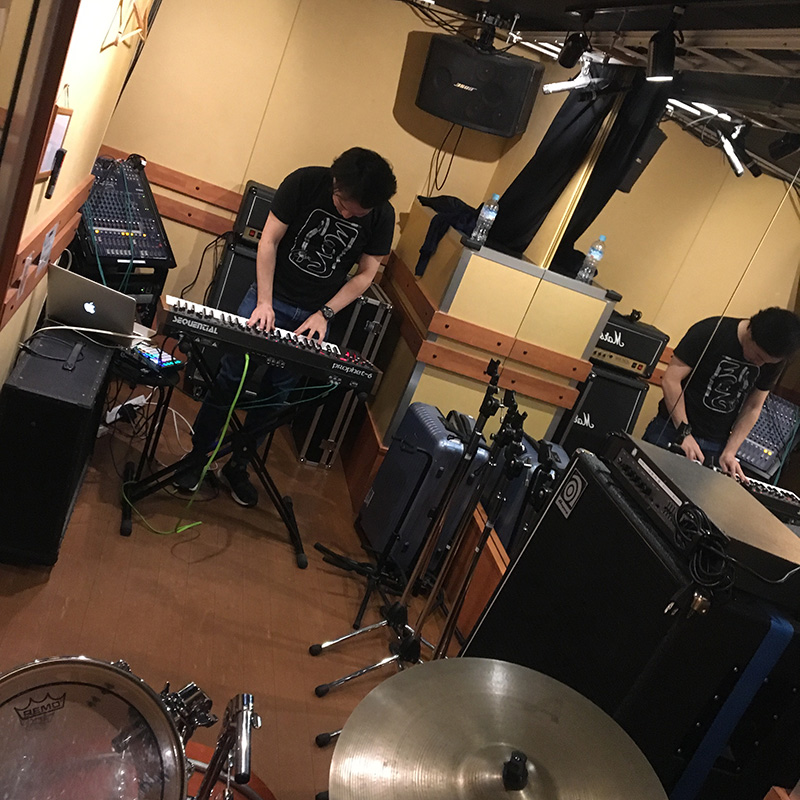
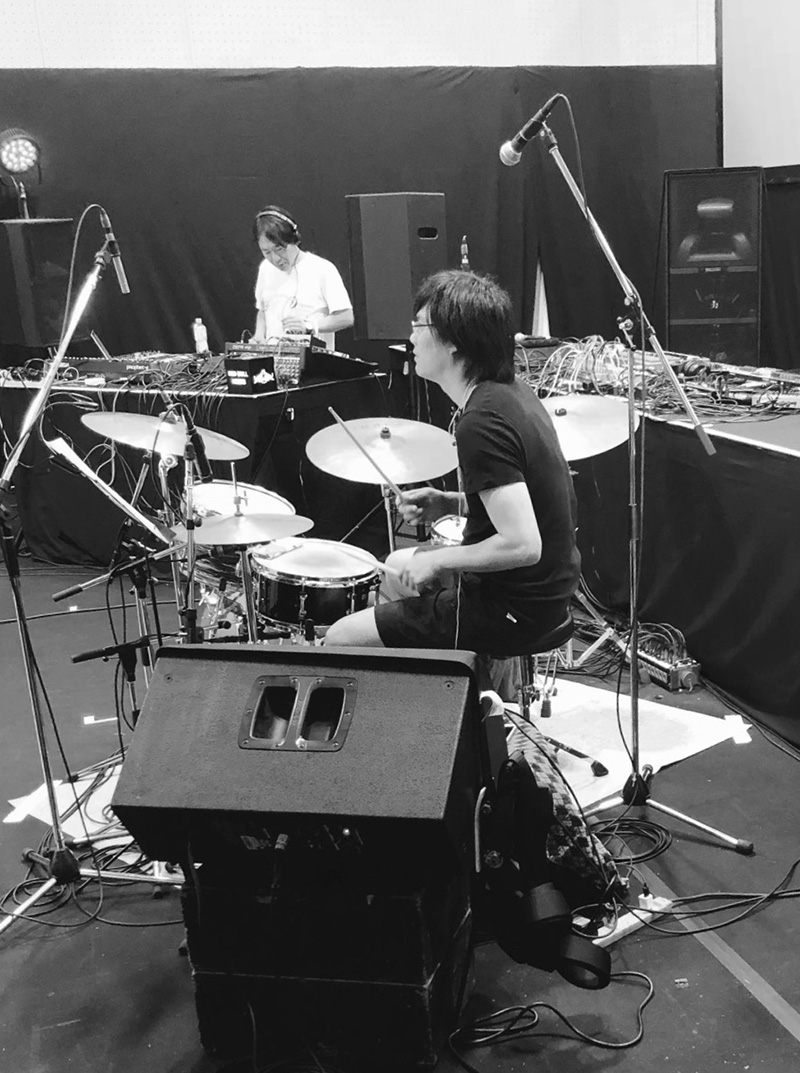
 アフリカのリズムは「ワン」がいろんなところに共存していて、というか拍の頭という概念が薄く、「あなたはここにいるからわたしはここにいます」と全体のなかの居所をみんな知っていて、集合体となる。道半ばながらこのような理解をしているのだが、トニー・アレンのドラミングは「ワン」は共有するにしても4肢のドラマーがそんなアフリカのリズムのように各々の居所に隙間を抜くように共存しながらエンジンとなって、しかも曲に合わせて変幻自在に動く。


 トニー・アレンによるモーゼス・ボイドへのクリニックはリズム的示唆に富んでいる。7:30~の短いミニマル・フレーズを伝えるシーンはもっともエキサイティング。フレーズで取り込もうとするモーゼスを制止するかのように、まずは右足のバスドラム、左足のフットハイハットからひとつ目のエンジンを確認する。次に左手のスネア。このとき、もうフレーズと言ってもいいものになっているのだが、それはあくまでもできあがってきたもので、フレーズから逆算していく4ウェイ的発想ではなく、右足、左足、左手が歯車のように絡んでいることに注目したい。そして、最後に参加する右手は4ビートに近い。絶妙にいわゆるスイングはしないところがクールだ。各々シンプルながら1人の中に4人いる。
 これを見ながら、アフリカの太鼓を練習しながら4拍目から1拍目へドンドンとすることさえもわからなくなったことがあったのを思い出した。そのときは、あまりになっていないだけだったのだが、「なんか違う」ながらドラムでかなりのフレーズを覚えていたにも関わらずそんな次第な上、同時にその理由を突きつけられたような気がした。しかし、はて、今だってどうだろう。ともすれば陥りがちなフレーズ先行が顔を出すことが大いにあるのではないかという反省を促される動画だ。しかも、気持ちよくだからにくい。楽観的なだけだろうか。その点アフリカのリズム・アンサンブルは本当によくできている。各々は絶妙に絡んでひとつの大きなうねりを形成する。その実はシンプルで、その輪に入ることができたとき最高の練習のひとつになると信じて続けている。

 「でもさ、実はみんな同じものじゃない? ハウスにジャズ云々、いろいろとジャンルはあるものの、要は同じ。誰もがあらゆるものを分け隔てなく聴いている、と。ほんと、ソウルフルな音楽か、リズミックな音楽かどうかってことがすべてなんだしさ」

 そう語るカマール・ウィリアムス筆頭に、多文化で、それに裏付けられた説得力のあるDIY精神(そうが故にリズムも気持ちところから外れないというような共通認識が生まれているのかもしれない)満載である南ロンドンならではのチャレンジは、ジャイルス・ピーターソンのブラウンズウッドからリリースされた『We Out Here』に凝縮されている。別冊ele-king『カマシ・ワシントン/UKジャズの逆襲』に、ここ数年起こっていることの一部始終が記されているが、僕のお気に入り3枚を挙げるなら、Yussef Kamaal『Black Focus』、Joe Armon-Jones『Starting Today』、Kamaal Williams『Return』。トニー・アレン直の影響が面白いとか、面白くないとかではなくて、曲に寄り添いながら、ときに寄り添わずに、自分たちのフレージングをしながら、気持ちいいところから外れようとはしないチャレンジが面白い。モーゼス・ボイド最高です。
 ところで、僕は2年程前にロンドンに行った。そのとき、交差点に信号が少ないのに車が譲り合うともなくするすると通り抜けていくところや、フィッシュ・アンド・チップス屋の兄ちゃんが手持ち無沙汰にポテトを入れる箱をクルクル回しながら、注文を受けて適当に頷いたと思ったらするするときれいに納めていくのを見て、リズムを感じたのだが、これを聞いてどう思われるだろうか? 立ち止まってはものを見ないとでも言うのだろうか。考え過ぎなことは承知で何かご意見があれば伺ってみたい。

 「“アフロフューチャリズム”という用語にはものすごくたくさんの定義を目にしてきたけれど、むしろ僕はこの用語自体が流動的で、それ自体が広い意味を持つようになって、より多くの人たちが自分たちの作品の背景として取り入れるようになったという点が気に入っている。まるでこの言葉そのものが生き物のように、多くの定義を取り込み続けている」  シャバカ・ハッチングス

 僕は、アフロフューチャリズムとは言えない代わりに、イン・サークルズ。堂々巡りなりに気持ちいいところから外れないようGONNOさんとグッド・ヴァイブスを目指すライヴが近づいてきた。

2018年7月8日(日) Open 17:00 / Start 18:00 GONNO × MASUMURA 『In Circles』リリースパーティー 会場:代官山UNIT 出演:GONNO × MASUMURA GUEST:トリプルファイヤー Adv ¥3,300 / Door ¥3,800 (ともに+1D) 2018年7月11日(水) 開場 18:30 開演 19:30 OLD DAYS TAILOR デビューアルバム 『 OLD DAYS TAILOR 』リリースパーティー 会場:吉祥寺スターパインズカフェ 出演:OLD DAYS TAILOR ゲスト:湯川トーベン(b) 前売り: ¥3,300 / 当日 ¥3,800(ともに+1D)


  1 2 3 4 5 6 7 8 9 10 11 12 13 14 15 16 17 18 19 20 21 22 23 24 25 26 27 28 29 30 31 32 33 34 35 36 37 38 39 40 41 42 43 44 45 46 47 48 49 50 51 52 53 54 55 56 57 58 59 60 61 62 63 64 65 66 67 68 69 70 71 72 73 74 75 76 77 78 79 80 81 82 83 84 85 86 87 88 89 90 91 92 93 94 95 96 97 98 99 100 101 102 103 104 105 106 107 108 109 110 111 112 113 114 115 116 117 118 119 120 121 122 123 124 125 126 127 128 129 130 131 132 133 134 135 136 137 138 139 140 141 142 143 144 145 146 147 148 149 150 151 152 153 154 155 156 157 158 159 160 161 162 163 164 165 166 167 168 169 170 171 172 173 174 175 176 177 178 179 180 181 182 183 184 185 186 187 188 189 190 191 192 193 194 195 196 197 198 199 200 201 202 203 204 205 206 207 208 209 210 211 212 213 214 215 216 217 218 219 220 221 222 223 224 225 226 227 228 229 230 231 232 233 234 235 236 237 238 239 240 241 242 243 244 245 246 247 248 249 250 251 252 253 254 255 256 257 258 259 260 261 262 263 264 265 266 267 268 269 270 271 272 273 274 275 276 277 278 279 280 281 282 283 284 285 286 287 288 289 290 291 292 293 294 295 296 297 298 299 300 301 302 303 304 305 306 307 308 309 310 311 312 313 314 315 316 317 318 319 320 321 322 323 324 325 326 327 328 329 330 331 332 333 334 335 336 337 338 339 340 341 342 343 344 345 346 347 348 349 350 351 352 353 354 355 356 357 358 359 360 361 362 363 364 365 366 367 368 369