「MAN ON MANã€ã¨ä¸€è‡´ã™ã‚‹ã‚‚ã®
ロックの死については、勝利のときも、嘆きのときも、度々宣言がなされてきたが、それはまだ死んではいない。何が起こったかといえば、ロックは、ポピュラー・カルチャーの中心としての立ち位置を失い、ジャズやカントリーのように、音楽の多数のニッチのひとつに落ち着きはじめ、ブランド志向のポップ・スターが利用する一連の記号や象徴となってはいるが、もはやスターたちが煌めく星座の中心に位置するものではなくなったのだ。
これには多くの含みがあり、そのひとつが、威張って闊歩するようなロック・スターの伝統的な感覚は、ますます不条理に見えはじめていることだ。死んだ時代の寂しい遺物は、手に入れたパワーとシンボリズムにしがみつくが、それらが自らの指の間からこぼれ落ちるのを目にしながら、過去へと遠ざかっていく。

スクイッドは、この立派で新しい世界には理想的なバンドなのかもしれない。ステージ上では5人がフラットな形で一列に並び、フロントマンにもっとも近いのは、歌うドラマーのオリー・ジャッジだが、その玉座は他のバンド・メンバーと同じ高さにあってそれ以上には上昇せず、どのメンバーも真の中心的な存在であることを示そうとはしない。ジャッジはロック・スターとしての存在感を、フリックするような軽いたたきや、華麗な身ぶりで表現するが、それも音楽の絶え間なく変化するダイナミクスに気を引かれて観客の意識がステージ上を行ったり来たりする瞬間に、通り過ぎてしまう。
たまに音楽家が口にする、「音楽だけがすべてだ」という、用心深さからくる、回りくどい主張がある。それは決して真実ではないし、達成するのが不可能で矛盾した純粋さであるかもしれないが、おそらくスクイッドは、誰よりもこの主張が似合うバンドではないだろうか。彼らのライヴ・セットは、5人のメンバー全員がリズムを奏でることからはじまり、ベース、ドラムスとパーカッションに何層にも重なる強烈な焦点が当てられることで、観客の注意を、彼らが音響的にどのようなことをしていて、次の70分ほどをどう設定するかの役割を担っていることに向けさせる。徐々に役割分担が変わっていき、ひとつのセットでひとつの楽器に留まる者はおらず、ときには1曲中に2回、3回と楽器を持ち替えることもある。彼らは皆、自らをマシンの交換可能な部品として、ステージ上でのエゴよりも音楽に奉仕するのだ。
絶えず繰り返される役割分担の変化による副次的な影響として、バンドにはもったいぶったロック・スターのフロントマンや、名人芸を披露するギター・ヒーローも存在しない。それは決して、このバンドが緊密なプレイをし、必要なときには爆発的な力を発揮することができないというわけではない。彼らは、その音楽性を売りにしているわけではなく、その激しさと、完全無欠に訓練された編成による、絶妙なバランスを売りにしているのだ。
このことが、スクイッドを冷血なマス・ロックの音楽エンジンのように見せているとしても、UKで過剰なほどの宣伝がなされ、〈Warp〉のようなレーベルがバックにいるバンドにしては、限りなくクラブに近い体験ができるほど小さな会場に詰め込まれた観客からは、そのような反応は感じられない。オープニングでの強烈なリズムで観客を魅了したバンドは、一度も彼らに直接呼びかけることなく、ほぼセットを通して、彼らを乗せていく。かわりに、ダイナミックな変化とギア・チェンジを頼りに、錯乱したカーディアックスのヒステリックなプログ・パンクから、恍惚としたアンビエント・ウェーヴまでの広い範囲の先端に触れていく。スクイッドに、いわゆるロック・ヒーローのような役回りの者がいないことが、複雑で絶え間なく変化する音の波の中で、私たち全員を彼らとともに音楽に乗せていくのに役立つのかもしれない。ステージ上での集団的なダイナミズムは、私たちをロック・スターのキリストのような人物の受け身なフォロワーへと導くのではなく、ギャングとしてプレイしているゲームの中へと誘い込むのだ。
もちろん、彼らのバンドとしての成功もその助けになっている。デビュー・アルバム『Bright Green Field』が、爆発するようなアイディアと音楽的な野心との間の、鋭さと厳しいコントラストの中で、自分たちのコントロールが効かないことを楽しむ若いバンドのサウンドだったのに対し、ニュー・アルバム『O Monolith』は、自分たちのツールをよりよく使いこなす(楽器とソング・ライティングの両方で)アーティスト集団であることをさらけ出している。ステージ上では、それが音楽の両極間で、そのつなぎの部分をほぼ感じさせずに観客を翻弄するというパワフルな才能へと転化される。曲たちは融合し、キャッチーなヴォーカルのリフレインは、実験的なシークエンスから飛び出し、インダストリアルな激しい鼓動の中からフックが立ち現れて、馴染み深い曲の到来を告げる。
とはいえ、スクイッドは、いまでも全く “音楽だけがすべて” というわけでない。重要なのは、音楽が何をするかであり、彼らの場合は、衝撃的で、眩暈を起こすほどの強烈な、フィジカル(身体的)な体験を生み出すことなのだ。そして、スクイッドのメンバーが、派手なプレイをするのを控えたとしても、彼らは舞台裏に隠れて見えないような操り人形的なグループからはほど遠い。むしろ、彼らのパフォーマンスの多面的な相互作用は、マシンをより人間的で、歓迎され、より楽しく、孤独ではないものにしていく。それは、現代のロック・スターをも嫉妬させてしまうかもしれない。
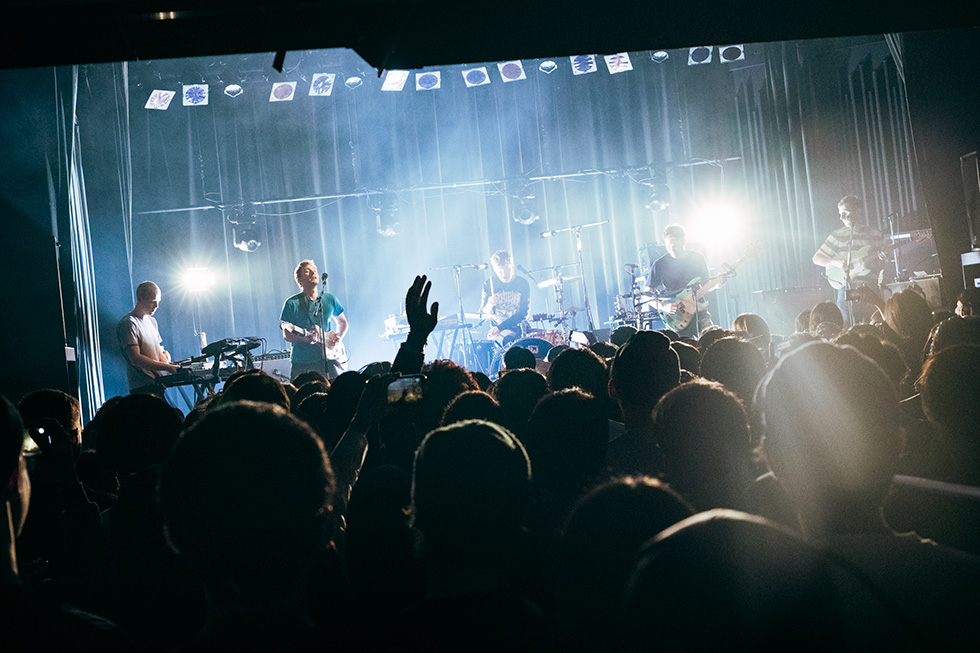
Squid at Shibuya WWWX
on 27th November 2023
written by Ian F. Martin
The death of rock music has been proclaimed many times, either in triumph or lament, and it’s not happened yet. What has happened is that rock has lost its position at the heart of popular culture and started to settle into position as one of music’s many niches, like jazz or country — a set of codes and symbols for the brand-driven pop stars to draw from, but no longer a core part of that constellation of stars.
This has many implications, but one of them is that the idea of the rock star in the swaggering, traditional sense begins to look more and more absurd — a lonely relic from a dead age, grasping for a power and symbolism that is visibly slipping between his fingers, away into the past.
Squid might be a band ideally suited to this brave new world. Lined up onstage in a flat row of five, the closest thing they have to a frontman is singing drummer Ollie Judge, raised up on his throne only to the same elevation as his bandmates and no higher, and no individual member presents as a true focal point. Judge communicates his rock star presence, such as it is, in flicks and flourishes that blink past in a vanished moment as your attention flickers back and forth across the stage, tugged this way and that by the music’s constantly shifting dynamics.
There’s a cagey and circular claim that musicians sometimes make, that “it’s only about the music”. It’s never true, and might be an impossible and contradictory sort of purity to achieve, but Squid could perhaps make as good a claim as anyone. Their set opens with each of the band’s five members on rhythm, the intense and layered focus on bass, drums and percussion forcing the crowd’s attention onto the what they’re doing sonically and the role it plays setting up the next seventy minutes or so. Gradually, they begin to shift roles, no one sticking to a single instrument for the whole set, sometimes changing two or three times within a single song. They make themselves interchangeable parts of the machine, serving the music ahead of any onstage ego.
One side-effect of this constant shifting of roles is that, just as there’s no strutting rock star frontman, there’s no virtuoso guitar hero either. That’s not to say that the band aren’t tight, and explosive when needs arise, but it means that they don’t sell themselves particularly on their musicianship but rather on this fine balance of intensity and immaculately drilled organisation.
If this makes Squid seem like a cold-blooded math-rock musical engine, it doesn’t feel like that from the crowd, packed into a venue small enough to provide something as close to a club experience as you can get — at least for a band with such UK hype and a label like Warp behind them. Having hooked the audience in those opening, intensely rhythmical moments, the band carry them along for nearly the whole set without once stopping to address the crowd directly. Instead they rely on the dynamic changes and gear shifts, ranging from hysterical prog-punk that touches the deranged peaks of the Cardiacs to blissed-out ambient waves. Squid’s lack of anyone in any of the obvious rock hero roles might even be what helps them bring us all along with them through such complex and constantly-changing sonic tides, the collective onstage dynamic inviting us into a game they’re playing as a gang rather than leading us as passive followers of some rock star Christ figure.
Their own growth as a band surely helps too, though. Where debut album “Bright Green Field” was the sound of a young band delighting in the edges and harsh contrasts between their exploding ideas and musical ambitions, luxuriating in their own lack of control, new album “O Monolith” reveals a group of artists with greater command of their tools (both in instruments and songwriting). Onstage, that translates into a powerful ability to tease the audience between the music’s extremes while barely seeing the join. Songs merge together, catchy vocal refrains bounce off experimental sequences, and hooks emerge out of throbbing, industrial pulses to announce the arrival of familiar songs.
That said, Squid are still far more than “just about the music” because what matters is what the music does — in this case create an electrifying, dizzying and intensely physical experience. And while Squid’s members might shy away from showboating, they’re far from a group of puppeteers, invisible behind the scenes. Rather the multifaceted interplay of their performance makes the machine more human, more welcoming, more fun, and less lonely. A modern day rock star might even be jealous.
おもに〈Mego〉~〈Editions Mego〉からのリリースを中心に、00年代から活躍をつづける電子音楽家、ツジコ・ノリコ。その5年ぶりの日本ツアーが決定している。最新作『Crépuscule I & II』をもとにしたライヴになるそうで、京都、東京、福岡の3都市をめぐる。東京公演ではベルリンの映像作家 Joji Koyama がAVを手がけるとのこと。詳しくは下記より。
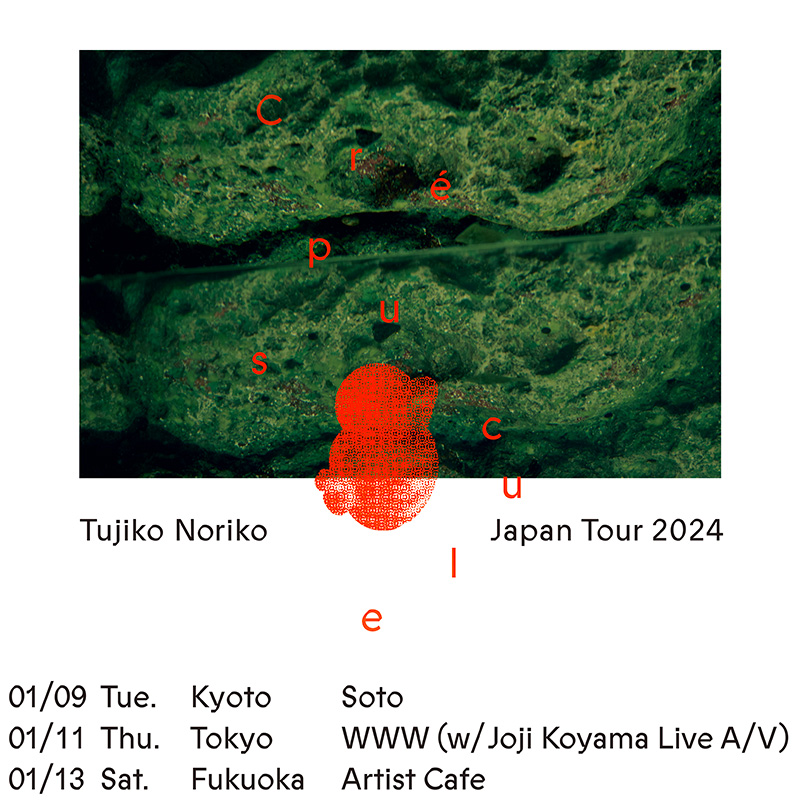
Tujiko Noriko Japan Tour 2024
1/09 Tue at Soto Kyoto
https://soto-kyoto.jp
1/11 Thu 18:30 at WWW Tokyo w/ Joji Koyama LIVE A/V
https://www-shibuya.jp/schedule/017371.php
TICKET https://t.livepocket.jp/e/20240111www *限定早割販売中
1/13 Sat at Artist Cafe Fuokuoka
https://artistcafe.jp
tour promoter: WWW / PERSONAL CLUβ
薄明かりのサウンドスケープ。エレクトロニカの伝説、フランス拠点のTujiko Norikoが5年ぶりの日本ツアーを開催。東京公演ではベルリンの映像作家Joji KoyamaとのライブA/Vを披露。
2001年のデビュー以来00年代のDIYなサウンドスケープのムーヴメントから生まれたエレクトロニカを始め、アートを軸とした電子音楽シーンで映像含む数多くの作品をリリースし、映画、パフォーマンス、アニメーション、インスタレーションの音楽制作含む数々のコラボレーションを果たして来たTujiko Norikoが、本年明けに老舗Editions Megoからリリースした映像作家Joji Koyamaとの大作『Crépuscule』(薄明かり)を基にしたライブを携え、京都、東京、福岡を巡る5年ぶりの日本ツアーを開催。
https://www.instagram.com/koyama_tujiko/

Tujiko Noriko
フランスを拠点に活動するミュージシャン、シンガーソングライター、映像作家。2000年、Peter RehbergとChristian Fenneszが彼女の最初のデモテープを発見し、アルバム『少女都市』でMegoからデビュー。アヴァンギャルドなエレクトロニカ周辺で高い評価を受け、Sonar、Benicassim、Mutekなどのフェスティバルに招かれ、世界中で演奏活動を行う。これまでにEditions Mego、FatCat、Room 40、PANから20枚のアルバムをリリースし、高い評価を得ている。2002年のアルバム「Hard Ni Sasete」はPrix Ars ElectronicaでHonorary Mentionを受賞。
映画、ダンス・パフォーマンス、アニメーション、アート・インスタレーションなどの音楽を手がけ、著名なミュージシャン、Peter Rehberg,、竹村延和、 Lawrence Englishらとコラボレーションしている。2005年には初の映像作品「Sand and Mini Hawaii」と「Sun」を制作し、パリのカルティエ財団や東京のアップリンクなどで国際的に上映された。2017年、Joji Koyamaと共同脚本・共同監督した長編映画「Kuro」はSlamdance 2017でプレミア上映され、Mubiでも上映された。2020年から21年にかけて、彼女の音楽作品はレイナ・ソフィア美術館で開催された展覧会「Audiosphere」(主要な現代美術館で初めて、映像もオブジェも一切ない展覧会)に出品された。
2020年にはサンダンスとベルリン国際映画祭で上映された長編映画「Surge」の音楽を担当し、2022年にはla Botaniqueでプレミア上映されたミラ・サンダースとセドリック・ノエルの映画「Mission Report」の音楽を担当した。
Joji Koyamaとの最新アルバム『Crepuscule I&II』をEditions Megoからリリースしている。
https://twitter.com/tujiko_noriko
ディスコグラフィー
'Shojo Toshi' 2001 (Mego)
'Make Me Hard' 2002 (Mego)
'I Forgot The Title' 2002 (Mego)
'From Tokyo To Naiagara' 2003 (Tomlab)
'DACM - Stereotypie' with Peter Rehberg 2004 (Asphodel)
'28' with Aoki Takamasa 2005 (Fat Cat)
'J' with Riow Arai 2005 (Disques Corde)
'Blurred In My Mirror' with Lawrence English 2005 (ROOM 40)
'Melancholic Beat' 2005 (Bottrop-boy)
'Solo' 2006 (Editions Mego)
'Shojo Toshi' 2007 (Editions Mego)
'Trust' 2007 (Nature Bliss)
'U' with Lawrence English and John Chantler 2008 (ROOM 40)
‘GYU’ with tyme. 2011/12 (Nature Bliss/ Editions Mego)
‘East Facing Balcony’ with Nobukazu Takemura 2012 (Happenings)
‘My Ghost Comes Back‘ 2014 (Editions Mego/ p*dis)
'27.10.2017' with Takemura Nobukazu 2018 (Happenings)
‘Kuro’ 2018 (pan)
‘Surge Original Sound Track Album’ 2022 (SN variations/Constructive)
‘Crepuscule I&II’ 2023 (Editions Mego)
‘Utopia and Oblivion’ 2023 (Concept compilation album from Constructive)
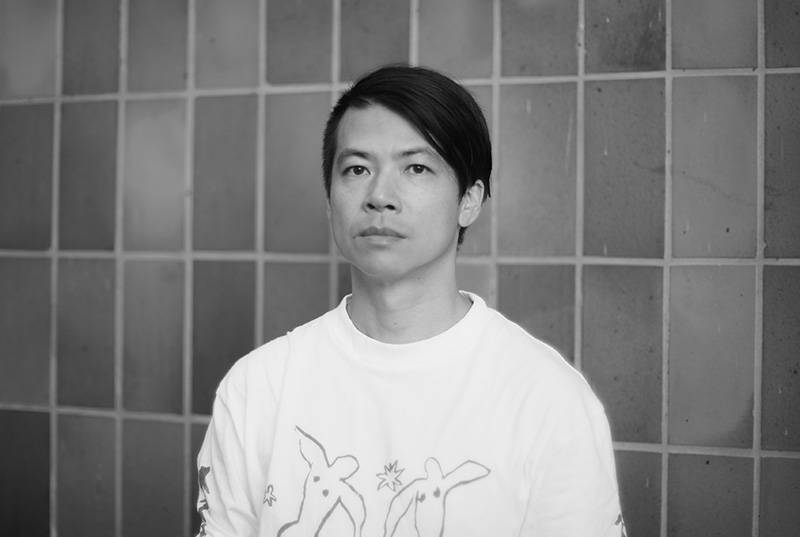
Joji Koyama
ベルリンを拠点に活動する映像作家、アニメーター、グラフィック・アーティスト。短編映画、アニメーション、ミュージックビデオ(Four Tet、Mogwai、Jlinなど)は国際的に上映され、ロンドン短編映画祭や英国アニメーションアワードで受賞。2015年には初の短編ビジュアルストーリー集「Plassein」を出版。Tujiko Norikoと脚本・監督を務めた長編映画「Kuro」はスラムダンス映画祭でプレミア上映され、MUBIで世界中に配信された。様々なメディアやコンテクストで活動し、最近のコラボレーションには、絶賛されたアルバム「Crépuscule I&II」に基づくTujiko NorikoとのツアーライブA/Vプロジェクトがある。
jojikoyama.com
instagram.com/jojikoyama
twitter.com/jojikoyama

Tujiko Noriko - Crépuscule I & II [Editions Mego / pdis]
まだEditions Megoになる前のMegoの初期、過激な作品群の中に思いがけない作品が登場しました。PITA、General Magic、Farmers Manualなどの歪んだハードディスクの中から、全く異なる種類のリリースが現れたのです。コンピュータで作られたものでしたが、よりソフトな雰囲気、雲のような音、そしてメロディーさえもありました。それは日本人アーティスト、ツジコノリコの記念すべきデビュー作『少女都市』(2001年)であり、彼女のキャリアをより多くの人々に紹介しただけでなく、Editions Megoの門戸をより幅広い実験的音楽形態に開くことになりました。
電子的な抽象性、メロディー、声、そして雰囲気というツジコノリコ特有の合成は、彼女の神秘的な言葉の周りを音が優しく回り、歌として構成された感情的な聴覚実験の連続へと変化していくため、他の追随を許さないものです。彼女はMegoからのデビュー作以来、ソロ作品やコラボレーションを重ね、また女優や監督として映画界にも進出するなど、進化を続けています。
PANから2019年にリリースされたサウンドトラック『Kuro』以来の新作となる本作では、映画というメディアが彼女の音楽に与えた影響を聴くことができ、視覚的な記号が手元にある刺激的なオーディオに呼び起こされます。インストゥルメンタルのインタールードは、タイトルと一緒に映画の風景を思い起こさせ、映画の形式を再確認させます。これは、深い人間的な存在感を持つ合成音楽です。内宇宙の幻想的な領域を彷徨う人間の心が、通常はそのような人間的な傾向を崩すよう促す機械を通して、絶妙に表現されています。その温もりと静寂、そして夢のような空間が、ツジコノリコという作家の個性であり、この『Crépuscule』は、その力を見事に証明しています。
「Crépuscule(薄明かり)」というタイトルこの音楽の夢遊病的な性質を見事に表現しており、夜行性の変化が広い意味での静寂を呼び起こします。「Crépuscule I」は短い曲のセレクションで構成され、「Crépuscule II」は3曲の長めの曲で構成され、これらの曲とムードが呼吸するためのスペースを提供しています。本作は、リスナーが彼女の目を通して世界を見ることを可能にし、機械に人間味を与える彼女の巧妙な手腕により、穏やかな不思議な世界がフレーム内にフォーカスされています。
Track listing:
Disc 1
1 Prayer 2′ 22”
2 The Promenade Vanishes 6′ 18”
3 Opening Night 4′ 30”
4 Fossil Words 8′ 10”
5 Cosmic Ray 3′ 26”
6 Flutter 4′ 18”
7 A Meeting At The Space Station 11′ 38”
8 Bronze Shore 6′ 46”
9 Rear View 3′ 22”
Disc 2
1 Golden Dusk 12′ 50”
2 Roaming Over Land, Sea And Air 23′ 58”
3 Don’t Worry, I’ll Be Here 18′ 45”
ブルックリン育ちのミュージシャン兼キュレーターのロレインことタジャ・チークは、3作のアルバムを通じて、彼女が「approaching songness(歌らしさへの接近)」と呼ぶ領域間で稼働してきた。その音楽は、記憶と連想のパリンプセスト[昔が偲ばれる重ね書きされた羊皮紙の写本]で、人生のさまざまな局面で作曲された歌詞とメロディーの断片が、胸を打つものから滑稽なものまで、幅広いフィールド・レコーディングと交互に織り込まれている。それはつねに変化し、さまざまな角度からその姿を現す。ニュー・アルバム『I Killed Your Dog』の “Our Funeral” の冒頭の数行で、チークはオートチューンで声を歪ませて屈折させ、息継ぎの度に変容させていく。焦らそうとしているわけではなく、一節の中に複数のヴァージョンの彼女自身を投影させるスペースを作り出そうとしているのだ。高い評価を得た2021年のアルバム『Fatigue』のオープニング・トラックは、「変わるために、あなたは何をした?」との問いかけではじまっている。ロレインは確かな進化を遂げながら、その一方でチークは、これまでの作品において、一貫性のある声を保っているのだ。ループするギター、狂った拍子記号、糖蜜のようににじみ出る、心を乱すようなドラムスなど、2017年の自身の名を冠したデビュー盤でみられた音響的な特徴は、『I Killed Your Dog』でも健在だ。同時にロレインは、これまでよりも人とのコラボレーションを前面に打ち出している。今回は、彼女とキャリアの初期から組んできたプロデューサーのアンドリュー・ラピンと、マルチ・インストゥルメンタリストのベン・チャポトー=カッツの両者が、彼女自身と共にプロデューサーとしてクレジットされているのだ。チークが過去の形式を打ち破ることを示すもっとも明白なシグナルは、気味が悪くて注意を引く今作のアルバム・タイトルに表れている。『I Killed Your Dog』の発売が発表された際のピッチフォークのインタヴューでは、これは彼女の「基本的にビッチな」アルバムであり、リスナーの期待を裏切り、意図的に不意打ちを食らわせるものだと語っている。また他のインタヴューでは、最近、厳しい真実を仕舞っておくための器としてユーモアを利用するピエロに嵌っていることに言及している。これは、感傷的なギターとピッチを変えたヴォーカルによる “I Hate My Best Friends(私は自分の親友たちが大嫌い)” という1分の長さの曲にも表れている。(念のため、実際には彼女は犬好きである。)
メディアは、ロレインの音楽がいかにカテゴライズされにくいかということを頻繁に取り上げている。だが、チークが黒人女性であり、予期せぬ場で存在感を発揮していることから、これがどの程度当たっているのかはわからない。その点では、彼女には他のジャンル・フルイド(流動性の高い)なスローソン・マローン1(『Fatigue』にも貢献した)、イヴ・トゥモア、ガイカやディーン・ブラントなどの黒人アーティストたちとの共通点がある。「You didn’t think this would come out of me(私からこれが出てくるとは思わなかったでしょ)」と、彼女は “5to 8 Hours a Day (WWwaG)” で、パンダ・ベアを思わせるような、幾重にも重ねられたハーモニーで歌っている(「この歌詞の一行は間違いなく、業界へ向けた直接的な声明だ」と彼女はClash Musicでのインタヴューで認めている)。
『I Hate Your Dog』 では、チークがこれまででもっともあからさまにロックに影響された音楽がフィーチャーされているが、彼女のこのジャンルとの関係性は複雑なものだ。最初に聴いたときに、私がテーム・インパラを思い浮かべた “Pet Rock” について、アルバムのプレス・リリースにはこう書かれている──2000年代初期のザ・ストロークスのサウンドと、若い頃のロレインが聴いたことのなかったLCDサウンドシステム──これには、一本とられた。
彼女の初期のアルバムと同じくシーケンス(反復進行)は完璧で、各トラックを個別に聴くことで、その技巧を堪能することができる。これは、トラックリストに散りばめられたスキットやミニチュアに顕著で、アルバムのシームレスな流れに押し流されてしまいがちだ。33秒間という長さの “Monsoon of Regret” は、微かな焦らしが入ったような、混沌とした曲であり、“Sometimes” は、アラン・ローマックスがミシシッピ州立刑務所にループ・ペダルをこっそり忍び込ませたかのような曲だ。
“Knead Be” がアルバム『Fatigue』の言葉のないヴォーカルとローファイなキーボードによる1分間のインタールードで、ヴィンテージなボーズ・オブ・カナダのようにワープし、不規則に揺れる “Need Be” をベースにしている曲だと気付くには、注意深く聴き込む必要がある。この曲でチークは、そのトラックに沈んでいたメロディーの一節を、小さい頃の自分に、物事がうまくいくことを悟らせる肯定的な賛歌へと拡大した。ただ、その言葉(「小さなタジャ、前に進め。あなたは大丈夫だから」)はミックスの奥深くに潜んでいるため、歌詞カードを見ないと、何と歌っているのか判別するのが難しい。
初期の “Blame Me” のような曲では、チークはひとつのフレーズのまわりを、まるでメロディーの断片が頭の中に引っかかってリピートされているかのようにグルグルと旋回する。『I Killed Your Dog』では、何度かデイヴィッド・ボウイの “Be My Wife” のようなやり方で、一度歌詞を最後まで通したかと思うと、またそれを繰り返して歌う。あらためて聴き返すと、彼女が足を骨折した後に書いたバラード調の “Clumsy(ぎこちない・不器用)” ほどではないが、歌詞は、その歌詞に出てくる問いかけ自体に回答しているかのように聴こえる。“Clumsy” では曲の最後に、冒頭で投げかけた問いへと戻る。「想像もつかないような形で裏切られたとき、(自分が足をついている)地面をどのように信頼しろというの?」
彼女はまだ、答を探り続けているのかもしれない。
終曲の “New Years’ UnResolution” は、チークがアルバムを「アンチ・ブレークアップ(別れに反対する)」レコードと表現したことを端的に表している。この曲でも、歌詞がループとなって繰り返されるが、今回はその繰り返しの中で、歌詞が大きく変えられているのだ。彼女はその言葉には、別れた直後と、かなりたってから、後知恵を働かせて書いたものがあると説明している。バレアリックなDJセットで、宇多田ヒカルの “Somewhere Near Marseilles -マルセイユ辺り-” と並べても違和感のない、ダブ風のキラキラと揺れる光のようなグルーヴに乗せて、チークは、陰と陽のような、互いを補いあう2つのヴァースを生み出している。
ひとりでいるのがどんな感じか忘れてしまった
雨を吐いて 雪を吐き出す。
日々は、ただ古くなっていく
何も持たないということがどんなものか知っている?
どんなものかは知らないけれど
あなたは今夜ここに来る?
私から電話するべきか あるいは無視するべき? 私は……する
恋をするということがどんな感じか忘れてしまった
太陽を飲み込んで 雪を吐き出す
日々は、古くはならない。
何かを持っているということがどんなことか知っている?
ふたりともそれを知っている。
ただ真っ直ぐに私の目を見て
あなたから私に電話するべきか あるいは私を無視するべき? あなたは……する
彼女はいまや、人生を両側から眺めることができたのだ。
L’Rain - I Killed Your Dog
written by James Hadfield
Across three albums, L’Rain – the alias of Brooklyn-raised musician and curator Taja Cheek – has operated in an interzone that she calls “approaching songness.” Her music is a palimpsest of memories and associations, interleaving fragments of lyrics and melodies composed at different points in her life, with field recordings that range from poignant to hilarious. It’s constantly shifting, revealing itself from different angles. During the opening lines of “Our Funeral,” from new album “I Killed Your Dog,” Cheek contorts and refracts her voice with AutoTune, morphing with each breath she takes. It isn’t that she’s playing hard to get, more that she’s making space for multiple versions of herself within a single stanza.
“What have you done to change?” asked the opening track of her widely acclaimed 2021 album “Fatigue.” L’Rain has certainly evolved, but Cheek has maintained a consistent voice throughout her work to date. Many of the sonic signatures from her self-titled 2017 debut – looping guitar figures, off-kilter time signatures, phased drums that ooze like treacle – are still very much present on “I Killed Your Dog.” At the same time, L’Rain has become a more collaborative undertaking: She’s quick to credit the contributions of producer Andrew Lappin – who’s been with her since the start – and multi-instrumentalist Ben Chapoteau-Katz, both of whom share producer credits with her this time around.
The most obvious signal that Cheek is breaking with past form on her latest release is in the album’s lurid, attention-grabbing title. As she told Pitchfork in an interview when “I Killed Your Dog” was first announced, this is her “basic bitch” album, pushing back against expectations and deliberately wrong-footing her listeners. She’s spoken in interviews about a recent fascination with clowns, who use humour as a vessel for hard truths. In this case, that includes a minute-long song of gooey guitar and pitch-shifted vocals entitled “I Hate My Best Friends.” (For the record, she loves dogs.)
Media coverage frequently notes how resistant L’Rain’s music is to categorising, though it’s hard to say how much this is because Cheek is a Black woman operating in spaces where her presence wasn’t expected. In that respect, she has something in common with other genre-fluid Black artists such as Slauson Malone 1 (who contributed to “Fatigue”), Yves Tumor, GAIKA and Dean Blunt. “You didn’t think this would come out of me,” she sings on “5 to 8 Hours a Day (WWwaG),” in stacked harmonies reminiscent of Panda Bear. (“That line is definitely a direct address to the industry,” she confirmed, in an interview with Clash Music.)
“I Hate Your Dog” features some of Cheek’s most overtly rock-influenced music to date, although her relationship with the genre is complicated. According to the press notes for the album, “Pet Rock” – which made me think of Tame Impala the first time I heard it – references “that early 00’s sound of The Strokes and LCD Soundsystem that L’Rain never listened to in her youth.” Touché.
Like her earlier albums, the sequencing is immaculate, and it’s worth listening to each track in isolation to appreciate the craft. That’s especially true of the skits and miniatures scattered throughout the track list, which can get swept away in the album’s seamless flow. The 33-second “Monsoon of Regret” is a tantalising wisp of inchoate song, reminiscent of Satomimagae; “Sometimes” is like if Alan Lomax had snuck a loop pedal into Mississippi State Penitentiary.
It takes close listening to realise that “Knead Be” is based on “Need Be” from “Fatigue,” a one-minute interlude of wordless vocals and lo-fi keyboards that warped and fluttered like vintage Boards of Canada. Here, Cheek takes the wisp of melody submerged within that track and expands it into a hymn of affirmation, in which she lets her younger self know that things are going to work out – though her words of encouragement (“Go ’head lil Taja you’re okay”) lurk so deep in the mix, you’d need to look at the lyric sheet to know exactly what she’s singing.
On earlier songs such as “Blame Me,” Cheek would circle around a single phrase, like having a fragment of a melody stuck in your head on repeat. Several times during “I Killed Your Dog,” she runs through all of a song’s lyrics once and then repeats them, in the manner of David Bowie’s “Be My Wife.” Heard again, the words sound like a comment on themselves – no more so than on the ballad-like “Clumsy” (written after she broke her foot), when she returns at the end of the song to the question posed at its start: “How do you trust the ground when it betrays you in ways you didn’t think imaginable?” It’s like she’s still grasping for an answer.
Closing track “New Year’s UnResolution” – which best encapsulates Cheek’s description of the album as an “anti-break-up” record – also loops back on itself, except this time the lyrics are significantly altered in the repetition. She’s explained that the words were written at different points in time, both in the immediate aftermath of a break-up and much later, with the earned wisdom of hindsight. Over a shimmering, dub-inflected groove that wouldn’t sound out of place alongside Hikaru Utada’s “Somewhere Near Marseilles” in a Balearic DJ set, Cheek delivers two verses that complement each other like yin and yang:
I’ve forgotten what it’s like to be alone
Vomit rain spit out snow.
Days, they just get old.
Do you know what it’s like to have nothing?
I don’t know what it’s like.
Will you be here tonight?
Should I call you or should I ignore you? I will...
I’ve forgotten what it’s like to be in love
Swallow sun spit out snow
Days, they don’t get old.
Do you know what it’s like to have something?
We both know what it’s like.
Just look me in the eye.
Should you call me or should you ignore me? You will...
She’s looked at life from both sides now.
TESTSETの曲でいちばん好きなのは “Moneymann” だ。ピキピキときしむ電子音やファンキーなベースがカッコいいのはもちろんなのだけれど、理由はもっと単純で、カネが生み出す関係性やそれが引き起こす状況を歌っているとおぼしきリリックに、日々カネのことばかり考えているぼくはどうしても引きこまれてしまうのだ。さりげなく挿入される日本語の「さりげない さりげない えげつない」には何度聴いてもドキッとさせられる。ほんとに、そうだよね。だから、今回のライヴを迎えるにあたってもこの曲をもっとも楽しみにしていた。
ふだんはフラットな恵比寿ガーデンホールのフロアに段差が設けられ、椅子が用意されている。どうやら着席の公演のようである。にもかかわらず、照明が落とされるやいなや一斉に、オーディエンスのほぼ全員が立ち上がった。まあそりゃそうだろう。ファンクネスあふれるTESTSETの音楽はからだを揺らしながら体験したほうがいいに決まっている。

響きわたる鳥の鳴き声。1発目はアルバム同様、“El Jop”。電子音の反復とギターの残響がいやおうなくこちらのテンションをあげてくる。そして待ち望んでいた曲はすぐにやってきた。印象的なコインの音に導かれ “Moneymann” が走りだす。ステージ後方には株価の変動をあらわしているかのようなグラフ、数値化された世界が映し出されている。ライヴだと一層なまなましさが際立つというか、円安に物価高がつづく今日、この切迫感にはほかのオーディエンスたちもきっとハッとさせられたにちがいない。
あらためて、演者は4人。向かって左から永井聖一(ギター)、LEO今井(ヴォーカル)、砂原良徳(キーボード)、白根賢一(ドラムス)が横一列に並んでいる。背後のスクリーンやメンバーの近くに設置された電光の棒も込みでステージをつくりあげるという点において、TESTSETのライヴはコーネリアスのそれと似ている(今井が動いたりMCを入れたりするところは異なるものの)。つまりはメンバーのキャラクターなり人間性なりにたのまないということで、ようするにテクノだ。ファンクに寄った曲が多いのもなるほど、テクノのルーツのひとつに想いを馳せれば不思議はない。
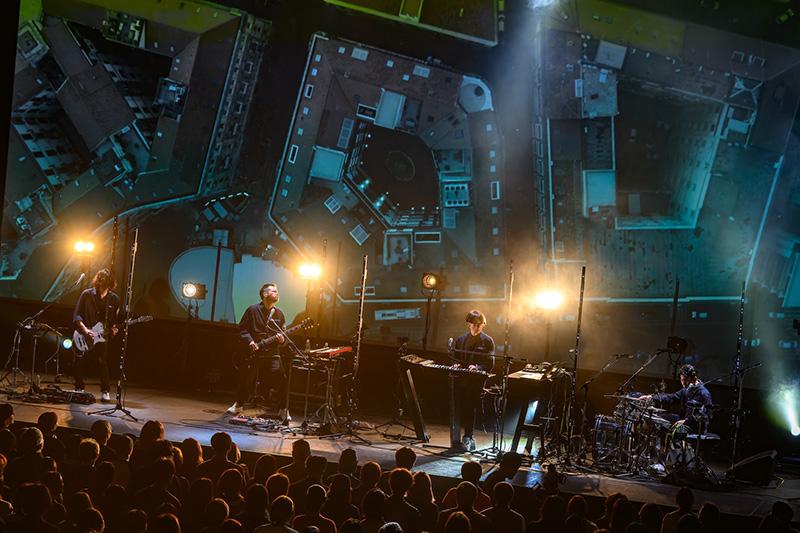
アルバムとおなじオーダーで4曲が終わると、今井が最初のMCを放つ。「ほぼ全出しセットでまいります」。今年のラスト・ライヴということで、気合いがみなぎっているのが伝わってくる。じっさいこの日は『1STST』から全曲が演奏され、「EP1 TSTST」からもいくつかピックアップされていたように思う。METAFIVEの曲も披露され、TESTSETのファンク・サウンドがMETAFIVEの発展形であることを再確認させられる。
ゆえにもっとも注目すべきは、終盤に差しかかったころに差し挟まれた高橋幸宏のカヴァーだろう。インタヴューで砂原が「いちばん好き」だと発言していた81年のアルバム、『NEUROMANTIC』のオープナーだ。スクリーンには雨の映像が流れている。歌詞をググってみると、たしかに窓を雨が伝っている。「だれかがここにいたはずなのに/痕跡さえもない/ただ顔の記憶だけが」。このバンドの出発点がどこにあったのかを思い出させる、なんともせつない追悼──であると同時にそれは、どこか鎖を断ち切るようなポジティヴな意味合いを含んでいるようにも受けとれる。彼はもういないんだ、と。
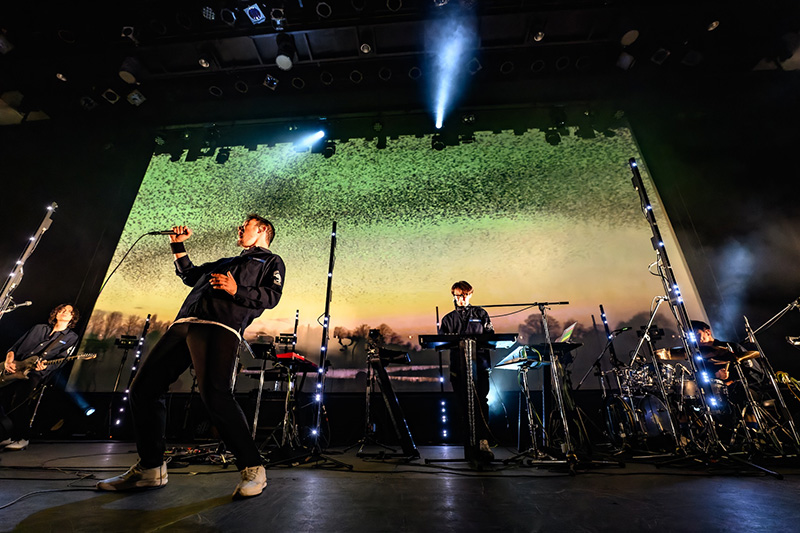
MCで今井は「来年はもっとたくさんライヴをやる、新しい曲もつくっていく」と語っていた。もしかしたら、TESTSETがほんとうにはじまるのはこれからなのかもしれない──そんな期待を抱かせてくれる、熱気に満ちた一夜だった。