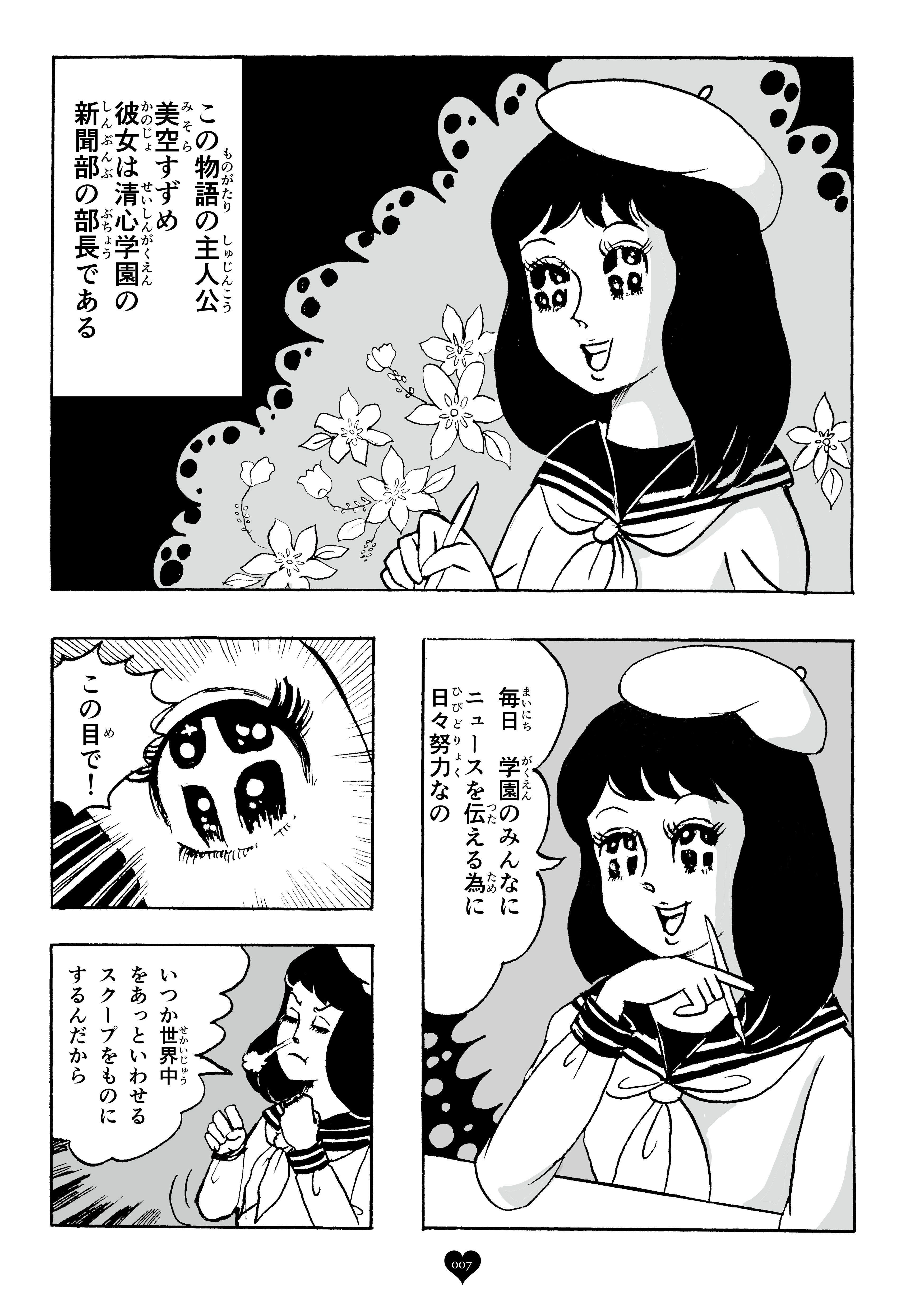
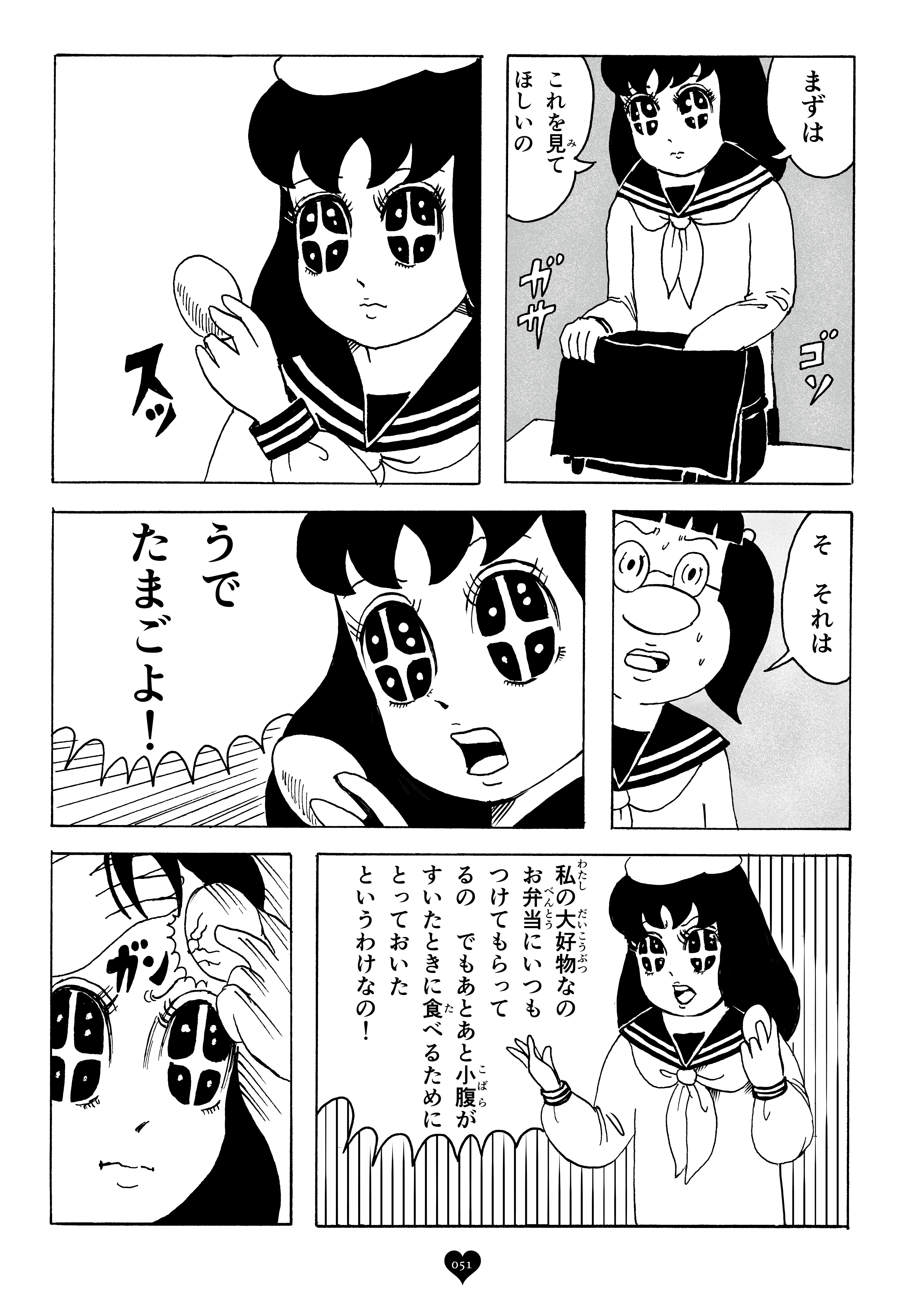
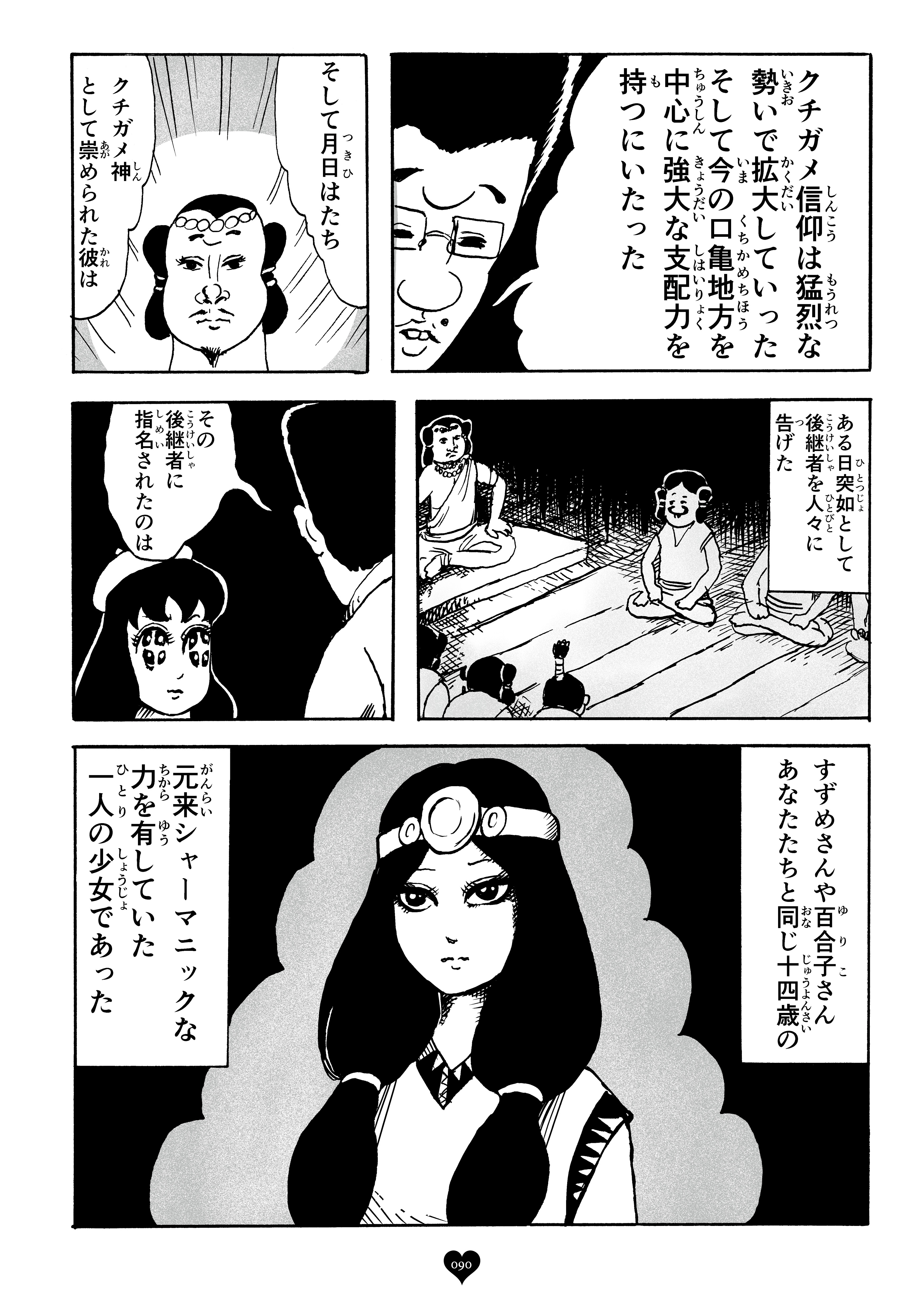
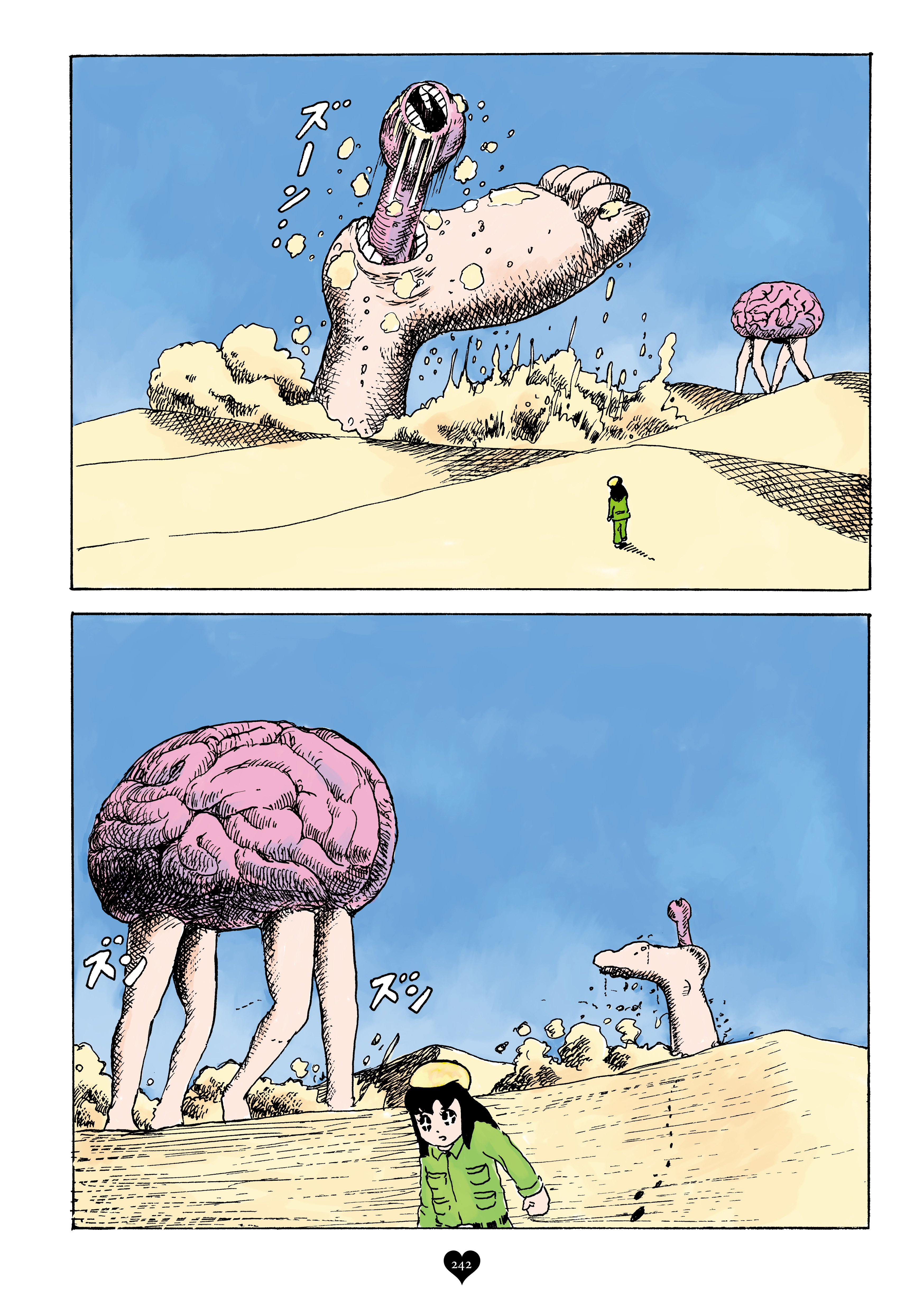
『IDM definitive 1958-2018』のカヴァー・イラストを担当した祟山祟の初の単行本、『恐怖の口が目女』が6月30日、おおかみ書房/リイド社から刊行される。これがまたとんでもなく意味がない、じつにバカバカしくてしょーもない恐怖漫画で、最高だ。
祟山祟はじつは、90年代のエレキングで一時期連載をしていたこともあるという特異な男で、思春期に電気グルーヴの洗礼を受けてしまった犠牲者のひとりなのだ。『恐怖の口が目女』には、梅図かずお、車田正美、大友克洋、宮崎駿、などなどの昭和の漫画がサンプリング的というかヴェイヴァーウェイヴ的にコーラジュされている。“口が目女”をめぐるナンセンス・サスペンス・ホラーとして描かれた物語には、スピリチュアル・ジャズにも負けないぶっ飛んだエンディングが待っている。
こんなにもこわくてくだらない漫画を描いた祟山祟、おそるべし。巻末には、彼が尊敬する天久聖一との対談もあり、です。
400
「Reã€ã¨ä¸€è‡´ã™ã‚‹ã‚‚ã®

ボン・イヴェールのジャスティン・ヴァーノンとザ・ナショナルのアーロン・デスナーがウィスコンシン州で主宰するフェスティヴァル〈Eaux Claires〉は、実際に行って感じたことだが、非常にDIY的な感覚で貫かれた場だ。大企業よりは地元の顔なじみの企業がスポンサーに入り、集客のためよりはミュージシャン同士の音楽的なネットワークを可視化するためにラインナップを決める。ミュージシャンシップによってジャンルを横断し、大勢の人間や価値観がひとつの場所に集うという感覚――とりわけ、ボン・イヴェールの作品や活動に貫かれているのは、この「シェア」という感覚である。いま、ヴァーノンが音楽仲間たちと取り組んでいるコレクティヴ・プロジェクトの名前はズバリ「PEOPLE」だ。
「PEOPLE」のラインアップには、そして、ヤン・ヴァーナーとアンディ・トマの名前もある。マウス・オン・マーズのオリジナル・アルバムとしては6年ぶり、通算11作めとなる『ディメンショナル・ピープル』は、彼らが〈Eaux Claires〉に参加した経験がかなりの部分で基になっている作品だ。大勢のゲストが参加しているという点ではコンピレーション作『21アゲイン』(14)の発想を推し進めていると言えるが、同作がモードセレクターはじめ基本的にエレクトロニック・ミュージック系のネットワークを駆使していたことに比べると、『ディメンショナル・ピープル』に現れるメンツはジャンル的に非常に多彩。ボン・イヴェール、ザ・ナショナルはもちろんのこと、サム・アミドン、ベイルート、リサ・ハニガンといったインディ・ロック/フォーク勢をはじめとして、スパンク・ロックやアマンダ・ブランク、さらには超大御所ソウル・シンガーであるスワンプ・ドッグといった意外なメンツはすべて、〈Eaux Claires〉に由来している。そしてまた、コンセプトが社会主義だというのも……ボン・イヴェールが社会主義者とまでは思わないが、「民主社会主義」を繰り返し唱えていたバーニー・サンダースの演説大会の前説をヴァーノンが担当していたことを思えば、そう遠くないと言えるだろう。少なくとも、「シェア」という感覚こそが本作のもっとも重要なテーゼである。
アルバムはそのヴァーノンが参加し、パート1~3で構成されるタイトル・トラック“Dimensional People”から始まる。ジューク/フットワークを意識したと思われるビートがせわしなく跳ねまわるが、ジューク/フットワークではない。フリージャズとダブ、アフロビートがたっぷりと注がれたすさまじくファンキーなIDMであり、それはやがてアンビエントへと姿を変えていく。このトラックがよく本作のモードを表していて、前作『パラストロフィックス』のエレクトロニックな質感に比べてオーガニックな音色とジャンルの積極的な衝突/融合が特徴だ。管弦楽器のアンサンブルや人声が要所で施され、大勢の人間がひとつの部屋にいる情景が何度も喚起される。IDMとポスト・ロックの交流に熱があった2000年前後の空気が、現代的に更新されていると言えばいいだろうか。久しぶりの〈スリル・ジョッキー〉作だというのも本作のトピックだ。
雑多な人間によるアンサンブルという点では発想的にボン・イヴェールと共通しているのだが、やはりというか何というか、もっとも異なるのはマウス・オン・マーズらしい素っ頓狂なユーモアが張り巡らされていることである。やる気が感じられない脱力しきったアブストラクト・ヒップホップ“Foul Mouth”、カントリー・ドローンとでも呼びたくなる“Parliament Of Aliens”、パーカッシヴでつんのめるグルーヴが躍動するメタ・ファンク“Daylight”と、爆笑ではなく思わず小さく噴き出してしまう妙ちくりんなトラックが並ぶ。きめ細かさもあるが、それを崩す余裕もある。このおかしなサウンドはマウス・オン・マーズが開発したというアプリであるElastic DrumsやfluXpadが駆使されてできたものだそうだが、テクノロジーを理知的に利用するというよりは、ただおもしろがって遊んでいるといった感じだ。実際、ヴァーノンはじめ本作に参加したメンバーがアプリで遊ぶ動画がいくつか公開されているが、みんな純粋に楽しそうだ。子どものように音を変形させ、笑っている。
紙ele-king vol.22に掲載されたヤン・ヴァーナーの発言を読めば、彼らが真剣に社会主義の発想を現代に生かせないか、と考えたことがわかる。資本や富を分かち合うこと、対話すること、多様な価値観を認め合うこと。OPNの『エイジ・オブ』がアンチ・ヒューマニズム的な見解からエレクトロニック・ミュージックの更新を(ある意味、トレンディに)目論んでいるとすれば、マウス・オン・マーズのIDMは頑なにヒューマニズムを貫こうとしている。だがそれは頑固とはほど遠い柔軟なもので、大勢の人間のアンサンブルの目標を(予定)調和に予め設定してしまうのではなく、偶発性や事故を能動的に楽しもうとする態度である。多様性とはそういうことなのだ、と。ベイルートのザック・コンドンとスワンプ・ドッグが参加したなかばドリーミーなクロージング・トラック“Sidney In A Cup”のピースフルな音の戯れを聴いていると、ここにマウス・オン・マーズの最新の理想主義が示されているように思えてくる。
avex内のレーベル、cutting edge主催のイヴェント『TOKYO CUTTING EDGE vol.02』に、Chim↑Pomがインスタレーションで参加する。また、TOKYO GIRLS COLLECTIONなどの会場装飾を手がけるバルーンアーティスト・Bashicoが場内のディスプレイを担当する事が発表された。
おっと、ちなみに出演者は、長岡亮介、SHINICHI OSAWA (MONDO GROSSO)、WONKに加えて、 jan and naomi やEYEの名の加わっています。金曜日の夜の贅沢な一夜になりそう。
TOKYO CUTTING EDGE vol.02
【日時・会場】
2018年7月6日(金曜日) LIQUIDROOM
開場/開演 24:00 ~ 終演 28:30予定
【出演】
LIVE:長岡亮介 / jan and naomi / WONK
DJ:SHINICHI OSAWA (MONDO GROSSO) / EYE (BOREDOMS) / AYASHIGE (wrench)
Installation:Chim↑Pom
Balloon Display:Bashico
【チケット】
一般発売
2018年5月31日(木)10:00~
Yahoo!チケット https://r.y-tickets.jp/tce1802
チケットぴあ https://w.pia.jp/t/tokyocuttingedge/
イープラス https://eplus.jp/tce2/
ローソンチケット https://l-tike.com/tokyocuttingedge02-lawson/
*年齢制限
※本公演は深夜公演のため20歳未満の方のご入場はお断り致します。 本人及び年齢確認のため、ご入場時に顔写真付きの身分証明書(免許書/パスポート/顔写真付き住民基本台帳カード/顔写真付きマイナンバーカード/在留カード/特別永住者証明書/顔写真付き社員証/顔写真付き学生証)をご提示いただきます。身分証をご提示頂けない場合は、前売りチケットをお持ちの方でもご入場頂けませんのでご注意下さい。
※全てコピー・画像及び期限切れは不可。
※身分証をご掲示頂けず、ご入場出来ない場合であっても、チケット代の払い戻しは一切致しません。
https://cuttingedge-tokyo.jp/
info
LIQUIDROOM 03(5464)0800
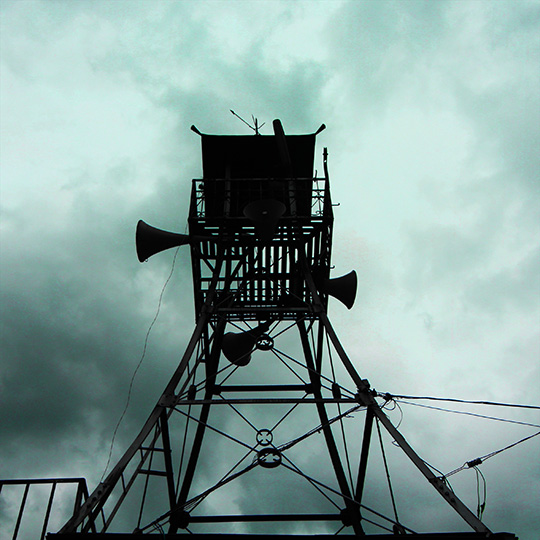
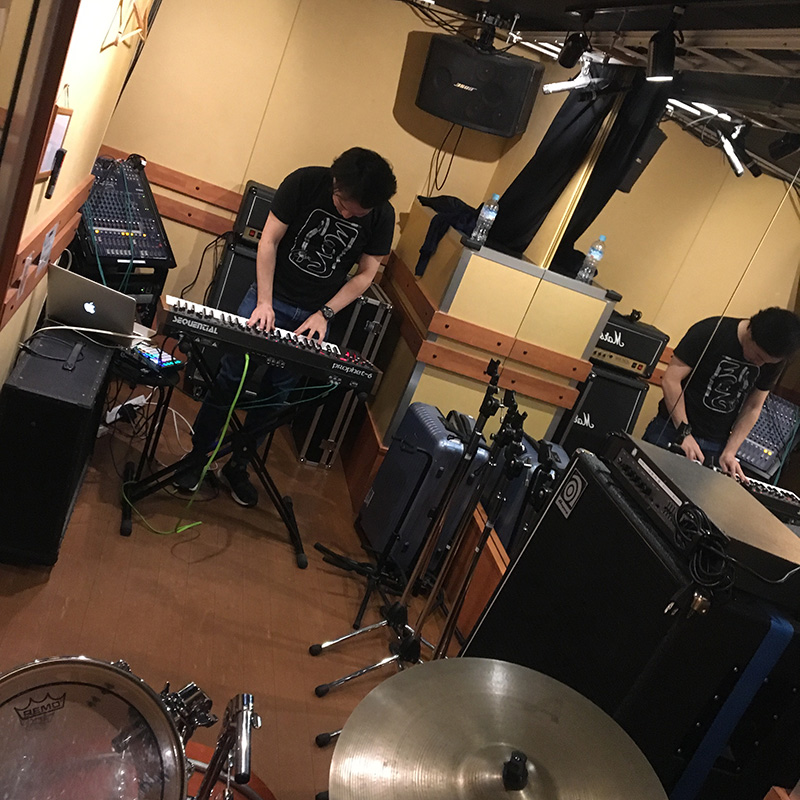
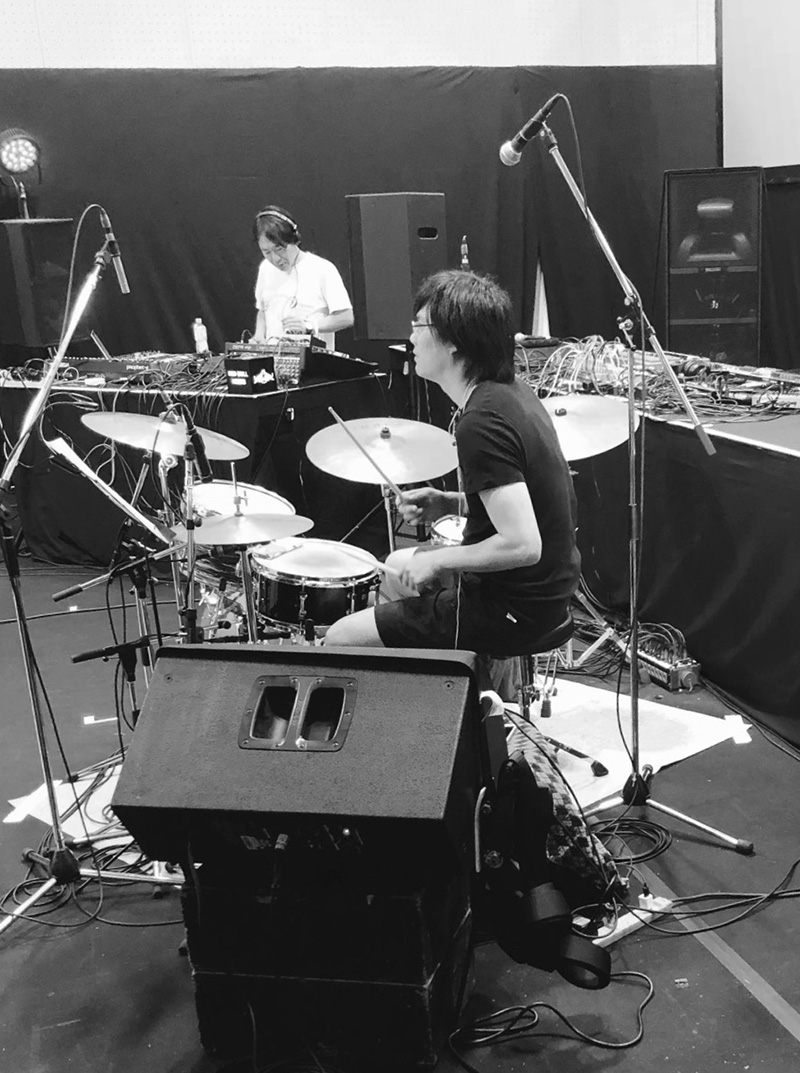
最高にクールなリズム・セクションを紹介させてくれ。
ジャズ、テクノ、ダブ、ヒップホップ、なにを載せてもびくともせず、猛烈に疾走するグルーヴ・エンジン。
窓の外には一瞬先の未来がかいま見える。
扉が開いた。なにかを掘り当てちゃった感じがする。
コズミック・テンプルのふたりがどうやってこの扉を開く鍵を見つけたのかはわからない。
だが、彼らはおのれの力で鍵を探り当て、扉を開いた。
とめどなく奔流のように流れるクリエイティヴなエネルギー。
クリエイションとは一瞬先の未来をかいま見ること。
すべては人生のすべてを賭けた壮大な洒落でもあり真剣勝負でもある。
心の奥深いところに入ってきてスイッチを入れてくれる。
自分のなかにまだ美しいものがたくさんあったなって気づかせてくれる。
コズミック・テンプル!
色即是空、空即是色。
お釈迦様も須弥山のサイファーでスティック片手にウインクしてるぜ、きっと。
(春日正信)

quasimodeのリズム・セクション、須長和広と今泉総之輔による「コズミック・テンプル」が7月4日に1stアルバム『TEMPLE and TREE means like a COSMIC』をリリースします。
6月26日にはApple MusicとSpotifyでアルバム先行配信開始。同日、渋谷Milky wayでライヴを行います。
Apple Music
https://itunes.apple.com/jp/album/1393926634
■リンク(Spotify)
Spotify
■配信ライヴ情報
7月4日のリリース当日には、全世界に向けてライヴ中継を配信します。
■アルバム情報

COSMIC TEMPLE
TEMPLE and TREE means like a COSMIC
Amazon
https://www.amazon.co.jp/dp/B07CXGS4N3
 Jim O'Rourke sleep like it’s winter NEWHERE MUSIC |
Writing about a musician like Jim O’Rourke is always a challenge. His work is rarely what it seems to be on the surface, its mechanisms carefully concealed so that how it works on you as a listener is the result of an almost invisible creative process. A huge amount of complexity and musical intelligence underscores music that feels completely natural and even obvious, as if it’s always existed. If his creative approach includes a strong element of academic discipline, his finished music nonetheless has a lot of heart.
On O’Rourke’s previous relatively high-profile release, his unexpected 2015 return to something like rock songwriting with Simple Songs, instantly familiar-sounding rock hooks would merge imperceptably into completely unexpected musical territory without you ever noticing how you’d travelled. His latest album, Sleep Like It’s Winter, released from the new, ambient-focused NEWHERE label, sees him in a radically a different sonic landscape again, with an icy, uneasy, breathtakingly beautiful 45-minute instrumental track.
Between Simple Songs and Sleep Like It’s Winter lie twenty-two separate releases in O’Rourke’s Steamroom series, which he puts out at a rate of about one every couple of months from his Bandcamp page. While some of these releases are old tracks deemed worthy of exhuming from his archives, this rapid flow of releases may also include something for those of us hoping to find clues as to his working. Certainly some of the Steamroom releases that most immediately preceded Sleep Like It’s Winter share similarities.
None of them are quite as richly layered and textured though, and while ambient music is almost by definition music that defies analysis, working primarily on the fringes of consciousness, Sleep Like It’s Winter at the same time feels like a very conscious album, full of ideas and revealing something new on every listen.
I mean, most people would say Eno. Actually it would go back to Michael Nyman’s book Experimental Music: Cage and Beyond. It’s a great, important book that I read when I was in high school.
I:
I always find it a bit difficult to talk about music that often gets described as ambient or drone…
J:
Right, well, the fact that they even asked me to make an ambient record for them, that’s why I decided to take the challenge. I didn’t set out to make an ambient record but it’s sort of about making an ambient record more than it’s an ambient record (laughing) you know? Pretty much everything I do is about what it is as opposed to being it.
I:
You’ve said before something along the lines of that you approach making music in a way kind of like a critic.
J:
Yeah, I don’t make music ‘cause I enjoy it. (Laughs) Yeah, I have said something like that. I’m not comparing myself to him but when I was young I read this quote from Godard where he said, “The best way to critique a film is to make another film,” and that stuck with me since I luckily read that as a young boy. That’s fundamental to how I work.
I:
How long did this new album take?
J:
That took about two years.
I:
Were you still living in Tokyo when you started work on it?
J:
I was still in Tokyo, yes, when they first asked me. But there was also a lot of extraneous work around that time also because I was moving. So the first six months of working on it was probably more thinking than actually putting anything down. Just thinking about what the hell that term “ambient” meant, and it means different things to different generations. At the beginning, when they asked me, it was like “We’re starting an ambient label,” and I was like, “Okay…” (laughs) Just making any record in terms of “make a record in this genre” is anathema to me, but I decided to do it because it was such a revolting idea! (Laughs) Not that I dislike ambient music – I don’t mean that. That’s just not the way I think when I make things, so it was such a bizarre proposal that I decided to do it.
I:
For ambient music what is your first natural frame of reference?
J:
I mean, most people would say Eno. Actually it would go back to Michael Nyman’s book Experimental Music: Cage and Beyond. It’s a great, important book that I read when I was in high school. There’s a bit about Eno in there talking about, and (Eno) didn’t use the word “ambient” yet, he refers (Erik) Satie’s idea of “furniture music”. And it might be on the back of his Discreet Music record, which was a big deal for me when I was a kid, because on the back of the record it’s all just him talking about these ideas and there’s also diagrams of technically how he made the music. When I think of ambient music I don’t necessarily think of Eno because Eno’s actual ambient music, when he moved on, you know those “Ambient” records, I actually don’t like those very much – no disrespect to him, but it’s just not my cup of tea. In a way I like Satie’s definition of it more: that it’s “furniture music”, that it’s like BGM: it’s not something that’s meant to be listened to with the active mind, which implies that you’re not following the formal structure of what’s going on. So it’s a sort of shift of standpoint that means “ambient” to me. For me, in making this record, the most important thing was, “Where is a line where you decide to give up on formal structures completely?” and, “Where is a line where formal structures can still be perceived but they’re not being shouted at you?”
I:
Speaking of formal structures, going back to Eno, he often seems interested in the idea of taking the musician completely out of the music
J:
For me, in that way of thinking of music, which I’ve been moving towards my entire life slowly but surely (laughs), Roland Kayn was the biggest guy for me. Someone could call his music ambient but it’s way too aggressive for that. The idea of his music is you create the system and then you just let it go. The challenge is how can you create a system that still represents the ideas even though you’ve let it go. If you look at some of the last decade or so of Cage’s scores, like the number pieces, they create these systems. These later Number Pieces of his are really interesting because, if you do them correctly, they’re really constraining even though they don’t seem to be. Whereas someone like Kayn and what Brian Eno were doing, especially in the 70’s, they still want a result but they want to be hands off about it.
I:
For those of us listening to you, it’s almost like we get to hear you, well not in real time but now it almost feels like every couple of months there’s a new thing on Bandcamp
J:
Yeah, Bandcamp is one of the few things the internet has created that I really like. I do like that it’s just there for the fifty people who want it and nothing else gets attached to it. Everything that comes with releasing records, if I have nothing to do with it that’s the happiest I could possibly be. For me, you’ve got to understand, once it’s done it’s done: I’m already gone.
I:
Did your work on those releases inform your work on this new album?
J:
I think one or two might have been failed versions. (Laughs) I mean the Bandcamp stuff, honestly it’s for the 50 or 80 people out there who want to hear that stuff. It’s just being able to be, “Here, you guys want this: go ahead.” Not that I don’t put as much work into those things. For every Bandcamp work I put up, there’s like 80 failed Bandcamp things.
I:
In Sleep Like it’s Winter, there are a lot of sounds that are happening just on the edge of hearing, where it drops to near silence for a while before the sounds build back up again.
J:
Yeah, that’s true. A lot of my really early stuff in the late ’80’s, early ’90’s was a lot of that but I think, because I was young, I was still in the mode of imitating people. I was imitating silence (laughs) because there’s a lot of that, especially in (Giaconto) Scelsi’s music, which I was really really into when I was in college. And I really appreciated the amount of silence in a lot of Luc Ferrari’s work, which I was also really really into.
Also, at that time, things like the Hafler Trio, P-16 D4a, blah blah blah, but I don’t think I really understood how to use that until later in life. Because silence is just as much a part of the dynamic as something loud. In the act of actually listening to something, time means a lot and silence is also time because you perceive time differently in silence than time with sound. Hopefully, the use of silence stretches your perception of time – it’s the same thing as having a good drum fill or something.
Well, in terms of structure, the one thing that music can’t really do eloquently, like the other art forms, is deal with time backwards. Music can really only change time by making reference, and that can only be done if the music has a formal structure because you’re making structural reference or a melodic reference.
I:
So silence can be a function of the overall rhythm of the piece.
J:
Right, yes, exactly, yeah. Another thing I had to think about a lot when making this record is the idea that just because the music is “ambient” and doesn’t have percussion elements or whatever, that doesn’t mean it doesn’t have a rhythm. So, what role does rhythm take in this and how does it manifest itself is also something I had to think about a lot. And silence is part of that. Silence is kind of like an audio punctuation as well and it can be a comma or it can be a period. Or a semi-colon. Of course it matters what comes before and what comes after, but you really can hear the difference between a period and a comma. There’s definitely a moment of silence on this record that’s a comma and then there’s one that’s 3 periods in a row. At least that’s the way I think of it.
I:
Did you find, while making this record that there are cliches in ambient music?
J:
Oh, there definitely are. I kind of knew them before I started this because that’s mostly the reason I don’t listen to ambient music. I mean, pretty much all ambient music is major 7th chords, so harmony was going to be a big deal – how to approach harmony with this. Major 9th is also very popular: those are the two go-to harmonies in ambient music, if it isn’t just a perfect 5th. How to deal with harmony on this! I didn’t want it to just be about the overtones, because with the drone route really you’re dealing with overtones and not dealing with harmony – that was something I knew firsthand from doing it. In my memory, all the failed versions are sort of mixed up in it. Once I’ve finished the record, the only time I’ve heard it since mixing it is to check the mastering, so I kind of forget what happens in it. I learned a lot of what it wasn’t, but I don’t know if I learned what it is. I would rather find the next question than find the answer: that’s just the way I am. I mean, I don’t really believe in answers. A solution should lead to the next question.
I:
A bit like a filmmaker working in a genre, you have a choice: “Am I going to take this convention and play with it or am I going to confound this convention?”
J:
That’s a really apt comparison for me, because those kinds of filmmakers were a much bigger influence on me than music really was when I was young. I always wanted to be a filmmaker and then I found out how expensive it is and what kind of life you have to lead so that didn’t happen. Someone like Robert Aldrich or Richard Fleischer, these kinds of filmmakers were a really big deal for me because I loved watching them do all sorts of things despite being in this supposed cage of genre convention. William Friedkin is like a superhero to me: I love William Friedkin. To Live and Die in L.A., that film is amazing in what it does with genre conventions. I have a huge poster of it staring in my face right now. My way of thinking on that stuff really comes more from film than anything else. Just it really taught me a lot about approach.
I:
I wonder as well if, compared to pop music where the story is told in a very concise nugget, ambient music, where a single piece might be stretched over an entire album, works in a more cinematic rhythm.
J:
Well, in terms of structure, the one thing that music can’t really do eloquently, like the other art forms, is deal with time backwards. Music can really only change time by making reference, and that can only be done if the music has a formal structure because you’re making structural reference or a melodic reference. And that’s really only calling back, that’s not restructuring time. Kurosawa Kiyoshi, in the ‘90s, was the king of that. He deals with time in his films in the most extraordinary manner, especially Hebi no Michi (Serpent’s Path) and Kumo no Hitomi (Eyes of the Spider). The way he restructures everything you’ve seen with just an image, and your perception of time in everything you’ve seen can change from just an image. You can do that in all the visual arts, and obviously you can do that in writing, but music doesn’t have the tools to do that in such an eloquent manner. It’s really kind of clumsy. That’s something that’s always fascinated me since college, because when I was in college and studying all the Stockhausen and all that shit, that was the stuff I was really interested in. There’s this whole period of Stockhausen doing these “moment works”. I mean, the 60s and 70s was when all those guys were trying to address the problem of time in music, and the fact that they did is awesome, but it was really kinda hamfisted. It’s still a problem in music and that’s the thing I think about a lot, and film is the thing that reminds me of that constantly, more so than music does.
I:
You’ve mentioned before constantly creating roadblocks for yourself in the creation of your music.
J:
I don’t think I do that as much as I used to. When I was younger I think I needed to. I think now I sort of trip myself up naturally. I don’t even consciously do that: its just the way my brain works. I think when I was younger I had to do that. And also, when you’re younger, when you have no gear or anything, that’s a great thing, you know? Having too much gear is one of the worst things in the world. The more gear you have, the less you do. That’s a concrete restriction that you’ve got to think about, “I’m not even gonna touch any of that stuff”. There’s only three instruments on this record – no, four, sorry, if you count a short-wave radio as an instrument.
I:
Were you working with any collaborators on this record or is it all you?
J:
Yeah, it’s just me. There was one version that was going to have drums on it but it didn’t work. So there’s a hard-drive full of this stuff with drums on it that will rust away (laughs).
I:
You’re living in the countryside now. Since moving there has that impacted the way you work.
J:
I just get to work more. There’s not much distraction at all. It’s the closest to when I was in my early twenties, really. I mean, I wouldn’t sleep for days at a time: I’d really be in my room with my tape machine and just doing that non-stop. That’s not something I’d want to do now, but I can get to that frame of mind again, which is something I haven’t been able to do for a long long time.
I:
You produce a wide range of music under the name of “Jim O’Rourke”, but there’s often this sense, particularly in Japan, that “this is what this project is and this is what it sounds like”. I remember a friend of mine was playing a show and at the end the manager of the venue commented, “Yeah, that should be three different bands, what you played there”
J:
Yeah, that’s a very reductive way of thinking. I think it is more common here than anywhere else.
I:
You’ve spoken in the past that people have a hard time considering an artist’s work as a whole rather than each thing discretely.
J:
Right, I think that’s more common in music. I mean, you say “Hitchcock “ – people might mention a film or two as their favourites but they’re generally thinking “the work of Hitchcock”. But it is true in music; you would think of “the works of Morton Feldman” but that’s because that world of music does tie into that socio-political way of thinking. But in terms of popular music that really has more to do with commodity than a way of thinking, there really aren’t that many people who approach it that way. Whether you like him or not, Frank Zappa is someone who could be seen as an exception to that: people generally think of “the work of Frank Zappa”, although he was generally making records with a rock band. People think that way about someone like Bob Dylan. So there are exceptions, but in general there aren’t.
I:
Do you feel there are themes that keep coming back in your music?
J:
Oh God, yeah! (Laughs) It’s all the same thing. They’re all the same thing really. I mean, I think it’s something Picasso said or someone said it about Picasso: “You’re really just making the same painting over and over again.”
One silly example, I remember when I was younger, I would read Naked Lunch every year, and I noticed that every year I re-read it, I learned more about me than I did about the book. Because I saw more of how I had changed, in that time, than the book had changed. Because the book, of course, hadn’t changed at all: it’s always been there.
Jim O'Rourke sleep like it’s winter NEWHERE MUSIC |
I: What do you think links an album like Simple Songs to and album like Sleep Like it’s Winter or maybe Kafka’s Ibiki’s Nemutte?
J:
I guess I would say it’s that I made them. (Laughs) It sounds like a joke, but in a way I think that’s really kind of the best answer. Certain aspects of what I’m trying to do come out stronger on some things more than others. But they’re kind of all there on all of them.
I:
One thing that connects them, when I listen to them, is that I hear multiple layers to the way things transition on your records.
J:
I don’t know if you’ve heard this record I did called The Visitor.
I:
Yeah, I was listening to that today, actually.
J:
I mean, that’s probably the closest I’ve ever gotten. It still has lots of problems, but that’s the closest ever to sort of doing what I wish the music would do. And that’s really all about the transitions, really – the flipping and the flopping, as Kramer would say. I don’t think in the abstract about the transitions – I don’t think “OK, now I’m going to make this kind of transition,” – it’s not an abstract idea or an exercise, but that really is a big part of how I put things together. It’s like weaving a rug. I don’t know if that’s an apt analogy, but you don’t want the work put into the music to show. The best rug you ever saw, if you look at the way it’s put together, that work never overshadows the overall effect, hopefully. That’s the hardest thing, I think, in making music - to hide the work. You’ve gotta hide it. That’s really really important to me.
I:
Has that always been a key part of your approach?
J:
It’s always been there. I’m trying to think of where I learned that lesson, but I know I learned it very young. Definitely since like… it was like ’91, ’92 where I got out of the habit of highlighting the work more than what the work was supposed to produce.
That’s kind of part and parcel of how I work. A big percentage of the work is in hiding the work: it needs to live once you’ve killed it, you know what I mean? (Laughs)
I:
Part of the fun of listening to some of your recent records was that on multiple listens, it continues to fundamentally change.
J:
You’ve reminded me. I know I’ve said this before, but this was a big deal for me and it relates 100% to this. When I was in high school there was a movie theatre within like two hundred yards of our house and, because I would go there every day, they eventually just let me go in for free. So I was going there every day. And one day I was going there to go see a movie and my father said, “You saw that movie already, why are you going to see it?” and I remember saying to him, something to the effect of, “All of these people put like a year of their lives into making this movie. How arrogant would it be for me to think I could understand it all in two hours?” That was one of the things I really love about film: that good films didn’t have it all out there on the surface like somebody serving you a whatever course dinner. You had to dig in, and some things don’t work without that resonance, that’s very important, ‘cause time equals resonance, you know? One silly example, I remember when I was younger, I would read Naked Lunch every year, and I noticed that every year I re-read it, I learned more about me than I did about the book. Because I saw more of how I had changed, in that time, than the book had changed. Because the book, of course, hadn’t changed at all: it’s always been there. So that was also kind of a profound thing for me when I was a young ‘un.
I:
Perhaps there’s also this idea of having the space to find you way into something. It took me forever to get into Bowie because at first I thought it was “classic rock”, which just had so much baggage attached to it. But because there were so many entry-points into his work I eventually found one that worked for me.
J:
I can understand that. I had that a few years ago with Keith Jarrett. He was someone I knew I was supposed to like and I should have ‘cause I love ECM –70s ECM, the stuff I grew up on. And of course, he’s like a towering figure in that world and it took a long long time. It’s really only in the past two or three years that I finally cracked the code with him.
I:
I can understand that. I guess the point for me is that there wasn’t a single door. There were multiple doors in and I had to find mine.
J:
Right. Well I think there has to be like one initial door and when you open that door there’s all the other doors. Just like… (Laughs) I immediately thought of Genesis, sorry!
I:
You don’t have to apologize for Genesis!
J:
Oh, I will never apologise for Genesis! You’re never going to find a more hardcore Genesis fan than me – Peter era, of course. The Lamb Lies Down on Broadway is my favourite album of all time. But, you know, Genesis wasn’t embarrassing when I was growing up.
I:
Maybe “I will never apologise for Genesis!” is a good sentiment to end on. Thanks!
アフリカのリズムは「ワン」がいろんなところに共存していて、というか拍の頭という概念が薄く、「あなたはここにいるからわたしはここにいます」と全体のなかの居所をみんな知っていて、集合体となる。道半ばながらこのような理解をしているのだが、トニー・アレンのドラミングは「ワン」は共有するにしても4肢のドラマーがそんなアフリカのリズムのように各々の居所に隙間を抜くように共存しながらエンジンとなって、しかも曲に合わせて変幻自在に動く。
トニー・アレンによるモーゼス・ボイドへのクリニックはリズム的示唆に富んでいる。7:30~の短いミニマル・フレーズを伝えるシーンはもっともエキサイティング。フレーズで取り込もうとするモーゼスを制止するかのように、まずは右足のバスドラム、左足のフットハイハットからひとつ目のエンジンを確認する。次に左手のスネア。このとき、もうフレーズと言ってもいいものになっているのだが、それはあくまでもできあがってきたもので、フレーズから逆算していく4ウェイ的発想ではなく、右足、左足、左手が歯車のように絡んでいることに注目したい。そして、最後に参加する右手は4ビートに近い。絶妙にいわゆるスイングはしないところがクールだ。各々シンプルながら1人の中に4人いる。
これを見ながら、アフリカの太鼓を練習しながら4拍目から1拍目へドンドンとすることさえもわからなくなったことがあったのを思い出した。そのときは、あまりになっていないだけだったのだが、「なんか違う」ながらドラムでかなりのフレーズを覚えていたにも関わらずそんな次第な上、同時にその理由を突きつけられたような気がした。しかし、はて、今だってどうだろう。ともすれば陥りがちなフレーズ先行が顔を出すことが大いにあるのではないかという反省を促される動画だ。しかも、気持ちよくだからにくい。楽観的なだけだろうか。その点アフリカのリズム・アンサンブルは本当によくできている。各々は絶妙に絡んでひとつの大きなうねりを形成する。その実はシンプルで、その輪に入ることができたとき最高の練習のひとつになると信じて続けている。
「でもさ、実はみんな同じものじゃない? ハウスにジャズ云々、いろいろとジャンルはあるものの、要は同じ。誰もがあらゆるものを分け隔てなく聴いている、と。ほんと、ソウルフルな音楽か、リズミックな音楽かどうかってことがすべてなんだしさ」
そう語るカマール・ウィリアムス筆頭に、多文化で、それに裏付けられた説得力のあるDIY精神(そうが故にリズムも気持ちところから外れないというような共通認識が生まれているのかもしれない)満載である南ロンドンならではのチャレンジは、ジャイルス・ピーターソンのブラウンズウッドからリリースされた『We Out Here』に凝縮されている。別冊ele-king『カマシ・ワシントン/UKジャズの逆襲』に、ここ数年起こっていることの一部始終が記されているが、僕のお気に入り3枚を挙げるなら、Yussef Kamaal『Black Focus』、Joe Armon-Jones『Starting Today』、Kamaal Williams『Return』。トニー・アレン直の影響が面白いとか、面白くないとかではなくて、曲に寄り添いながら、ときに寄り添わずに、自分たちのフレージングをしながら、気持ちいいところから外れようとはしないチャレンジが面白い。モーゼス・ボイド最高です。
ところで、僕は2年程前にロンドンに行った。そのとき、交差点に信号が少ないのに車が譲り合うともなくするすると通り抜けていくところや、フィッシュ・アンド・チップス屋の兄ちゃんが手持ち無沙汰にポテトを入れる箱をクルクル回しながら、注文を受けて適当に頷いたと思ったらするするときれいに納めていくのを見て、リズムを感じたのだが、これを聞いてどう思われるだろうか? 立ち止まってはものを見ないとでも言うのだろうか。考え過ぎなことは承知で何かご意見があれば伺ってみたい。
「“アフロフューチャリズム”という用語にはものすごくたくさんの定義を目にしてきたけれど、むしろ僕はこの用語自体が流動的で、それ自体が広い意味を持つようになって、より多くの人たちが自分たちの作品の背景として取り入れるようになったという点が気に入っている。まるでこの言葉そのものが生き物のように、多くの定義を取り込み続けている」 シャバカ・ハッチングス
僕は、アフロフューチャリズムとは言えない代わりに、イン・サークルズ。堂々巡りなりに気持ちいいところから外れないようGONNOさんとグッド・ヴァイブスを目指すライヴが近づいてきた。
2018年7月8日(日) Open 17:00 / Start 18:00
GONNO × MASUMURA
『In Circles』リリースパーティー
会場:代官山UNIT
出演:GONNO × MASUMURA
GUEST:トリプルファイヤー
Adv ¥3,300 / Door ¥3,800 (ともに+1D)
2018年7月11日(水) 開場 18:30 開演 19:30
OLD DAYS TAILOR
デビューアルバム
『 OLD DAYS TAILOR 』リリースパーティー
会場:吉祥寺スターパインズカフェ
出演:OLD DAYS TAILOR
ゲスト:湯川トーベン(b)
前売り: ¥3,300 / 当日 ¥3,800(ともに+1D)
近年アンダーグラウンドのエレクトロニック・ミュージック・シーンにおいてもっとも尖鋭的かつ批評的な実践を試みているのは、2015年にンキシ、エンジェル・ホ、チーノ・アモービの3人によって起ち上げられた〈NON〉だろう。世界じゅうに散らばったディアスポラを「ノン=非」という否定の形で繋ぎ合わせることによって新たな共同体の可能性を探るという彼らのコンセプトは、徐々に当初の「ブラック・ディアスポラ」から幅を広げ、今日ではより多彩なアーティストたちを招き入れるにいたっている。その横断性はたとえば今春リリースされた3部作『NON Worldwide Compilation Trilogy Volume 1 - 3』にも表れているが、そんな彼らの未来的なイメージの背後にはアフロフューチャリズムとドレクシアが横たわってもいる。そしてここへきて、そのコンセプトやバックグラウンドを一手に引き受けるかのような強烈な作品が現れた。
アフロドイチェことヘンリエッタ・スミス=ローラは、マンチェスターを拠点に活動しているプロデューサーである。彼女は上述の〈NON〉のコンピにも“I Know Not What I Do”というトラックを提供しているが、その活動は10年ほど前まで遡ることができる。彼女はなんと、かつて808ステイトのグラハム・マッセイが4人のオルガン奏者とともに結成したシスターズ・オブ・トランジスターズなるグループの一員だったのである(同グループは2009年に〈ディス・イズ・ミュージック〉からアルバム『At The Ferranti Institute』を発表している)。またそれとはべつに彼女は、同じくマッセイとともにサン・ラーのトリビュート・バンドにも参加している。
コーンウォールの隣に位置するデヴォンで育ったヘンリエッタは、マンチェスターへ移り住んだのち自身のアイデンティティを探りはじめ、音楽制作を開始したのだという。彼女の父親はガーナ人で、その先祖にはロシア人やドイツ人も混ざっているそうだ。「アフロドイチェ(アフロ=ジャーマン)」なるステージネームにはその複雑なルーツが織り込まれているわけだけど、そのようにディアスポリックな背景を持つ彼女が〈NON〉と接続したのはほとんど必然と言っていい(彼女は5月にNTSラジオにてンキシとともにパフォーマンスをおこなってもいる)。
そのアフロドイチェのデビュー・アルバムがこの『Break Before Make』だ。リリース元が〈スカム〉というのがまた象徴的で、これは〈ウォープ〉が今年再始動させたサブ・レーベルの〈アーコラ〉でンキシをフックアップしたことと対応している。つまり、かつてテクノ~エレクトロニカを牽引した大御所レーベルまでもが、いま〈NON〉の動きを無視できなくなっているということだ(ちなみに、彼女を〈スカム〉へ繋いだのはおそらくグラハム・マッセイだろう。彼はマソニックス名義で2006年に〈スカム〉から深海をテーマにしたアルバムをリリースしており、〈ビート〉から日本盤も発売されている)。
冒頭の冷ややかなシンセの響きから、アフロドイチェがドレクシアから多大な影響を受けていることがわかる。2曲目の“And!”は、昇降しながら反復するゲーム音楽のようなそのシンセ音をもって、はやくもこのアルバムのハイライトを提示している。5曲目“Now What”や7曲目“Blanket Ban”、あるいは先行公開された8曲目“Filandank”などに漂うSF感とダークネスは、かのデトロイトのデュオほど過激ではないものの、まず間違いなく彼らのサウンドに範をとったものだろう。
ドレクシアといえば、件の〈NON〉のコンピと同じころに〈ラッキミー〉からリリースされたスティーヴン・ジュリアンのLPにもその影響が色濃く滲み出ていたけれど、アフロドイチェのこのアルバムはそのようなドレクシア再評価の波を決定づける強度を具えている。
亡霊のように現代へと回帰してくるドレクシア、深化と拡張を続ける〈NON〉、その背後に横たわるアフロフューチャリズムという想像力――それらの交錯に関しては紙エレ最新号で濃厚な特集を組んでいるので、ぜひそちらをご一読いただきたいが、この『Break Before Make』はまさにその三者の結節を見事に体現しているという点において、いまもっとも注目すべき1枚と言える。
なんと、アンダーワールドとイギー・ポップがコラボEPをリリースします。これはなんとも意外な組み合わせ……と一瞬思ってしまいましたが、いやいやいや、まったく意外ではありません。『トレインスポッティング』です。あの映画のオープニングを飾っていたのは“ラスト・フォー・ライフ”、そしてエンディングは“ボーン・スリッピー”でした。
その続編である『T2トレインスポッティング2』の音楽を担当していたリック・スミスは、制作中にイギー・ポップと会合を重ね、それが今回のコラボとして結実したそうです。このたび公開された“アイル・シー・ビッグ”のリリックは、オリジナルの『トレインスポッティング』と『T2』の背景からインスパイアされているのだとか。
発売は7月27日。22年ぶりの共演に、胸を躍らせましょう。
UNDERWORLD & IGGY POP
Teatime Dub Encounters
ロック界のレジェンド、イギー・ポップと
世界屈指のダンス・アクト、アンダーワールドが満を持して
コラボEP「ティータイム・ダブ・エンカウンターズ」のリリースを発表!
昨年満を持して公開された映画『T2トレインスポッティング2』。その映画音楽を担当したアンダーワールドのリック・スミスは、制作中、ともにオリジナルの『トレインスポッティング』に楽曲を提供したイギー・ポップとロンドンでミーティングを行ない、新作映画のためのコラボレーションの可能性を話し合った。
イギーは快く「会って何か話そう」と応じてくれた。僕らはともにトレインスポッティングとダニー(・ボイル)に強い絆を抱いていたからね。この紳士を説得して一緒に仕事をする一度きりのチャンスだろうと思った。だからホテルの部屋を貸し切って、スタジオを用意して彼が現れるのを待ったんだ。 ――リック・スミス(アンダーワールド)
イギー・ポップの“ラスト・フォー・ライフ”で幕を開け、アンダーワールドの“ボーン・スリッピー(ナックス)”で幕を閉じる96年公開の『トレインスポッティング』。完璧なオープニングと完璧なエンディングを持った映画は、青春映画の最高傑作として本国イギリスを中心とするヨーロッパはもちろん、アメリカ、日本でも異例の大ヒットを記録。ユアン・マクレガーやロバート・カーライルといったスター俳優を生んだ一方、イギー・ポップ、ブライアン・イーノ、プライマル・スクリーム、 ニュー・オーダー、ブラー、ルー・リード、レフトフィールド、デーモン・アルバーン、そしてアンダーワールドといった当時の先鋭的ポップ・シーンを代表するアーティストが名を連ねたサウンドトラックも大きな話題となった。
それから実に22年。リック・スミスのもとに現れたイギー・ポップは、完璧にセッティングされたスタジオを目にし、すぐにでも制作に取り掛かろうという情熱に駆られた。
ホテルの部屋に完璧なスタジオを持った誰かと会って、Skypeにはアカデミー賞監督がいて、目の前にはマイクと30もの洗練された楽曲があったら、頷くだけでびびってられないだろ。一瞬で血が沸き立ったよ。 ――イギー・ポップ
今作『ティータイム・ダブ・エンカウンターズ』は、アンダーワールドが『バーバラ・バーバラ・ウィ・フェイス・ア・シャイニング・フューチャー』を、イギー・ポップが『ポスト・ポップ・ディプレッション』を2016年3月16日に同時にリリースした数週間後に、ホテルの部屋で秘密裏に行われた数回のセッションの末に誕生した。これは過去に対するトリビュート的なものではなく、今もなお第一線で活躍し、持っているすべてを目の前の作品に捧げ、ひらめきこそが創造を生むという信念を持ったアーティストたちが作り上げた、最高に刺激的で躍動に満ちた作品である。
先行曲である“ベルズ&サークルズ”は、BBC Music主催イベント《Biggest Weekend 2018》でアンダーワールドがヘッドライナーとしてパフォーマンスした際に初披露された。そしてEPリリースの発表と合わせて、新曲“アイル・シー・ビッグ”が解禁。“ベルズ&サークルズ”とはある意味真逆の魅力を持った楽曲で、壮大なアンビエント・トラックの上で、イギー・ポップは語りかける。その歌詞は、ダニー・ボイルとの会話の中で、『トレインスポッティング』と『T2トレインスポッティング2』の背景にインスパイアされて書かれたものだという。
今では俺も多少は年を食い、俺がいなくなった時に俺のことを思ってくれる友達について考え始めてる
1人か2人は笑顔を浮かべ、俺との楽しい思い出に浸ってくれるだろう奴がいる
I’ll See Big
Apple Music: https://apple.co/2Ie6vtk
Spotify: https://spoti.fi/2luH9OZ
Bells & Circles
https://youtu.be/KmJWD9jQvhc
アンダーワールドとイギー・ポップによるコラボレート作「ティータイム・ダブ・エンカウンターズ」は、7月27日(金)に世界同時リリース! 国内盤CDにはボーナストラック2曲が追加収録され、歌詞対訳と解説書が封入される。iTunes Storeでは「Mastered for iTunes」フォーマットでマスタリングされた高音質音源での配信となり、今アルバムを予約すると、公開された“Bells & Circles”と“I’ll See Big”の2曲がいち早くダウンロードできる。
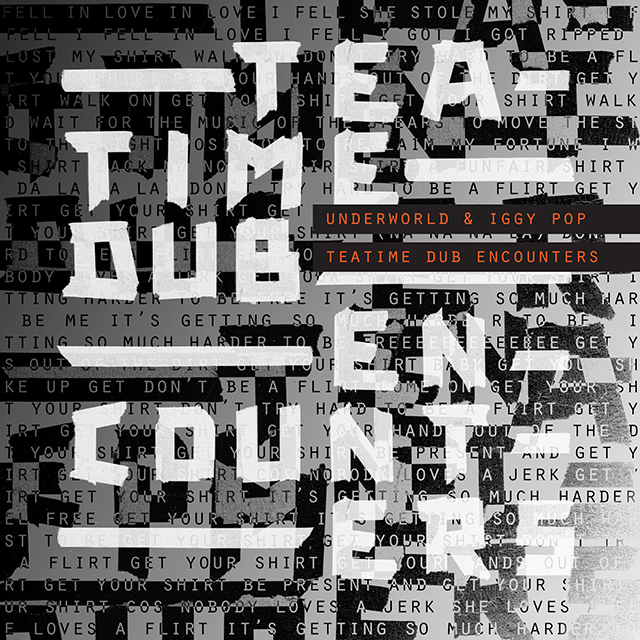
label: Beat Records
artist: Underworld & Iggy Pop
title: Teatime Dub Encounters
release date: 2018.07.27 FRI ON SALE
国内盤CD: BRC-576 ¥1,500+tax
リリース詳細はこちら:
https://www.beatink.com/products/detail.php?product_id=9742
Tracklist
01. Bells & Circles
02. Trapped
03. I See Big
04. Get Your Shirt
05. Bells & Circles (instrumental version) *Bonus Track for Japan
06. Get Your Shirt (instrumental version) *Bonus Track for Japan
ジム・オルークがソロCD(フィジカル)作品としては3年ぶりとなる新作アルバムをリリースした。リリースは〈felicity〉の兄弟レーベル〈NEWHERE MUSIC〉から。同レーベルは「アンビエント、 ニューエイジ、ドローン、ポストクラシカル、等々。これらジャンルの境界線を取り払い 「エレクトロニック・ライト・ミュージック」 と定義付けて電子的な軽音楽を創造するニューブランド」と称されており、本作『sleep like it's winter』は、王舟 & BIOMAN『Villa Tereze』についでレーベル2作目のリリース作品となる。その霞んだ空気と霧のような音響は、オルーク作品のなかでも異彩を放つ仕上がりであり、今後も参照され続けていくに違いない重要なアルバムといえる。音と音が折り重なることで生まれる時間の層のなんという繊細さ、豊穣さだろうか。
そもそもジム・オルークという類まれな才能を誇る音楽家は、20世紀音楽の「時間の層」をいくつも折り重ねることで、複雑な時間軸を内包した音楽を作曲してきた人物だ。彼の楽曲において構成されるさまざまな音のモジュールは、「接続」というより映画/映像でいうところの「ディゾルブ」のように折り重なり、そして、つながっている。
むろん、それはたんに「手法」の問題だけに留まらない。つまりは「歴史」への接続だ。そこにおいて折り重ねられるものは、個々の音楽モジュールそれ自体の時の流れと、音楽の歴史である。90年代以降、ジム・オルークが「音楽」に導入したもっとも重要な要素は、このメタ音楽の生成・構成であった。彼の音楽がドローン、ノイズ、インプロヴィゼーション、ポップ・ミュージック、電子音楽、映画音楽という領域を超えて成立しえるのも、メタ的視線(聴覚)で音楽史を捉え、音楽として再構成しているからだろう。
デヴィッド・グラッブスとのガスター・デル・ソルを経て発表されたソロ・アルバム『ユリイカ』(1999)などでは、ジョン・フェイヒィ、ヴァン・ダイク・パークスなどのアメリカーナ/大衆音楽(の異端?)とトニー・コンラッドの実験音楽/現代音楽を、「現代アメリカの民族音楽」として、メタ的に作曲・構成したことを思い出してみればいい。
ディゾルブする歴史・音楽。オルーク作品において、複数/単数の歴史/音楽が重なり合う。聴き手はその重なり合うさまを聴いている。それは歴史以降の音楽だ。歴史は終わっても、歴史以降の世界は続く。以降の世界で耳を拓くこと。音楽を聴くこと。オルークの録音作品は、それを突き詰めている。
当然、本作も同様なのだが、ここではかつてのアメリカ音楽的なものはそれほど全面化していない。それらは音の層のなかにすでに融解している。アルバムは全部で45分ほどあるが、トラック分けされておらず長尺1曲である。とはいえドローン作品のように一定の持続音が微細に変化していくわけでもない。さまざまな録音素材(演奏や電子音なども含む)がつながり、ひとつの大きな変化を「語っていく」かのような構成になっているのだ。
その意味で、彼の初期の長尺ドローン作品『Disengage』(1992)や、『Mizu No Nai Umi』(2005)、『Long Nigh』(2008.1990)、「Jim O'Rourke & Christoph Heemann」名義『Plastic Palace People Vol. 1』(2011、1991)、同じく「Jim O'Rourke & Christoph Heemann」名義『Plastic Palace People Vol. 2』(2011、1991)、「Fennesz&Jim O'Rourke」名義『It's Hard For Me To Say I’m Sorry』(2016)、「Kassel Jaeger&Jim O'Rourke」名義『Wakes On Cerulean』(2017)や、自身のバンドキャンプ「Steamroom」で定期的にリリースされている音響作品などを思い出しもする。長尺1曲でサウンドが接続し、変化していく『Happy Days』(1997)、『Bad Timing』(1997)、『The Visitor』(2009)や、カフカ鼾の『Okite』(2014)、『Nemutte』(2016)も想起することもできるだろう。また「ディゾルブ的な編集」という意味では8cmCDとしてリリースされた映画的な環境音楽作品『Rules Of Reduction』(1993)も重要な参照点になるはずだ。
本アルバムも、このような「ディゾルブ的」感覚が見事に生成していた。アルバムの色彩が、どこか霞んだような冬の響きから、春の夜明けのようなサウンドへと微細に、かつ明瞭に変化を遂げているのである。また、冒頭の霞んだ持続音、少し湿ったピアノ、低音のベースのようなドローンがそれぞれ別の時間を有しているかのようにレイヤーされていく展開にも、折り重なる音響の時間が生まれているように感じられた。
個人的には冒頭のベース的な持続音に加えて、18分から20分あたりの、密やかな鳥の声の音や環境音の挿入を経て、暗さから明るさに変化しつつあるドローン/環境音のパートにも惹かれた。冬/夜から春/夜明けへと移行する中間の音響的なトーンが生成しており、楽曲全体が「ディゾルブ的」に重なっていく感覚を覚えたのだ。また、楽曲全体に空気のように満ちている繊細な電子音も素晴らしい。
本作の音楽の構成・作曲にはジム・オルーク単独作品特有の感覚と技法の現在形が封じ込められている。録音は2017年にオルークの「Steamroom」で行われ、おそらくペダルスティール、ピアノ、シンセなどの録音素材を、ジム・オルークがひとりで時間をかけて編集したのだろう。直近の作品では「Kassel Jaeger&Jim O'Rourke」名義の『Wakes On Cerulean』にも共通する質感を感じる(ジム・オルークのなかではこういったコラボレーションとバンドキャンプで定期的に配信されているアルバムと、今回のようなソロ作品との差異はそれほど付けていないのだろう。すべては自身の音楽として繋がっている)。ジム・オルークのなかでは録音とミックスと作曲が分かちがたく一体化しているのだろう。
では、それによってどのような音楽が生成しているのだろうか。私見では、声のない音響作品であっても、どこか感情と感覚が淡く交錯する「歌」のようなものが折り重なる音響のむこうから、微かに感じられるのだ。かつてのオルーク作品をもじっていうならば「こえのないうた」とでもいうべきか。
ともあれ、このアルバムが「ジム・オルークのソロCD作品」としてリリースされたことの意味はやはり大きい。なぜなら、このような日々の創作/コラボレーションにおける思考錯誤と実践の成果が、この1枚の銀盤に、驚異的な創作力の成果として集約されているのだから。となれば、われわれリスナーは、その事実に耳を傾け、オルークが本作に込めた音楽・音響の移り変わりに注意深く耳を傾け、より深いリスニングの時間を得ることが大切のはずだ。そう、繰り返し聴くことだ。
じじつ、本アルバムを手にされた方は、今後の人生において何度も何度も、まるで水を求めるように折に触れて聴き返すに違いない。いわば人生の傍らにあるエクスペリメンタル・ミュージック。かつてジム・オルークが、その再発盤にライナーを執筆したルチアーノ・チリオ『Dialoghi Del Presente』の横に本作を置いてみると、意外としっくりくる作品ではないかとも思う。20世紀音楽の歴史が、繊細な実験性と上質なロマンティシズムのなかに凝縮されているのだ。
XXX(エックスエックスエックス)テンタシオンとジミー・ウォポが相次いで撃たれて亡くなった。20歳と21歳。前者はこのところアメリカのヒップホップにおいて高まっていた世代間の確執では中心人物とも言える存在で、しかし、そのことと撃たれたことは関係がなかったらしい。後者も同じくで、強盗か何かに撃たれたらしく、メジャーと契約を交わしたばかりというタイミングだった。このふたりの死から導き出されるのはヒップホップとか文化に関する話題であるよりは、やはりアメリカの銃社会にまつわる議論に終始するべきだろう。警察とのトラブルではないので、ブラックライヴスマターの案件ですらない。
実は紙エレキング用に5月の時点で書いた原稿にXXXテンタシオンにも触れていて、そのときにはドレイクやミーゴスと対立するXXXテンタシオンをケンドリック・ラマーが支持するのかしないのか曖昧なままにしてあったんだけれど、訃報が伝わった直後にケンドリック・ラマーどころか「どれだけ君にインスパイアされたかわからない」というカニエ・ウエストやディプロ、ジューシー・Jやマイリー・サイラスなど多くのミュージシャンたちが彼の才能に賛辞を惜しまないツイートをアップする事態となっている(意外とマンブル派ではなくJ・コールのようなリリカル派からリアクションが多い。マンブル・ラップというのは何をラップしてるのか内容がわからないと揶揄されているラッパーたちのことで、フューチャーやミーゴスが代表とされる)。もしかすると黒人版ニルヴァーナのような存在になったかもしれないことを思うと、それなりに納得はするものの、一方で、白人の男の子をステージ上で絞首刑にするという映像表現や妊娠中のガールフレンドに暴力を振るい、その映像をバズらせて喜んでいたことは彼の死に同情できないという声を多く呼び寄せる事態にもなっており、彼の才能の是非についてはXXXテンタシオンが生きていて、彼自身の活動によって証明する以外に方法はなかったとも思う。この3月にはビルボードで1位を獲得したというセカンド・フル・アルバム『?(Success&Victory)』もケンドリック・ラマーと同じく僕も5回ほど聴いてみたけれど、そこまでの作品には思えなかったし(大ヒットした“Sad!”より“Moonlight”の方が良かった気が)、やはり昨年、オーヴァードーズで亡くなったリル・ピープ同様、ロックになったりラップになったりというスタイル(エモ・トラップ)は興味深いものの、これまでのラップのスタイルに取って代わる「叫び」を体現したという評価はやや早計な見解ではなかっただろうか(叫んでいるときはラップじゃないし)。
ちなみに紙エレキングの記事でXXXテンタシオンはスポティファイから削除されたと書きましたが、正確にはレコメンド機能から外されただけで、聴くことは可能のようです。(三田格)
< å‰ 1 2 3 4 5 6 7 8 9 10 11 12 13 14 15 16 17 18 19 20 21 22 23 24 25 26 27 28 29 30 31 32 33 34 35 36 37 38 39 40 41 42 43 44 45 46 47 48 49 50 51 52 53 54 55 56 57 58 59 60 61 62 63 64 65 66 67 68 69 70 71 72 73 74 75 76 77 78 79 80 81 82 83 84 85 86 87 88 89 90 91 92 93 94 95 96 97 98 99 100 101 102 103 104 105 106 107 108 109 110 111 112 113 114 115 116 117 118 119 120 121 122 123 124 125 126 127 128 129 130 131 132 133 134 135 136 137 138 139 140 141 142 143 144 145 146 147 148 149 150 151 152 153 154 155 156 157 158 159 160 161 162 163 164 165 166 167 168 169 170 171 172 173 174 175 176 177 178 179 180 181 182 183 184 185 186 187 188 189 190 191 192 193 194 195 196 197 198 199 200 201 202 203 204 205 206 207 208 209 210 211 212 213 214 215 216 217 218 219 220 221 222 223 224 225 226 227 228 229 230 231 232 233 234 235 236 237 238 239 240 241 242 243 244 245 246 247 248 249 250 251 252 253 254 255 256 257 258 259 260 261 262 263 264 265 266 267 268 269 270 271 272 273 274 275 276 277 278 279 280 281 282 283 284 285 286 287 288 289 290 291 292 293 294 295 296 297 298 299 300 301 302 303 304 305 306 307 308 309 310 311 312 313 314 315 316 317 318 319 320 321 322 323 324 325 326 327 328 329 330 331 332 333 334 335 336 337 338 339 340 341 342 343 344 345 346 347 348 349 350 351 352 353 354 355 356 357 358 359 360 361 362 363 364 365 366 367 368 369 370 371 372 373 374 375 376 377 378 379 380 381 382 383 384 385 386 387 388 389 390 391 392 393 394 395 396 397 398 399 400 401 402 403 404 405 406 407 408 409 410 411 412 413 414 415 416 417 418 419 420 421 422 423 424 425 426 427 428 429 430 431 432 433 434 435 436 437 438 439 440 441 442 443 444 445 446 447 448 449 450 451 452 453 454 455 456 457 458 459 460 461 462 463 464 465 466 467 468 469 470 471 472 473 474 475 476 477 478 479 480 481 482 483 484 485 486 487 488 489 490 491 492 493 494 495 496 497 498 499 500 501 502 503 504 505 506 507 508 509 510 511 512 513 514 515 516 517 518 519 520 521 522 523 524 525 526 527 528 529 530 531 532 533 534 535 536 537 538 539 540 541 542 543 544 545 546 547 548 549 550 551 552 553 554 555 556 557 558 559 560 561 562 563 564 565 566 567 568 569 570 571 572 573 574 575 576 577 578 579 580 581 582 583 584 585 586 587 588 589 590 591 592 593 594 595 596 597 598 599 600 601 602 603 604 605 606 607 608 609 610 611 612 613 614 615 616 617 618 619 620 621 622 623 624 625 626 627 628 629 630 631 632 633 634 635 636 637 638 639 640 641 642 643 644 645 646 647 648 649 650 651 652 653 654 655 656 657 658 659 660 661 662 663 664 665 666 667 668 669 670 671 672 673 674 675 676 677 678 679 680 681 682 683 684 685 686 687 688 689 690 691 692 693 694 695 696 697 698 699 700 701 702 703 704 705 706 707 708 709 710 711 712 713 714 715 716 717 718 719 720 721 722 723 724 725 726 727 728 729 730 731 732 733 734 735 736 737 738 739 740 741 742 743 744 745 746 747 748 749 750 751 752 753 754 755 756 757 758 759 760 761 762 763 764 765 766 767 768 769 770 771 772 773 774 775 776 777 778 779 780 781 782 783 784 785 786 787 788 789 790 791 792 793 794 795 796 797 798 799 800 801 802 803 804 805 806 807 808 809 810 811 812 813 814 815 816 817 818 819 820 821 822 823 824 825 826 827 828 829 830 831 832 833 834 835 836 837 838 839 840 841 842 843 844 845 846 847 848 849 850 851 852 853 854 855 856 857 858 859 860 861 862 863 864 865 866 867 868 869 870 871 872 873 874 875 876 877 878 879 880 881 882 883 884 次 >