「Second Woman」と一致するもの

Pulp - ele-king

 1995年という年は、いまとなっては当時の1965年と同じくらい遠い過去になった。1995年、グラストンベリー・フェスティヴァルのメインステージに、ストーン・ローゼズの代役として突如ヘッドライナーとして登場したパルプにとって、それはバンドの飛躍を意味したものだったが、同時に、イギリスのポップ・カルチャーにおける決定的な出来事でもあった。当時リリースされたばかりのシングル「Common People」は、その瞬間にして90年代を象徴するポップ・ソングとしての地位を確立したのだった。
 あのときの勝利は、周縁に追いやられてきた人びと、置き去りにされてきた人びと──インディ・キッズ、労働者階級、学校でいじめられ、スーパーマーケットの駐車場で暴力を受けていたような“変わり者”たちにとっての正当性の回復のようにも感じられた。
 あれから30年──2025年に(あまりうまく隠し通せなかった)シークレット・セットとして同じステージに戻ってきた彼らは、明らかに年齢を重ね、白髪も混じった風貌のバンドとなっていた。もっとも、ジャーヴィス・コッカーはもともと“老けた若者”のような佇まいで、彼の身体がようやく年齢に追いついただけとも言える。その意味では、彼の佇まいはあまり変わっておらず、2025年のパルプのライヴは、驚異と美しさに満ちたものだった。90年代の楽曲がひとつずつ演奏されていくにつれ、時間が逆流していくような錯覚を覚える。ジャーヴィスの表情や身振りが、いつしか過去の写真のなかの彼自身と重なっていき、ひとつひとつの曲が、ふたたび若さを帯びながら息を吹き返していくのだ。

 パルプの新作アルバム『More』は、こうした熟年期の彼らが生み出した作品である。そこには人生の静かな失望や諦念が、擦り切れた袖口のように滲んでいる。だがこのアルバムは同時に、過去の断片や未完の思考と緩やかにつながりながら、それらを現在へと開かれた「連続体」の一部として再構築している。過去と対話を重ねることで、それをいまなお生き続ける何かとして復活させている。

 オープニング曲 “Spike Island” は、1990年にザ・ストーン・ローゼズが敢行した伝説的な野外コンサートを参照している。この公演は、音響の不備や場当たり的な運営が問題視された一方で、インディ・カルチャーが時代精神を掌握した象徴的瞬間であり、パルプが1995年にグラストンベリーのメインステージに立つまでの流れを形成する上でも、重要な踏み石となった出来事だ。 “Slow Jam” に登場する「Cos I’m the resurrection man(だってぼくは復活の男だから)」という一節もまた、ザ・ストーン・ローゼズの代表曲 “I Am the Resurrection ” を想起させつつ、彼らが生み出した時代の空気がパルプの台頭を後押ししたという文脈をほのめかしている。
 アルバムにはその他にも、ポップ・カルチャーへの言及が点在している。 “Tina ” のなかの「Your lipstick on my coffee cup(コーヒーカップについた君の口紅)」という台詞は、90年代UKポップスの寵児テイク・ザットへのウィンクとして響く。そしてラスト曲 “A Sunset” では「I’d like to teach the world to sing(世界中に歌を教えたい)」というフレーズが繰り返される。これは、1971年に放映されたコカ・コーラのCM──海辺の夕焼けを背景に、若者たちが合唱するあの映像──に記憶の起源をもつかもしれないが、同時にオアシスの初期代表曲──ロジャー・クックとロジャー・グリーナウェイによる原曲 “I’d Like to Teach the World to Sing ” のメロディを流用していたことで知られている── “Shakermaker ” をも想起させる。

 もちろん、このアルバムにはパルプ自身の歴史も随所に織り込まれている。 “Got to Have Love ” でジャーヴィスが綴る「L-O-V-E」の綴り方は、1995年の名曲 “F.E.E.L.I.N.G.C.A.L.L.E.D.L.O.V.E. ” を明確に呼び起こすし、 “Grown Ups” における「Are you sure?(本気かい?)」という一言は、 “Common People” での印象的な語り口をなぞる。そして “Background Noise ” で告白される「Don’t remember the first time(最初のときのことは覚えていない)」という一節は、1994年の出世作『His’n’Hers』に収録された名曲 “Do You Remember the First Time? ” への静かな応答でもある。過去と現在、記憶と再演──それらはこのアルバム全体を通して繰り返し響き合いながら、パルプという存在の継続性を、静かに、しかしたしかに証明している。

 とはいえ、こうした過去のポップ・カルチャーにまつわるイースターエッグ[*復活祭に飾られるカラフルな卵/復活の象徴]の数々は、どちらかといえば時間の経過を示す通過点のようなものであり、このアルバムの核心にあるのは、ジャーヴィス自身による老いについての私的な黙想にほかならない。そしてそれは、かつて彼の楽曲を特徴づけていた、性的欲望や覗き見るような痛みを描いた物語の精緻な語り口とまったく同じ文体で遂行されている。
 2曲目 “Tina” は、 “Something Changed ” の構造を逆転させるような楽曲だ。あの曲では、語り手はまだ出会ってもいない女性との未来を夢見ていたが、 “Tina” では(おそらく既婚の)男が、実現しなかったもうひとつの人生──ある女性との長年にわたる幻想の関係──を回想するというかたちをとる。いや、より正確には、電車やカフェでふと目にする女性たちに向けて日常的に抱く、現実とは切り離された空想の象徴といった方がいいかもしれない。
 この曲の核心にあるのは、「老い」がいかにして人間から「別の人生」の可能性をひとつひとつ奪っていくか、という痛切なメタファーである。そしてそのメタファーは、女性の名前に込められた言葉遊びによって強調される。 “Tina” とは、マーガレット・サッチャーがかつて語った有名なフレーズ──「There Is No Alternative(他に選択肢はない)」──の頭文字なのだ。

“My Sex ” は、より近過去の記憶を反映している。ギリシャ悲劇のコロスを思わせる鋭く語りかけるようなバッキング・コーラスは、ジャーヴィス・コッカーが2019年に始動させたプロジェクト《Jarv Is...》の作風と語り口を彷彿とさせる。一方、 “Got to Have Love” は、別の興味深いアプローチを取っている。2000年前後に書かれたが一度はお蔵入りとなった楽曲を再構築し、いまのバンドの状況にふさわしいかたちで蘇らせているのだ。ディスコ的な律動が執拗に反復されるこの曲は、バンドの絶頂期の痛切な渇望──とりわけ “She’s a Lady” に通じるもの──をもっとも明示的に喚起するものだが、同時にジャーヴィスは、当時と現在とのあいだに広がる時間の隔たりを自覚的に見つめている。「It cannot be denied, I waited far too long / To believe, to believe in the words, I once wrote to this song(否定できない、ぼくはあまりに長く待ちすぎた/かつてこの曲のために綴った言葉を信じるために)」
 しかしながら『More』は、ブラーの近作『The Ballad of Darren』と同様、強いポップ性を前面に押し出すよりも、静かなテンポと内省的な憂いに重心を置いた作品である。ブラーのデーモン・アルバーンが“ダレン”という誰でもない架空の存在を媒介に老いについての思索を展開したのに対して、ジャーヴィス・コッカーはより直接的で、感傷に浸ることなく語りかけてくる。曲そのものも、しっとりとしたトーンのなかに、どこか切迫した緊張感を保っている。
  “Partial Eclipse” は、パルプがこれまで録音してきたなかでも屈指の名曲のひとつと言ってよいだろう。そしてアルバムを締めくくる “A Sunsets” は、すでにライヴでのハイライトとしての風格すら漂わせている。録音ではブライアン・イーノとその家族がバック・ヴォーカルに加わっているが、その響きはまるで、イーノの名作『Before and After Science』のB面に収められていても不思議ではないような、静謐かつ奥行きある余韻を残す。
 『More』に欠けているのは、作品全体を貫く強固な「音の輪郭」だ。少なくとも、それが『His’n’Hers』にあったような、きらめくシンセとグラム・ロック的華やかさで構築されたウォール・オブ・サウンドであったり、『This is Hardcore』のような、コカインの幻覚と偏執的閉塞感、そしてオーケストラルなギター・ノイズが渾然一体となった不穏な音響的スープであったりするような形では、ここには存在していない。

 もっとも、『More』も『This is Hardcore』と同じく、管弦楽的アレンジへの愛着を共有してはいる。だが本作を特徴づけているのは、むしろ過剰さを排した端正なプロダクション──それぞれの楽曲に必要な空間だけを与え、個々の曲が独立した輝きを放てるように配慮された、ミニマルで清潔な仕上げである。その意味で、アルバム全体の印象は『Different Class』に近い。じっさい、この『Different Class』との関係こそが、本作について考えるとき何度も立ち返ってしまう視点である。『More』は、90年代のあの名作の、老いを経た鏡像のようにも感じられる。年月に磨耗しながらも希望を失わず、どの曲も同じように独自性をもち、洗練され、控えめなながらしっかりとした自信をたたえた、もうひとつのポップの結晶としてそこにあるのだ。


Ian F. Martin

1995 is is distant in the past now as 1965 was then. When Pulp stepped onto the main stage at Glastonbury in 1995 as last-minute replacement headliners for The Stone Roses, it was a breakthrough moment for the band and a defining event in British pop life, cementing the position of their then-new single Common People as the iconic pop song of the decade. It felt like a triumph and vindication for the outsiders and the left-behind: the indie kids, the working class, the weirdos who got bullied at school and beaten up in supermarket car parks.

When they stepped onto that same stage for a (not very well kept) secret set in 2025, it was as an older, greyer, more weathered group. Jarvis Cocker always looked to me like an elderly man just waiting for his body to catch up, so he inhabits this ragged state well. This also means that he is remarkably unchanged, and Pulp live in 20205 is a thing of wonder and beauty: as the songs from their 90s unfold, time seems to flow backwards through them, Jarvis growing impossibly younger as the set goes on and one by one he begins to inhabit those photographs of another time.

Pulp’s new album, More, is a creature born of this older band — music that wears the quiet disappointments of life on its worn sleeves — but throughout, it connects to and runs with loose threads from the past, turning the past into part of a still-living continuum, in conversation with its older self.

Opening song Spike Island references The Stone Roses’ legendary 1990 outdoor concert, notorious for its poor sound and slapdash atmosphere but a key moment in indie culture’s seizing of the zeitgeist and an important stepping stone on Pulp’s route to that stage in Glastonbury. The line “Cos I’m the resurrection man” on Slow Jam also perhaps calls back to The Stone Roses and the role they had in shaping the atmosphere that enabled Pulp’s rise. Other pop cultural reference points dot the album too. The line “Your lipstick on my coffee cup” from Tina gives a wink in the direction of Take That. Meanwhile, closing song A Sunset repeats the line “I’d like to teach the word to sing”, which perhaps has its roots in a childhood memory of a 1971 Coke advert, featuring a choir of youngsters singing the line against the backdrop of a seaside sunset, but also summons the memory of Oasis’ early hit Shakermaker, which stole the melody of Roger Cook and Roger Greenaway’s original song.

Naturally, Pulp’s own history extends through the album too. The way Jarvis enunciates the letters “L-O-V-E” in Got to Have Love echoes F.E.E.L.I.N.G.C.A.L.L.E.D.L.O.V.E. from 1995, The line “Are you sure?” on Grown Ups nods to his famous delivery of the same phrase in Common People, and his confession of “Don’t remember the first time” in Background Noise calls back to Do You Remember The First Time? from Pulp’s 1994 breakthrough (and best) album His’n’Hers.

But all these little easter eggs from past pop moments are more like waypoints to symbolise the passage of time, while the heart of the album is Jarvis’ own personal meditations on growing old. This he does with all the storyteller’s attention to detail that characterised his early tales of sexual frustration and voyeuristic heartache. Second track Tina inverts the structure of Something Changed, where instead of the narrator dreaming of a future with a girl he hasn’t yet met, it takes the form of a (possibly married) man loking back over a decades-long fantasy of a life he never had with another woman — or more likely an avatar for all the other women he idly fantasises about in trains and cafés. The song underscores its metaphor for the way age closes down one alternative life path after another by making the woman’s name an acronym for Margaret Thatcher’s famous declaration of cancelled futures everywhere: “There Is No Alternative”.

My Sex reflects the more recent past, with its sharply delivered Greek chorus backing choir recalling the style and tone of Cocker’s 2019 Jarv Is project. Meanwhile, Got to Have Love takes another interesting approach, resurrecting an abandoned song from around the turn of the millennium and retooling it for the band’s current circumstances. With its insistent disco pulse, it’s the song that most explicitly summons the painful longing of the band’s heyday, particularly She’s a Lady, but with Jarvis noting the distance between the song’s roots and the band’s current lives as he sings “It cannot be denied, I waited far too long / To believe, to believe in the words, I once wrote to this song”.

Like Blur’s recent The Ballad of Darren, though, More leans less on bold pop statements and harder on its downtempo, melancholy side. Where Damon Albarn wrapped his own musings on advancing age in the distancing device of everyman Darren, though, Jarvis is more direct, less mournful, the songs still crisp and urgent in their own way. Partial Eclipse might be one of the best songs Pulp have ever recorded, and closing song A Sunset already feels like a live showstopper, the recorded version recruiting Brian Eno and most of his family on backing vocals for a tune that already feels like it could have sat comfortably on Side B of Before and After Science.

What More doesn’t have is a strong overarching sound of its own, or at least not in the way His’n’Hers did with its shimmering, glittering, synth-glam wall of sound or This is Hardcore did with its paranoid, claustrophobic brew of cocaine-sleaze and orchestrally-augmented guitar noise. While it shares the latter’s love of orchestral arrangements, the overall sound it’s characterised more by a tidy, unfussy production style that gives each of the songs what they need to shine individually, and in this way it more closely resembles Different Class.

It’s that relationship with Different Class that I keep coming back to with this album, and in many ways it feels like an older mirror to its 90s counterpart: worn down by the years but still hopeful, and each song every much as unique, elegantly crafted and quietly confident a piece of pop in its own more understated way.
 2024年のアメリカについて日本の方々に知ってもらいたいことがひとつあるとしたら、今回の選挙における選択肢に、私たち多くのアメリカ人が熱狂していたわけではなかったという点だ。
 まず一方には、近年でもっとも忌み嫌われた政治家、ドナルド・J・トランプがいた。彼はかつて、2004年にスタートしたリアリティ番組『アプレンティス』(※参加者が「見習い」として働き、最後に採決される)において「お前はクビだ!」と叫ぶ役を演じ、それで一躍、アメリカで有名人になった、億万長者のペテン師である。2024年に早送りすると、後期資本主義の典型であるこの人物は、なぜか労働者階級からの支持を得て現状に至っている。支持層の多くは白人の地方住民——おそらくは私たちの社会では一括りにしても問題のない唯一のグループ、無学で人種差別的な「田舎者」たち——で、2024年の選挙ではラテン系や黒人層にも右傾化が顕著に見られた。結果、トランプは国民投票と議論の的となる選挙人団の両方で勝利を収めたわけで、多くのアメリカ人の心に彼のポピュリスト的メッセージが響いたことは否定できない。
 もうひとりの候補者は、2020年の大統領選で民主党予備選挙において支持を得られなかったカマラ・ハリスだった。アメリカ史上初の女性副大統領であるが、しかし、女性である私としては、黒人女性を副大統領に起用したバイデンの人選が「フェミニズムの勝利」などという幻想を抱くようなものではないことを承知している。また、ハリス氏が女性であるからといって、彼女が女性の利益を代弁するなどとは一瞬たりとも考えたこともなかった(事実、民主党はオバマ政権時から妊娠中絶に関する法改正の機会を持っていながら優先事項とせず、最初の任期中に却下した)。もしその女性が優れたアイデアと能力を認められて当選したのであれば、アメリカ社会は真の男女平等を達成したと言えただろう。悪名高いことに、彼女は電撃的な選挙キャンペーン中、ほとんどインタヴューに応じなかった。数少ないそのなかには、ニュース番組『60ミニッツ』も含まれていたが、番組では、彼女の当初の極めて親イスラエル的な立場を隠すように編集されていた。また、彼女の具体的な政策に関心のあるインタヴュアーに対しては、「ウェブサイトを見てください」と答えるのみだった。
 トランプは、過去10年間の大半を大統領選に費やしてきたと言えるような、誇大妄想的なおしゃべり屋だ。彼を打ち負かすのは難しくないはずだった。が、“政策(ポリシー)”ではなく“権力(ポリティクス)”に頼ってアメリカ人の半分を味方につけようとするのは、明らかに勝利のための戦略とは言えない。

 理由はふたつある。第一に、民主党が(アメリカ)国民に対して誠実でなかったこと、そしてそれが私たち(私のような真の左派を自認する人びとを含む)の多くを遠ざけてしまったことだ。アメリカの民主党は決して「左派」ではないことをここに明確にしておきたい。実際には、経済政策に関しては穏健中道、あるいはやや右派だ。しかも、アメリカの主流メディアは民主党に支配され、バイデンや民主党への批判を「保守派の陰謀」に過ぎないとした。また、バイデンの明らかな認知機能の衰え、米国(およびその他の国々)におけるインフレの蔓延、犯罪の増加、そして不法な人権侵害の国境問題は「陰謀説」であって、それも右派によるものとした。現在の平均的な民主党員によれば、右翼であることはナチスであることを意味する。

 そのようなレッテルを貼られるのを避けるために、自分の信念を検閲した人はたくさんいると思う。私もそのひとりだ。なぜなら、私の食料品代は2020年以来ほぼ2倍になっているのに、アメリカは無意味な代理戦争にふたつも関わっている(そればかりか大量虐殺に積極的に資金を提供)。2022年には、私が利用するニューヨーク市の地下鉄駅で起きた集団銃撃事件で10人が撃たれ29人が負傷した、私は何ヶ月も電車に乗るのが怖かった。アメリカの“信頼できる”メディア、たとえば『ニューヨーク・タイムズ』などによると、これらの懸念はすべて私が「右派の白人至上主義者だから」ということになるらしい。
 私が、民主党がトランプを打ち負かすことができなかった理由としてふたつ目に挙げるのは、あからさまな偽善だ。私はドナルド・トランプの内閣や気候に対する態度、最高裁の保守的な人選、1月6日の議会襲撃事件など、数え上げればきりがないが、これらすべてに深い不快感を抱いている。しかし、民主党がヒステリックに主張する「自分たちに投票すれば、ファシズムからアメリカを何とかして救うことができる」という主張は疑わしい。なぜなら、真の左派の候補者たち(とくにコーネル・ウェストやロバート・F・ケネディ・ジュニア、ただしイスラエルに対する姿勢を除いて)は、討論会はおろか、予備選挙にも参加させてもらえなかったからだ。ハリス自身も民主党候補として選出されたわけではない。今年6月のトランプとの討論会の惨憺たる結果によってバイデンの老いがもはやアメリカ国民に隠しきれなくなった後、ようやく戴冠されたに過ぎない。
 トランプは厳密には有罪判決を受けた犯罪者だが、それは捜査を受けたからだ。それに対して、バイデン一家が関わっていると想像される違法な不正行為には驚かされるばかりだ。とくに彼の息子ハンターのノートパソコンにウクライナや中国との家族ビジネスに関するメッセージが含まれていたという噂が事実だったことを考えると——もっとも、その話はアメリカの主流メディアによって大幅に検閲されていたが。
 民主党が自らの権力を脅かす人物を攻撃しようとしたのは今回が初めてではない。民主党と共和党が同じコーポラティズムの硬貨の表裏であることは、何年も前から明らかであった。例えば、バーニー・サンダースの階級意識を意識したキャンペーンは、2016年と2020年の両方で民主党に支配されたメディアによって組織的に破壊された。そして2024年には、ロバート・F・ケネディ・ジュニアの型破りながらも力強いキャンペーン・メッセージ、すなわちアメリカ政治に蔓延する腐敗と取り組むというメッセージも、ナチス(すなわち民主党員と認めない者)からの言論の自由を守ることを主張する「左翼」メディアによって同様に粉砕された。バーニーの選挙運動と同様に、ケネディ・ジュニアの政策も検閲され、ワクチン反対派の気違いじみた戯言にすぎないものに貶められた。なぜなら、彼もバーニー同様、“アイデンティティ”ポリティクスではなく“階級”ポリティクスによって、実際にアメリカの分裂を埋めようとしていたからだ。
 結局のところ、真の左翼であれば、抑圧の本質的な交差点は「階級」だと教えるだろう。カマラ・ハリスの集会でビヨンセやトゥワークをするミーガン・ジー・スタリオンを登場させても、生活費が手頃になるわけでも、パレスチナの戦争が終わるわけでもない。

 注目すべきは、選挙運動が失敗に終わっていた際に、この国を悩ませている政治的分裂の解消を模索して、ケネディ・ジュニアが民主党と共和党に接触したことである。民主党は彼を無視したが、トランプは最終的に彼に閣僚への参加を要請した。

 民主党は過去8年間、自分たちに反対する人びとの知性や人間性を侮辱してきたという不名誉な実績がある。ヒラリー・クリントンは、自分たちに投票しない人たちを「憐れむべき人びとの巣窟(the basket of deplorables)」と呼び、バイデンは先月、彼らを「ゴミ(garbage)」と呼んだ。私の友人でさえ「トランプに投票する人は悪だ」と宣言している。私が貧しい田舎の白人アメリカで育ち、そこで暮らす大多数の人たちは、ただ生活を営み、そっとしておいてほしいと願う善良で勤勉な人たちであることを知っているからかもしれないが、私は民主党が「蜂を捕まえるには酢よりも蜜を使った方がよい」(*)という古い諺を聞いたことがないのではないかと思わずにはいられない。

 私はふたつの出来事を決して忘れないだろう。どちらも私の政治的信条に影響を与えた出来事だ(私は環境問題に関心があり、所得の平等、中産階級および労働者階級の生活の質に維持、女性の権利に関心があり、アメリカの海外における植民地主義的な存在を排除することに関心があり、性的暴行容疑のある人物には投票しない。民主党がその事実を隠そうとしても、ジョー・バイデンもその対象だ)。
 最初の出来事は2016年、いまは亡き祖父に「なぜトランプに投票するのか」と尋ねた。
 「私は実はバーニーのほうが好きなんだ。でも、トランプには勢いがあるし、ワシントンDCには変化が必要なんだ。民主党の連中は自分たちがみんなにとっていちばん良いことをわかっているつもりだが、そんなことはない。政府は小さく保つべきなんだ」
 「なぜ小さく保つ必要があるの?」と私は尋ねた。「国民皆保険(ユニバーサル・ヘルスケア)制度は必要ないの?」
 「それはいいな」と祖父は言いました。「でも、郵便物を確実に送ってもらいたいなら、米国郵便公社ではなくフェデックスのようなサービスを利用しなければならない。政府のウェブサイトにアクセスしても、動きが遅すぎて使えない。それに政府の電話番号にかけても、何時間も保留音が鳴りっぱなしだ」
 彼の言うとおりだ、と私は思った……
 「では、もし政府が医療を提供したら?  まあ、おそらく世界最悪の医療だろうね」
 オバマが 全国民向け医療制度を試みた際、健康保険に加入できない人には700ドル以上の罰金を科されることを考えると、私も同意せざるを得ないかもしれない。

 ふたつ目の出来事は、私が日本の音楽の博士号を取得するために在籍していたコーネル大学の大学院の仲間たちと、2016年の選挙後のパーティで過ごしたときのことだった。 大学院生たちは、トランプに投票した人たちは無学で愚かで、——そしてまたあの言葉が出てきたわけだが——、邪悪(evil)だ、などと不満を漏らしていた。
 「トランプに投票した人と話したことがある人はいる?」と私は尋ねた。
 「いるわけないだろ!」と彼らは声を張り上げ、誇らしげに言った。「なぜそんなことをする?」
 「まあ、もしそうしたら」と私は言った。「みんなあなたたちをエリート気取りのろくでなしの集まりだと思うだろうね」そして私はその場を去った。
 過去最悪のパーティでの出来事。

 私としては、これは希望の持てる出来事だと考えている。民主党がなぜ負けたのかについて、引き続きよく考えてほしいと願っている。共和党は、相手候補があまりにもひどかったからこそ自分たちが勝てたのだということを知ってほしいと願っている。そして、私は米国が最終的に現実的な第三政党を誕生させることを願っている。私はこれまで3回の大統領選挙でそうした政党に投票してきた。なぜなら、今年のアメリカ大統領選挙の茶番劇が示すように、民主党と共和党は同様に堕落しているからだ。
 おそらくほとんどのアメリカ人が私の意見に賛成してくれると思う。

(*)物事をうまく進めたり人を惹きつけたりしたいなら、批判や冷たさよりも、親切や優しさで接するほうが効果的だという意味のことわざ。

American Politics: There Are No Good Guys in 2024

Written by Jillian Marshall

If there’s one thing I wish Japanese people could know about Americans in 2024, it’s that most of us were not excited about the choices in this election.
On the one hand was the most reviled politician and public figure in recent memory. Yes, Donald J. Trump: the billionaire grifter who cemented his fame in America on a reality TV show called The Apprentice, where he screamed “you’re fired!” at contestants. Fast forward to 2024, and this poster child of late-stage capitalism somehow found his political base in working class America: the very people exploited by the system that rewarded him. And while that base was largely white and rural — perhaps the only group in our society it’s OK to make sweeping judgements about (uneducated, racist rubes, they are!) — this year’s election saw significant rightward movement in Latino and Black populations as well. Having won both the popular vote and the somewhat controversial electoral college, it’s undeniable that Trump’s populist messaging evidently spoke to the majority of American voters.
On the other hand was a candidate so unpopular during her 2020 presidential bid that she received zero votes in the Democratic primary: Kamala Harris, the first woman vice president in American history. But as a woman, I’m under no illusions that Biden’s explicitly tokenistic appointing of a Black, female vice president was any kind of “feminist victory”— nor did I believe for a second that Harris would serve women’s interests simply because she herself is one (Democrats have had the chance to codify pro-abortion legislation into our constitution since the Obama administration, which Obama himself dismissed as a “non-priority” during his first term). If anything, I’d believe that American society achieved true gender equality if a woman got elected by recognition for her good ideas and competency— neither of which Harris demonstrated. Infamously, she gave very few interviews during her blitzkrieg campaign — including one with news program 60 Minutes that was actually edited to redact her original, highly pro-Israel stance— and dismissed interviewers interested in her specific policies to “go to her website.”
Trump is a megalomaniacal blowhard who has spent most of the past decade vying for presidency. It shouldn’t be hard to outwit him, but banking on politics instead of policy to win over half of America is, evidently, not the winning strategy.
The reason why is twofold. First is the Democratic Party’s inability to be honest with the (American) public, and how this has alienated many of us— including people, like me, who identify as true leftists. Let me first clarify that the American Democratic Party is not truly “left”; it’s actually moderate-center or even slightly right on economic policies. At the same time, mainstream media in the US — overwhelmingly controlled by the Democratic Party — have claimed that any critiques about Biden or the party in general were nothing but conservative nonsense. Biden’s obvious cognitive impairment, the rampant inflation in the US (and elsewhere), increased crime, and illegal, inhumane border crossings were not only conspiracies, but right wing ones at that. And according to the average Democrat today, being right wing means you’re a Nazi.
To a certain extent, I’d say that there are many of us who censored our beliefs to avoid being branded as such— myself included. Because, even though my grocery bill has nearly doubled since 2020, the US is in two ridiculous new proxy wars (while actively funding a genocide) and, after twenty-two people got shot at my subway station in New York City in 2022, I was scared to ride the train for months, my concerns — according to America’s “reputable media” sources like the New York Times — must be because I’m a right wing white supremacist.
The second reason I think the Democratic Party failed to defeat Trump is because of its blatant hypocrisy. I am deeply uncomfortable with Donald Trump’s cabinet, his misogyny, his stance on climate, his conservative stacking of the Supreme Court, what happened on January 6th of 2021 — the list goes on. But the Democrats' hysterical claims that voting for them will somehow save America from fascism is suspicious when other candidates running on truly leftist tickets — notably Cornel West and RFK Jr (save for his stance on Israel) — weren’t even allowed a debate, much less a primary election. Harris herself wasn’t even elected as the Democratic candidate; she was essentially coronated only after Biden’s senility was no longer able to be hidden from the American public following a disastrous debate with Trump in June of this year. And while Trump is technically a convicted felon, that’s only because he was investigated. I can only imagine the illegal shenanigans in the Biden family, particularly since rumors about his son Hunter’s laptop (with its messages about family business deals with Ukraine and China) turned out to be real— though that story was heavily censored by American mainstream media.
This isn’t the first time the Democrats have sought to destroy anyone who threatens their power. It’s been obvious for years that the Democrats and Republicans are two sides of the same corporatist coin; Bernie Sanders’ class-conscious campaign, for instance, was systematically destroyed by the Democrat-captured media in both 2016 and 2020. And in 2024, RFK Jr’s unconventional, but powerful campaign message of tackling the rampant corruption in American politics was similarly dismantled by the “left wing” media outlets claiming to preserve freedom of speech from the Nazis (i.e. anyone who doesn’t identify as a Democrat). Like Bernie’s campaign before him, RFK Jr’s platform was censored, reduced to nothing but an anti-vaxxer’s kooky ramblings, because he— like Bernie— threatened to actually bridge the divide in America through class politics instead of identity politics.
After all, a real leftist will tell you that class is the true intersection point of oppression. Trouncing out Beyonce or a twerking Megan Thee Stallion at a Kamala Harris rally does jack shit to make the cost of living more affordable, or end the war with Palestine.
Worth noting, too, is that RFK Jr reached out to the Democrats and the Republicans when his campaign was failing, seeking to bridge the political divide plaguing this country. The Democrats ignored him, while Trump ending up asking him to join his cabinet.
What’s more, Democrats have a nasty track record these past eight years of disparaging the intelligence and even humanity of whomever disagrees with them. Hillary Clinton called people who don’t vote for them “the basket of deplorables”; Biden called them “garbage” just last month. Even my own friends have declared on several occasions that “anyone who votes for Trump is evil.” Maybe it’s because I grew up in impoverished, rural white America and know for a fact that the majority of people there are decent, hardworking folks who just want to make a
living and be left alone, but I can’t help but think the Democrats never heard the old adage: “You catch more bees with honey than with vinegar.”
I’ll never forget two moments, both of which informed my personal politics (I care about the environment, I care about eliminating America’s colonialist foreign presence overseas, and I won’t vote for anyone with a sexual assault allegation — which includes Joe Biden, as much as Democrats try to hide that fact). The first was in 2016, when I asked my now-deceased Grandpa why he was voting for Trump.
“I actually like Bernie,” he said. “But Trump has the momentum, and we need change down in Washington DC. And those Democrats think that they know what’s best for everyone, but they don’t. We need to keep the government small.”
“Why small, though?” I asked. “Don’t you want universal health care?”
“That’d be nice,” my Grandpa said. “But if you want something mailed on time, you have to use a service like FedEx instead of the United States Postal Service. If you go to a government website, it’s too slow to use. And if you call any government phone number, you’re on hold for hours.”
He’s right about that, I thought...
“So if the government offered health care? Well, it’d probably be the worst health care in the world.”
Given that Obama’s attempt at universal health care penalized people upwards of $700 if they couldn’t obtain health insurance otherwise, I might have to agree.
The second moment was during a post-2016 election party with my fellow graduate students at Cornell University, where I was finishing my PhD in Japanese music. Grad students there were sharing their grievances, like how everyone who voted for Trump is uneducated, stupid, and— here’s that word again — evil.
“Have any of you ever talked to anyone who voted for Trump?” I asked.
“Of course not!” they remarked, with something close to pride in their voices. “Why would we?”
“Well, if you did,” I said, “You’d know they’d think you’re all a bunch of elitist assholes.” And I left.
It was the worst party I ever went to, by the way.
So I, for one, see this as a time of hope: I hope that the Democrats keep taking a look in the mirror about why they lost. I hope the Republicans know they only won because the other candidate was so awful. And I hope the US can finally produce a viable third party — which is how I’ve voted for three presidential elections now — because the Democrats and the
Republicans are, as evidenced by the farce that was this year’s American presidential election, equally captured.
And I dare say most Americans would agree with me.

Belong - ele-king

 脈打つように規則的に刻まれるシンプルなリズム/ビート。その規則性から逸脱するように刻まれるノイズ。マイケル・ジョーンズとターク・ディートリックによるUSはニューオリンズ出身のビロング、その13年ぶりの新作アルバム『Realistic IX』は、00年代に華開いたネオ・シューゲイザーの極限、いや極北とでもいうべきか。じつにソリッドなサウンドを全編に渡って展開しているのだ。かといって大袈裟な作風ではない。サウンドはソリッドにしてシンプル。そこがたまらないのだ。リリースは〈Kranky〉。マスタリングはステファン・マシューが手がけている。

 ビロングはこれまでアルバムを二作リリースしている。まず2006年に〈Carpark〉からリリースした『October Language』。同アルバムは2018年に元エメラルズのジョン・エリオットが主宰する〈Spectrum Spools〉からリイシューされた。セカンド・アルバムは、2011年に〈Kranky〉からリリースされた『Common Era』。
 この二作はシューゲイザーのサウンドをアンビエント/ドローン化したような仕上がりで、アンビエント/ドローン・マニアやシューゲイズ・マニアから高く評価された。ちなみにメンバーのターク・ディートリックはインダストリアル・ユニットのセカンド・ウーマンのメンバーでもあり、2016年に『Second Woman』、2019年に『S/W』を〈Spectrum Spools〉からリリースしている(この二作のアートワークをマイケル・ジョーンズが手掛けている)。

 新作『Realistic IX』では、前二作において全面的に展開されていたアンビエント/ドローン的な要素は控えめであり、対してソリッドなリズム/ビートが導入されている。そうすることによって何をあぶり出しているかといえば、シューゲイザーがロックであること、そしてパンク、ポスト・パンクの継承であることを全面化させているように思える。いわば、シューゲイズとポスト・パンクの「交錯点」がここにあるのだ。
 この新作でマイケル・ジョーンズとターク・ディートリックのふたりが実現したかったことは、(おそらくだが)シューゲイザーのもうひとつの側面である「ロック」を全面化することだったのではないか。00年代以降、エレクトロニカ/アンビエントの系譜として再評価されることが多かったシューゲイザーから「ロックとしてのシューゲイズ」を再獲得すること。簡単にいえば、ざっくりとしたギターのノイズとリズムによって生まれる中毒性の再獲得とでもいうべきか。
 とはいえ13年ぶりのアルバムで、しかも〈Kranky〉からのリリースである。聴き手も前二作と同様のシューゲイザー風味のアンビエントを期待するはず。そこでソリッドなポスト・パンク/オルタナティヴ風味の音を鳴らすというのはなかなか挑戦的な試みだ。たとえるなら「シューゲイザー・パンク」とでもいうべきか。私は彼らの果敢な挑戦を断固支持したい。
 とはいえ音を聴き込んでいくと、ミニマムなリズムのむこうにマイ・ブラッディ・ヴァレンタイン『Loveless』直系の甘美なノイズやコーラス(声)が鳴っていることにも気が付くはず。いわばアンビエント/アンビエンスのエレメントは消失したわけではなく、全面化していないだけであり、サウンドの色彩のように、アンビエンスは鳴り響いているのだ。いっけんラフなロック・サウンドでありながらも、じつに繊細な音響も構築されているのである。

 ビートとシューゲイズ・ノイズで始まる1曲目 “Realistic (I'm Still Waiting)” でアルバムのトーンが明確に提示される。ギター・ノイズと霧のような声と性急なリズムの交錯は、彼らがマイブラの後継者であることを示しもする。切り刻むような鋭いギターリフもリズムからわかるようにロック・サイドのマイブラの後継というわけだ。いわばアンビエント/ドローンではないビロングのはじまりというわけである。2曲目 “Difficult Boy” も同様の曲だ。
 3曲目 “Crucial Years” では彼らのアンビエント・サイドを聴かせる。破壊された音響のアンビエント化とでもいうべきサウンドである。4曲目 “Souvenir” ではリズムが復活し、軽快にビートを刻む。一方ノイズは控えめになり、全体に軽やかな印象のシューゲイザーを展開する。
 5曲目 “Image of Love” ではインダストリアル・ミーツ・シューゲイザーのようなサウンドを展開する。続く6曲目 “Bleach” はブラックゲイズ的な硬質かつ激しいノイズと簡素なリズムが折り重なり、これも新機軸といってもいいサウンドである。
 7曲目 “Jealousy” はシューゲイザーらしいギターの刻みと声のレイヤーが新時代のシューゲイザーとでもいうべき音を作り上げている。そしてアルバム最終曲にして8曲目 “AM / PM” ではアンビエント・ノイズを展開する。カチカチと小さな音で刻まれるハットのような音がリズムを奏でてはいるが、サウンド全体はアルバム中もっともアンビエント/ドローンを思わせるものである。それもかつてのような薄暗いアンビエンスではく、まるで光の中に吸い込まれていくような、どこか煌びやかなアンビエントなのだ。

 全8曲、計37分。比較的コンパクトなアルバムである。一気に聴き通せることができる尺でもある。アルバム一枚を通してリズムとノイズを一気に堪能できるように考えられた構成ではないかと思う。
 何より重要なのは「過去」を反復していない点だ。彼らはかつてシューゲイズなアンビエント/ドローンの名作を作り上げたわけだが、しかし本作では同じことを繰り返していない。シューゲイザーというフォームに敬意を表し探求しつつも、ネクストを目指し、新たな音楽と音響を探求しているのである。シューゲイザー・リスナー、アンビエント・リスナーの両方に加えて、(
シューゲイザー以外の)ロックのリスナーですらも納得させるにアルバムといえよう。

L’Rain - ele-king

 ブルックリン育ちのミュージシャン兼キュレーターのロレインことタジャ・チークは、3作のアルバムを通じて、彼女が「approaching songness(歌らしさへの接近)」と呼ぶ領域間で稼働してきた。その音楽は、記憶と連想のパリンプセスト[昔が偲ばれる重ね書きされた羊皮紙の写本]で、人生のさまざまな局面で作曲された歌詞とメロディーの断片が、胸を打つものから滑稽なものまで、幅広いフィールド・レコーディングと交互に織り込まれている。それはつねに変化し、さまざまな角度からその姿を現す。ニュー・アルバム『I Killed Your Dog』の “Our Funeral” の冒頭の数行で、チークはオートチューンで声を歪ませて屈折させ、息継ぎの度に変容させていく。焦らそうとしているわけではなく、一節の中に複数のヴァージョンの彼女自身を投影させるスペースを作り出そうとしているのだ。高い評価を得た2021年のアルバム『Fatigue』のオープニング・トラックは、「変わるために、あなたは何をした?」との問いかけではじまっている。ロレインは確かな進化を遂げながら、その一方でチークは、これまでの作品において、一貫性のある声を保っているのだ。ループするギター、狂った拍子記号、糖蜜のようににじみ出る、心を乱すようなドラムスなど、2017年の自身の名を冠したデビュー盤でみられた音響的な特徴は、『I Killed Your Dog』でも健在だ。同時にロレインは、これまでよりも人とのコラボレーションを前面に打ち出している。今回は、彼女とキャリアの初期から組んできたプロデューサーのアンドリュー・ラピンと、マルチ・インストゥルメンタリストのベン・チャポトー=カッツの両者が、彼女自身と共にプロデューサーとしてクレジットされているのだ。チークが過去の形式を打ち破ることを示すもっとも明白なシグナルは、気味が悪くて注意を引く今作のアルバム・タイトルに表れている。『I Killed Your Dog』の発売が発表された際のピッチフォークのインタヴューでは、これは彼女の「基本的にビッチな」アルバムであり、リスナーの期待を裏切り、意図的に不意打ちを食らわせるものだと語っている。また他のインタヴューでは、最近、厳しい真実を仕舞っておくための器としてユーモアを利用するピエロに嵌っていることに言及している。これは、感傷的なギターとピッチを変えたヴォーカルによる “I Hate My Best Friends(私は自分の親友たちが大嫌い)” という1分の長さの曲にも表れている。(念のため、実際には彼女は犬好きである。)
 メディアは、ロレインの音楽がいかにカテゴライズされにくいかということを頻繁に取り上げている。だが、チークが黒人女性であり、予期せぬ場で存在感を発揮していることから、これがどの程度当たっているのかはわからない。その点では、彼女には他のジャンル・フルイド(流動性の高い)なスローソン・マローン1(『Fatigue』にも貢献した)、イヴ・トゥモア、ガイカやディーン・ブラントなどの黒人アーティストたちとの共通点がある。「You didn’t think this would come out of me(私からこれが出てくるとは思わなかったでしょ)」と、彼女は “5to 8 Hours a Day (WWwaG)” で、パンダ・ベアを思わせるような、幾重にも重ねられたハーモニーで歌っている(「この歌詞の一行は間違いなく、業界へ向けた直接的な声明だ」と彼女はClash Musicでのインタヴューで認めている)。
 『I Hate Your Dog』 では、チークがこれまででもっともあからさまにロックに影響された音楽がフィーチャーされているが、彼女のこのジャンルとの関係性は複雑なものだ。最初に聴いたときに、私がテーム・インパラを思い浮かべた “Pet Rock” について、アルバムのプレス・リリースにはこう書かれている──2000年代初期のザ・ストロークスのサウンドと、若い頃のロレインが聴いたことのなかったLCDサウンドシステム──これには、一本とられた。
 彼女の初期のアルバムと同じくシーケンス(反復進行)は完璧で、各トラックを個別に聴くことで、その技巧を堪能することができる。これは、トラックリストに散りばめられたスキットやミニチュアに顕著で、アルバムのシームレスな流れに押し流されてしまいがちだ。33秒間という長さの “Monsoon of Regret” は、微かな焦らしが入ったような、混沌とした曲であり、“Sometimes” は、アラン・ローマックスがミシシッピ州立刑務所にループ・ペダルをこっそり忍び込ませたかのような曲だ。
 “Knead Be” がアルバム『Fatigue』の言葉のないヴォーカルとローファイなキーボードによる1分間のインタールードで、ヴィンテージなボーズ・オブ・カナダのようにワープし、不規則に揺れる “Need Be” をベースにしている曲だと気付くには、注意深く聴き込む必要がある。この曲でチークは、そのトラックに沈んでいたメロディーの一節を、小さい頃の自分に、物事がうまくいくことを悟らせる肯定的な賛歌へと拡大した。ただ、その言葉(「小さなタジャ、前に進め。あなたは大丈夫だから」)はミックスの奥深くに潜んでいるため、歌詞カードを見ないと、何と歌っているのか判別するのが難しい。
 初期の “Blame Me” のような曲では、チークはひとつのフレーズのまわりを、まるでメロディーの断片が頭の中に引っかかってリピートされているかのようにグルグルと旋回する。『I Killed Your Dog』では、何度かデイヴィッド・ボウイの “Be My Wife” のようなやり方で、一度歌詞を最後まで通したかと思うと、またそれを繰り返して歌う。あらためて聴き返すと、彼女が足を骨折した後に書いたバラード調の “Clumsy(ぎこちない・不器用)” ほどではないが、歌詞は、その歌詞に出てくる問いかけ自体に回答しているかのように聴こえる。“Clumsy” では曲の最後に、冒頭で投げかけた問いへと戻る。「想像もつかないような形で裏切られたとき、(自分が足をついている)地面をどのように信頼しろというの?」
 彼女はまだ、答を探り続けているのかもしれない。
 終曲の “New Years’ UnResolution” は、チークがアルバムを「アンチ・ブレークアップ(別れに反対する)」レコードと表現したことを端的に表している。この曲でも、歌詞がループとなって繰り返されるが、今回はその繰り返しの中で、歌詞が大きく変えられているのだ。彼女はその言葉には、別れた直後と、かなりたってから、後知恵を働かせて書いたものがあると説明している。バレアリックなDJセットで、宇多田ヒカルの “Somewhere Near Marseilles -マルセイユ辺り-” と並べても違和感のない、ダブ風のキラキラと揺れる光のようなグルーヴに乗せて、チークは、陰と陽のような、互いを補いあう2つのヴァースを生み出している。

ひとりでいるのがどんな感じか忘れてしまった
雨を吐いて 雪を吐き出す。
日々は、ただ古くなっていく
何も持たないということがどんなものか知っている?
どんなものかは知らないけれど
あなたは今夜ここに来る?
私から電話するべきか あるいは無視するべき? 私は……する
恋をするということがどんな感じか忘れてしまった
太陽を飲み込んで 雪を吐き出す
日々は、古くはならない。
何かを持っているということがどんなことか知っている?
ふたりともそれを知っている。
ただ真っ直ぐに私の目を見て
あなたから私に電話するべきか あるいは私を無視するべき? あなたは……する

 彼女はいまや、人生を両側から眺めることができたのだ。


L’Rain - I Killed Your Dog

written by James Hadfield

Across three albums, L’Rain – the alias of Brooklyn-raised musician and curator Taja Cheek – has operated in an interzone that she calls “approaching songness.” Her music is a palimpsest of memories and associations, interleaving fragments of lyrics and melodies composed at different points in her life, with field recordings that range from poignant to hilarious. It’s constantly shifting, revealing itself from different angles. During the opening lines of “Our Funeral,” from new album “I Killed Your Dog,” Cheek contorts and refracts her voice with AutoTune, morphing with each breath she takes. It isn’t that she’s playing hard to get, more that she’s making space for multiple versions of herself within a single stanza.

“What have you done to change?” asked the opening track of her widely acclaimed 2021 album “Fatigue.” L’Rain has certainly evolved, but Cheek has maintained a consistent voice throughout her work to date. Many of the sonic signatures from her self-titled 2017 debut – looping guitar figures, off-kilter time signatures, phased drums that ooze like treacle – are still very much present on “I Killed Your Dog.” At the same time, L’Rain has become a more collaborative undertaking: She’s quick to credit the contributions of producer Andrew Lappin – who’s been with her since the start – and multi-instrumentalist Ben Chapoteau-Katz, both of whom share producer credits with her this time around.

The most obvious signal that Cheek is breaking with past form on her latest release is in the album’s lurid, attention-grabbing title. As she told Pitchfork in an interview when “I Killed Your Dog” was first announced, this is her “basic bitch” album, pushing back against expectations and deliberately wrong-footing her listeners. She’s spoken in interviews about a recent fascination with clowns, who use humour as a vessel for hard truths. In this case, that includes a minute-long song of gooey guitar and pitch-shifted vocals entitled “I Hate My Best Friends.” (For the record, she loves dogs.)

Media coverage frequently notes how resistant L’Rain’s music is to categorising, though it’s hard to say how much this is because Cheek is a Black woman operating in spaces where her presence wasn’t expected. In that respect, she has something in common with other genre-fluid Black artists such as Slauson Malone 1 (who contributed to “Fatigue”), Yves Tumor, GAIKA and Dean Blunt. “You didn’t think this would come out of me,” she sings on “5 to 8 Hours a Day (WWwaG),” in stacked harmonies reminiscent of Panda Bear. (“That line is definitely a direct address to the industry,” she confirmed, in an interview with Clash Music.)

“I Hate Your Dog” features some of Cheek’s most overtly rock-influenced music to date, although her relationship with the genre is complicated. According to the press notes for the album, “Pet Rock” – which made me think of Tame Impala the first time I heard it – references “that early 00’s sound of The Strokes and LCD Soundsystem that L’Rain never listened to in her youth.” Touché.

Like her earlier albums, the sequencing is immaculate, and it’s worth listening to each track in isolation to appreciate the craft. That’s especially true of the skits and miniatures scattered throughout the track list, which can get swept away in the album’s seamless flow. The 33-second “Monsoon of Regret” is a tantalising wisp of inchoate song, reminiscent of Satomimagae; “Sometimes” is like if Alan Lomax had snuck a loop pedal into Mississippi State Penitentiary.

It takes close listening to realise that “Knead Be” is based on “Need Be” from “Fatigue,” a one-minute interlude of wordless vocals and lo-fi keyboards that warped and fluttered like vintage Boards of Canada. Here, Cheek takes the wisp of melody submerged within that track and expands it into a hymn of affirmation, in which she lets her younger self know that things are going to work out – though her words of encouragement (“Go ’head lil Taja you’re okay”) lurk so deep in the mix, you’d need to look at the lyric sheet to know exactly what she’s singing.

On earlier songs such as “Blame Me,” Cheek would circle around a single phrase, like having a fragment of a melody stuck in your head on repeat. Several times during “I Killed Your Dog,” she runs through all of a song’s lyrics once and then repeats them, in the manner of David Bowie’s “Be My Wife.” Heard again, the words sound like a comment on themselves – no more so than on the ballad-like “Clumsy” (written after she broke her foot), when she returns at the end of the song to the question posed at its start: “How do you trust the ground when it betrays you in ways you didn’t think imaginable?” It’s like she’s still grasping for an answer.

Closing track “New Year’s UnResolution” – which best encapsulates Cheek’s description of the album as an “anti-break-up” record – also loops back on itself, except this time the lyrics are significantly altered in the repetition. She’s explained that the words were written at different points in time, both in the immediate aftermath of a break-up and much later, with the earned wisdom of hindsight. Over a shimmering, dub-inflected groove that wouldn’t sound out of place alongside Hikaru Utada’s “Somewhere Near Marseilles” in a Balearic DJ set, Cheek delivers two verses that complement each other like yin and yang:

I’ve forgotten what it’s like to be alone
Vomit rain spit out snow.
Days, they just get old.
Do you know what it’s like to have nothing?
I don’t know what it’s like.
Will you be here tonight?
Should I call you or should I ignore you? I will...
I’ve forgotten what it’s like to be in love
Swallow sun spit out snow
Days, they don’t get old.
Do you know what it’s like to have something?
We both know what it’s like.
Just look me in the eye.
Should you call me or should you ignore me? You will...

She’s looked at life from both sides now.

第1回目:#Metoo以後のUSポップ・ミュージック - ele-king

 まるでプラトンの「洞窟の寓話」みたいだ。男性優位にもとづいた家父長的な観念の数々が何千年ものあいだ女性の経験をかたちづくってきたために、その外でシスターフッドを概念化することは難しいし、ましてそれを定義することは難しい。
 いずれにせよ私は、フェミニズムがこんにち辿りついている地点を疑わしく思っている。いうまでもないことだが、たとえば日本とアメリカのあいだにある社会的・文化的なニュアンスの違いは、結果として女性の行為についての異なる基準を生みだすことになる——つまりジュディス・バトラーが述べたとおり、「ジェンダー[役割の数々]は行為遂行的なものであり[……それらが]行為されるかぎりにおいて実在する*2」ものなのだ。だけどけっきょくのところいま、ニューヨークから東京まで、誰もが同じ経験をしている。つまりいま現在のフェミニズムのなかでは、女性にたいする抑圧のメカニズムそのものが、私たちをエンパワーするための鍵としてブランド化されてしまっているのである。 
 とはいえ、10年たらず前まで、フェミニズムは刺激的な危険地帯に身を置いていた。#Metooの示した展望のあとで、いったい私たちは、どうしてこんなところに辿りついてしまったのだろうか?
 そのピークにおいて#Metooは、——そもそも女を支配し沈黙させる性質をもつ家父長的な管理が、原初的なかたちをとってあらわれたものである——性的暴行の証言とともに、有名無名を問わない女たちを公の場へと連れだした。2000年代初頭にこの運動を開始したとされるタラナ・バークの言葉を引用するなら、「”Me too”はたった二語で十分だった。(……)暴力は暴力である。トラウマはトラウマだ。だけど私たちはそれを軽んじるように教えこまれ、子供の遊びのようなものだと考えるようにさえ教えこまれている」
 だけどミュージシャンたち——つまり明確に社会のサウンドスケープを形成している者たち——は、2010年代なかばの絶頂期のさなかで、奇妙なほど沈黙したままだった。とはいえ、少数の女性たちが名乗り出たことは賞賛されるべきだろう。なかでもとくに挙げられるのは、虐待を受けたマネージャーにたいする10年以上に及ぶ訴訟につい最近決着をつけたばかりのケシャや、レディー・ガガビョークテイラー・スイフトなどの名前だ。とはいえしかし、こんにちのフェミニズムをより生産的な方向へと導きうる道しるべは、まさにいま現在ポップ・ミュージックのなかに身を置いている女性たちをより深く掘り下げてみることによって与えられる。

もうひとつの“F”ワード
——いったいいま誰がフェミニストになることを望んでいるのか?

 スキャンダラスな——いやむしろ虐待的な——男性ミュージシャンたちは、実質的にひとつの原型になっている。長い間彼らには、その行動にたいするフリーパスが与えられてきたのだ。マイケル・ジャクソンは金目当ての子供たちに性的虐待なんかしていない。たしかにデイヴィッド・ボウイは14才の「グルーピーの子供」とセックスしたが、彼女は自分からその状況を招いたのだ。だとしても、ではあの悪名高いレッド・ツェッペリンのサメ事件はどうなのか? いずれにせよいつも、「男ってのは困ったもんだ」で済まされるのだ。カニエ・ウエストでさえ擁護者を抱えている。YouTubeのコメント欄をざっと見てみると、敬虔なイーザス信者の軍勢がいることが見えてくる。なかでもとくに、以下のような悲痛なコメントは、こちらをノスタルジーというボディーブローで連打してくる。「カニエは『Graduation』を作った。『Graduation』を作った。『Graduation』を作ったんだ!」*3
 どうやら男たちの場合、アーティストと彼の作るアートは、つねに切り離すことが可能らしい。
 だがしかし、女たちの場合はどうだろう?
 人類学者のルース・ベハーは『Women Writing Culture』において、あえて発言する女たちに突きつけられる期待をあきらかにしながら、「女たちが書くとき、世界は見張っている*4」と警句めかして書いている。女性ミュージシャンたちもまた、その発言にかんして——文字どおりそれを注視するような——同様の圧力に直面している。よく知られているとおりだが、シネイド・オコナーが教皇の写真を破った直後にキャンセルされたことを思いだしておこう。より最近の例として、ラッパーのアジーリア・バンクスは、楽曲よりもそのスキャンダルで有名になっている。また誰もが覚えているとおり日本では、AKB48のメンバーが、ボーイフレンドと夜を共にするというとんでもない犯罪——嗚呼!——を犯したために、頭を丸め、公に謝罪したのだった。
 悲しいことに#Metooは、たった数年で頓挫しだしたが、おそらくそれは、不幸にも性的暴行とコミュニケーション不足が結びつけられていったからだろう。2022年になるとハリウッドは、配偶者からの虐待を主張して彼の「名誉を毀損」した元妻アンバー・ハードとの訴訟に勝ったジョニー・デップを、やさしく諸手を広げて受け入れた。#Metooのあとで、私たちに伝えられているメッセージはこれまで以上にはっきりしたものになった。私たち女は、火あぶりにならないよう目立つようなことはしないのが一番なのだ。
 当初は#Metooや、ジョー・バイデンにたいする性的暴行の申し立てを支持していたレディーガガが、にもかかわらず大統領就任式で歌うことになったのは、きっとそうした圧力があったからなのだろう。だがこのことはむしろ、アメリカの(そして他の後期資本主義社会の)政治が激しく分岐していることの証明なのかもしれない。「すべての女たちを信じる」[#Metoo運動のなかで生まれたスローガン”Belive women”の派生系。ハラスメントや暴行の申し立てをまずは信じることを主張する]——なるほどね、だけどそうすることが政治的に不都合じゃないかぎり、でしょ?
 またおそらく——以前は自身がフェミニストであることを宣言する光り輝く巨大な電飾の前でパフォーマンスをしていた——ビヨンセが、女性問題にたいする公然としたサポートをやめたのは、#Metooのあとで、もはや社会の同意が得られなくなったからなのだろう。
 あるいはまた、おそらくこのことは、あの業界の寵児について、そう、テイラー・スウィフトその人について説明するものでもあるはずだ。私は自分が「スウィフティー[Swiftie:スウィフトのファンの通称]」だとは思わないし、スフィフトが——フェミニスト的な立場を主張していたのに——カニエ・ウエストの「Famous」のなかの悪名高い歌詞(自分とスウィフトは「まだセックスしてるかもしれない」というもの)を[発表前に知っていながら]知らないふりをしていたことを、[カニエの元妻の]キム・カーダシアンが暴露したときは、真剣に眉をひそめもした。しかしキャリアがスタートに見られたコンプライアンスを重視するその公的な人格は、結果として彼女のファン層(とその経済的自由)を築きあげ、そして最終的には、いまいる場所まで彼女を辿りつかせることになった。こうして彼女はいま、倫理的な理由でSpotifyから楽曲を取り下げたり、最初の6枚のアルバムを自身のアーティストとしてのヴィジョンに合うように再録したり、摂食障害について率直に語ったりしているわけである。
 だからこそ、キム・カーダシアンには[SNS上で]すぐに捕まったとはいえ、スポットライトの外で一年を過ごしたすえに18キロも痩せて帰ってきながら、歴史に残るカムバック・アルバム『Reputation』であからさまに中指を突き立て、次のように歌っていた頃のテイラー・スウィフトこそが、私は大好きなのだ。「私は誰も信じないし、誰も私を信じない。私はあなたの悪夢の主演女優になってやる」  あれこそが最高(バッドアス)だった。

女の性の力

 #Metoo以降、他に何が起きたのかを考えてみよう。グローバル経済は着実に下降している。アメリカ人たちは2008年の破綻以降いまだにふらついたままだ。一方で日本では、バブル崩壊以後の終わりのない不況が、長い戦後史上でも最低の円安を招いている。またコロナ禍以降、インフレによって貧富を分けるうんざりするような隔たりが世界中で広がっている。
 苦境にあえぐ経済は、同じ立場で男が1ドル稼ぐあいだ、こんにちにいたってもいまだに77セントしか稼げていない女たちにとって、とくに深刻な含意をもっている。そうした状況がある以上、セックス・ワークが——なかでもOnlyfans[ファンクラブ型のSNS]のような界隈のなかや、「シュガー・ベイビーズ」というかたちでおこなわれるそれが——これまで以上に魅力的なものに見えているのも当然だといえる。『Harper’s Bazaar』誌でさえもが、カーディ・Bがストリッパーだったことを梃子にして登りつめたことを「シンデレラ・ストーリー」だと表現するくらいだ。
 「WAP」で共演しているメーガン・ザ・スタリオンは自身のリリックのなかで、ごくシンプルに、「この濡れたマンコにキスしたいなら学費を払ってよ」と歌っている。
 カーディ・Bのブランドになっている、いわゆる「売女ラップ[slut rap]」の土台には、当時としては革命的だった1990年代の遺産が横たわっている。リル・キムの“How Many Kicks”やキアの“My Neck, My Back (Lick It)”といった曲が、その当時のヒップホップの場を地ならしし、女たちも、異性をモノのように扱うことで悪名高い男たち——私がここで思い浮かべているのはスヌープ・ドッグの“Bitches Ain’t Shit”やジェイ・Zの“Big Pimpin’”のような曲だ——に肩を並べることができるようにしたのは疑いないことだ。
 だがけっきょくのところ売女ラップは、男性の眼差し(メイルゲイズ)からの持続的な解放にはいたらなかったと言えるのではないだろうか? 私は何もここで、女性のセクシュアリティや、「世界最古の職業」(このこと自体、女の「選択」よりも男の欲望の方が優先されてきたことの例だが)を侮辱しようというつもりはない。そうではなく——とくに女性のセクシュアリティの表象がどんどんと男性の眼差し(メイルゲイズ)におもねったものになっている状況のなかにおいて——こんにちのフェミニズムが、そうした選択は女性たちをエンパワーするものだと主張していることに疑問を投げかけたいのだ。もちろん、少なくともエルヴィス以来ずっと、ポップスターたちは自身のセクシュアリティを資本化してきたわけだが、ガールパワーを伝えるものだったローリン・ヒルの“Doo-Wop (That Thing)”やシャナイア・トゥエインの“Any Man of Mine”、ノー・ダウトの“Just a Girl”といった90年代のヒット曲は、“WAP”を隣に置かれると、まったくもって禁欲的なものに見えるてくる。
 つまり私たちのもとにはいま、男性ミュージシャンにたいして、何でもいいがたとえば、「バカなことするのはやめて」と頼みこむ代わりに、その先には袋小路しかない「性的エンパワーメント」なるものへと向かう道をどんどんと突き進んでいく女性のポップスターたち——しかも男性プロデューサーからなるチームに指導された*5女性ポップスターたち——がいるのだ。ドレイクが自身[と21サヴェージ]のアルバム『Her Loss』のなかでフェミニズムに言及しているのは、よく言えば自分で自分に鞭を打っているようなものだが——ああ、クソッ、俺は悪いビッチたちに惑わされた善人だ、というわけである——、悪く言えば人を侮辱するたぐいのものだ。「お前らのために50万ドル遣ってやるぜビッチ、おれはフェミニストだ」といったリリックによってドレイクは、男性の眼差し(メイルゲイズ)の外に自分たちのための価値を見いだそうとしてもがく女たちを嘲笑っている。だがそのことと、“WAP”の待望された続編である“Bongos”——そのMVのなかでは、Tバックを履いた二人のラッパーがセックスの真似をしながら、「ビッチ、私はお金そのものみたいにイケてる/私の顔をドル札を印刷したっていい/太鼓みたいにコイツを叩いてみたらどう?」とラップしている——とのあいだに違いがあるとした場合、けっきょくのところそれは、後者においては、女が主導権を握っているという点に求められることになるだろうか?
 たしかに、ポン引きに食い物にされるより、自分自身がポン引きになる方がいいだろうが、だが真剣に考えてみてほしい、はたしてそれだけが私たちの選択肢だといえるのだろうか?
 #Metoo以降メディアがどう変わったか(あるいは変わっていないか)を見ていると、私たちは完全に論点を見失っているのではないかと思えてくる。言っておくが、私はカーディ・Bのメディア上での人格が好きだ。彼女はクレバーでふてぶてしく、現代にとって決定的なものである経済的な戦いも上手くこなしている。彼女もまた最高(バッドアス)だ。だから我がシスターたちの一部とは違った考えをもっていることになるかもしれないが、とはいえ私は、ファミニズムを苦しめる内輪揉めに加わるつもりはまったくない(また平等を求めるその他の運動に加わるつもりもまったくない——この点については、次のように書くなかでシモーヌ・ド・ボーヴォワールが見事に要約しているとおりだ。「女たちの翼は切り取られている、その上で彼女は、飛び方を知らないといって責められる*6」)。プラトンの寓話の洞窟に捕らえられたあの魂のように、私たちにとって真の平等を概念化することは難しい。
 だけど、ねえ(メン)*7——カーディ・Bがあの素晴らしい声を何か他のことを言うために使ったとしたらどう思う? 
 けっきょくのところ性的暴行とは、不平等にもとづくより広範なシステムの悲劇的なあらわれなのであり、このシステムにおいて女たちは、男の期待によって拘束されつづけている。男たちに私たちの価値を定義するように頼っているかぎり、私たちの価値はあくまで、特定の(セックス)にかかっていることになる。つまり、男の喜びに向けて調整された(セックス)に。
 だがひどいセックスと同じで、そんなことはただ退屈なだけだ。

【プロフィール】
ジリアン・マーシャル/Jillian Marshall

ジリアン・マーシャル博士は、現在ニューヨークを拠点に活動しているライター、教育者、ミュージシャン。初の著作『JAPANTHEM: Counter-Cultural Experiences, Cross-Cultural Remixes』 (Three Rooms Press: 2022)は、日本の伝統音楽、ポピュラー音楽、アンダーグラウンド音楽にたいする民族音楽的研究にもとづき、大学と公共圏を架橋している。博士号取得後にアカデミアを去ったが、その理由のひとつは、同僚たちからその半分もまともに受け取れないのに、彼らの二倍も努力するのに嫌気がさしたからである。https://wynndaquarius.net/

◆注

  • 1 [訳注:原題にある”hot take”とは、大方の予想とは異なる見方を強く示すことで、受け手の積極的な反応を引き出す一種のレトリックのこと。もともとはスポーツ・ジャーナリズムで用いられた言葉だが、SNS上で一般化した。日本語の語感としては「逆張り」にも近いが、もっぱらネガティヴな面が強調されてしまう点で本稿のもつ自覚的な戦略性にはそぐわないため、ここでは、カナによる音写で多義性を残しつつ、直訳的に訳した]
  • 2 Judith Butler, “Performative Acts and Gender Constitution: An Essay in Phenomenology and Feminist Theory,” in Performing Feminisms: Feminist Critical Theory and Theatre, ed. Sue-Ellen Case (Baltimore: Johns Hopkins University Press, 1990), 278.
  • 3 はぁ。冗談ではなく私は、本当に昔のカニエが恋しい。
  • 4 Ruth Behar, Women Writing Culture, ed. Ruth Behar and Deborah Gordon (Berkeley: university of California Press, 1995), 32.
  • 5 カーディ・Bとメーガン・ザ・スタリオンは、自分たち以外の6人と作詞のクレジットを共有している——そのいずれもが男性だ。
  • 6 Simone de Beauvoir, The Second Sex (New York: Vintage, 1989), 250.
  • 7 [訳注:英語では、性差を問わず誰かに呼びかけるさいの言葉として”man”が用いられるが、ここではそのことが、言語そのものに刻まれた男性優位の例として強調されている。]

なお、本コラムの第二回目(2010年代のカニエ・ウェスト)は、年末号のエレキングに掲載される。

Musicological Hot Take: Pop Music Post-#MeToo By Jillian Marshall, PhD

It’s like Plato’s “Allegory of the Cave": because patriarchal notions of male superiority have shaped the female experience for millennia, it’s hard to conceptualize —let alone define — womanhood outside of it.
Nevertheless, I find myself wondering about where feminism has ended up today. Of course, socio-cultural nuances between, say, Japan and the US create different standards of the feminine performance — and, as Judith Butler wrote, “Gender [roles] are performative… and are real only to the extent that [they] are performed.”*1 But in the end, it’s the same story from New York to Tokyo: in contemporary feminism, the mechanisms of women’s oppression are now branded as the keys to our empowerment.
Yet not even ten years ago, feminism was perched at an exciting precipice. So, how did we end up here after the promise of #Metoo?
At its peak, #MeToo brought forward women of both stature and obscurity with stories of sexual assault: a primary manifestation of patriarchal control that, by its nature, dominates and silences women. Quoting Tarana Burke, who is credited with starting the movement in the early 2000s, “‘Me too’ was just two words… Violence is violence. Trauma is trauma. And we are taught to downplay it, even think about it as chid’s play.”
Yet musicians — those who explicitly shape society’s soundscape— remained curiously silent during #MeToo’s height in the mid-2010s. Perhaps it should be celebrated that only a handful of women came forward with stories: notably KE$HA, who only recently settled a decade-plus lawsuit against her abusive manager, as well as Lady Gaga, Bjork, and Taylor Swift. But a deeper inquiry into women in pop music today provides a roadmap that could guide contemporary feminism toward a more productive direction.

The Other “F” Word: Who Wants to Be a Feminist, Anyway?

Scandalous — nay, abusive — male musicians are practically an archetype, and they’ve long been awarded free passes on their behavior. Michael Jackson didn’t sexually abuse those gold-digging children. Sure, David Bowie had sex with a fourteen-year-old “baby groupie,” but she put herself in that position. And that infamous shark incident with Led Zeppelin? Well, boys will be boys. Even Kanye West has his apologists: a quick look at YouTube comments reveals legions of faithful Yeezus devotees. One lament in particular hits me with a nostalgic gut punch: “He made Graduation. He made Graduation. He made Graduation!” *2
With men, we can always seem to separate the art from the artist.
But women?
In Women Writing Culture, anthropologist Ruth Behar quipped that “When women write, the world watches,”*3 articulating the expectations thrusted upon women who dare speak up. Female musicians face similar pressures regarding their voices— literally. Consider how Sinead O’Connor was famously cancelled for ripping up a photo of the Pope before cancellation itself. More recently, rapper Azalea Banks is more famous for her scandals than her songs. And in Japan, we all remember when the AKB48 member who shaved her head and publicly apologized for the egregious crime of — gasp! — spending the night with her boyfriend.
Sadly, #MeToo began fizzling out just a few years in, perhaps due to unfortunate conflations of sexual assault with poor communication. By 2022, Hollywood opened its loving arms to Johnny Depp following his victorious lawsuit against ex-wife Amber Heard, who “defamed” him with claims of spousal abuse. Post #MeToo, the message is clearer than ever: we women best stay in line, lest we burn at the stake.
So maybe this explicit pressure explains how Lady Gaga, despite her initial support for #MeToo and the sexual assault against allegations against Joe Biden, sang at his 2021 presidential inauguration ceremony. But this might be more of a testament to the bitter bifurcation of American (and other late-capitalist societal) politics. “Believe all women”— unless it’s politically inconvenient to do so, right?
And maybe Beyonce— who once performed in front of that giant, glowing sign declaring herself a FEMINIST — dropped her overt support of women’s issues because, post-#MeToo, societal permission was no longer granted.
Or maybe this all explains the industry’s darling: yes, Taylor Swift herself. Now, I’m not exactly a “Swiftie,” and I raised a serious eyebrow when Kim Kardashian revealed that she feigned ignorance — while claiming a feminist stance, no less — regarding Kanye West’s infamous lyric about how he and she “might still have sex” in his song “Famous.” But Swift’s compliant public persona at the start of her career is what built up her fan base (and financial freedom) to ultimately arrive where she is now: pulling her catalog from Spotify for ethical reasons, re-recording her first six albums to fit her artistic vision, and speaking candidly about her eating disorder.
And though Kim Kardashian caught her red-handed, I love that Taylor Swift came back forty pounds healthier and a year out of the spotlight later, middle fingers blazing on a come-back album for the ages, Reputation, singing: “I don’t trust nobody and nobody trusts me. I’ll be the actress starring in your bad dreams.” Badass.

The Power of Female Sex

Let’s consider what else has happened since #MeToo: the steady downturn of the global economy. Americans are still reeling from the crash of 2008; meanwhile, an endless post-Bubble recession in Japan has weakened the yen to its lowest value in the long postwar. And since coronavirus, inflation cleaves a disheartening chasm across the globe between the rich and poor.
The implications of a struggling economy are particularly grave for women who, to this day, still earn just 77 cents for every dollar made by men in identical positions. So it makes sense that sex work, especially in spheres like OnlyFans or as “sugar babies,” holds seemingly more appeal than ever. Cardi B’s upward mobility, leveraged by stripping, is even described by Harper’s Bazaar as a “Cinderella Story.”
“WAP”-collaborator Megan Thee Stallion puts it succinctly with her line, “Pay my tuition just to kiss me on this wet ass pussy.”
Cardi B’s brand of so-called “slut rap” builds on a legacy from the 1990s that was revolutionary for its time. There’s no doubt that Lil Kim’s “How Many Kicks” and Khia’s “My Neck, My Back (Lick It)” leveled the hip-hop playing field for a time, enabling women to keep up with boys notorious for their objectification of the opposite sex (Snoop Dawg’s “Bitches Ain’t Shit” comes to mind, along with Jay-Z’s “Big Pimpin’”).
But can we finally admit that slut rap didn’t impart lasting liberation from the Male Gaze? I don’t mean to shame female sexuality or the “world’s oldest profession” (itself a commentary on the prioritization of male desire more than female “choice”), but to question contemporary feminism’s insistence this choice is inherently empowering— particularly as representations of women’s sexuality increasingly pander to the Male Gaze. Of course, pop stars since at least as far back as Elvis have capitalized on their sexuality, but the 90s girl-power messaging of Lauryn Hill’s “Doo-Wop (That Thing),” Shania Twain’s “Any Man of Mine,” or No Doubt’s “Just a Girl” appear downright puritanical next to “WAP.”
So rather than imploring male musicians to, I don’t know, stop being assholes, instead we have female pop stars — coached by a team of male producers*4 — marching further down a dead-end road toward “sexual empowerment.” We can all agree that Drake’s nods to feminism on his album Her Loss, is self-flaggelating at best — aw, shucks, just a good guy led astray by bad bitches — and insulting at worst. With lyrics like “I blow half a million on you hoes, I’m a feminist,” Drake makes a mockery of women’s struggle to find worth for themselves outside the Male Gaze. But when the purported difference between this and “WAP”’s much-anticipated follow-up, “Bongos” — whose video features the two rappers in thongs, simulating sex, rapping “Bitch, I look like money / You could print my face on a dollar / Better beat this shit like a drum?” — is that, here, the women are in control?
Sure, I suppose being your own pimp is better than being pimped, but seriously: these are the options?
Seeing how things have (or haven’t) changed in media since #MeToo leaves me wondering if we’ve missed the point altogether. For the record, I like Cardi B’s media personality: she’s clever, unapologetic, and in tune with the economic struggles definitive of our times. She, too, is a badass, so while I might have differing ideas on feminism from some of my sisters, I’ll never participate in the infighting that plagues feminism (and any other movement for equality_, which Simone de Beauvoir eloquently summed up when she wrote, “Women’s wings are clipped, and then she’s blamed for not knowing how to fly.”*5 Like those souls trapped in Plato’s allegorical cave, it’s hard for us ladies to conceptualize true equality.
But man — can you imagine if Cardi B used that incredible voice of hers to say something else? Ultimately, sexual assault is a tragic symptom of a broader system of inequality, where women are imprisoned by male expectation. When we look to men — themselves increasingly socialized by pornography and violence — to define our value, our worth hinges upon a particular kind of sex: one geared toward male pleasure. Like bad sex itself, it’s all just so boring.

  • 1 Judith Butler, “Performative Acts and Gender Constitution: An Essay in Phenomenology and Feminist Theory,” in Performing Feminisms: Feminist Critical Theory and Theatre, ed. Sue-Ellen Case (Baltimore: Johns Hopkins University Press, 1990), 278.
  • 2 Sigh. I really do miss the Old Kanye.
  • 3 Ruth Behar, Women Writing Culture, ed. Ruth Behar and Deborah Gordon (Berkeley: university of California Press, 1995), 32.
  • 4 Cardi B and Megan Thee Stallion share writing credits on “Bongos” with six others— all men.
  • 5 Simone de Beauvoir, The Second Sex (New York: Vintage, 1989), 250.

Author Bio

Jillian Marshall, PhD, is a writer, educator, and musician currently based in Brooklyn New York. Her first book, JAPANTHEM: Counter-Cultural Experiences, Cross-Cultural Remixes (Three Rooms Press: 2022) draws on her ethnomusicological research on Japan’s traditional, popular, underground music worlds, and bridges the university and the public sphere. She left academia following the completion of her doctorate, in part because she was tired of working twice as hard to be taken half as seriously by her colleagues.

interview with Dry Cleaning - ele-king

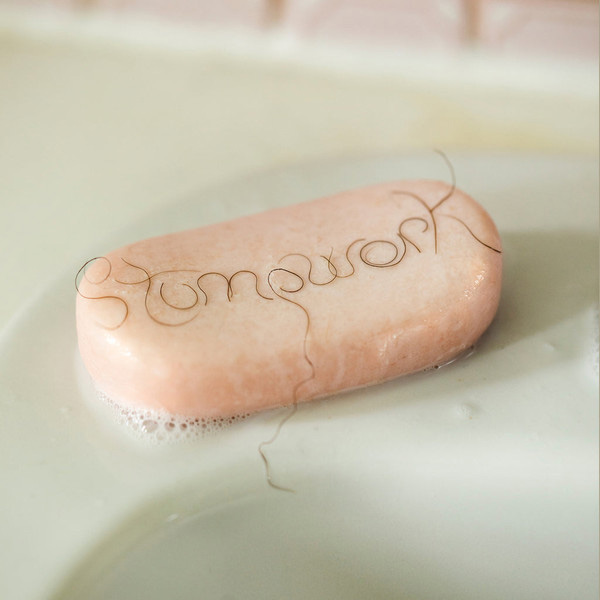
 『Stumpwork』というのはおかしな言葉だ。口にしてみてもおかしいし、その意味を紐解くのに分解してみると、さらに厄介になる。「Stump(=切り株)」とは、壊れたものや不完全なもの、つまり枯れた木の跡や、切断された枝があった場所を指す。そして、そこに労働力(= work)を加えるのは奇妙な感じがする。

 「Stumpwork」とは、糸や、さまざまな素材を重ねて、型押し模様を作り、立体的な奥行きを出す刺繍の一種で、もしかしたら、そこにドライ・クリーニングの濃密で複雑なテクスチャーの音楽とのつながりを見い出すことができるかもしれない。しかし、まず第一に、この言葉が感覚的に奇妙でおかしな言葉であることを忘れないでいよう。

 フローレンス・ショウは、いま、英語という言語を扱う作詞家のなかでもっとも興味深い人物の一人であり、面白くて示唆に富む表現に関しての傑出した直感の持ち主である。アルバム・タイトルでもそうだが、彼女は言葉の持つ本質的な響きというテクスチャーに一種の喜びを感じているようだ。“Kwenchy Kups”という曲では、歌詞の「otters(発音:オターズ)」という単語で、「t」を強調し、後に続く母音を引きずっているのが、音楽らしいとも言えるし、ひそかにコミカルとも言える。また、「dog sledge(*1)」、「shrunking(*2)」、「let's eat pancake(*3)」といった言葉や表現には、「あれ?」と思うくらいのズレがあるが、言語的な常識からすると、訳がわからないほど逸脱しているわけではなく、ちょっとした間違いや、型にとらわれない表現の違和感を常に楽しんでいることがうかがえる。このような遊び心あふれるテクスチャーは、「Leaping gazelles and a canister of butane (跳びはねるガゼルの群れと、ブタンガスのカセットボンベ)」のような、幻想的なものと俗なものを並列させる彼女の感性にも常に息づいている。ドライ・クリーニングの歌詞は、物語をつなぎとめる組織体が剥ぎ取られ、細部と色彩だけが残された話のように展開する。何十もの声のコラージュが、エモーショナルで印象主義的な絵画へと発展していくのだ。

*1: 正しくはdog sled(=犬ぞり)。「Sledge」はイギリス英語で「そり」なので、dogと合体してしまっているが、dog sledが正確には正しい。
*2: 正しくはshrinking(=収縮)。過去形はshrank、過去分詞はshrunk、現在進行形はshrinkingでshrunkingという言葉は存在しない。動詞の活用ミス。
*3: 正しくはLet’s eat a pancakeもしくはLet’s eat (some) pancakes。文法ミス。冠詞が入っていないだけだが、カタコト風な英語に聞こえる。

 音楽性において『Stumpwork』は、彼らの2021年のデビュー作『New Long Leg』(これも素晴らしい)よりも広範で豊かなパレットを露わにしている。ドライ・クリーニングのサウンドは、しばしばポスト・パンクという伸縮性のある言葉で特徴付けられ、トム・ダウズの表情豊かなギターワークからは、ワイヤーの尖った音や、フェルトやザ・ドゥルッティ・コラムの類音反復音を彷彿とさせるような要素を聴くことができるが、彼は今回それをさらに押し進めて、不気味で酔っ払ったようなディストーションやアンビエントの濁りへと歪ませている。ベーシストのルイス・メイナード、ドラマーのニック・バクストンは、パンクやインディの枠組みを超えたアイデアやダイナミクスを取り入れた、精妙かつ想像力豊かなリズムセクションを形成している。オープニング・トラックの“Anna Calls From The Arctic”では、まるでシティ・ポップのような心地よいシンセが出迎えてくれるし、アルバム全体を通して、予想外かつ斜め上のアレンジが我々を優しくリードしてくれる。このアルバムは、聴く人の注意を強烈に引きつけるようなものではなく、煌めくカラーパレットに溶け込んでいく方が近いと言えるだろう。

 だがこの作品は抽象的なものではない。現実は、タペストリーに縫い込まれたイメージの断片に常に存在するし、自然な会話の表現の癖を捉えるショウの耳にも、そして彼女の蛇行するナレーションとごく自然に会話を交わすようなバンドの音楽性とアレンジにも存在している。ある意味、このアルバムはより楽観的な感じがあって、人と人がつながる幸せな瞬間や、日常生活のささやかな喜びに焦点を当てているのだが、やはり、フローレンスの歌い方は相も変わらず、不満げで、擦れた感じがある。イギリスの混乱した政治状況は、曲のタイトル“Conservative Hell”に顕著に表れているのだが、私は、とりわけ混乱した状況の最中にトムとルイスと落ち合うことになった。イギリス女王は数週間前に埋葬されたばかりで、リズ・トラス首相の非現実的な残酷さが、ボリス・ジョンソンのぼろぼろな残酷さに取って代わったばかりで、リシ・スナックの空っぽで生気のない残酷さにはまだ至っていないという状況だった。

 3年ぶりにイギリスを訪れた私は、いきなりこんな質問で切り出した。

最近のイギリスでの暮らしはどのような感じですか?

トム:ニュースを見ていると、まるで悪夢だよ。しかも、すべてはいままでと同じような感じで進んでいる。新しい首相が誕生したことで、ひとつ言えることは、いまがまさにどん底だってことで、保守党政権の終焉を意味してるということ。12年間も緊縮財政を続けたのに、何の成長もなかったから、上層部の議員でさえ、もはや野党になる必要があるなんて言っているんだ。まあ、良い点としては、次の選挙で保守党が落選することだろう。デメリットは、保守党落選まで、俺たちは、彼らが掲げる馬鹿げた政策に付き合わなければならないってことだね。

ルイス:うちの妹みたいに政治に全く興味のない人でも、「ショックー! マジでクソ高い!」って言ってるんだ。 請求書や食料の買い出しなど、いまは本当にキツイ状況になってる。

トム:まさにその通りだね。もし次の選挙で負けたいなら、国民の住宅ローンをメチャクチャにしてやればいい!


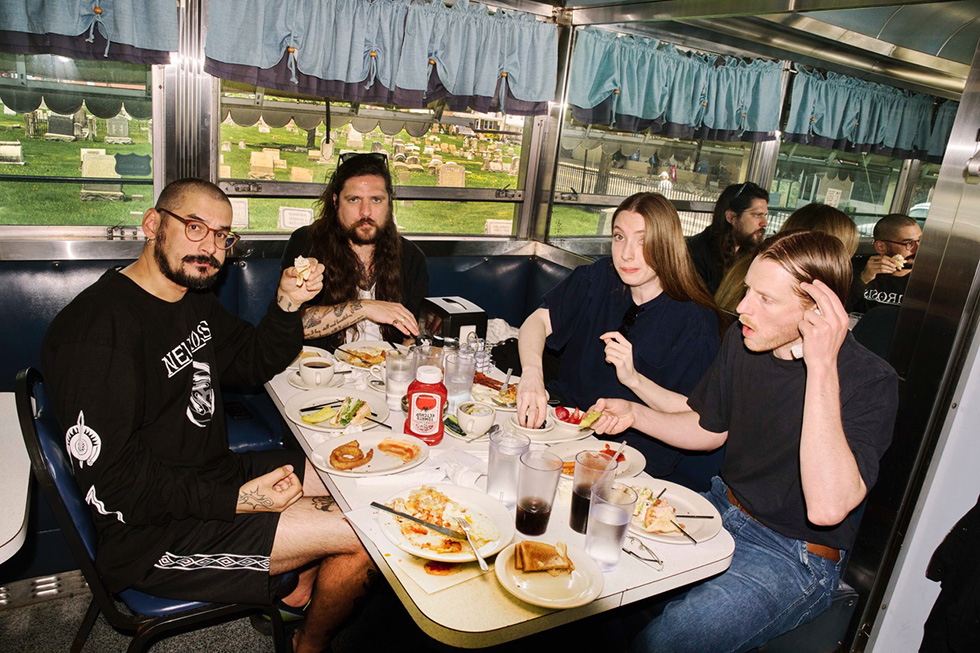
by Ben Rayner(左から取材に答えてくれたギターのトム、中央にベースのルイス、そしてヴォーカルのフローレンスにドラムのニック)

ニュースを見ていると、まるで悪夢だよ。しかも、すべてはいままでと同じような感じで進んでいる。新しい首相が誕生したことで、ひとつ言えることは、いまがまさにどん底だってことで、保守党政権の終焉を意味してるということ。12年間も緊縮財政を続けたのに、何の成長もなかったから、上層部の議員でさえ、もはや野党になる必要があるなんて言っているんだ。

私の家族も同じようなことを言っていますよ。さて、この話題をどうやって新しいアルバムにつなげようかな......(一同笑)。先ほど、普段通りの生活をしながらも、現在の状況が断片的に滲み出てきているとおっしゃっていましたね。もしイギリスの政治情勢がアルバムに影響を与えているとしたら、それは日常生活のなかに感じられる、そういったささやかな断片なのだと思います。例えば、ある曲でフローレンスは「Everything’s expensive…(何から何まで物価は高いし...)」と言っていますよね。

トム: 「Nothing works(何をやっても駄目)」そうなんだよ。俺たちがフローの歌詞についてコメントするのはなかなか難しいんだけど、彼女は、ひとつのテーマについて曲を書くということは絶対にしない人なんだ。彼女の曲を聴いていると、脳の働き方がイメージできる。俺は以前、自転車に乗っていて車に轢かれたことがあるんだが、気絶する直前、不思議なことがいろいろと頭に浮かんできたんだ。でも、さっき俺が言った「いままでと同じような感じで進んでいる」というのは、「いままでと同じような感じで進んでいるけど、すごく抑圧的な空気が影に潜んでいる」という意味なんだ。それでも仕事に行かないといけないし、請求書も払わないといけないし、日常のことはすべてやらないといけない。ただ、政治情勢がね……俺たちは12年間この状況にいたわけで、少しでも好奇心や観察力がある人なら、その影響を受けていると思うよ。

ルイス:俺たちはいつもひとつの場所に集まって、一緒に作曲をする。フローは、自分の書いた歌詞を紙に束ねて持って来るから、それを組み合わせたり、繋げたり、丸で囲んだり、位置を変えたりしている。そうやって、様々なアイデアが集まるコラージュのようなものを作っているんだ。

(ドライ・クリーニングの音楽を)聴いていると、何かの断片が自分を通り越していくような感じがするんです。

トム:でも、ランダムってわけじゃない。彼女は、歌詞を一行書くと、次は、逆の内容を書くという性分みたいなものがあると思う。響き的にも、テクスチャー的にも、コンセプト的にも、まったく違うものを書くんだよ。例えば、絵を描くときに、すべての要素がうまく調和するようにバランスをとっているような感じかもしれない。

ルイス:俺たちが自分たちのパートを演奏することで彼女の歌詞に反応するという、会話みたいなことをたくさんやっているんだ。

(アルバムには)日常生活の断片のような一面もあるので、自分たちでアルバムを聴いていて「あ、この会話覚えてる……」と思ったりすることはあるんですか?

トム:ああ、たしかに俺たちの言ったこととか、自分がいた場で友だちが言ったこととかが、歌詞に入ってるよ。

ルイス:俺たちの演奏と同じように、彼女も即興で歌詞を書くことが多いし、あらかじめ考えたアイディアも持っている。バンドで演奏しているときは、その場の音がかなりうるさいから、ヴォーカルだけ別録りして、フローが言ったことを自分で聴き返せるようにしたんだ。今回のアルバムでは、ファーストよりも、レコーディングのプロセスで歌詞を変えていたことが多かったみたいだけど、それほど大きな違いはなかったと思う。

トム:それは、スタジオでの即興をたくさんやったからということもある。でも、だいたいの場合、フローは俺たちが曲を作り始めるタイミングと同じ時に作詞をはじめるんだ。曲を書きはじめる時はみんなで集まって、ルイスが言っていたように、フローがやっている何かが、俺たちのやっていること、つまりサウンドに影響することがよくあるんだよ。“Gary Ashby”を作曲しているときは、フローが、行方不明になった亀について歌っていると知った時点で、こちらの演奏方法が変わった。フローが言っていることをうまく強調する方法を探したり、フローの歌詞をもっと魅力的にできるように、もっとメランコリックにできるように工夫する。以前なら使わなかったマイナーコードなどを使うかもしれない。音楽を全部作った後に、彼女が別の場所で歌詞を書くということはめったにないよ。もっとオーガニックな形でやってるんだ。

ルイス:俺たちは、他のメンバーへの反応と同じような方法で、フローにも反応する。俺がドラムに反応するのと同じように、彼女のヴォーカルにも反応するし、その逆もしかり。(フローの声は)同じ空間にある、別の楽器なんだ。

初期のEPや、特に前作と比べて、(作曲の)アプローチはどのように変化したのでしょうか?

トム:作曲のやり方はいまでも変わらないよ。基本的にみんなでジャムして作曲するんだ。

ルイス:携帯電話でデモを録ることが多いね。みんなでジャムしていて、「これはいい感じだな」と思ったら、誰かが携帯電話を使って録音しはじめる。そして、翌週にその音源で作業することもあれば、半年間放置されていて、誰かが「そういえば、半年前のジャムはなかなか良かったよな」って思い出すこともある。ほとんどの曲はそんな始まり方だよ。今回はスタジオにいる時間が長く取れたから、意図的に、曲が完成されていない状態でスタジオに入ったんだ。

トム:そう、アプローチの違いは、基本的に時間がもっと使えたということ。前回は2週間しかなくて、なるべく早く仕上げないといけなかった。

ルイス:それに、ファースト・アルバムのときは、事前にツアーをやっていたから、レコーディングする前にライヴで演奏していた曲もあったんだ。今回は、ツアーができなかったから、アルバムをレコーディングし終わって、いまはアルバムの曲を練習しているところなんだ。

なるほど。曲を作曲している段階で、観客の存在がなかったということが、この作品のプロセスにどのような影響を与えたのか気になっていました。

トム: 実際に曲をライヴで演奏して試してみないとわからないから、何とも言えないね。その状況を受け入れるしかなかったよ。ライヴで曲を演奏することができなかったから、自分たちがいいと思うようなアルバムを作ることにしたのさ。

ルイス:(自分たちの曲を)聴くってことが大事だと思う。スタジオでは、また違った感じで音が録音されるから。スタジオで実験できるのはとてもいいことだし、俺たちの曲作りのプロセスには聴き返すという部分が多く含まれている、ジャムを聴き返すとかね。もし俺たちがレコーディングして、それを聴き直して編集するという作業をしていなかったら、ほとんどの曲は、演奏していて一番楽しいものがベースになるだろうけど、実際はほとんどそうならない。聴き返すということをちゃんとしているから。ライヴで演奏できなかったけれど、結局、同じようなことが起こったと思う。つまり、何が演奏して楽しいかよりも、何が良い音として聴こえるか、ということに重きが置かれることになるんだ。

トム:それと、1枚目のアルバムで学んだのは、あるひとつの方法でレコーディングしたからといって、必ずしもそれがライヴで再現される必要はないということ。だから、今回のアルバムをいまになって、またおさらいしているんだ。アルバムには絶対に入れるべき要素もあるけれど、また作り直していいものもある。『New Long Leg』のツアーでは、“Her Hippo”と“More Big Birds”に、新しいパートを加えたり、尺を長くしたりしていたから、この2曲は(アルバムヴァージョンより)少し違う曲になったんだ。

ルイス:偶然にそうなるときもあるよね。ツアーを通して、曲が自然に進化していくこともある。

[[SplitPage]]

俺たちはいつもひとつの場所に集まって、一緒に作曲をする。フローは、自分の書いた歌詞を紙に束ねて持って来るから、それを組み合わせたり、繋げたり、丸で囲んだり、位置を変えたりしている。そうやって、様々なアイデアが集まるコラージュのようなものを作っているんだ。

今回のアルバムを聴いていてしばしば感じたことなのですが、曲が自然な形で完結し、これで終わりかなと思ったらまた戻ってきて、それが時にはそれまでとは全く違う感じになっているということがありました。それも、スタジオで色々と作業する時間が増えたからなのでしょうか?

トム:それにはいくつかの要因があると思う。まず、“Every Day Carry”を作ったときは、初めてスタジオで三つのパートを作って、そのなかでも即興演奏を加えたりした。“Conservative Hell”のときは、曲の最後の部分は、曲の最初の部分を完成させてから、何かが足りないと感じていたところに、ジョン(・パリッシュ、プロデューサー)が、何か作り上げようという気にさせてくれたから、出来たものなんだ。

ルイス:ファースト・アルバムでは、ジョンは曲を短くするのがとても上手だったけど、“Every Day Carry”では曲を伸ばそうという意図があった。ジョンにとっても、そのプロセスが実は楽しかったみたいだ。セカンド・アルバムのときも、ジョンはまた曲を短くするんだろうと覚悟していたんだけど、彼はもっと曲を伸ばそうとしていた。長くするのを楽しんでいたみたいだった。「曲は長い方がいいんだ!」とか言って。ジョンが曲を長くしてくれたことに、俺たちは驚きだったよ。

プロデューサーのジョン・パリッシュのことですね?

ルイス:そう。

ジョン・パリッシュは、私の地元ブリストル近辺の出身なんです。彼は、私が大好きなアルバム、ブリリアント・コーナーズの『Joy Ride』をプロデュースしたんですよ……(一同笑)。彼が他にも、さらに有名なアルバムを手がけているのは知っていますけど、私はとにかくブリリアント・コーナーズが大好きなんですよね。

トム:それがジョンのいいところだよね。自慢話をするような人ではないし、あまり有名人の名前を出したりしないんだけど、一緒に夕食をとっているときに、何か言ったりする。ジョンがトレイシー・チャップマンのレコードを手がけたって言うから、俺は「何だって!?」と思ったよ。彼にはそういうエピソードがあるんだけど、それは自然に彼から引き出さないといけないんだ。

ジョンとの制作は2回目ということで、親しみもあり、リラックスした雰囲気で仕事ができたのでしょうか?

トム:そうだね、それにはいくつかの理由があると思う。まず、自分たちの状態が安定していたということ。『New Long Leg』が好評だったことも自信につながったし、あの時点では、もっと大規模な公演にも出ていたから、とにかく気持ちが楽だったんだ。最初のアルバムでは、テイクを重ねながら、「これは絶対に素晴らしいものにしないといけないから、俺は全力を尽くさねば!」なんて思っていたんだけど、実際には、そんなこと思わなくていいんだと後で気づいた。アルバムを制作するということはとても複雑なことで、本当に数多くの段階があるから、ミキシングとマスタリングが終わる頃には、自分がそもそも何をしようとしていたのかさえ、すっかり忘れているんだ。だから、今回のアルバムでは、ある意味、ありのままを受け入れた。良いテイクを撮ろうとはするけれど、ジョンが満足すれば、次の作業に移るということをしていた。

ルイス:それにファースト・アルバムでは、ジョンと会った直後にレコーディングしたんだ。彼に会って、ほんの数時間で“Unsmart Lady”を録音して、次の曲に移って、また次の曲に移ってという感じ。バンドとして演奏する時間があまりなかったんだ。

トム:そうそう、それに前回は、彼が「それは嫌だから、変えて」とか言うもんだから、耐性のない俺たちにはショックだったよな(笑)。

ルイス:そうそう、で、トムは「え、今からですか?」ってなってたよね。前回は、日曜日に休みが1日だけあって、土曜日にジョンに「それは嫌だから、明日の休みの日の間に変えてくれ。では、月曜日に!」って言われたんだ。

トム:でも、前回のセッションが終わるころには、俺たちはすっかり溶け込んでいた。ジョンの仕事の仕方が気に入ったし、彼のコメントを個人的に受け止めなくていいってことが分かった。それに俺たちの自信もついたし、バンドとして少したくましくなったから、彼のコメントにもうまく対処できるようになった。だから、2枚目のアルバムでは、もしジョンが何かを違う風にやってみろと言ったら、俺たちは素直に違うやり方を模索した。

ルイス:それに、今回は音源に何か変更を加えるためにスタジオ入りしたという感じもある。最初のアルバムでは、多くの曲を既にライヴで演奏していたから、みんな自分のパートやアイデアに固執してしまっていて、それを変えるのは難しかった。でも今回は、もっとオープンな気持ちで臨んだんだ。

今回のアルバムは、ファースト・アルバムに比べて音の質感がかなり広がった感じがあります。それは自然にそうなったのでしょうか、それとも何か意識的に音を広げる要素があったのでしょうか?

トム:俺たちの音楽の好みが広いから、そうなることは自然だと思うんだよね。もし、もっと時間があれば、俺はアンビエント系のプロジェクトをやりたいと思うし、ルイスと一緒にメタル・バンドをやりたいとか、いつも思うんだよ。ニックはきっと何らかのダンス・ミュージックをやるだろうな。

ルイス:ドライ・クリーニングは、そうしたすべてのアイデアをさまざまな方向にうまく展開させた、素敵なコラボレーションなんだ。

トム:ルイスが1枚目のアルバムから今回のアルバムへの移行を説明したように、1枚目のアルバムでは、様々な方向に進むための余白がほとんど残っていなかった。2枚目のアルバムでは、そこから少し先に進めたという感じ。そして、もし次のアルバムを作る機会があれば、できれば3枚目のアルバムでは、さらにそれを発展させたいと考えているんだ。いろいろな道を模索していきたいと思っている。だから、もう少しアンビエントな方向に行きそうなときでも、「いや、こういう音楽は作りたくない」とはならずに、その流れに乗ることができるんだ。俺たちは、すでにそういう音楽が好きだからね。

ルイス:それに、スタジオで何ができるかということもいろいろと学んでいる。最初のEPはデモみたいなもので、2、3時間でレコーディングした。スタジオで演奏する時間があまりないから、リハーサルルームでいい感じに聴こえたものを、自分のパートとして書き留めていくような感じだった。2枚目のアルバムでは、スタジオ用に曲を書いていたという意識が強かった。曲を書いていて、トムが「この上に12弦ギターを乗せるべきだ!」などと言い出したりね。キーボードのパートがあったとしたら、ニックが静かに演奏しながら「アルバムではもっと大音量にするけど、こうやって弾くとすごくいい音になるんだよ」と言ったりね。そういう実験がもっとできるようになったんだ。

そのアンビエントな感じがもっとも顕著に表れているのが“Liberty Log”ではないかと思いますが、スポークン・ワードが大部分を占める曲のために作曲することというのは、従来のポップ・ソングのヴァース、コーラス、バースという構成に比べて、別のやり方で音楽を構成していくことになるのではないかと思うのですが。

ルイス:メンバーの誰かが「じゃあ、そろそろコーラスを演奏してみるか?」と言うんだけど、他のメンバーが「どれがコーラスなの?」って聞き返すことが何度もあったよ。

トム:そうそう、「どれがコーラス?」って。

ルイス:それで、どこがでコーラスなのか、みんなで決めるんだよ。

トム:それは実は良い傾向だと思うんだ。俺たちは皆、それぞれ別の考え方をしているけど、そんななかでも音楽は成立しているんだってこと。これは俺も同感なんだが、ルイスは過去のインタヴューで、俺たちのアイデンティティの強さのひとつは、すべての中心にフローがいることだと言っていて、彼女の声が俺たちをしっかりと固定して支えてくれることだと言っていた。たしかにミュージシャンとして、いろいろなものを取り入れる余地が与えられているように感じられるね。“Hot Penny Day”を書きはじめたとき、俺が最初にメイン・リフを書いたんだが、それは、『山羊の頭のスープ』時代のローリング・ストーンズみたいなサウンドに聴こえたんだけど...。

ルイス:誰かが、それをぶち壊したんだよ!

トム:それをルイスに聴かせて、一緒に演奏し始めたら、スリープみたいなストーナー・ロックみたいなものに変わり始めて、よりグルーヴィーになったんだ。

ルイス:そこにフローが加わると、一気にドライ・クリーニングのサウンドになるんだ。彼女の声や表現が、俺たちの音楽に幅を与えてくれていると思う。

トム:ミュージシャンとして、このメンバーと5年間一緒に仕事をしてきて、みんなそれぞれ、音のモチーフがあると思うんだ。ルイスだとわかる音があり、ニックだとわかる音があり、彼らにも俺だとわかる音がある。でもフローは間違いなくドライ・クリーニングという世界で、すべてを錨のように固定して、支えている存在なんだ。

by Ben Rayner

俺たちは皆、それぞれ別の考え方をしているけど、そんななかでも音楽は成立しているんだってこと。これは俺も同感なんだが、ルイスは過去のインタヴューで、俺たちのアイデンティティの強さのひとつは、すべての中心にフローがいることだと言っていて、彼女の声が俺たちをしっかりと固定して支えてくれることだと言っていた。

あなたがたが過去に活動していたバンド、サンパレイユとラ・シャークの作品を聴いていたのですが、例えばサンパレイユは一見パンク・バンドですが、わかりやすいパンク・バンドではないし、ラ・シャークは少しインディ・ポップ・バンドっぽいですが、これまたわかりやすいバンドではないように感じます。常に予期せぬ角度から攻めている気がするんです。

トム:俺たちが過去にいたバンドをチェックしてくれたのはすごく嬉しいよ! ドライ・クリーニングを理解するには、俺たちが過去にやってきたことがルーツになっていると思うからね。あなたが言う通り、俺たちは音楽の趣味が広い。俺が最初に経験した音楽はパンクやハードコアのバンドだったけど、スタイル的にかなり限界があると思っていたんだ。速い音楽のカタルシスも好きなんだけど、REMのメロディも好きなんだよ。ラ・シャーク(の演奏)は何度か見たことがあるけど、彼らは、明らかに歪んだ感じのポップ・バンドだったけど、後期の作品はインストゥルメンタルなファンカデリックのようなサウンドだったんだ。そんなわけだから、自分たちのいままでの影響をすべてひとつのバンドに集約するには時間が足りないんだよ。

ルイス:俺は運転中に、ふたつのバンドを組み合わせたらどうなるかっていう妄想をいろいろするんだけど、トムやニックやフローに会ったときに、そのアイデアを話すんだ。すると、彼らは「それ、やってみようよ!」と言ってくれる。で、やってみると、やっぱりドライ・クリーニングになるんだよね。ニュー・アルバムからフローのヴォーカルを抜いたら、いろんなジャンルに落とし込めそうな素材がたくさんあると思う。

フローレンスはすべての中心にいて、バンドのアイデンティティを束ねているとのことですが、同時に、彼女は少し離れているようなところもありますよね。新作では、ミックスの仕方だと思うのですが、以前よりもさらに、バンドがどこかひとつの場所で演奏しているように聴こえるのに、彼女のヴォーカルが入ってくると、まるで彼女が耳元で歌っているように聴こえるんです。まるで、自分がステージ上のバンドを観ているときに女性が耳元で囁いているような。

ルイス:それを聞いて、フローがバンドに入った経緯を思い出したよ。たしか、トムがバンド(の音楽)を演奏していたときに、フローがそれにかぶせるようにしゃべったのがはじまりだったね。

トム:俺たちは一緒にヴィジュアル・アートを学んでいて、当時は二人とも漫画の制作をしていて、その話をするために会ったんだ。彼女が「最近は他に何してるの?」と聞いてきたから、「ルイスとニックとジャムしはじめたよ」と答えた。そのときにちょうどデモがいくつかあったから、彼女に聴いてもらった。彼女はイヤホンを取り外して、「ふーん、面白いわね」と言って、喋りを再開したんだけど、まだイヤホンから音が出ていて、音楽が聴こえてきて、彼女の声がそれにかぶさっていた。ジョンが俺たちのバンドのことで一番興味があるのは、どうやってフローの声をミックスするかと言うことだと思うんだ。このアルバムでは、彼女の息づかいがかなり感じられるようになっている。フローはとても繊細なパフォーマーだから、彼女がするちょっとした仕草、例えば舌の動きとか、そういったごく小さな音も、ジョンは確実に取り込もうとする。このことについて、ジョンがインタヴューで語っているのを読んだことがあるけど、彼女がやっていることすべてを聴かなければならないと言っていた。それが第一で、それをベースにしてミックスを構築して、バンドの音を加えているんだ。

ルイス:レコーディングの時はいつも彼女も同席して、同時に彼女のトラックも撮る。スタジオには、隔離された部屋がいくつもあるから、俺のアンプは1つの部離すためにかなりの工夫がされているから、バンドの音の影響をあまり受けないようになっているんだ。トムが言ったように、ジョンはその点にかなり重点を置いている。

[[SplitPage]]

The texture of broken things

by Ian F. Martin

Stumpwork is a funny word. It feels funny in your mouth, and it only gets more awkward once you start breaking it down to untangle its meaning. A stump is a broken or incomplete thing — the remains of a dead tree or the place where an amputated limb used to attach — and it seems like a strange thing to dedicate one’s labour toward.

It refers to a form of embroidery where threads or other materials are layered to create an embossed, textured pattern, giving a feeling of three dimensional depth to the image, and perhaps in this we can reach out and contrive a connection with the increasingly rich and intricately textured music of Dry Cleaning. But we shouldn’t forget that it’s first and foremost a viscerally strange and funny word.

Florence Shaw is one of the most interesting lyricists in the English language right now, and she has a remarkable instinct for interesting and evocative phrasing. Just as with the title itself, she seems to take a sort of joy in the inherent sonic texture of a word — the way she hangs on the hard t and trailing vowels of the word “otters” in the song Kwenchy Kups is both musical and quietly comical. There’s a constant delight in the awkwardness of small errors and unconventional phrasings that reveals itself in words and expressions like “dog sledge”, “shrunking” and “let’s eat pancake” that deviate disconcertingly but never incomprehensibly from linguistic norms. This playful texture is also ever-present in her instinct for juxtaposing the magical and the mundane that results in lines like, “Leaping gazelles and a canister of butane”. Dry Cleaning’s lyrics play out like a story where the connecting tissue of narrative has been stripped out, leaving only the details and colour — a collage of dozens of voices that adds up to an impressionistic emotional tableau.

Musically, Stumpwork reveals a broader, richer palette than the band’s (also excellent) 2021 debut full-length New Long Leg. The band’s sound has often been characterised with the elastic term post-punk, and you can hear elements that recall the choppy angles of Wire or the chiming sounds of Felt and Durutti Column in Tom Dowse’s expressive guitar work, but he takes it further this time, twisting it into queasy, drunken distortions or ambient haze. Bassist Lewis Maynard and drummer Nick Buxton make for a subtle and imaginative rhythm section that brings in ideas and dynamics from beyond punk and indie tradition. Smooth washes of almost city pop synth welcome you into opening track Anna Calls From The Arctic, and unexpected and oblique arrangements pull you gently one way and another throughout the album. It’s not an album possessed of an urgent need to grab your attention so much as a shimmering palette of colours to melt into.

It’s not an as disaffected and worn as ever. Britain’s confused political situation filters through, most explicitly in the song title Conservative Hell, and I catch up with Tom and Lewis in the middle of a particularly chaotic moment. The Queen has just been buried a couple of weeks prior, and the delusional cruelty of prime minister Liz Truss has recently replaced the ramshackle cruelty of Boris Johnson, but not quite yet given way to the vacant, lifeless cruelty of Rishi Sunak.

It’s been three years since I last had a chance to visit the UK, so I open with a big question.

IAN: So what’s it like living in Britain these days?

TOM: If you look at the news, it’s a living nightmare. Beyond that, though, things just carry on kind of as they were before, really. One thing that I think has happened now with the new prime minister is that this is the nadir: this is the endgame of Conservative politics. We’ve had twelve years of austerity and no growth, and even high ranking MPs are sort of admitting that they need to be an opposition party now. So one good thing about that is that the Conservatives are going to get voted out in the next election. The downside is that until that happens, we have to live with the stupid policies they have.

LEWIS:Even someone like my sister, who totally ignores it, even she’s like, “It’s shocking; it’s really fucking expensive!” — the bills, the food shopping, it’s getting really tough now.

T:That’s a really good point. If you want to lose the next election, fuck with people’s mortgages!

I:I’m hearing similar things from my family too, yeah. So seeing if I can segue this into the new album… (everyone laughs) What you were saying earlier about life going on as normal but with little pieces of the situation coming through, it feels like if the political situation in the UK informs the album, it’s in these little fragments filtering through normal life, like at one point Florence just remarks, “Everything’s expensive…”

T:“Nothing works.” Yeah, it’s quite difficult for us to comment on Flo’s lyrics, but she’s definitely the kind of person who wouldn’t make a song about one subject. Her songs remind me of the way your brain works. I remember being hit by a car on my bike once, and on the edge of the void there’s all sorts of strange things that come to your mind. But I should clarify what I said earlier about how everyone’s just getting on with things: everyone’s just getting on with things but under a very oppressive shadow. You still have to go to work, you still have to pay your bills, you still have to do all the normal things, it’s just that the political climate — we’ve been under this for twelve years, and if you’re an even slightly curious or observant person, it’s going to affect you.

L:We write together in the room at the same time, and she’ll have a stack of papers which will have lyrics that she’s written and will sort of combine and join together, and there’s lots of circling that and dragging it to that, making almost a collage where lots of different ideas come together.

I:When I’m listening, it feels like fragments of something flowing past me.

T:It’s not random though. When she writes a line, she has the sort of temperament to write the opposite line next — something completely different tonally, texturally, conceptually. It’s almost like when you’re making a painting or something, you’re trying to balance all the elements so it works nicely.

L:There’s a lot of reacting to us in the room playing our parts and us reacting to her, like a conversation.

I:There’s such an aspect of fragments of daily life to it and I wonder if there’s ever a sense where you’ll be listening to it and think, “Oh, I remember that conversation…”

T:Oh, there’s definitely things that we’ve said or things that friends have said when I was there and they’re in the lyrics.

L:And like ourselves, she improvises a lot when writing her lyrics as well as having some pre-formed ideas. We’ve had to get better at finding ways to record because the room’s quite loud when we’re playing, so a lot of times we’ll separately record the vocals so she can hear back what she said. I think on this record the lyrics changed more when it came to recording than on the first record, but not a huge amount.

T:That was partly because we improvised quite a lot of stuff in the studio. But generally, Flo will start at the same time we start writing the song. We’re all there at the start of it, and like Lewis says, a lot of the time there’s something Flo is doing that informs how we’re doing our thing as well — tonally, if that makes sense. When we were writing Gary Ashby, when I found out she was singing a song about a tortoise that’s gone missing, it changes the way you play; you find ways of punctuating what she’s saying, making it more charming or melancholy, you might use a minor chord or something that you wouldn’t have done before. It’s rare that we’ll write a whole song and then she’ll go away and write all the lyrics — that never happens, and it’s a more organic thing.

L:We’ll react to her in the same way we react to each other. I’ll react to the drums in the same way I react to the drums and the guitar, and vice versa. It’s another instrument in the room.

I:How has the approach changed, since the early EPs and the last album in particular?

T:We still write in the same way. We write by basically just jamming together.

L:There’s a lot of phone demos. We’ll be having a jam, think “This sounds OK” and someone just clicks on their phone and starts recording, and then sometimes we’ll work on it the next week or sometimes it’ll get lost for six months and someone will be like, “Hey, that jam from six months ago was quite good.” That’s how almost everything starts. This time, because we had more time in the studio, we intentionally went in with ideas less finished.

T:Yeah, the change in approach was basically that we got more time. Before we had two weeks to get it down as quickly as possible.

L:Also, with the first record, we were doing some tours beforehand, so we were playing some of that record live before we recorded it. This time we didn’t get a chance to do that: we recorded it and now we’re in the process of learning it.

I:Right, and I was wondering how not having the constant physical presence of the audience while you were developing the songs affected the process on this one.

T: It’s hard to say really, because without actually road testing the song, you never know. We just embraced it really: we couldn’t play live, so we just write the album the way we wanted to.

L:It comes down to listening, because things get captured differently in the studio as well. It’s quite nice to be able to try something in the studio and a lot of our writing process comes down to listening — like listening back to jams. It’s a nice way of doing it, because if we weren’t recording and listening back and editing from there, a lot of our songs would be based on what was the most fun to play, but that rarely happens because it’s all about listening. And I think that happens as well with not being able to play it live: it’s less about what’s fun to play and more about what sounds good.

T:I think also we learned from the first record that just because you’ve recorded a song one way, that’s not necessarily how it has to be live again, so that’s why we’re sort of relearning the album now. There’s things on the album that definitely need to be on there, but there’s also things that we can just make up again.Touring New Long Leg, there’s Her Hippo and More Big Birds where they just changed and became slightly different songs — added a new part to them, made them longer.

L:Sometimes by accident as well. Sometimes they kind of naturally evolve through a tour.

I:One thing that happens a few times on the new album is that a song will work its way to a natural sounding conclusion, I’ll think it’s ended, but then it will come back and sometimes as something quite different from what it was before. Was that something that came out of having more time to play around in the studio?

T:I think there’s several factors there. First, when we did Every Day Carry, that was the first time we did that in the studio, literally making three parts and kind of improvising some of them. When we did Conservative Hell, that whole last section of that song really came from the first part of the song down and feeling like there was something missing, and John (Parish, producer) was very good at motivating us to just go and make something up.

L:On the first album, John was quite good at making songs snappy, but with Every Day Carry we sort of extended it — and I think he quite enjoyed that process. When it came to the second album, we were kind of prepared for him to make things shorter again, but he seemed to extend stuff more. i think he kind of enjoys it, like, “It’s good when it’s longer!” He surprised us quite a lot by extending songs.

I:That’s John Parish, your producer, right?

L:Yeah.

I:He’s from around my hometown in Bristol. He produced one of my favourite albums, Joy Ride by The Brilliant Corners… (everyone laughs) I know he’s done way more famous albums than that, but they’re one of my favourite bands!

T:That’s one of the great things about John: he’s not the kind of person to brag about things or he doesn’t namedrop much, but when you’re having dinner, he’ll say something — he told me he did a Tracy Chapman record, and I was like, “What!?” He’ll have these stories, but you have to get it out of him naturally.

I:Was it more relaxing working with him this second time, with the familiarity?

T:I think in several ways. Firstly, we were more comfortable, just in ourselves; we’d been doing it longer and had more confidence. The fact New Long Leg did well gave us confidence, we’d played bigger shows by that point, and we were just feeling comfortable. I remember doing takes on the first record and feeling, “This has to be amazing, I have to give this everything!” and then you realise you don’t. Making an album is so complicated, there’s so many layers to it that by the time it’s mixed and mastered, you’ve completely forgotten what it was you were trying to do. So definitely on this one we sort of accepted things the way they were; you try to get a good take, if John’s happy, you move on to the next thing.

L:With the first one as well, we recorded it so quickly with John. We met him and within a few hours, we’d tracked Unsmart Lady, then we moved on to the next one and moved on to the next one. We didn’t have time to play so much.

T:Yeah. And it was a bit of a shock to the system last time when he would say things like, “I don’t like that. Change it.” (laughs)

L:And you’d be like, “Uh… now?” We had one day off last time, on the Sunday, and on Saturday, he was like, “I don’t like that. Change that tomorrow on your day off. See you Monday!”

T:But by the time we got to the end of that session, we were really onboard with it. We liked the way he worked and you just don’t take it personally. Because you’re more confident, a bit more robust, you can deal with it a bit better — you expect it and you welcome it. So with the second record, if he says to go and do something differently, that’s what you’re looking for.

L:And we’d go into the studio looking for things to change. With the first record, we’d been playing a lot of those songs live, so maybe people were a bit more fixed on their parts and their ideas, so that’s harder to change. This one was a bit more open to change.

I:The sonic texture of this album feels a lot broader than the first one. Did that come naturally, or was there some sort of conscious element to expanding the sound?

T:I think it’s natural in the sense that our listening tastes are so broad. I often feel that if I had more time, I’d do some kind of ambient project, or me and Lewis could do a metal band together. For sure Nick would do some kind of dance music, wouldn’t he?

L:And Dry Cleaning’s a nice collaboration of all those ideas pulling nicely in different directions.

T:The way Lewis described the transition from the first record to this one, it’s like the first record left little markers down for different directions to go in and on the second record we take them all a little bit further. And then hopefully on the third one if we get the opportunity to do another one, we’ll take it even further. It’s all about exploring different avenues. So when things seem to go a little more ambient, we’re already into that kind of music and we’ll go with it as opposed to being sort of, “Oh, I don’t want to make that kind of music.”

L:We’re learning more about what we can do in the studio as well. The first EP was really like a demo, recorded in a couple of hours. You don’t get much time to play in the studio, so you sort of write your parts for what sounds good in the rehearsal room. Writing the second record, we were writing for the studio more. We’d be writing a song and Tom would go, “There should be a twelve string on top of this!” There’d be a keyboard part here, or Nick would be playing really quietly and saying “On the record it’s going to be really big but it just sounds good the way I’m hitting it like this.” You get to experiment more like that.

I:I suppose it’s on Liberty Log where that almost ambient feeling is most pronounced, and I was wondering if writing for what’s mostly spoken word lends itself to a different way of structuring music compared to the traditional pop song structure of verse-chorus-verse-chorus.

L:There were a lot of times where one of us would say, “Should we do the chorus now?” and then we’d be like, “Which one’s the chorus?”

T:Yeah, “What’s the chorus?”

L:And we’d all have to agree on what’s the chorus.

T:Which I think was a good sign, actually. It shows how we’re all thinking in different ways but music is getting done. I think I agree: Lewis has said before in other interviews that one of the strengths of our identity is you have Flo in the middle of everything, and her voice anchors you, and certainly as a musician it feels that you’re given a lot of room to chuck things in. When we first started writing Hot Penny Day, initially when I wrote the main riff it sounded like Goats Head Soup-era The Rolling Stones to me…

L:And then someone fucked it up!

T:And then when I showed it to Lewis and we started playing it together, it started turning into something more like Sleep or stoner rock — made it more groovy.

L:And then Flo gets involved and it instantly sounds like Dry Cleaning. I think her voice and her delivery gives us a lot of scope.

T:I mean, as musicians, having worked with these guys for five years, I think we all have our own sonic motifs — I can tell it’s Lewis, I can tell it’s Nick, they can tell it’s me — but Flo definitely anchors things in Dry Cleaning world.

I:I was angles.

T:I’m really glad you checked our previous bands! I think if you want to understand Dry Cleaning, it has roots in what we’ve done in the past. Like you say, because we’ve got broad music taste, my first experiences in music were in punk and hardcore bands but I did find them stylistically quite limiting. I like the catharsis of fast music, but I also like the melody of REM. I remember seeing La Shark a few times and it was clearly a sort of skewed pop band but their later stuff sounded like instrumental Funkadelic, so it’s almost like there isn’t enough time to put all your influences into one band.

L:I’ll be driving and have little fantasies about combining two bands, and then I’ll meet up with Tom or Nick or Flo and I’ll say that, and they’ll be like, “We should do that!” And once again, it’s still Dry Cleaning. If you took Flo’s vocals off the new album, there’s so many different genres you could put stuff into.

I:You say Florence is in the centre of it all, holding the identity of the band together, but at the same time, she’s also a little bit separate from it in some ways. On the new album, even more than before, the way it’s mixed you hear the band playing, who sound like they’re in a room somewhere, but then her vocals come in and it’s like she’s right up against your ear. Like you’re watching a band on the stage and there’s just this woman whispering in your ear!

L:That reminds me of Flo’s story about her joining the band started with you playing the band and her talking over the top of it.

T:We’d studied visual art together — we were both making comics at the time, and we met up to talk about that. She asked, “What else have you been up to?” and I said, “I’ve started jamming with Lewis and Nick.” I had some demos and she listened to it. Then she took her earphones out, said, “Oh, that’s interesting,” and started talking, and I could hear the music still with her voice over the sound out of the earphones in the background. I think John’s key interest in our band is how he mixes Flo. On this record to a much greater extent you can hear bits of her breath. Flo is a very nuanced performer: just the little things she does, like the click of her tongue or something — very small sonic things that he’s very keen to make sure are in there. I’ve seen him talking about this in an interview, about how you have to hear everything she’s doing: that’s the first thing, and then around that, he builds the mix and brings the band in.

L:She’s always in the room when we’re recording, and she’s tracking at the same time. We’re lucky enough to have isolated rooms, so my amps can be in one room, Tom’s amps can be in another room, Nick could be behind some glass, Flo’s in the room with us, and she keeps a lot of those vocals. There’s a lot of effort put into isolating her vocals so there’s not too much bleed from the band. I agree with what Tom said, John puts a lot of focus on that.

Stereolab - ele-king

 1993年から2004年にかけてのステレオラブは、1970年代のデヴィッド・ボウイにも似た活躍を見せ、毎年、新しくて非凡な作品をリリースしていた。個々の作品は単体で見ても優れているのだが、全体として捉えてみると、それがバンドの成長と進化の記録そのものとなって我々を魅了する。

 今回のキャンペーンで再発されるのは、グループ(彼らはたびたび自分たちのことを“group”ではなく“groop”と称する。発音は同じだがgroopには「排水溝」という意味がある)がこの期間にリリースした7枚のスタジオ・アルバムだが、この数字だけでは、当時のステレオラブがどれほど旺盛に制作を行っていたかを説明するにはいささか物足りない。7枚のアルバム以外にも、2枚のミニアルバム、2作品からなるコンピレーション・シリーズ『Switched On』、さらには前衛音楽の伝説的バンド、ナース・ウィズ・ウーンドとコラボレーションした数枚のEPが、同じ時期に生み出されているのだから。彼らに関して興味深いのは、結成して活動を始めたときからバンドとしての完全な形態を成立させており、下積みの期間を飛び越えて、そのままデビューアルバム『Peng!』と複数のシングルとEPを完成させ、それを『Switched On』の1作目に繋げたことだ。

 ステレオラブの下地となっているのは、1980年代のイギリスおよびアイルランドのギター・ポップ・シーンである。このころティム・ゲインが中心メンバーだった騒々しく反抗的な左翼バンド、マッカーシーに、レティシア・サディエールが加入し、バンドにとって最後の(そして最高傑作である)アルバム『Banking, Violence and the Inner Life Today』が制作された。マッカーシーの歌詞は、1980年代のイギリス左派による政治闘争を主要なテーマとしており、しばしば皮肉を込めて、敵対する政治スタンスをあえて標榜し、そうすることで相手の明らかな不合理や偽善を風刺しようとした。マッカーシーの最後のアルバムを聴けば、そこからステレオラブのサウンドが芽生え始めていたことがわかる。ギターの騒がしい音はわずかに鳴りを潜め、それまで以上に瑞々しく多層的なキーボード主体のサウンドが“I Worked Myself Up from Nothing”などの楽曲に現れている。このアルバムでとりわけ興味深い楽曲が“The Well Fed Point of View”で、マッカーシーの定番とも言える、敵の立ち位置を歌に乗せて風刺する手法を採用している──この曲では、自身の幸福と感情の安寧は本質的に個人の問題だと捉えるべきだと聴き手をけしかける。反面、この世界にある残酷さと不公正さもまた、個人に帰する問題だとしている。マッカーシーが言外に主張しているのは、これらは本来、個人の問題ではなく社会の問題だということだ。こうして培われた思想の中核が、やがてはステレオラブの世界観の根幹を成すことになる。すなわち、個人の問題と、社会的もしくは政治的問題の間には、切り離せない相互関係があるということだ。

 ステレオラブが活動を始めたころ、バンドは主にロンドンのミュージシャンたちと交流を持っていた。こうした集まりは「自画自賛の界隈」などと軽蔑されながらも、後のブリットポップに繋がる、何でもありのインディー・ロックシーンを形成していた。当時ステレオラブの周辺には、スロウダイヴ、チャプターハウス、ラッシュなどのシューゲイザーのバンド、またはマッドチェスターの残り火から熱を受け取って早々に名を上げたブラーのようなバンド、そしてシー・シー・ライダー、ガロン・ドランク、ザ・ハイ・ラマズなどの一風変わったパフォーマンスをするバンドなどが存在していた。初期のステレオラブのサウンドには、周囲から受けたさまざまな影響が渾然となっていて、マッカーシーが築いたものをある程度引き継ぎながら、ギターポップとシンセサイザーを組み合わせるだけでなく、シューゲイザーや実験的ポップスの要素も取り入れられている。

 他に初期の彼らに多大な影響を与えたのがクラウトロック、とりわけノイ!というバンドの存在だった。1992年に壮大な叙事詩的傑作『Jehovahkill』をリリースしたジュリアン・コープとともに、ステレオラブは90年代初めにクラウトロックへの注目が再燃した際に中心的役割を果たした。その影響が何よりも華々しく描かれているのが、新たに〈Warp Records〉から再発される作品の中でもっとも古い『Transient Random-Noise Bursts with Announcements』である。再発されるアルバムの中でも──そしておそらくステレオラブの全アルバムのなかでも──これがバンドにとってもっとも荒削りで、獰猛なサウンドの作品だ。冒頭の曲“Tone Burst”は素っ気なく始まるが、次第にサウンドは分裂し不協和音の層に溶け込んでいく。それでいて、このサウンドを際立たせるのがサディエールによる幻想的で夢のような歌詞だ。このように粗さと優美さを並列させるスタイルは、次の“Our Trinitone Blast”でも続き、ヴォーカルは前面に出る声と後ろを支える声に分かれ、片方が粗野に歪めば一方が甘く歌うというように、まるでラッシュのようなハーモニーを奏でている。“Golden Ball”では、間断なくかき鳴らされるギターコードとともに、特定の箇所で明らかにテープが途切れたかのような効果が再現され、ノイ!のセカンド・アルバム後半で積極的に採用されているような、故意に曲のスピードを変化させる一筋縄では行かない演出を真似ている。対して“I'm Going Out of My Way”では、ほとんど若者向けのバブルガム・ロックと言っていいようなガレージ・ロックのグルーヴを取り入れ、ひたすら反復を続けることでトランス・ミュージックに似た作用を引き出している。

“Pack Yr Romantic Mind”では、ステレオラブの原動力を示す別の重要な一面が見られる。それは、情念もしくは冷笑主義のどちらかに裏打ちされたサディエールの抑揚のない平板な歌い方と、その後ろに聞こえるメアリー・ハンセンによる「ba ba ba」という歌声との間に生まれる相互作用だ。また、『Transient Random-Noise Bursts』が、ザ・ハイ・ラマズのメンバーだった(その前はアイルランドのインディー・バンド、マイクロディズニーのメンバーだった)ショーン・オヘイガンを正式に迎え入れ、初めてその存在を前面に出して制作されたステレオラブのフルアルバムだという点も見逃せない。この時点で、オヘイガンはギター・ポップからより実験的な方向へという自身の転向を踏まえてバンドを導いていた。そこにはブライアン・ウィルソン、ヴァン・ダイク・パークス、バート・バカラック、フィル・スペクターの他、多くのアーティストの影響があった。アルバムの持つ粗さにもかかわらず、“Pack Yr Romantic Mind”のような曲を聴くと、このころから前衛的なイージーリスニングの影響を受けるようになったことが明白だ。これは後にステレオラブの作品においてますます重要な特色となるものであり、ザ・ハイ・ラマズの1994年のアルバム『Gideon Gaye』にも、オヘイガンによる特色として現れている。それでもやはり、この歌とアルバムの他の曲との共通点をひとつ挙げるなら、それはマントラのような繰り返しに専念していることで、歌詞はひとつのフレーズを途切れることなく何度も復唱するものになっている。

 しかしながら、ノイ!が用いたような4ビートのモータリック・サウンドこそが、『Transient Random-Noise Bursts』の特徴としてもっとも強力なもので、楽曲“Jenny Ondioline”の要となっている。歓喜に満ちた18分の歌を構成するのは、のらりくらりと奏でられるキーボード、幾層にも重なるシューゲイザーのギター、反抗的でありながら純真さのあるサディエールの独特な歌声であり、そうした寄せ集めの中で、無限に広がる至福の音が神々しいまでの領域に達している。

 『Transient Random-Noise Bursts』がステレオラブのもっとも荒削りなアルバムであるとすれば、1994年の『Mars Audiac Quintet』は、もっとも激しい怒りが歌われているアルバムかもしれない。明るい曲調の“Ping Pong”の軽快なメロディーは、それまでにない都会的なポップ・サウンドで、同時期に日本で渋谷系と呼ばれ始めていたものと類似する。だが、表面的には前向きなこの曲も、歌詞を見ればその様相が一変する。マッカーシーの戦略を引き継いで、語り手は作詞者の真意とは対極にある考え方を持ち、安心させるような口調で、世の中のことで悩むのはやめるようにと聴き手を促す。

「心配いらない 歴史のパターンはもうわかっているから/経済のサイクルがどんなふうに回っていくか/何十年という周期の中で 3つの局面が繰り返し現れる/不況と戦争があっても そこから挽回して元に戻り さらに上を目指していく」

 この架空の語り手は、厳しい時代でも悩むことはないと聴き手を煽る。なぜなら「ものごとは自然に良くなっていく」からであり、「凄惨な戦争があって死ぬのは数百万人 だから心配いらない/せいぜい彼らの命とその次の世代の命が失われただけのこと」と強調する。最終的には、社会の現状に対してメンバーたちが抱く怒りや不安が、「悩まなくていい 何も言わず そのままでいい 受け入れて幸せになりなさい」という言葉で封殺されていることを明らかにする。

 “Three Longers Later”は、平和を実現するという名目で戦争を行うことの不合理について語る。これは、徴兵制度によって家族から父親を奪われた子供の目を通して描かれる──作詞をしたサディエールの祖国フランスでこの徴兵制度が終了したのは、アルバムリリースの2年後だった(そして本稿執筆時の2019年夏、現大統領エマニュエル・マクロンが何らかの形でこの制度を復活させようと試みている)。このテーマを表現するため、楽曲は童謡と言っていいほど穏やかなメロディーから始まり、やがて爆発してスペースロックと呼ぶにふさわしいクライマックスを迎える。

 “Transporte sans Bouger”では、ますます断片化していくように見える世界を嘆く。人びとは空しい「仮想の夢」の中で生き、「隣人のことを知る必要がない」夢の世界で「一定の距離を置いて愛し合う」。1994年には、まだインターネットが人びとの生活に深く浸透していなかったことを考えれば、これは見事な先見性ではないだろうか。徐々に失われていく友好的な地域社会を懐かしむというのは、いくぶん保守的な考え方だ。だが、ステレオラブは左派としてのスタンスにもかかわらず、現在の問題の解決策を探るために過去を振り返ることを決して厭わなかった。
“International Colouring Contest”は、エキセントリックな音楽家で塗り絵帳の制作者であるルチア・パメラの持つ、創造性と宇宙時代的な楽観主義に対する賛辞のようなものだ。曲の冒頭は、ルチア・パメラによる「私の頭の中はアイデアでいっぱい 最高のアイデアを教えてあげる!」という高らかな声のサンプリングから始まっている。ステレオラブは、創造性とは根本的な変革をもたらすものであり、自由の概念と密接につながっているという意識に繰り返し立ち返っている。

 反対に、想像力を発揮するための道筋を塞いでしまうものがあれば重苦しく感じられるだろう。“L'Enfer Des Formes”は、冷笑的な態度が、変化をもたらすための行動をどのように阻害するかということを述べ、クラウトロックの影響を受けた“Nihilist Assault Group”は検閲制度と道徳的な危機を題材に、それがいかに批評的な感性を潰えさせ、問題を効率的に対処するためのあらゆる現実的な手段が犠牲になるかということを描く。“Wow and Flutter”とアルバムを締めくくる“New Orthophony”は、現在の状況を避けられないものとして受け入れるのではなく、異議を唱えることの必要性に触れる。

 『Mars Audiac Quintet』では、前作同様クラウトロックのリズムセクションの技法に頼っているが、それとともに、紛れもなくアヴァンポップの分野に進んでいる。“Ping Pong”に加えて“L’Enfer Des Formes”もまた、表面的には明るいポップなメロディーを奏で、一方“The Stars Our Destination”と“Des Etoiles Electroniques”では、リズムマシンによる陽気なループ音と、夢幻的なシンセと、絡み合うヴォーカルのメロディーラインが組み合わさって流麗で重層的なサウンドを生み、バンドが進む新たな方向性を示している。

 歴史を辿る旅の次なる停車駅は、1996年の『Emperor Tomato Ketchup』だ。本作でこのバンドのサウンドは完全に刷新されているが、それにもかかわらずステレオラブとすぐに認識できる特徴が残っている。前作までと同様、バンドは前進する過程において過去の芸術を参考にしていて、例えばタイトルは日本の劇作家で映画監督の寺山修司による1971年の同名の映画(『トマトケチャップ皇帝』)から取られたものであり、ジャケットのアートワークは1960年代にリリースされたベラ・バルトーク作曲の『Concerto for Orchestra』のジャケットを下敷きにしている。やはりステレオラブにとってお馴染みの要素がアルバムの中核を成しており──繰り返しのリズム、多層的な音作り、あえて外した曲調のポップス、作用しあうサディエールとハンセンのヴォーカル、そしてマルクス主義を遠回しに表現する歌詞──たとえ今作でいっそう洗練された姿へと進化していても、その点は変わっていない。

 最初の“Metronomic Underground”では、クラウトロックの中でもファンク寄りの部分、つまりノイ!ではなくカンのようなサウンドを引き出しているが、フレーズの繰り返しとドラムのループが変わらず全体を包みながら、それぞれの歌がモータリックのリズムを刻み続ける。例えばアルバムと同タイトルの楽曲“Emperor Tomato Ketchup”や“Les Yper Sound”では、そこにヴォーカルが融合し、数々のアルバムのなかでもとくに甘美でポップなメロディーが用いられている。華麗な“Cybele's Reverie”はプルースト風の内省によって記憶を巡り、ステレオラブのポップ・ミュージックへの傾倒を踏まえて、より豪華でオーケストラ的な演出を志向している。一方他の場面では、バンドは繰り返しとループ再生を探求する中で、さらに新しくて興味深い手法を発見しており、それはミニマル・ミュージックの“OLV 26”や左右のギターが鏡合わせのように鳴らされる“Tomorrow is Already Here”といった曲で窺える。

 歌詞においては、それまでのアルバムと比べてさらに抽象的な世界を探求しているが、このアルバムが個人と社会の関係性というテーマをもっとも明示的に扱っていると言えるかもしれない(少なくとも、ステレオラブの全作品の中で、確実にこのアルバムが一番多く「社会」という言葉を使用している)。“Spark Plug”は、個々の人間やあるいは人間の集団が見せる内なる生命の輝きを、抽象的に捉えるのではなく、実際にあるものとして認識することの重要性を描く。“Tomorrow is Already Here”では、本来は社会に資するために用意された、いくつもの制度が、今では対象を抑圧する元凶となっていることに着目する。対して“Motoroller Scalatron”は、子供向けの歌のように質問と答えを歌詞にするという構成になっていて、社会というものが脆弱な基盤の上に成り立っているのだと語り、現在の社会を維持するには、脆弱な基盤が確かに存在し、そしてそれがしきりに変動しているという考えを共有するしかないと述べる──そして皮肉なことに「言葉の上に築かれた」社会では、我々が言った言葉、あるいは言わないことを選択した言葉が、最後には計り知れない結果を招くことがあるのだとも述べる。

 そしておそらく、さらに意義ある変革が、次のアルバム『Dots and Loops』で成された。『Emperor Tomato Ketchup』がリリースされたのと同時期に、シカゴ出身のバンド、トータスが画期的なアルバム『Millions Now Living will Never Die』をリリースし、その少し前にはドイツ生まれのデュオ、マウス・オン・マーズがセカンド・アルバム『Iaora Tahiti』をリリースしていた。3つのグループはいずれも、急速に拡大したにもかかわらず定義が曖昧なままだったポスト・ロックというジャンルのなかで大きな役割を担った。1990年代当時のポスト・ロックを理解するには、ジャーナリストのサイモン・レイノルズの記述がもっとも適しているだろう。「ロックの楽器編成をロックではない用途に使い、ギターはリフやパワーコードを奏でるのではなく、音色や響きを補助するものとして使用される」

 コラボレーション相手としてマウス・オン・マーズを選び、トータスのジョン・マッケンタイアをプロデューサーに迎えたことで、『Dots and Loops』はポスト・ロック黎明期の才能がぶつかり合う場となった。ディストーションのかかった電子音で始まり、そのまますぐに軽快なブレイクビーツに続く“Brakhage”では、サディエールが夢のような声で、消費主義の影響を受けて感覚が麻痺してしまうことを嘆く。一方、先行シングルの「Miss Modular」は、ラウンジ・ミュージックの美しい作品で、歌詞は、戯れや神秘、そして目の錯覚といった比喩に言及している──抽象的な比喩表現のために主題がわかりにくいかもしれないが、フランスの状況主義(人の行動は状況によって決定されるところが大きいとする考え方)の先導者ギー・ドゥボールが消費主義を批判したその著作『スペクタクルの社会』にバンドが親近感を抱いていることからも明らかなように、こうした比喩表現が暗示しているのは、人為的なもの──すなわちスペクタクル──が現実と想像、あるいは歴史と終わらない現在の違いを見極める人間の能力を圧倒してしまうときに、社会的な関係性がより広い意味を持つということであるのは確かだろう。このアルバムに特定のテーマがあるとすれば、それは孤立かもしれない。社会や近しい人たちからの孤立だけでなく(そして個人と社会は不可分だとするステレオラブの世界観を考えれば必然的に)自我や自身の感覚からの孤立もまたテーマである。

 マッケンタイアとの関係は続く2枚のアルバム、1999年の『Cobra and Phases Group Play Voltage in the Milky Night』と2001年の『Sound Dust』でも続き、その2作には、共同プロデューサーとしてジム・オルークが加わった。『Dots and Loops』に比べればエレクトロニック・サウンドはあからさまではなく、この2枚のアルバムでは、バンドはジャズの影響を取り入れて純然たるアヴァン・ポップの方向に進んでいった。

 『Dots and Loops』が孤立の感覚を携えているとすれば、『Cobra and Phases』はバンド史上もっとも希望に満ちた音が鳴るアルバムである。少なくともその要因の一端は、ゲインとサディエールの間に子供が誕生したことにある。それは“People Do it All the Time”ではっきりと言及されていて、歌詞では、創造的営みの混沌たる作用である生命の誕生を大いに喜んでいる。「混沌のなかから創造が生まれる/ひとつの形に結びついて/酒飲みが正気になるように」そして子供は希望で満たされるべき器であると位置づけ「あなたにはのびのびと育ってほしい/私たちが守っている古い考えを蘇らせて」と宣言する。

 自由に育っていくことは「古い考えを蘇らせる」ことと両立しなければならないという考え方は、ステレオラブが繰り返してきた、前に進むには振り返ることも必要になるだろうというテーマに対する新しい切り口だ。アルバム全体を通して、(単なる誕生や発見ではなく)生まれ変わりや再発見というイメージが繰り返し登場する。“The Free Design”でサディエールは「願いが届きいつでも復活させられる/私たちにできるのはプロジェクトを再生させるだけ」と歌い、過去のプロジェクトで未完成のまま残されたものがあることをほのめかしている。一方“Puncture in the Radax Permutation”に登場する「孤独に歩む人の形をしたもの」は、それが「五感を取り戻」そうとする姿を通して「自分の歩調を再発見する」ことの象徴として描かれる──新しさとは過去を振り返ることに結びついている、そして、生命のサイクルと生まれ変わりが意味するのは、新しいものは必ず何か古いものと同一であるということだ。そのような考えが、ここで再度強調されているのかもしれない。

 『Cobra and Phases』は官能的なアルバムで、最初と最後には愛についての歌が並び、大地と自然のイメージに何度も立ち返っている。本作は、サディエールが女性として生きることをはっきりと単刀直入に歌っている希有な事例であり、フェミニズムのテーマが「Caleidoscopic Gaze」や、クラウトロックにわずかながら回帰した「Strobo Accelleration」で前面に出ている。

 『Cobra and Phases』では楽観的な姿勢が念頭にあったが、『Sound Dust』はさまざまな意味でステレオラブのもっとも陰鬱なアルバムで、資本主義に内在する人間性の剥奪と社会の抑圧を扱うテーマに戻っており、“Gus the Mynah Bird”では「自己決定とは事実として存在しなければならない/本来は権利などではない」と断言して、資本主義は偽りの自由を提供し、嬉々として社会の抑圧と結託するのだと示唆する。“Space Moth”で参考にしているのは2人の映画監督、ジャン・ルーシュとエドガール・モランで、彼らによる1960年の映画『ある夏の記録』は、フランスの多様な人々、なかでもとりわけ労働者階級の人々にとっての幸福をテーマに、幸福とは政治と自由に密接な関連があるという考えのもと、戦争、検閲制度、人種の問題に触れ、ホロコーストを痛切に描いている。この歌の「人間はその職に応じて変わる」というフレーズは、再度、資本主義を自由と相反するものとして位置づける。

 “Nothing to Do with Me”の歌詞は、イギリスの風刺作家クリス・モリスによる陰気でシュールなコメディーから直接引用されている。そのテレビ番組『ジャム』は、不気味なアンビエントミュージックを短編コメディーに組み合わせ、タブーを破り、ドクターと呼ばれる人種は利他的な人々ではないという描写を用いたことで、イギリスで議論の的となった。モリスが描くドクターは、しばしば混沌の仲介者となる。それは自分たちに頼る人々の信頼を不明確な理由で悪用する権威の象徴である。「私の娘に1ポンドのヘロインを処方したの?」と歌の途中でサディエールは尋ねる。他の箇所では、顧客と依頼人という微妙に異なる立場の関連性に混乱が生じ、ひとりの女が配管工に頼みごとをする。「先日は本当に助かりました/おかげでボイラーが直りました/今度はうちの赤ちゃんを直してくれませんか/あの子はもう3週間も動かないの」どちらの例においても、社会的な関係性が悪用されているのだが、社会的に定められた当事者同士の関係性は、それでもなお形式的には妥当な手続きに守られており、穏やかで理性のある様子を見せることは、他者を威圧する非常識な人間に付け入られることに繋がる。

 だが、それ以上に『Sound Dust』は二重性についてのアルバムだと思われる。ステレオラブの曲の多くが、対立する概念を考察して真理に至ろうとする弁証法的アプローチを採用し、2つの対立する勢力や立場に折り合いをつけることを論じていて──命題とそのアンチテーゼがあってこそ、総合的な判断ができるということだ──その構造が変わらず存在する。「Baby Lulu」の歌詞は「両極端なものは一致していた/即興を奏でる/合理的にそして詩的に/すぐに矛盾を見極めながら」と述べている。そしてこれは、バンドにとって、これまででもっとも率直に邪悪という概念に向き合ったアルバムだということでもある。「Naught More Terrific than Man」の歌詞に「ふたつの対極点が人の歩みを導く」とあり、対極点のうちのひとつが邪悪そのものとして描かれる。そして「Suggestion Diabolique」では、邪悪の概念が明らかに聖書を意識した内容で表される。メロディーの華麗さや温かさや美しさは、歌詞の暗さや厳粛さと相まって、アルバムのテーマと同様の二重性を有している。

 このような特徴は、アルバムの音楽的な構成にも反映されており、多くの曲がふたつのパートで構成されている。曲の前半と後半では、メロディーもアレンジも、まったく別のものが展開される。もっとも際だった事例が、楽しげな“Captain Easychord”で、生と死のサイクルというテーマに戻り、それを突き詰めた結果、もっとも基本的な息を吸って吐くという行為のサイクルによってそのテーマを表現している。

 『Sound Dust』はメアリー・ハンセンが参加した最後のアルバムとなった。ハンセンが翌年、交通事故で他界したからだ。今回の再発キャンペーン最後のアルバムとなる2004年の『Margerine Eclipse』には、ハンセンに捧げるという側面がある。楽曲“Feel and Triple”では直接別れに言及し、“Need to Be”では、今あるものを認めるために、痛みや寂しさや死への恐れを受け入れることの必要性を語り、そして“…Sudden Stars”では、愛に向き合って喪失の悲しみを尊重することを伝える。

 当時のヨーロッパやアメリカの政治状況もまた、アルバムのあちらこちらに影を落としている。それは、アフガニスタンやイラクでの戦争、自分たちの中にムスリムという「他者」がいることで具体化したテロの恐怖の増大、そしてますます過度になる国家の監視という姿で現れている。“La Demeure”はこの他者への恐怖を描き、“Bop Scotch”は、我々は自由と安全を天秤にかけられるのかという問いかけを論じる。

 死と恐怖が影を落としているにもかかわらず(あるいは、だからこそと言うべきか)『Margerine Eclipse』はステレオラブのもっとも明るいアルバムのひとつでもあり、また、間違いなくもっともファンク寄りのアルバムで、豊かで濃密なシンセとベースのサウンドが派手に鳴らされながら推進する。そしてこれはもっとも明確に愛を謳ったアルバムであり、最後の曲“Dear Marge”では愛することと学ぶことを関連づけていて、反面、愛と共感が欠けていれば人は学ぶことも成長することもままならないという含みを持たせている。

 『Sound Dust』と同様、弁証法的な構成が『Margerine Eclipse』の基礎を作っている。『Margerine Eclipse』では、ミックス時にすべての楽器の音が極端に右か左にパンをした状態で配置されていて、左右それぞれのサウンドが独立して成立していながら、それでいて同時に聴いたときに2つが統合されるように設計されている。

 この期間に製作された作品を聴いた上で改めて問うてみよう。ステレオラブにとって、バンドとして本当に重要なことは何だろうか?

 このバンドを理解するためのひとつの手段は、同じ時代の見地から彼らを探ってみることだ。この7枚のアルバムは、ソビエト連邦の崩壊に始まり、2001年9月11日にワールドトレードセンターが攻撃され冷戦後のアメリカにもはや敵はいないという意識が粉砕された10年間と、密接に重なっている。

 経済学者フランシス・フクヤマによって「歴史の終わり」と表現されるこの時代には、社会全体が持つ大規模な想像力が通用しなくなったという特徴がある。20世紀に繰り広げられた巨大なイデオロギー同士の闘争は終焉を迎え、自由資本主義が勝利を収めた。それに取って代わるものは存在しなかった。そして評論家マーク・フィッシャーが「資本主義リアリズム」と呼んだ考え方が浸透した結果、さまざまな未来の展望が示されても、すべてが必ずしも「二番煎じ」とは限らなかったにもかかわらず、それらを一律に実現不可能なものとして扱う風潮が生まれた。

 この考え方こそ、ステレオラブが繰り返し非難してきた敵そのものだ。『Mars Audiac Quintet』収録の“Wow and Flutter”の歌詞が、それをもっとも明快に表現している。

 「IBMはこの世界とともに誕生したのだと思っていた/アメリカの旗は永遠に漂うのだろう/冷淡な敵対者は早々にいなくなった/資本家はこれからもついていかなくてはならない/それは永遠でも不滅でもない/そう きっと変わっていくだろう/それは永遠でも不滅でもない/化石のような法律なのだから」

 資本主義リアリズムは人の想像力に制限を加えることで、狡猾で抑圧的な力を持つ。そしてステレオラブにとって、これを克服するには、意識を高く持ち、独創的な(そして夢想的な)精神を発揮するより他にない。状況主義の誕生と、1968年のパリで起こった五月革命(学生たちの運動に端を発したフランスの社会的危機で、世界中の社会運動に多大な影響をもたらした)で示されたように、個人の創造性と構想力が発揮される類まれな瞬間に、社会にショックを与えて、ひとつのサイクルを終わらせ、世のなかを新しい段階へ引き上げることができる。ちょうど『Emperor Tomato Ketchup』のジャケットに描かれた螺旋のように、変わらず周回を続けながらも、常に空に向かって上昇するのである。この意味で、ステレオラブの展望には、フィッシャーが不慮の死の直前まで展開していた思想や、彼が「アシッド共産主義」と称した概念と共通する部分がある。この意味における共産主義とは、資本主義者の自己満足に向かって投げ込まれた修辞上の爆弾であり、20世紀の共産主義体制の再現ではない。そもそもスターリンの抑圧体制は、フィッシャーやステレオラブのような人びとにとっては常に恐怖の対象だった。むしろ彼らは五月革命の子供世代(フィッシャーとサディエールは共に1968年生まれ)であり、アシッド・ハウス全盛のときに成人を迎えた──両者の展望は、地域社会に分散した自発的な活動の影響を受けている。「アシッド共産主義」の「アシッド」という名称は幻覚剤から取られたものかもしれないが、その真の意味は、言葉が持つ以上のものがある。アシッドすなわちLSDは、意識を上昇させ新たな段階に引き上げる行為の同義語となっており、さらにその背後には実験や探求という意味合いも込められるようになった。これはまた、ステレオラブが新たな表現に至るために再三にわたって創造性を引き出そうとしていることと深く合致している。そして『Mars Audiac Quintet』では明確にこのテーマに向き合っており、“Three-Dee Melodie”にはこう歌われている。

 「存在することの価値は/宗教やイデオロギーによって与えられるのではない/意味があろうとなかろうとそれは崖っぷちに出現する/それこそが創造的に生きることで得られる唯一の力」

 では、フィッシャーが語っていたように「未来が取り消された」とき、それをもう一度、発見し直すにはどうすればいいだろうか? ひとつの手段は過去に目を向けることだ。

 取り消された未来の幻影は、現在を生きる我々を苛む。その姿は、あるときはノスタルジーとなり、あるときは俗悪なものとなり、あるときは我々の充実感を潰えさせるほどの威力を持ったままで現れる。フィッシャーは、過去と現在が共存する不自然なこの状況を「憑在論」と呼んだが、前を向く人々にとっては、このように未来が失われたことは、一旦退いた上で新たな道を探して前進するための好機となる。1960年代のヒッピーによるカウンター・カルチャー、1968年の五月革命、昔のサイエンスフィクション作家たちが描いた理想郷の姿というように──ステレオラブの美的価値観は、彼らが過去を掘り進め、独自の理想郷への道を開いていることから、ときに「レトロフューチャー」と評される。初期におけるクラウトロックへの執着もまた、過去の光景を想像しながら再訪し、その先に何か新しいものを追い求めることで、未来に目を向けるためのものである──この結果として、図らずもポスト・ロックが誕生する一助となったのである。

 往々にして革命の実体は幻影のようなものだ。なぜなら、それは現実となるまでは物質的な姿を持たない概念として存在し、静かに現在の体制を脅かしていくからだ。よく知られているように、マルクス自身が共産主義を「ヨーロッパに取り憑いた」亡霊であると表現したが、この場合のより適切な描写は、1819年のピータールーの虐殺(選挙法の改正を求めてマンチェスターの広場に集まった群衆を騎兵隊が鎮圧しようとして多くの死傷者を出した事件)で犠牲になった人びとについて急進的詩人パーシー・ビッシュ・シェリーが述べた「彼らの墓所からは輝かしい幻が飛び出してくるだろう」という表現だろう──果たされなかった革命は、それでもなお、いずれ蘇ってその目的を達成するかもしれないという脅威を孕んでいる。1960年代に成し得なかった革命の数々は、取り消されたその他のあらゆる未来と同じように、ステレオラブの楽曲に息づいている。

 ステレオラブの作品で中核となる弁証法的手法があるとするならば、彼らは問題を解決するために、常に意識を高めて創造性を抑制しないという方向性を目指しているように見受けられる──想像や創作から何か新しいものが生まれる希有な瞬間、それはより自由な世界へ突き進むための革命的手段として世界に登場する。そこに立ちはだかるのが、世界はともすると同じパターンやサイクルを繰り返してしまうという事実だ。例えば、不況で経済が落ち込み戦争が起こり回復していくように、愛が花開いて枯れていくように、そして死と再生のサイクルがあるというように。ステレオラブの音楽は、それ自体がこの世界に呼応している。その形式は繰り返しによって定められながら、創造的発見が生まれる類まれな瞬間に前進して新しいパターンを獲得する。あるいは別の言葉で表すなら、これはまさにアルバム『Dots and Loops』のタイトルのごとく「点とループ」が織りなすシンフォニーだ。


Stereolab in the years 1993 to 2004 were like David Bowie in the 1970s in that every year saw them release something new and extraordinary, each a wonderful record in its own right, but taken together adding up to a fascinating document of a band’s growth and development.

The current batch of re-releases encompasses the seven studio albums the group (or “the groop”, as they often referred to themselves) released over that period, although this slightly understates just how productive Stereolab were at that time, with two mini-albums, two volumes of their excellent “Switched On” compilation series, and a couple of collaboration EPs with avant-garde legend Nurse with Wound also falling within the same timeframe. What’s interesting about them is that they start off with the band fully-formed in their first incarnation, skipping over the period of finding their feet that that defined their debut album “Peng!” and the singles and EPs that made up the first “Switched On” compilation.

Stereolab’s background lies in the British and Irish 1980s guitar pop scene, with Tim Gane having been a key member of the jangly and defiantly left-wing McCarthy, joined by Laetitia Sadier for their last (and best) album “Banking, Violence and the Inner Life Today”. McCarthy’s lyrics mostly focused on the political struggles of the 1980s British left, often ironically adopting the stance of political enemies in order to satirise their perceived absurdities or hypocrisies. It was on that final McCarthy album that you start to hear the early murmurs of Stereolab, with the band dialing the guitar jangle back slightly in favour of a more lush, layered, keyboard-based sound on songs like “I Worked My Way Up from Nothing”. A particularly interesting song on this album is “The Well Fed Point of View”, which takes the standard McCarthy approach of satirically vocalising their enemy’s position – in this case, a voice encouraging listeners to see their happiness and emotional wellbeing as essentially individual issues, with the flipside of that being that the cruelty and injustice of the world is also the problem of individuals. McCarthy’s implied message, that these are actually social rather than individual issues, lays down a key idea that would become a key part of Stereolab’s worldview: the inseparable interrelationship between the personal and the social or political.

In Stereolab’s early days, they were connected to a cluster of musicians in London, known cynically as “the scene that celebrates itself”, as well as the eclectic pre-Britpop indie scene. Around them at that time were shoegaze bands like Slowdive, Chapterhouse and Lush, bands like Blur, who had risen to early fame heated by the dying embers of the Madchester scene, and oddball acts like See See Rider, Gallon Drunk and The High Llamas. The early Stereolab sound shows a mixture of these influences, picking up in part from where McCarthy left off, combining guitar pop with synthesisers, but also drawing on elements of shoegaze, and experimental pop.

The other big influence in these early days is krautrock, and Neu! in particular. Along with Julian Cope, whose epic cosmic masterpiece “Jehovahkill” came out in 1992, Stereolab were key figures in the revival of interest in krautrock that bloomed in the early ’90s. It’s this influence that and the expresses itself most spectacularly on the oldest of the new Warp Records re-releases, “Transient Random-Noise Bursts with Announcements”. Of all the re-releases – perhaps of all Stereolab albums – this is the band’s rawest and most sonically brutal. The opening song, “Tone Burst” begins simply, but gradually dissolves into layers of sonic discord, but set against this are Sadier’s deamily romantic lyrics. That juxtaposition of harsh and sweet continues on “Our Trinitone Blast”, with the vocals pinging back and forth, one part harsh and distorted and the other sweet, Lush-like harmonies. “Golden Ball”, with its relentless, clanging guitar chord, fakes an apparent tape breakdown at one point in a way that echoes the frequent, deliberately awkward speed-changes in side two of Neu!’s second album. Meanwhile, “I’m Going Out of My Way” takes a garage rock, almost bubblegum, groove and turns it into something trancelike through sheer repetition.

“Pack Yr Romantic Mind” showcases another key aspect of the Stereolab dynamic: the interplay between Sadier’s plain vocal delivery, uninflected by either passion or cynicism, and Mary Hansen’s backing “ba ba ba”s. It’s telling as well that “Transient Random-Noise Bursts” is Stereolab’s first full album to feature Sean O’Hagan of The High Llamas (formerly of Irish indie band Microdisney) as an official member. O’Hagan was at this point navigating his own transition from guitar pop to something more experimental, drawing on the influences of Brian Wilson, Van Dyke Parks, Burt Bacharach, Phil Spector and more. Despite the album’s harshness, tracks like “Pack Yr Romantic Mind” reveal the beginnings of an avant-garde easy listening influence that would become an increasingly important feature of Stereolab’s work, as well as O’Hagan’s on The High Llamas’ 1994 album “Gideon Gaye”. Nonetheless, one thing the song has in common with the rest of the album is its dedication to mantric repetition, with the lyrics just a single phrase repeated over and over again in a loop.

The motorik sounds of Neu! are what most powerfully define “Transient Random-Noise Bursts” though, and the centrepiece is Jenny Ondioline, a joyous 18 minutes of droning keyboard, layered shoegaze guitars, and Sadier’s uniquely disaffected-yet-wide-eyed vocals that punches through pastiche into a heavenly realm of cosmic sonic bliss.

If “Transient Random-Noise Bursts” is Stereolab’s harshest sounding album, 1994’s “Mars Audiac Quintet is perhaps their lyrically angriest. On the upbeat “Ping Pong”, the bouncy melody parallels the sophisticated emerging pop sounds that were starting to get called Shibuya-kei in Japan at this time, but the song’s superficial positivity is undercut by its lyrics. Following the McCarthy playbook, the narrator adopts a position opposed to the author’s true intentions, taking the reassuring tone of someone urging the listener to stop worrying about the world.

“It's alright 'cause the historical pattern has shown / How the economical cycle tends to revolve / In a round of decades, three stages stand out in a loop / A slump and war, then peel back to square one and back for more.”

The fictional narrator urges the listener not to worry about bad times because “things will get better naturally”, noting that “There's only millions that die in the bloody wars, it's alright / It's only their lives and the lives of their next of kin that they are losing,” and finally revealing their own anger and disquiet at seeing the status quo questioned by declaring, “Don't worry, shut up, sit down, go with it and be happy.”

“Three Longers Later” talks about the absurdity of waging war in order to achieve peace through the eyes of a child seeing their father ripped away from his family by military conscription – a system that wouldn’t be ended in lyricist Sadier’s home country of France until two years later (and which current president Emile Macron is, at the time of writing in summer 2019, trying to bring back in some form). It does this over a melody that begins quietly, almost like a nursery rhyme, and then explodes into a spacerock climax.

“Transporte sans Bouger” laments a world that seems to be becoming increasingly atomised, with people living in a lonely “virtual dream” with “no need to know your neighbour”, in which we “make love at a distance”. Given that the internet hadn’t penetrated people’s lives very deeply in 1994, this seems prescient. It is also rather conservative in its yearning for an increasingly lost sense of neighbourly community, but despite their leftist outlook, Stereolab were never averse to looking back to the past to find solutions to the problems of the present. “International Colouring Contest” is a tribute of sorts to the creativity and space-age optimism of eccentric musician and colouring book creator Lucia Pamela, who is sampled at the beginning of the song exclaiming, “I’m so full of ideas, and here’s a good one!” Repeatedly, Stereolab return to the notion that creativity is a fundamentally revolutionary act, and one inextricably bound up with the idea of freedom.

The inverse of that is that anything that closes off routes through which the imagination can travel is oppressive. “L’Enfer Des Formes” notes the way cynicism kills action for change, while the krautrock-influenced “Nihilist Assault Group” is concerned with censorship and moral panic, and how that annihilates critical sensibilities at the expense of effectively dealing with problems in any real way. “Wow and Flutter” and the closing “New Orthophony” both touch on the need to challenge rather than accept as inevitable the way things currently are.

While “Mars Audiac Quintet” relies on a similar toolbox of krautrock rhythms as its predecessor, things are also clearly moving forward into avant-pop territory. In addition to “Ping Pong”, “L’Enfer Des Formes” is another superficially upbeat pop melody, while “The Stars Our Destination” and “Des Etoiles Electroniques” both combine bubbly rhythm machine loops, dreamy synths and intertwining vocal lines into a smooth, layered sound that points a new way forward for the band.

The next stop on that journey was 1996’s “Emperor Tomato Ketchup” which completely blew apart the band’s sound while remaining instantly recognisable as Stereolab. As before, there are nods to the past in how the band move forward, with the title being drawn from Japanese playwright and director Shuji Terayama’s 1971 film of the same name and the cover artwork being based on a 1960s release of Bela Bartok’s “Concerto for Orchestra”. Nevertheless, the familiar Stereolab elements still make up the core of the album – the repetitive rhythms, the layered production, the off-kilter pop tunes, Sadier and Hansen’s vocal interplay, and the obliquely Marxist lyrical themes – albeit now developed into something far more sophisticated.

The opening “Metronomic Underground” draws from a funkier side of krautrock, more Can than Neu!, but still wrapped up in repetition and looping rhythms, while the songs that retain motorik rhythms, like the title track and “Les Yper Sound” marry it with vocal lines that employ some of the albums sweetest pop melodies. The gorgeous “Cybele’s Reverie” is a Proustian meditation on memory, that takes Stereolab’s pop inclinations in a more lushly orchestral direction, while elsewhere the band find ever more new and interesting ways to explore repetitions and loops, from the minimal “OLV 26” to the mirrored guitar clang of “Tomorrow is Already Here”.

Lyrically, it explores more abstract places than previous albums, but it’s perhaps the album most explicitly concerned with the relationship between the individual and society (certainly it’s the album in Stereolab’s catalogue that uses the word “society” most). “Spark Plug” is concerned with the importance of recognising the innate spark of life in an individual or collective group rather than viewing them in the abstract. “Tomorrow is Already Here” deals with institutions originally set up to serve society, now become something oppressive. Meanwhile, “Motoroller Scalatron”, with its children’s song-like question-and-answer structure talks about the fragile basis on which society is constructed, maintaining its existence only on a shared agreement that it exists, and constantly in flux – as well as the irony that, in a society “built on words”, the words we say, or choose not to say, can end up having huge consequences.

Perhaps an even more significant shift came with the next album, “Dots and Loops”. At around the same time that “Emperor Tomato Ketchup” was being released, Chicago-based Tortoise were releasing the landmark “Millions Now Living will Never Die” and German duo Mouse On Mars had recently released their second album “Iaora Tahiti”. All three were key acts in the burgeoning but nebulous genre of post-rock, which at this point in the 1990s can best be understood using journalist Simon Reynolds’ description as, "using rock instrumentation for non-rock purposes, using guitars as facilitators of timbre and textures rather than riffs and power chords."

Bringing in Mouse on Mars as collaborators and Tortoise’s John McEntyre as producer, “Dots and Loops” was a collision of early post-rock talent. Opening with a burst of electronic distortion, it swiftly moves into the skittering breakbeats of “Brakhage”, Sadier dreamily bemoaning the narcotising effects of consumerism. Lead single “Miss Modular”, meanwhile, is a beautiful slice of lounge pop with lyrics touching on imagery of games, mystery and tricks of the eye – abstract imagery with an opaque subject, but one that, for a band undoubtedly familiar with French situationist leader Guy Debord and his consumerist critique “The Society of the Spectacle”, surely hints at wider social relevance in the way the artificial – the spectacle – overwhelms our ability to discern a difference between reality and representation, history and endless present. If there’s a particular theme of the album, it might be that of alienation, not only from society and people close to you, but also (and necessarily given the way the individual and society are inextricable in Stereolab’s worldview) alienation from the self and one’s own feelings.

The collaboration with McEntyre continued over the next two albums, 1999’s “Cobra and Phases Group Play Voltage in the Milky Night” and 2001’s “Sound Dust”, with Jim O’Rourke joining as co-producer on both albums. Less explicitly electronic than “Dots and Loops”, these two albums see the band picking up on its jazz influences and advancing with them into pure avant-pop.

If “Dots and Loops” carried a sense of alienation, “Cobra and Phases” is the band’s most hopeful sounding album, with at least part of that coming from the birth of Gane and Sadier’s child, explicitly referenced on “People Do it All the Time”, which revels in the birth as a chaotic act of creation, “Out of chaos, a creation / Binding into one form / Lucid drunkenness” and positions the child as a vessel of hope, declaring, “I want you free when you grow, boy / Revive the old idea that we carry.”

The idea that growing up free should go together with “reviving an old idea” is a new angle on Stereolab’s recurring theme that moving forward may require looking back. Throughout the album, images of rebirth and rediscovery (rather than simply birth and discovery) keep cropping up. On “The Free Design” Sadier sings “The request is here ready to resurrect / What else can we do but recover the project” hinting at a past project left unfinished, while the “lonely walker humanoid” of “Puncture in the Radax Permutation” is described as “rediscovering your own pace” as it tries to “repossess the senses” – the idea of newness being linked to going back to something, and perhaps also of the cycle of life and rebirth meaning that everything new is something old just come round again.

“Cobra and Phases” is a sensual album, opening and closing with songs about love, and constantly returning to images of earth and nature. It’s also a rare example of Sadier singing explicitly and directly about being a woman, with feminist themes coming to the fore in “Caleidoscopic Gaze” and krautrock slight return “Strobo Accelleration”.

With the positive attitude of “Cobra and Phases” in mind, “Sound Dust” is in many ways Stereolab’s darkest album, returning to themes touching on the dehumanisation and oppression inherent in capitalism in songs like “Gus the Mynah Bird”, which declares “Self determination should be a fact / not essentially a right,” and suggests that capitalism offers false freedom, and will happily collude with oppression. “Space Moth” references the filmmakers Jean Rouch and Edgar Morin, whose 1960 film “Chronicle of the Summer” deals with the subject of happiness among various, mostly working class, people in France, touching on war, censorship, race, and poignantly the Holocaust, with the idea that happiness is closely linked to politics and freedom. The line in the song “L'homme est réduit à son travail” – “man is reduced to his job” – again positions capitalism as antagonistic to freedom.

The song “Nothing to Do with Me” takes its lyrics directly from the dark, surreal comedy of British satirist Chris Morris, whose TV show “Jam” combined eerie ambient music with comedy sketches and was controversial in the UK for breaking the taboo against portraying doctors as less than altruistic people. Morris’s doctors were often agents of chaos: figures of authority who abused the trust of people who relied on them, for opaque reasons. “Did you prescribe my daughter a pound of heroin?” asks Sadier at one point in the song. Elsewhere, the relationship between customer and client is turned on its head as a woman asks a plumber, “You did such a great job / With the boiler last time / Please can you mend my baby / He hasn't moved for three weeks.” In both instances, a social relationship is being abused, but the socially defined relationships between the participants are still followed in a formally proper way, the form and appearance of calm rationality put into the service of the terrifying and absurd.

More than this, though, “Sound Dust” feels like an album about duality. Many of Stereolab’s songs are dialectic in that they deal with reconciling two opposing forces or positions – the thesis and antithesis birthing a synthesis – and that structure is still present here. “Baby Lulu” delivers the line “extremes reconciled / improvisation / rational and poetical / summing up contradictions”. It’s also the most direct the band ever were about the notion of evil, referencing it as one of the “two poles guiding his step” in “Naught More Terrific than Man”, and giving it an explicitly Biblical face in “Suggestion Diabolique”. The lushness, warmth and beauty of the melodies works in a similar dualistic way with the darkness or gravity of the lyrics.

This is reflected in the musical structure of the album too, with many of the songs having a two–part structure, where the first and second half of the song follow quite different melodies and arrangements. The most striking example is the joyous “Captain Easychord”, which returns to the theme of the life and death cycle, boiling it down to its most basic representation in the cycle of inhaling and exhaling breath.

“Sound Dust” was the final album to feature Mary Hansen, who was killed in a road accident the following year. The last album of this current batch of re-releases, 2004’s “Margerine Eclipse” is in part a tribute to Hansen, with the song “Feel and Triple” a directly addressed farewell, “Need to Be” talking about the need to embrace pain, loneliness and fear of death in order to recognise the now, and ‘…Sudden Stars’ dealing with embracing love and respecting loss.

The political situation in Europe and America at the time also hangs over parts of the album, in the shape of the wars in Afghanitan and Iraq, rising fear of terrorism embodied in the “other” of the Muslim in our midst, and increasingly intrusive state surveillance. “La Demeure” references this fear of the other, while “Bop Scotch” deals with the question of whether we can trade freedom for security.

Despite (or perhaps because of) the death and fear hanging over it, “Margerine Eclipse” is also one of Stereolab’s most upbeat albums, and certainly their funkiest with its rich, thick, squelchy synth and bass sounds. It is the album that most explicitly addresses love, with the closing “Dear Marge” tying love up with learning, with the implied flipside that lack of love or empathy prevents us from learning or growing.

Like “Sound Dust” there is a dialectical structure underlying “Margerine Eclipse”, with the album being mixed with all the instruments panned to the extreme right or left, with each channel designed to work either independently or as a synthesis of the two made when both are listened to together.

After listening over this span of work, what is Stereolab really about as a band though?

One way to make sense of the band is to look at them through the prism of their times. These seven albums closely overlap with the ten-year period after the fall of the Soviet Union and the aftermath of the September 11th, 2001 attack on the World Trade Center that shattered America’s sense of post-Cold War invulnerability.

This period, described by Francis Fukuyama as “The End of History”, was characterised by a shutting down of the public imagination on a mass scale. The struggle between great ideological movements of the 20th Century was over and liberal capitalism had won: there was no alternative. A mindset took hold of what the critic Mark Fisher called “capitalist realism”, which made any vision of the future that didn’t essentially amount to “more of the same” seem impossible.

This mindset is the enemy against which Stereolab constantly rail. The lyrics to “Wow and Flutter” from “Mars Audiac Quintet” express it most clearly:

“I thought IBM was born with the world / The US flag would float forever / The cold opponent did pack away / The capital will have to follow / It's not eternal, imperishable / Oh, yes it will go / It's not eternal, interminable / The dinosaur law.”

The limits capitalist realism place on the imagination are what make it such an insidiously oppressive force, and one that, for Stereolab, can only be overcome by the lifting of consciousness and the opening up of the creative (and the romantic) mind. As with the situationists and the 1968 Paris Spring, unique moments of individual creativity and imagination can jolt society out of one of its cycles and elevate it to a new level, like the spiral on the cover of “Emperor Tomato Ketchup”, ever-circling but always reaching skyward. In this sense, Stereolab’s vision shares something in common with the ideas Fisher was developing before his untimely death, and which he referred to as “acid communism”. In this sense, communism is really functioning as a rhetorical bomb thrown into the midst of capitalist complacency rather than a recreation of the communist regimes of the 20th century. The repressiveness of Stalin would have been a horror to people like Fisher and Stereolab: rather they were children of the Paris Spring (both Fisher and Sadier were born in 1968), who came of age at the height of acid house – both visions of decentralised, spontaneous, communal action. The “acid” of “acid communism” may take its name from psychedelic drugs, but its true meaning perhaps lies more in what it represents. Acid or LSD has become synonymous with the act of elevating consciousness to a new level, with an underlying meaning of experimentation and exploration. This again locks in very well with Stereolab’s repeated invocation of creativity as a route to revelation. Again, “Mars Audiac Quintet” tackles the theme explicitly, this time on “Three-Dee Melodie”:

“The meaning of existence / Can't be supplied by religion or ideology / The sense or non-sense that will emerge from the precipice / Is only the impact of a creative activity”

So when, as Fisher put it, “the future has been cancelled”, how do we rediscover it anew? One way, is to look to the past.

The ghosts of cancelled futures haunt the present, sometimes as nostalgia, sometimes as kitsch, sometimes as something that still has the power to jolt us out of our complacency. Fisher referred to this uneasy coexistence of past and present as “hauntology”, but for those of us looking ahead, these lost futures can provide opportunities to step back and find a new route forward. The hippy counterculture of the 1960s, the 1968 Paris Spring, the utopian visions of old science-fiction authors – Stereolab’s aesthetic is often described as “retro-futurist” because of the way they mined the past for routes towards their own utopia. Their early obsession with krautrock is another way of looking to the future by revisiting past visions of what it might be like and pursuing those lines towards something new – in this case, helping to bring post-rock into existence in the process.

Revolution often takes the form of a ghost because, before it can become real, it will exist as an idea without corporeal form, silently threatening the status quo. Marx himself famously described communism as a spectre that “is haunting Europe”, but more pertinent in this case might be the radical poet Percy Bysshe Shelley’s depiction of the victims of the 1819 Peterloo Massacre as “graves from which a glorious Phantom may burst” – an unfinished revolution that nevertheless threatens to return and complete its work. The failed revolutions of the 1960s live on in Stereolab’s songs, as do all the other cancelled futures.

If there is a central dialectic process at work with Stereolab, the direction they seem to be trying to resolve it in always leans towards a kind of raised consciousness and unrestrained creativity – unique moments of imagination and creation bringing something new into the world as a revolutionary means towards pushing forward into a place of greater freedom. Against that lies a tendency of the world to fall into repeating patterns and cycles, whether they be destructive cycles of economic depression, war and recovery, the blooming and dying of love, or the cycle of death and rebirth. Stereolab’s music itself parallels this, its own forms defined by repetition, driven forward into new patterns by unique moments of creative revelation – or to put it another way, it is a symphony of “dots and loops”.

Telefon Tel Aviv - ele-king

 なんてエモーショナルなエレクトロニック・ミュージックなのだろうか。悲しみがある。希望を求める感情がある。夢の中を生きている浮遊感覚がある。現実の都市をスキャンするような緊張感も漲っている。死がある。そして再生がある。

 テレフォン・テル・アヴィヴ、10年ぶりの新作アルバム『Dreams Are Not Enough』を聴いたとき、私はそう感じた。『Dreams Are Not Enough』は壊れかけた電子音とビートとヴォイスによる都市と人のいまと心を彩るサウンドトラックであり、「夜」のムードが濃厚なアルバムである。われわれは、いま、喪と悲しみが横溢する「夜の時代」を生きている、とでも告げるように。
 もちろんかつてのテレフォン・テル・アヴィヴも十分にエモーショナルだったわけだが、本アルバムではさらに深まった。10年という歳月は大きい。ジョシュア・ユースティスの盟友チャールズ・クーパーの死が深く関係しているのかもしれない。

 2009年にチャールズ・クーパーがこの世を去って、ジョシュア・ユースティスひとりとなったテレフォン・テル・アヴィヴは活動を停止した。最後にリリースしたアルバムは2009年のサード・アルバム『Immolate Yourself』だった。
 2001年、ニューオリンズ出身のジョシュア・ユースティスとチャールズ・クーパーは、テレフォン・テル・アヴィヴのファースト・アルバム『Fahrenheit Fair Enough』を、シカゴの〈Hefty Records〉からリリースした。細やかなグリッチと電子音響による00年代以降のサウンド・プロダクションと、デトロイト・テクノのエモーショナルさ、ハウス・ミュージックのエレガントさを併せ持ったトラックは、世界中のIDMファンの耳を虜にし、彼らは一躍、ゼロ年代初頭=「エレクトロニカの時代」を象徴するユニットになった。ちなみに『Fahrenheit Fair Enough』がリリースされるまでの経緯は2016年に〈Ghostly International〉からリイシューされた『Fahrenheit Fair Enough』のライナーノーツに詳しい。
 2004年、〈Hefty Records〉からセカンド・アルバム『Map Of What Is Effortless』をリリースした。ヴォーカル・トラックを中心としたシルキーなIDM/R&Bといった趣の曲を収録し、このアルバムも多くのファンから愛されている名盤である。
 2009年、チャールズ・クーパー存命時のラスト・アルバムにしてサード・アルバム『Immolate Yourself』を発表する。アナログ・シンセサイザーの音などを盛り込み、新たな可能性を模索しだ意欲作だった。しかしその直後、チャールズ・クーパーが亡くなった。テレフォン・テル・アヴィヴは活動を停止した。

 むろん、ジョシュア・ユースティスは音楽活動を停止したわけではない。ソロ・ユニットであるサンズ・オブ・マグダリーン、2013年のナイン・インチ・ネイルズのツアー参加など積極的に動いていたように記憶する。近年もヴァチカン・シャドウとのコラボレーションやビロングのターク・ディートリックとのユニットであるセコンド・ウーマンなど、インダストリアル/テクノ以降ともいえる10年代の先端音楽の領域に介入するなど、その手を休めたことはない。
 特に〈Spectrum Spools〉からリリースされたセカンド・ウーマンの二枚のアルバムは、グリッチ以降の電子音響をモードなムードの先端音楽へと変換させた決定的な作品であった。テレフォン・テル・アヴィヴ『Dreams Are Not Enough』のサウンドには、どこかセカンド・ウーマンのサウンド・マテリアルを継承する面があるように感じられる。セコンド・ウーマンの活動がテレフォン・テル・アヴィヴ再起動に影響を与えているのではないかとも推測してしまうほどに。
 じじつ、セカンド・ウーマンのファースト・アルバム『Second Woman』が〈Spectrum Spools〉からリリースされたのは2016年で、廃盤になっていたテレフォン・テル・アヴィヴのアルバムが〈Ghostly International〉からリイシューされ、テレフォン・テル・アヴィヴ復活へと動き出した時期も2016年だ。2017年もセカンド・ウーマンは新作アルバム『S/W』をリリースし、テレフォン・テル・アヴィヴはライブ活動をおこなう。このふたつのプロジェクトは10年代後半において並行して走っていた。共通するサウンドを感じられるのは当然かもしれない。

 ではなぜテレフォン・テル・アヴィヴなのか。盟友がこの世から去り、ひとりとなったテレフォン・テル・アヴィヴは「テレフォン・テル・アヴィヴ」として存在できるのか。2014年にリリースしたチャールズ・クーパーと亡くなる直前に完成させた曲も含まれていたサンズ・オブ・マグダリーン『Move To Pain』は、テレフォン・テル・アヴィヴを継承するサウンドを展開していたがテレフォン・テル・アヴィヴ名義ではない。となれば10年代中盤以降のテレフォン・テル・アヴィヴの復活は、ジョシュア・ユースティスが死という喪失を受け入れ、テレフォン・テル・アヴィヴを再生するための儀式といえなくもない。
 つまり『Dreams Are Not Enough』の収録曲はソロ作品や他ユニットのものではなく、テレフォン・テル・アヴィヴの作品なのだという確信にジョシュア・ユースティスが至ったのではないかと想像するのだ。ゴーストのようにトラックの中を徘徊し浸透するヴォイス(極端に加工されている)と幽玄な電子音の交錯を聴くとそんなことをつい考えてしまった。

 アルバムには全9曲が収録されているが、どの曲も亡霊が真夜中の都市を徘徊するような緊張感が漲っている。中でも M2 “a younger version of myself,”と M3 “standing at the bottom of the ocean;”は本作を代表する曲だ。クラッシュするような電子音と透明なヴォイス、断続的に鳴らされるビート、全体を包み込む密やかな刺激と静かなアンビエンスのバランスが奇跡のように美しい。“a younger version of myself,”はリード・トラックでありMVも作られた。エドワード・ホッパーの夜の街を思わせる映像も本作のムードをよく表現している。

 M4 “arms aloft,”も軋むようなグリッチ・ノイズと霧のようなヴォイス/ヴォーカルにアトモスフィアなアンビエント/アンビエンスが交錯する。曲の終わりではすべてが溶け合ったようにアンビエント/ドローンへとカタチを変えていく。
 M5 “mouth agape,”では前曲を継承するようにアンビエント/ドローンで幕を明けるが、うっすらとした声が重なり、サウンドもまた闇から光が溢れるように変化する。この流れが非常にエモーショナルだ。M6 “eyes glaring,”と M7 “not seeing,”もさまざまなサウンド・エレメントが融解したようなアンビエントな曲。ここでは声がまるで讃美歌のようにサウンドが溶け合っている。おそらく“arms aloft,”、“mouth agape,”、“eyes glaring,”、“not seeing,”の4曲は組曲的な扱いではないか。アルバム冒頭で提示された“a younger version of myself,”と“standing at the bottom of the ocean;”のサウンド・フォームとエレメントが融解し、聴き手の意識の深いところで音が作用するような感覚を覚えるのだ。まるで瞑想への誘いのように。
 続く M8 インダストトリアルな“not breathing,”で、リスナーは心地良いインナースペースから目を覚まさせられることになるだろう。このハードなエレクトロ・トラックを経てアルバムは再び現実へと回帰し、穏やかにして不穏な M9 “still as stone in a watery fane.”で、終局を迎える。

 こうしてアルバムを聴き進んでいくと、『Dreams Are Not Enough』は、この10年あまりにジョシュア・ユースティスが経験したふたつの死(親しい友人と父親の死)への思いが込められているように感じられた。喪失と再生のように。そんなパーソナル/エモーショナルさゆえに本アルバムの曲たちは、セカンド・ウーマンでもなく「テレフォン・テル・アヴィヴの曲」である必要があったのだろう。個人的であることは大切な他者を心の中に思い続けること意味する。そう、『Dreams Are Not Enough』には、ひとりの音楽家の新たなはじまりが刻み込められている。

Telefon Tel Aviv - ele-king

 2001年のファーストと2004年のセカンドでエレクトロニカの歴史に大きな足跡を残したシカゴのテレフォン・テル・アヴィヴ。片割れのチャールズ・クーパーの死により活動休止状態にあった同プロジェクトが、もうひとりのヨシュア・ユースティスによって再始動させられたのが2016年で、同年あらためて〈Ghostly〉から再発されたファーストは異例のヒットを飛ばし、ヴィジブル・クロークスなどが台頭する下地を用意したとも言える。そして活動20周年を迎える今年、ついにテレフォン・テル・アヴィヴの新たなアルバムがリリースされる運びとなった(ちなみにこの間、ヨシュアはセカンド・ウーマンとして2枚のアルバムを発表)。現在、新曲“a younger version of myself,”のMVが公開中。

Telefon Tel Aviv の 9/27 リリースの10年ぶりのニュー・アルバムから“a younger version of myself,”のMVが公開

Telefon Tel Aviv が活動20周年となる今年、実に10年ぶりにリリースする通算4作目にして Joshua Eustis 1人となってからは初のアルバム『Dreams Are Not Enough』からセカンド・シングルとなる「a younger version of myself,」のMVを公開致しました。

Telefon Tel Aviv – “a younger version of myself,” (Official Video)

Director – Lance Drake
Executive Producer – Austin Simons
Producer – David Ledwith
Cinematographer – Joshua Zucker-Pluda
AC – Nobuyoshi Sakurai
Gaffer – Drew Valenti
PA – David Stokes
Editor – Jeremiah Mayhew
AI Artist – Michail Rybakov (https://rybakov.com/)
Colorist – Bryan Smaller at Co3
Production Company – Wrong Creative

圧倒的なセンスでゼロ年代のエレクトロニカ・シーンを牽引し、今日においてもその評価を高め続け、2017年に行われた来日公演(東京公演はソールドアウト)ではそのアップデートしたサウンドで衝撃を走らせた Telefon Tel Aviv が、活動20周年となる2019年、実に10年ぶりとなる通算4作目にして Joshua Eustis 1人となってからは初のアルバムを完成!!

今は無き名門〈Hefty〉から『Fahrenheit Fair Enough』『Map Of What Is Effortless』をリリースして、USのエレクトロニカを代表する存在となり、2009年にベルリンのDJ/プロデューサー、Ellen Allien 主宰のレーベル、〈Bpitch Control〉から3作目『Immolate Yourself』をリリース。しかしその直後に Charles Cooper が突然他界。1人となった Josh Eustis は Telefon Tel Aviv としての活動を停止する。その後は Nine Inch Nails や Puscifer のライヴのサポート・メンバーとしての活動や、ソロ・プロジェクト、Sons of Magdalene、Belong の Turk Dietrich とのユニット、Second Woman、Vatican Shadow や Drab Majesty、Tropic Of Cancer などの作品への参加など、メジャーからアンダーグラウンドまで多岐に渡る活動をしてきた。

そういった活動を経て、2016年に遂に Joshua 1人で Telefon Telefon Aviv を再始動。廃盤となっていたファースト・アルバムを〈Ghostly〉から再発。2017年にはセカンドの再発に加え、およそ8年ぶりとなる新曲も披露し、同年9月にはおよそ11年ぶり2度目の来日にして、初の国内ヘッドライン公演を行い、東京公演はソールド・アウト。その漆黒の衝撃的なパフォーマンスでオーディスンスを震撼させた。

そして活動20周年となる2019年、遂に10年ぶりとなる4作目にして Joshua 1人となってからは初となるアルバム『Dreams Are Not Enough』を完成。もちろんこれまでの作品の延長線上であるが、10年間の経験を経て、よりアップグレードした作風をみせている。本作は損失、怒り、そして年齢についてのストーリーについて書かれており、Telefon Tel Aviv らしいハイパーモダンなサウンド・デザインとスモーキーで夜を想起させるエモーションは、より鮮やかになった印象。

ダークでメランコリックなムードが漂う中、アブストラクト且つ瞑想的な世界観にミステリアスなモダンポップ・テイスト~インダストリアルが融合し、蒸気のようなメロディとヴォーカル、そして複雑なリズムと反復を操りながら構築される、最新の Telefon Tel Aviv サウンドに固唾を呑むこと必至。
図太く重厚でありながら、無駄が削ぎ落とされたストイックで孤高のサウンド。その美しくエモーショナルな音像に否応なしに引き込まれる。

Artist: Telefon Tel Aviv
Title: Dreams Are Not Enough
Cat #: ARTPL-118
Format: CD / Digital
Release Date: 2019.09.27
Price (CD): 2,000 yen +税
解説: 小野島 大
※ 歌詞・対訳付き
※ 正方形紙ジャケット仕様
※ 特典〈Ghostly〉レーベル・ロゴ・ステッカー付き

TRACK LIST:
01. I dream of it often:
02. a younger version of myself,
03. standing at the bottom of the ocean;
04. arms aloft,
05. mouth agape,
06. eyes glaring,
07. not seeing,
08. not breathing,
09. still as stone in a watery fane.

XOR Gate - ele-king

 昨年2017年はドレクシア関係の動きが目立った年であった。まず、ドレクシア=故ジェームス・スティンソンの変名ユニット、ジ・アザー・ピープル・プレイスの『Lifestyles Of The Laptop Café』が〈Warp〉からリイシューされた。さらにはドレクシアの『Grava 4』(2002)もリイシューした。そうかと思えば元メンバーのジェラルド・ドナルド(とミカエラ・トゥ=ニャン・ バーテルによる)の別ユニット、ドップラーエフェクトが10年ぶりのアルバム『Cellular Automata』を発表する。この作品はオーセンティックなシンセ的な音響を生成・展開しつつも、単なる懐古主義に陥ることなく、現代のエレクトロニクス・ミュージックのモードへと見事に接続されていた。

https://open.spotify.com/album/6Qf0Ot0oJb32jhtBl4L4Ol

 そして2018年、ジェラルド・ドナルドはXOR Gate名義でアルバム『Conic Sections』を送り出す。リリースはベルリンを拠点とするレーベル〈Tresor〉からである(ちなみに〈Tresor〉はSecond Womanの新作EP「Apart / Instant」もほぼ同時期にリリースしているのでそちらもぜひ注目していただきたい)。

https://open.spotify.com/album/3XwsVsVnnRKB3HnKNq3sAd

 ここで重要な点がある。先に記したようにジェラルド・ドナルドは2017年にドップラーエフェクト名義で『Cellular Automata』をベルリンの〈Leisure System〉からリリースしているが、本作『Conic Sections』もベルリンのレーベルからのリリースだ。つまりドイツ発の音楽でもあるのだ。
 その音楽と音響性にはドイツという電子音楽史における重要な土地への深いリスペクトを感じさせるものだ。端的にいえばどこかに(微かに)クラフトワークの影響を感じるのだ。私は不思議とクリス・カーターの新作との親近性を(あちらは多様な短い曲を集めたものだが)聴きとってしまったのだが、思い返してみればクリス・カーターの新譜もクラフトワークの影響を強く感じさせる作品である。つまり、フォームは違えども、どこかドイツ電子音楽への憧憬を強く感じ取れるのだ。これは現在の電子音楽がクラフトワーク的なるものに遡行しつつ例としても貴重な例ともいえよう。これはもちろん原型への回帰ではない。そうではなく、原型の拡張とでもいうべきものだ。

 では、本作における「新しさ」はいかなるものなのか。なぜなら、このアルバむは単なる「懐古」的な作品ではないからだ。クラウトワーク・リヴァイヴァルでもデトロイト・リヴァイヴァルでもない。同時代的な音響のアトモスフィアが濃厚に漂っているのである。それはいかなるものか。
 この『Conic Sections』は、『Cellular Automata』を継承するようにビートレス30分1トラックの長尺曲でもある。とはいえドローンやアンビエントのように一定の音響的な持続が変化していくサウンドではない。このXORでは複数(8つ)のサウンド・モジュールが次第に接続され、展開していく構造と構成になっている。音の数学的結晶体を思わせるトラックを形成しているのだ。
 まず、ユニット名からしてコンピュータの論理回路のひとつ「排他的論理和演算回路」のことを指しており、本作が極めてマシニックな音楽を目指していることがわかる。じっさい、私はマシンのなかにヒトの心が解体されていくかのような感覚を覚えてしまった。「アンビエント・インダスリアル」とでも形容したいほどに。
 しかし同時に、このアルバムの音響には、冷たい鉄の質感に触れたときに感じる独自の「哀しみ」も感じとれた。いわばマシン・ブルースとでもいうべきものである。といってもそれは音階のことではない。デトロイト・テクノを継承する抑圧された(というべきだろう)「感情」の発露といったものだ。いわば機械と心。このふたつの共存と拡散……。
 じじつ、冒頭の緊張と柔軟が交錯するシーケンスのトラックから、その機械と人間の交錯が鳴っている。以降、トラックはマシニティックとヒューマニティが交錯するような断続的なシーケンシャルなトーンへと変化し、まるで深海を潜航するようなムードを醸し出していく。持続と変化。接続と融解。対立と交錯。1トラックを通して変化する世界を形成しているわけだ。ビートの粒子が融解するかのごとき音響彫刻的なフォームを生成しているとでもいうべきか(まるでアクトレスの近作やアルカの作品のように……)。物質と粒子のニュー・マテリアル・テクノの実現である。

 ジェラルド・ドナルドは、たしかにドレクシアを継承し、デトロイト・テクノの本質を受け継ごうとしている。と同時にエレクトロニック・ミュージックを新しい同時代的な音響体へと結晶させようともしている。そのためにサウンドからビートを融解させ、多層的なエレメントが接続される30分のトラックにする必要があったのではないかと思う。
 XOR Gate『Conic Sections』は(2017年のドップラーエフェクトの『Cellular Automat』がそうであったように)、ジェラルド・ドナルドによるテクノロジカルな音響による同時代への研究報告書のようなアルバムである。同時に、この時代の無意識へと拡散する(言葉のない)「詩」のごとき音の結晶体でもある。ヒトとマシンの交錯と融解。その表現の実践と実現において非常に重要なアルバムといえよう。

2