「Red Hot」と一致するもの

Tyler, The Creator - ele-king

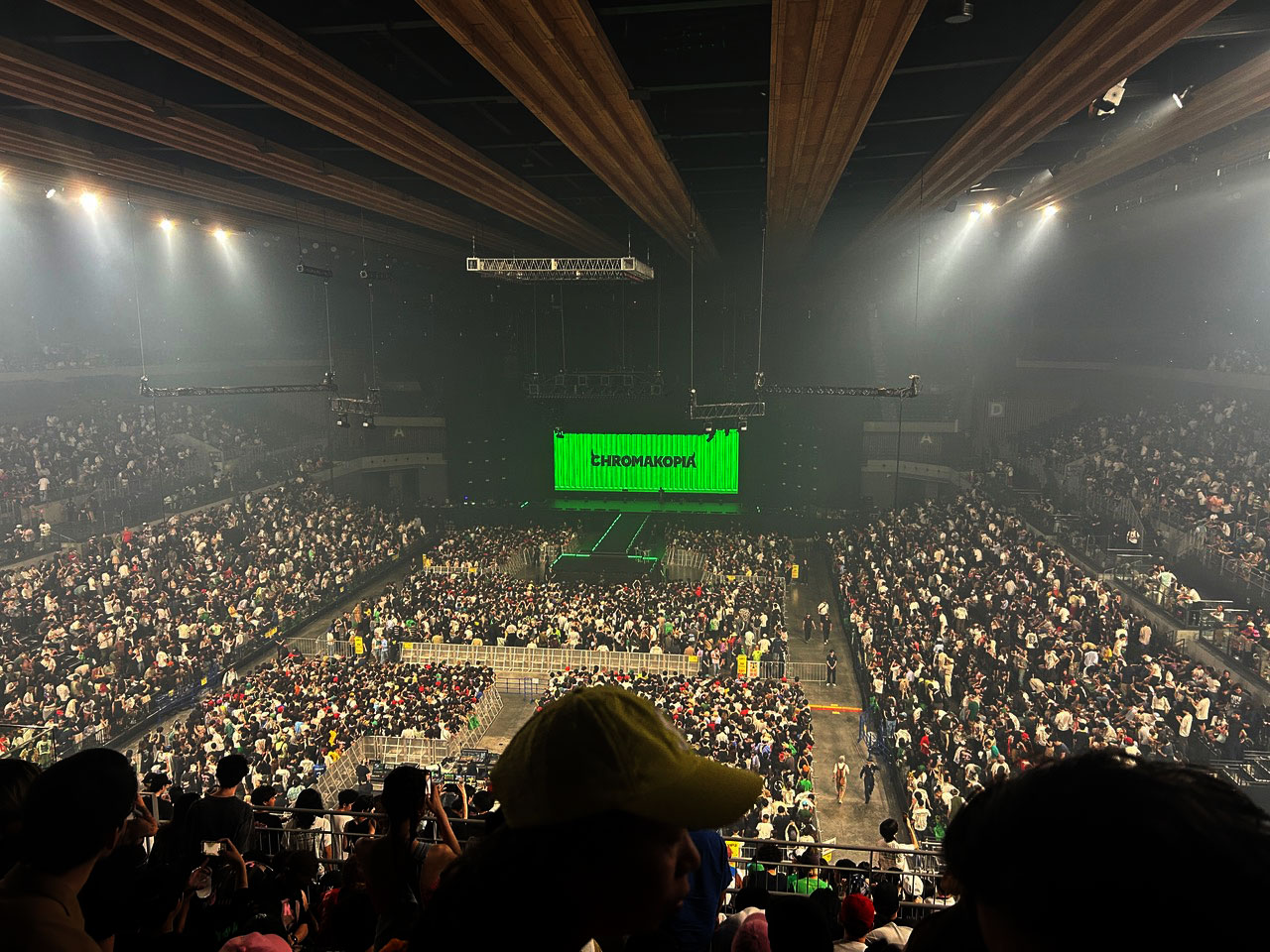
 2017年に行われた最後の来日公演から8年、タイラー・ザ・クリエイターが東京に降り立った。今回はお台場・有明アリーナで二夜連続(9月9日、10日)という大舞台。かつて恵比寿リキッドルームでの一夜限りの公演を観た人なら、その規模の違いはまさに天と地ほどだと実感するだろう。タイラーは紛れもなく人気者であり、世界で最も優れ、最も影響力を持つラッパーのひとりだ。そして本人も認めるように、タイラー自身は疲れを覚えている。
 OFWGKTA(Odd Future Wolfgang Kill Them All)がまだTumblrを拠点にし、その思想と広告戦略がまさにそこに刻まれていたローファイなデジタル時代から彼らを追いかけてきた私だが、残念ながらこれまで一度もタイラーをステージで観ることは叶わなかった。YouTubeを通じて彼と一緒にステージダイブをする自分を想像したり、彼の最初の3枚のアルバムに合わせて跳ね回る自分を思い描くしかなかった。そして有明アリーナをほぼ満員にした二夜の観客の8割は、おそらく私と同じ状況だったに違いない。
 オープニングを任されたのはバンドのParis Texas。タイラーの熱量とフロウをなぞるように、観客を温める役割を見事に果たしてみせた。彼らの演奏の前後には、二公演目にして最後となる日本公演を待ちわびる熱気がホールを満たし、人びとは席を探しながら廊下を駆け抜けていた。その光景に自然と頬が緩む。日々のメディア過剰時代にあっても、こうした切実な「待ち遠しさ」や「胸の高鳴り」がまだ健在であることに、私は心から安堵する。
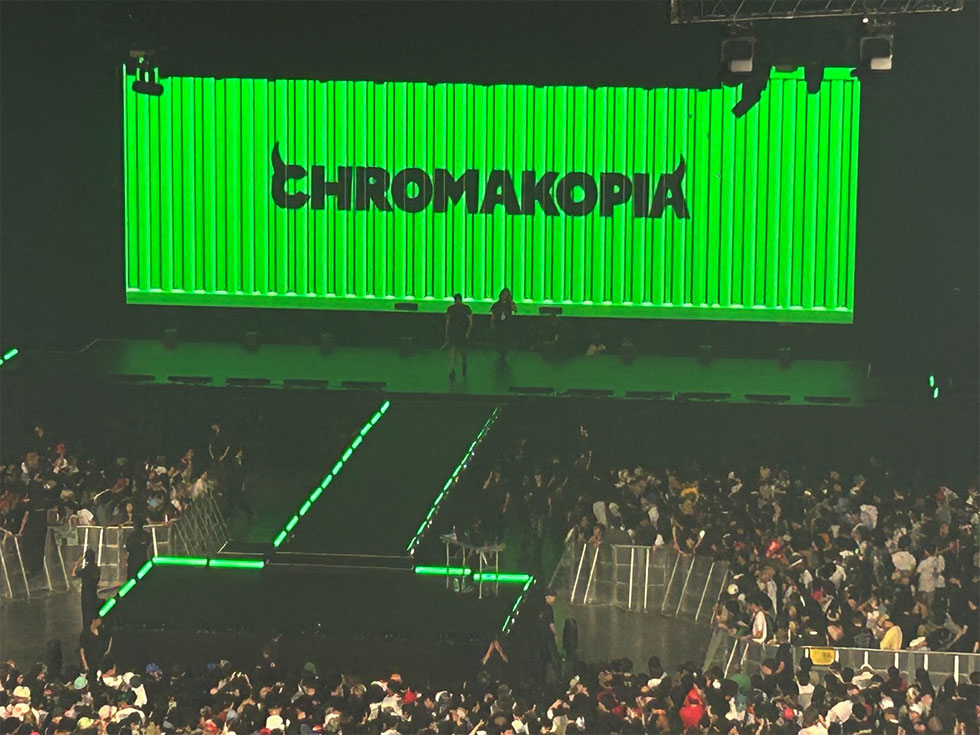
 照明が落ち、巨大スクリーンが一斉に光を放つと、新作『Don’t Tap the Glass』の映像が流れはじめ、観客の熱気は一気に高まった。そしてそのまま、タイラーは“Big Poe”でアリーナ全体を揺らしにかかった。残念ながら私は三階席に追いやられてしまったが、周囲の観客の一部は、これがダンス・ミュージックであることを忘れてしまったかのように静かで、その分アリーナのフロアは熱狂的に応えていた。
 ステージに現れたタイラーは真っ赤なレザーパンツに白いTシャツ、そして赤のレザージャケットという装い。観客の多くが30歳未満であることを考えると、この色彩の組み合わせがマイケル・ジャクソンの『Bad』や『Thriller』を想起させるものだと気づいた人は少なかったのではないだろうか。タイラーが披露した数々のムーンウォークを見れば、その内輪的なジョークは明らかだったはずだ。
 『Don’t Tap the Glass』の鮮やかな色彩から、次の曲群では『Chromakopia』の緑を基調とした演出へと移行した。だが、ここで違和感を覚えた。タイラーの責任ではないが、ヴィジュアル・チームはスクリーンの光演出に偏りすぎており、ステージ上のタイラー自身は闇に包まれてしまっていたのだ。曲がひとつふたつと続くあいだも、彼の姿がほとんど見えない時間があり、観客としては落ち着かない体験となった。

 音楽自体は素晴らしく、タイラーは純粋なポジティヴ・エナジーの塊として、心を込めてラップを届けてくれた。もっと多くのラッパーがこうした愛情をもってパフォーマンスをすれば、と願わずにはいられなかった。しかし、それでもなお舞台演出には混乱の影が残った。これまでの公演映像を見返してきた私は、今年7月までのツアーでもタイラーが『Chromakopia』のプロモーションに集中し、仮面、アフリカ風のヘアスタイル、そして緑のスーツを纏っていたことを知っている。だが、新作『Don’t Tap the Glass』が突如リリースされたことで、そうした演出はすべて覆され、東京の観客はその世界観を体験できなかった。過去の公演映像で見た華麗な舞台美術を心から楽しみにしていたが、有明アリーナの舞台装置は巨大スクリーンがあるだけで、それ以上は何もなかった。この特別な東京公演における演出の物足りなさは、まさに痛手だった。仕事を休んでまで足を運んだ観客にとってはなおさらだ。
 それでも、知っている曲では声の限りに歌い、馴染みのない曲では耳を傾け続け、一度も座ることはなかった。だがタイラーは座った。三度も。そしてそのうち一度は、床に仰向けに寝そべってしまったのだった。

 “Take Your Mask off”で彼が吐き出した深い心の傷——それはたしかに私の胸にも響いた。本物の誠実さがそこにあった。だが同時に、彼は何度も「暑い」とこぼした。真っ赤なレザージャケットを着たまま、一度も脱がずに。さらに彼は、「しばらく日本には戻ってこないだろう」と、観客の心を射抜くような言葉を投げかけた。思い返せば、前回の東京公演は2017年、ほぼ10年近く前のことだ。そして彼は繰り返し「疲れた」とも語った。私は3〜4時間にわたる長丁場のステージをこなすバンドを見てきたが、この日のタイラーの公演はわずか1時間20分だった。

 もちろん私はライヴを楽しんだ。謎めいた存在であるタイラーを間近に感じられたことは大きな昂揚をもたらした。しかし、ステージ上で「疲れている」と訴える姿には苛立ちも覚えた。時差ボケ、過剰に熱狂的なファン、日々絶え間なく求められる発言、仲間に囲まれない孤独——そうした重荷を背負う彼に共感しないわけではない。だがそれは、毎朝4時に起き、夜8時まで働きづめだった父の労働や、複数の子どもを出産し、7〜9時間立ち仕事をしてから家に帰って夕食を用意した母の姿から聞こえる、「疲れた」と同じではない。
 彼はたしかに観客に感謝していた。しかし、舞台演出の乏しさや、人気曲を断片的に繋いだメドレー形式——それぞれが一節で切られてしまう構成には、「完全なパッケージ」を体験できなかった物足りなさが残った。
 もし今回の東京公演を観た人がいるなら、ぜひ7月にニューヨーク・ブルックリンのバークレイズ・センターで行われたパフォーマンスを観て比較してほしい。


8 long years since his last show in Japan in 2017, Tyler the Creator touched down in Tokyo for 2 nights at the Ariake Arena in Odaiba (Sept 9th and 10th). Unlike his one show at Liquid Room in Ebisu before, packing two dates at Ariake are like day and night. Tyler is hands down popular, one of the best and one of the most influential rappers around the world. And by his own admission, Tyler is tired.
Despite following OFWGKTA from their Tumblr days when literally their ethos and advertising was prominent there (the good old low-fi digital days), I have unfortunately never seen him on stage. Only through YouTube was I able to imagine myself stage diving with him or bouncing to his first 3 albums. And I am sure 80 percent of the audience over the 2 almost sold out nights were in the same boat.
Tyler brought the band Paris, Texas to warm up the crowd and they didn`t fail in their mission to make as best an impression as possible emulating Tyler`s energy and flow. Before and after they took the stage, the anticipation for Tyler for this second and last show in Japan, was very palpable with people running in the hallways anxious to find their seats. This energy brought a smile to my face. Despite daily media oversaturation, I`m glad that anticipation and excitement are still alive.

Once the lights came down, the jumbo screens lit up and images from the new release “Don`t Tap the Glass” appeared gassing everyone up and just like that Tyler started the arena moving to “Big Poe.” Unfortunately relegated to the third floor, it did seem some audience members near me forgot it was dance music but the floor didn`t.
Tyler was out from the beginning dressed totally in red leather pants, white T and a red leather jacket. With a significant segment of the audience under 30, I fear they didn`t get the Michael Jackson reference with the color coordination reflecting “Bad” and “Thriller.” The inside joke should have been obvious with many of the moon walk dance moves Tyler pulled off.
From the bright colors of “Don`t Tap the Glass” the stage changed with the next songs to the green of “Chromakopia” and it`s here where I felt things became a bit off-kilter. I don`t blame Tyler for this but his visual team focused too much on creating nice lights for the jumbo screens while Tyler on stage was almost surrounded in darkness. For more than one song. It was disorientating.
The good music flowed and Tyler, just a ball of pure positive energy, rapped with the heart and love I wish more rappers did. But still there was bits of disorientation. Having watched earlier shows, even up til July of this year, Tyler had focused largely on promoting and performing “Chromakopia” and wore the outfit and hairstyle that he created for it on stage. Mask, African hairstyle and green suit. With “Don`t Tap the Glass” suddenly released though, it seems he threw all of that under the bus so Tokyo audiences didn`t get to experience any of it. Having also seen video of past years of great performances, I REALLY looked forward to a gorgeous set design. The Ariake Area set design unfortunately were literally just jumbo screens and nothing more. The lack of effort for such special show for Tokyo hit me bad. Like I look time off of work to see this show.
I sang my heart out at songs I knew and listened intently to songs I wasn`t so familiar with and I never sat down. But Tyler did. Three times to be exact. Once even lying flat on the ground.

Yes, he was spitting out deep emotional trauma with “Take Your Mask Off” and I fell that. It hit me. All that sincerity. But more than once he complained that it was hot despite wearing a leather jacket he never took off. He sent out arrows to pierce everyone`s heart saying he wouldn`t be back any time soon (keep in mind he hasn't been to Tokyo since 2017 - that`s almost a decade) and complained that he was tired. I`ve seen bands play 3 to 4 hour shows and Tyler`s show was just an hour and 20 minutes.
I enjoyed all of the concert. Being close to the enigma that is Tyler left me high but Tyler complaining on stage about being tired irked me. Though I have empathy for anyone combatting jet lag or having obsessive fans or tons of people asking your opinion every day or the loneliness of not having a crew around to mentally protect you, it still isn`t the same as my father who woke up at 4am to drive to work and stay til 8pm 5 times a week. Or my mother who gave birth to several children and then went back to work standing on her feet for 7 to 9 hours before going back home to cook dinner. I understand he was grateful for everyone coming to the show but with the set design, medleys of his most popular songs - each song cut down to one verse, it felt like we didn`t get the full package.
For anyone who saw the show, I encourage you to watch his performance in New York City this July at Barclays to compare.

MC Yallah & Debmaster - ele-king

 日本や世界各地のクラブ・シーンを席巻しているエモ寄りのメロディック・ラップの氾濫からひととき解放されるかのように、ヤラ・ガウデンシア・ムビデ( Yallah Gaudencia Mbidde)、すなわちMCヤラー(MC Yallah)のセルフタイトル新作『Gaudencia』は、Nyege Nyege のサブレーベル〈Hakuna Kulala〉からフランス人プロデューサーのデブマスター(Debmaster)との共作として登場した。これはすでに熱気を帯びた夏にさらにスパイスを振りまく、革新の清新な空気であり、意識を覚醒させるバンガーの数々だ。2023年のブレイク作『Yallah Beibe』が放った生々しいエネルギーと昂揚を継承しつつ、今回のヤラーとデブマスターはさらにいっおう音響的一貫性を獲得している。まるで宿命に導かれた音響的な結婚のごとく、互いが互いを突き動かし、より高みへと刺し合うようにして。
 ケニアに生まれ、ウガンダで育った背景は、言語の仕組みを自在に連結するためのコードをヤラに授けた。彼女はルガンダ語、ルオ語、スワヒリ語、そして時折の英語を切り替えながら、それぞれの言語がもつ力を最大限に引き出し、すべてを猛烈な韻律のなかで機能させている。
 これはマムブル・ラップでも、2分間に40語しか吐き出さないエモ的な歌唱でもない。これはバトルラップ・スタイルだ。週末のニューヨークのバスケットコートに持ち込まれるような、あるいはあらゆるコンテストに投じられるようなものだ。英語を母語とする私にとって、ラッパーの言葉を理解できないことに多少の寂しさはある。だが“Omulinji”のようなトラックでは、そのもどかしさはメロディとフロウに慰められ、魅了される。優れたラッパーは、外部の聴衆が渡れる旋律の橋を築くのだと、そこには単純に示されている。

 アルバムのテンポは冒頭から狂騒的で、ハイプを積み上げていく。冒頭曲“Higher”のシンセサイザーの響きからして、その昂ぶる予感が全身に伝わってくる。トラックメイカーとしてのデブマスター(Debmaster )の手腕は、必要な余白と緊張感を残し、MCヤラにマシンガンのようなケイデンスを浴びせるだけの空間を与えている。そして続く“Kujagana”では夏らしいバウンス感を解放し、どこの都市でも通じるメロディを響かせる。地下鉄のなかで自然と口ずさめるような、記憶に残る旋律だ。
 1曲目以降、このアルバムの大部分はディープでスローなリズムに身を委ねている。現代アフリカのスロービートやアフロビーツと、西洋で人気のグルーヴィなエレクトロニクスとのあいだに心地よく収まり、クラブで多用されるガバの硬質な音を相殺するかのようだ。

 ヤラーにとりわけ惹かれるのは、そのラップのフロウ、歌唱、パフォーマンス・スタイルはもちろんだが、全体的な美学において、セクシュアリティを最優先にしていない点にもある。だいたいこのご時世、裸同然の格好をせず、言葉を発する前から腰をくねらせたりしない女性ラッパーがバズったりすることは困難だろう。実力派のDoechii(https://www.ele-<https://www.ele-/>http://king.net/review/album/011615/)でさえも、注目を集めるため、真っ裸になってヴィデオを制作したほどである。しかし、『Gaudencia』におけるヤラーは、ゲストなしでアルバム全体を牽引する女王の風格を見せつける。13曲すべてにおいてゲストも客演プロデューサーも存在しない。サウンドは一貫しており、メッセージは純粋無垢で、そのゆえに圧倒的な磁力を放っている。そして率直に言えば、リリックを完全に理解できなくとも、ヤラの才能はジェイ・Z級だ。
 願わくは、ヤラーがアメリカのしばしば言語的排外主義に陥りがちなラップ・カルチャーを突破してほしい。現実にはそれが起こるとは思えないが、それでもなお願わずにはいられない。


In a welcome break from the plethora of emo-driven melodic rap taking over the club scenes here in Japan and in many parts of the world, Yallah Gaudencia Mbidde aka MC Yallah`s new self titled work “Gaudencia” with Debmaster on the the Nyege Nyege`s sub-label HAKUNA KULALA, is the fresh air of innovation and mind-awakening bangers necessary to bring spice to an already hot summer.
In a continuation of the raw energy and excitement around her breakthrough 2023 “Yallah Beibe,” Yallah and Debmaster go even further into sonic coherence showing that they were meant to each other, an ordained sonic marriage by fate, each half needling each other toward greater excellence.
Being Kenyan, raised in Uganda showered Yallah with the codes necessary to interconnect with the inner-workings of number languages. Yallah toggles between Luganda, Luo, Kiswahili, and brief moments of English accessing the greatest parts of each language and making them all work in rapid fire cadences.
This isn`t mumble rap or 40 words in a 2 minute emo-sing song, this is battle rap style. The type one would take to the basketball court in New York City on the weekend or any contest. For myself as a native English speaker, there is a little sadness in not being able to understand anything a rapper is saying. But in a track like “Omulinji," my mental frustrations are put to rest with melodies and flows that mesmerize, showing simply the best rappers build melodic bridges outsiders can cross.
The pace of the album from the beginning is manic, hype building. You can feel the anticipation from the opening synths in opening “Higher.” Debmaster`s craft as a track maker leaves space and just enough tension giving MC Yallah tons of air to fire machine gun style cadences. And then allows summer bounce vibes in the following “Kujagana,” easily translatable in any city with melodies, memorable and hummable on any subway.
Beyond the first track, the majority of the album grooves in deep slow rhythms fitting comfortably between modern African slow beat or afrobeats and groove heavy electronics popular in the Western world to offset much of the gabber music played in clubs.
What particulary attracts me to Yallah is her rap flow, singing, performance style or overall aesthetic, not prioritizing sexuality first. It`s difficult now to find viral female rappers that aren`t near naked or gyrating before they even say a word. Even equally as talented Doechii has made video(s) completely butt naked to attract attention. In “Gaudencia” Yallah shows queen status carrying the whole album without any guests. 13 tracks without any guests or even guest producers. The sound is consistent and the message is pure, and by being so, incredibly magnetic. And truth be told, Yallah is Jay Z level talented, even without understanding fully her lyrical content.
It would be my hope that Yallah could break through the often linguistically xenophobic rap culture of America. I don`t see that happening but it is still a hope.

Simon Frank - ele-king

 Mars89が主宰するレーベル〈Nocturnal Technology〉より、カタログ10枚目を飾る新譜のリリースです。

 カナダに出自を持ち上海を拠点に活動する音楽家・サイモン・フランクによるアルバム『VICTIM OF A NEW AGE』は、ブルボンズ・クオークやフラックスなどの影響下にある9曲入のEBMライクな作品で、レーベル曰く「アウトサイダーポップとダンス、オールドスクールと未来志向が交錯する、ポストパンク・エレクトロ」とのこと。かような矛盾を両立させることであらたな視点を浮かび上がらせるような作風は、まさしく日本の音楽家・Mars89の持つ美学と通ずるところもあり、上海と東京の2都市をつなぐ1枚であることがうかがえる。

 マスタリング・エンジニアにはTorei名義で音楽家としても活動するRei Taguchiが参加、闇夜に立ち現れるアンダーグラウンドの美学をひしひしと感じられつつ、「ニューエイジの犠牲者」という皮肉なタイトルにはかつてレイヴがわれわれに見せてくれた夢のつづきが投影されているような気も。デジタル/カセットともにBandcampにて発売中。

Artist: Simon Frank
Title: VICTIM OF A NEW AGE
Label: Nocturnal Technology
Format: Digital / Casette
Release Date: 2025.8.21
Buy / Stream: https://nocturnaltechnology.bandcamp.com/album/victim-of-a-new-age

Tracklist:

1. Premonition
2. Unmask
3. Cave
4. Attrition
5. Puppetmaster
6. Shopping Mall
7. Pass
8. Classic Cars
9. Victim of a New Age

Composed by Simon Frank
Mastered by Rei Taguchi (Saidera Mastering)

 Mars89主宰のレーベルNocturnal Technologyより、上海を拠点に活動するカナダ出身のプロデューサー、サイモン・フランクによるNew-Wave / EBMスタイルのアルバムVICTIM OF A NEW AGEが登場。ミニマル・シンセのソングブックからそのまま抜け出したような皮肉っぽいボーカルが、アシッドなベースライン、歪んだブレイクビーツ、渦巻くダブ・エコーと組み合わさり、全体を通してオールドスクールでアナログライクな雰囲気を保ちながらも、断固として未来志向なアルバムとなっている。

アーティスト・ステートメント:
2021年の夏に前作のアルバムをリリースしてから数か月後、私はElektron Digitaktのサンプラーを購入した。しばらくの間、かなり限られた機材で音楽を作ってきたので、サンプルや、より直接的でない構造でどう実験できるか試してみたかった。制作には時間がかかった。理由の一つは北京から上海への引っ越しであり、もう一つは2022年の中国での生活がコロナ禍の影響でやや不安定だったからだ。しかし最終的に、新しいサンプラーを使ってブレイクビーツを演奏・加工する方法を習得し、それが新たな可能性を切り開いた。そして、産業音楽やパンクが新しいテクノロジーによってより柔らかくファンキーなものへと変化した2枚のアルバムのことを考えるようになった。Bourbonese Qualkの My Government Is My Soul とFluxの Uncarved Block だ。Bourbonese Qualkのアルバムを初めて聴いたとき、あまりにもアンダーグラウンドな作品なのに、子どもの頃に初めて触れたエレクトロニック・ミュージック——Fatboy SlimやThe Chemical Brothers——を思い起こさせたことに驚いた。私はそれと同じように、奇妙でありながら耳に残り、そして少し素直さを恐れないようなエネルギーを持つ作品を作りたいと思った。
 私は普段、自宅で曲を書き、その後ライブで演奏して、うまくいく部分、そうでない部分、そして即興の中で現れる細かなディテールを確認している。今作の全曲も、ロックのライブハウスやダンスミュージックのクラブで演奏しながら練り上げた。
 キックドラムが4つ打ちのときでも、パーカッション、サンプル、シンセラインを使って、リズムに動きや、見かけ以上の複雑さを与えるように心がけた。よりブレイクビーツ主体やテンポの遅い曲を作る際には、90年代に子どもとして聴いた音楽の曖昧な記憶を思い出していた。それは、前述のメインストリームなアーティストだけでなく、当時父がよく聴いていたBill Laswellのプロジェクトや、最近になって知ったScornやTechno Animalといったアーティストも含まれる。また、スウェーデンの The Flesh-Eating Bugs の2022年のアルバム Melting Pot にも影響を受けた。この作品は、まるでブレイクビーツを用いて作られたノイジーなインディーロックのようだ。「Premonition」は、非常に霧の濃い午後に、自宅近くの明代の墓の周囲を散歩した後に書いたもので、そのゴシックな音はその影響かもしれない。「Pass」については、書き始めたときには意図していなかったが、プロト・ダブステップのような響きがあるところが気に入っている。
 上海は多くの点で北京よりも暮らしやすいが、容赦なく商業主義的でもある。いくつかの歌詞を書くときには、文化が単なる消費の対象にすぎない場所で文化を創るということがどういう意味を持つのかについて考えていた。アルバム制作の終盤にはウィリアム・ギブスンの作品を多く読んでおり、その先見的で(暗い)未来像だけでなく、過去のイメージや観念が私たちをどのように付きまとっているかという彼の描写にも刺激を受けた。振り返ってみると、このテーマは「Victim of a New Age」や「Classic Cars」にも現れていると思う。

アーティストバイオグラフィー
サイモン・フランクはカナダに生まれ、ニューデリーと北京で育ち、現在は上海に在住している。彼は高校生の頃に音楽活動を始め、2008年のオリンピック前後に中国の首都で芽生えたアナーキーなノイズおよび実験的ロックのシーンに参加した。インド古典音楽や自由即興から着想を得た濁ったドローンやループによる実験を経て、彼の音楽は徐々にポストパンク・エレクトロニクスへの独自のアプローチへと進化し、アウトサイダー・ポップと没入型のダンスミュージックが同等の割合で融合するスタイルとなった。ミニマル・シンセのソングブックから抜け出したような皮肉げなボーカルが、腐食性のアシッドハウスのベースライン、重く響くドラムマシン、歪んだブレイクビーツ、渦巻くダブ・エコーの塊、そしてダンスホール特有の低音圧と結びついている。
サイモンは、兄でありGong Gong Gongのメンバーでもあるジョシュ・フランクとのデュオ Hot & Cold、アレックス・チャン・ホンタイとオースティン・ミルンとの Love Theme、そして Love Research Institute といったバンドで活動してきた。自身のイベント・シリーズ XMQ Presents を通じて、John T. Gast、Phuong-Dan、Tolouse Low Trax、First Hate、Yearning Kru といったDJやアーティストを招聘している。

instagram: https://www.instagram.com/sf_xmq/

---

Nocturnal Technology
Bandcamp
Store
Soundcloud
Instagram

bar italia - ele-king

 当初は顔も明かさぬミステリアスなバンドだったバー・イタリア。ディーン・ブラントが一枚かんでいるのではないか、という点からも注目されたりした彼らだけれど、〈Matador〉へと移籍して以降は表立ってメディアにも登場するようになり、2023年の2枚──『Tracey Denim』と『The Twits』──はそれまで以上にバー・イタリアの存在を知らしめるアルバムとなった。
 そんな彼らの新たなオリジナル・アルバムが10月17日にリリースされる。題して『Some Like It Hot』。先行公開中の “Fundraiser” を聴きながら、楽しみに秋を待ちましょう。

artist: bar italia
title: Some Like It Hot
release date: 2025.10.17
label: Matador Records / Beat Records
Pre-Order: https://www.beatink.com/products/detail.php?product_id=15295

Tracklist:
01. Fundraiser
02. Marble Arch
03. bad reputation
04. Cowbella
05. I Make My Own Dust
06. Plastered
07. rooster
08. the lady vanishes
09. Lioness
10. omni shambles
11. Eyepatch
12. Some Like It Hot
13. FH (Bonus Track for Japan)

・国内盤CD
(解説書・歌詞対訳付き/ボーナストラック収録)
・輸入盤CD
・輸入盤LP(ブラック)
・限定盤LP(ターコイズ・ヴァイナル)
・日本語帯付きLP
(日本語帯付き/歌詞対訳・解説書付き/ターコイズ・ヴァイナル)
・国内盤CD+Tシャツセット
・日本語帯付きLP+Tシャツセット

Mocky - ele-king

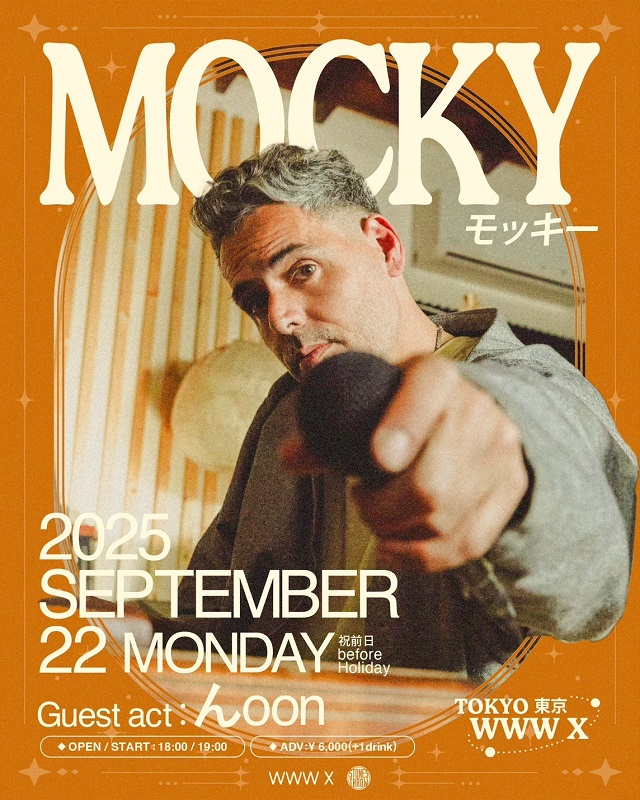
 ジャンルにとらわれず多方面に活躍している音楽家、モッキーが6年半ぶりに来日する。2か月ほど前に最新作『Music Will Explain』を〈Stones Throw〉からリリースしたばかりの彼だけど、こたびのツアーでは9/22(月)@東京WWW X、9/24(水)@大阪CONPASS、9/25(木)@京都CLUB METROの3都市を巡回。東京公演にはいま注目のエクスペリメンタル・ポップ・バンド、んoonが出演することも決まっている。
 今回のツアーは6人編成のバンド・セットで臨む予定で、モッキー本人はドラム、キーボード、ヴォーカルを担当、ステージには国内外の実力派ミュージシャンが集結するという。見逃せない一夜になりそうだ。

Mocky Japan Tour 2025 - “Music Will Explain” Album Release Tour
9/22(月・祝前) 東京公演 @WWW X(オープニングゲスト:んoon)
https://www-shibuya.jp/schedule/019084.php
9/24(水) 大阪公演 @CONPASS INFO公演情報
https://www.conpass.jp/7687.html
9/25(木) 京都公演 @ CLUB METRO INFO公演情報
https://www.metro.ne.jp/schedule/250925/

Mocky(モッキー)、6年半ぶりの東京公演のゲストアクトに「んoon」の出演が決定!

これまでFeist、Kelela、Moses Sumney、Vulfpeckなどのプロデュースを手がけ、GZA、Kanye West、Cordae、G-Dragonにサンプリングされるなど、幅広いアーティストの音楽にその痕跡を残してきた変幻自在のアーティスト、Mocky(モッキー)。

日本でも根強い人気を持ち、数多の来日公演、坂本慎太郎やcero、中村佳穂BANDとの共演、ラッパーKID FRESINOやCampanellaの楽曲プロデュースなども行ってきた彼の最新アルバム『Music Will Explain』がStones Throwより6月27日(金)にリリース。その新作を携え、2019年以来約6年半ぶりの来日公演が決定した。

「なぜ私たちは創造するのか?」「なぜ音楽を作るのか?」

『Music Will Explain』は、「人間の声が響く場所」「愛や悲しみ、つながりを受け止める心のスペース」、そして「言葉では説明できないことを伝える音楽だけの領域」——それらすべてをめぐる、Mockyなりの“音楽による証明”。

東京公演のゲストアクトに「んoon」の出演が決定!
ボーカル、ハープ、キーボード、ベースというユニークな編成でノイズ、フリージャズ、ヒップホップ、ソウル、パンク、クアイヤー、エレクトロなど、あらゆる音楽のエッセンスを不気味に散りばめた音を演奏し、昨年リリースした1stフルアルバム「FIRST LOVE」が各所で賞賛を浴びた唯一無二のバンド「んoon」のライブに乞うご期待。

チケットは今週末7/26(土)より一般発売。

[公演概要]
MOCKY
出演:MOCKY(band set) / Guest Act:んoon
日程:2025年9月22日(月・祝前日)
会場:WWW X
時間:open18:00 / start19:00

interview with Colin Newman/Malka Spigel - ele-king

 「時代の流れに身を任せながらも、自分の原則を守ろうとする」というのが、マルカ・シュピーゲルが、過去数十年にわたって音楽と人生の道を歩む上で指針としてきた哲学を、自ら説明した言葉だ。イスラエル生まれで最初はベルギーを拠点とするポスト・パンクと実験的ポップ・バンド、ミニマル・コンパクトとして活動を始めた。
「君は本当に詩人だね」と、この時間の大半で冗談交じりに語ったのは、彼女のパートナーでイギリスのポスト・パンク時代の伝説のバンド、ワイアーのリード・ヴォーカル兼ソングライターとして名を馳せたコリン・ニューマンだ。
やりとりのなかで、行ったり来たりしながら互いの空白を埋めるように話し、どちらかが割って入って会話の流れを調整する。コラボレーションが基本という感覚こそが彼らの自然な会話の仕方の本質の一部であり、おそらくそれが、音楽家として長く継続できている協働の特性をも垣間見せているのかもしれない。


Immersion
Nanocluster Vol. 1


Immersion
Nanocluster Vol. 2


Immersion
Nanocluster Vol. 3

 1980年代にベルギーで出会ったふたりの、尽きることのない好奇心、新しい音に対する鋭いアンテナを張り巡らせること、そして他者の作品を吸収して共有したくてたまらない、スポンジのような吸収力と解放的な感性が組み合わさったことで、魅惑的で変わりやすいオルタナティヴ・ポップ・ミュージックの歴史に大きな影響を与える(同時に影響を受ける)存在となった。

 〈スウィム(Swim ~)〉レーベルの共同オーナーとして、Githead名義のバンドとして、ここ最近ではエレクトロニック・デュオ、イマージョン(Immersion/没入の意味)名義として『ナノクラスター(Nanocluster)』における複数の人と共働するスピーゲルとニューマンは、おそらくこれまでで一番活発な活動を展開している。今年のはじめ、彼らは『ナノクラスター』シリーズの第3弾をリリースし、イマージョンとしては、アメリカのアンビエント・カントリー・トリオのSUSSと共に砂漠と海、コンクリートと空を融合させた、ヒプノティックで本質的なテクノで宇宙的なコラージュを創り上げた。その一方、イマージョンのニュー・アルバム『WTF?』は時代精神を捉えたタイトルで、9月にリリース予定だ。

 下記は、昨年夏に『ナノクラスター』の「vol.2」「vol.3」のリリース期間中に実施した、スピーゲル(MS)とニューマン(CN)とのインタヴュ-の編集版である。

80年代半ばのブリュッセルに本物のシーンがあった。〈クラムド・ディスクス〉だけでなく、〈クレプスキュール〉もあり、両レーベルにたくさんの国際的なアーティストが集まって、結果的にブリュッセルに住むようになったりしていた。物価も安くてツアーもやりやすかったし。

この世界に入るきっかけは何だったと考えていますか?

マルカ・スピーゲル(以下、MS):知識も技術もない状態でも、とにかく人と集まって一緒になって演奏することから始まった気がします。それでも、クリエイティヴであることの力がどういうものなのかを感じることができたのが大きかった。そして私は‶一緒に居ること〟の力を感じ続けている。私たちが常にコラボレーションをするのはそのため。他の人と演奏すると音楽面だけでなく、人間関係においても魔法みたいなものを感じるから。

コリン・ニューマン(以下、CN):僕はマルカとはまったく違う世界から来ています。いわゆるハードコアからネオクラシカルまでの、ありとあらゆる音楽の領域で、合奏(アンサンブル)にはふたつのアプローチの仕方があると思う。ひとつは、誰かが何か書き留めたものを皆で演奏するタイプ。もう一方は、皆で部屋に集まってその場で一緒に何とかするタイプだとすると、僕は最初の方。ワイアーが、ジャミングが下手くそなのは、周知の事実! 「部屋で一緒に音楽を作ってみよう!」と言っても決して何もできあがらない。基本的な作品の構造と要素があれば、非常に良いものになる可能性はある。それに対して、マルカは完全に怖い物なしなんだ。彼女が文字通り演奏を始めると、その周りに必ず何かが見つかるという具合。僕たちが最初に出会ったのは1985年で、それからほぼ継続的に長い時間、一緒に仕事をしている。

あなたは、ミニマル・コンパクト(Minimal Compact)の5枚目のアルバムをプロデュースされましたね?

CN:そう、『レイジング・ソウルズ/Raising Souls』をね。

その頃、つまり1980年代初頭のベルギーの音楽シーンは、アクサク・マブールとザ・ハネムーン・キラーズのマーク・ホランダー(オランデル)が〈クラムド・ディスクス〉で活躍していた非常に興味深い時代だったようですね。

MS:そう、ある種のエネルギーがあった。レーベル周辺にはタキシードムーンやその他の多様な音楽があって、コリンは完全に魅了されていたと思う。彼は、ロンドンで公有地に不法滞在するような生活から、ブリュッセルに移ってイギリスよりも少し穏やかな人びとや美味しい食事に出会えた。

CN:そうなんだ。すごく気に入っていたよ。本物のシーンがあった。80年代半ばは常に魅力的な時代で、〈クラムド・ディスクス〉だけでなく、〈クレプスキュール〉もあり、両レーベルにたくさんの国際的なアーティストが集まって、結果的にブリュッセルに住むようになったりしていた。物価も安くてツアーもやりやすかったし。

MS:ロンドンはかなり厳しい場所だった! 私はロンドンに行き始めたばかりの頃にショックを受けたの。ものすごく貧しい感じがして。あなたがブリュッセルに惹かれた理由がわかった。誰かと恋に落ちた以外にもね……わかるでしょう?

CN:一目ぼれだったよ。

MS:楽しい場所だったけれど、(シーンが)衰退すると退屈なベルギーになってしまった。

CN:それは、ベルギーのシーンが心理的な境界線を越えてしまったからなんだ。フランドルとワロン地域はほとんど別の国とも言える場所で、シーンは〈R&S〉レコードがあったゲント(ヘント)に移ってしまい、そこがテクノ・シーンのすべてになった。突然、〈R&S〉と契約した国際的なアーティストたちが現れて、シーンを牽引するようになった。エイフェックス・ツインの最初のアルバムをリリースしたのも彼ら。〈ワープ〉レーベルが頭角を現して彼らの輝きを奪うまで、ゲントには強いシーンがあった。

MS:私たちが再びロンドンに興味を持ち始めたのもその頃だったね。

CN:たしかにね。ブリュッセルからゲントへの移住を考えるぐらいなら、ポーランドに移るのと変わらない。どちらにも同じ銀行、同じ店があるけど、言語もメンタリティも全然違う。それに、ロンドンはまさに、拡大し始めている時だった。

MS:私たちはいつも、物事が始まりそうな場所に惹かれる傾向があるね。

CN:僕は1986年にブリュッセルに移ったんだけど、僕たちがそこを離れたのは1992年になってからだった。その時、ロンドンではようやく電子音楽シーンが始まったところだった。

MS:そして私たちはレーベルを立ち上げて、多くの電子音楽のアーティストたちと知りったの。

CN:移住する前には、マルカのミニマル・コンパクトでの活動が下火になっていて、シンガーのサミー・バーンバッハの近所に住みながらあるプロジェクトに取り組んでいたんだけれど、進展しなかった。そしたら、マルカにソロ・アルバムの話が来たんだよね。でも、彼女は知らない雇われのミュージシャンたちとスタジオに入るのを嫌がり、自分たちのスタジオで、自分たち自身で作りたいと思った。

MS:それに、彼らは私たちの考え自体を理解してはくれなかった。その頃ちょうど、自分たちのスタジオを持つということをし始めたばかりだったから。今では普通のことなのにね。

CN:彼女は、‶もうやり始めたからには、最後までやり遂げたい。さっさとやってしまおう″と言ったんだ。ロンドンに引っ越す時には、ガレージをしっかりと録音ができる場所に改造してレコードを作ってから、リリースしてもらえるレーベルを探すつもりだった。持っていた僅かな金でガレージに防音を施して、新しいミキシング・コンソールを買い、レコードを完成させた。だけど、レコードを出してくれるレーベル探しには完全に失敗したんだ。そんななか、ミュート・レコード社長のダニエル・ミラーとミーティングをしたら、「ここまで全部を自分たちでやったのなら、自分たちで出せばいいのに。やり方はこうだ……」と、レーベルの運営方法を2時間かけて指導してもらった。そして突然、アルバムをリリースすることになった。

MS:(私たちの)典型的な回答ね! 質問に対して、もはやまったく別の話題になってしまっている……!

その後、ミニマル・コンパクトのサミー・バーンバッハと一緒に、オラクルという名でコンピレーションを制作して出した。2枚のレコードを出したところで、マルカが言ったんだ。「私たちはテクノ・レコードを作らなければ!」と。

これこそが私の理想のインタヴューの形ですよ。私がやるべきことが少なければ少ないほど良い!

CN:実は、僕たちがレコード会社を作ったことをマルカが認めるまでに一年かかったんだ。彼女にはそれがとても思い上がったことに思えたから! それでも僕たちはマルカの初のソロ・アルバムをリリースし、そこから利益を得ることができた。

MS:あの頃はいまよりもまだやり易い時代だったから。

CN:そして、人びとはもっと多く(音楽を)購入していた。その後、ミニマル・コンパクトのサミー・バーンバッハと一緒に、オラクル(Oracle)という名でコンピレーションを制作して出した。2枚のレコードを出したところで、マルカが言ったんだ。「私たちはテクノ・レコードを作らなければ!」と。

MS:私はそんなこと言っていないけど!

CN:いや、言ったよ!君はもっとインストゥルメンタルな曲を作るという想いにかられていた。そして、常に‶ミステリアス〟という言葉を好んでいたね。

MS:多分、そっちの方がより純粋だからだと思う。テクノには‶フロント〟というイメージがあまり無いところに惹かれたの。音楽の制作者がどこから来た、どういう人なのかは知らなくても、純粋な音楽だけがすべてだと思うようなところに。

CN:そうそう、『NME』では‶顔なしのテクノ・バカ(”faceless techno bollocks)″みたいにまとめられたけれど、それは‶ジャングル″のような言葉と同じで、最初はこき下ろしみたいな呼び方だけど、結局は受け入れられるんだ。‶顔なしのテクノ・バカ″なんて、素晴らしい発想だよね![編註:これはすぐにテクノの匿名性、音楽重視で作り手のルッキズムに依存しない態度を賛辞する言葉になった] 最初のイマージョンのレコードでは、僕たちはドイツ出身だと偽ってウィッグやマスクを着けて宣材写真を撮って、でたらめな偽名を使っていた。レコード会社としては、レコードをリリースするだけだから、それが誰によるものなのかは関係ない。それが最初のイマージョンのアルバム『オシレイティング/Oscillating』だった。

ほぼ同じ時期にリミックス・アルバムもリリースされましたよね?

MS:当時はほんとうに簡単だった。電子音楽のミュージシャンがたくさんいて、誰もがオープンで、「お願いできる?」と聞くと「もちろん、リミックスするよ!」という返事がもらえたものよ。

CN:それはロビン(ランボー、別名スキャナー)が始めたんだよね。バタシー・バークを歩いていた時、彼が「リミックスしてあげるよ!」と言ったんだ。我々も、いいね! という感じで。僕たちはそれが12インチ盤を出す口実になると思った。それで2枚分のリミックス・アルバムを作ったんだけど、2作目の頃には、テクノ界の少し有名なクロード・ヤングのようなアーティストがリミックスを手掛けてくれるようになって、それらのレコードが売れたんだ! まだレーベルを始める前の〈ファット・キャット〉がコヴェント・ガーデンにレコード店を持っていたから、少し多めに白盤を作って〈ファット・キャット〉に渡せば、彼らがトップDJたちに売ってくれていた。

MS:そうやって、自然と広がっていったの。あの自然な流れが好きだったな。今は、すべて業界の仕組みを通さなくてはならなくて、その罠から抜け出すのは不可能ね。

CN:それで、僕たちのそれまでの歴史とはまったく関係なく、ダンス・ミュージック界でクールな音楽を出すレーベルという評判を得たんだ。その次に、LFOのゲズ・ヴァーリーから連絡が来て、「いくつかのトラックがあるんだけど、ワープは全部が‵聴くための音楽′でないと出したくないと言っている。俺はダンスフロア向けの音楽をやりたいのに」と言うんだ。ちょうど息子のベンを迎えに行く車の中でそのカセットを聴いたんだけど、最初のトラック“クオ・ヴァディス/Quo Vadis”を聴いた瞬間にこれはポップ・ミュージックだと思ったね!

MS:彼はG-Manと名義を変えて12インチを出して、この曲は大成功を収めたし、今でもプレイされている。日本でのワイアーのライヴで、ある人がワイアーの出番の前に“クオ・ヴァディス”をプレイしていた。その人は、コリンとこの曲の繋がりを知らなかったと思うけど。聴いた瞬間に、「ワオ! まだプレイする人がいるんだ」と思った。

CN:まさにクラシックな、ダンスのできるミニマル・テクノとして、DJたちに愛されたよね。この頃には僕たちはもう恐ろしいほどの評判を得ていたんだけど、ひとつのスタイルに固執したくはなくて。そして、ドラムンベースが登場し、僕たちも夢中になった。テクノはある種、アメリカンな感じがしたけど、ドラムンベースはまさにロンドンの音楽で、70年代パンクのような興奮を覚えた。突然、信じられないほどのエネルギーの爆発が起きた。正直、90年代半ばのある時点では、もうドラムンベースさえあればいいという感じだった。自分たちでも少し作ったけれど、その後、ロニー&クライドという、ブレイクビートのより知的な側面に分け入って、違う領域に挑戦する人たちと仕事をするようになった。僕たちはもう少しダウンテンポ寄りの作品をいくつか出して、90年代後半にはポスト・ロックの渦に巻き込まれ始めた。僕たちは90年代をアンビエント・テクノから始めて、ポスト・ロックへとたどり着いた。その時の時流に乗ったということだ。レーベルをやるのであれば、常に現代的であり続けなければいけない。

いまの話を聞いて、あなたが先ほど話していたことを思い出しました。あなたは、ネオクラシックからその他のさまざまなジャンルへと続く音楽の糸のようなものについて話してくれましたが、それに名前は付けていないと言いました。実は私もそういったことをよく考えるのです。ジョン・ケージからブライアン・イーノが1970年代にやったこと、それからパンクの時代にもっとも興味深いバンドがやっていたことまで、線を引くことができるのではないかと。それは、クラシック・ロックの正典の枠組み外にある、並行歴史(パラレル・ヒストリー)のようなものではないかとね。

MS:ストリーミングが始まってからすべてが変わったのではないかな。音楽を届ける範囲や、仕組みそのものが変わったのでは?

CN:根本的に変わったのは、どこに力があるかということだと思う。例えば、90年代のインストゥルメンタル・ミュージックの台頭は、アーティストがアメリカやイギリス出身でなくても世界的に活躍できることを意味して、その変化はストリーミングの普及によって完成されたんだ。今ではその現象は‶グローカリズム(glocalism)〟と呼ばれていて、アーティストが自国で成功を収めながら世界中へと広げていくことができる。それと同時に業界は、完全に石化したかのような状態になって——僕が言っているのは、メジャー・レーベルや大手の独立系のことだけど——なんとか過去の体制にしがみつこうともがいている。権力の分散化は確実に起きていて、それをさらに加速化させる必要がある。

[[SplitPage]]

ドラムンベースが登場し、僕たちも夢中になった。テクノはある種、アメリカンな感じがしたけど、ドラムンベースはまさにロンドンの音楽で、70年代パンクのような興奮を覚えた。突然、信じられないほどのエネルギーの爆発が起きた。正直、90年代半ばのある時点では、もうドラムンベースさえあればいいという感じだ。

あなた方が一緒に働き始めた時、コラボレーションが重要になったと言っていましたね。年月を経て、それが大きく成長したように見えます。それはあきらかに、『ナノクラスター』の重要な要素のひとつですよね。

MS:それがすごく魅力的な領域なんです。長年音楽を作り続けていると、知らない人と一緒に働くこともあって、そんな時には自分の安全地帯から押し出されるようなことも起きてくる。どこか違う場所で、他の人たちのやり方に挑戦すると、視野が広がって、多くの選択肢を与えられるの。すべてのコラボレーションが私たちを新たな場所へと連れて行ってくれる。

CN:2000年代になると、ワイアーが再び始動して、それと並行してGitheadというバンドのプロジェクトにも取り組んでいた。10年前には、ブライトンに移住したんだけど、そこでまたイマージョンも復活させることにしたんだ。機材がかなりシンプルで、ただ一緒にギグをするだけでよかったから。イマージョンの前のアルバム『ロウ・インパクト/Low Impact』は1999年のリリースで、その次のレコードは2016年だった。長い間隔が空いてしまったけど、それが僕たちに自由に活動する空間を与えてくれた。それでアルバムを制作して最初は2枚の10インチ盤として発売し、後にCDに編集した――まるで島に住むアナログな生き物みたいなイメージで。実際にそれがタイトルになったんだけど(EP『アナログ・クリーチャーズ/Analogue Creatures』と『リヴィング・オン・アン・アイランド/Living On An Island』 をまとめたアルバム、『アナログ・クリーチャーズ・リヴィング・オン・アン・アイランド』)。実は僕たちがすでにその時、ブレグジットによる疎外感を感じ始めていたのがタイトルに表れているんだ。

今日の取材の前にその曲を聴いていて、そのことに強く感じ入りました。『リヴィング・オン・アン・アイランド』というタイトルと2016という年を見て「ああ、自分もその感覚を知っている!」と思ったんです。

MS:ブレグジットの投票時には、私たちは島に居て、あらゆるものから隔絶されているという強い感覚を覚えたの。

CN:僕たちは海辺に住んでいるしね。

MS:そう。そしてそれがある種の希望と楽観主義を同時にもたらしてもくれる。

CN:いくつかライヴやフェスティヴァルにも出演したけれど、大きな動きはなかったね。
でもブライトン在住の知人が、「ブライトンに居るなら、自分たちの手でシーンを作る必要がある」と言ったんだ。現地の音楽シーンは結構分断されているからね。

MS:ミュージシャンもすごく多いから!

CN:すごく多い! それで僕たちは、「それはどういう意味だろう? どうやったらシーンを生み出すことができるのか? クラブでイベントを企画してもいいけど、他の人とどうやって差別化できるんだろう? そうだ、コラボレーションの要素を入れてみよう」と思いついた。僕たちはターウォーター(Tarwater)とはベルリンのシーンの初期から何年も知り合いだったし、会場をみつけて、ターウォーターとイマージョンがコラボレートするイベントを企画しようということになった。彼らが数日間、僕たちの所に泊まり込んで一緒に曲を作ればよいと考えた。そして、それが上手くいったんだ。

MS:リハーサル中にもスタジオで録音ができたから、基礎となる録音を残すことができたしね。

CN:ザ・ローズ・ヒルという公共の、110人ぐらいのキャパの小さな会場でやったんだよね。ちゃんとしたお客さんで埋めるのも簡単な規模の。

これは、実はワイアーのブルース・ギルバートが人生と芸術について語った大事な声明のひとつ、「文脈がすべてだ(Context is all).」から来ている。僕はいわゆるビッグ・ボーイ・プロダクションと言われるものを常に嫌ってきた。レコードを聴いて、その背後に関わった‶プロデューサー″のエゴが透けて見えるような自己主張の強いもののことだ。

コラボレーションはどのような感じでやるのでしょう? 即興することもあるんでしょうか? それとも事前の準備の方が多めですか?

MS:まず私たちがアーティストにアプローチして、「私たちの方から3つの基本的なアイディアを送るから、あなたの3つの基本の考えを返送してください。何か思いついたものをそこに乗せてみてほしい」と言う。それを基に、あまりやり過ぎない程度に構築していく。それから相手と一緒になって完成を目指すの。毎回違うやり方にはなるけれど、それが基本的な構造かな。全然即興ではないけれど、完成度をそこまで高くしないから「うまく行くだろうか?」とか「良いライヴができるだろうか?」というような多少の緊張感もある。

CN:次に思いついたコラボレーションの相手がレティシア・サディールだった。‶クラウトロック・カラオケ″というものがあってね。

MS:ロンドンに長年住んでいる、日本から来た人が企画している、違うバンドの人達が集まってクラウトロックのヴァージョンを弾くという一夜があって、それが楽しいの!

CN:それをレティシア・サディールと一緒にやったんだけど、彼女はギター演奏の能力だけでなく、すべてのパートを覚えて参加したんだ。僕たちはそんなことをしたことがなかったんだけど! それを見て、彼女に『ナノクラスター』の話を持ちかけたら、セットをやってくれるのではないかと思った。

MS:彼女が私たちの所にやって来て滞在し、一緒に題材に取り組んで。そう、とても良かったわ。

CN:僕たちは多くの素晴らしい人たちを知っているけど、そのうちの何人かは僕たちがその人たちのファンであるという理由からなんだ。ウルリッヒ・シュナウスが宇宙で一番の音楽を作っていた時もあったし、他にもロビン・ランボー、スキャナー、勿論Githeadのね。彼のことももう何年も知っているよ。

MS:それ以来、私たちはますます幅広い分野でコラボを続け、紙の上では機能しそうもない奇抜なアイディアを次々と生み出してきたの。

CN:そこへ突然パンデミックが襲い、2020年5月に僕たちは4つのコラボレーション企画以外はまったくすることがなかったから、「アルバムを完成させよう」と決めた。実はこれは難しい決断だった。というのも、マルカと僕はそれまで一度もアルバムのミキシングをやったことがなかったから。まさに目から鱗が落ちるような経験だった。僕の感覚では、それが当時、僕たちのスタジオから生まれた作品のなかでも最高のミックスのレコードになったんだ。すべてをコラボレーションして制作したからだと思う。

MS:ある意味、ラジオからも影響を受けていたよね。異なるジャンルの曲をたくさん聴くと、音の組み合わせ方など、無意識に影響を受けていたと思う。

CN:その通りだね。それを2021年にリリースして、批評家からはある程度の高評価を得たけれど、パンデミックの最中にはプロモーションは何もできなかった。ライヴもすでに終わっていたので、ツアーを組むのも難しい状況だった。どちらにしても、2021年から22年にかけて、ツアーを検討したミュージシャンは、自分たちで主催するしかなかったし。

パンデミックの状況において、アルバムで他のアーティストたちとはどのように協力して制作できたんですか?

CN:すべてを事前に録音していた。

MS:リハーサルをしながら録音し、それを制作の基盤としたの。現在では、彼らが送ってくれる素材で仕事をしているけれど、次回作のコラボレーション(2025年のSUSSとの『ナノクラスターVol.3』)では、物理的な空間での作業はしないと思う。状況次第だけどね。スタジオ・ワークを完成させるには、互いにパーツを送り合うか、物理的に人が集まるかのどちらかの方法がある。

それは、プロジェクトの進化の一環ですね。始めた頃にはブライトン在住のミュージシャンたちや、移動が容易な人たち中心だったのが、より広範にアーティストを探し始めると、プロセス自体も変わってくる。

CN:まさに。最初の作品をリリースした後、「次のレイヤーに行くにはどうすればよいか」を考えた。多くの人と話をしたけど、誰もブライトンには居なかったし、パンデミック後というのは、誰もが自分のキャリアに集中していた時期だった。僕たちと仕事をするのは贅沢だと思われる可能性もあったから、何か別の方法はないかと考えた。僕たちの知り合いにサウス・バイ・サウスウェストの主なオーガナイザーのひとりであるジェイムズ・マイナーがいたので、そこで何かをやってみようと思った。

MS:それは結構怖いことだった。というのも、オースティンまで遠征して、現地の人たちと音楽を作らなければならなかったから。どうやってやろう?と。その時、リストにソー(Thor)・ハリスの名前を見つけたの。彼はその土地の人で、パーカッションを演奏するので、一緒に何かを創りやすいのではないかと思った。

CN:彼はかなりアメリカのミニマリスト・シーンの核心にいる人物だし。

MS:そして、生まれつきコラボレーションの才能のある人。

CN:ソーは、実に乗り気きだったね。事前に素材を交換したので現場に着いたらすでに基盤となるものもあった。結局、彼の家でリハーサルをすることになった――彼はただ優秀な音楽家であるだけでなく、大工、配管工、便利屋としても何でもござれの職人で、素晴らしい社会的良心も持ち合わせているんだ。

MS:彼は素晴らしい人物だった。彼の自宅で仕事ができたのは良い経験だった。オースティンでは誰もが知る人物。

CN:実際のパフォーマンスでは、ちょっとした試練のようだった。というのも、結局、ホテル・ヴェガスで演奏することになり、半分暗がりの、そこら中、酔っぱらいだらけのなかで、テーブルの上に機材を設置しなければなかったから。

MS:それがコラボレーションの良いところ。それぞれの異なる経験が、いつもなら行かないような場所にまで連れて行ってくれるので、かなりの中毒性がある。私たちは人と一緒に音楽を作ることが大好きだし、他の人の世界に引き込まれるのも特別なことだから。

それが、リスナーとして『ナノクラスター』のアルバムを聴くときに興味深い点のひとつです。音楽的な個性が互いに溶け合っていくかのような感覚なんです。多くの人が関わっていて、各盤面やディスクごとにコラボレーターが違うのに、常に一貫した雰囲気が漂ってくるからです。あなたたちがワイヤーとの作業について説明してくれたのとは対照的ですね。ワイアーでは各人の役割が明確に分けられ、決まっていたという。

MS:コラボレーターが違っていても、音に一貫した豊かさがあると言う声をよくもらいます。

CN:それはおそらく、最終的なミックスのやり方も影響しているだろうね。

MS:でも、それだけではないわ。私たちはそこに人間同士の繋がりを持ち込むから。いつも、最後には友情関係になって終わることが多いよね。

CN:僕たちは、一緒に仕事をする人の空間を作ろうと努めるけれど、文脈を設定した上でそうする。これは、実はワイアーのブルース・ギルバートが人生と芸術について語った大事な声明のひとつ、「文脈がすべてだ(Context is all).」から来ている。僕はいわゆるビッグ・ボーイ・プロダクションと言われるものを常に嫌ってきた。レコードを聴いて、その背後に関わった‶プロデューサー″のエゴが透けて見えるような自己主張の強いもののことだ。制作に関わるのであれば、その音楽とそれを聴く人の間の障壁を取り除くべきだ。リスナーがその音楽のなかに何があるのかを容易に聴けるようにするべきだと思う。自分や他の関係者を良く見せよう、聴かせようとすることではなく、全体が大事なんだ。

レーベル名をSwim(泳ぐ)にしたのはなぜですか?

MS:だめ(笑)? 私たちはいつも響きの良い名前を探しているんだけど。多分、私たちがいつも異なる人びとの世界の間に軽やかに浮かんでいるからかも。でも、ほんとうはよくわからない。それは後からついて来るものだと思う。この名前を聞いて、あなたは何を思い浮かべますか?

私はブライアン・イーノのことを思い出しました。彼の音楽では水が繰り返し登場するテーマで、イマージョンで聴く音にもどこか似たものを感じます。あなた方は、どちらも他のバンドではシンガーとして知られていますが、ここでは多くの曲でヴォーカルを削ぎ落しています。だから、ポップスターやロックスターのエゴを排除して、他の可能性が生まれる流動的な空間を探しているように聴こえます。

MS:私たちは、『ウォーター・コミュニケーション/Water Communication』というコンピレーションも出したし、水は繰り返し現れるテーマなの。そして今は、海辺に住んでいるし。

CN:これは、ある意味、『ナノクラスターVol.2』のもうひとつのコラボレーションであるジャック(ウォルター、別名カブゾア Cubzoa)に引き戻される。2021年頃だったと思うけれど、皆が再びライヴを開催するようになり、僕たちはザ・ローズ・ヒルに行ってカブゾアに真に感銘を受けたんだ。

MS:彼は私たちに曲を送ってくれるようになったんだけど、曲というのは完成されたものなので、最初はどうしたらよいのかと戸惑った。通常は、もっと基本的なところから始めるから。でもとても興味深い挑戦になったし、すごく良い作品に仕上がったと思う。

「いまのバンドは大変なのよね。そうせざるを得ないんだから」「ほんとうにそう! パンデミック以降、業界はミュージシャンに圧力をかけている」

CN:さらにもうひとつ、これまでの『ナノクラスター』ではやったことのないことをしたんだ。それは、素材をどんどん出し合うことだった。最初は素材が足りていなかったから。結果、かなり素晴らしい成功に繋がった。彼の曲とはかなり違うものになったんだ。

MS:彼が一緒に居るとほんとうに良い人なので助かったわ。人間性は非常に重要だから。

前回の作品では、4人のアーティストが参加してそれぞれが10インチの片面を担当されましたが、2作目ではふたりとなり、各ディスクにひとりのアーティストが参加した形になっていますね。

MS:それは事前に決めたことではなかったけど、作業を進めるうちに素材が十分そろったことに気付いたの。今後はもしかしたら、コラボレーションはひとつだけになるかもしれない(注:実際、『ナノクラスターVol.3』では、SUSSのみとのコラボになった)。

CN:ルールを設けてはいないよね。ただ、僕たちはダブル10インチ(2枚組の10インチ盤)が好きで。この着想は、完全に実用面でのふたつの理由から生まれた。ひとつ目は、最初のアルバムを製造した際、12インチのヴァイナルをプレスするのに数か月かかったのに、10インチならずっと早く作れたということがあった。また、最初のアルバムには4つのまったく異なるプロジェクトが含まれていた。だから‶それぞれに専用の面があれば、それが自然な仕切りになる″と考えた。

MS:アーティストにとってもより興味深くなるしね。

CN:そう。それぞれが独立した作品になればね。当然のようにデジタル配信では、別々のEPとしてもリリースされているし、ストリーミングでは、短い長さのリリースがトレンドになっているようだ。例えば、20曲入りのアルバムをリリースしても、注目されるのは1、2曲だけで、残りは無視されてしまう。ストリーミングでは聴く人の注意力が極端に短いから。別々のEPにすることで、異なる人たちがそれぞれ別のアーティストに集中できると思った。でも実際には、媒体によるということなんだけど。

そして2作目では、各アーティストがより広い範囲でプレイする余地が得られると、EPのような短いフォーマットではなく、違う方向性になる気がします。

MS:そうかも。各アーティストがより多くの表現で貢献できるようになることが重要。

現在のあなた方の作品に共通するテーマのひとつは、独立した所有権の尊重のように感じます。ワイアーの場合も、バンドがカタログの大部分を所有しているというのは事実でしょうか?

CN:僕たちは80年代の作品は所有しておらず、70年代、80年代の出版権も持っていないけれど、70年代作品のマスターテープは保持していて、2000年以降の作品のすべても持っている。〈スウィム〉からリリースしたアーティストの一部は、自分たちで権利を買い戻していて、他のアーティストは特に気にしていないようだけれど、僕たちは喜んで権利を返還するつもりなんだ。他の人の音楽に執着する必要はない。

MS:あなたの場合は、所有権を持つことがとても重要だと思う。だって、大手レーベルが持つ影響力というものに嫌というほど、気付かされたんだから……

CN:僕たちにとっては、個人的にかなり大きな違いになったよね……。勿論、僕は非常に恵まれた立場で話しているわけだけど。つまり、70年代のワイアーの素材が何世代にもわたって受け入れられてきたから。それは70年代にリリースされた当時の人たちだけでなく、世代を超えて受け継がれて若い人にまで響いている、決して静かではないダイナミックな現象なんだ。さらにストリーミングの数字から判断すると、リスナーは減少するどころか、増加している。自らでマスターの権利を所有し、収益の大部分をバンドに還元できると、生計を立てるための基盤ができる。もしもオリジナル・メンバーと同世代の人たちが公務員になっていれば、はるかに多くの収入を得ていただろう。だけど、60代、70代、80代のミュージシャンのなかには、生活に苦労している人も多い。ツアーに出なければ家賃を払えないから、過酷な条件でツアーを続けるしかないんだ。

MS:でも、私たちが一緒に作るものをすべて所有していることには、メリットとデメリットの両方がある。外部レーベルのように、作品をより広めるような力はないから。

CN:お金がかかるからね。宣伝費や製造費、その他すべてに費用がかかる。だけど、例えばすでにやっているコラボレーションのひとつは、ブライトンを拠点とするバンド、ホリディ・ゴースツというサムとカットのカップルで、僕たちとも仲が良い。彼は30代前半で、ツアーのブッキング方法まで良く知っているんだ。僕の世代のミュージシャンは、ツアーのブッキングの仕方などまったく知らないと思う。

MS:いまのバンドは大変なのよね。そうせざるを得ないんだから。

CN:ほんとうにそう! パンデミック以降、業界はミュージシャンに圧力をかけている。

日本でも似たような状況だと感じます。あの数年で、何かが急激に加速した、‶それ以前とそれ以後″があるんです。若手のミュージシャンたちが、まるで優秀なビジネスマンのように見えるのはある意味で尊敬に値するけど、彼らがそうせざるを得ないことに同情してしまいます。

MS:そうよね。ミュージシャンとして、ただ音楽を追求する自由は、素晴らしい以外の何ものでもない。

(了)

[[SplitPage]]

“I think you swim with the times, but you try to hold onto your own principles,” is how Malka Spigel describes the philosophy that’s guided her path through music and life over the past several decades — initially with Israeli-born, Belgian-based post-punk and experimental pop band Minimal Compact.

“You’re such a poet,” jokes her partner through the greater part of that time, Colin Newman, who made his name as the lead vocalist and songwriter of UK post-punk legends Wire.

A sense of back-and-forth, of each filling the gaps left by the other, of one stepping in and adjusting the flow of the conversation — of collaboration, essentially — is a natural part of the way they talk, and perhaps offers a window into the nature of their long-lasting collaboration as musicians too.

The pair met in Belgium in the 1980s and a combination of endless shared curiosity, a finely honed antenna for new sounds, and a porous, open sensibility to both absorb and eagerly share other people’s work has seen them leave their in fluence on (and be influenced by) by a fascinating and fluid alternative history of popular music.

Working together as co-owners of the Swim~ label, in the band Githead, as the electronic duo Immersion and most recently with a series of collaborators in the Nanocluster live and recording project, Spigel and Newman are perhaps more active than they’ve ever been. Earlier this year, they released the third of their Nanocluster series in collaboration, Immersion merging with US ambient-country trio SUSS to create a hypnotic, techno-organic, shifting kosmische collage of desert and sea, concrete and sky. Meanwhile, Immersion’s new album, under the zeitgeist-grabbing title “WTF?”, is set for release in September.

The following interview is an edited version of a conversation with Spigel (MS) and Newman (CN) last summer in the period between the second and third Nanocluster releases.

__________

IM : What do you think was your starting point that got you on this train?

MS: I think just getting together with people and playing together without any knowledge and technical ability, but feeling already the power of what it’s like to be creative. But also the togetherness, for me is the power that always stays there. That’s why we always collaborate: there’s some kind of magic when you play with other people, not only on the music side but on the human side.

CN: I come from a very different world from Malka. I mean, within whatever you call this whole gamut of music that runs from hardcore to neoclassical or whatever, there seem to be two approaches among ensembles. One is somebody writes something and the ensemble plays it, or the ensemble stand in a room and figure it out together. I come from the first approach. Wire is famously rubbish at jamming! If you’d said, “Let’s stand in a room and figure out some music together,” that’s never happened. If you have a basic structure and some compositional elements that are going in there, then it can be very, very good. Whereas Malka is completely fearless: she will literally just start playing and you kind of find things that go around what she’s playing. We first met in 85, so that’s a long period of pretty much continual working together.

IM : You produced maybe the fifth Minimal Compact album, right?

CN: Yeah, “Raging Souls”.

IM : That looks like a very interesting period for music in Belgium in the early 80s, with the Crammed Discs label and Marc Hollander from Aksak Maboul and The Honeymoon Killers.

MS: Yeah, there was some kind of energy. There was Tuxedomoon and other kinds of music around the label, and I think Colin was pretty much charmed by the whole thing. He came from living in a squat in London into Brussels, and the nice food and people who are kind of softer than in the UK.

CN: Yeah, I loved it. It was a real scene. And that period around the mid-80s was a really fascinating time. It wasn’t just Crammed Discs, there was Crépuscule, and both labels had a lot of international artists who ended up living in Brussels because it was cheap and good for touring.

MS: And London was a pretty harsh place! I was a bit shocked when I started going to London! It felt pretty poor. I could see why you were charmed with Brussels. Apart from falling in love with… you know!

CN: It was love at first sight.

MS: It was a fun place, but when it died off, it just became boring Belgium.

CN: What happened was the scene in Belgium crossed the psychological border. Flanders and Wallonia are almost two separate countries, and the scene moved to Ghent because that’s where R&S Records were based, and that was the whole techno scene was. Suddenly there were all these international artists signed to R&S and they were leading the pack. I mean, they put out the first Aphex Twin albums. Until Warp came and stole their thunder, there was a strong scene in Ghent.

MS: That’s also when we started getting more interested in London again.

CN: That’s true, if you’re in Brussels and you’re thinking about moving to Ghent, you might as well be moving to Poland. You have the same banks and same shops, but you have a totally different language and an entirely different mentality. And London was just starting to expand.

MS: We always feel attracted to places where things kind of start.

CN: I moved to Brussels in 1986 and we finally left in ’92, and at that point, the electronic scene was just starting in London.

MS: And started a label, and started to get to know more electronic music artists.

CN: Before we left, Malka’s time with Minimal Compact had sort of fizzled out, and we lived around the corner from the singer, Samy Birnbach, and sort of worked on a project that didn’t go anywhere. Then Malka got the offer to do a solo album, but she didn’t want to go into the studio with a bunch of hired musicians. We wanted to make it ourselves in our own studio.

MS: And they just didn’t get the concept. It was the beginning of people owning their own studios, and now it’s so common.

CN: She said, “Well I’ve already started on it. I want to finish it. Let’s just do it.” We moved to London with the idea that we could convert our garage into a proper space for recording, then make that record and figure out if we could find someone to release it. We took the little money we had, soundproofed the garage, bought a new mixing board and set to work on finishing the record. Then totally failed to find a label for it, but I had a meeting with (Mute Records boss) Daniel Miller and he said, “You’ve done it all yourselves, so why don’t you just release it yourselves as well? This is what you do…” So I had like a two-hour instruction about how to run a label. And suddenly we were releasing an album.

MS: Typical answer! He asked a question and now we’re a million miles away!

IM : This is my ideal interview. The less work I have to do, the better!

CN: It took Malka a year to actually admit that we had a record company. She thought it was well pretentious! But we put out Malka’s first solo album, and we made some money out of it!

MS: It was easier in those days.

CN: And people bought more. And after that we put out a compilation of the material we’d worked on with Sami Birnbach from Minimal Compact, under the name Oracle. So we’d released two records and then Malka said, “We have to make a techno record!”

MS: I never said that!

CN: Yes you did! You were very much into the idea that we had to make something more instrumental. You always liked the word “mysterious”.

MS: I guess it’s more pure. I always felt attracted with techno to how it doesn’t have too much of a “front image”. The people making the music, we don’t know where they come from, it’s all about the purity of music.

CN: Yeah, summed up in the NME with the phrase “faceless techno bollocks”, which rather like all those other words, like “jungle”, which starts off as a put-down but you sort of embrace it: “faceless techno bollocks”, what a brilliant idea! With the first Immersion record, we just pretended to be from Germany and we had publicity photos with wigs and masks, we had made-up names. If you’re a record company, you just release records: they could be by anybody. That was the first Immersion album, “Oscillating”.

IM : You also put out a remix album at almost the same time, didn’t you?

MS: It was really easy at the time. There were lots of electronic musicians, people were open, you’d ask someone, “Yeah, I’ll do you a remix!”

CN: It was Robin (Rimbaud, a.k.a. Scanner) that started it. We were walking in Battersea Park and he said, “I’ll do you a remix!” Oh, alright! Then we thought that would be an excuse to put out twelve-inches. We did two volumes of remixes and by the second one, we were getting slightly bigger names in the techno world doing remixes for us, like Claude Young, and those records were selling! Fat Cat Records had a shop in Covent Garden, and basically you’d manufacture some extra white labels, give them to Fat Cat, and they would sell them to all the top DJs.

MS: So it kind of spread naturally. I like the way it was so organic. Now everything goes through the industry and it’s impossible to break out of that kind of trap.

CN: And we started to have a reputation within dance music that was nothing to do with our history, just as this label that puts out cool music. The next thing that happened was that Gez Varley from LFO got in contact with us and he said, “I’ve got these tracks and Warp don’t want to put it out because they want to be all ‘listening music’ and I want to to do dancefloor.” And I remember listening to his cassette while going to pick up our son Ben from school in the car, listening to the first track, “Quo Vadis”, and I just thought, “This is pop music!”

MS: He called himself G-Man. And we did really well with it. I mean, people still play “Quo Vadis”. I heard it in Japan, when Wire played a gig and there was someone playing earlier, I don’t think he connected you with the track, but he played “Quo Vadis” and I thought, “Wow! People are still playing it!”

CN: It’s just an absolutely classic bit of danceable minimal techno and DJs loved it. So by this point we had a fearsome reputation but didn’t want to stick in one style. And then drum’n’bass happened. We were biiiiig on drum’n’bass. Techno was sort of American, but drum’n’bass was just London music, and it was kind of exciting like the 70s punk thing: suddenly you have this unbelievable explosion of energy. There was a point in the mid-90s when, to be honest, drum’n’bass was the only music that you needed. We made a little bit of it ourselves, but then we started working with Ronnie & Clyde, who were sort of the more intellectual side of breakbeat or pushing into a different kind of area. We put out some other stuff that was kind of more downtempo, and then towards the end of the 90s, we started to get involved in the whole post-rock thing. We charted a course through the 90s, starting with ambient techno and ended up with post-rock. It was all about what was going on: if you’re a label, you’ve got to be contemporary.

IM : It reminds me of something you said earlier. You talked about this thread of music that runs from neoclassical through all these other things, and you didn’t have a name for it. But it’s something I often think about: that there’s a line you could draw through stuff like John Cage, through what Brian Eno was doing in the 1970s and what a lot of the most interesting bands of the punk era were doing. It’s like a parallel history outside that classic rock canon.

MS: Didn’t everything change because of streaming. It changed how far it can reach and how it works.

CN: I think the fundamental change is in where the power lies. For example, the rise of instrumental music in the 90s meant that artists didn’t have to be from America or the UK to be international artists, and that thing has really been completed now with streaming, where you have what they call “glocalism”, where artists can do really well in their territory and spread out. At the same time, the industry is absolutely petrified and they’re doing everything they can to hang on — I’m talking about the major labels and the large independents — to the way it was. There’s definitely been a devolution of power and that has to be accelerated.

IM : You said that collaboration is something that became important when you started working together, and it seems like that’s grown a lot over they years. It’s obviously a big part of what Nanocluster is.

MS: It’s a fascinating area, because after so many years of making music, you get pushed out of your comfort zone because you’re working with a person you might not even know very well. So to kind of find yourself somewhere else and to try to go towards what they do, it opens you up and gives you ways forward with more options. Every collaboration takes us somewhere else.

CN: Wire happened again through the 00s, we had a parallel project, Githead, which was also a band, and we moved to Brighton ten years ago. We made a decision when we got to Brighton that we would reactivate Immersion because the equipment was quite modest and we could just play gigs together. Immersion’s last album (“Low Impact”) had come out in 1999 and the next one came out in 2016. It’s a long time between records, but that offered us a space to just get on and do stuff, so we did an album, which we initially released as two 10-inches and then compiled onto a CD — like analogue creatures living on an island, which was actually the title (the EPs “Analogue Creatures” and “Living On An Island” which were compiled into the album “Analogue Creatures Living On An Island”). So we were already starting to feel the alienation of Brexit in that title.

IM : I was listening to that earlier today and that struck me. I saw “Living On An Island”, then the date 2016 and thought, “Oh yeah, I know that feeling!”

MS: There was a really strong feeling at the time of the Brexit vote that we’re on an island, kind of separate from everything.

CN: And we live next to the sea, too.

MS: Yeah, which gives you a kind of hope and optimism at the same time.

CN: We did a few gigs, maybe a couple of festivals, but there wasn’t a lot going on with it. But someone we knew in Brighton had told us, “If you’re in Brighton, you need to create your own scene.” It can be quite divided-up.

MS: There’s LOTS of musicians!

CN: Lots of musicians! So we thought, “Well what does that mean? How can we create a scene? Let’s create a night in a club, but how can we make that different to anybody else’s? Well let’s have a collaborative element in it.” We’d known Tarwater for absolutely years, right from the early days of the Berlin scene, and we thought, “We’ll find a venue, do Tarwater and Immersion collaborating together. They can stay with us for a couple of days, we can work out the pieces together.” And it worked.

MS: And we could record it in our studio while we were rehearsing, so we had a basic recording of it.

CN: We did it at The Rose Hill, which is a small community venue that holds about 110 people — easy to fill it up with the right thing.

IM : How does the collaboration come about? Is there improvisation, or more prior preparation?

MS: We approach the artist and say, “We’ll send you three very basic ideas, you send us three basic ideas: try and put something on it that you come up with.” And we kind of build it, but not too far. Then we get together and sort of complete it in a way. It’s different every time, but that’s the basic structure. It’s not improvisation at all, but it’s not so complete that there isn’t a kind of tension about “Is it going to work? Is it going to be good live?”

CN: The next person we thought of was Laetitia Sadier. There’s something called “Krautrock Karaoke”.

MS: It’s someone from Japan who’s been living in London for a long time, and he’s been organising nights where people from different bands get together and play a version of krautrock. It’s fun!

CN: We did one with Laetitia Sadier. She came with not only the competence of her guitar playing: she’d actually learned all the parts, which is more than we’d ever done! It was amazing. So we thought maybe if we ask her, she’ll do a Nanocluster set.

MS: And she came over, stayed here, worked on material, and yeah, it was good.

CN: We know a lot of people, some of them just because we’re fans. There was a point when Ulrich Schnauss was making some of the best music on the planet, and then Robin Rimbaud, Scanner, of course who was in Githead. We’ve known him for years.

MS: And since then, we’ve been collaborating further and further afield and come up with more weird ideas that maybe shouldn’t work on paper.

CN: And then suddenly the pandemic hit, it was May 2020, we had these four collaborations, absolutely nothing else to do, so we thought, “Let’s finish the record.” And that was a difficult decision because Malka and I had never worked on mixing an album before. It was a real eye-opener: it was at that point the best mixed record that had come out of our studio, in my opinion, and it was because we were doing everything as a collaboration.

MS: It was kind of influenced by the radio show as well. When we play a lot of songs from different genres, we hear sounds, how things are put together, and it does unconsciously influence how we work.

CN: Absolutely. So we put that out in 2021, to some critical acclaim but in the middle of a pandemic you can’t do anything about promoting it much. All the gigs had been done already, so a bit difficult to tour it. And anyway, if any musicians in 2021-2022 were thinking about touring, they were thinking about touring themselves.

IM : Given the pandemic situation, how were you able to work together with the artists on the album?

CN: Everything was recorded beforehand.

MS: So while we rehearse, we record, and that becomes the base to work on. Now we’re working on stuff that they send us, and I don’t think something physical, in a room, is going to happen for this next collaboration (2025’s “Nanocluster vol. 3” with SUSS). So it depends. There’s always a way to finish studio work, whether we send parts to each other or peeople are physically here.

IM : This is also part of the way the project has evolved, by the sound of it. When you started, it was musicians in Brighton or who could travel easily, but as you start looking further afield for artists to work with, maybe that changes the process.

CN: Absolutely. What happened was that we put the first one out and then we thought “How do we move that on to the next layer?” Because we’d spoken to a lot of people but none of them were in Brighton, and the post-pandemic period was one when people were very much looking at their own careers. Doing stuff with us could be seen as a luxury. So we thought, “How can we do this another way?” We know quite well one of the main organisers of South By Southwest, James Minor, and we thought, “OK, why don’t we do something there?”

MS: It was quite scary because we have to travel to Austin and somehow create music with someone already there, so how do you do it? Then we saw Thor Harris on the list: he’s local, he plays percussion and seemed like it might be easy to make something together.

CN: And he’s very much in the American minimalist world.

MS: And he’s a natural collaborator.

CN: Thor was really up for it, we exchanged some material so we had something to build on when we got there. We ended up rehearsing in his house — the house that he built himself because he’s not only a very competent musician: he’s also a very competent carpenter, plumber and odd-job man, who also has this amazing social conscience.

MS: He’s an amazing guy. It was a great experience to work in his house. Everybody knows him in Austin.

CN: It was a bit of a baptism of fire in terms of the actual performance. We ended up playing at Hotel Vegas. We had to set up a table with all our gear on, in semi-darkness with drunk people falling all over us.

MS: It’s the beauty of the collaboration: each experience is different and each experience takes you somewhere you wouldn’t otherwise be. That feeling is quite addictive because we love making music together but to be pulled into someone else’s world as well is special.

IM : That’s one of the things that I find interesting, hearing the Nanocluster albums as a listener: it’s the feeling of all the musical egos dissolving into each other. Even though there’s a lot of people involved and the collaborator is switching with each side of the record or each disc, quite a coherent atmosphere comes out of it. The opposite of how you described working with Wire where each person’s role is very clearly fixed and separated.

MS: We do hear from people that even though there’s different collaborators, there’s a fullness to the sound.

CN: I guess that’s also how we mix it in the end.

MS: But not only that: we bring something human-wise where we connect with the person. It’s always ended up being a friendship.

CN: I mean we try to create a space for the person but we set a context. That’s actually one of Bruce Gilbert from Wire’s big statements about life and art: “Context is all.” I always hate what I call “big boy production” where you hear a record and you know there’s been a “producer” involved because it’s got that ego about it. If you’re working on production, you should be taking away the barrier between the music and the person listening to it: you should make it easy for the person to hear what’s in the music. It’s not about making yourself sound good, or about making this other person sound good: it’s about the whole thing.

IM : Why did you choose the name Swim~ for the label?

MS: Why not? (Laughs) I mean we always look for good sounding names. I suppose we always float easily between the worlds of different people. I don’t know, though. That’s something that comes after the fact. What do you think when you hear the name?

IM : It reminds me of Brian Eno. Water is such a recurring theme in his music, and I felt he does something a little similar to what I hear in Immersion. You’re both musicians who are known as singers in your other bands, but here you’ve stripped away the vocals in a lot of it. So it’s like taking away the pop star or rock star ego and finding some more fluid space where other things could happen.

MS: We had a compilation called Water Communication, so water seems to be a theme that keeps coming back. And now we live by the sea.

CN: This kind of brings us back to Jack (Wolter, a.k.a. Cubzoa), the other collaboration on Nanocluster Volume 2. I think it was back in 2021, when people were starting to have gigs again, and we went to The Rose Hill and we were really impressed by Cubzoa.

MS: He ended up sending us songs, and we thought, “What are we going to do?” because songs are quite complete things. Normally we start from something more basic, but it was an interesting challenge and I think it turned out really well.

CN: And the other thing was we did something that we had so far not done with Nanocluster, which is bash out some material between us because we didn’t have enough material at first. It was a quite spectacular success. They were quite different to his songs.

MS: It helps that he’s such a nice guy to be with. The human side is so important.

IM : With the last one, there were four artists, with each getting one side of the 10-inch but with the second one it’s just two, with one artist per disc.

MS: It’s not something we decided in advance, but it became obvious as we worked that there’s enough material. In the future it might be just one collaboration (Note: this ended up being the case with “Nanocluster vol.3” with SUSS).

CN: There’s no rule. Though we like the double ten-inch. The idea for it came about through two entirely practical reasons. One was that when we manufactured the first album, pressing 12-inch vinyl was taking absolutely months when you could do 10-inches much quicker. And then also on the first album there were four really different projects. So we thought, “If each one gets their own side, it’ll make a natural division between them.”

MS: And it’s more interesting for the artists, too.

CN: Yeah, if they’ve got their own separate things. And of course with the digital release, they are separate EPs as well. With streaming, the trend seems to be towards shorter releases. You’ll notice that someone releases an album with like twenty tracks, but only one or two will get attention and the rest will be ignored because there’s a bit of a short attention span in streaming. So we thought separate EPs and then perhaps different people will tend more towards one or towards another one. But it’s just about the medium, really.

IM : And I guess with the second one, each artist having more space to play with takes it to a different place than with a smaller, EP-length canvas.

MS: Yeah, there’s more expression for each artist to contribute.

IM : One thing that seems to run through your work now is a respect for independent ownership. I think even with Wire now the band owns most of its catalogue, is that right?

CN: We don’t own the 80s stuff and we don’t own the publishing on the 70s or 80s stuff, but we own the masters on the 70s stuff and we own everything since 2000. Some of the artists that we’ve released on Swim have taken back their own rights and others don’t seem to be bothered so much, but we’re happy to give back the rights. We don’t need to be hanging onto other people’s music.

MS: With you, it’s really important to have ownership because you became much more aware about how big labels can really…

CN: It’s made a massive difference to us personally. Of course I talk from a very priveliged position because it just so happens that Wire’s 70s material caught generation after generation. It’s not a static thing where the only people who listen to Wire’s music from the 70s are contemporaries of when it came out. It seems to go down the generations and catch younger audiences as well, so it’s a dynamic thing. And that audience, from what I can see in the streaming figures, is growing, not diminishing. So owning the master rights and getting the majority of the money into the band gives you a living. I mean people of the age of the original members, if they’d gone into the civil service, could easily be making much more money, but a lot of musicians in their sixties, seventies and eighties are struggling. Having to go on tour in poor conditions because if they don’t go on tour, they can’t pay their rent.

MS: There is an avantage and a disadvantage in that we own everything that we make together. We don’t have the power of an external label that can maybe push it more.

CN: It does cost money. You have to spend money on promotion, you have to spend money on manufacturing and all the rest of it. But, for example one of the collaborations that we’ve already started is with a band who are based in Brighton called Holiday Ghosts — with Sam and Kat. We’re two couples and we get on really well. He’s in his early thirties, and they know how to book a tour: they don’t have any problem with that kind of stuff. Musicians of my generation would not have even the first idea how to book a tour.

MS: I mean it’s so hard for bands nowadays, they have to be.

CN: They have to be! And since the pandemic, the industry has squeezed the musicians.

IM : It feels similar in Japan, where there’s a before and after where something accelerated massively over those years. Young musicians seem like such good businesspeople, and I sort of admire them but I kind of feel sorry for them that this has had to happen to them.

MS: Yeah, the freedom of just being a musician is amazing.

Sam Prekop - ele-king

 ザ・シー・アンド・ケイクのサム・プレコップがソロ・アルバム『OPEN CLOSE』を発表。マスタリング・エンジニアとしてテイラー・デュプリーが参加。前作『The Sparrow』からは約3年振りとなる、待望の新作となる。9月26日(金)にシカゴの名門インディー・レーベル〈Thrill Jockey〉と、これまた日本の名門レーベル〈HEADZ〉よりCD盤のリリースも予定されている。なお、日本盤のみ完全未発表の新曲をボーナス・トラックとして追加収録予定。

 サム・プレコップはララージとのツーマンを5月にサンフランシスコにて実施しており、この公演に向けて作曲された楽曲が収録されているとのこと。ザ・シー・アンド・ケイク結成から30年以上、ソロ・デビューから四半世紀を迎えた熟練者の新境地が垣間見える内容に期待が高まります。

Artist : SAM PREKOP
Title : OPEN CLOSE
label : THRILL JOCKEY / HEADZ
Format : CD / Digital
Release Date:2025年9月26日(金)

Tracklist:

1. OPEN CLOSE
2. FONT
3. PARA
4. LIGHT SHADOW
5. A BOOK
6. OPERA
7. MIRROR CHOICE
8. DIVISIONS ADD

Tracks 7, 8 … 日本盤のみのボーナス・トラック

Written and recorded by Sam Prekop in Chicago Summer Fall 2024 Winter 2025
Mixed with John McEntire
Mastered by Taylor Deupree
Cover Photo by Sam Prekop, California 2025
Back Cover drawing by Sam Prekop, November 2024

DJ Marfox - ele-king

 早いもので、リスボンのレーベル〈Príncipe(プリンシペ)〉が15周年を迎える。それを記念したコンピもリリースされているが、このたびなんとレーベル主宰者、DJマルフォックスの来日ツアーが決定した。8月15日は京都West HarlemでDJ ntankによるパーティ《MAVE》に、8月16日は渋谷WWW&WWWβでE.O.Uとmelting botによるパーティ《南でloopな》に出演。これは熱い夏がやってきますぜ……
 なお、DJマルフォックスの2019年のインタヴューはこちらを。

DJ Marfox Japan Tour 2025 -15 years of Príncipe-

8/15 FRI 22:00 at West Harlem Kyoto
8/16 SAT 23:00 at WWW &WWWβ Tokyo

artwork: Márcio Matos
tour promoted by WWW / melting bot

灼熱のアフロ・ダンス!リスボン・ゲットーで育まれたアフロディアスポラによる100%リアル・コンテンポラリーな先鋭電子レーベルPríncipe、シーンのゴットファーザーDJ Marfoxが本年レーベル15周年を祝した初のロングセットで来日ツアー公演を京都と東京で開催。京都はntank主宰のMAVEでWest Harlemにて、東京はE.O.U & melting bot主宰loopなの昨年に続く南バイブス第2弾でWWWにて開催。追加ラインナップは後日発表。

DJ Marfox Interview @eleking
“声なき人びと、見向きもされない人びと、その顔が俺だ” https://www.ele-king.net/interviews/006925/
Príncipe 特集@RA “リスボンのゲットー・サウンド” https://ra.co/features/2070

MAVE feat.DJ Marfox -15 years of Príncipe-
2025/08/15 FRI 22:00 at West Harlem Kyoto
ADV/U23 ¥2,000 / DOOR ¥2,500 (+1D)
TICKET https://t.livepocket.jp/e/ao_c

DJ Marfox -15 years of Príncipe- [PT/Lisbon]
ntank
+TBA

MAVE
2020年West Harlemにて京都拠点のDJ ntankにより、一貫した身体的グルーヴをオルタナティブな文脈でジャンルレスに紡ぐエネルギッシュパーティーとして始動。これまで国内外問わずバラエティ豊かなゲストを招聘。近年ではCassius Select, DJ Nigga Fox, Livity Sound, TSVIやPeladaといったDJ・Producerを迎えている。
https://www.instagram.com/_ntank
https://www.instagram.com/mave.jp


南でloopな w/ DJ Marfox -15 years of Príncipe-
2025/08/16 SAT 23:00 at WWW & WWWβ Tokyo
Early Bird/U25 ¥2,500 / ADV ¥3,000 / DOOR ¥3,500 (+1D)
TICKET https://t.livepocket.jp/e/20250816www

WWW:
DJ Marfox -15 years of Príncipe- [PT/Lisbon]
E.O.U
Foodman

VJ: eijin

WWWβ:
+TBA

20歳未満入場不可・要顔写真付きID
Over 20 only Photo ID required to enter

PLAYLIST:
https://open.spotify.com/playlist/4M4sLXzKcGj6ulR0bE0cqm?si=2f226360aabd4ecc&pt=97eb8b7c99ec7d96b9fec62bc15cbe4a
https://soundcloud.com/meltingbot/sets/loop-w-dj-marfox-15-years-of-principe

loopな
2024年よりE.O.Uとmelting botによりWWWβにて始動、あらゆるジャンルの超越後の現代における”ミニマル”を方向性としたレギュラーのキュレーション・パーティ兼E.O.U主宰レーベルhaloのリリース・プロジェクト。 VJ・アートワークはeijinが担当。昨年夏に開催されたサウス・バイブスの南でloopなに続き、今回はリスボンからDJ Mafoxを招聘、東京公演ではリスボン・ゲットーのコンテンポラリーな先鋭電子レーベルPríncipeの15年周年記念としてその歴史を紐解く3時間のロングセットを予定。
https://haloooo.bandcamp.com/music
https://www.instagram.com/eoumuse
https://www.instagram.com/meltingbot

------------

●DJ Marfox [Príncipe/PT]

プロデューサー兼DJのMarfoxは、リスボンにおいて都市部、郊外、そしてゲットーの伝説的存在であり、電子音楽の新たな方向性を追求する世界的なネットワークにおいて著名な人物となる。ダンスミュージックにおける文化の様々な分野から、先駆的な作品と音楽に対する称賛を受けており、過去10年間にわたりLit City Trax、Boomkat Records、Warp Records、Príncipeなどのレーベルから作品をリリースしてきました。特にPríncipeに関しては、その創設者の一人として確固たる地位を築く。

また、Fever Ray、Elza Soares、tUnE-yArDs、BADSISTA、Panda Bearなどのアーティストのためのリミックスを手がけ、最近では新たなプロジェクトに挑戦。2019年ヴェネツィア・ビエンナーレのドイツ館でアーティストNatascha Sadr Haghighianのインスタレーションのためのオリジナル音楽を提供等、過去数年間、ヨーロッパとイギリスでDJセットを精力的に行い、ブラジル、ウガンダ、アンゴラ、ロシアを訪問し、アメリカ、カナダ、メキシコ、オーストラリア、東アジアでのツアーも実施している。

2023年には、自身のオリジナルクルーDJs Di Guettoのコンピレーションのダブル・ヴァイナルLPエディションをPríncipeからリリース。Resident Advisorは「17年経ってもこんなに新鮮に聞こえることは、この音楽がどれだけ重要かを証明している」と言及、外部の者が触れることのできない音楽の系譜とスタイルを持つ、強固なコミュニティであり伝統であると記録した。

https://www.instagram.com/djmarfox

●Príncipe [PT/Lisbon]

プリンシペはポルトガルのリスボンを拠点とするレコード・レーベル。この街、その郊外、プロジェクト、スラムから生まれる100%リアルなコンテンポラリー・ダンス・ミュージックをリリースすることに専念している。独自の詩学と文化的アイデンティティを持った新しいサウンド、形態、構造であり、ハウス、テクノ、クドゥーロ、バティーダ、キゾンバ、フナナー、タラチーニャ、あるいはその他の新しい美学的発展など、この街で生み出される素晴らしい作品が、クラブ、携帯電話、家の外で聴けないままであることがないようにしたい。すべてのアートワークはマーシオ・マトスが考案し、実行した。全てのレコードは、一枚一枚手作業でステンシルされ、手描きされている。すべてのサウンド・マスタリングは、ポルトガルのベテラン天才サウンド・エンジニア、トー・ピニェイロ・ダ・シルヴァの自宅スタジオで、哲学に基づき行われている。

https://principediscos.wordpress.com
https://www.instagram.com/principediscos_verdadeiro

●V/A - Não Estragou Nada [Príncipe 2025]

https://principediscos.bandcamp.com/album/n-o-estragou-nada

1. Farucox - Para de Espirrar 02:54
2. Bubas Produções - Samba no Pé (Dedicação ao Lilocox) 04:15
3. Lilocox - Camones 04:32
4. DJ Bboy - Latona 03:20
5. DJ Nervoso - Veronica 04:11
6. Niagara - Madstell 05:02
7. LawBeatz - Sem Ti 03:47
8. DJ Danifox - Rua do Abismo 04:07
9. E8 Prod - Daylight 02:28
10. Mixbwé - Beat 2 02:36
11. Puto Anderson - Khamba 03:13
12. Mano Jio - Party na Jungle 03:12
13. DJ Nigga Fox - Na Casa da Mana 04:02
14. DJ Bebedera - Fodência The Scratch 01:51
15. DJ Firmeza - Beats das Piriguetes 02:49
16. DJ Cirofox - My Pain 03:10
17. Dadifox - Sambaa 02:49
18. A.k.Adrix - Glitch [IIIII] 01:57
19. DJ N.K. - Bo Ta Rebola (feat. Dama Kriola & Dama Pink) 03:22
20. DJ Marfox - Batimento 04:40
21. DJ Maboku - Capeta Lisboeta 03:02
22. PML Beatz - Reflexos Desiguais 03:41
23. Diiony G - Carrega 03:33
24. DJ Lycox - Anubis 03:46
25. XEXA - Ondas 03:03
26. Nídia - Toma Bailarina 04:55
27. DJ Narciso - Lixo 03:01
28. DJ Doraemon - G.A.Z. 03:15
29. Lokowat - Up Up 03:12
30. Puto Márcio - Orgia Mental 02:51
31. PT Musik - Tears 02:08
32. K30 - Vento no Tarraxo 03:39
33. DJ Helviofox - Melodic Vibration (feat. E8 Prod) 04:11
34. Nuno Beats - Micasibi 02:48
35. Deejay Poco - Última Hora 02:24
36. DJ NinOo - Som di Paz (feat. Vanyfox) 02:52
37. Deejay Veiga - Jarda 03:31

最も新しい学校: Príncipeは1つの屋根の下にいくつかの活動の合流点であるハウスをオープンする。このイベントを記録するために、私たちは過去と現在の未発表曲を、時には10年以上もハードディスクの中に隠しておくことにした。文脈の欠如、感性の変化、あるアーティストの良質な音源の過多など、このトラックリストが未発表のままになっている理由はいくつかある。「Não Estragou Nada "は、ファミリーの拡張されたヴィジョンを提供し、この音楽の包括的なステートメントを、ほとんど最も生々しい表現で、フィルターにかけず、喜びを表現している。私たちは、アーカイブの豊かさを考えると、特定の新曲を制作する必要はないと感じた。アーカイブがゼロから進化し始めた2010年以降、DJ Marfoxまでの数年間を網羅した、管理されたタイムマシン。このコンピレーションに参加していない著名なアーティストの中には、現在音楽以外の道を歩んでおり、自らの意志で不在にしている者もいる。祝福と感謝を。若手からベテランまで、ハウスの他のすべての人たち。それをハウス・ミュージックと呼びたいのなら、そうすればいい。春になると、すべてのものが花開くようだ。

DJ Python & mad miran - ele-king

 不定期ながらいつも刺戟的なパーティを開催しているブランド〈C.E〉より、最新情報です。3月に来日した人気者、ニューヨークのDJパイソンが早くも再来日。オランダのマッド・ミランとともに長月の一夜を彩ります。9月6日、表参道はVENTにて。
 なお、9月発売予定の紙エレキング最新号には、前回来日時に収録したDJパイソンのインタヴューが掲載されます。そちらもお楽しみに。

[8/29追記]
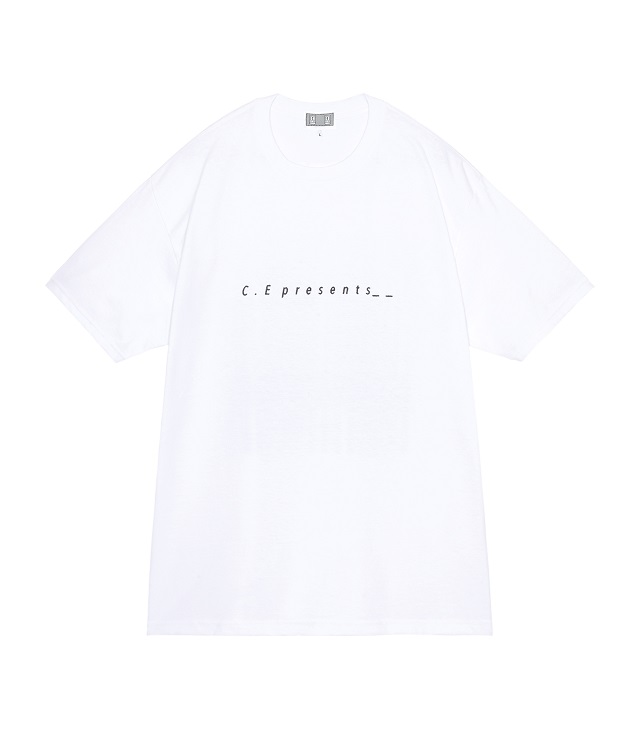
 パーティ会場限定でTシャツの販売が決定! フライヤーのデザインが分解~再構築され、フロントとバックに配されています。これはかっこいいぞ。


C.E presents
DJ Python
mad miran

C.Eのパーティが9月6日土曜日にVENTで開催。

洋服ブランドC.E(シーイー)が、2025年9月6日土曜日、表参道に位置するVENTを会場にパーティを開催します。

Skate Thing (スケートシング)がデザイナー、Toby Feltwell(トビー フェルトウェル)がディレクターを務めるC.Eは、2011年のブランド発足以来、不定期ながら国内外のミュージシャンやDJを招聘しパーティを開催してきました。

9月6日に開催となる本パーティでは、アメリカはニューヨークよりDJ Python、そしてオランダからmad miranをゲストに迎えます。

C.E presents
DJ Python
mad miran

開催日時:2025年9月6日土曜日午後11時
会場:VENT
http://vent-tokyo.net/

料金:Door 3,500 Yen
Advance Tickets 2,000 Yen
http://ra.co/events/2216407

Over 20’s Only. Photo I.D. Required.
20歳未満の方のご入場はお断り致します。年齢確認のため顔写真付きの公的身分証明書をご持参願います

■DJ Python
ニューヨークはクイーンズを拠点とするDJ兼ミュージシャンのブライアン ピネイロによるプロジェクトにおいて最も知られるエイリアス。
NYのクラブ、Nowadaysにおける長年のレジデンシーや、Anthony Naples(アンソニー ネイプルス)とJenny Slattery(ジェニー スラッタリー)のレーベルInciensoを通じて、ブルックリン/クイーンズのシーンの柱となっている。
近年、DJ Pythonはディープハウスのダイナミクスとラテンリズムを融合させた革新的な音楽スタイルによって、世界中のレコードショップ、ミックスシリーズ、クラブで注目を集めている。
2020年にリリースしたアルバム『Mas Amable』(Incienso)はResident AdvisorやBoomkatのアルバム・オブ・ザ・イヤーに選出された。
その後、EP『Club Sentimientos Vol. 2』や、DominoのアーティストEla Minusとのコラボレーション、Nick LeónとのスプリットEPなどをリリースし、さらにKelman DuranとFlorentinoのグループSangre Nuevaなども手がけている。
2023年には、アンビエント・ポップの先駆者Ana Roxanneとチームアップし、『Natural Wonder Beauty Concept』名義で、ムーディーでIDMの影響を受けたポップソングとユニークなインストゥルメンタルを収めたアルバムをMexican Summerから発表。同アルバムは、再び年間ベストアルバムリストに名を連ね、ヨーロッパ、イギリス、北米を巡るライブツアーが行われた。

2024年にはBBC Radio 1の「Essential Mix」に初登場し、未発表のトラックやAir、Alex G、Nina Simone、Autechreなどのエディットを含むミックスを披露した。同ミックスはResident AdvisorやMixmagから「Best Of」の評価を受け、Mixmagは「xxxx」と絶賛をした。
2025年3月にはEP「I Was Put On This Earth」をXL Recordingsよりリリース。
soundcloud.com/worldwideunlimited
ra.co/dj/djpython
www.instagram.com/dj__python

■mad miran
オランダのアンダーグラウンドが生んだDJ。
Garage NoordやDe School、Nitsa、Blitzなどのクラブだけではなく、DekmantelをはじめPrimaveraやSolstice、Love Internationalといった音楽フェスティバルにも出演。
soundcloud.com/madmiran
ra.co/dj/madmiran
www.instagram.com/madmiran

Pulp - ele-king

 1995年という年は、いまとなっては当時の1965年と同じくらい遠い過去になった。1995年、グラストンベリー・フェスティヴァルのメインステージに、ストーン・ローゼズの代役として突如ヘッドライナーとして登場したパルプにとって、それはバンドの飛躍を意味したものだったが、同時に、イギリスのポップ・カルチャーにおける決定的な出来事でもあった。当時リリースされたばかりのシングル「Common People」は、その瞬間にして90年代を象徴するポップ・ソングとしての地位を確立したのだった。
 あのときの勝利は、周縁に追いやられてきた人びと、置き去りにされてきた人びと──インディ・キッズ、労働者階級、学校でいじめられ、スーパーマーケットの駐車場で暴力を受けていたような“変わり者”たちにとっての正当性の回復のようにも感じられた。
 あれから30年──2025年に(あまりうまく隠し通せなかった)シークレット・セットとして同じステージに戻ってきた彼らは、明らかに年齢を重ね、白髪も混じった風貌のバンドとなっていた。もっとも、ジャーヴィス・コッカーはもともと“老けた若者”のような佇まいで、彼の身体がようやく年齢に追いついただけとも言える。その意味では、彼の佇まいはあまり変わっておらず、2025年のパルプのライヴは、驚異と美しさに満ちたものだった。90年代の楽曲がひとつずつ演奏されていくにつれ、時間が逆流していくような錯覚を覚える。ジャーヴィスの表情や身振りが、いつしか過去の写真のなかの彼自身と重なっていき、ひとつひとつの曲が、ふたたび若さを帯びながら息を吹き返していくのだ。

 パルプの新作アルバム『More』は、こうした熟年期の彼らが生み出した作品である。そこには人生の静かな失望や諦念が、擦り切れた袖口のように滲んでいる。だがこのアルバムは同時に、過去の断片や未完の思考と緩やかにつながりながら、それらを現在へと開かれた「連続体」の一部として再構築している。過去と対話を重ねることで、それをいまなお生き続ける何かとして復活させている。

 オープニング曲 “Spike Island” は、1990年にザ・ストーン・ローゼズが敢行した伝説的な野外コンサートを参照している。この公演は、音響の不備や場当たり的な運営が問題視された一方で、インディ・カルチャーが時代精神を掌握した象徴的瞬間であり、パルプが1995年にグラストンベリーのメインステージに立つまでの流れを形成する上でも、重要な踏み石となった出来事だ。 “Slow Jam” に登場する「Cos I’m the resurrection man(だってぼくは復活の男だから)」という一節もまた、ザ・ストーン・ローゼズの代表曲 “I Am the Resurrection ” を想起させつつ、彼らが生み出した時代の空気がパルプの台頭を後押ししたという文脈をほのめかしている。
 アルバムにはその他にも、ポップ・カルチャーへの言及が点在している。 “Tina ” のなかの「Your lipstick on my coffee cup(コーヒーカップについた君の口紅)」という台詞は、90年代UKポップスの寵児テイク・ザットへのウィンクとして響く。そしてラスト曲 “A Sunset” では「I’d like to teach the world to sing(世界中に歌を教えたい)」というフレーズが繰り返される。これは、1971年に放映されたコカ・コーラのCM──海辺の夕焼けを背景に、若者たちが合唱するあの映像──に記憶の起源をもつかもしれないが、同時にオアシスの初期代表曲──ロジャー・クックとロジャー・グリーナウェイによる原曲 “I’d Like to Teach the World to Sing ” のメロディを流用していたことで知られている── “Shakermaker ” をも想起させる。

 もちろん、このアルバムにはパルプ自身の歴史も随所に織り込まれている。 “Got to Have Love ” でジャーヴィスが綴る「L-O-V-E」の綴り方は、1995年の名曲 “F.E.E.L.I.N.G.C.A.L.L.E.D.L.O.V.E. ” を明確に呼び起こすし、 “Grown Ups” における「Are you sure?(本気かい?)」という一言は、 “Common People” での印象的な語り口をなぞる。そして “Background Noise ” で告白される「Don’t remember the first time(最初のときのことは覚えていない)」という一節は、1994年の出世作『His’n’Hers』に収録された名曲 “Do You Remember the First Time? ” への静かな応答でもある。過去と現在、記憶と再演──それらはこのアルバム全体を通して繰り返し響き合いながら、パルプという存在の継続性を、静かに、しかしたしかに証明している。

 とはいえ、こうした過去のポップ・カルチャーにまつわるイースターエッグ[*復活祭に飾られるカラフルな卵/復活の象徴]の数々は、どちらかといえば時間の経過を示す通過点のようなものであり、このアルバムの核心にあるのは、ジャーヴィス自身による老いについての私的な黙想にほかならない。そしてそれは、かつて彼の楽曲を特徴づけていた、性的欲望や覗き見るような痛みを描いた物語の精緻な語り口とまったく同じ文体で遂行されている。
 2曲目 “Tina” は、 “Something Changed ” の構造を逆転させるような楽曲だ。あの曲では、語り手はまだ出会ってもいない女性との未来を夢見ていたが、 “Tina” では(おそらく既婚の)男が、実現しなかったもうひとつの人生──ある女性との長年にわたる幻想の関係──を回想するというかたちをとる。いや、より正確には、電車やカフェでふと目にする女性たちに向けて日常的に抱く、現実とは切り離された空想の象徴といった方がいいかもしれない。
 この曲の核心にあるのは、「老い」がいかにして人間から「別の人生」の可能性をひとつひとつ奪っていくか、という痛切なメタファーである。そしてそのメタファーは、女性の名前に込められた言葉遊びによって強調される。 “Tina” とは、マーガレット・サッチャーがかつて語った有名なフレーズ──「There Is No Alternative(他に選択肢はない)」──の頭文字なのだ。

“My Sex ” は、より近過去の記憶を反映している。ギリシャ悲劇のコロスを思わせる鋭く語りかけるようなバッキング・コーラスは、ジャーヴィス・コッカーが2019年に始動させたプロジェクト《Jarv Is...》の作風と語り口を彷彿とさせる。一方、 “Got to Have Love” は、別の興味深いアプローチを取っている。2000年前後に書かれたが一度はお蔵入りとなった楽曲を再構築し、いまのバンドの状況にふさわしいかたちで蘇らせているのだ。ディスコ的な律動が執拗に反復されるこの曲は、バンドの絶頂期の痛切な渇望──とりわけ “She’s a Lady” に通じるもの──をもっとも明示的に喚起するものだが、同時にジャーヴィスは、当時と現在とのあいだに広がる時間の隔たりを自覚的に見つめている。「It cannot be denied, I waited far too long / To believe, to believe in the words, I once wrote to this song(否定できない、ぼくはあまりに長く待ちすぎた/かつてこの曲のために綴った言葉を信じるために)」
 しかしながら『More』は、ブラーの近作『The Ballad of Darren』と同様、強いポップ性を前面に押し出すよりも、静かなテンポと内省的な憂いに重心を置いた作品である。ブラーのデーモン・アルバーンが“ダレン”という誰でもない架空の存在を媒介に老いについての思索を展開したのに対して、ジャーヴィス・コッカーはより直接的で、感傷に浸ることなく語りかけてくる。曲そのものも、しっとりとしたトーンのなかに、どこか切迫した緊張感を保っている。
  “Partial Eclipse” は、パルプがこれまで録音してきたなかでも屈指の名曲のひとつと言ってよいだろう。そしてアルバムを締めくくる “A Sunsets” は、すでにライヴでのハイライトとしての風格すら漂わせている。録音ではブライアン・イーノとその家族がバック・ヴォーカルに加わっているが、その響きはまるで、イーノの名作『Before and After Science』のB面に収められていても不思議ではないような、静謐かつ奥行きある余韻を残す。
 『More』に欠けているのは、作品全体を貫く強固な「音の輪郭」だ。少なくとも、それが『His’n’Hers』にあったような、きらめくシンセとグラム・ロック的華やかさで構築されたウォール・オブ・サウンドであったり、『This is Hardcore』のような、コカインの幻覚と偏執的閉塞感、そしてオーケストラルなギター・ノイズが渾然一体となった不穏な音響的スープであったりするような形では、ここには存在していない。

 もっとも、『More』も『This is Hardcore』と同じく、管弦楽的アレンジへの愛着を共有してはいる。だが本作を特徴づけているのは、むしろ過剰さを排した端正なプロダクション──それぞれの楽曲に必要な空間だけを与え、個々の曲が独立した輝きを放てるように配慮された、ミニマルで清潔な仕上げである。その意味で、アルバム全体の印象は『Different Class』に近い。じっさい、この『Different Class』との関係こそが、本作について考えるとき何度も立ち返ってしまう視点である。『More』は、90年代のあの名作の、老いを経た鏡像のようにも感じられる。年月に磨耗しながらも希望を失わず、どの曲も同じように独自性をもち、洗練され、控えめなながらしっかりとした自信をたたえた、もうひとつのポップの結晶としてそこにあるのだ。


Ian F. Martin

1995 is is distant in the past now as 1965 was then. When Pulp stepped onto the main stage at Glastonbury in 1995 as last-minute replacement headliners for The Stone Roses, it was a breakthrough moment for the band and a defining event in British pop life, cementing the position of their then-new single Common People as the iconic pop song of the decade. It felt like a triumph and vindication for the outsiders and the left-behind: the indie kids, the working class, the weirdos who got bullied at school and beaten up in supermarket car parks.

When they stepped onto that same stage for a (not very well kept) secret set in 2025, it was as an older, greyer, more weathered group. Jarvis Cocker always looked to me like an elderly man just waiting for his body to catch up, so he inhabits this ragged state well. This also means that he is remarkably unchanged, and Pulp live in 20205 is a thing of wonder and beauty: as the songs from their 90s unfold, time seems to flow backwards through them, Jarvis growing impossibly younger as the set goes on and one by one he begins to inhabit those photographs of another time.

Pulp’s new album, More, is a creature born of this older band — music that wears the quiet disappointments of life on its worn sleeves — but throughout, it connects to and runs with loose threads from the past, turning the past into part of a still-living continuum, in conversation with its older self.

Opening song Spike Island references The Stone Roses’ legendary 1990 outdoor concert, notorious for its poor sound and slapdash atmosphere but a key moment in indie culture’s seizing of the zeitgeist and an important stepping stone on Pulp’s route to that stage in Glastonbury. The line “Cos I’m the resurrection man” on Slow Jam also perhaps calls back to The Stone Roses and the role they had in shaping the atmosphere that enabled Pulp’s rise. Other pop cultural reference points dot the album too. The line “Your lipstick on my coffee cup” from Tina gives a wink in the direction of Take That. Meanwhile, closing song A Sunset repeats the line “I’d like to teach the word to sing”, which perhaps has its roots in a childhood memory of a 1971 Coke advert, featuring a choir of youngsters singing the line against the backdrop of a seaside sunset, but also summons the memory of Oasis’ early hit Shakermaker, which stole the melody of Roger Cook and Roger Greenaway’s original song.

Naturally, Pulp’s own history extends through the album too. The way Jarvis enunciates the letters “L-O-V-E” in Got to Have Love echoes F.E.E.L.I.N.G.C.A.L.L.E.D.L.O.V.E. from 1995, The line “Are you sure?” on Grown Ups nods to his famous delivery of the same phrase in Common People, and his confession of “Don’t remember the first time” in Background Noise calls back to Do You Remember The First Time? from Pulp’s 1994 breakthrough (and best) album His’n’Hers.

But all these little easter eggs from past pop moments are more like waypoints to symbolise the passage of time, while the heart of the album is Jarvis’ own personal meditations on growing old. This he does with all the storyteller’s attention to detail that characterised his early tales of sexual frustration and voyeuristic heartache. Second track Tina inverts the structure of Something Changed, where instead of the narrator dreaming of a future with a girl he hasn’t yet met, it takes the form of a (possibly married) man loking back over a decades-long fantasy of a life he never had with another woman — or more likely an avatar for all the other women he idly fantasises about in trains and cafés. The song underscores its metaphor for the way age closes down one alternative life path after another by making the woman’s name an acronym for Margaret Thatcher’s famous declaration of cancelled futures everywhere: “There Is No Alternative”.

My Sex reflects the more recent past, with its sharply delivered Greek chorus backing choir recalling the style and tone of Cocker’s 2019 Jarv Is project. Meanwhile, Got to Have Love takes another interesting approach, resurrecting an abandoned song from around the turn of the millennium and retooling it for the band’s current circumstances. With its insistent disco pulse, it’s the song that most explicitly summons the painful longing of the band’s heyday, particularly She’s a Lady, but with Jarvis noting the distance between the song’s roots and the band’s current lives as he sings “It cannot be denied, I waited far too long / To believe, to believe in the words, I once wrote to this song”.

Like Blur’s recent The Ballad of Darren, though, More leans less on bold pop statements and harder on its downtempo, melancholy side. Where Damon Albarn wrapped his own musings on advancing age in the distancing device of everyman Darren, though, Jarvis is more direct, less mournful, the songs still crisp and urgent in their own way. Partial Eclipse might be one of the best songs Pulp have ever recorded, and closing song A Sunset already feels like a live showstopper, the recorded version recruiting Brian Eno and most of his family on backing vocals for a tune that already feels like it could have sat comfortably on Side B of Before and After Science.

What More doesn’t have is a strong overarching sound of its own, or at least not in the way His’n’Hers did with its shimmering, glittering, synth-glam wall of sound or This is Hardcore did with its paranoid, claustrophobic brew of cocaine-sleaze and orchestrally-augmented guitar noise. While it shares the latter’s love of orchestral arrangements, the overall sound it’s characterised more by a tidy, unfussy production style that gives each of the songs what they need to shine individually, and in this way it more closely resembles Different Class.

It’s that relationship with Different Class that I keep coming back to with this album, and in many ways it feels like an older mirror to its 90s counterpart: worn down by the years but still hopeful, and each song every much as unique, elegantly crafted and quietly confident a piece of pop in its own more understated way.

  1 2 3 4 5 6 7 8 9 10 11 12 13 14 15 16 17 18 19 20 21 22 23