 Jim O'Rourke sleep like it’s winter NEWHERE MUSIC |
Writing about a musician like Jim O’Rourke is always a challenge. His work is rarely what it seems to be on the surface, its mechanisms carefully concealed so that how it works on you as a listener is the result of an almost invisible creative process. A huge amount of complexity and musical intelligence underscores music that feels completely natural and even obvious, as if it’s always existed. If his creative approach includes a strong element of academic discipline, his finished music nonetheless has a lot of heart.
On O’Rourke’s previous relatively high-profile release, his unexpected 2015 return to something like rock songwriting with Simple Songs, instantly familiar-sounding rock hooks would merge imperceptably into completely unexpected musical territory without you ever noticing how you’d travelled. His latest album, Sleep Like It’s Winter, released from the new, ambient-focused NEWHERE label, sees him in a radically a different sonic landscape again, with an icy, uneasy, breathtakingly beautiful 45-minute instrumental track.
Between Simple Songs and Sleep Like It’s Winter lie twenty-two separate releases in O’Rourke’s Steamroom series, which he puts out at a rate of about one every couple of months from his Bandcamp page. While some of these releases are old tracks deemed worthy of exhuming from his archives, this rapid flow of releases may also include something for those of us hoping to find clues as to his working. Certainly some of the Steamroom releases that most immediately preceded Sleep Like It’s Winter share similarities.
None of them are quite as richly layered and textured though, and while ambient music is almost by definition music that defies analysis, working primarily on the fringes of consciousness, Sleep Like It’s Winter at the same time feels like a very conscious album, full of ideas and revealing something new on every listen.

I mean, most people would say Eno. Actually it would go back to Michael Nyman’s book Experimental Music: Cage and Beyond. It’s a great, important book that I read when I was in high school.
I:
I always find it a bit difficult to talk about music that often gets described as ambient or drone…
J:
Right, well, the fact that they even asked me to make an ambient record for them, that’s why I decided to take the challenge. I didn’t set out to make an ambient record but it’s sort of about making an ambient record more than it’s an ambient record (laughing) you know? Pretty much everything I do is about what it is as opposed to being it.
I:
You’ve said before something along the lines of that you approach making music in a way kind of like a critic.
J:
Yeah, I don’t make music ‘cause I enjoy it. (Laughs) Yeah, I have said something like that. I’m not comparing myself to him but when I was young I read this quote from Godard where he said, “The best way to critique a film is to make another film,” and that stuck with me since I luckily read that as a young boy. That’s fundamental to how I work.
I:
How long did this new album take?
J:
That took about two years.
I:
Were you still living in Tokyo when you started work on it?
J:
I was still in Tokyo, yes, when they first asked me. But there was also a lot of extraneous work around that time also because I was moving. So the first six months of working on it was probably more thinking than actually putting anything down. Just thinking about what the hell that term “ambient” meant, and it means different things to different generations. At the beginning, when they asked me, it was like “We’re starting an ambient label,” and I was like, “Okay…” (laughs) Just making any record in terms of “make a record in this genre” is anathema to me, but I decided to do it because it was such a revolting idea! (Laughs) Not that I dislike ambient music – I don’t mean that. That’s just not the way I think when I make things, so it was such a bizarre proposal that I decided to do it.
I:
For ambient music what is your first natural frame of reference?
J:
I mean, most people would say Eno. Actually it would go back to Michael Nyman’s book Experimental Music: Cage and Beyond. It’s a great, important book that I read when I was in high school. There’s a bit about Eno in there talking about, and (Eno) didn’t use the word “ambient” yet, he refers (Erik) Satie’s idea of “furniture music”. And it might be on the back of his Discreet Music record, which was a big deal for me when I was a kid, because on the back of the record it’s all just him talking about these ideas and there’s also diagrams of technically how he made the music. When I think of ambient music I don’t necessarily think of Eno because Eno’s actual ambient music, when he moved on, you know those “Ambient” records, I actually don’t like those very much – no disrespect to him, but it’s just not my cup of tea. In a way I like Satie’s definition of it more: that it’s “furniture music”, that it’s like BGM: it’s not something that’s meant to be listened to with the active mind, which implies that you’re not following the formal structure of what’s going on. So it’s a sort of shift of standpoint that means “ambient” to me. For me, in making this record, the most important thing was, “Where is a line where you decide to give up on formal structures completely?” and, “Where is a line where formal structures can still be perceived but they’re not being shouted at you?”
I:
Speaking of formal structures, going back to Eno, he often seems interested in the idea of taking the musician completely out of the music
J:
For me, in that way of thinking of music, which I’ve been moving towards my entire life slowly but surely (laughs), Roland Kayn was the biggest guy for me. Someone could call his music ambient but it’s way too aggressive for that. The idea of his music is you create the system and then you just let it go. The challenge is how can you create a system that still represents the ideas even though you’ve let it go. If you look at some of the last decade or so of Cage’s scores, like the number pieces, they create these systems. These later Number Pieces of his are really interesting because, if you do them correctly, they’re really constraining even though they don’t seem to be. Whereas someone like Kayn and what Brian Eno were doing, especially in the 70’s, they still want a result but they want to be hands off about it.
I:
For those of us listening to you, it’s almost like we get to hear you, well not in real time but now it almost feels like every couple of months there’s a new thing on Bandcamp
J:
Yeah, Bandcamp is one of the few things the internet has created that I really like. I do like that it’s just there for the fifty people who want it and nothing else gets attached to it. Everything that comes with releasing records, if I have nothing to do with it that’s the happiest I could possibly be. For me, you’ve got to understand, once it’s done it’s done: I’m already gone.
I:
Did your work on those releases inform your work on this new album?
J:
I think one or two might have been failed versions. (Laughs) I mean the Bandcamp stuff, honestly it’s for the 50 or 80 people out there who want to hear that stuff. It’s just being able to be, “Here, you guys want this: go ahead.” Not that I don’t put as much work into those things. For every Bandcamp work I put up, there’s like 80 failed Bandcamp things.
I:
In Sleep Like it’s Winter, there are a lot of sounds that are happening just on the edge of hearing, where it drops to near silence for a while before the sounds build back up again.
J:
Yeah, that’s true. A lot of my really early stuff in the late ’80’s, early ’90’s was a lot of that but I think, because I was young, I was still in the mode of imitating people. I was imitating silence (laughs) because there’s a lot of that, especially in (Giaconto) Scelsi’s music, which I was really really into when I was in college. And I really appreciated the amount of silence in a lot of Luc Ferrari’s work, which I was also really really into.
Also, at that time, things like the Hafler Trio, P-16 D4a, blah blah blah, but I don’t think I really understood how to use that until later in life. Because silence is just as much a part of the dynamic as something loud. In the act of actually listening to something, time means a lot and silence is also time because you perceive time differently in silence than time with sound. Hopefully, the use of silence stretches your perception of time – it’s the same thing as having a good drum fill or something.
Well, in terms of structure, the one thing that music can’t really do eloquently, like the other art forms, is deal with time backwards. Music can really only change time by making reference, and that can only be done if the music has a formal structure because you’re making structural reference or a melodic reference.
I:
So silence can be a function of the overall rhythm of the piece.
J:
Right, yes, exactly, yeah. Another thing I had to think about a lot when making this record is the idea that just because the music is “ambient” and doesn’t have percussion elements or whatever, that doesn’t mean it doesn’t have a rhythm. So, what role does rhythm take in this and how does it manifest itself is also something I had to think about a lot. And silence is part of that. Silence is kind of like an audio punctuation as well and it can be a comma or it can be a period. Or a semi-colon. Of course it matters what comes before and what comes after, but you really can hear the difference between a period and a comma. There’s definitely a moment of silence on this record that’s a comma and then there’s one that’s 3 periods in a row. At least that’s the way I think of it.
I:
Did you find, while making this record that there are cliches in ambient music?
J:
Oh, there definitely are. I kind of knew them before I started this because that’s mostly the reason I don’t listen to ambient music. I mean, pretty much all ambient music is major 7th chords, so harmony was going to be a big deal – how to approach harmony with this. Major 9th is also very popular: those are the two go-to harmonies in ambient music, if it isn’t just a perfect 5th. How to deal with harmony on this! I didn’t want it to just be about the overtones, because with the drone route really you’re dealing with overtones and not dealing with harmony – that was something I knew firsthand from doing it. In my memory, all the failed versions are sort of mixed up in it. Once I’ve finished the record, the only time I’ve heard it since mixing it is to check the mastering, so I kind of forget what happens in it. I learned a lot of what it wasn’t, but I don’t know if I learned what it is. I would rather find the next question than find the answer: that’s just the way I am. I mean, I don’t really believe in answers. A solution should lead to the next question.
I:
A bit like a filmmaker working in a genre, you have a choice: “Am I going to take this convention and play with it or am I going to confound this convention?”
J:
That’s a really apt comparison for me, because those kinds of filmmakers were a much bigger influence on me than music really was when I was young. I always wanted to be a filmmaker and then I found out how expensive it is and what kind of life you have to lead so that didn’t happen. Someone like Robert Aldrich or Richard Fleischer, these kinds of filmmakers were a really big deal for me because I loved watching them do all sorts of things despite being in this supposed cage of genre convention. William Friedkin is like a superhero to me: I love William Friedkin. To Live and Die in L.A., that film is amazing in what it does with genre conventions. I have a huge poster of it staring in my face right now. My way of thinking on that stuff really comes more from film than anything else. Just it really taught me a lot about approach.
I:
I wonder as well if, compared to pop music where the story is told in a very concise nugget, ambient music, where a single piece might be stretched over an entire album, works in a more cinematic rhythm.
J:
Well, in terms of structure, the one thing that music can’t really do eloquently, like the other art forms, is deal with time backwards. Music can really only change time by making reference, and that can only be done if the music has a formal structure because you’re making structural reference or a melodic reference. And that’s really only calling back, that’s not restructuring time. Kurosawa Kiyoshi, in the ‘90s, was the king of that. He deals with time in his films in the most extraordinary manner, especially Hebi no Michi (Serpent’s Path) and Kumo no Hitomi (Eyes of the Spider). The way he restructures everything you’ve seen with just an image, and your perception of time in everything you’ve seen can change from just an image. You can do that in all the visual arts, and obviously you can do that in writing, but music doesn’t have the tools to do that in such an eloquent manner. It’s really kind of clumsy. That’s something that’s always fascinated me since college, because when I was in college and studying all the Stockhausen and all that shit, that was the stuff I was really interested in. There’s this whole period of Stockhausen doing these “moment works”. I mean, the 60s and 70s was when all those guys were trying to address the problem of time in music, and the fact that they did is awesome, but it was really kinda hamfisted. It’s still a problem in music and that’s the thing I think about a lot, and film is the thing that reminds me of that constantly, more so than music does.
I:
You’ve mentioned before constantly creating roadblocks for yourself in the creation of your music.
J:
I don’t think I do that as much as I used to. When I was younger I think I needed to. I think now I sort of trip myself up naturally. I don’t even consciously do that: its just the way my brain works. I think when I was younger I had to do that. And also, when you’re younger, when you have no gear or anything, that’s a great thing, you know? Having too much gear is one of the worst things in the world. The more gear you have, the less you do. That’s a concrete restriction that you’ve got to think about, “I’m not even gonna touch any of that stuff”. There’s only three instruments on this record – no, four, sorry, if you count a short-wave radio as an instrument.
I:
Were you working with any collaborators on this record or is it all you?
J:
Yeah, it’s just me. There was one version that was going to have drums on it but it didn’t work. So there’s a hard-drive full of this stuff with drums on it that will rust away (laughs).
I:
You’re living in the countryside now. Since moving there has that impacted the way you work.
J:
I just get to work more. There’s not much distraction at all. It’s the closest to when I was in my early twenties, really. I mean, I wouldn’t sleep for days at a time: I’d really be in my room with my tape machine and just doing that non-stop. That’s not something I’d want to do now, but I can get to that frame of mind again, which is something I haven’t been able to do for a long long time.
I:
You produce a wide range of music under the name of “Jim O’Rourke”, but there’s often this sense, particularly in Japan, that “this is what this project is and this is what it sounds like”. I remember a friend of mine was playing a show and at the end the manager of the venue commented, “Yeah, that should be three different bands, what you played there”
J:
Yeah, that’s a very reductive way of thinking. I think it is more common here than anywhere else.
I:
You’ve spoken in the past that people have a hard time considering an artist’s work as a whole rather than each thing discretely.
J:
Right, I think that’s more common in music. I mean, you say “Hitchcock “ – people might mention a film or two as their favourites but they’re generally thinking “the work of Hitchcock”. But it is true in music; you would think of “the works of Morton Feldman” but that’s because that world of music does tie into that socio-political way of thinking. But in terms of popular music that really has more to do with commodity than a way of thinking, there really aren’t that many people who approach it that way. Whether you like him or not, Frank Zappa is someone who could be seen as an exception to that: people generally think of “the work of Frank Zappa”, although he was generally making records with a rock band. People think that way about someone like Bob Dylan. So there are exceptions, but in general there aren’t.
I:
Do you feel there are themes that keep coming back in your music?
J:
Oh God, yeah! (Laughs) It’s all the same thing. They’re all the same thing really. I mean, I think it’s something Picasso said or someone said it about Picasso: “You’re really just making the same painting over and over again.”
One silly example, I remember when I was younger, I would read Naked Lunch every year, and I noticed that every year I re-read it, I learned more about me than I did about the book. Because I saw more of how I had changed, in that time, than the book had changed. Because the book, of course, hadn’t changed at all: it’s always been there.
Jim O'Rourke sleep like it’s winter NEWHERE MUSIC |
I: What do you think links an album like Simple Songs to and album like Sleep Like it’s Winter or maybe Kafka’s Ibiki’s Nemutte?
J:
I guess I would say it’s that I made them. (Laughs) It sounds like a joke, but in a way I think that’s really kind of the best answer. Certain aspects of what I’m trying to do come out stronger on some things more than others. But they’re kind of all there on all of them.
I:
One thing that connects them, when I listen to them, is that I hear multiple layers to the way things transition on your records.
J:
I don’t know if you’ve heard this record I did called The Visitor.
I:
Yeah, I was listening to that today, actually.
J:
I mean, that’s probably the closest I’ve ever gotten. It still has lots of problems, but that’s the closest ever to sort of doing what I wish the music would do. And that’s really all about the transitions, really – the flipping and the flopping, as Kramer would say. I don’t think in the abstract about the transitions – I don’t think “OK, now I’m going to make this kind of transition,” – it’s not an abstract idea or an exercise, but that really is a big part of how I put things together. It’s like weaving a rug. I don’t know if that’s an apt analogy, but you don’t want the work put into the music to show. The best rug you ever saw, if you look at the way it’s put together, that work never overshadows the overall effect, hopefully. That’s the hardest thing, I think, in making music - to hide the work. You’ve gotta hide it. That’s really really important to me.
I:
Has that always been a key part of your approach?
J:
It’s always been there. I’m trying to think of where I learned that lesson, but I know I learned it very young. Definitely since like… it was like ’91, ’92 where I got out of the habit of highlighting the work more than what the work was supposed to produce.
That’s kind of part and parcel of how I work. A big percentage of the work is in hiding the work: it needs to live once you’ve killed it, you know what I mean? (Laughs)
I:
Part of the fun of listening to some of your recent records was that on multiple listens, it continues to fundamentally change.
J:
You’ve reminded me. I know I’ve said this before, but this was a big deal for me and it relates 100% to this. When I was in high school there was a movie theatre within like two hundred yards of our house and, because I would go there every day, they eventually just let me go in for free. So I was going there every day. And one day I was going there to go see a movie and my father said, “You saw that movie already, why are you going to see it?” and I remember saying to him, something to the effect of, “All of these people put like a year of their lives into making this movie. How arrogant would it be for me to think I could understand it all in two hours?” That was one of the things I really love about film: that good films didn’t have it all out there on the surface like somebody serving you a whatever course dinner. You had to dig in, and some things don’t work without that resonance, that’s very important, ‘cause time equals resonance, you know? One silly example, I remember when I was younger, I would read Naked Lunch every year, and I noticed that every year I re-read it, I learned more about me than I did about the book. Because I saw more of how I had changed, in that time, than the book had changed. Because the book, of course, hadn’t changed at all: it’s always been there. So that was also kind of a profound thing for me when I was a young ‘un.
I:
Perhaps there’s also this idea of having the space to find you way into something. It took me forever to get into Bowie because at first I thought it was “classic rock”, which just had so much baggage attached to it. But because there were so many entry-points into his work I eventually found one that worked for me.
J:
I can understand that. I had that a few years ago with Keith Jarrett. He was someone I knew I was supposed to like and I should have ‘cause I love ECM –70s ECM, the stuff I grew up on. And of course, he’s like a towering figure in that world and it took a long long time. It’s really only in the past two or three years that I finally cracked the code with him.
I:
I can understand that. I guess the point for me is that there wasn’t a single door. There were multiple doors in and I had to find mine.
J:
Right. Well I think there has to be like one initial door and when you open that door there’s all the other doors. Just like… (Laughs) I immediately thought of Genesis, sorry!
I:
You don’t have to apologize for Genesis!
J:
Oh, I will never apologise for Genesis! You’re never going to find a more hardcore Genesis fan than me – Peter era, of course. The Lamb Lies Down on Broadway is my favourite album of all time. But, you know, Genesis wasn’t embarrassing when I was growing up.
I:
Maybe “I will never apologise for Genesis!” is a good sentiment to end on. Thanks!

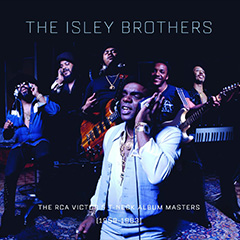
 まずは初アルバムの『Shout!』。これはRCAからのセカンド・シングルだったタイトル曲がヒットして、それを軸に組まれた59年のアルバムだ。兄弟3人の作となる“Shout!”は、チャート・アクションこそ地味だったがロング・ヒットとなって、最終的にはミリオン・セラーに達したらしい。ここでの彼らは、いくらか節度のあるコントゥアーズと言いたくなるくらい、実にエネルギッシュなドゥーワップ・グループで、それは3人が飛び跳ねるジャケットにもよく表れている。シンプルな作りの陽気なドゥーワップに交じって、トラディショナルの“When The Saints Go Marching In”、R&Rの“Rock Around The Clock”なども歌っており、街角からそのままやってきたような活きの良さだが、それもそのはず、この年、一番年長のオーケリーでも22歳、ロナルドはまだ18歳だ。
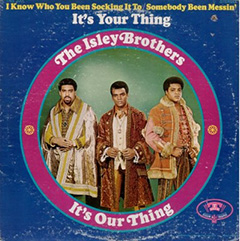
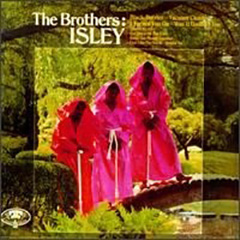
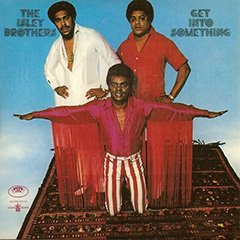
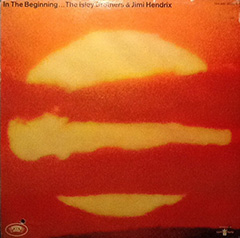
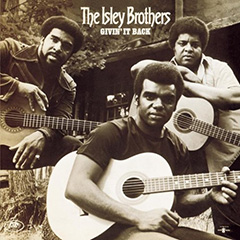 本筋に戻ろう。この後は、R&Bチャートのトップ20ヒットとなったサイケでファンキーな“Warpath”のシングル発表を挟んで、71年に『Givin' It Back』(“Warpath”もボーナス収録されている)が発表された。前作では主にファンク・ロックの流れを突き進んでいたが、今回はカーティス・メイフィールドやマーヴィン・ゲイらによってもたらされたニュー・ソウルの流れを捉えて、ニール・ヤング、ジェイムズ・テイラー、ボブ・ディランなど、男性ミュージシャンのカヴァー集だ。3人揃ってアコースティック・ギターを抱えたジャケットからも想像できるようにアコースティックな作りで、多用されたパーカッションが耳を引く。そしてロナルドは激しいヴォーカルだけでなく、シルキー・ヴォイスで切々と歌う場面も多い。ここからはCSNYのカヴァー“Love The One You're With”がヒットした。
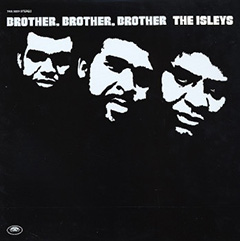 そのヒットに気を良くしたか、続く72年の『Brother, Brother, Brother』も半分はカヴァーで、今度は女性シンガーに照準を合わせ、キャロル・キングのカヴァーが3曲もある。そのうちシングル・カットされた“It's Too Late”は、歌にも演奏にも原曲の名残がほとんどない10分半の長尺版。ロナルドの独自の解釈による歌も含め、すっかり自分たちの曲のような佇まいだ。だが人気が高かったのはオリジナル曲の方で、R&Bチャート3位になった“Pop That Thing”をはじめ3曲がヒットした。またジミの死に思うところがあったのか、アーニーのギター・ソロは堂々として進境著しい。加えてクラシカルの正式な教育を受けているクリスも、全体に華やかさや重厚さなど、様々な彩りをもたらし、その活躍には目を見張る。
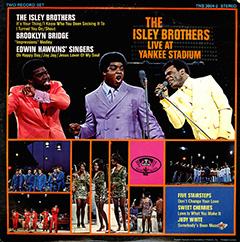
 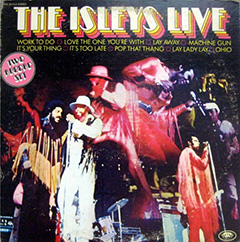 急速に頼もしさを増した弟たちとともに、その勢いをダイレクトに刻んだのが、73年発表の『The Isleys Live』だ。オリジナルはアナログ2枚組で、前2作の収録曲からのセレクトに“It's Your Thing”を加えた曲目は、やはりカヴァーとオリジナルが半々。衣装もすっかりサイケになったヴォーカルのオーケリー、ルドルフ、ロナルド、ギターとベースに弟のアーニーとマーヴィン、キーボードに義弟クリス、このラインナップにドラムスとパーカッションを加えたバンドはとてもまとまりがあり、間もなく始まる絶頂期を予感させる熱い演奏が繰り広げられている。特に“featuring Ernest Isley, Lead Guitar”というクレジットに恥じず、アーニーは各曲で燃え上がるようなソロを聴かせる。ブックレットには、まるでジミのようにバンダナを巻いた頭の後ろにギターを抱える姿が見られるし、すべての曲が終わった後の独演は、もはやジミそのものだ。
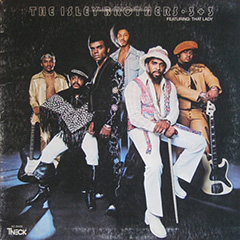 この後、アイズレーズは年長の兄3人のヴォーカル隊に、弟と義弟の3人が正式に加わったバンド体制となり、73年の『3+3』は、ジャケットにも6人が揃って写った記念すべき第一弾アルバムだ。半分ほどはジェイムス・テイラー、ドゥービー・ブラザーズなどのカヴァーでフォーキーな路線を残すが、その中で、ヴォーカル・グループ時代の64年にシングル発売したオリジナル曲“Who's That Lady”の新装版“That Lady”は、パーカッションとアーニーの唸るギターが映える、ファンキーさとメロウさを兼ね備えた名曲で、R&B/ポップ両チャートのトップ10に入り、69年の“It's Your Thing”以来の大ヒットとなった。クラヴィネットを交えたクリスの演奏の鮮烈な彩りも加わって、アイズレーズは明らかにパワーアップしており、他にもスライ&ザ・ファミリー・ストーンのリズム・パターンを流用した“What It Comes Down To”、シールズ&クロフツの曲を極上のメロウにリメイクした“Summer Breeze”がヒットし、アルバムはR&B/ポップの両チャートで初めてトップ10入りを果たした。なお余談ながら、“If You Were There”は、シュガーベイブ/山下達郎の「ダウン・タウン」の下敷きになった曲だ。
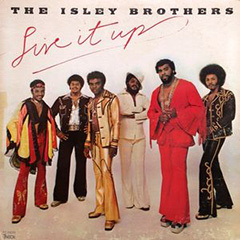 続く74年の『Live It Up』は、タイトル曲を筆頭とする激しいファンク、Tネック期では最後のカヴァー曲となるトッド・ラングレンの“Hello, It's Me”を含むメロウを二本柱とした方向性が示され、絶頂期の音楽性の基盤が固まった手応えが感じられる1枚だ。ファンクとメロウのいずれでも、アーニーとクリスが力強さ、美しさの両面を膨らませて強化し、大いに貢献しており、中でもクラヴィネット、モーグと、順次、新しい機材を導入してきたクリスが持ち込んだアープ・シンセの美しく繊細な音色は、以後のアイズレーズには欠かせないトレードマークのひとつとなる。
 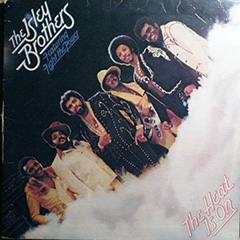 そしてアーニーがドラムスを兼任し、名実ともに3+3の6人だけの録音体制となった翌75年の『The Heat Is On』は、弟たちが曲作りにも力を発揮してカヴァー曲を排し、ついにR&B/ポップの両アルバム・チャートを制覇した。後にパブリック・エネミーが同名曲を出す“Fight The Power”では、“Bullshit is going down”というストレートかつ強烈なメッセージを発信されているのに驚く。作詞をしたアーニーは“nonsense”と書いたのだが、それでは生易しいと感じたロナルドが、録音時に急遽“bullshit”に変えて歌ったとのことだ。初めてかどうかはわからないが、この時期に“bullshit”という言葉が歌詞で歌われるのは異例。そしてそのロナルドの本気がみなぎる歌を、クリスのクラヴィネットのバッキングが熱く盛り上げている。この曲を含めアナログ盤のA面にあたる前半はファンク、B面にあたる後半には、後年サンプリングで大人気となる“For The Love Of You”をはじめとするメロウが収録されており、クリスのアープ・シンセの格調高く甘い音色が加わったメロウは、とろけるような威力を身につけた。なおボーナス収録されている“Fight The Power”のラジオ・エディットでは、やはり“bullshit”にピー音がかぶせられている。
 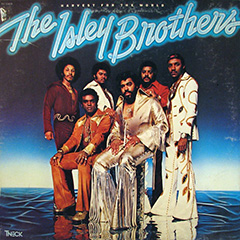 翌76年の『Harvest For The World』は、クリスのピアノを軸とした壮大な前奏曲で始まる。前作と比べるとファンクの比重は抑え気味で、ヒットしたのも、アーニーのギターともどもスムースな疾走感で駆け抜ける“Who Loves You Better”と、フォーキーなメッセージ・ソングのタイトル曲だ。だがクリスのクラヴィネットによる同じフレーズの繰り返しのバッキングが高揚感を煽る“People Of The Today”や“You Still Feel The Need”など、ヘヴィーなファンクも健在で、この辺りはスティーヴィー・ワンダーの「迷信」や「回想」などの作風がベースになっていそうだ。そしてまどろみを誘う“(At Your Best) You Are Love”をはじめとするメロウともども、音の幅をどんどん広げるクリスの手腕が随所に活かされている。
 続く77年の『Go For Your Guns』ではファンクが盛り返す。ヒットした“The Pride”はEW&Fを意識したようなファンクで、マーヴィンが拙いスラップ・ベースで頑張っているのが愛おしい。もう1曲のファンク“Tell Me When You Need It Again”は、久々に外部のメンバーがアディショナル・キーボードとベースで参加しており、マーヴィンにはまだ無理そうなこなれたスラップなどを加味。またファンク・ロックの“Climbin' Up The Ladder”は、ファンカデリックの“Alice In My Fantasies”が下敷きになっているのは明らかで、アーニーのギター・ソロも、ジミとファンカデリックのエディ・ヘイゼルが混ざり合ったイメージだ。もっともエディもジミの大ファンだったので、3人のプレイにはもともと共通点が多いのだが。一方のメロウも名曲が揃い、特に“Footsteps In The Dark”と“Voyage To Atlantis”の2曲は、神秘的なメロウという新境地を切り開いた。今になって思うと、アイズレーズはドリーム・ポップの先駆者でもあったのかもしれない。
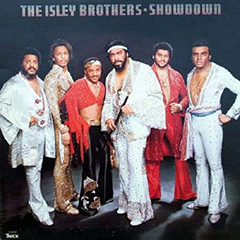 再度6人体制に戻した78年の『Showdown』も、ファンクとメロウのバランスが取れたアルバムで、前者は“Take Me To The Next Phase”、後者は“Groove With You”という名曲を生んだ。この2曲を聴くだけでも、ロナルド、ひいてはアイズレーズの、ファンクでの力強さとメロウでの繊細さ、その対照的な両者を極めた高い表現力を実感できるだろう。また、多数のカヴァー曲に取り組んでいた頃から一貫して、他者のいいところを自分たちの流儀にあてはめて取り込むことに長けていたアイズレーズだが、この頃は、当時のファンク・バンドが当然のように使っていたホーン・セクションやストリングスを、何故か取り入れていない。アーニーが“Groove With You”のドラムスでハイハットを入れていないことに言及しながら、アイズレーズの場合は「あるものがないところが特徴」と語っているが、その言葉は核心をついている。歌3人、楽器3人でできることに敢えてこだわり、その結果、音数の少ない組み立てでオリジナリティが確立されているのだ。ただアーニーの言葉には、ひと言付け加えて、「あるものがないが、足りないものは何もない」とさせてもらいたい。
 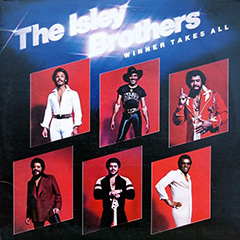 こうしてアイズレーズは自分たちの流儀で、『Live It Up』からの5作を連続してR&Bのアルバム・チャート1位にし、そのうちの4作はポップ・チャートでもトップ10に送り込んだ。この勢いに乗って、79年の『Winner Takes All』は2枚組と大きく出た。1枚目はファンク主体、2枚目はメロウ主体で、細かいところでは、クリスがペンペンした特徴的な音のアレンビックのベースを弾くなどの新しい試みや、フレーズの幅を広げたアーニーのギターの成長といった部分的な変化はあるが、大筋ではこれまでのアルバムの拡大版だ。となると若干の冗長さを免れず、セールス的には後退。そうはいってもアルバムはR&Bチャートで3位、ポップ・チャートで14位だし、3曲のシングルのうち、ファンクの“I Wanna Be With You”はR&Bチャートで1位になっているので、セールスの後退の主な要因は2枚組の高価格だったのだろう。だがディスコの隆盛やエレクトロの発展によって、セルフ・コンテインド・バンドによるファンクの時代の終焉が徐々に近づいていた、という背景も、じわじわと影響を及ぼし始めていたのかもしれない。
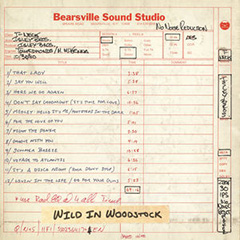 このタイミングで、これまでのヒット曲をライヴ用のアレンジでスタジオ録音した擬似ライヴを2枚組で出したいと考え、アイズレーズはドラマーとパーカッション奏者を迎えて『Wild In Woodstock: The Isley Brothers Live At Bearsville Sound Studio 1980』をレコーディングした。しかしこのアルバムは配給元のCBSから発売を却下されてお蔵入りとなったため、これまでに5曲を除いてボーナス・トラックなどでバラけて発表されてきたが、完全な形で陽の目を見たのは今回が初めてだ。そもそも何故スタジオ録音の擬似ライヴを録りたかったかというと、実際のライヴでは機材の不調や故障、ノイズといった不測の事態が起こりがちだし、一概に悪いこととは言えないが、勢い余って演奏が荒れることもある。そうした可能性を排除した状態で、ベストの演奏を残したかったようだ。冒頭の“That Lady”を聴くだけでも、バンドの力量がオリジナル録音当時とは比べ物にならないほど上がっているのがわかるだけに、彼らがそうした思いを強く持ったことには何の不思議もない。余談ながら、Pファンクも77年のアース・ツアーのリハーサル風景を収めたアルバム『Mothership Connection Newberg Session』を95年に発表しているが、観客のいない空間で、ある程度の冷静さと緊張感を保ちながら、自分たちの演奏とインタラクションの力だけで熱くなるパフォーマンス特有の雰囲気が、私は結構好きだ。人前で披露するためではなく、自分たちで最高の演奏を目指して一丸となって楽しむ、そんな心持ちの演奏の魅力だろうか。だからこのアルバムも、私は大好きだ。
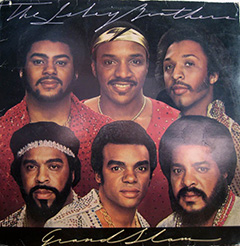 お蔵入りでつまずいたか、純然たる新作としては2年ぶりとなった82年の『Glandslum』には、時代の変化が明確に感じ取れる。以前のアイレーズは、先行シングルをファンクにするだけでなく、アルバムの1曲目にはファンクを配するのが通例となっていたが、今回は静謐なハープの音で幕を開けるスローが冒頭に配されている。ここに至るまでの80、81年には何枚かのシングルを発売しており、80年末に出したファンクの“Who Said?”がR&Bチャートで20位どまりだったことも手伝って、メロウを主軸とする方針を定めたのだろう。実際にこのアルバムの中でゴリゴリのファンクは、この“Who Said?”のみで、それもアルバムの最後の曲としての収録になった。結局、本作から大きなヒットは出なかったが、そのわりにアルバムはR&Bチャートで3位と健闘している。
 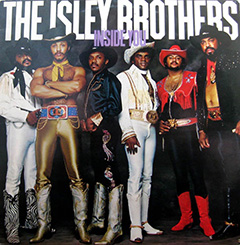 その流れを引き継いで、同年、発表された『Inside You』からは、ジャケットこそ勇ましいが生粋のファンクは姿を消し、アップ・テンポはファンクというよりもディスコ寄りのダンス・チューンとなって、ロナルドもファルセットで歌う場面が多くなっている。そしてスローではクリスのアレンジによるストリングスが全面的に導入され、アルバム全体のイメージがメロウに大きくシフト。またクリスは“First Love”のコーラスをひとりで担うなど、歌にも意欲を見せて、より積極的に関わっている。統一感のある流麗なアルバムだが、ヒットはタイトル曲がR&Bチャート10位となったのが最高で、残念ながらセールスは思わしくなかった。
 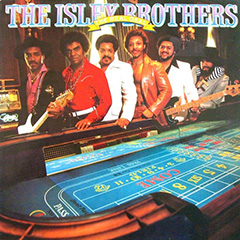 そのためか翌82年の『The Real Deal』では、ファンクをエレクトロに衣替えして復活させ、以前のようにメロウとほぼ半々の構成となった。カジノを舞台にしたジャケットも、これまでになくアーバンぽさが漂っており、時代に沿ったイメージの演出に心を砕いた跡が見受けられる。繊細な情感をたたえて美しさを増したアーニーのギターと、ロナルドのシルキー・ヴォイスの饗宴“All In My Lover's Eye”、アーニーが遠慮無く弾きまくる渋いブルース“Under The Influence”などの名曲/名演もあるが、エレクトロ・ファンクのタイトル曲がそこそこヒットしたのみ。時代の変化の中で、ちょっとした不調の連鎖に苛まれるアイズレーズであった。
 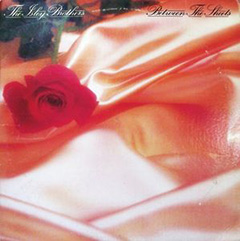 そしてTネックからの最終作となる83年のアルバム『Between The Sheets』のジャケットは、真紅の薔薇に寄り添うようなサーモンピンクのシーツ。どちらかといえば無骨なメンバーの姿は裏ジャケットに隠された。音を聴くまでもなく、アーバン&メロウに照準を定めたことが察せられ、実際に本作からは、今でもメロウの名曲として聴き継がれるタイトル曲と、“Choosey Lover”の2曲がトップ10ヒットとなった。甘美な香りを放つサウンド・プロダクションにはクリスの貢献が大きく、ロナルドのシルキー・ヴォイスにはさらに磨きが掛かってトロトロである。そうした中にあって、胸を強烈に揺さぶるメッセージ・ソングの“Ballad For The Fallen Soldiers”は、決してメロウなだけではないアイズレーズの骨太の一面を表わした、面目躍如たる1曲だ。そしてアルバムは久々にR&Bチャートの1位となり、アイズレーズはTネックでの有終の美を飾った。




















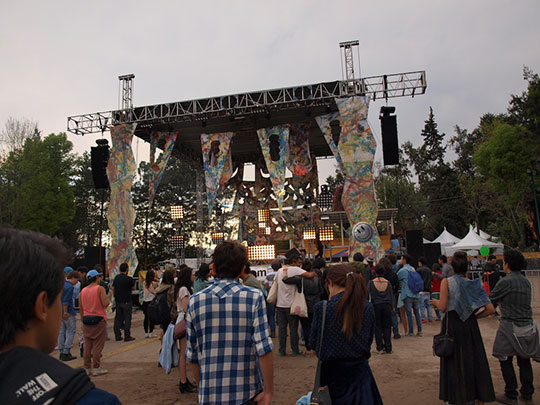
 メインステージの前でくつろぐ参加者たち。芝生でリラックス © Elisa Lemus
 楽器販売のブース © Miho Nagaya
 雑貨とレモネードを販売するブース © Miho Nagaya
  ブランコもあった © Miho Nagaya"
  フードトラックが並び、充実した各国料理が食べられる © Miho Nagaya"
 VANSが提供するスケート用ランページも © Miho Nagaya
 ティファナ出身のフォークシンガー、Late Nite Howl © Miho Nagaya
 雑誌VICEの音楽プログラム、NOISEYが提供するステージ © Miho Nagaya
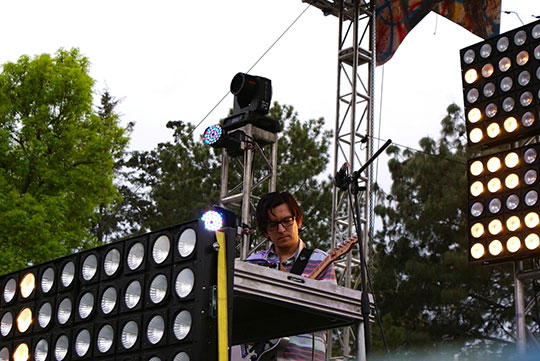 メヒカリ出身の新鋭テクノアーティストTrillones © Elisa Lemus
 会場はペットフレンドリー © Miho Nagaya
 NRMALのスタッフたちは黒尽くめでクール © Miho Nagaya
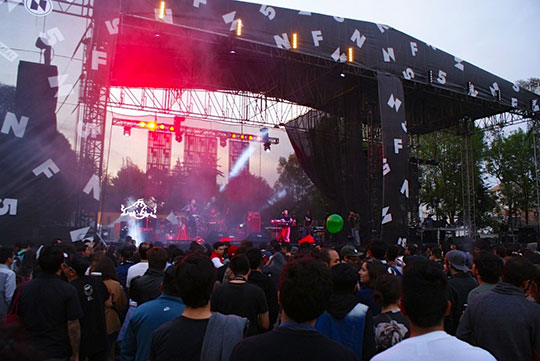 マティアス・アグアヨとモストロのステージが始まる頃には満員に © Elisa Lemus
 マティアス・アグアヨ © Miho Nagaya
 コロンビアのLa mini TK del miedo © Elisa Lemus