「時代の流れに身を任せながらも、自分の原則を守ろうとする」というのが、マルカ・シュピーゲルが、過去数十年にわたって音楽と人生の道を歩む上で指針としてきた哲学を、自ら説明した言葉だ。イスラエル生まれで最初はベルギーを拠点とするポスト・パンクと実験的ポップ・バンド、ミニマル・コンパクトとして活動を始めた。
「君は本当に詩人だね」と、この時間の大半で冗談交じりに語ったのは、彼女のパートナーでイギリスのポスト・パンク時代の伝説のバンド、ワイアーのリード・ヴォーカル兼ソングライターとして名を馳せたコリン・ニューマンだ。
やりとりのなかで、行ったり来たりしながら互いの空白を埋めるように話し、どちらかが割って入って会話の流れを調整する。コラボレーションが基本という感覚こそが彼らの自然な会話の仕方の本質の一部であり、おそらくそれが、音楽家として長く継続できている協働の特性をも垣間見せているのかもしれない。

Immersion
Nanocluster Vol. 1

Immersion
Nanocluster Vol. 2

Immersion
Nanocluster Vol. 3
1980年代にベルギーで出会ったふたりの、尽きることのない好奇心、新しい音に対する鋭いアンテナを張り巡らせること、そして他者の作品を吸収して共有したくてたまらない、スポンジのような吸収力と解放的な感性が組み合わさったことで、魅惑的で変わりやすいオルタナティヴ・ポップ・ミュージックの歴史に大きな影響を与える(同時に影響を受ける)存在となった。
〈スウィム(Swim ~)〉レーベルの共同オーナーとして、Githead名義のバンドとして、ここ最近ではエレクトロニック・デュオ、イマージョン(Immersion/没入の意味)名義として『ナノクラスター(Nanocluster)』における複数の人と共働するスピーゲルとニューマンは、おそらくこれまでで一番活発な活動を展開している。今年のはじめ、彼らは『ナノクラスター』シリーズの第3弾をリリースし、イマージョンとしては、アメリカのアンビエント・カントリー・トリオのSUSSと共に砂漠と海、コンクリートと空を融合させた、ヒプノティックで本質的なテクノで宇宙的なコラージュを創り上げた。その一方、イマージョンのニュー・アルバム『WTF?』は時代精神を捉えたタイトルで、9月にリリース予定だ。
下記は、昨年夏に『ナノクラスター』の「vol.2」と「vol.3」のリリース期間中に実施した、スピーゲル(MS)とニューマン(CN)とのインタヴュ-の編集版である。
80年代半ばのブリュッセルに本物のシーンがあった。〈クラムド・ディスクス〉だけでなく、〈クレプスキュール〉もあり、両レーベルにたくさんの国際的なアーティストが集まって、結果的にブリュッセルに住むようになったりしていた。物価も安くてツアーもやりやすかったし。
■この世界に入るきっかけは何だったと考えていますか?
マルカ・スピーゲル(以下、MS):知識も技術もない状態でも、とにかく人と集まって一緒になって演奏することから始まった気がします。それでも、クリエイティヴであることの力がどういうものなのかを感じることができたのが大きかった。そして私は‶一緒に居ること〟の力を感じ続けている。私たちが常にコラボレーションをするのはそのため。他の人と演奏すると音楽面だけでなく、人間関係においても魔法みたいなものを感じるから。
コリン・ニューマン(以下、CN):僕はマルカとはまったく違う世界から来ています。いわゆるハードコアからネオクラシカルまでの、ありとあらゆる音楽の領域で、合奏(アンサンブル)にはふたつのアプローチの仕方があると思う。ひとつは、誰かが何か書き留めたものを皆で演奏するタイプ。もう一方は、皆で部屋に集まってその場で一緒に何とかするタイプだとすると、僕は最初の方。ワイアーが、ジャミングが下手くそなのは、周知の事実! 「部屋で一緒に音楽を作ってみよう!」と言っても決して何もできあがらない。基本的な作品の構造と要素があれば、非常に良いものになる可能性はある。それに対して、マルカは完全に怖い物なしなんだ。彼女が文字通り演奏を始めると、その周りに必ず何かが見つかるという具合。僕たちが最初に出会ったのは1985年で、それからほぼ継続的に長い時間、一緒に仕事をしている。
■あなたは、ミニマル・コンパクト(Minimal Compact)の5枚目のアルバムをプロデュースされましたね?
CN:そう、『レイジング・ソウルズ/Raising Souls』をね。
■その頃、つまり1980年代初頭のベルギーの音楽シーンは、アクサク・マブールとザ・ハネムーン・キラーズのマーク・ホランダー(オランデル)が〈クラムド・ディスクス〉で活躍していた非常に興味深い時代だったようですね。
MS:そう、ある種のエネルギーがあった。レーベル周辺にはタキシードムーンやその他の多様な音楽があって、コリンは完全に魅了されていたと思う。彼は、ロンドンで公有地に不法滞在するような生活から、ブリュッセルに移ってイギリスよりも少し穏やかな人びとや美味しい食事に出会えた。
CN:そうなんだ。すごく気に入っていたよ。本物のシーンがあった。80年代半ばは常に魅力的な時代で、〈クラムド・ディスクス〉だけでなく、〈クレプスキュール〉もあり、両レーベルにたくさんの国際的なアーティストが集まって、結果的にブリュッセルに住むようになったりしていた。物価も安くてツアーもやりやすかったし。
MS:ロンドンはかなり厳しい場所だった! 私はロンドンに行き始めたばかりの頃にショックを受けたの。ものすごく貧しい感じがして。あなたがブリュッセルに惹かれた理由がわかった。誰かと恋に落ちた以外にもね……わかるでしょう?
CN:一目ぼれだったよ。
MS:楽しい場所だったけれど、(シーンが)衰退すると退屈なベルギーになってしまった。
CN:それは、ベルギーのシーンが心理的な境界線を越えてしまったからなんだ。フランドルとワロン地域はほとんど別の国とも言える場所で、シーンは〈R&S〉レコードがあったゲント(ヘント)に移ってしまい、そこがテクノ・シーンのすべてになった。突然、〈R&S〉と契約した国際的なアーティストたちが現れて、シーンを牽引するようになった。エイフェックス・ツインの最初のアルバムをリリースしたのも彼ら。〈ワープ〉レーベルが頭角を現して彼らの輝きを奪うまで、ゲントには強いシーンがあった。
MS:私たちが再びロンドンに興味を持ち始めたのもその頃だったね。
CN:たしかにね。ブリュッセルからゲントへの移住を考えるぐらいなら、ポーランドに移るのと変わらない。どちらにも同じ銀行、同じ店があるけど、言語もメンタリティも全然違う。それに、ロンドンはまさに、拡大し始めている時だった。
MS:私たちはいつも、物事が始まりそうな場所に惹かれる傾向があるね。
CN:僕は1986年にブリュッセルに移ったんだけど、僕たちがそこを離れたのは1992年になってからだった。その時、ロンドンではようやく電子音楽シーンが始まったところだった。
MS:そして私たちはレーベルを立ち上げて、多くの電子音楽のアーティストたちと知りったの。
CN:移住する前には、マルカのミニマル・コンパクトでの活動が下火になっていて、シンガーのサミー・バーンバッハの近所に住みながらあるプロジェクトに取り組んでいたんだけれど、進展しなかった。そしたら、マルカにソロ・アルバムの話が来たんだよね。でも、彼女は知らない雇われのミュージシャンたちとスタジオに入るのを嫌がり、自分たちのスタジオで、自分たち自身で作りたいと思った。
MS:それに、彼らは私たちの考え自体を理解してはくれなかった。その頃ちょうど、自分たちのスタジオを持つということをし始めたばかりだったから。今では普通のことなのにね。
CN:彼女は、‶もうやり始めたからには、最後までやり遂げたい。さっさとやってしまおう″と言ったんだ。ロンドンに引っ越す時には、ガレージをしっかりと録音ができる場所に改造してレコードを作ってから、リリースしてもらえるレーベルを探すつもりだった。持っていた僅かな金でガレージに防音を施して、新しいミキシング・コンソールを買い、レコードを完成させた。だけど、レコードを出してくれるレーベル探しには完全に失敗したんだ。そんななか、ミュート・レコード社長のダニエル・ミラーとミーティングをしたら、「ここまで全部を自分たちでやったのなら、自分たちで出せばいいのに。やり方はこうだ……」と、レーベルの運営方法を2時間かけて指導してもらった。そして突然、アルバムをリリースすることになった。
MS:(私たちの)典型的な回答ね! 質問に対して、もはやまったく別の話題になってしまっている……!

その後、ミニマル・コンパクトのサミー・バーンバッハと一緒に、オラクルという名でコンピレーションを制作して出した。2枚のレコードを出したところで、マルカが言ったんだ。「私たちはテクノ・レコードを作らなければ!」と。
■これこそが私の理想のインタヴューの形ですよ。私がやるべきことが少なければ少ないほど良い!
CN:実は、僕たちがレコード会社を作ったことをマルカが認めるまでに一年かかったんだ。彼女にはそれがとても思い上がったことに思えたから! それでも僕たちはマルカの初のソロ・アルバムをリリースし、そこから利益を得ることができた。
MS:あの頃はいまよりもまだやり易い時代だったから。
CN:そして、人びとはもっと多く(音楽を)購入していた。その後、ミニマル・コンパクトのサミー・バーンバッハと一緒に、オラクル(Oracle)という名でコンピレーションを制作して出した。2枚のレコードを出したところで、マルカが言ったんだ。「私たちはテクノ・レコードを作らなければ!」と。
MS:私はそんなこと言っていないけど!
CN:いや、言ったよ!君はもっとインストゥルメンタルな曲を作るという想いにかられていた。そして、常に‶ミステリアス〟という言葉を好んでいたね。
MS:多分、そっちの方がより純粋だからだと思う。テクノには‶フロント〟というイメージがあまり無いところに惹かれたの。音楽の制作者がどこから来た、どういう人なのかは知らなくても、純粋な音楽だけがすべてだと思うようなところに。
CN:そうそう、『NME』では‶顔なしのテクノ・バカ(”faceless techno bollocks)″みたいにまとめられたけれど、それは‶ジャングル″のような言葉と同じで、最初はこき下ろしみたいな呼び方だけど、結局は受け入れられるんだ。‶顔なしのテクノ・バカ″なんて、素晴らしい発想だよね![編註:これはすぐにテクノの匿名性、音楽重視で作り手のルッキズムに依存しない態度を賛辞する言葉になった] 最初のイマージョンのレコードでは、僕たちはドイツ出身だと偽ってウィッグやマスクを着けて宣材写真を撮って、でたらめな偽名を使っていた。レコード会社としては、レコードをリリースするだけだから、それが誰によるものなのかは関係ない。それが最初のイマージョンのアルバム『オシレイティング/Oscillating』だった。
■ほぼ同じ時期にリミックス・アルバムもリリースされましたよね?
MS:当時はほんとうに簡単だった。電子音楽のミュージシャンがたくさんいて、誰もがオープンで、「お願いできる?」と聞くと「もちろん、リミックスするよ!」という返事がもらえたものよ。
CN:それはロビン(ランボー、別名スキャナー)が始めたんだよね。バタシー・バークを歩いていた時、彼が「リミックスしてあげるよ!」と言ったんだ。我々も、いいね! という感じで。僕たちはそれが12インチ盤を出す口実になると思った。それで2枚分のリミックス・アルバムを作ったんだけど、2作目の頃には、テクノ界の少し有名なクロード・ヤングのようなアーティストがリミックスを手掛けてくれるようになって、それらのレコードが売れたんだ! まだレーベルを始める前の〈ファット・キャット〉がコヴェント・ガーデンにレコード店を持っていたから、少し多めに白盤を作って〈ファット・キャット〉に渡せば、彼らがトップDJたちに売ってくれていた。
MS:そうやって、自然と広がっていったの。あの自然な流れが好きだったな。今は、すべて業界の仕組みを通さなくてはならなくて、その罠から抜け出すのは不可能ね。
CN:それで、僕たちのそれまでの歴史とはまったく関係なく、ダンス・ミュージック界でクールな音楽を出すレーベルという評判を得たんだ。その次に、LFOのゲズ・ヴァーリーから連絡が来て、「いくつかのトラックがあるんだけど、ワープは全部が‵聴くための音楽′でないと出したくないと言っている。俺はダンスフロア向けの音楽をやりたいのに」と言うんだ。ちょうど息子のベンを迎えに行く車の中でそのカセットを聴いたんだけど、最初のトラック“クオ・ヴァディス/Quo Vadis”を聴いた瞬間にこれはポップ・ミュージックだと思ったね!
MS:彼はG-Manと名義を変えて12インチを出して、この曲は大成功を収めたし、今でもプレイされている。日本でのワイアーのライヴで、ある人がワイアーの出番の前に“クオ・ヴァディス”をプレイしていた。その人は、コリンとこの曲の繋がりを知らなかったと思うけど。聴いた瞬間に、「ワオ! まだプレイする人がいるんだ」と思った。
CN:まさにクラシックな、ダンスのできるミニマル・テクノとして、DJたちに愛されたよね。この頃には僕たちはもう恐ろしいほどの評判を得ていたんだけど、ひとつのスタイルに固執したくはなくて。そして、ドラムンベースが登場し、僕たちも夢中になった。テクノはある種、アメリカンな感じがしたけど、ドラムンベースはまさにロンドンの音楽で、70年代パンクのような興奮を覚えた。突然、信じられないほどのエネルギーの爆発が起きた。正直、90年代半ばのある時点では、もうドラムンベースさえあればいいという感じだった。自分たちでも少し作ったけれど、その後、ロニー&クライドという、ブレイクビートのより知的な側面に分け入って、違う領域に挑戦する人たちと仕事をするようになった。僕たちはもう少しダウンテンポ寄りの作品をいくつか出して、90年代後半にはポスト・ロックの渦に巻き込まれ始めた。僕たちは90年代をアンビエント・テクノから始めて、ポスト・ロックへとたどり着いた。その時の時流に乗ったということだ。レーベルをやるのであれば、常に現代的であり続けなければいけない。
■いまの話を聞いて、あなたが先ほど話していたことを思い出しました。あなたは、ネオクラシックからその他のさまざまなジャンルへと続く音楽の糸のようなものについて話してくれましたが、それに名前は付けていないと言いました。実は私もそういったことをよく考えるのです。ジョン・ケージからブライアン・イーノが1970年代にやったこと、それからパンクの時代にもっとも興味深いバンドがやっていたことまで、線を引くことができるのではないかと。それは、クラシック・ロックの正典の枠組み外にある、並行歴史(パラレル・ヒストリー)のようなものではないかとね。
MS:ストリーミングが始まってからすべてが変わったのではないかな。音楽を届ける範囲や、仕組みそのものが変わったのでは?
CN:根本的に変わったのは、どこに力があるかということだと思う。例えば、90年代のインストゥルメンタル・ミュージックの台頭は、アーティストがアメリカやイギリス出身でなくても世界的に活躍できることを意味して、その変化はストリーミングの普及によって完成されたんだ。今ではその現象は‶グローカリズム(glocalism)〟と呼ばれていて、アーティストが自国で成功を収めながら世界中へと広げていくことができる。それと同時に業界は、完全に石化したかのような状態になって——僕が言っているのは、メジャー・レーベルや大手の独立系のことだけど——なんとか過去の体制にしがみつこうともがいている。権力の分散化は確実に起きていて、それをさらに加速化させる必要がある。

ドラムンベースが登場し、僕たちも夢中になった。テクノはある種、アメリカンな感じがしたけど、ドラムンベースはまさにロンドンの音楽で、70年代パンクのような興奮を覚えた。突然、信じられないほどのエネルギーの爆発が起きた。正直、90年代半ばのある時点では、もうドラムンベースさえあればいいという感じだ。
■あなた方が一緒に働き始めた時、コラボレーションが重要になったと言っていましたね。年月を経て、それが大きく成長したように見えます。それはあきらかに、『ナノクラスター』の重要な要素のひとつですよね。
MS:それがすごく魅力的な領域なんです。長年音楽を作り続けていると、知らない人と一緒に働くこともあって、そんな時には自分の安全地帯から押し出されるようなことも起きてくる。どこか違う場所で、他の人たちのやり方に挑戦すると、視野が広がって、多くの選択肢を与えられるの。すべてのコラボレーションが私たちを新たな場所へと連れて行ってくれる。
CN:2000年代になると、ワイアーが再び始動して、それと並行してGitheadというバンドのプロジェクトにも取り組んでいた。10年前には、ブライトンに移住したんだけど、そこでまたイマージョンも復活させることにしたんだ。機材がかなりシンプルで、ただ一緒にギグをするだけでよかったから。イマージョンの前のアルバム『ロウ・インパクト/Low Impact』は1999年のリリースで、その次のレコードは2016年だった。長い間隔が空いてしまったけど、それが僕たちに自由に活動する空間を与えてくれた。それでアルバムを制作して最初は2枚の10インチ盤として発売し、後にCDに編集した――まるで島に住むアナログな生き物みたいなイメージで。実際にそれがタイトルになったんだけど(EP『アナログ・クリーチャーズ/Analogue Creatures』と『リヴィング・オン・アン・アイランド/Living On An Island』 をまとめたアルバム、『アナログ・クリーチャーズ・リヴィング・オン・アン・アイランド』)。実は僕たちがすでにその時、ブレグジットによる疎外感を感じ始めていたのがタイトルに表れているんだ。
■今日の取材の前にその曲を聴いていて、そのことに強く感じ入りました。『リヴィング・オン・アン・アイランド』というタイトルと2016という年を見て「ああ、自分もその感覚を知っている!」と思ったんです。
MS:ブレグジットの投票時には、私たちは島に居て、あらゆるものから隔絶されているという強い感覚を覚えたの。
CN:僕たちは海辺に住んでいるしね。
MS:そう。そしてそれがある種の希望と楽観主義を同時にもたらしてもくれる。
CN:いくつかライヴやフェスティヴァルにも出演したけれど、大きな動きはなかったね。
でもブライトン在住の知人が、「ブライトンに居るなら、自分たちの手でシーンを作る必要がある」と言ったんだ。現地の音楽シーンは結構分断されているからね。
MS:ミュージシャンもすごく多いから!
CN:すごく多い! それで僕たちは、「それはどういう意味だろう? どうやったらシーンを生み出すことができるのか? クラブでイベントを企画してもいいけど、他の人とどうやって差別化できるんだろう? そうだ、コラボレーションの要素を入れてみよう」と思いついた。僕たちはターウォーター(Tarwater)とはベルリンのシーンの初期から何年も知り合いだったし、会場をみつけて、ターウォーターとイマージョンがコラボレートするイベントを企画しようということになった。彼らが数日間、僕たちの所に泊まり込んで一緒に曲を作ればよいと考えた。そして、それが上手くいったんだ。
MS:リハーサル中にもスタジオで録音ができたから、基礎となる録音を残すことができたしね。
CN:ザ・ローズ・ヒルという公共の、110人ぐらいのキャパの小さな会場でやったんだよね。ちゃんとしたお客さんで埋めるのも簡単な規模の。
これは、実はワイアーのブルース・ギルバートが人生と芸術について語った大事な声明のひとつ、「文脈がすべてだ(Context is all).」から来ている。僕はいわゆるビッグ・ボーイ・プロダクションと言われるものを常に嫌ってきた。レコードを聴いて、その背後に関わった‶プロデューサー″のエゴが透けて見えるような自己主張の強いもののことだ。
■コラボレーションはどのような感じでやるのでしょう? 即興することもあるんでしょうか? それとも事前の準備の方が多めですか?
MS:まず私たちがアーティストにアプローチして、「私たちの方から3つの基本的なアイディアを送るから、あなたの3つの基本の考えを返送してください。何か思いついたものをそこに乗せてみてほしい」と言う。それを基に、あまりやり過ぎない程度に構築していく。それから相手と一緒になって完成を目指すの。毎回違うやり方にはなるけれど、それが基本的な構造かな。全然即興ではないけれど、完成度をそこまで高くしないから「うまく行くだろうか?」とか「良いライヴができるだろうか?」というような多少の緊張感もある。
CN:次に思いついたコラボレーションの相手がレティシア・サディールだった。‶クラウトロック・カラオケ″というものがあってね。
MS:ロンドンに長年住んでいる、日本から来た人が企画している、違うバンドの人達が集まってクラウトロックのヴァージョンを弾くという一夜があって、それが楽しいの!
CN:それをレティシア・サディールと一緒にやったんだけど、彼女はギター演奏の能力だけでなく、すべてのパートを覚えて参加したんだ。僕たちはそんなことをしたことがなかったんだけど! それを見て、彼女に『ナノクラスター』の話を持ちかけたら、セットをやってくれるのではないかと思った。
MS:彼女が私たちの所にやって来て滞在し、一緒に題材に取り組んで。そう、とても良かったわ。
CN:僕たちは多くの素晴らしい人たちを知っているけど、そのうちの何人かは僕たちがその人たちのファンであるという理由からなんだ。ウルリッヒ・シュナウスが宇宙で一番の音楽を作っていた時もあったし、他にもロビン・ランボー、スキャナー、勿論Githeadのね。彼のことももう何年も知っているよ。
MS:それ以来、私たちはますます幅広い分野でコラボを続け、紙の上では機能しそうもない奇抜なアイディアを次々と生み出してきたの。
CN:そこへ突然パンデミックが襲い、2020年5月に僕たちは4つのコラボレーション企画以外はまったくすることがなかったから、「アルバムを完成させよう」と決めた。実はこれは難しい決断だった。というのも、マルカと僕はそれまで一度もアルバムのミキシングをやったことがなかったから。まさに目から鱗が落ちるような経験だった。僕の感覚では、それが当時、僕たちのスタジオから生まれた作品のなかでも最高のミックスのレコードになったんだ。すべてをコラボレーションして制作したからだと思う。
MS:ある意味、ラジオからも影響を受けていたよね。異なるジャンルの曲をたくさん聴くと、音の組み合わせ方など、無意識に影響を受けていたと思う。
CN:その通りだね。それを2021年にリリースして、批評家からはある程度の高評価を得たけれど、パンデミックの最中にはプロモーションは何もできなかった。ライヴもすでに終わっていたので、ツアーを組むのも難しい状況だった。どちらにしても、2021年から22年にかけて、ツアーを検討したミュージシャンは、自分たちで主催するしかなかったし。
■パンデミックの状況において、アルバムで他のアーティストたちとはどのように協力して制作できたんですか?
CN:すべてを事前に録音していた。
MS:リハーサルをしながら録音し、それを制作の基盤としたの。現在では、彼らが送ってくれる素材で仕事をしているけれど、次回作のコラボレーション(2025年のSUSSとの『ナノクラスターVol.3』)では、物理的な空間での作業はしないと思う。状況次第だけどね。スタジオ・ワークを完成させるには、互いにパーツを送り合うか、物理的に人が集まるかのどちらかの方法がある。
■それは、プロジェクトの進化の一環ですね。始めた頃にはブライトン在住のミュージシャンたちや、移動が容易な人たち中心だったのが、より広範にアーティストを探し始めると、プロセス自体も変わってくる。
CN:まさに。最初の作品をリリースした後、「次のレイヤーに行くにはどうすればよいか」を考えた。多くの人と話をしたけど、誰もブライトンには居なかったし、パンデミック後というのは、誰もが自分のキャリアに集中していた時期だった。僕たちと仕事をするのは贅沢だと思われる可能性もあったから、何か別の方法はないかと考えた。僕たちの知り合いにサウス・バイ・サウスウェストの主なオーガナイザーのひとりであるジェイムズ・マイナーがいたので、そこで何かをやってみようと思った。
MS:それは結構怖いことだった。というのも、オースティンまで遠征して、現地の人たちと音楽を作らなければならなかったから。どうやってやろう?と。その時、リストにソー(Thor)・ハリスの名前を見つけたの。彼はその土地の人で、パーカッションを演奏するので、一緒に何かを創りやすいのではないかと思った。
CN:彼はかなりアメリカのミニマリスト・シーンの核心にいる人物だし。
MS:そして、生まれつきコラボレーションの才能のある人。
CN:ソーは、実に乗り気きだったね。事前に素材を交換したので現場に着いたらすでに基盤となるものもあった。結局、彼の家でリハーサルをすることになった――彼はただ優秀な音楽家であるだけでなく、大工、配管工、便利屋としても何でもござれの職人で、素晴らしい社会的良心も持ち合わせているんだ。
MS:彼は素晴らしい人物だった。彼の自宅で仕事ができたのは良い経験だった。オースティンでは誰もが知る人物。
CN:実際のパフォーマンスでは、ちょっとした試練のようだった。というのも、結局、ホテル・ヴェガスで演奏することになり、半分暗がりの、そこら中、酔っぱらいだらけのなかで、テーブルの上に機材を設置しなければなかったから。
MS:それがコラボレーションの良いところ。それぞれの異なる経験が、いつもなら行かないような場所にまで連れて行ってくれるので、かなりの中毒性がある。私たちは人と一緒に音楽を作ることが大好きだし、他の人の世界に引き込まれるのも特別なことだから。
■それが、リスナーとして『ナノクラスター』のアルバムを聴くときに興味深い点のひとつです。音楽的な個性が互いに溶け合っていくかのような感覚なんです。多くの人が関わっていて、各盤面やディスクごとにコラボレーターが違うのに、常に一貫した雰囲気が漂ってくるからです。あなたたちがワイヤーとの作業について説明してくれたのとは対照的ですね。ワイアーでは各人の役割が明確に分けられ、決まっていたという。
MS:コラボレーターが違っていても、音に一貫した豊かさがあると言う声をよくもらいます。
CN:それはおそらく、最終的なミックスのやり方も影響しているだろうね。
MS:でも、それだけではないわ。私たちはそこに人間同士の繋がりを持ち込むから。いつも、最後には友情関係になって終わることが多いよね。
CN:僕たちは、一緒に仕事をする人の空間を作ろうと努めるけれど、文脈を設定した上でそうする。これは、実はワイアーのブルース・ギルバートが人生と芸術について語った大事な声明のひとつ、「文脈がすべてだ(Context is all).」から来ている。僕はいわゆるビッグ・ボーイ・プロダクションと言われるものを常に嫌ってきた。レコードを聴いて、その背後に関わった‶プロデューサー″のエゴが透けて見えるような自己主張の強いもののことだ。制作に関わるのであれば、その音楽とそれを聴く人の間の障壁を取り除くべきだ。リスナーがその音楽のなかに何があるのかを容易に聴けるようにするべきだと思う。自分や他の関係者を良く見せよう、聴かせようとすることではなく、全体が大事なんだ。
■レーベル名をSwim(泳ぐ)にしたのはなぜですか?
MS:だめ(笑)? 私たちはいつも響きの良い名前を探しているんだけど。多分、私たちがいつも異なる人びとの世界の間に軽やかに浮かんでいるからかも。でも、ほんとうはよくわからない。それは後からついて来るものだと思う。この名前を聞いて、あなたは何を思い浮かべますか?
■私はブライアン・イーノのことを思い出しました。彼の音楽では水が繰り返し登場するテーマで、イマージョンで聴く音にもどこか似たものを感じます。あなた方は、どちらも他のバンドではシンガーとして知られていますが、ここでは多くの曲でヴォーカルを削ぎ落しています。だから、ポップスターやロックスターのエゴを排除して、他の可能性が生まれる流動的な空間を探しているように聴こえます。
MS:私たちは、『ウォーター・コミュニケーション/Water Communication』というコンピレーションも出したし、水は繰り返し現れるテーマなの。そして今は、海辺に住んでいるし。
CN:これは、ある意味、『ナノクラスターVol.2』のもうひとつのコラボレーションであるジャック(ウォルター、別名カブゾア Cubzoa)に引き戻される。2021年頃だったと思うけれど、皆が再びライヴを開催するようになり、僕たちはザ・ローズ・ヒルに行ってカブゾアに真に感銘を受けたんだ。
MS:彼は私たちに曲を送ってくれるようになったんだけど、曲というのは完成されたものなので、最初はどうしたらよいのかと戸惑った。通常は、もっと基本的なところから始めるから。でもとても興味深い挑戦になったし、すごく良い作品に仕上がったと思う。
「いまのバンドは大変なのよね。そうせざるを得ないんだから」「ほんとうにそう! パンデミック以降、業界はミュージシャンに圧力をかけている」
CN:さらにもうひとつ、これまでの『ナノクラスター』ではやったことのないことをしたんだ。それは、素材をどんどん出し合うことだった。最初は素材が足りていなかったから。結果、かなり素晴らしい成功に繋がった。彼の曲とはかなり違うものになったんだ。
MS:彼が一緒に居るとほんとうに良い人なので助かったわ。人間性は非常に重要だから。
■前回の作品では、4人のアーティストが参加してそれぞれが10インチの片面を担当されましたが、2作目ではふたりとなり、各ディスクにひとりのアーティストが参加した形になっていますね。
MS:それは事前に決めたことではなかったけど、作業を進めるうちに素材が十分そろったことに気付いたの。今後はもしかしたら、コラボレーションはひとつだけになるかもしれない(注:実際、『ナノクラスターVol.3』では、SUSSのみとのコラボになった)。
CN:ルールを設けてはいないよね。ただ、僕たちはダブル10インチ(2枚組の10インチ盤)が好きで。この着想は、完全に実用面でのふたつの理由から生まれた。ひとつ目は、最初のアルバムを製造した際、12インチのヴァイナルをプレスするのに数か月かかったのに、10インチならずっと早く作れたということがあった。また、最初のアルバムには4つのまったく異なるプロジェクトが含まれていた。だから‶それぞれに専用の面があれば、それが自然な仕切りになる″と考えた。
MS:アーティストにとってもより興味深くなるしね。
CN:そう。それぞれが独立した作品になればね。当然のようにデジタル配信では、別々のEPとしてもリリースされているし、ストリーミングでは、短い長さのリリースがトレンドになっているようだ。例えば、20曲入りのアルバムをリリースしても、注目されるのは1、2曲だけで、残りは無視されてしまう。ストリーミングでは聴く人の注意力が極端に短いから。別々のEPにすることで、異なる人たちがそれぞれ別のアーティストに集中できると思った。でも実際には、媒体によるということなんだけど。
■そして2作目では、各アーティストがより広い範囲でプレイする余地が得られると、EPのような短いフォーマットではなく、違う方向性になる気がします。
MS:そうかも。各アーティストがより多くの表現で貢献できるようになることが重要。
■現在のあなた方の作品に共通するテーマのひとつは、独立した所有権の尊重のように感じます。ワイアーの場合も、バンドがカタログの大部分を所有しているというのは事実でしょうか?
CN:僕たちは80年代の作品は所有しておらず、70年代、80年代の出版権も持っていないけれど、70年代作品のマスターテープは保持していて、2000年以降の作品のすべても持っている。〈スウィム〉からリリースしたアーティストの一部は、自分たちで権利を買い戻していて、他のアーティストは特に気にしていないようだけれど、僕たちは喜んで権利を返還するつもりなんだ。他の人の音楽に執着する必要はない。
MS:あなたの場合は、所有権を持つことがとても重要だと思う。だって、大手レーベルが持つ影響力というものに嫌というほど、気付かされたんだから……
CN:僕たちにとっては、個人的にかなり大きな違いになったよね……。勿論、僕は非常に恵まれた立場で話しているわけだけど。つまり、70年代のワイアーの素材が何世代にもわたって受け入れられてきたから。それは70年代にリリースされた当時の人たちだけでなく、世代を超えて受け継がれて若い人にまで響いている、決して静かではないダイナミックな現象なんだ。さらにストリーミングの数字から判断すると、リスナーは減少するどころか、増加している。自らでマスターの権利を所有し、収益の大部分をバンドに還元できると、生計を立てるための基盤ができる。もしもオリジナル・メンバーと同世代の人たちが公務員になっていれば、はるかに多くの収入を得ていただろう。だけど、60代、70代、80代のミュージシャンのなかには、生活に苦労している人も多い。ツアーに出なければ家賃を払えないから、過酷な条件でツアーを続けるしかないんだ。
MS:でも、私たちが一緒に作るものをすべて所有していることには、メリットとデメリットの両方がある。外部レーベルのように、作品をより広めるような力はないから。
CN:お金がかかるからね。宣伝費や製造費、その他すべてに費用がかかる。だけど、例えばすでにやっているコラボレーションのひとつは、ブライトンを拠点とするバンド、ホリディ・ゴースツというサムとカットのカップルで、僕たちとも仲が良い。彼は30代前半で、ツアーのブッキング方法まで良く知っているんだ。僕の世代のミュージシャンは、ツアーのブッキングの仕方などまったく知らないと思う。
MS:いまのバンドは大変なのよね。そうせざるを得ないんだから。
CN:ほんとうにそう! パンデミック以降、業界はミュージシャンに圧力をかけている。
■日本でも似たような状況だと感じます。あの数年で、何かが急激に加速した、‶それ以前とそれ以後″があるんです。若手のミュージシャンたちが、まるで優秀なビジネスマンのように見えるのはある意味で尊敬に値するけど、彼らがそうせざるを得ないことに同情してしまいます。
MS:そうよね。ミュージシャンとして、ただ音楽を追求する自由は、素晴らしい以外の何ものでもない。
(了)
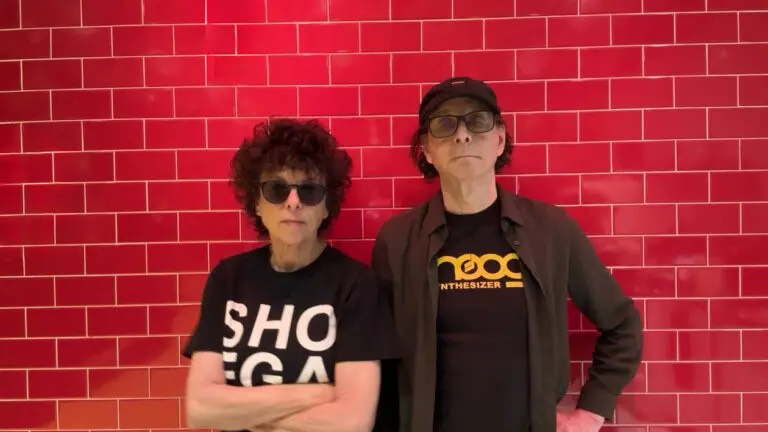
“I think you swim with the times, but you try to hold onto your own principles,” is how Malka Spigel describes the philosophy that’s guided her path through music and life over the past several decades — initially with Israeli-born, Belgian-based post-punk and experimental pop band Minimal Compact.
“You’re such a poet,” jokes her partner through the greater part of that time, Colin Newman, who made his name as the lead vocalist and songwriter of UK post-punk legends Wire.
A sense of back-and-forth, of each filling the gaps left by the other, of one stepping in and adjusting the flow of the conversation — of collaboration, essentially — is a natural part of the way they talk, and perhaps offers a window into the nature of their long-lasting collaboration as musicians too.
The pair met in Belgium in the 1980s and a combination of endless shared curiosity, a finely honed antenna for new sounds, and a porous, open sensibility to both absorb and eagerly share other people’s work has seen them leave their in fluence on (and be influenced by) by a fascinating and fluid alternative history of popular music.
Working together as co-owners of the Swim~ label, in the band Githead, as the electronic duo Immersion and most recently with a series of collaborators in the Nanocluster live and recording project, Spigel and Newman are perhaps more active than they’ve ever been. Earlier this year, they released the third of their Nanocluster series in collaboration, Immersion merging with US ambient-country trio SUSS to create a hypnotic, techno-organic, shifting kosmische collage of desert and sea, concrete and sky. Meanwhile, Immersion’s new album, under the zeitgeist-grabbing title “WTF?”, is set for release in September.
The following interview is an edited version of a conversation with Spigel (MS) and Newman (CN) last summer in the period between the second and third Nanocluster releases.
__________
IM : What do you think was your starting point that got you on this train?
MS: I think just getting together with people and playing together without any knowledge and technical ability, but feeling already the power of what it’s like to be creative. But also the togetherness, for me is the power that always stays there. That’s why we always collaborate: there’s some kind of magic when you play with other people, not only on the music side but on the human side.
CN: I come from a very different world from Malka. I mean, within whatever you call this whole gamut of music that runs from hardcore to neoclassical or whatever, there seem to be two approaches among ensembles. One is somebody writes something and the ensemble plays it, or the ensemble stand in a room and figure it out together. I come from the first approach. Wire is famously rubbish at jamming! If you’d said, “Let’s stand in a room and figure out some music together,” that’s never happened. If you have a basic structure and some compositional elements that are going in there, then it can be very, very good. Whereas Malka is completely fearless: she will literally just start playing and you kind of find things that go around what she’s playing. We first met in 85, so that’s a long period of pretty much continual working together.
IM : You produced maybe the fifth Minimal Compact album, right?
CN: Yeah, “Raging Souls”.
IM : That looks like a very interesting period for music in Belgium in the early 80s, with the Crammed Discs label and Marc Hollander from Aksak Maboul and The Honeymoon Killers.
MS: Yeah, there was some kind of energy. There was Tuxedomoon and other kinds of music around the label, and I think Colin was pretty much charmed by the whole thing. He came from living in a squat in London into Brussels, and the nice food and people who are kind of softer than in the UK.
CN: Yeah, I loved it. It was a real scene. And that period around the mid-80s was a really fascinating time. It wasn’t just Crammed Discs, there was Crépuscule, and both labels had a lot of international artists who ended up living in Brussels because it was cheap and good for touring.
MS: And London was a pretty harsh place! I was a bit shocked when I started going to London! It felt pretty poor. I could see why you were charmed with Brussels. Apart from falling in love with… you know!
CN: It was love at first sight.
MS: It was a fun place, but when it died off, it just became boring Belgium.
CN: What happened was the scene in Belgium crossed the psychological border. Flanders and Wallonia are almost two separate countries, and the scene moved to Ghent because that’s where R&S Records were based, and that was the whole techno scene was. Suddenly there were all these international artists signed to R&S and they were leading the pack. I mean, they put out the first Aphex Twin albums. Until Warp came and stole their thunder, there was a strong scene in Ghent.
MS: That’s also when we started getting more interested in London again.
CN: That’s true, if you’re in Brussels and you’re thinking about moving to Ghent, you might as well be moving to Poland. You have the same banks and same shops, but you have a totally different language and an entirely different mentality. And London was just starting to expand.
MS: We always feel attracted to places where things kind of start.
CN: I moved to Brussels in 1986 and we finally left in ’92, and at that point, the electronic scene was just starting in London.
MS: And started a label, and started to get to know more electronic music artists.
CN: Before we left, Malka’s time with Minimal Compact had sort of fizzled out, and we lived around the corner from the singer, Samy Birnbach, and sort of worked on a project that didn’t go anywhere. Then Malka got the offer to do a solo album, but she didn’t want to go into the studio with a bunch of hired musicians. We wanted to make it ourselves in our own studio.
MS: And they just didn’t get the concept. It was the beginning of people owning their own studios, and now it’s so common.
CN: She said, “Well I’ve already started on it. I want to finish it. Let’s just do it.” We moved to London with the idea that we could convert our garage into a proper space for recording, then make that record and figure out if we could find someone to release it. We took the little money we had, soundproofed the garage, bought a new mixing board and set to work on finishing the record. Then totally failed to find a label for it, but I had a meeting with (Mute Records boss) Daniel Miller and he said, “You’ve done it all yourselves, so why don’t you just release it yourselves as well? This is what you do…” So I had like a two-hour instruction about how to run a label. And suddenly we were releasing an album.
MS: Typical answer! He asked a question and now we’re a million miles away!
IM : This is my ideal interview. The less work I have to do, the better!
CN: It took Malka a year to actually admit that we had a record company. She thought it was well pretentious! But we put out Malka’s first solo album, and we made some money out of it!
MS: It was easier in those days.
CN: And people bought more. And after that we put out a compilation of the material we’d worked on with Sami Birnbach from Minimal Compact, under the name Oracle. So we’d released two records and then Malka said, “We have to make a techno record!”
MS: I never said that!
CN: Yes you did! You were very much into the idea that we had to make something more instrumental. You always liked the word “mysterious”.
MS: I guess it’s more pure. I always felt attracted with techno to how it doesn’t have too much of a “front image”. The people making the music, we don’t know where they come from, it’s all about the purity of music.
CN: Yeah, summed up in the NME with the phrase “faceless techno bollocks”, which rather like all those other words, like “jungle”, which starts off as a put-down but you sort of embrace it: “faceless techno bollocks”, what a brilliant idea! With the first Immersion record, we just pretended to be from Germany and we had publicity photos with wigs and masks, we had made-up names. If you’re a record company, you just release records: they could be by anybody. That was the first Immersion album, “Oscillating”.
IM : You also put out a remix album at almost the same time, didn’t you?
MS: It was really easy at the time. There were lots of electronic musicians, people were open, you’d ask someone, “Yeah, I’ll do you a remix!”
CN: It was Robin (Rimbaud, a.k.a. Scanner) that started it. We were walking in Battersea Park and he said, “I’ll do you a remix!” Oh, alright! Then we thought that would be an excuse to put out twelve-inches. We did two volumes of remixes and by the second one, we were getting slightly bigger names in the techno world doing remixes for us, like Claude Young, and those records were selling! Fat Cat Records had a shop in Covent Garden, and basically you’d manufacture some extra white labels, give them to Fat Cat, and they would sell them to all the top DJs.
MS: So it kind of spread naturally. I like the way it was so organic. Now everything goes through the industry and it’s impossible to break out of that kind of trap.
CN: And we started to have a reputation within dance music that was nothing to do with our history, just as this label that puts out cool music. The next thing that happened was that Gez Varley from LFO got in contact with us and he said, “I’ve got these tracks and Warp don’t want to put it out because they want to be all ‘listening music’ and I want to to do dancefloor.” And I remember listening to his cassette while going to pick up our son Ben from school in the car, listening to the first track, “Quo Vadis”, and I just thought, “This is pop music!”
MS: He called himself G-Man. And we did really well with it. I mean, people still play “Quo Vadis”. I heard it in Japan, when Wire played a gig and there was someone playing earlier, I don’t think he connected you with the track, but he played “Quo Vadis” and I thought, “Wow! People are still playing it!”
CN: It’s just an absolutely classic bit of danceable minimal techno and DJs loved it. So by this point we had a fearsome reputation but didn’t want to stick in one style. And then drum’n’bass happened. We were biiiiig on drum’n’bass. Techno was sort of American, but drum’n’bass was just London music, and it was kind of exciting like the 70s punk thing: suddenly you have this unbelievable explosion of energy. There was a point in the mid-90s when, to be honest, drum’n’bass was the only music that you needed. We made a little bit of it ourselves, but then we started working with Ronnie & Clyde, who were sort of the more intellectual side of breakbeat or pushing into a different kind of area. We put out some other stuff that was kind of more downtempo, and then towards the end of the 90s, we started to get involved in the whole post-rock thing. We charted a course through the 90s, starting with ambient techno and ended up with post-rock. It was all about what was going on: if you’re a label, you’ve got to be contemporary.
IM : It reminds me of something you said earlier. You talked about this thread of music that runs from neoclassical through all these other things, and you didn’t have a name for it. But it’s something I often think about: that there’s a line you could draw through stuff like John Cage, through what Brian Eno was doing in the 1970s and what a lot of the most interesting bands of the punk era were doing. It’s like a parallel history outside that classic rock canon.
MS: Didn’t everything change because of streaming. It changed how far it can reach and how it works.
CN: I think the fundamental change is in where the power lies. For example, the rise of instrumental music in the 90s meant that artists didn’t have to be from America or the UK to be international artists, and that thing has really been completed now with streaming, where you have what they call “glocalism”, where artists can do really well in their territory and spread out. At the same time, the industry is absolutely petrified and they’re doing everything they can to hang on — I’m talking about the major labels and the large independents — to the way it was. There’s definitely been a devolution of power and that has to be accelerated.
IM : You said that collaboration is something that became important when you started working together, and it seems like that’s grown a lot over they years. It’s obviously a big part of what Nanocluster is.
MS: It’s a fascinating area, because after so many years of making music, you get pushed out of your comfort zone because you’re working with a person you might not even know very well. So to kind of find yourself somewhere else and to try to go towards what they do, it opens you up and gives you ways forward with more options. Every collaboration takes us somewhere else.
CN: Wire happened again through the 00s, we had a parallel project, Githead, which was also a band, and we moved to Brighton ten years ago. We made a decision when we got to Brighton that we would reactivate Immersion because the equipment was quite modest and we could just play gigs together. Immersion’s last album (“Low Impact”) had come out in 1999 and the next one came out in 2016. It’s a long time between records, but that offered us a space to just get on and do stuff, so we did an album, which we initially released as two 10-inches and then compiled onto a CD — like analogue creatures living on an island, which was actually the title (the EPs “Analogue Creatures” and “Living On An Island” which were compiled into the album “Analogue Creatures Living On An Island”). So we were already starting to feel the alienation of Brexit in that title.
IM : I was listening to that earlier today and that struck me. I saw “Living On An Island”, then the date 2016 and thought, “Oh yeah, I know that feeling!”
MS: There was a really strong feeling at the time of the Brexit vote that we’re on an island, kind of separate from everything.
CN: And we live next to the sea, too.
MS: Yeah, which gives you a kind of hope and optimism at the same time.
CN: We did a few gigs, maybe a couple of festivals, but there wasn’t a lot going on with it. But someone we knew in Brighton had told us, “If you’re in Brighton, you need to create your own scene.” It can be quite divided-up.
MS: There’s LOTS of musicians!
CN: Lots of musicians! So we thought, “Well what does that mean? How can we create a scene? Let’s create a night in a club, but how can we make that different to anybody else’s? Well let’s have a collaborative element in it.” We’d known Tarwater for absolutely years, right from the early days of the Berlin scene, and we thought, “We’ll find a venue, do Tarwater and Immersion collaborating together. They can stay with us for a couple of days, we can work out the pieces together.” And it worked.
MS: And we could record it in our studio while we were rehearsing, so we had a basic recording of it.
CN: We did it at The Rose Hill, which is a small community venue that holds about 110 people — easy to fill it up with the right thing.
IM : How does the collaboration come about? Is there improvisation, or more prior preparation?
MS: We approach the artist and say, “We’ll send you three very basic ideas, you send us three basic ideas: try and put something on it that you come up with.” And we kind of build it, but not too far. Then we get together and sort of complete it in a way. It’s different every time, but that’s the basic structure. It’s not improvisation at all, but it’s not so complete that there isn’t a kind of tension about “Is it going to work? Is it going to be good live?”
CN: The next person we thought of was Laetitia Sadier. There’s something called “Krautrock Karaoke”.
MS: It’s someone from Japan who’s been living in London for a long time, and he’s been organising nights where people from different bands get together and play a version of krautrock. It’s fun!
CN: We did one with Laetitia Sadier. She came with not only the competence of her guitar playing: she’d actually learned all the parts, which is more than we’d ever done! It was amazing. So we thought maybe if we ask her, she’ll do a Nanocluster set.
MS: And she came over, stayed here, worked on material, and yeah, it was good.
CN: We know a lot of people, some of them just because we’re fans. There was a point when Ulrich Schnauss was making some of the best music on the planet, and then Robin Rimbaud, Scanner, of course who was in Githead. We’ve known him for years.
MS: And since then, we’ve been collaborating further and further afield and come up with more weird ideas that maybe shouldn’t work on paper.
CN: And then suddenly the pandemic hit, it was May 2020, we had these four collaborations, absolutely nothing else to do, so we thought, “Let’s finish the record.” And that was a difficult decision because Malka and I had never worked on mixing an album before. It was a real eye-opener: it was at that point the best mixed record that had come out of our studio, in my opinion, and it was because we were doing everything as a collaboration.
MS: It was kind of influenced by the radio show as well. When we play a lot of songs from different genres, we hear sounds, how things are put together, and it does unconsciously influence how we work.
CN: Absolutely. So we put that out in 2021, to some critical acclaim but in the middle of a pandemic you can’t do anything about promoting it much. All the gigs had been done already, so a bit difficult to tour it. And anyway, if any musicians in 2021-2022 were thinking about touring, they were thinking about touring themselves.
IM : Given the pandemic situation, how were you able to work together with the artists on the album?
CN: Everything was recorded beforehand.
MS: So while we rehearse, we record, and that becomes the base to work on. Now we’re working on stuff that they send us, and I don’t think something physical, in a room, is going to happen for this next collaboration (2025’s “Nanocluster vol. 3” with SUSS). So it depends. There’s always a way to finish studio work, whether we send parts to each other or peeople are physically here.
IM : This is also part of the way the project has evolved, by the sound of it. When you started, it was musicians in Brighton or who could travel easily, but as you start looking further afield for artists to work with, maybe that changes the process.
CN: Absolutely. What happened was that we put the first one out and then we thought “How do we move that on to the next layer?” Because we’d spoken to a lot of people but none of them were in Brighton, and the post-pandemic period was one when people were very much looking at their own careers. Doing stuff with us could be seen as a luxury. So we thought, “How can we do this another way?” We know quite well one of the main organisers of South By Southwest, James Minor, and we thought, “OK, why don’t we do something there?”
MS: It was quite scary because we have to travel to Austin and somehow create music with someone already there, so how do you do it? Then we saw Thor Harris on the list: he’s local, he plays percussion and seemed like it might be easy to make something together.
CN: And he’s very much in the American minimalist world.
MS: And he’s a natural collaborator.
CN: Thor was really up for it, we exchanged some material so we had something to build on when we got there. We ended up rehearsing in his house — the house that he built himself because he’s not only a very competent musician: he’s also a very competent carpenter, plumber and odd-job man, who also has this amazing social conscience.
MS: He’s an amazing guy. It was a great experience to work in his house. Everybody knows him in Austin.
CN: It was a bit of a baptism of fire in terms of the actual performance. We ended up playing at Hotel Vegas. We had to set up a table with all our gear on, in semi-darkness with drunk people falling all over us.
MS: It’s the beauty of the collaboration: each experience is different and each experience takes you somewhere you wouldn’t otherwise be. That feeling is quite addictive because we love making music together but to be pulled into someone else’s world as well is special.
IM : That’s one of the things that I find interesting, hearing the Nanocluster albums as a listener: it’s the feeling of all the musical egos dissolving into each other. Even though there’s a lot of people involved and the collaborator is switching with each side of the record or each disc, quite a coherent atmosphere comes out of it. The opposite of how you described working with Wire where each person’s role is very clearly fixed and separated.
MS: We do hear from people that even though there’s different collaborators, there’s a fullness to the sound.
CN: I guess that’s also how we mix it in the end.
MS: But not only that: we bring something human-wise where we connect with the person. It’s always ended up being a friendship.
CN: I mean we try to create a space for the person but we set a context. That’s actually one of Bruce Gilbert from Wire’s big statements about life and art: “Context is all.” I always hate what I call “big boy production” where you hear a record and you know there’s been a “producer” involved because it’s got that ego about it. If you’re working on production, you should be taking away the barrier between the music and the person listening to it: you should make it easy for the person to hear what’s in the music. It’s not about making yourself sound good, or about making this other person sound good: it’s about the whole thing.
IM : Why did you choose the name Swim~ for the label?
MS: Why not? (Laughs) I mean we always look for good sounding names. I suppose we always float easily between the worlds of different people. I don’t know, though. That’s something that comes after the fact. What do you think when you hear the name?
IM : It reminds me of Brian Eno. Water is such a recurring theme in his music, and I felt he does something a little similar to what I hear in Immersion. You’re both musicians who are known as singers in your other bands, but here you’ve stripped away the vocals in a lot of it. So it’s like taking away the pop star or rock star ego and finding some more fluid space where other things could happen.
MS: We had a compilation called Water Communication, so water seems to be a theme that keeps coming back. And now we live by the sea.
CN: This kind of brings us back to Jack (Wolter, a.k.a. Cubzoa), the other collaboration on Nanocluster Volume 2. I think it was back in 2021, when people were starting to have gigs again, and we went to The Rose Hill and we were really impressed by Cubzoa.
MS: He ended up sending us songs, and we thought, “What are we going to do?” because songs are quite complete things. Normally we start from something more basic, but it was an interesting challenge and I think it turned out really well.
CN: And the other thing was we did something that we had so far not done with Nanocluster, which is bash out some material between us because we didn’t have enough material at first. It was a quite spectacular success. They were quite different to his songs.
MS: It helps that he’s such a nice guy to be with. The human side is so important.
IM : With the last one, there were four artists, with each getting one side of the 10-inch but with the second one it’s just two, with one artist per disc.
MS: It’s not something we decided in advance, but it became obvious as we worked that there’s enough material. In the future it might be just one collaboration (Note: this ended up being the case with “Nanocluster vol.3” with SUSS).
CN: There’s no rule. Though we like the double ten-inch. The idea for it came about through two entirely practical reasons. One was that when we manufactured the first album, pressing 12-inch vinyl was taking absolutely months when you could do 10-inches much quicker. And then also on the first album there were four really different projects. So we thought, “If each one gets their own side, it’ll make a natural division between them.”
MS: And it’s more interesting for the artists, too.
CN: Yeah, if they’ve got their own separate things. And of course with the digital release, they are separate EPs as well. With streaming, the trend seems to be towards shorter releases. You’ll notice that someone releases an album with like twenty tracks, but only one or two will get attention and the rest will be ignored because there’s a bit of a short attention span in streaming. So we thought separate EPs and then perhaps different people will tend more towards one or towards another one. But it’s just about the medium, really.
IM : And I guess with the second one, each artist having more space to play with takes it to a different place than with a smaller, EP-length canvas.
MS: Yeah, there’s more expression for each artist to contribute.
IM : One thing that seems to run through your work now is a respect for independent ownership. I think even with Wire now the band owns most of its catalogue, is that right?
CN: We don’t own the 80s stuff and we don’t own the publishing on the 70s or 80s stuff, but we own the masters on the 70s stuff and we own everything since 2000. Some of the artists that we’ve released on Swim have taken back their own rights and others don’t seem to be bothered so much, but we’re happy to give back the rights. We don’t need to be hanging onto other people’s music.
MS: With you, it’s really important to have ownership because you became much more aware about how big labels can really…
CN: It’s made a massive difference to us personally. Of course I talk from a very priveliged position because it just so happens that Wire’s 70s material caught generation after generation. It’s not a static thing where the only people who listen to Wire’s music from the 70s are contemporaries of when it came out. It seems to go down the generations and catch younger audiences as well, so it’s a dynamic thing. And that audience, from what I can see in the streaming figures, is growing, not diminishing. So owning the master rights and getting the majority of the money into the band gives you a living. I mean people of the age of the original members, if they’d gone into the civil service, could easily be making much more money, but a lot of musicians in their sixties, seventies and eighties are struggling. Having to go on tour in poor conditions because if they don’t go on tour, they can’t pay their rent.
MS: There is an avantage and a disadvantage in that we own everything that we make together. We don’t have the power of an external label that can maybe push it more.
CN: It does cost money. You have to spend money on promotion, you have to spend money on manufacturing and all the rest of it. But, for example one of the collaborations that we’ve already started is with a band who are based in Brighton called Holiday Ghosts — with Sam and Kat. We’re two couples and we get on really well. He’s in his early thirties, and they know how to book a tour: they don’t have any problem with that kind of stuff. Musicians of my generation would not have even the first idea how to book a tour.
MS: I mean it’s so hard for bands nowadays, they have to be.
CN: They have to be! And since the pandemic, the industry has squeezed the musicians.
IM : It feels similar in Japan, where there’s a before and after where something accelerated massively over those years. Young musicians seem like such good businesspeople, and I sort of admire them but I kind of feel sorry for them that this has had to happen to them.
MS: Yeah, the freedom of just being a musician is amazing.