

MOST READ
- 異次元の常識──パンク/ハードコアの思想とメッセージ
- ジャパニーズ・ヒップホップ第二世代──あるDJの証言
- Arab Strap - Half-Told Tales | アラブ・ストラップ
- Moodymann ──ムーディーマンの来日公演が決定、今年は東京と京都をツアー
- Protomartyr - Hotel Usona | プロトマーター
- DREAMING IN THE NIGHTMARE 第2回 ずっと夜でいたいのに――Boiler Roomをめぐるあれこれ
- METHOD MOTEL - @名古屋・栄CENTRAL
- Eden Aurelius - Entre Nous / emer ft. Ugnė Uma - You and Me | エデン・オーレリウス、エメル、ウグネ・ウマ
- interview with Adrian Sherwood and Nightmares On Wax UKダブ・“トーク”・セッション | ――エイドリアン・シャーウッド×ナイトメアズ・オン・ワックス特別対談
- 別冊ele-king パンク50周年記念号──それは何だったのか、何でありえるのか
- 細野晴臣 - Yours Sincerely | Haruomi Hosono
- Helen - Linda's Head | ヘレン
- Marcellus Pittman ──デトロイト・ハウス珠玉の逸材、マーセラス・ピットマンの来日ツアーが開催
- AMBIENT KYOTO ──2027年春、レイ・ハラカミの展示が決定
- Columns ♯17:もしもパンクがなかったら ——その基礎知識と『パンク50周年記念号』刊行のお知らせ
- The Alchemist ──現代USヒップホップのキーパースン、ジ・アルケミストが来日
- aya × Violent Magic Orchestra ──初来日を果たす〈Hyperdub〉のアヤと、ブラックメタル・テクノ・プロジェクトVMOによる共同ツアー
- ゲーセン波乱万丈の100年史
- Boy Harsher - GET MEAN | ボーイ・ハーシャー
- ele-king vol.37 ボーズ・オブ・カナダ大研究/サイケ&ドリーミー特集
 DOMMUNE
Home > Reviews > Album Reviews > The Leaf Library- After the Rain, Strange Seeds
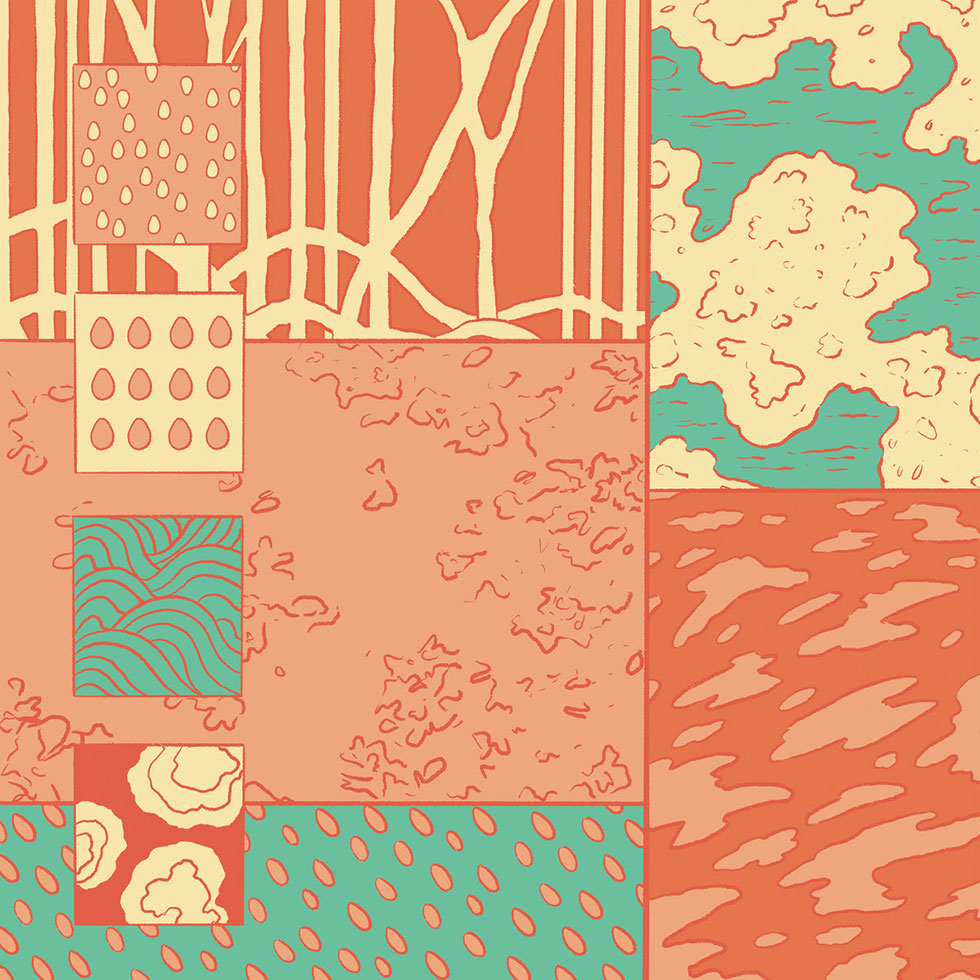

ロンドンのザ・リーフ・ライブラリーは、いつもどこか「お天気が優れない」ような佇まいを見せている。とは言っても、病気だとか体調が悪いという意味ではない。彼らは、イギリスの優れたミュージシャンの多くが抱えるメランコリーという名の持病を共有してはいるが、そのメランコリーは、空の機嫌(気候)が彼らの気質に表れたものに過ぎない。バンドの音楽のうえに垂れ込め、そのなかを渦巻いている天気そのものなのだ。
ザ・リーフ・ライブラリーのこれまでのキャリア(4枚の公式アルバムに加え、ルーズな楽曲、実験音楽、ドローン、アンビエント、コラボレーション作品など、少なくともさらに12枚分ほどのアルバムに匹敵する音源がある)を通じて、彼らは1990年代に登場したイギリスの二大最高峰バンド、ステレオラブとブロードキャストからの影響を隠そうとしたことは一度もない。メランコリックな空気感はブロードキャストと共通するものであり、一方で「Still & Moving」のような楽曲を推進するリズムのエンジンは、ケイト・ギブソンの飾り気のない、自然体のヴォーカルと相まって、“Super-Electric”といった初期ステレオラブのモーターリックなポップ・ソングを思い起こさせる。
しかし、こうした表面的な類似点はあるものの、ザ・リーフ・ライブラリーは完全に彼ら独自の生き物である。彼らの音楽に流れる憂鬱さは、ブロードキャストが描くような後期資本主義的な疎外感というよりも、もっと有機的で、もしかしたら満足感さえ伴うような、人生の喧騒から一歩退いて文字通り「草に触れる(自然に親しむ)」感覚に近い。オープニング曲“Colour Chant”は、ステレオラブのアルバム『Emperor Tomato Ketchup』の幕開けを飾る“Metronomic Underground”のような、マントラ的なヴォーカルの抑揚を共有しているかもしれないが、それは自然界や人間界の感覚的な言葉によって届けられる。
『After the Rain, Strange Seeds』の空気感には、自然のイメージや感覚が縦横に織り込まれている。海、波、川、水。木々、畑、庭。不安定な空と雷の予感。それはブライアン・イーノの『Ambient 4: On Land』と同じ空の下で作られた音楽であり、あるいは、灰色の雲の下で霧雨に愛撫される「イギリス版ヨ・ラ・テンゴ」のようでもある ── 夏の太陽というよりは、終わりのない秋の気配だ。
また、1990年代のブリストル・サイケデリック・シーンとの類似性も見られ、フライング・ソーサー・アタックが持っていた「すぐ近くにある都市の存在に怯える田舎の空間」という感覚を共有している。そういった意味で、8分に及ぶ“Some Circling”はアルバムのテーマ的な中心作のように感じられる。曲がゆっくりと高まり、恍惚のクレッシェンドへと向かうなか、自然の猛威によって前後に引き裂かれるトビ(鳥)のイメージが描かれ、推進力のある反復的なリズムがビルドアップしていく。それは、遥か彼方にあるロンドンの街へと繋がる環状道路や高速道路を想起させる。
フライング・ソーサー・アタックの田舎風景が、ウェストカントリーの古墳群に広がる新石器時代の記念碑という神話的な存在を呼び起こすのに対し、ザ・リーフ・ライブラリーが暮らす風景はもっと小さく、ありふれており、その神秘は風景の内部に閉じ込められている。それは、子供時代の個人的な神話や、さもなければなかば忘れ去られた記憶であり、流れる車の列は遠くへと溶け込んで下流へと滴る水になり、そよ風に捉えられた葉のあいだから太陽が揺らめきながら差し込む。この点において、彼らは小さな瞬間やかすかな感情から感覚的な世界を紡ぎ出す手法において、もうひとつのブリストルのバンド、モヴィートーン(Movietone)を彷彿とさせる。あるいは、イギリスのインディ・ミュージックのフォークな記憶のなかにいまも脈々と流れるニック・ドレイクの残り香を捉えている ── それがもっとも顕著に現れているのが、“Carry a River in Your Mouth”におけるマット・アシュトンのさざ波のようなアコースティック・ギターと、胸が締め付けられるほど美しいヴォーカルのメロディだ。
『After the Rain, Strange Seeds』は、ともすれば「曖昧さ」に陥ってしまいかねないアルバムである。本作は、不確実性や不決断を楽しんでいる。見知らぬ人びと、場所、出来事。循環する、あるいは終わりのないプロセス。存在するものと失われたもの、そこに在るものと在らぬもの。前作である2019年の『The World Is a Bell』は、バンドのこうした側面に傾倒し、アンビエントやドローンへの深い傾倒を包括した80分・2枚組にわたって、霧や霞に煙る風景を広大に探求していた。
その移ろいゆく境界(リミナル)的な風景に深く沈み込む快感もある一方で、今回のバンドは、この「不確定性」というテーマ的な特質を、サウンドにおける鋭く具体的な何かによって相殺しようと決意したようだ。彼らが愛するアンビエントな音響風景は、反復するリズムや時折挿入されるキーボードのドローンのなかにいまも健在だが、それはきちんとしたポップ・ソングの1枚のディスクに収まるよう十分に抑制されている。バンド自身によるプロデュースと、トータスやザ・シー・アンド・ケイクのジョン・マッケンタイアによるミックス(彼がヨ・ラ・テンゴの『Fade』で残した仕事は、ステレオラブとの数々のコラボレーションと同様に、本作にとって確実に重要である)によって、楽曲はパンチが効いてクリアに仕上がっている。1曲目のはじまりから、ルイス・ヤングのドラムは鮮烈で力強い存在感を放ち、ギャレス・ジョーンズのベースの生々しく、ざらついた質感のサウンドと相まって、楽曲に満足感のある執拗な土台を与えている。それが音楽を紛れもなく、そこに、あなたと同じ部屋のなかに引き戻すのだ。
このアプローチは、ソングライターとしてのグループの個性や、演奏者としての彼らのフィールに焦点を当てているが、断片的な感覚やイメージから作られ、スナップショットの記憶という写真集的な文法で繋がれた、歌詞のコラージュのような抽象性を損なうことはない。曲を聴き進めるうちに、地面と空は今も果てしなく移り変わり、丘や雷のようにうねり、悲しみを帯びながらも美しさと繋がっている。一筋の太陽の光が降り注ぐ雨粒を照らし、そのすべての内側には、毅然とした、そして静かに風変わりな楽観主義が息づいている。
(訳:編集部)
written by Ian F. Martin
London’s The Leaf Library always seem a little under the weather. Not in the sense of being sick or unwell, although they share with many of the best English musicians an affliction of the melancholy. But that melancholy is just an expression in the humours of the temperament of the skies, the weather that both hangs over and swirls through the band’s music.
Throughout The leaf Library’s career (comprising four official albums and at least another dozen or so albums’ worth of loose songs, experimental, drone, ambient and collaborative work), the influence of the two best British bands to emerge from the 1990s, Stereolab and Broadcast, is one they’ve not been shy about. The atmosphere of melancholy is one they share with Broadcast, while the rhythmical engine that propels songs like “Still & Moving”, combined with Kate Gibson’s unadorned, unaffected vocals, recalls the motorik pop of early Stereolab songs like “Super-Electric”.
But for all these superficial similarities, The Leaf Library are a very much their own sort of creature. The sense of melancholy running through their music feels less like the late capitalist alienation of Broadcast than a more organic, maybe even contented sense of stepping away from the noise of life and literally touching grass. First track “Colour Chant” may share a mantric vocal cadence with Stereolab’s “Emperor Tomato Ketchup” opener “Metronomic Underground”, but it’s delivered in the sensory language of the natural and human world.
The atmosphere of “After The Rain, Strange Seeds” is threaded through with the images and sensations of nature. Seas, waves, rivers, water. Trees, fields, gardens. Unsteady skies and the threat of thunder. It’s music made under the same skies as Brian Eno’s “Ambient 4: On Land” or like a British Yo La Tengo under grey clouds, caressed by drizzle — less summer sun than endless autumn.
There are parallels, too, in the 1990s Bristol psychedelic scene, sharing with Flying Saucer Attack the feeling of rural spaces haunted by the presence of the city nearby. In this way, the eight-minute long “Some Circling” feels like a thematic centrepiece to the album with its images of red kites torn back and forth by the elements as the song rises slowly to a roaring, ecstatic crescendo, with driving, repetitive rhythms building, evoking the circular roads and motorways that feed the city of London in the distance.
While the countryside of Flying Saucer Attack summons the mythic presence of neolithic monuments across Westcountry barrow downs, the landscape The Leaf Library inhabit is smaller, more mundane, its mysteries locked within it, the private myth of childhood or otherwise half-forgotten memory, the flow of traffic melting into the distance and becoming water trickling downstream, sun shimmering through leaves caught by a breeze. In this, the band recall another Bristol band, Movietone, in their way of spinning sensory worlds out of small moments and slight emotions. Or they catch onto the lingering threads of Nick Drake that still wind their way through the folk memory of British indie music — most strikingly in Matt Ashton’s rippling acoustic guitar and the achingly beautiful vocal melody on “Carry A River In Your Mouth”.
“After The Rain, Strange Seeds” is an album that could suffer from vagueness. It revels in uncertainty and indecision: people, places and events unknown, processes cyclical or neverending, present and lost, there and not there. Its predecessor, 2019’s “The World Is A Bell”, leaned into this side of the band, expansively exploring mist- and haze-blurred landscapes across 80 minutes and two discs that encompassed deep excursions into their love of ambient and drone motifs.
For all the pleasure to be found sinking into that ever-shifting, liminal landscape, the band this time round seem determined that this thematic quality of indeterminacy be offset by something sharp and tangible in the sound. Their love of ambient soundscapes is still present in the repetitive rhythms and the occasional keyboard drone but it’s reined in enough to make a single disc of proper pop songs. In the production (by the band themselves) and the mix by John McEntire of Tortoise and The Sea And Cake (whose work on Yo La Tengo’s “Fade” is surely as important for this album as his many collaborations with Stereolab), the songs come out punchy and clear. From the opening of the first track, Lewis Young’s drums are a vivid, forceful presence, which together with the raw, coarsely textured sound of Gareth Jones’ bass gives the songs a satisfying, insistent foundation that places the music inescapably there, in the room with you.
This approach brings into focus the group’s character as songwriters and their feel as performers but doesn’t compromise the collage-like abstraction of their lyrics, made from fragmented sensations and images, connected by a photobook grammar of snapshot memories. As you travel through the songs, the ground and skies still shift endlessly, rolling like hills or thunder, touched with sadness but in touch with beauty, a shaft of sun illuminating drops of falling rain, and within it all a resolute and quietly eccentric optimism.
ALBUM REVIEWS
- Arab Strap - Half-Told Tales
- Protomartyr - Hotel Usona
- Eden Aurelius - Entre Nous/ emer ft. Ugnė Uma - You and Me
- Boy Harsher - GET MEAN
- Helen - Linda's Head
- Black Marble - Life in Small Spaces
- 食品まつり a.k.a foodman - HIKARIGASASHIKOMU
- Horse Lords - Demand to Be Taken to Heaven Alive!
- Arca - XXXXX
- 細野晴臣 - Yours Sincerely
- Klara Lewis - Opening
- Kim Doeon - SLAPSTICK
- This Is Lorelei - The Singer in My Band
- Dusty - Dusty & Friends/ Commodo - Deep Harbour ft. Alfa Mist
- Lambchop - Punching the Clown
